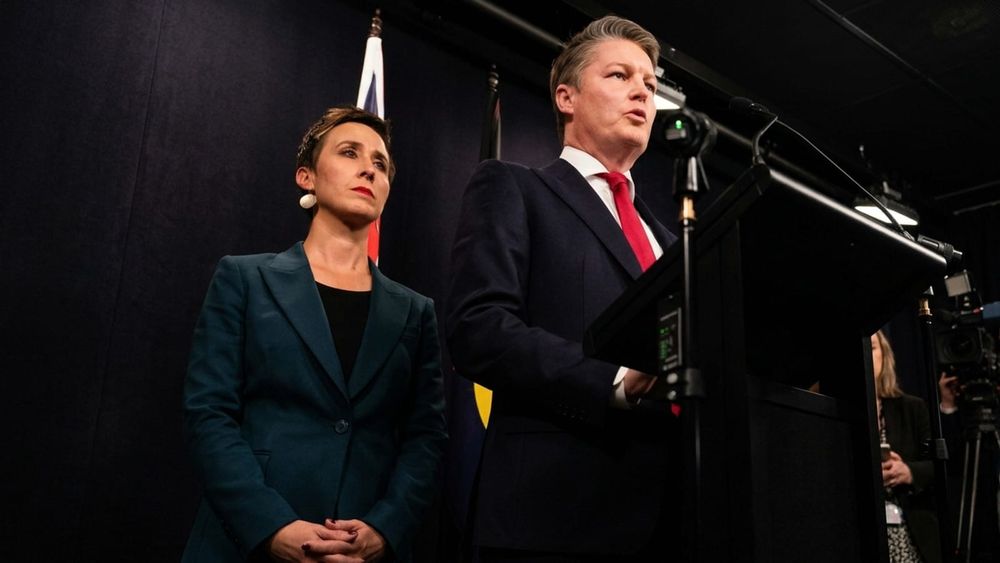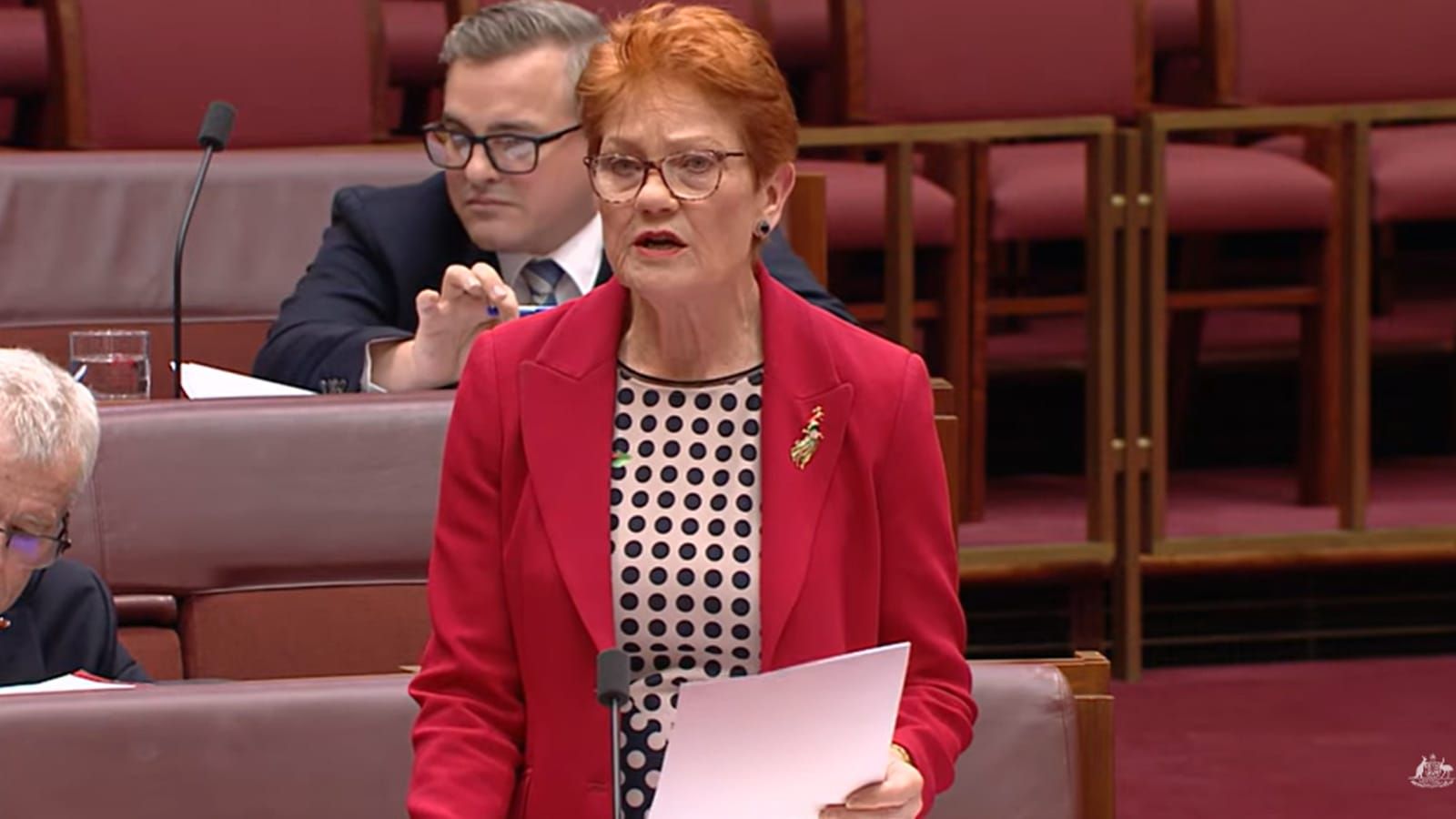
Pauline Hanson asked the Senate on Tuesday to drop everything and debate a bill written to keep convicted ISIS fighters out of Australia. Twenty one minutes later the bill was dead, shut down 35 votes to 24, and not one of those minutes had been spent on what the bill does.
Environment and Water Minister Murray Watt moved the motion that ended the debate and Greens senator David Shoebridge also spoke against Pauline Hanson before him. Between them they gave the Senate several reasons not to look at the bill, and not one of those reasons was that the men it targets aren't coming back to Australia.
Thirteen Australian men linked to Islamic State are in a Baghdad prison with their sentences running out, among them Tareq Kamleh, the doctor who appeared in the group's propaganda under the name Dr Jihad. One News reported in July that they could walk free, and nobody in the chamber disputed it.
Video: Senate broadcast, via ParlView. Pauline Hanson tells the Senate that 13 Australian men linked to Islamic State are held in a Baghdad prison and may soon be released.
Katy Gallagher started the interruptions and the chair carried them on for two minutes
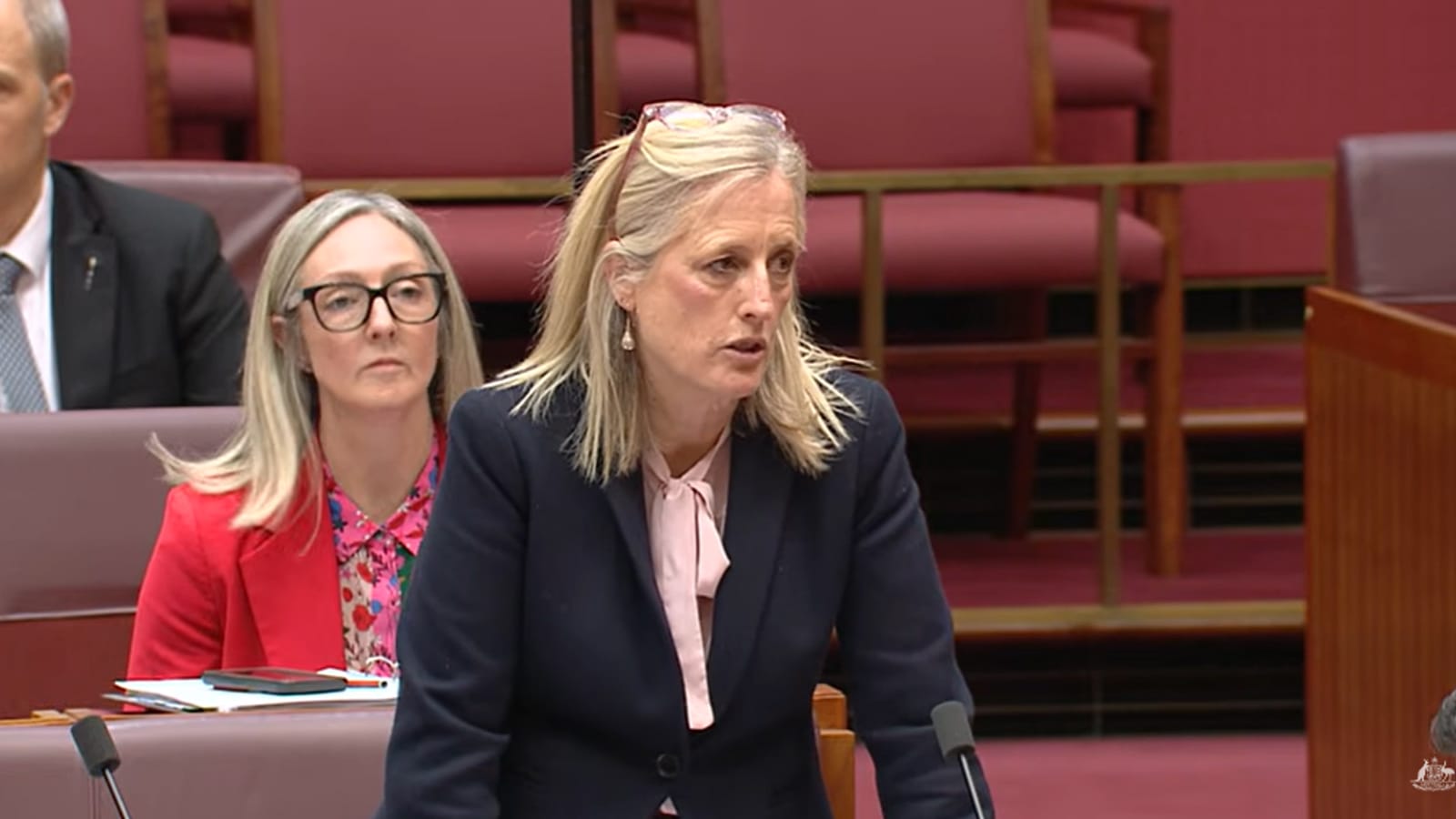
Senator Katy Gallagher rose for the government on a point of order two minutes into her speech, asking the chair to bring Pauline Hanson back to why the matter was urgent rather than what was in the bill. The chair pulled her up five times over the next two minutes.
"Speak to the urgency, not the substantive," the chair told her.
Her answer was that the two could not be pulled apart.
"The urgency is that it needs to go to the courts. The bill needs to be introduced so it can go to the courts, to keep these people out of the country. So that is the urgency of this motion."
She was blunter about who she thought was driving it.
"If the Labor Party does not like what I am reading out here, really telling the people why we desperately need this, then they have the problem with this."
David Shoebridge said One Nation doesn't care about the constitution, minutes after Pauline Hanson said the opposite
David Shoebridge opened by calling the bill a dog whistle, and said One Nation was "proposing legislation they know is unconstitutional" with "about as much chance of surviving a constitutional challenge as a paper kite in a bushfire".
He then told the chamber what One Nation's position on the constitution was.
"They even say it. They come and say, oh, let it go to the courts, we do not have to worry about constitutionality."
Three minutes earlier, in the same debate, Pauline Hanson had said this.
"I say let the High Court determine whether a law is constitutional, because that is its job."
David Shoebridge told the chamber One Nation doesn't care whether its own bill is constitutional. Pauline Hanson had asked for the High Court to rule on it, which is the opposite of not caring.
He also told the Senate she had "tried to go off to Syria on a Channel 7 funded trip" and that it was "all too hard". Pauline Hanson demanded the comment be withdrawn and said there was "no truth in it whatsoever".
The chair looked annoyed, called it a debating point and told her to sit down. It's the second time in seven weeks that a Greens senator has put an unproven claim about One Nation on the record and kept it there, after the party accused it of foreign interference in June.
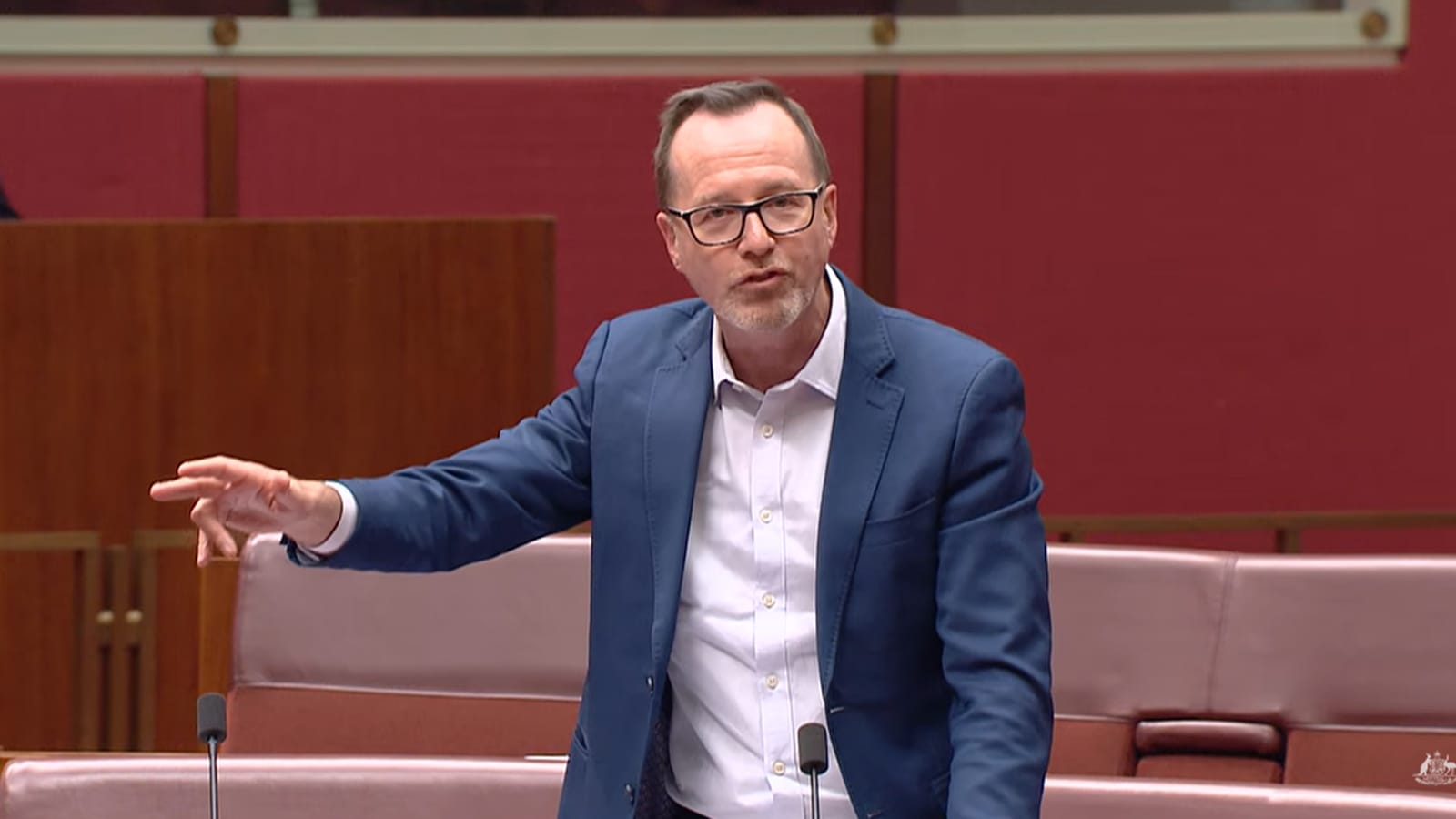
His alternative started with a trip, and he told the Senate he had been to northeast Syria and spoken to the women who fought and defeated Islamic State, that Pauline Hanson had not, and that they do not support what she is doing, bearing in mind they're not Australian citizens. He named none of them, gave no date, and nobody in the chamber was in a position to check it.
What those fighters want, he said, is a pathway to justice, meaning Australian support for the International Criminal Court, cooperation with international tribunals and a way to hold ISIS fighters to account.
None of that keeps anyone out of Australia. That court prosecutes people for what they did overseas, and it has no say in who gets off a plane in Sydney, which is a question of Australian citizenship and migration law. David Shoebridge spoke twice, used the phrase dog whistle in both contributions, and never named one measure that would stop any of the 13 men in Baghdad boarding a flight home.
Murray Watt lied and said Labor doesn't pass laws that get thrown out of court, but Labor backed two that were
Murray Watt's case against the bill was that it would not survive.
"What this government is about is laws that stand up in court, that do protect Australians and do not end up resulting in being thrown out by a court, exposing Australians to greater risk."
Labor has failed that test twice as a supporter and once in court.
Tony Abbott's government wrote the first citizenship stripping law in 2015, and Scott Morrison's rewrote it in 2020 so the home affairs minister could strip citizenship personally, and both passed with Labor's support. The High Court struck down the first in 2022 and the second in 2023, by 6 to 1, in the case of convicted MCG bomb plotter Nacer Benbrika. Labor was in government by then, went to the High Court to keep Benbrika stripped of his citizenship, and lost.
Both laws fell for the same reason. Under the Constitution only a court can punish someone, never a politician. Pauline Hanson's 22 page bill is built around that ruling, and it gives the minister no power to bar anybody. It requires the minister to go to the Federal Court and prove the person poses an unacceptable risk, with a judge making the decision.
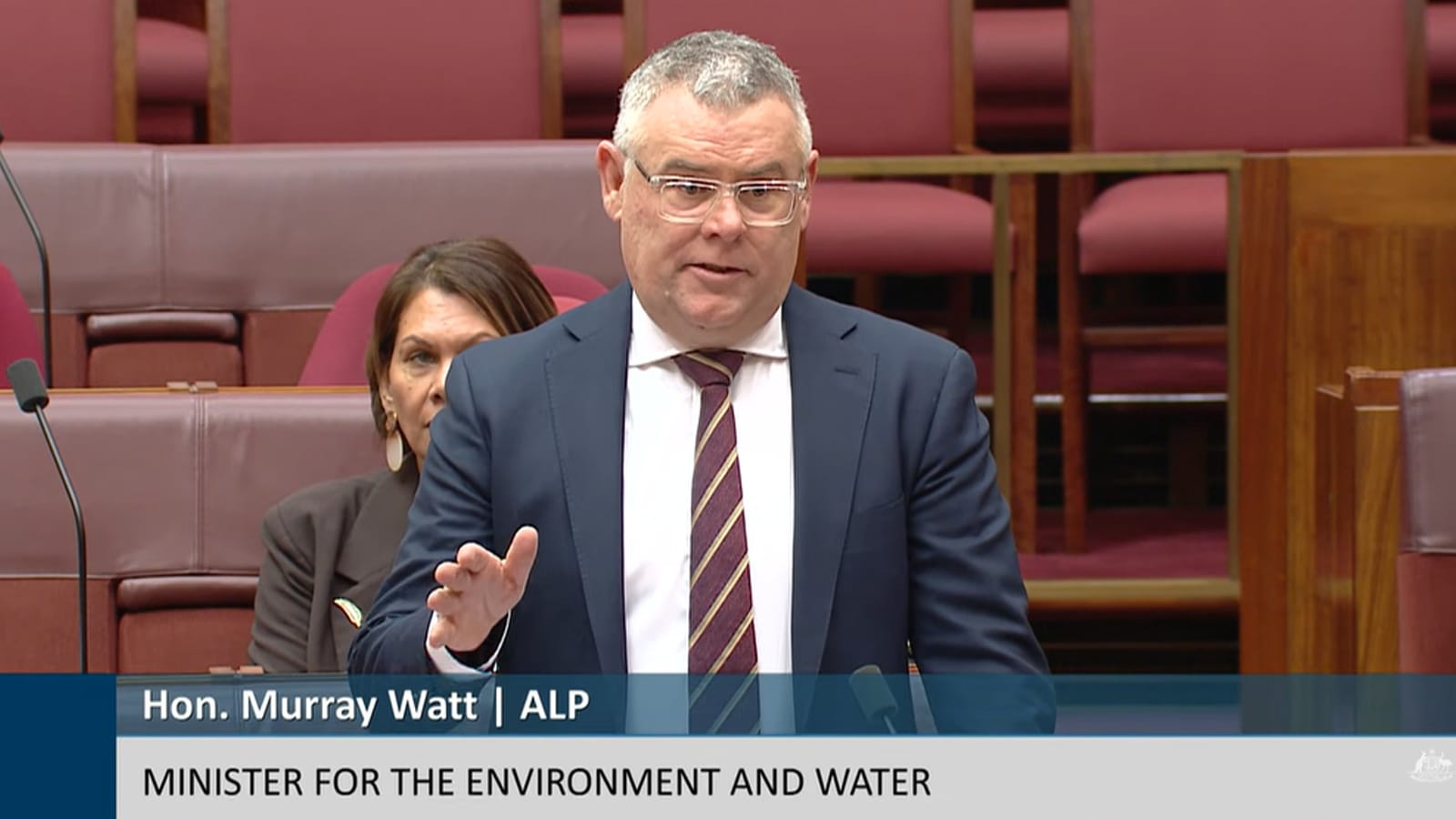
Murray Watt used the case law to kill a bill drafted to comply with it, and neither he nor David Shoebridge pointed to a single clause that offends it.
He also told the Senate the existing exclusion order regime "goes to the absolute maximum lengths that are permissible under the Australian Constitution". The High Court has never ruled on temporary exclusion orders. That maximum is the government's own estimate, and the debate that would have tested it is the one he moved to end. The minister who actually holds the power, Tony Burke, has used it once, telling News24 in July there had "only been one occasion where I've been able to ... put in a temporary exclusion order", and that order was later revoked.
Labor said "not an ounce of assistance" about the ISIS brides too
Murray Watt's other assurance was that the government is doing nothing to help anyone come home.
"This government is not providing an ounce of assistance to those individuals in returning."
Pauline Hanson told the chamber Labor had said exactly that about the women who became known as the ISIS brides, and had helped them return anyway. Murray Watt did not answer the point, and the record is against him.
What One News has reported is that Labor won't rule out taxpayer funded housing for members of the returned group, that Anthony Albanese was forced to concede his government issued those women passports in February, and that 16 women and 46 children have come back since 2019. Two ISIS-linked women facing serious charges are also living in the community on bail, Kawsar Abbas and Rayann El Houli, both still before the courts with nothing proven against either of them.
Five things could be done right now, and neither party has done any of them
Pauline Hanson's bill isn't the only thing that could be done about returning foreign fighters. It is the only thing anyone has put up.
There are five ways to make it harder for a convicted fighter to come back. Four need nothing more than a vote in this Senate.
| What could be done | What it needs | Coalition | Labor |
|---|---|---|---|
| Use the exclusion orders that already exist | Nothing. A ministerial decision under the 2019 Act | Wrote the power in 2019 | Says the power is at its constitutional limit. Tony Burke has used it once, and that order was revoked |
| Widen court ordered citizenship stripping | Ordinary legislation, no referendum | Has never proposed widening it | Drew its 2023 law so narrowly it only reaches people sentenced after 2023 |
| Remove the dual national requirement | Ordinary legislation, plus notice of withdrawal from the 1961 convention. The United States is not a party to it | Never proposed it in nine years | Never proposed it in four |
| Pass the One Nation bill | A vote. It was on the notice paper on Tuesday | Took a week to answer Hanson's offer and is running a competing bill | Refused leave, then gagged it 12 minutes in |
| Put the referendum | A national majority and four states of six | Never put it | Never put it |
Only the last one needs the public, and it is the only route back to a minister being able to strip citizenship personally. No government has ever asked the question.
Everything else sits inside the power of an ordinary parliamentary majority. Labor's own 2023 citizenship law works precisely because a sentencing judge makes the call instead of a politician, and yet it was written so tightly that it only applies to people sentenced after 2023. Nacer Benbrika was sentenced in 2009, so the law passed after his case can never reach him.
Stripping also only ever reaches dual nationals, because Australian law will not leave anyone stateless. That limit sits in the Citizenship Act, Parliament put it there, and Parliament can take it out with a majority in both houses.
The 13 men are still in Baghdad
Pauline Hanson sent the bill to crossbenchers on 29 July and asked for it to be debated on 11 August, the first day the Senate sat. Angus Taylor took a week to answer her offer of One Nation's votes for any lawful strengthening of the terror laws, and the Coalition is preparing a bill of its own.
On 11 August the Senate voted 35 to 24 not to discuss hers. The sentences in Baghdad are still running out.