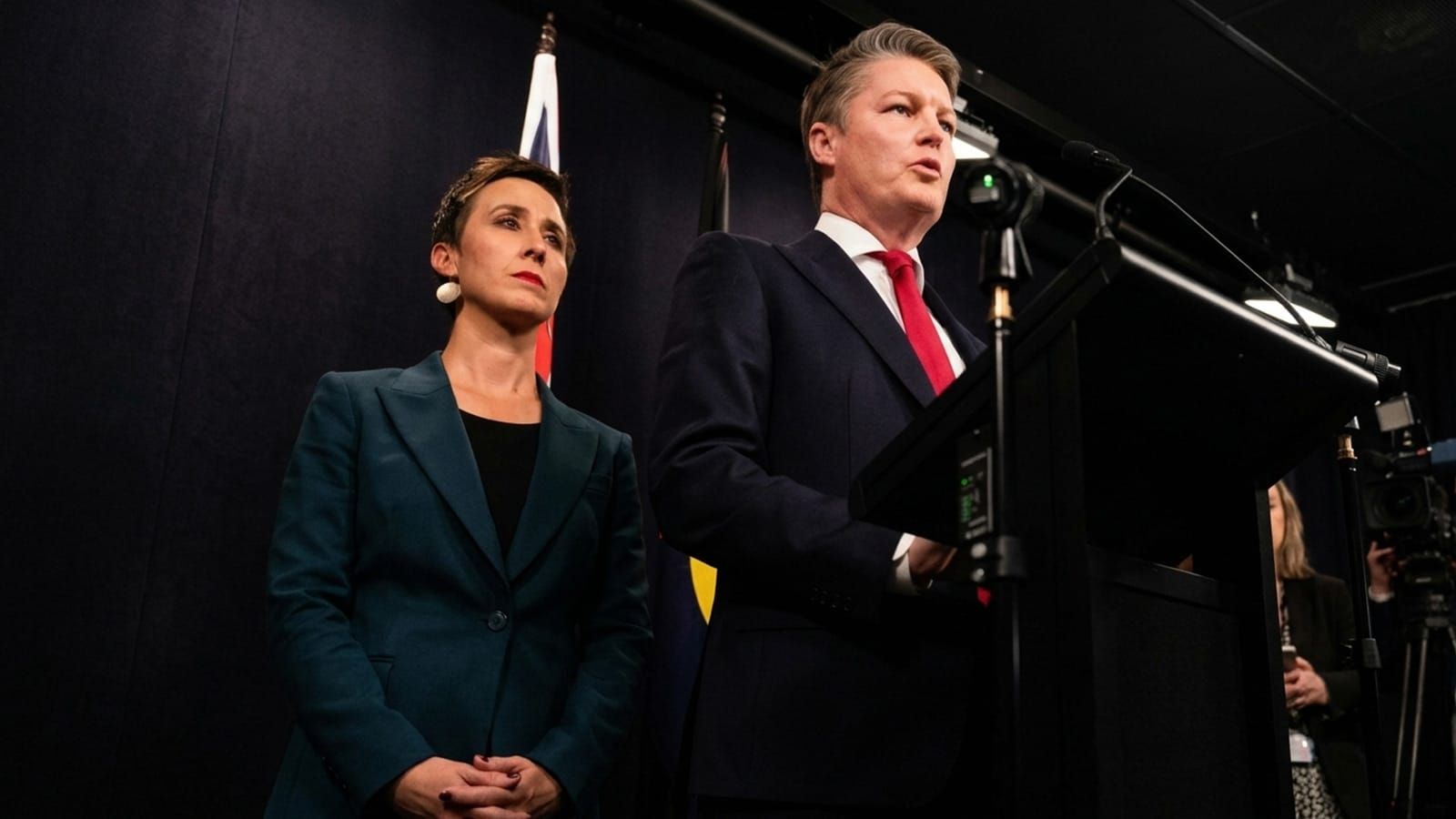
Victorian Premier Ben Carroll says Victoria's work from home laws won't start until 1 July 2027, seven months after the state votes. The bill sitting in parliament still says 1 September this year, and Carroll can't change that on his own.
He announced it today, one day after employer groups told him to scrap the bill outright. He's pulled this week's upper house debate and says he still expects the law to pass before the 28 November election. What he's proposing lets Labor keep campaigning on the promise while no Victorian worker sees the right before polling day.
The only date in front of parliament is still 1 September
The start date isn't something a premier gets to pick. It's printed inside the bill itself, which says the law "comes into operation on 1 September 2026". The only way to change that line is for parliament to vote to rewrite it, and that vote happens in the upper house, where the bill is stuck right now.
Carroll's government hasn't asked for that vote. To move the date it needs to file a change to the bill, called an amendment, and it hasn't filed one. The only changes anyone has filed came from the Liberals two weeks ago. In the 12 days the bill has been in the upper house, Labor has filed nothing at all.
So where did 1 July 2027 come from? It has been in the bill all along, because when Labor announced the policy in March it set two start dates: 1 September this year for businesses with 15 or more staff, and 1 July 2027 for smaller ones, which were given extra time to adjust. Carroll is now saying that date applies to everybody. Under what he announced today, every Victorian employer gets the same 1 July 2027 start, big or small, which is the deal small business already had. The corner shop timeline is now the whole state timeline.
Carroll says he supports the law he's asking Victorians to wait for
Carroll spent the morning insisting the delay wasn't a retreat.
"I want to be very clear, I support work from home, I support flexible work, it is good for working families."
He told the press conference he'd rung two of the employer leaders that morning to tell them himself.
"I've spoken to Sally Curtain this morning and Tim Piper and I've informed them that work from home will not proceed on the 1st of September, it will proceed on the first of July 2027."
Sally Curtain runs the Victorian Chamber of Commerce and Industry and Tim Piper is the Australian Industry Group's Victorian head. Both had put their names to Monday's statement. Carroll called the delay part of "a new direction of my leadership" and "a reset of our relationship with the business community".
"My door will always be open to the business community, I want Victoria to be open for business, I want it to be thriving, that is why I've delayed these changes and it's why I'm going to continue to work with the business community to make sure this policy is right."
Labor promised workers 1 September, and are now talking about July 2027
Labor has spent five months telling Victorian workers that a legal right to work from home two days a week begins on 1 September. On Carroll's timetable it doesn't. He's now talking about 1 July 2027, which is 10 months later than the date his own party has been advertising and seven months after the state has voted.
On paper the entitlement is simple. Eligible employees in both the public and private sectors could work from home two days a week where it's reasonable to do so, pro rata for part time and regular casual staff. Disputes would go to the Equal Opportunity Commission for conciliation, and then to VCAT if they couldn't be settled there. Labor has costed the benefit to households at $110 a week, or $5,308 a year.
None of it arrives before polling day. A law that hasn't commenced can be repealed by the next parliament without a single worker having used it, and Victorians choose that parliament on 28 November.
Employer groups asked to scrap the bill and got one item off a list of ten
The pressure that produced the announcement came from a joint statement published on Monday by employer groups including the Business Council of Australia, the Victorian Chamber of Commerce and Industry and the Australian Industry Group. They asked for the bill to be dropped altogether rather than delayed, saying Victoria "cannot afford policies that take the state further backwards". The government, they said, should be attracting investment and lifting living standards, not passing a law that risks pushing jobs interstate.
The same groups had already put a ten point plan to the government through the Victorian Congress of Employer Associations, on the basis that the bill as drafted "risks creating a costly, complex and unworkable regime for employers". It asked for a hard cap of two days, broader grounds for an employer to refuse, and clearer rules on who pays for equipment. It also wanted safety obligations spelled out for people working at home, a compliance checklist for small business, and a power to throw out frivolous complaints quickly. On timing, it asked for commencement to be moved to 1 March 2027.
Carroll has offered them the timing and none of the rest. He's gone four months further than they asked on the date and left the other nine points where they were.
Carroll needs six crossbench votes in the Council and hasn't shown he has them
The bill cleared the Legislative Assembly on 30 July and went straight to the Council, where it stopped. A majority in that upper house is 21, so Labor can't pass anything the Coalition opposes without six votes from the crossbench.
That crossbench is four Greens, two Legalise Cannabis MPs, and one each from Animal Justice, the Libertarians, One Nation, the Shooters, Fishers and Farmers, and one independent. Pulling this week's debate buys Carroll time to count those votes as well as time to talk to employers.
Labor still goes to the election promising Victorians a legal right to work from home, and no employer in the state has to provide it before polling day. There's no upper house vote he might have lost three months out from an election. And because nothing has been filed, nothing is locked in, so he can amend the bill later, delay it again, or leave it exactly where it is.
If Labor loses on 28 November the right never commences, and nobody ever finds out what it would have cost a Victorian employer to comply with it.
What happens between now and 28 November
The bill goes back to the Legislative Council when parliament next sits, and the government says it wants it through before the campaign starts. If it passes in its current form, the law Carroll says starts in July 2027 starts on 1 September instead, because that is what clause 2 says. Getting his date means an amendment, a debate and the crossbench votes he hasn't counted yet. If Labor loses in November, none of it commences at all. Labor's primary vote has sat in the low to mid 20s across the major pollsters this year, and every state and federal poll as it lands is on our poll tracker.
What Carroll has offered is 10 more months he hasn't yet put in writing. Victorians will have voted before any of it takes effect.