Australian men suspected of fighting for Islamic State could be released from an Iraqi jail under an international push to free detainees judged to be "noncombatants", The Australian reports. One of the 13 Australians held in Baghdad's prison system is Mohammed Ahmad, the husband at the centre of the country's first crimes against humanity case.
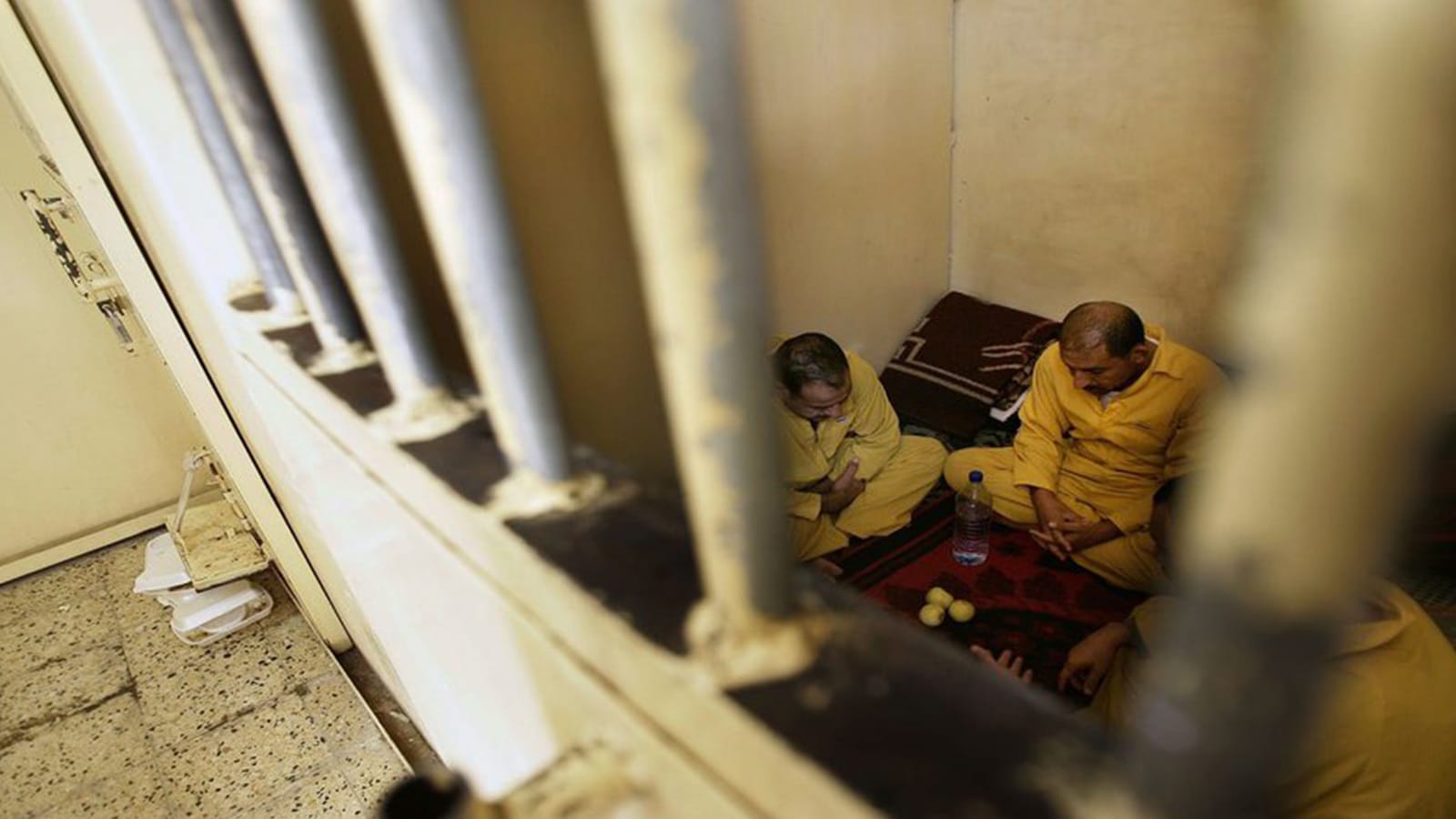
Thirteen Australians, and a push to free the "noncombatants"
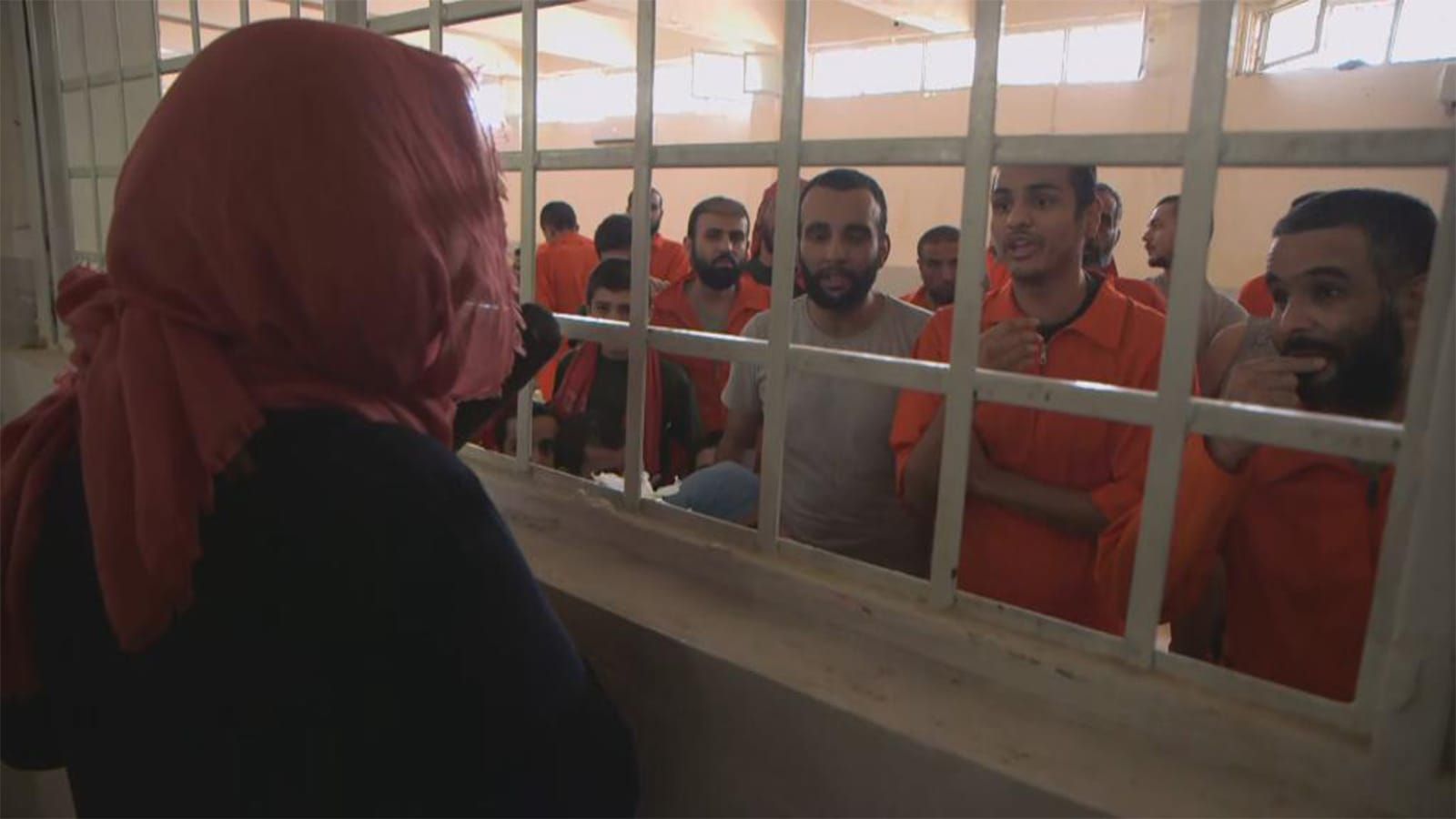
The Australian reports that some of the 13 men who identify as Australian are being interviewed by United States and Iraqi officials to work out what involvement they had with Islamic State, and that those judged to be noncombatants could be released. An Iraqi Correctional Services staffer told the paper the men are part of a larger group of terrorism detainees who will be spoken to as part of a handover process aimed at "achieving justice".
Conditions are "not pleasant", the staffer said, citing years of drone strikes, rocket strikes and security threats, with single cells holding many prisoners. Many of the men have no current passport, so the Australian government would need to approve any removal.
Earlier this year the US military moved more than 5,700 adult male Islamic State detainees from Syria to Iraq for investigation and prosecution. Some face the death penalty. Others deemed noncombatants have already been freed, including a minor from Finland and a US national returned home in April. The prisons that held these men in Syria, run by Kurdish forces, housed thousands of foreign fighters, and in 2019 some Western detainees told CBS News they wanted to be sent home.
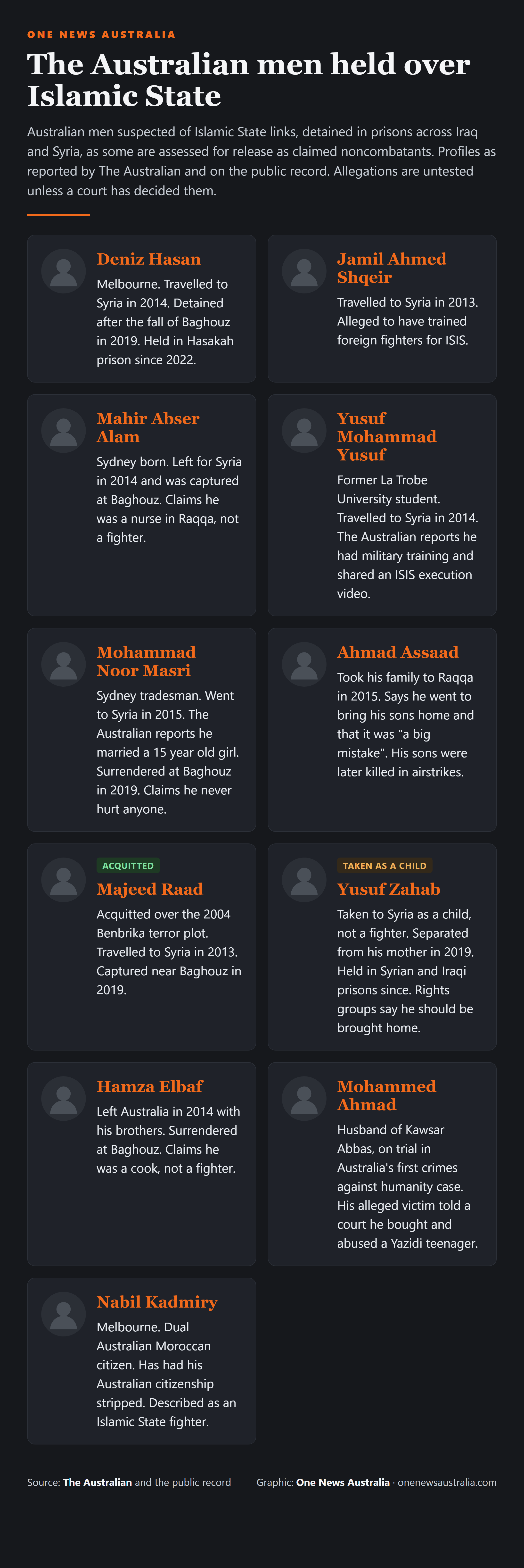
One of the men is the husband in the Yazidi slave case
Among the 13 is Mohammed Ahmad, named by The Australian as the husband of Kawsar Abbas and father of Zeinab Ahmad, the mother and daughter at the centre of Australia's first crimes against humanity case over the alleged enslavement of a Yazidi teenager.
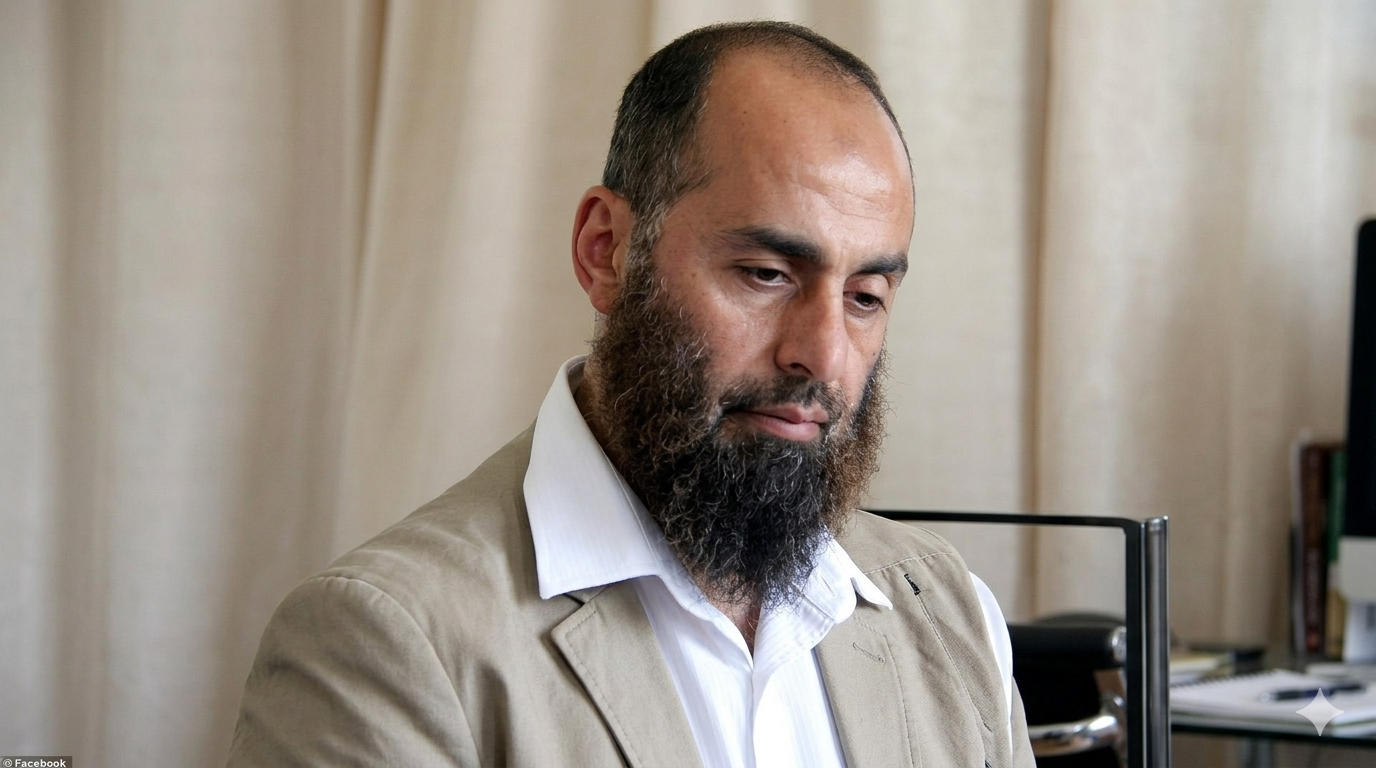
The complainant in that case told police Ahmad bought her for US$10,000, and in her account set out in a Melbourne court she said he told her he had bought her "for the purpose of raping and at the same time serving the home". Ahmad left Australia in 2013, has never returned, and is believed to have been held in Iraq. He has not been charged in Australia.
A former US diplomat says the "noncombatant" claim is a fiction
Peter Galbraith, a former US diplomat who has worked to help enslaved Yazidi women, told The Australian he was sceptical any of the men were genuinely noncombatants.
"I'm sceptical that there are men who aren't linked to combat and to the crimes of ISIS. I've talked to various men in the prisons of the Syrian Kurds and it's amazing, they were all drivers or cooks or whatever ... I mean of course they weren't," he said.
Galbraith said "at least several of these Australian men had Yazidi slaves and raped them", and argued they should be tried where the crimes were committed. "Why is it that just because you're Australian you get to come back and be in Australian prisons and have all the benefits of that?"
Labor says it won't actively bring the men home
The Australian reports the Albanese government has ruled out repatriating the men from Iraq. A government spokesperson said Labor would not be repatriating people from Iraq and does not comment on the circumstances of individuals. It was unclear whether any freed detainee could be deported elsewhere in future.
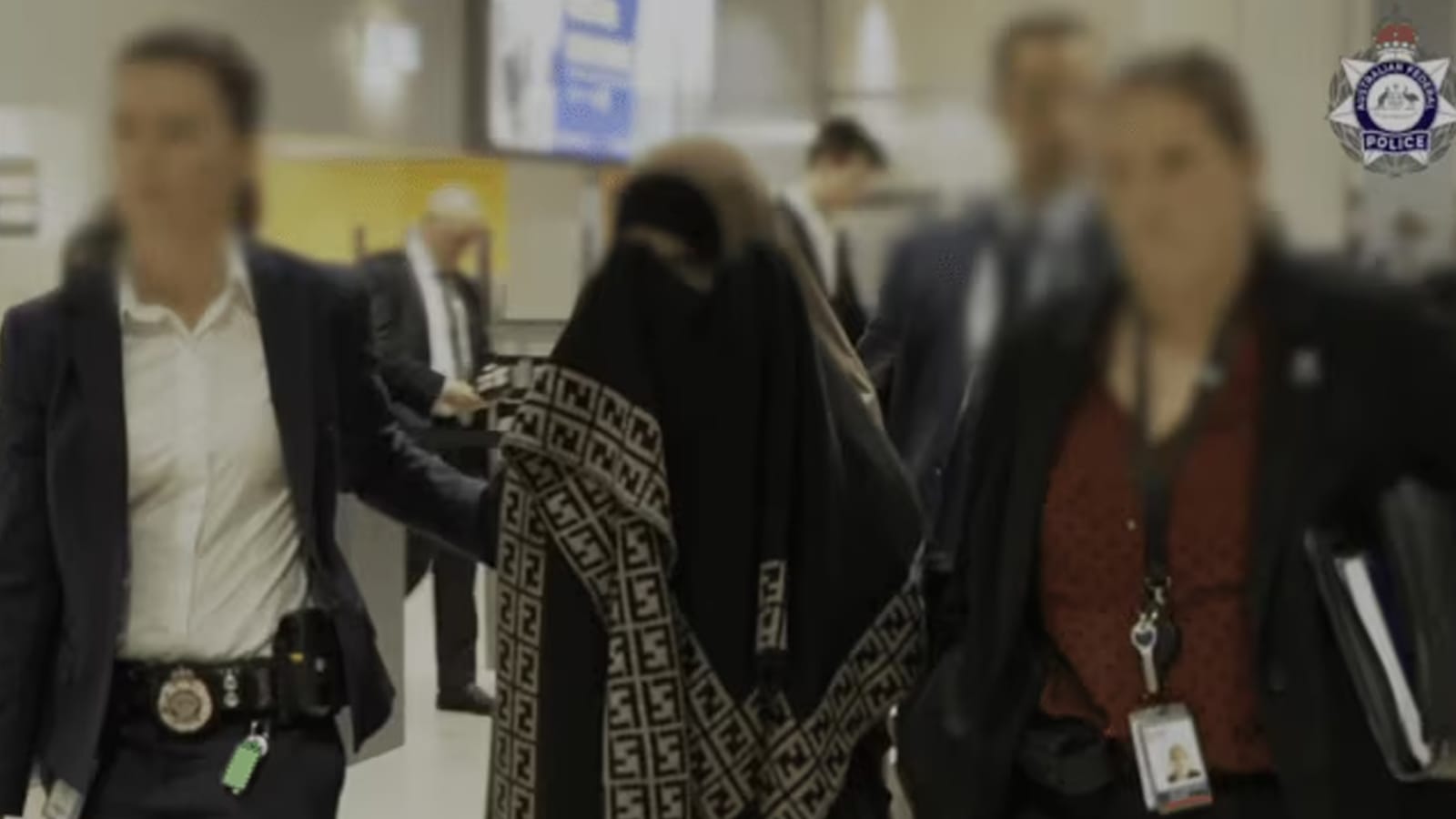
Freed does not mean flown to Australia. Ruling out repatriation means the government will not organise or fund the men's return, not that it can keep them all out. Those who hold only Australian citizenship keep the right to come home and could make their own way back, as Kawsar Abbas did when she returned on a commercial flight and was arrested at Melbourne airport. The government can slow a return with an exclusion order or by withholding a passport, and for dual nationals it can strip citizenship, as it did with Nabil Kadmiry. For the rest, the door is harder to shut.
The report says Foreign Minister Penny Wong's department has had contact with the family of one detainee, Yusuf Zahab, and is believed to have visited him in jail.
What happens if the men come back
If a freed man does return, he does not simply walk into the community. A returning suspect is arrested on arrival, as Kawsar Abbas was at Melbourne airport, and Australia has the charges to bring. Returnees can face terrorism and foreign incursion offences for joining Islamic State or entering a declared conflict zone, and, where the evidence supports it, slavery or crimes against humanity, the same charges now before the courts.
The harder question is whether those cases hold. Evidence gathered in a war zone is difficult to secure, which is part of why Majeed Raad was acquitted and why the AFP has conceded the challenge. And even a man charged with a crime against humanity would not automatically face the toughest bail test, the same gap that let Kawsar Abbas walk free on bail. Arrest does not guarantee a conviction, or even that the accused stays in custody while the case runs.
The exception: Yusuf Zahab, taken to Syria as a child
Zahab was taken to Syria as a child and, according to The Australian, never fought. Separated from his mother in 2019, he has spent more than 10 years in Syrian and Iraqi prisons and is believed to be in his 20s. Galbraith said Zahab was "a kid who should never have been in prison" and that there was "no excuse" for Australia not to repatriate him.
Human Rights Watch Australia's Daniela Gavshon said it was "really unconscionable" not to treat Zahab as one of the children and find a way to bring him home. Gavshon argued everyone, including the men, should be repatriated and prosecuted in Australia if crimes can be proven, pointing to the charges the AFP has already laid against returned Islamic State wives as proof the system can do it.
It follows the return of the ISIS brides
The report comes after 10 women once described as ISIS brides returned to Melbourne and Sydney following a decade in the Roj camp in northeast Syria, with the last of the women set to return after her temporary exclusion order was lifted. Those women and their children came back with government approval. The men in Iraq are a separate group the government says it will not bring back.
For now, the Albanese government's position is that the men stay out. But the process deciding who counts as a noncombatant is being run by the United States and Iraq, not Australia, and what happens to any man judged not to have fought remains an open question.