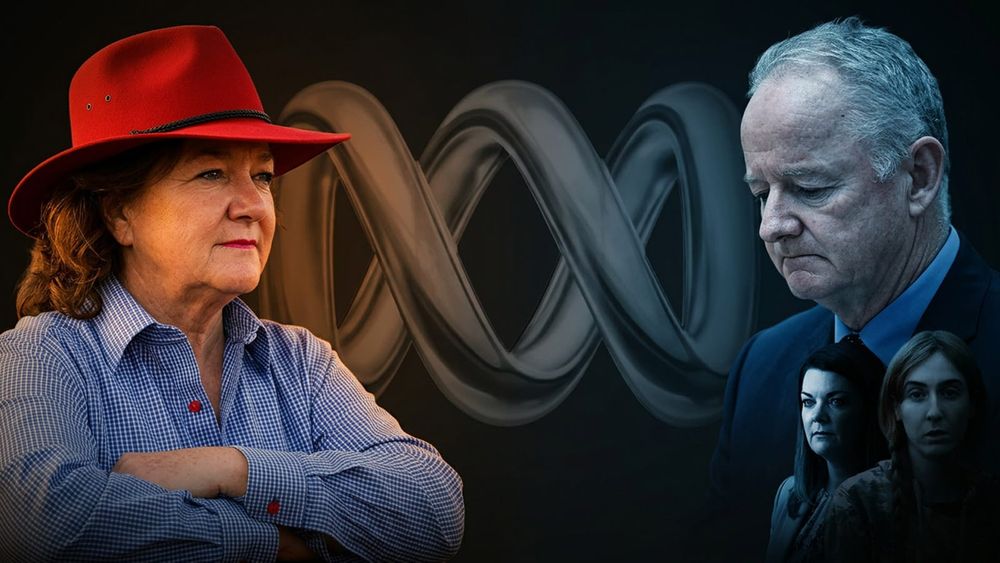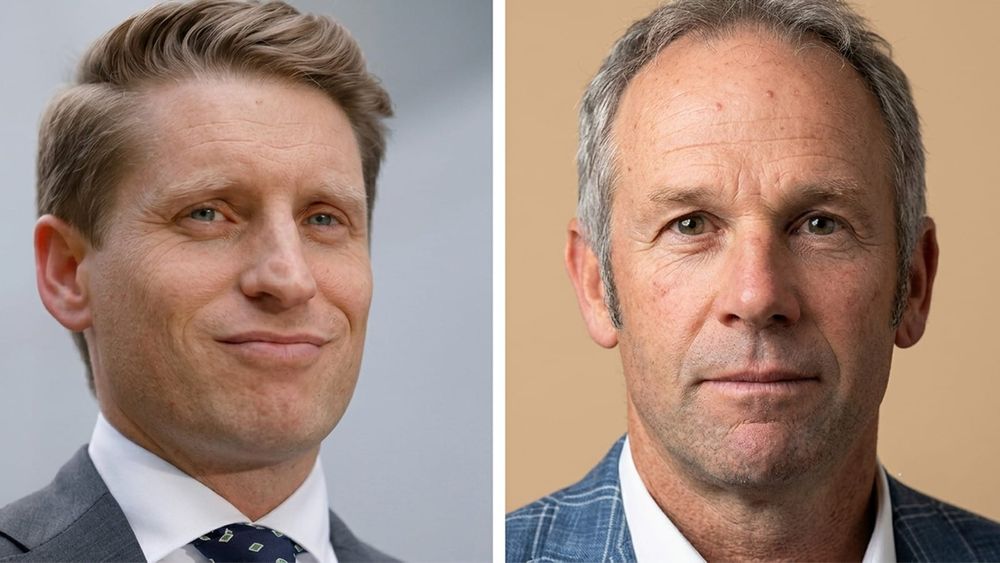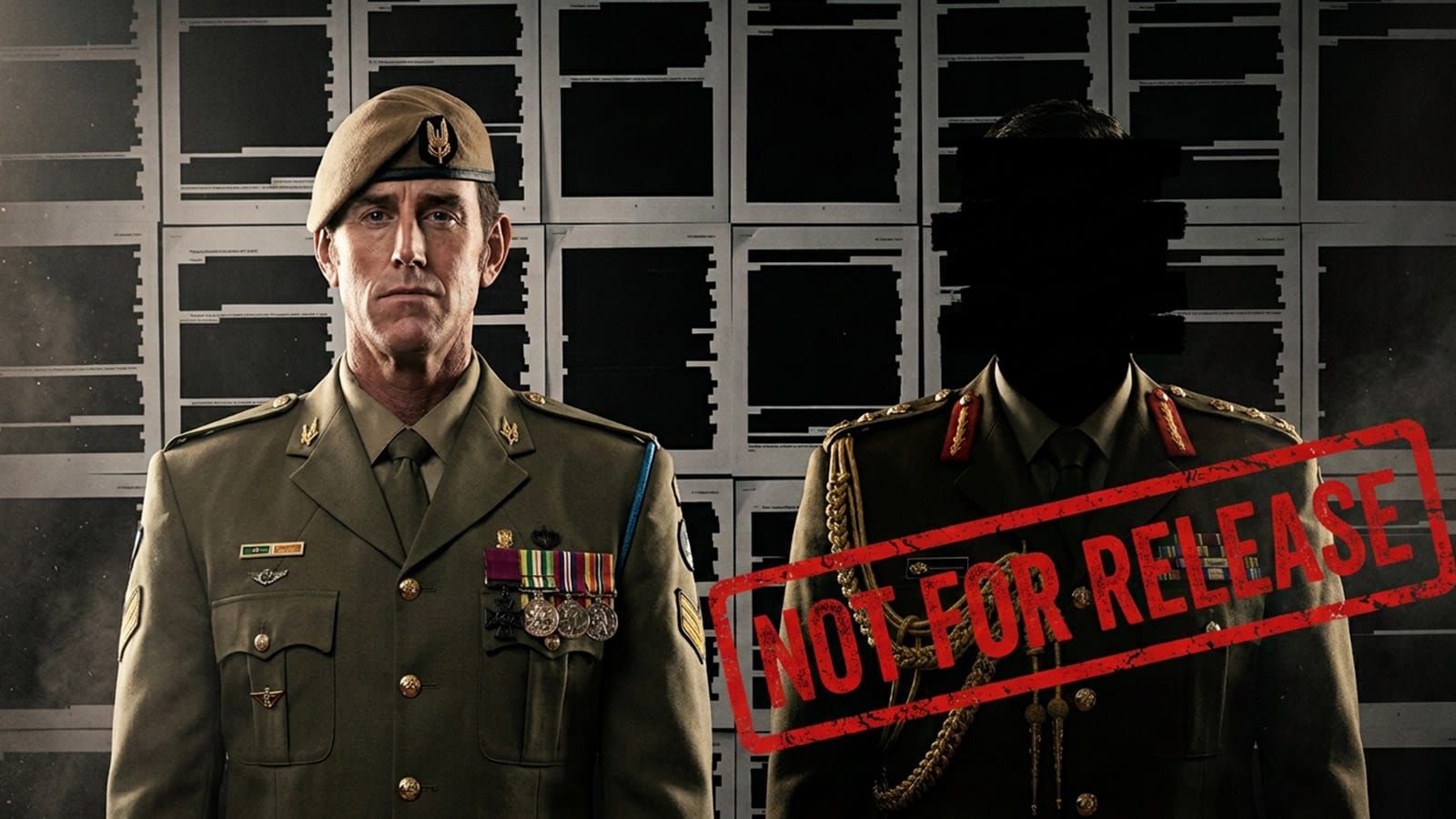
The Senate has voted to keep secret a report examining whether Australian commanders should have known their soldiers were allegedly murdering prisoners in Afghanistan, with Labor's 21 senators and three Coalition senators combining to defeat it.
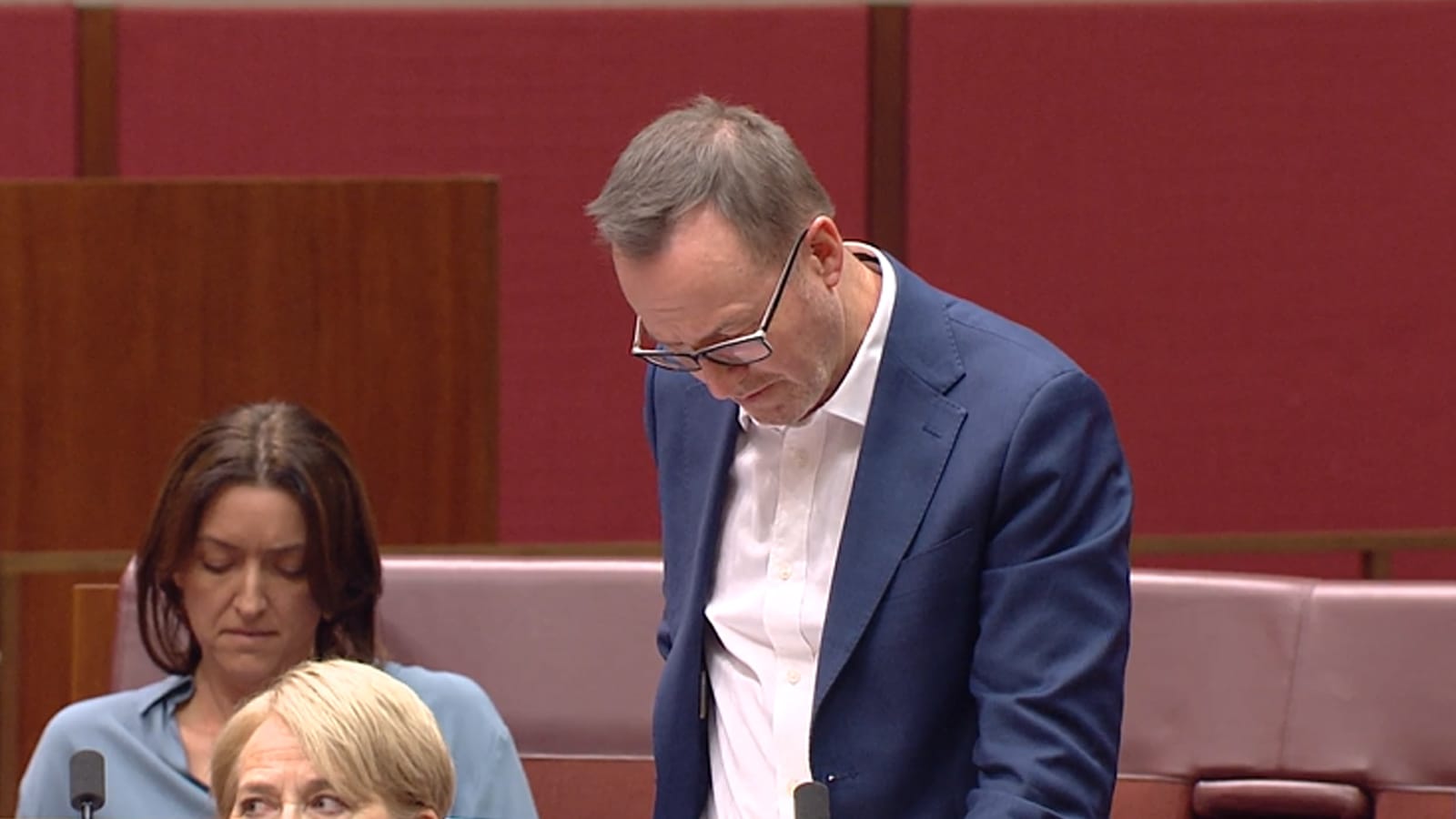
Greens senator David Shoebridge moved the order on Thursday 2 July, asking that the minister representing Defence Minister Richard Marles table a full copy by 28 July. The Senate divided at 12:02pm and rejected it, 24 votes to 15.
The report was commissioned in June 2021 by the Inspector-General of the Australian Defence Force, James Gaynor, on the orders of the then chief of the defence force, Angus Campbell. The Inspector-General runs Defence's internal watchdog, and it was his office that conducted the Afghanistan inquiry led by Major-General Paul Brereton.
Gaynor's directions establishing the review, which were obtained by The Australian, set its purpose as being to "review and analyse known information in order to inform future action including possible reform of command doctrine and leadership ethics". He instructed two unnamed assistant directors-general to find "whether there were any things that could have been indicators to alert tactical, operational or strategic commanders" that special forces soldiers might be committing serious misconduct.
It's the only official document that asks what Australia's generals should have seen.
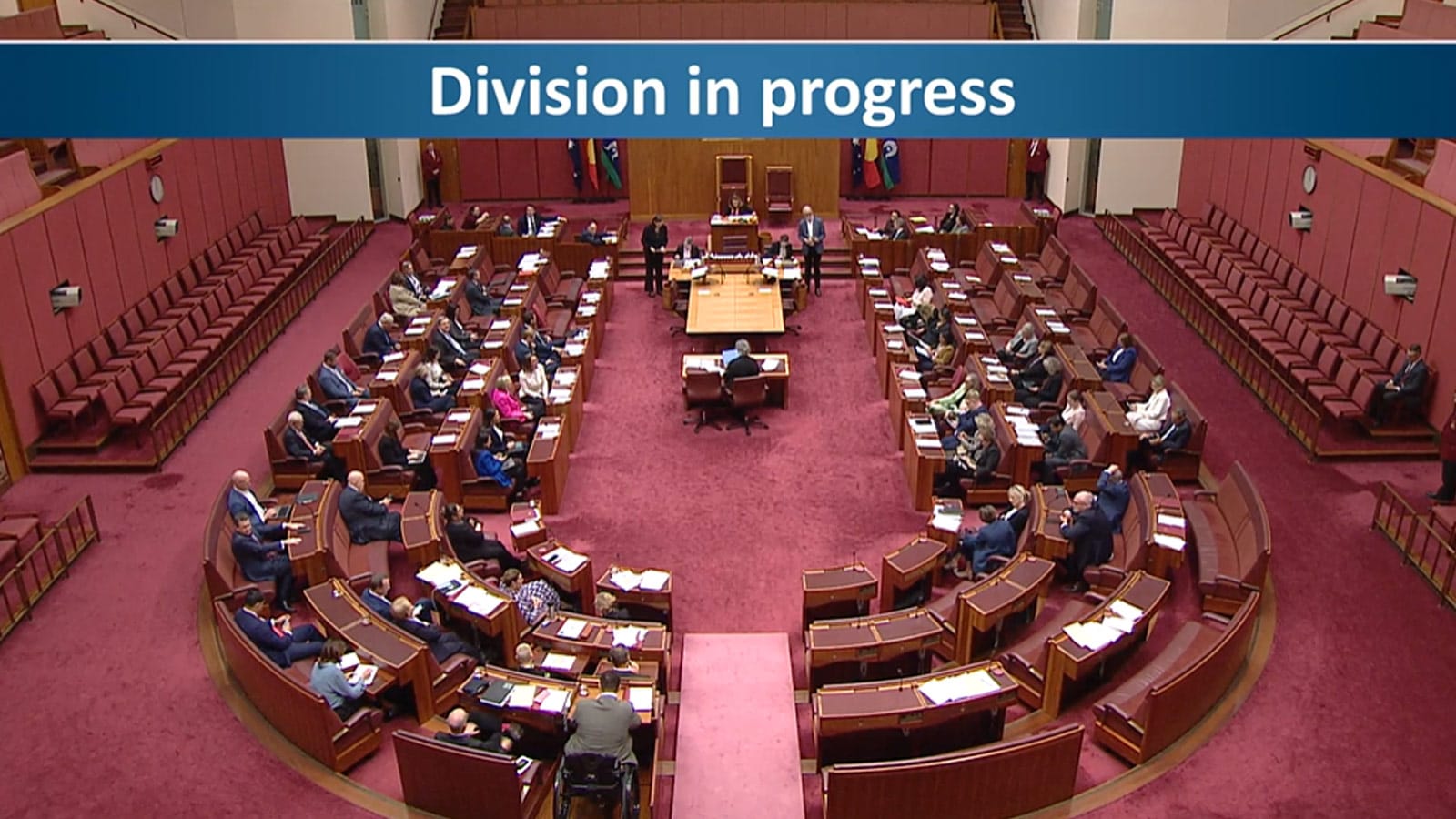
Three minutes after burying the war crimes report, the same senators voted to release a different Defence file
The division on the command accountability report produced 15 ayes and 24 noes, with no pairs recorded.
Three minutes later the Senate divided again. Shoebridge had moved a second order, aimed at the same minister, this time seeking the Defence reform study conducted by the interim National Armaments Director, Nadine Williams. That one passed, 33 votes to 21, with 18 Coalition senators voting in favour and another nine formally paired.
Those Coalition senators hadn't gone anywhere. Another 15 of them took no part in the 12:02pm division and then recorded votes three minutes later, which is why they don't appear in the list below. Senate President Sue Lines had told the chamber at 11:46am that any further divisions would carry one minute bells.
The two documents are different animals. Nadine Williams was appointed interim National Armaments Director on 2 July, the same day as the vote, to lead the government's overhaul of how Defence buys and delivers military equipment. Her study is a management review of that system and carries no security classification, while the war crimes report is classified and sits alongside two live prosecutions. Even so, the Coalition was willing to force Defence to hand over a document about how it spends money. In the same room, minutes later, it wouldn't do the same for a report on what commanders knew about the killing of prisoners.
Here is how all 39 senators voted on the war crimes report
| Party | Voted to release it | Voted to keep it secret |
|---|---|---|
| Australian Labor Party | 0 | 21 |
| Liberal Party | 0 | 3 |
| Australian Greens | 10 | 0 |
| One Nation | 3 | 0 |
| United Australia Party | 1 | 0 |
| Independent | 1 | 0 |
| Total | 15 | 24 |
| Voted to release it (15) | Voted to keep it secret (24) |
|---|---|
| Penny Allman-Payne, Greens, Qld | Michelle Ananda-Rajah, Labor, Vic |
| Ralph Babet, United Australia Party, Vic | Wendy Askew, Liberal, Tas |
| Sean Bell, One Nation, NSW | Tim Ayres, Labor, NSW |
| Mehreen Faruqi, Greens, NSW | Carol Brown, Labor, Tas |
| Sarah Hanson-Young, Greens, SA | Dorinda Cox, Labor, WA |
| Steph Hodgins-May, Greens, Vic | Lisa Darmanin, Labor, Vic |
| Nick McKim, Greens, Tas | Josh Dolega, Labor, Tas |
| Barbara Pocock, Greens, SA | Jonathon Duniam, Liberal, Tas |
| David Pocock, Independent, ACT | Don Farrell, Labor, SA |
| Malcolm Roberts, One Nation, Qld | Katy Gallagher, Labor, ACT |
| David Shoebridge, Greens, NSW | Varun Ghosh, Labor, WA |
| Jordon Steele-John, Greens, WA | Nita Green, Labor, Qld |
| Larissa Waters, Greens, Qld | Karen Grogan, Labor, SA |
| Peter Whish-Wilson, Greens, Tas | Maria Kovacic, Liberal, NSW |
| Tyron Whitten, One Nation, WA | Sue Lines, Labor, WA |
| Jenny McAllister, Labor, NSW | |
| Deborah O'Neill, Labor, NSW | |
| Helen Polley, Labor, Tas | |
| Tony Sheldon, Labor, NSW | |
| Glenn Sterle, Labor, WA | |
| Jana Stewart, Labor, Vic | |
| Charlotte Walker, Labor, SA | |
| Jess Walsh, Labor, Vic | |
| Ellie Whiteaker, Labor, WA |
Tasmanian Liberal Jonathon Duniam, who is Manager of Opposition Business in the Senate, sought leave to make a short statement before the question was put. President Lines granted him a minute.
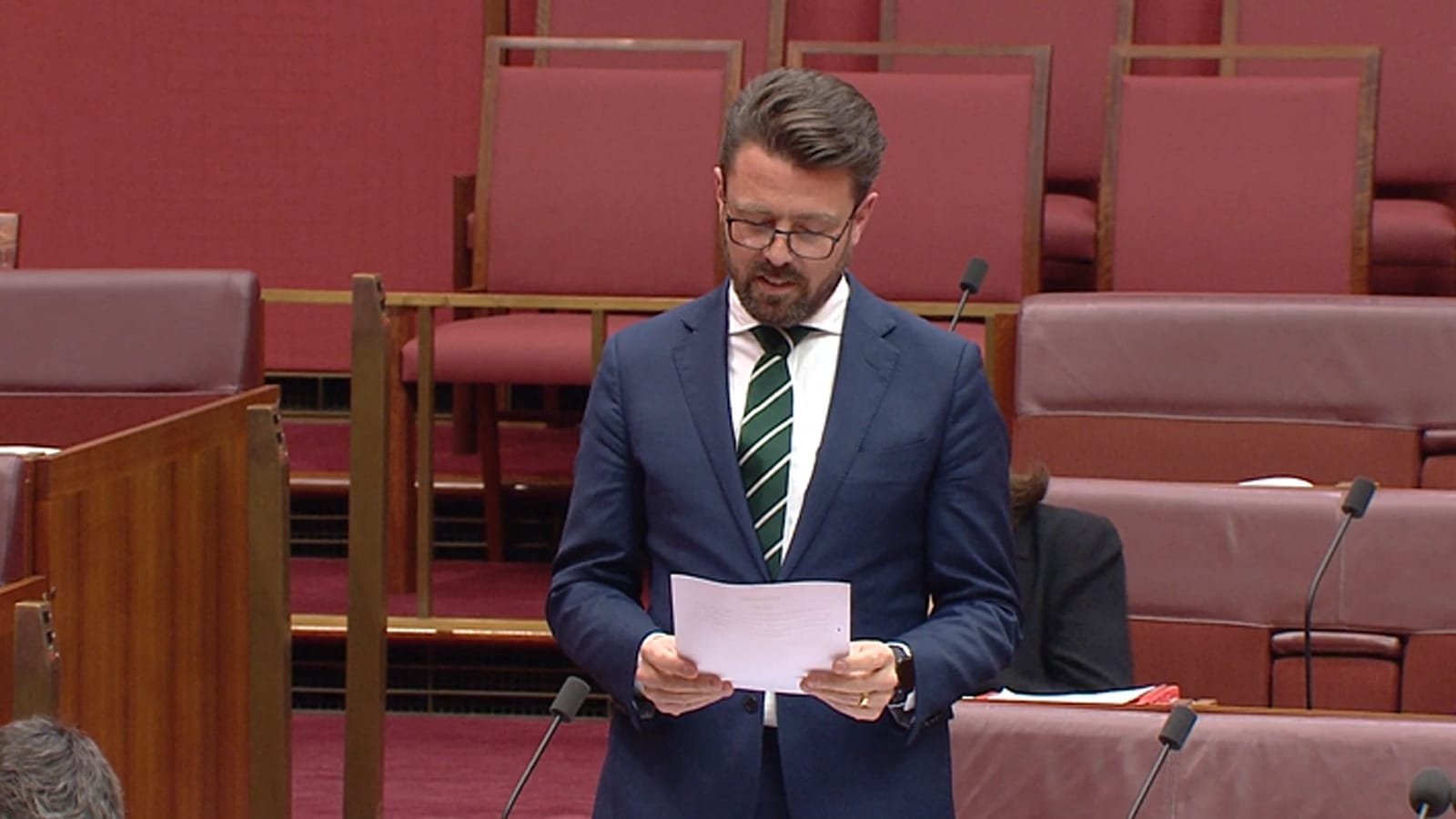
"The coalition is advised that the evidence within the report is highly classified and goes into operational matters within the ADF. Releasing it could impact and jeopardise ongoing investigations the Office of the Special Investigator is leading into allegations of war crimes."
No government senator spoke to the motion. General business orders are frequently put without any contribution from the government, so there's nothing unusual in that. It does mean Labor has never explained the vote in the chamber.
Duniam had been more forthcoming four minutes earlier, on a separate order about nuclear waste. There he told the chamber the Coalition was "not opposed to the release of the document, in principle", but was waiting on a Federal Court matter. He offered no equivalent qualification on the war crimes report.
Defence told The Australian the secrecy runs through every page of the document
Defence twice refused freedom of information requests from The Australian's foreign affairs and defence correspondent Ben Packham, arguing the report holds information affecting national security, including "sensitive information about tactics, techniques and procedures of special forces in Afghanistan".
When the paper appealed and asked for portions rather than the whole thing, Defence answered that the sensitive material was "pervasive and inextricably intertwined throughout the document". It added that release could affect "ongoing criminal matters", despite Gaynor having barred the authors from identifying or interviewing any witnesses.
Rex Patrick, the former South Australian senator who has spent years pursuing federal agencies through freedom of information litigation, called the refusal "clearly wrong".
"How can a report into the culture of our special forces and the linkages between that culture and deviant or unlawful behaviour be a military secret? Confronting for leadership? Yes. Embarrassing? Yes. Military secret? No."
Patrick accepted that parts of it might have to stay back, but said "a public version must be made available", and that a failure to do that would look like a cover up to serving members of the ADF and to the public.
Paul Brereton ruled the generals weren't accountable, then quit the corruption watchdog over his Defence ties
Brereton's November 2020 findings held that commanders carried a "moral command responsibility" for what happened beneath them, while ruling that accountability "does not extend to higher headquarters". That's the conclusion the secret review was written to test, and it remains contested. The Commonwealth Criminal Code makes commanders criminally liable for their subordinates' war crimes where they knew about them, or were reckless as to whether they were happening.
Brereton went on to become the inaugural National Anti-Corruption Commissioner in July 2023. He holds the rank of Major-General in the Army Reserve and, as reporting through late 2025 established, he kept working for the Inspector-General's office while running the corruption watchdog. He had been granted an extension to stay in the Reserve past the usual age so he could continue supplying what Defence described as critical capability to the Afghanistan inquiry. His conflict of interest declarations in 2023, 2024 and 2025 made no mention of that work, and he updated them only after the arrangement was reported.
In December 2025 he told a hearing he had consulted the Inspector-General's office about his own Afghanistan inquiry roughly 22 times since taking the NACC job, and said there was no conflict. He had already stepped away from NACC matters involving Defence on 31 October 2025, in a statement published quietly in a monthly website update.
He resigned on 25 May 2026, three years into a five year term, with his departure taking effect on 6 July.
"The ongoing focus on matters relating to me personally rather than the Commission's work is drawing attention away from the Commission's core purpose. While I will continue to resist any suggestion of impropriety, I have decided that it is time ... to step aside."
Separately, in 2024, the Inspector of the NACC found Brereton had engaged in officer misconduct over his handling of the Robodebt referrals, a matter unconnected to Afghanistan.
The same morning, the Senate also refused to release the paperwork on who replaces Brereton
At 11:44am, 18 minutes before the war crimes vote, Shoebridge moved an order seeking all documentation on the applications, departmental review, panel assessments and interviews for the next National Anti-Corruption Commissioner or Deputy Commissioner.
That one failed as well, 25 votes to 15, carried down by the same combination of Labor senators and three Coalition senators.
Richard Marles stripped medals from fewer than 10 officers and has never named one of them
Marles closed off the government's formal response to the Brereton inquiry in September 2024, announcing that command medals would be taken from fewer than 10 current and former officers. None have been publicly identified.
Retired Major-General Roger Noble, one of the army's most operationally experienced commanders, told The Australian recently that Brereton had erred in clearing senior officers including Campbell. "I don't agree with the premise that (the chain of command) breaks in the middle," he said, adding that Campbell had been in the chain of command, and that anyone in it carries responsibility for what subordinates do.
Victoria Cross recipient Ben Roberts-Smith and former SAS soldier Oliver Schulz are each facing a charge of the war crime of murder following the Brereton inquiry. Both matters are before the courts, and Roberts-Smith is due back for a hearing in September after national security arguments delayed his case. The Office of the Special Investigator, whose work Duniam cited, was also the subject of a suspected leak referral earlier this year.
One Nation's senators voted to release the report and were beaten by nine votes
The 15 senators who voted for release were the 10 Australian Greens, three One Nation senators, independent David Pocock and United Australia Party senator Ralph Babet.
Sean Bell, Malcolm Roberts and Tyron Whitten all voted to force it out. No pairs were recorded for the division.
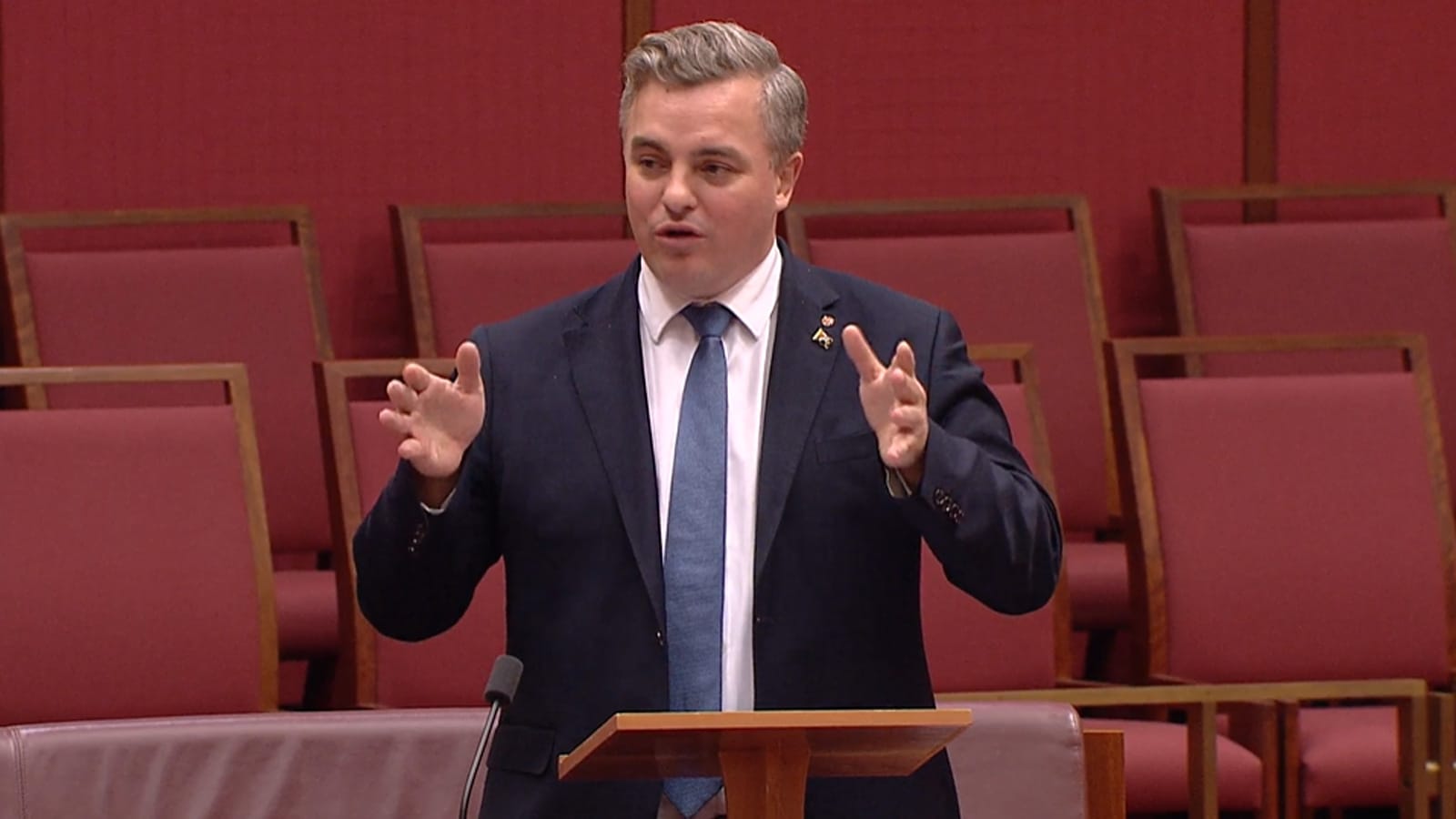
Senate crossbencher Jacqui Lambie, who also did not vote in the division, told The Australian the refusal reflected a culture in which commanders would not accept responsibility. She said it was "clear that there have been, and still are, cultural issues in Defence", and that the leadership should have seized the chance to show it was fixing them and rebuilding trust.
Shoebridge argued the secrecy was itself the story. "If the report says the leadership knew nothing, then why hide it?" he said, arguing that if the leadership had known, keeping it secret amounted to a cover up and a scandal, and that either way it had to be released. He has previously pressed Defence on the rules of engagement that governed Australian operations in Afghanistan.
Any government could release this report, and both major parties have decided not to
Nothing in law makes the document permanently secret. Brereton's own report was published in redacted form in November 2020, so a public version of a review produced by the same office, about the same inquiry, is plainly achievable.
A government that wanted it released could table it in parliament, direct Defence to prepare a public version, or decline to claim the exemptions it currently relies on. The decision sits with whoever holds the Defence portfolio, and any government that wanted to could undo it. If One Nation were ever to form government, it could release the findings on the same authority, because that power belongs to the government of the day and to nobody else.
Duniam did raise a genuine constraint. The Office of the Special Investigator still has active work, and two prosecutions are running. Any release would have to be handled so it doesn't cut across those matters, which is what the redactions in the 2020 report were for.
On 2 July, the two parties that have taken turns governing Australia for more than a century had the numbers to settle the question, and they settled it by keeping the report shut.