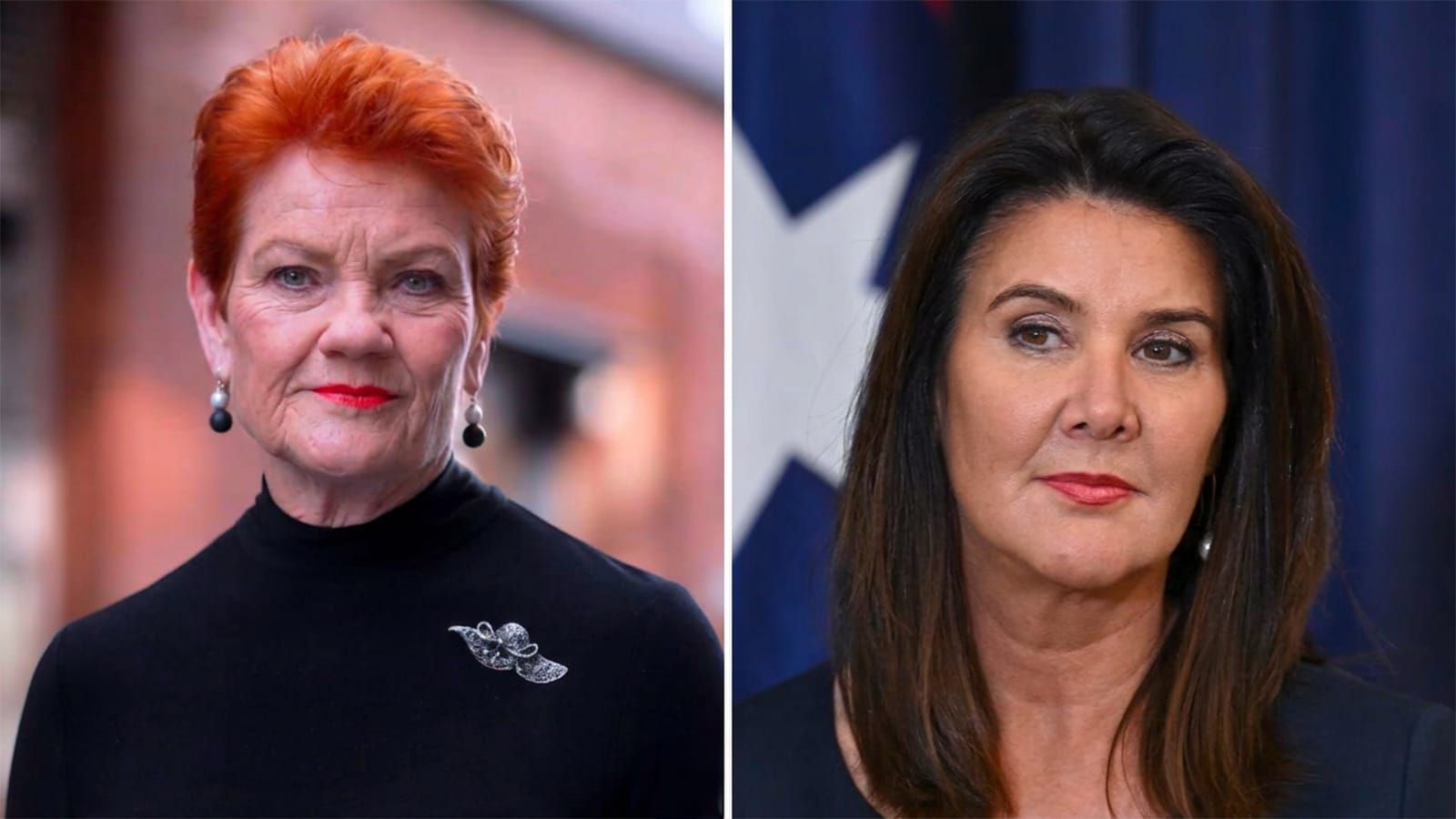
Deputy Liberal leader Jane Hume told Australians today that Pauline Hanson "should know" the Coalition doesn't need One Nation's votes to pass its ISIS laws. It was a neat attempt at a put down with one problem: that isn't what Hanson offered. The One Nation leader's letter, sent to Coalition leader Angus Taylor on Thursday night, asks his party to sit down with hers and draft tougher legislation than the bill Hume was defending, with One Nation's votes thrown in and the credit given away for free.
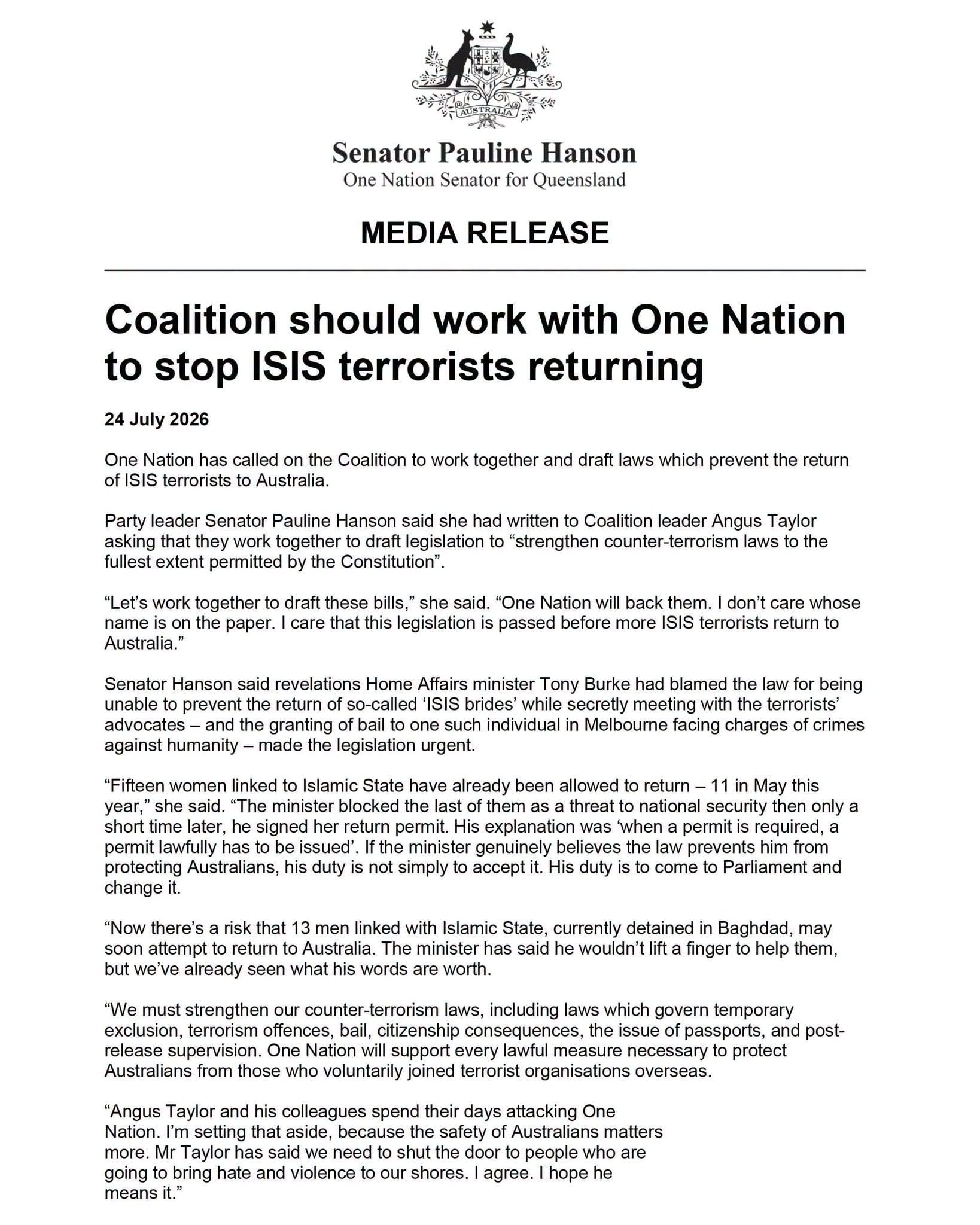
"Let's work together to draft these bills," the One Nation leader said in a media release on Friday.
"One Nation will back them. I don't care whose name is on the paper. I care that this legislation is passed before more ISIS terrorists return to Australia."
It's a striking offer from a party leader riding ahead of the Coalition in the polls, and it comes weeks after Hanson returned from Britain plainly rattled by what she saw there. She walked Luton with Tommy Robinson and called it a warning for Australia's future, and she told Liz Truss Britain is worse off than Australia, "and we're not far behind".
The UK trip earned her days of sneering coverage at home, but its relevance keeps landing on Australia's doorstep. In the same week her ISIS letter reached Taylor, a mosque complex for more than 2,500 worshippers was under construction in Brisbane, approved not by any elected government but by a planning court, in a suburb where Islam is now the largest religion.
The pattern Hanson saw in Luton, of change arriving faster than anyone voted for, is the pattern she came home describing. The letter to Taylor reads as that alarm turned into action: she's so concerned about where Australia is heading that she's prepared to hand a rival party the pen, and the credit.

Tony Burke signed the permit he said he'd refused
The problem is Home Affairs minister Tony Burke. Fifteen women linked to Islamic State have already been allowed to return, 11 of them in May this year, Hanson said, and Burke blocked the last of them as a threat to national security before signing her return permit anyway. His explanation, as he told reporters: "when a permit is requested, a permit lawfully has to be issued."
Hanson's answer is blunt. If the minister genuinely believes the law prevents him from protecting Australians, his duty isn't to accept it, it's to come to Parliament and change it.
She also pointed to Senate documents showing Burke secretly met the returned women's advocates, asking a public servant to leave the room, and to the Melbourne bail decision that let accused ISIS slave owner Kawsar Abbas walk free despite facing Australia's first crime against humanity charge.
She didn't have to wait long for the next example: on Monday, returned ISIS bride Rayann El Houli was granted bail on terrorism charges, released on conditions that include a ban on contacting convicted terrorist Abdul Nacer Benbrika.
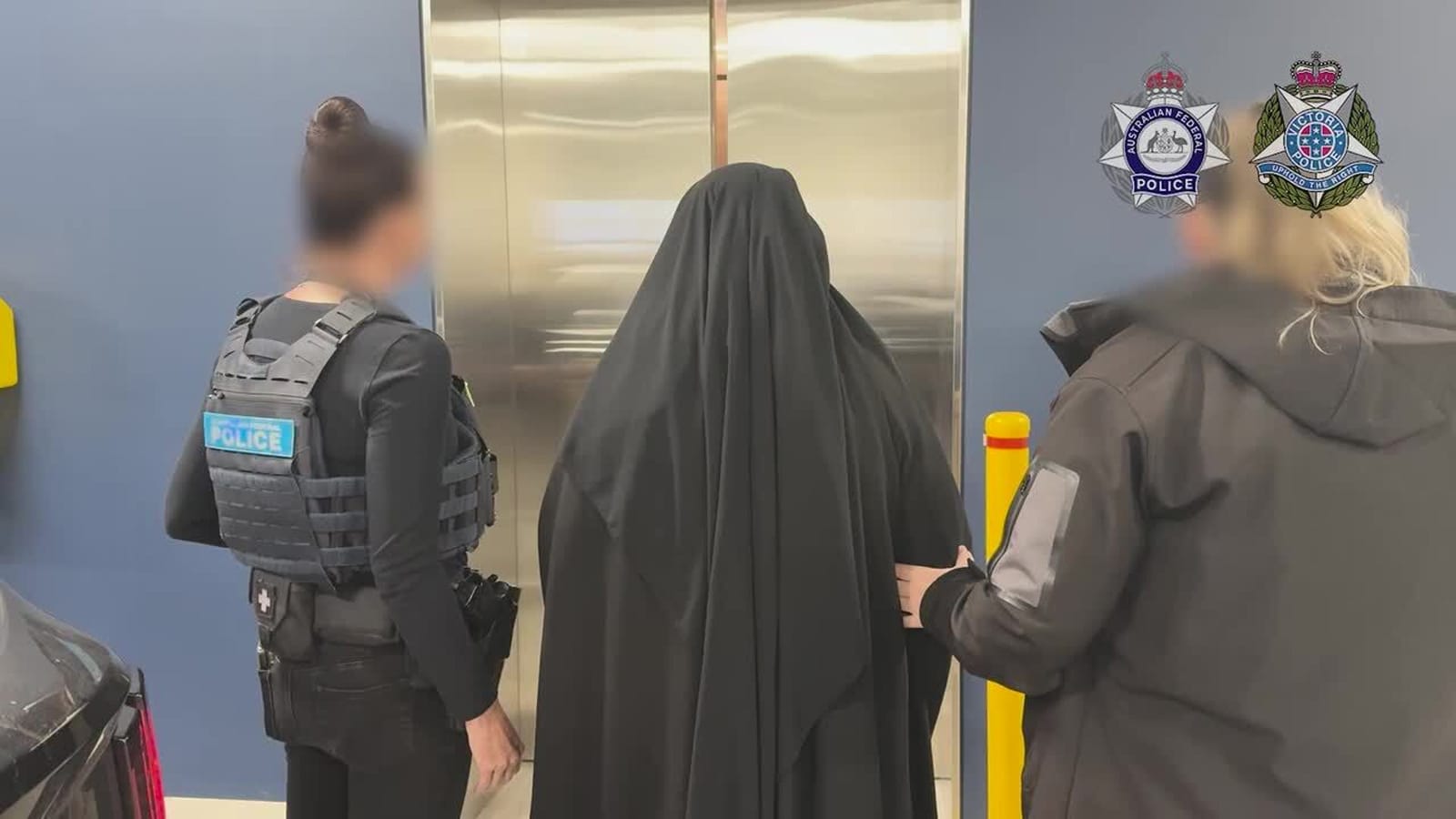
Thirteen men in Baghdad, including Doctor Jihad
The next wave is already visible. Thirteen Australian men linked to Islamic State are detained in Baghdad and could seek repatriation, among them Perth-born Tareq Kamleh, the ISIS propagandist known as Doctor Jihad. Burke has said he wouldn't lift a finger to help them, but as Hanson put it, "we've already seen what his words are worth."
Her list of fixes covers temporary exclusion orders, terrorism offences, bail, citizenship consequences, passports and post release supervision. "We will support every lawful measure necessary to protect Australians from those who voluntarily joined terrorist organisations overseas," her letter reads.

Jane Hume answered a question Pauline Hanson never asked
Taylor has spent months attacking One Nation, warning a One Nation government would mean an "eternity of pain". Hanson says she's setting that aside.
"Mr Taylor has said we need to shut the door to people who are going to bring hate and violence to our shores. I agree. I hope he means it."
The Coalition's answer came Friday morning, and it wasn't a thank you. Deputy Liberal leader Jane Hume told Sunrise the Coalition had "led the fight against bringing these ISIS sympathisers home" and already introduced its legislation back in March. March 2026, that is. From opposition.
The Coalition governed for nine years. In that time it watched Islamic State rise, recruit Australians and fall, and never once wrote laws tough enough to keep its fighters out and sound enough to survive the High Court. By Labor minister Mark Butler's own count, offered on the same program, "45 male ISIS fighters returned before we came to Government". The bill Hume points to landed in March, four years after her party lost the power to pass anything. With that record behind her, she reached for the numbers instead:
"It's not One Nation's votes that we need to pass this legislation, and Pauline should know that after 30 years in politics. We simply don't have the numbers even with One Nation. It's Labor's votes that we need."
Except that's an answer to a question Hanson never asked, unless she didn't understand what was in Hanson's media release. Her letter isn't an offer of Senate numbers for the Coalition's March bill. It's an offer to sit down and draft new legislation that goes further, "to the fullest extent permitted by the Constitution", covering exclusion orders, bail, citizenship and post release supervision. Hume turned an invitation to write stronger laws into voting numbers, and skipped the part where Hanson had already conceded the credit:
"I don't care whose name is on the paper."
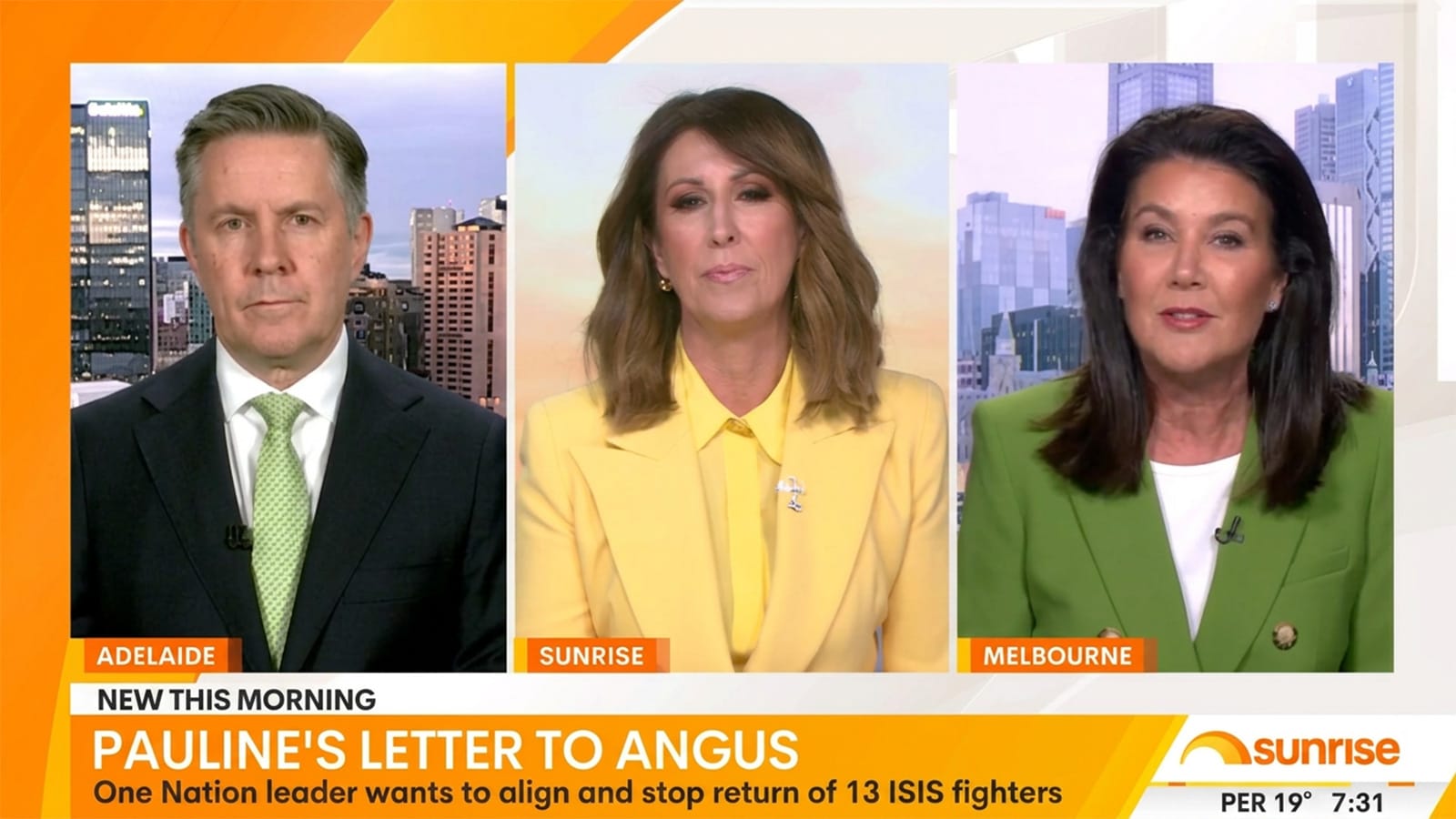
The March bill turned out to be narrower than Hume's fighting talk anyway. Pressed by host Natalie Barr on what it actually does, Hume explained it "would stop third parties bringing people back to Australia", the passport and travel help she claims the ISIS brides received. Barr saw the gap straight away: "If they could get themselves on a plane, they could still come, even with your laws." A bill about travel agents isn't a bill that shuts the door. Hanson's letter asks for the laws that would, on exclusion orders, terrorism offences, bail, citizenship and passports.
There's a longer history being skated over too. Hanson has been warning about who Australia lets through its doors for three decades, and for most of them both major parties dismissed her for it. It was the Coalition's own 2019 exclusion order laws that built the rule Burke now leans on, that a return permit must be issued once requested, and the Coalition governed for three more years without fixing it. Now the woman they ignored offers to help repair their handiwork, and Hume is presenting the Coalition as the ones who "led the fight".
And what did leading the fight actually look like? Both parties have had a swing at keeping convicted terrorists out of Australia, and both fell over the same constitutional tripwire. Here's the record, Abbott to Albanese, and why every attempt failed:
| Labor & Liberal Parties | What they did | Why it failed |
|---|---|---|
| The High Court's job, first | The High Court doesn't write laws and doesn't take sides. Its job is to uphold the Constitution, the rule book that sits above every parliament. The rule that decided this case is simple: only judges can punish people. Never politicians. | It can't be overruled by any government, Liberal or Labor. The only thing that beats the Constitution is changing the Constitution, and that takes a referendum. |
| Coalition, Abbott, 2015 | Wrote the first citizenship stripping law during the ISIS panic. Legal experts warned it let a politician hand out punishment, which the Constitution forbids. | They knew the risk and gambled the High Court would let it stand. It didn't. Struck down in 2022. |
| Coalition, Morrison, 2020 | Rewrote the law so the Home Affairs Minister could strip citizenship personally. Peter Dutton used it on Benbrika and promised to deport him to Algeria. | Same gamble, same result. Struck down 6 to 1 in 2023, in Benbrika's own case. His citizenship came back and the deportation died with it. |
| Labor, in opposition | Voted for both Coalition laws as they passed. | Co-owns the failure. Neither party fixed the known flaw before using the law on a real case. |
| Labor, in government, 2023 | Did try to keep him stripped: Labor's government fought the case in the High Court and lost in November 2023. It then passed its own version of the law, where the sentencing judge strips citizenship instead of a minister. | The court fight was unwinnable because Dutton's decision was invalid from day one. Labor's own law is valid, but it only works at sentencing. Benbrika was sentenced in 2009, so it can never reach him. |
| Labor, November 2025 | Benbrika's supervision order, the last restraint on him, expired and was not replaced. | Whether the government even applied to extend it has not been made public. This is the one failure the Constitution didn't force on anyone. |
| Why no referendum | Changing the Constitution needs a yes vote nationally, plus a yes in at least 4 of the 6 states. Only 8 of 45 referendums in Australia's history have ever passed. | Neither party has put citizenship stripping to the people. Governments don't run referendums they might lose, so the rule stays as it is. |
The Benbrika ruling is set out in the High Court's own judgment summary, and legal academics say both stripping laws were known to be constitutionally doomed when the Coalition wrote them, with Labor's backing. That's the quiet admission buried in Hanson's letter, which asks only for laws "to the fullest extent permitted by the Constitution".
Turning to Health Minister Mark Butler beside her, Hume said: "It's up to Mark to tell us why we can't get this done because the legislation is there."
Butler's reply was to swat the offer away, claiming the government doesn't "know what the proposed laws are" and calling it "one of many sucker balls that are going to be bowled at Angus Taylor by Pauline Hanson between now and the next election."
Which raises the question neither major party has even mentioned. If the Constitution is genuinely the ceiling, if ministers can't strip citizenship and permits "lawfully have to be issued", then the honest fix isn't another bill destined for the High Court. It's putting the question to the Australian people at a referendum and resolving, once and for all, whether someone who leaves this country to join a terrorist army has a right to come back. Both parties have had 30 years to ask it. Neither has.
So the door Hanson wants shut stays open. An offer to draft stronger laws is on the table, one major party calls it a sucker ball and the other pretends it was never made. Hanson's letter puts the deadline plainly: she wants it passed, she wrote, "before the gates of that Baghdad prison open."