Victorians will fill in the upper house ballot paper differently on 28 November. The single 1 above the line, which is how most people have voted their whole lives, won't be enough any more.
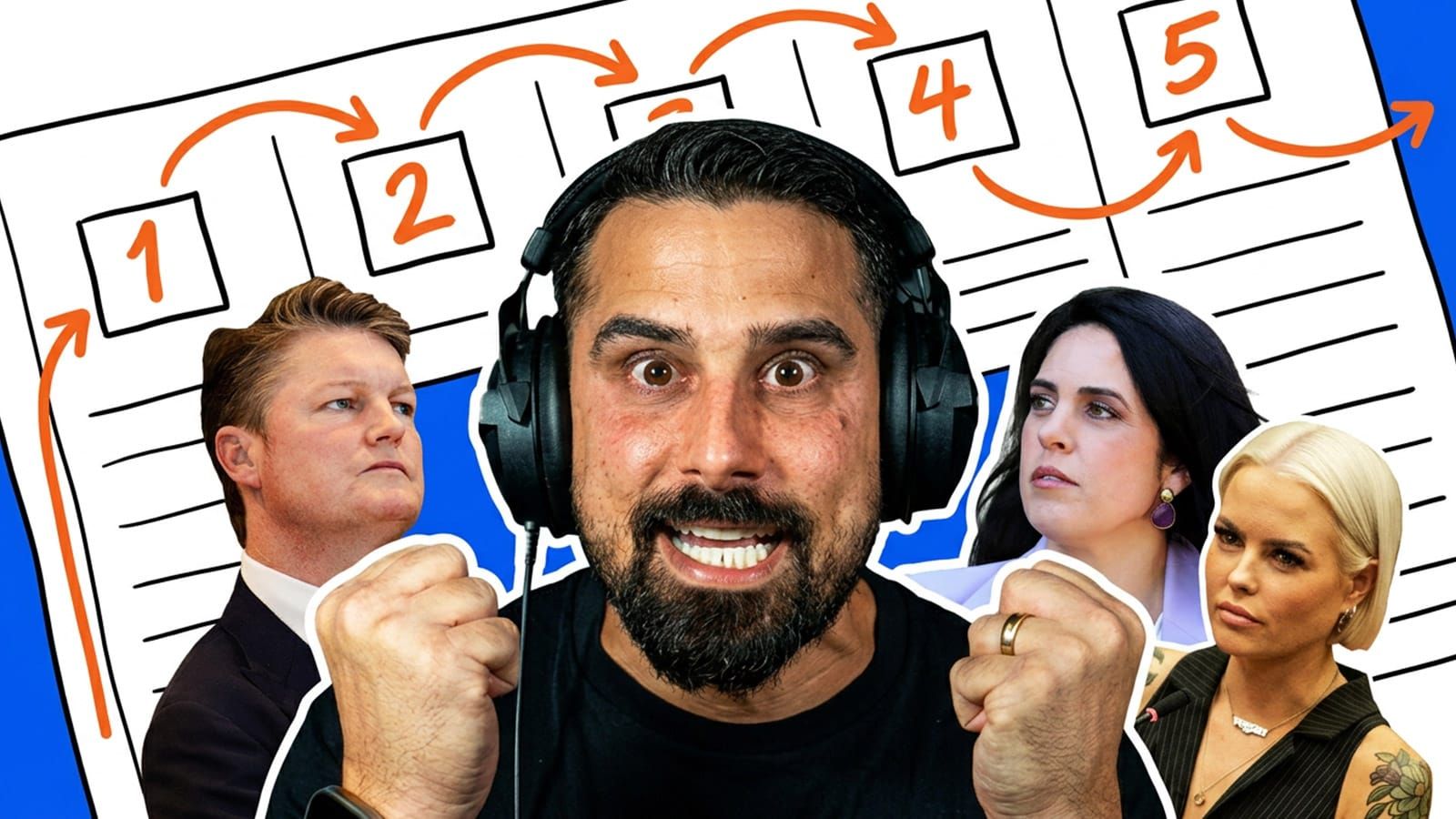
Parliament abolished group voting tickets on 11 August, and from now on you have to number at least five boxes above the line, with those numbers counting as your preferences.
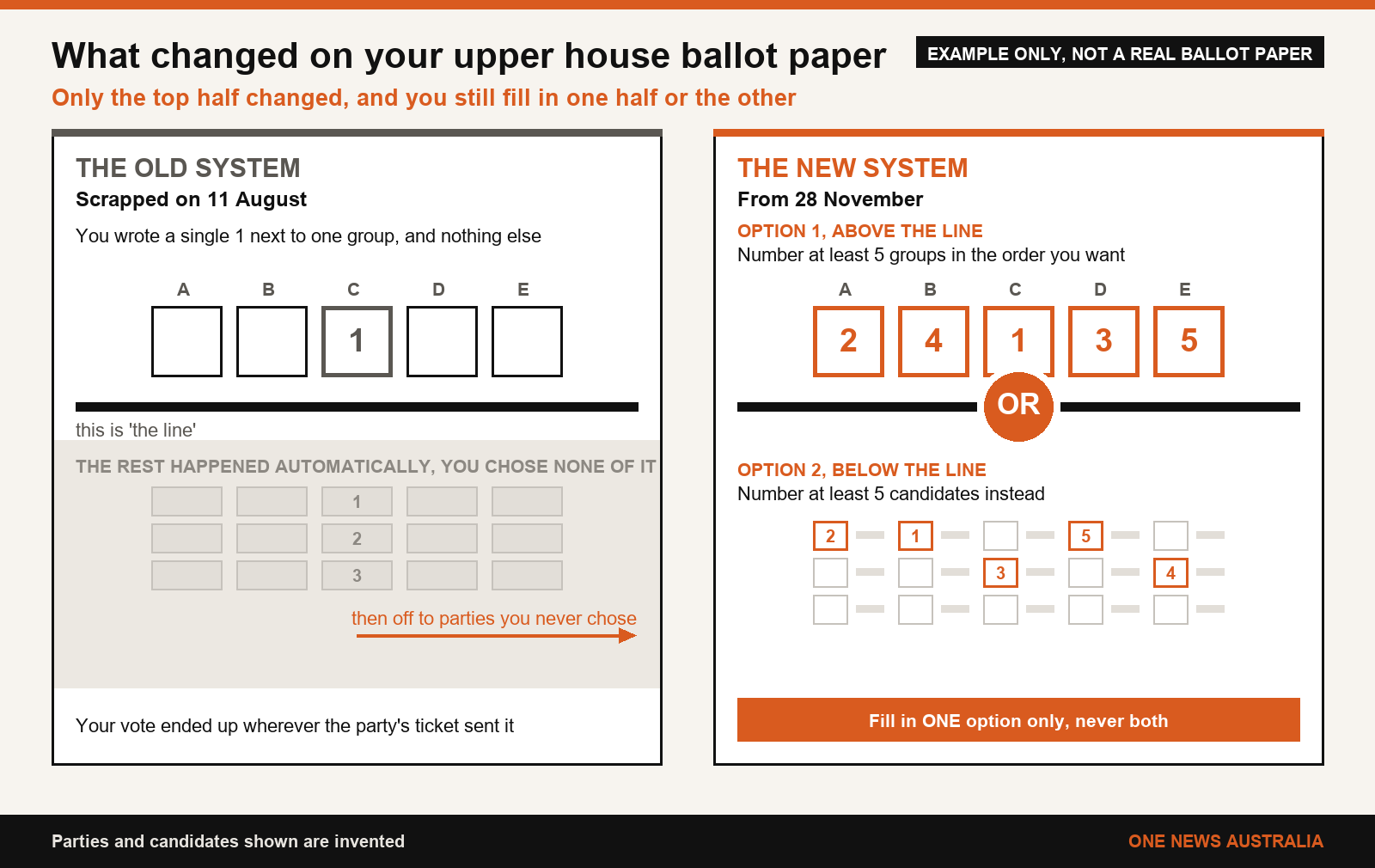
The Victorian Electoral Commission hasn't caught up with the change. Its own page on how to fill out a ballot paper still tells voters to write a single 1 above the line and leave the rest blank. The bill hasn't received assent yet, so the commission isn't wrong to wait, but if you check the official instructions today they'll tell you to vote the old way.
🚨 This changes everything...
— Avi Yemini (@OzraeliAvi) August 12, 2026
Turns out politicians REALLY don’t like it when their own rigged system is about to be used against them 😂
The Free Palestine Party triggered one hell of a meltdown in Parliament.
The excuses. The panic. The cope.
👉 https://t.co/HDgIiHQMbP pic.twitter.com/2Orz3gvAPz
Why Parliament changed it
Until this month, a 1 above the line handed your preferences to a list the party had lodged with the commission months before polling day. You couldn't see that list, and it decided where your vote went once your first choice was dealt with.
That's how people won seats on very small votes. At the 2022 election a party called Restore Democracy Sack Dan Andrews collected votes from Victorians who wanted the Premier gone, and its ticket passed those preferences to five parties none of those voters had chosen.
More than 90% of Victorians voted above the line at the last election, the chamber was told during the debate, so the change affects almost everyone who votes.
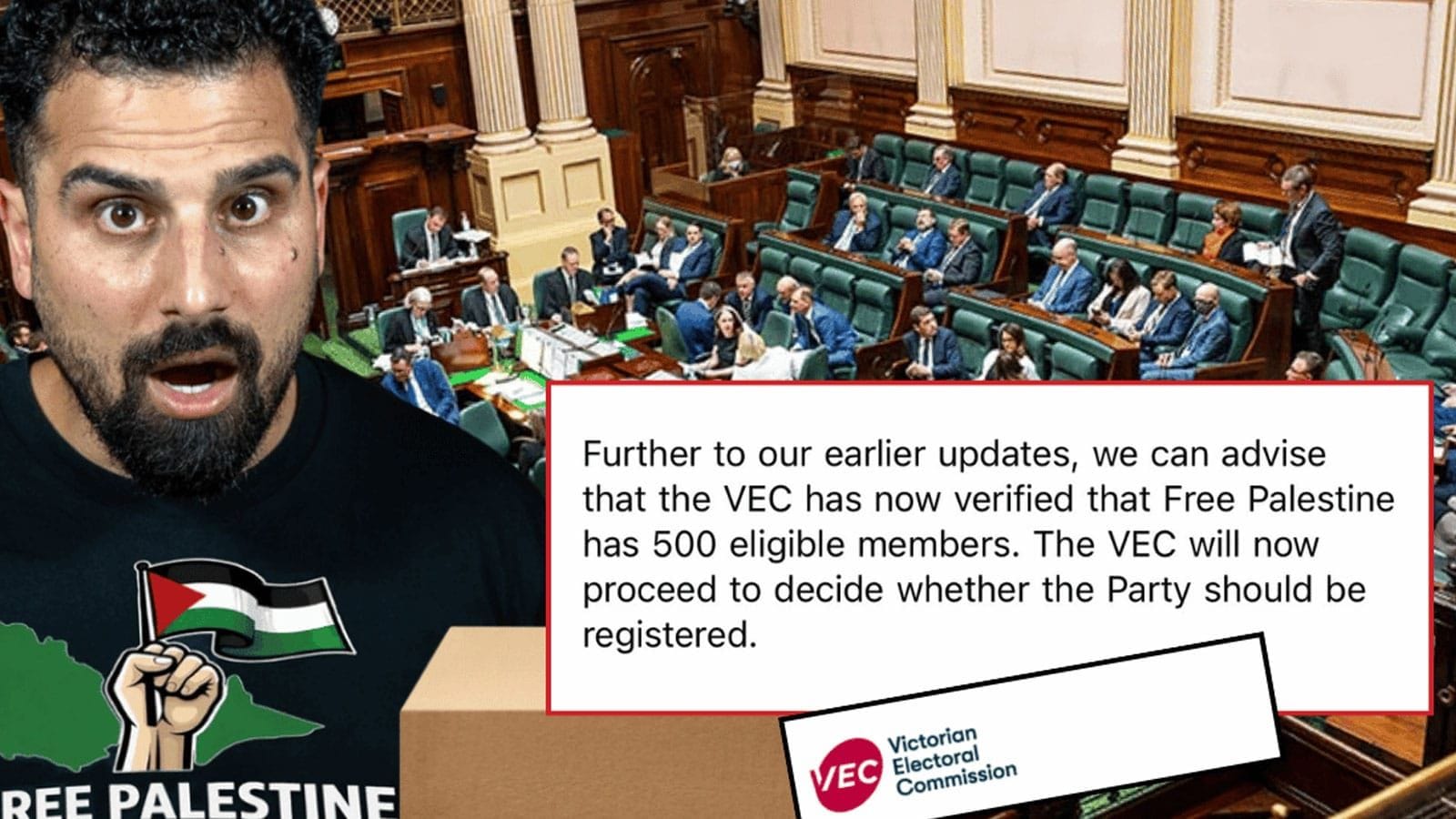
The system finally broke when Rebel News reporter Avi Yemini registered a Free Palestine Party to run the same trick in reverse and send left wing preferences to One Nation. The Legislative Council voted the tickets out 33 to 4, and the government says the party had nothing to do with the timing.
How to fill in the upper house paper above the line: put 1 to 5 next to five different parties of your choice
Above the line is the row of boxes running across the top of the paper, with one box for each party standing in your region, plus a box for any independents who have chosen to run together. Put a 1 in the box next to the party you want most, a 2 next to your second choice, and keep going until you have numbered at least five of them. You can number more than five if you want to, and every number you write is counted.
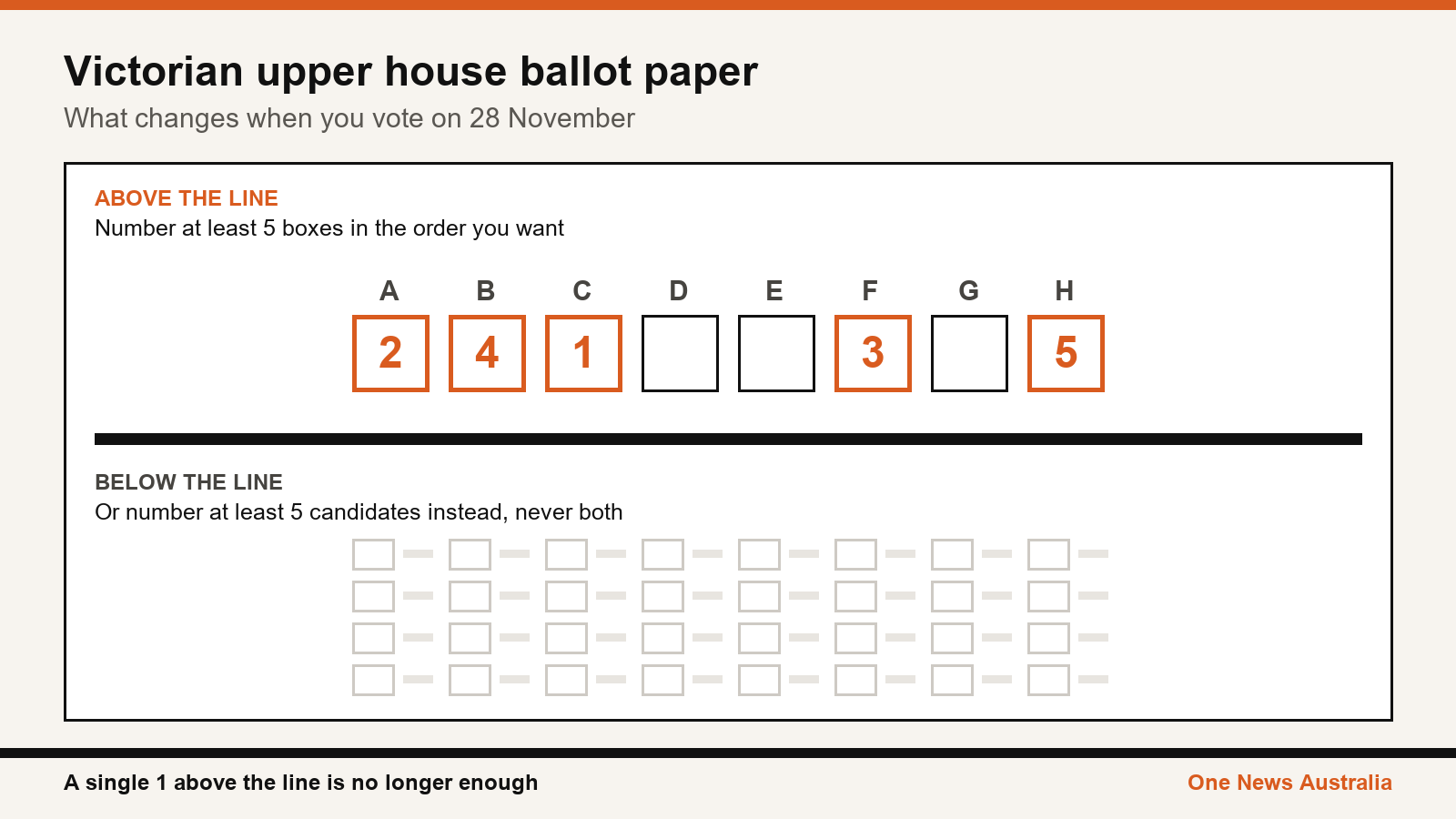
Your vote stays with your first party until it can't help them any further, then moves to your second, and then your third, in the order you wrote.
Numbering the other four boxes cannot hurt your first choice. Your 2, 3, 4 and 5 only come into play once your first choice has either won a seat or been knocked out, so all they decide is where your vote travels after that.
Parties will hand you a how to vote card at the polling booth suggesting the order they want, and Ingrid Stitt told Parliament that a card can show you 1 to 5 above the line or 1 to 5 below the line, though it cannot mix the two. You're free to ignore it and number the boxes however you like, but if you want to back your first choice all the way, their card shows where they would send your vote after it leaves them.
Below the line: nothing has changed
If you'd rather choose individual candidates instead of parties, number at least five of them in the order you want, which is the same as it has always been. You vote above the line or below it and never both, which is how it has always worked.
A tick counts, a circle doesn't
If you make a mistake, your vote will probably still count, because Minister Ingrid Stitt told Parliament that if you number 1, 2 and 3 and then skip a number, your vote is counted up to the break and recorded as formal.
A tick or a cross is read as a 1, the same as at a federal election, but a circle isn't. David Limbrick pressed the minister on that in the chamber, pointing out that in Japanese and Chinese a circle means you're choosing something while a cross means you're rejecting it. Stitt replied that Victoria had modelled the rules on the Commonwealth provisions, which recognise only a tick or a cross.
You don't have to use ordinary numerals either, because Roman numerals count, Stitt said, as long as what you meant is clear.
Victoria is still the hardest upper house in the country to win
Scrapping group voting tickets changed where your preferences go, but it didn't change how hard it still is to win a seat.
Victoria elects its upper house in eight regions of five members each, so a candidate needs 16.7% of the vote in their region, which is the highest bar in Australia. The Senate quota is 14%, South Australia 8%, New South Wales 4.5% and Western Australia 2.7%. Those three states elect their whole upper house statewide, which is why their numbers are so much lower.
Moira Deeming made that point during the debate and voted for crossbench amendments over it. "Nowhere else makes it this hard for those outside the establishment to get representation in Parliament," she said.
The four who voted against the bill were Georgie Purcell of the Animal Justice Party, Rachel Payne of Legalise Cannabis, David Limbrick of the Libertarian Party and Jeff Bourman of the Shooters, Fishers and Farmers. All four voted for an amendment from Bourman that would have tied the change to a reorganisation of the eight regions, which the chamber defeated.
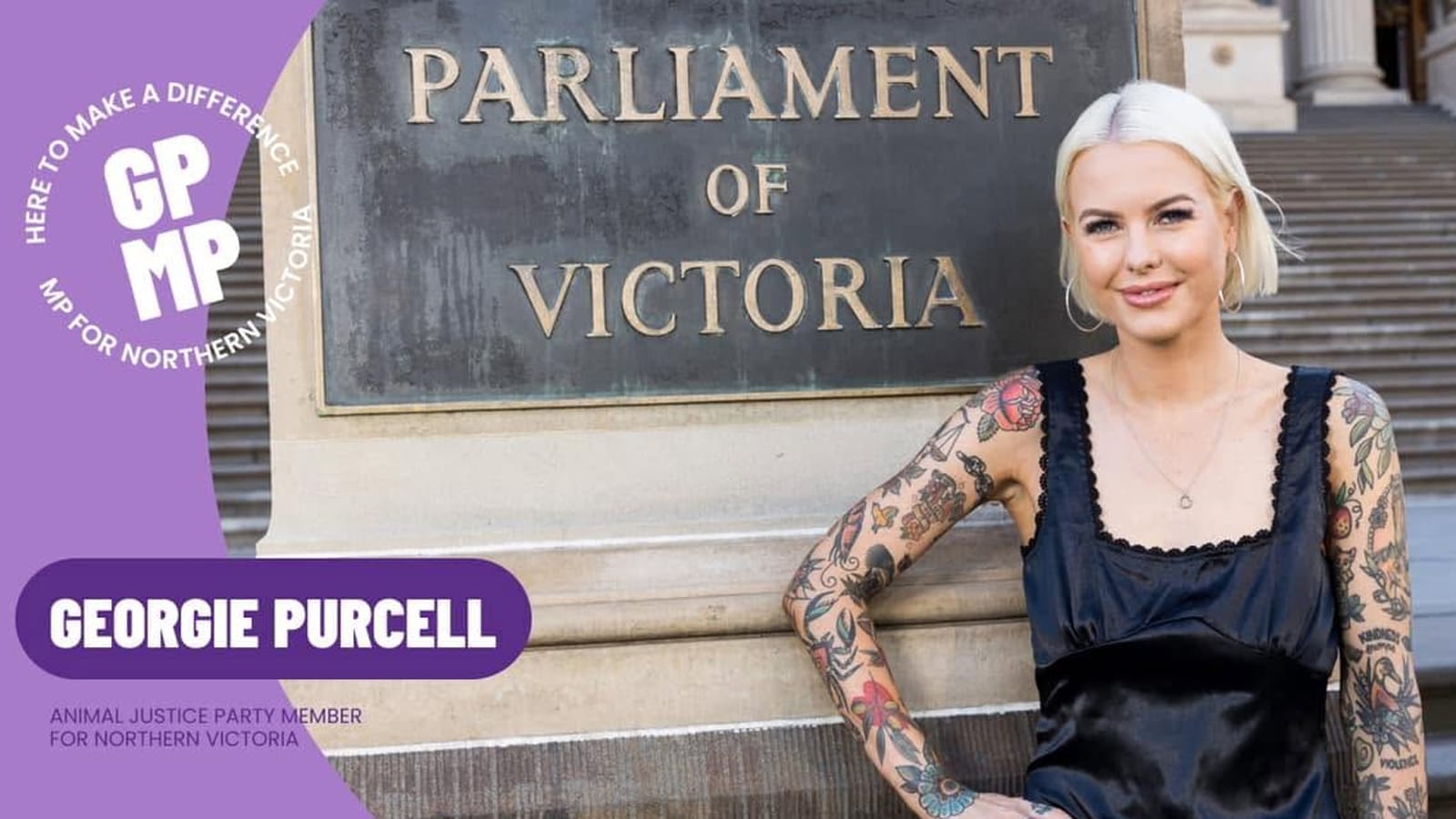
Georgie Purcell holds a Northern Victoria seat for the Animal Justice Party, which won it in 2022 on 1.53% of the regional vote, a figure Labor MP Mathew Hilakari put to the Assembly during the debate. She told Guardian Australia the change would "significantly decrease" her chances of being elected again, while adding that "it's not over until it's over" and that her team would run a strong campaign.
Hilakari told the Assembly that Limbrick had won his own South Eastern Metropolitan seat in 2018 on 0.84% of the vote, for the party then known as the Liberal Democrats, finishing ahead of a Liberal candidate who had started on 12.3%.
The federal Senate asks for six numbers above the line, and from 28 November Victoria will ask for five.