The Allan government is moving to abolish group voting tickets, the preference system that can hand a candidate a seat in Victoria's upper house on a fraction of the vote, after two conservative operations showed they could turn that same system against the parties it has long served.
Update, 12 August 2026: the Legislative Council passed the Electoral Amendment (Miscellaneous Matters) Bill 2026 on 11 August, 33 votes to 4, and group voting tickets have been abolished. What follows describes the position as it stood on 11 July.
The change would bring Victoria into line with the rest of the country. Every other state has scrapped group voting tickets, and the federal Senate did away with them in 2016. Victoria was the last jurisdiction still running the model, and an Electoral Amendment (Group Voting and Vote Counting) Bill 2026 has sat before the Parliament since February.
What's changed is the politics. For years the system drew little urgency from Labor. That shifted the moment the right worked out it could play the same game.
How group voting tickets let a candidate win on 0.5% of the vote
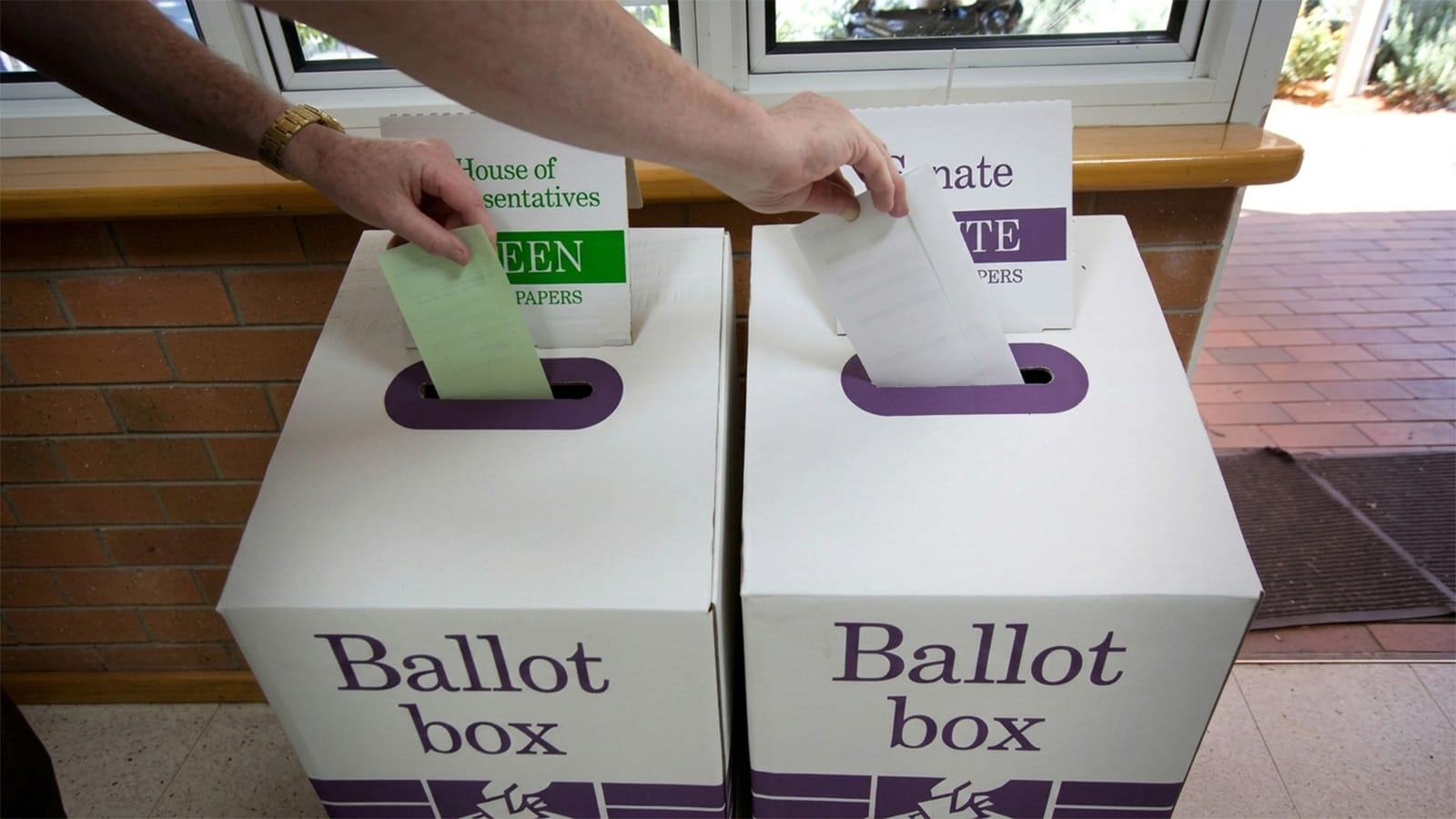
When you vote above the line in a Legislative Council election, your preferences don't flow the way you might assume. Under group voting tickets, the party you pick decides where those preferences travel next, through a ticket lodged in advance with the Victorian Electoral Commission.
That hands real power to so called preference whisperers, who broker deals between dozens of micro parties to shuffle votes toward a chosen candidate. Someone can be elected on as little as 0.5% of the primary vote because a chain of preference deals carried them over the line. A parliamentary research paper and the Parliament's own Electoral Matters Committee have both examined the practice, and the committee recommended abolition before the 2026 election.
Avi Yemini and Monica Smit make the same point about why it lasted this long, that it suited Labor. Labor introduced group voting tickets in 2006, and it's the last government in the country still refusing to scrap them, now leaning on a promise of broader reform to drag it out. What changed is that the right worked out it could play the same game.
Video: Monica Smit, via X (@reignitedem). Smit tells supporters the micro party registration drive may have forced election reform in Victoria.Jacin
Avi Yemini's Free Palestine Party turned the rort back on the left
Rebel News Australia bureau chief Avi Yemini registered a Free Palestine Party with the Victorian Electoral Commission, and he's been open about the plan. The name is built to draw voters attracted to a Free Palestine banner, many of whom would never knowingly help the right. Its group voting ticket then sends those harvested preferences the other way, toward One Nation and other conservative candidates.
Yemini has said he's setting up slogan based micro parties that emotionally driven Greens voters can't resist, then funnelling the preferences to One Nation through a system the Greens have lived with happily for years. The Greens have accused him of setting out to deceive voters. His answer is that he's doing openly what the left has done quietly for more than a decade.

Monica Smit and Reignite Democracy raced to register the numbers
Yemini isn't working alone. Monica Smit, who founded Reignite Democracy Australia, has driven a parallel push to register a bloc of conservative friendly micro parties, chasing the 500 member threshold the commission requires for registration.
In a video message to supporters, Smit said the campaign "may have forced election reform in Victoria," and framed the membership drive as the pressure point.
"If the group voting ticket doesn't get abolished, then we will go ahead, we will run candidates, and we will do exactly what they've been doing behind closed doors, but we will be doing it transparently."
She urged members to return their commission confirmation letters to hold the numbers, "just in case they change their mind."
Why Jacinta Allan is trapped either way she turns
The arrival of a conservative harvesting operation left the government with no clean way out. Keep group voting tickets, and the right can now harvest preferences the same way the left has for years, with Yemini's Free Palestine Party built to funnel them straight to One Nation. Abolish them, and One Nation's rising primary vote wins seats on its own, with no backroom deal able to trade it away.
Critics, including the operators behind the new parties, say that's the real reason Labor protected the system for as long as it did. With the advantage no longer running one way, the government has moved from earlier in principle support toward legislating the tickets out before the election.
Under a clean system, most likely optional preferential voting above the line as used in the Senate, voters decide where their own preferences go. Parties on every side would then rise or fall on the votes they actually attract, which is exactly the ground One Nation now wants to fight on.
What abolition means for One Nation in November
Timing is now the whole game. The Victorian Electoral Commission has indicated the government has until around August to lock in any change before the 28 November election, which leaves a narrow window when Parliament returns from its winter break.
Smit told supporters nothing is settled and the outcome should be clear "by the end of July or the start of August." If the tickets go, every conservative micro party registered in the push will have played a part in forcing the reform. If they stay, the same parties have signalled they'll contest the election and work the preferences in full view.
The stakes are set by where the vote now sits. Victorian state polling has One Nation in front on a primary vote of 27%, ahead of the Coalition and Labor on 26 each, after starting from zero a year earlier. The Greens trail on 13.
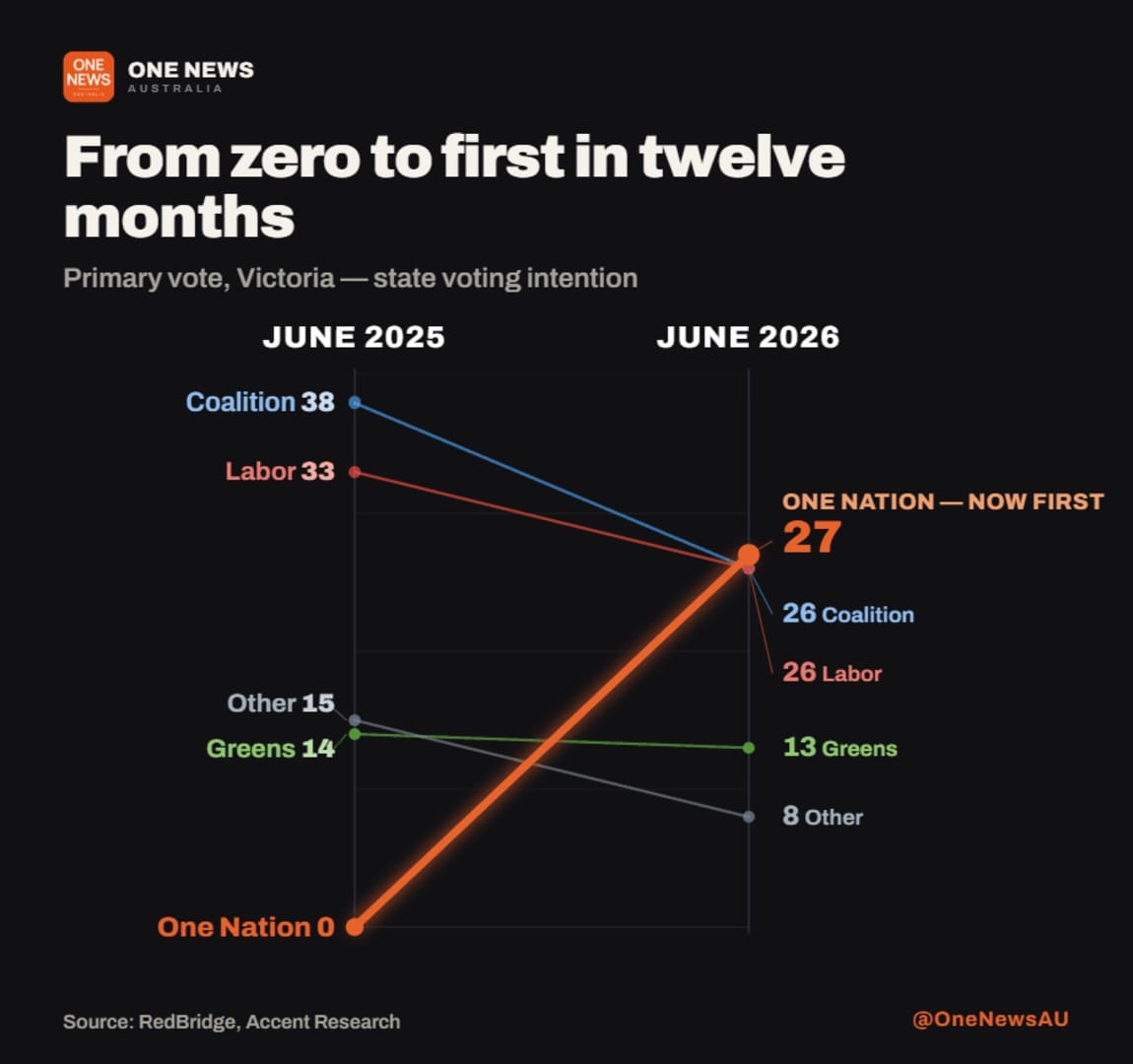
And it's leading without having announced a single candidate for November. The surge is running on brand and momentum alone, before the party has even begun to field a ticket.
One Nation already broke through in Victoria once, when Rikkie-Lee Tyrrell won Northern Victoria in 2022 as the party's first MP in the state. With its vote now leading, its candidates still to come, and both roads on group voting tickets running its way, 28 November is shaping as the election where One Nation stops being a single voice on the Victorian crossbench.