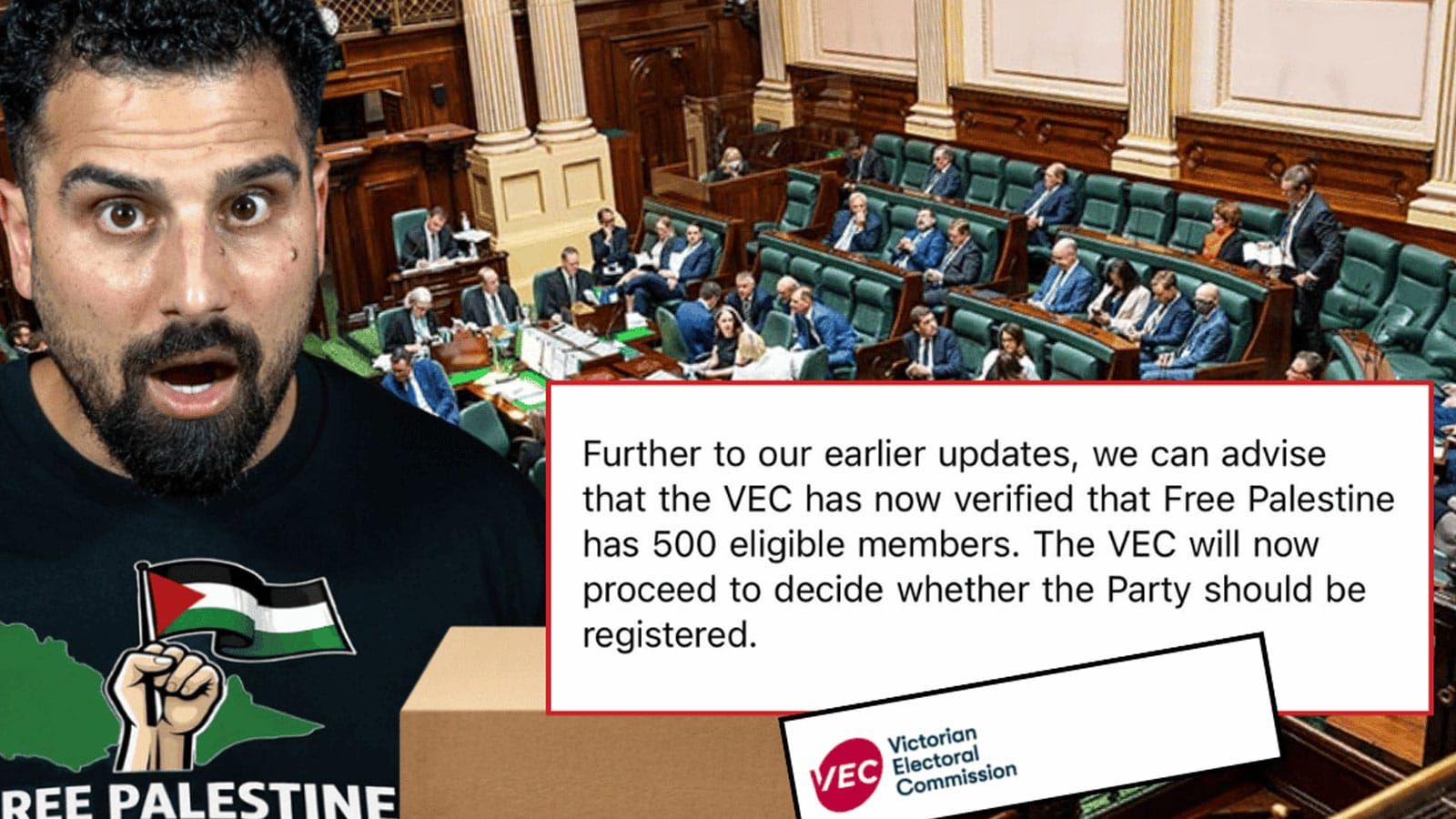
Avi Yemini, the Rebel News reporter, is the registered officer of a Victorian political party called Free Palestine. The Victorian Electoral Commission's public register lists it as first registered on 5 August 2026, under his legal name Avraham Yemini, at an address in Collins Street, Melbourne.
Yemini served in the Israeli military and has spent years reporting against pro Palestine rallies in Melbourne. He is close to the last person in the country you would expect to put that name on a ballot paper. There is a reason for it, and it has nothing to do with Palestine. Yemini says he registered the party to prove a point about how Victoria's upper house preferences work, and that the point has already been made.
Writing on Rebel News, Yemini said the party was a response to group voting tickets, the mechanism that lets a party lodge a preference order with the VEC and have every above the line vote follow it.
He said the aim was to use the preference machine against the people who built it, and that the party had "already served its purpose by forcing this outcome," a reference to the legislation now before parliament. He put the cost at roughly $15,000, including legal costs after the VEC delayed the application, and said the party had signed up the 500 members the Act requires.
The vehicle is also still loaded. If the bill to abolish group voting tickets doesn't clear the upper house before the election, he wrote, the party is "locked and loaded" to funnel votes from left wing voters back to One Nation.
Yemini says he copied the tactic from the leftist playbook
Yemini did not invent the manoeuvre and has never claimed he did. Announcing the party, he said he had decided to "take a leaf out of the leftist playbook". His reason, as he put it, was that "for years, the Labor Party has retained power in this state partly through a 'shonky' preference system that is now banned everywhere else in Australia." He has since described the whole exercise as "the direct result of exposing and then using the same political tactics that have been exploited by left-wing political operatives for years."
Video: Avi Yemini. Yemini sets out the Free Palestine plan on 27 April 2026 and calls for the members needed to register it.
The example he reaches for is the 2022 state election, when a party called Restore Democracy Sack Dan Andrews appeared on the upper house ballot. Angry voters flocked to it, Yemini wrote, and their preferences flowed back to Labor.
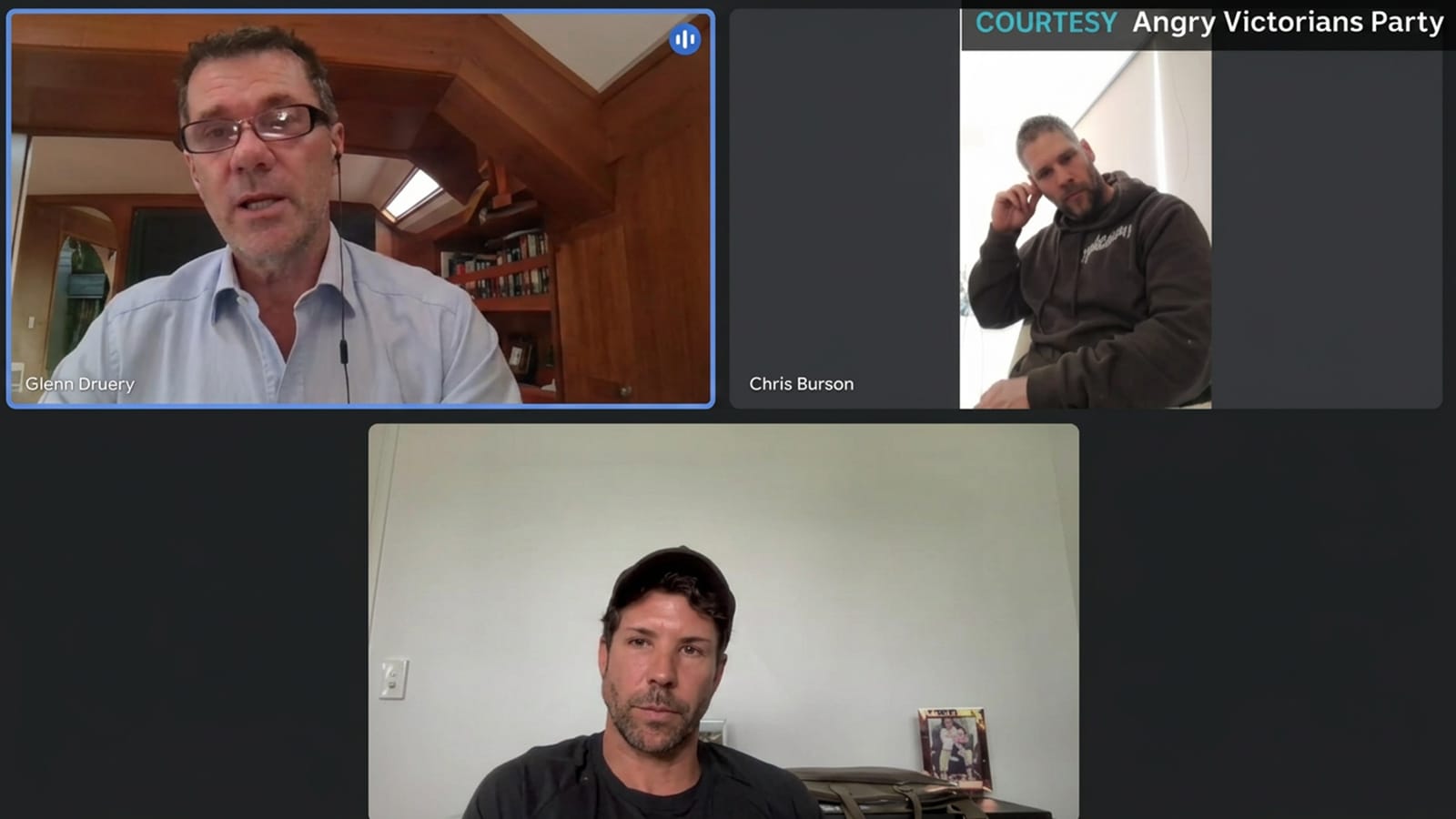
The Preference Whisperer claimed Sack Dan Andrews as his own in the same conversation secretly recorded by Chris Burson, now One Nation's candidate for Western Victoria, and the former commando Heston Russell. He said he had gone looking through an activist's social media and found the slogan posted over and over. He formed a party around it and expected it to usurp Clive Palmer, One Nation and the smaller parties of the right.
The tickets it lodged with the Victorian Electoral Commission sent those votes on to the Shooters, Health Australia, the Liberal Democrats, Labour DLP and Derryn Hinch's Justice Party. Not one of the people who voted for it picked any of them.
At the 2018 election Yemini stood for the Australian Liberty Alliance in Southern Metropolitan Region and polled 0.48% of that region's vote, which won him nothing. At the same election Rod Barton of the Transport Matters Party won a seat in Eastern Metropolitan Region from 0.62% of the statewide vote, finishing ahead of a Greens candidate, because rival micro parties had pointed their tickets at him. Victorian MPs cited those 2018 results in the Assembly while debating the reform.
Why registering a party with that name is enough to move preferences
Under the current rules, a voter who marks a single 1 above the line hands their preferences to that party's registered group voting ticket. Only the 1 counts. Anything written after it above the line is ignored. Victoria is the last jurisdiction in the country still running the system this way, and the practical effect is that the party, not the voter, decides where the preferences travel.
A voter can put a 1 next to a name they like and hand their vote to a party they have never heard of, and nothing on the ballot paper warns them who that party preferences.
Yemini was not the only person chasing the name. The VEC advertised a rival application for a Free Palestine Party, lodged by Ibrahim Hadi from an address in Prestons in New South Wales, on 2 June, and the two sat in the queue undecided for months. Yemini's cleared first on 5 August and Hadi's was refused the next day.
Ben Carroll's government put the bill up on his first day as Premier, to end the backroom preference deals
The Electoral Amendment (Miscellaneous Matters) Bill 2026 was introduced on 28 July, the day Ben Carroll was sworn in as Premier after Jacinta Allan resigned. It passed the Legislative Assembly on 29 July and has been sitting at second reading in the Legislative Council since 30 July. It would scrap group voting tickets and require voters to number at least five groups above the line, with those preferences counting, the way a federal Senate ballot works. Special Minister of State Ingrid Stitt said the change removes backroom preference deals so Victorians know exactly who they are voting for.
Moving the bill, Ivanhoe MP Anthony Carbines told the Assembly an Electoral Matters Committee inquiry had found voters don't understand where their above the line vote goes. Brunswick MP Tim Read said upper house seats had been bought for as little as $50,000. He said a four year term going for less than the price of a Hilux was about as bad as the preference trading he called legal but corrupt.
Lowan MP Emma Kealy said party names had in some cases been deliberately misleading in order to attract preferences, and that a democratic system could not allow what she called blatant deception of voters.
Angry Victorians did it first, and Burson was one of the two men behind it
Yemini isn't the first person to register a curiously named Victorian party to make a point about preferences. Russell had founded the Australian Values Party, built around veterans and registered federally in January 2022. For the Victorian state election the party ran through a state vehicle called Angry Victorians, which the Victorian Electoral Commission registered on 28 October 2022, weeks out from polling day, and deregistered on 21 December 2023.

Talking to Yemini in a Rebel News interview, Burson said the name was chosen because they had no money and needed something that would get attention. Nobody took any notice of them until they had it.
Burson told Yemini the aim from the beginning was to get group voting tickets repealed, and that he never expected it to happen. Four years later it is happening, and he says the reason isn't the recordings. Those went to IBAC and elsewhere and, in his account, nobody cared. What moved parliament was somebody threatening to run the same play again.
He also described what the system did to campaigning. Nobody discussed policy at the 2022 election, he said, because there was no point: parties were approaching them asking them to run candidates in marginal lower house seats in exchange for upper house preferences. Under group voting tickets, on his account, a party's policies are beside the point, because that isn't what decides who gets the seat.
What happens next, and what it means for the ballot paper in November
Until the Council votes and the change commences, group voting tickets remain the law. The VEC is still working to the existing timetable, with registration for tickets closing at noon on 11 November. Whether the reform governs the ballot papers on 28 November depends on the Council and on the bill's commencement provisions.
One Nation, which changed its registered Victorian name to One Nation Victoria on 3 August, is contesting 7 of the state's 8 upper house regions. Our upper house preview covers the regions and the quota.
The Council returns for its next sitting week with the bill on its notice paper.