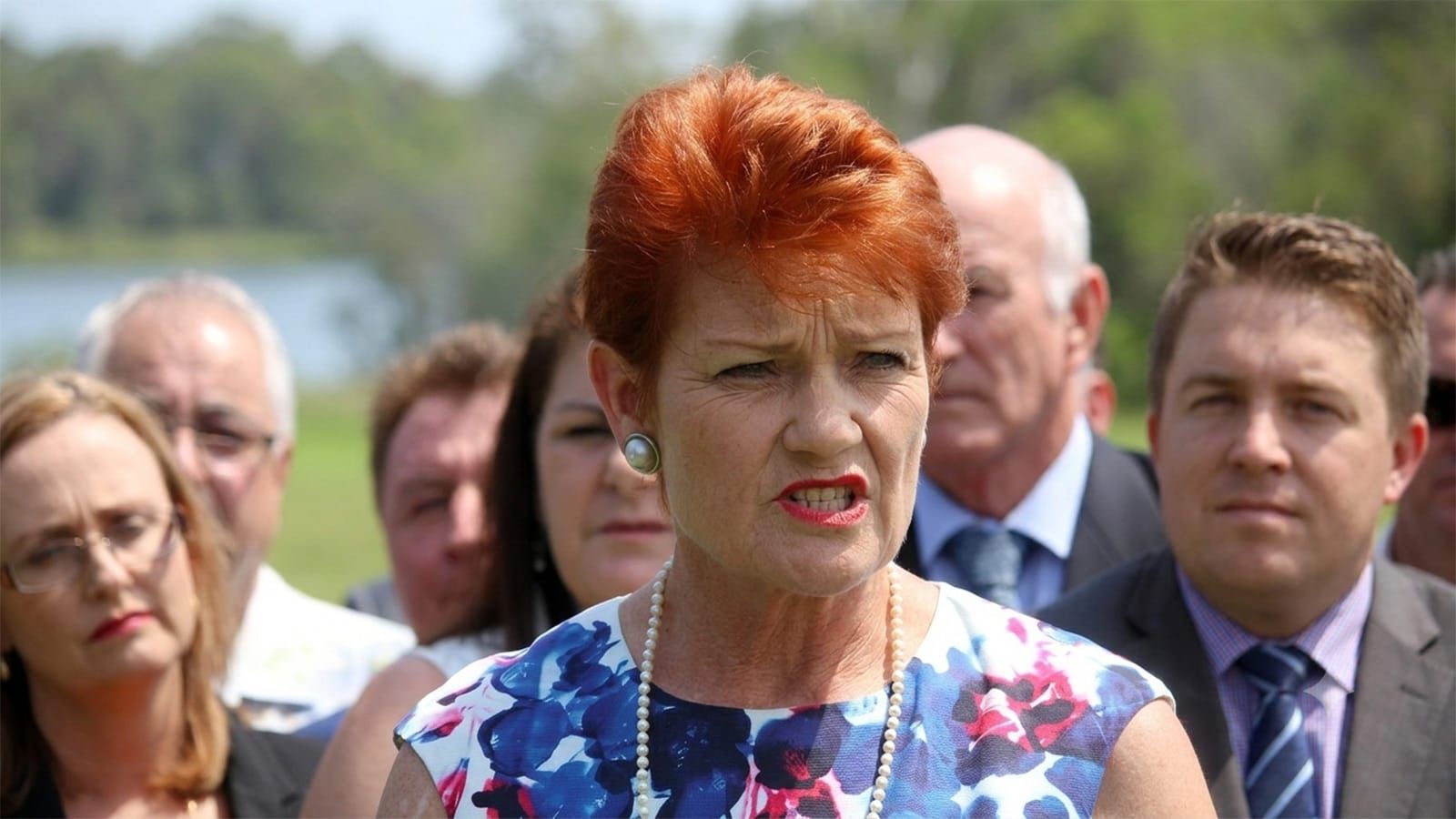
Pauline Hanson says she knows why Australians keep getting poorer, and she's put her name to the plan she says will reverse it. In an opinion piece for News24, the broadcaster known for the past 30 years as Sky News Australia, the One Nation leader commits to scrapping net zero, Australia's pledge to cut greenhouse gas emissions to a net balance of zero by 2050, and lays out what she'd do instead: keep the coal plants running, make nuclear power legal and hand Australians an owner's stake in their own gas.
Her case runs on the one number every household already knows. Australian electricity prices, once among the cheapest in the world, are now the highest in the world outside Europe, Hanson writes, and have risen by more than 200% since the first large scale renewable energy target was introduced. Thousands of households are in energy debt or energy poverty, either behind on their power bills or going without to avoid them.
"Rising energy costs are the single biggest component in the rising cost of living and the reduction in our living standards. Net zero is the culprit," she writes.
Japan, China and India buy Australian coal and pay less for power than Australians do
Australia exports more than 300 million tonnes of coal a year, and around half of it is burned overseas to produce energy, Hanson writes. Major buyers such as Japan, Korea, China and India all have cheaper electricity than Australia. In China and India, average household power costs sit at about a quarter to a third of ours, on her figures, while Australia keeps shutting down its own coal plants.
"Here we are exporting good quality coal so other countries can produce cheaper energy, while we are shutting down coal power plants in Australia. It doesn't make sense," she writes.
Canada, France and the US buy Australian uranium. Using it here is against the law
The same argument powers her push on nuclear. Australia holds the world's largest uranium reserves, more than a quarter of the proven global total, and has export agreements with more than 40 countries, Hanson writes. Nuclear generates about 15% of Canada's electricity, 20% of America's and 70% of France's, on her figures.
The Albanese government is ramping up uranium exports to India to help it reach a target of 100 gigawatts of nuclear capacity. A research reactor has operated at Lucas Heights in Sydney since 1958, producing nuclear medicines, and Australia has signed up to buy and build nuclear powered submarines under AUKUS. Generating nuclear electricity at home remains illegal under section 140A of the Environment Protection and Biodiversity Conservation Act.
"We export uranium to others to generate emissions-free energy, but we don't allow it here. It doesn't make sense," Hanson writes.
One Nation's platform would lift the ban outright. Hanson calls nuclear the only proven technology that can deliver baseload power, the steady supply the grid needs day and night, without producing emissions.
50,000 closed businesses and a manufacturing sector cut almost in half
The scoreboard Hanson lays out is blunt: more than 50,000 Australian businesses have closed in the four years since Labor came to power, about 1,400 manufacturers have gone insolvent in the same period, and manufacturing's share of GDP has fallen from 8.9% in 2005 to 5.2%, she writes.
The bills side is already on the record. One News reported this month that one in five Australian households can't pay the power bill while the grid is cleared for data centres and export deals.
Hanson reserves her sharpest lines for what she calls the renewables lie: sunshine and wind are free, but capturing them requires massive infrastructure that taxpayers have subsidised with hundreds of billions of dollars. The turbines and panels are made with coal, moved with fuel and backed up with gas, she writes, and native habitat is cleared for turbines that end up in landfill 15 or 20 years later.
"Labor and the Greens are literally destroying the environment in order to save it," she writes.
Hanson's gas plan: the public owns up to 30% of the fields and Canberra can't raid the fund
The net zero pledge sits on top of the most detailed plan in One Nation's platform: gas ownership. Australia has 0.3% of the world's population and produces nearly 10% of the world's exported gas, Hanson said in launching the party's gas plan in Adelaide in May, yet the main federal tax on the industry, the Petroleum Resource Rent Tax, returned $1.48 billion in the 2023 to 2024 financial year against roughly $65 billion in gas exports. That works out to about 2 cents in the dollar.
Her fix is the Norway model. The federal government would pay 30% of the cost of hunting for new gas in Commonwealth waters, and in return own up to 30% of the projects that result, paying its share of the costs and taking its share of the gas and the profits. The returns would be banked in a sovereign wealth fund, in effect a national savings account, held by a new body, the Australian Natural Wealth Investment Corporation, with a board of industry experts. Norway's version of that fund is now worth around US$2 trillion.
"We are proposing a genuine partnership with industry, from exploration through to decommissioning," Hanson said at the launch. "Norway succeeded because government and industry partnered together."
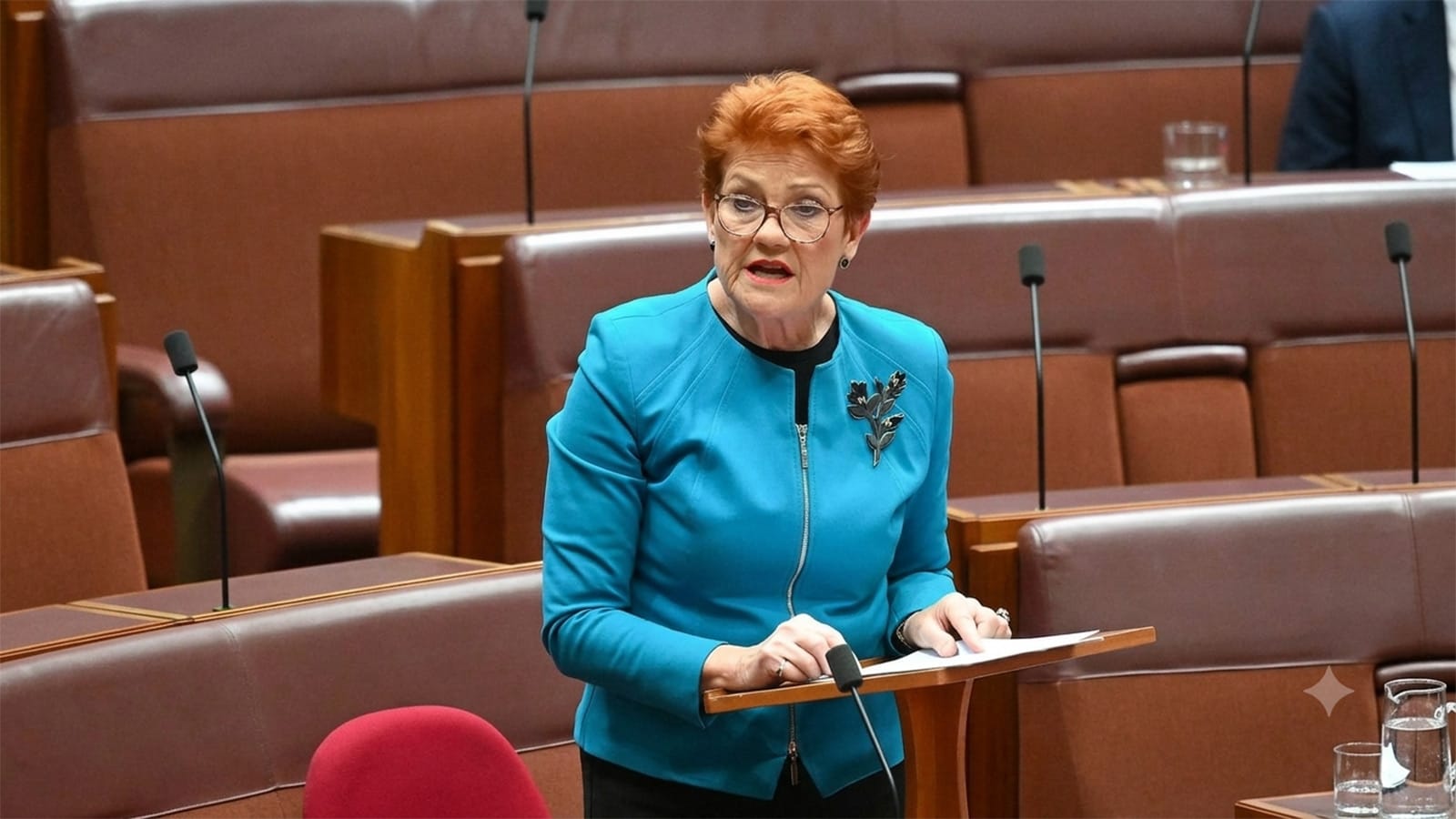
Gas would go to Australians first. The plan directs a share of all gas to critical industries, fertiliser, energy and fuel refining, before any surplus is exported, uses the government's share of the gas to build a 90 day onshore fuel reserve, and caps project approvals at six months.
One Nation has already tested the parliament on gas this year. In March the party circulated the Offshore Petroleum and Greenhouse Gas Storage Amendment (Domestic Reserve) Bill 2026, which would have reserved 15% of Australian gas for domestic use, and says the government refused to let it be debated. After consulting producers, the party dropped forced reservation from its plan, calling it a blunt tool that punishes the onshore producers already supplying Australians, and moved to the ownership model instead.
The contrast Hanson draws is with Labor's own scheme. The government announced a domestic gas reservation scheme in December 2025 that doesn't start until July 2027 and exempts export contracts signed before then. On the party's figures, about 80% of east coast gas keeps heading overseas in the meantime, and the public still owns none of it. The Greens and David Pocock want a flat 25% tax on the value of every gas export instead; One Nation rejects that too, arguing it treats a struggling project the same as a goldmine and would scare off investment.
Resources Minister Madeleine King told Sky News the party shows "a lack of knowledge of our gas system" and that Labor develops its policies "with the focus on Australia, not Norway". One Nation's answer is that the Commonwealth already owns Snowy Hydro and the NBN the same way, and that about $4 in every $10 Norway earns from gas comes from government ownership of the fields, not tax. "When I consulted gas producers, they were shocked to even be asked their views," Hanson said.
There's a consumer end too. One Nation's cost of living platform pledges to change National Electricity Market rules to favour cheaper baseload power, which it says would cut electricity bills by 20%, and to halve the fuel excise, the tax built into every litre of petrol and diesel, to 26 cents a litre for three years.
Penny Wong couldn't define net zero, and the polls say Hanson may get her chance
Hanson recounts asking Labor's Senate leader Penny Wong to define net zero and receiving what she describes as a word salad that amounted to "net zero is net zero". Labor, she argues, can't define the target it insists must be reached by 2050.
The pledge to scrap it now comes with numbers behind it. Modelling released by pollster DemosAU this week put One Nation within reach of forming government, with Labor's majority gone.
"I've had enough. I'll never stop calling out this hypocrisy, and with the support of the Australian people I'll scrap net zero to put an end to it," Hanson writes.