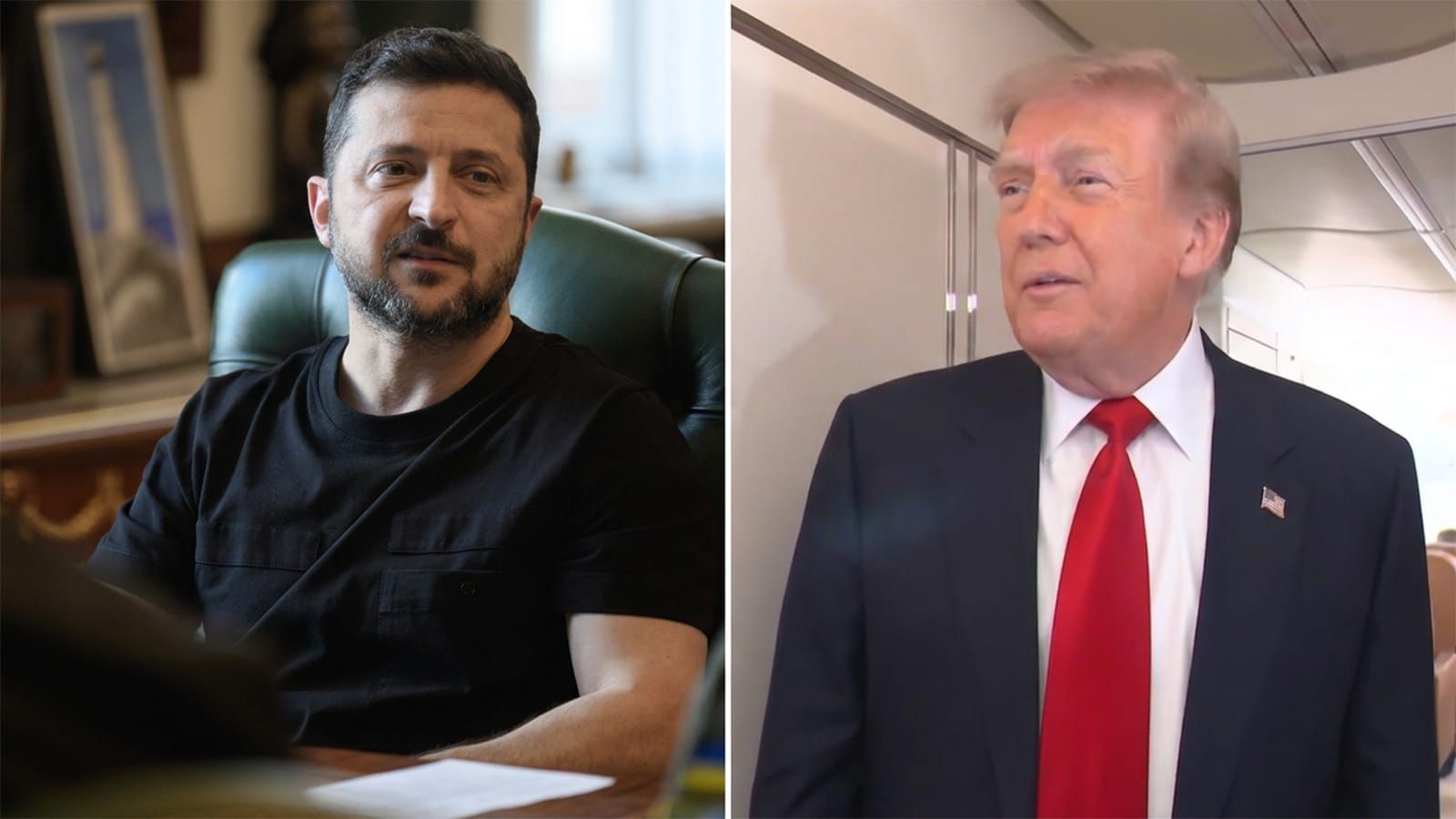
President Donald Trump wants Iran to pay for the damage its war has done to shipping in the Strait of Hormuz, and he plans to take the money from the roughly $100 billion in Iranian assets the United States has held frozen since 1979. The bill would be settled, in his words, with "Iranian Money that the United States has in its possession, and controls", and paying it this way is "the fair and equitable thing to do". Iran's Foreign Minister Abbas Araghchi called the threat "an incendiary precedent" and warned that "once governments normalise confiscation, no one's assets are safe".
It landed as the United States paused its bombing of Iran after 13 straight nights of strikes, a quiet that only exposed how much of the neighbourhood has turned on Tehran. Follow the minute by minute developments on our live feed. On Monday, Saudi Arabia shot down drones launched by Iran's proxies above its oil fields, Jordan downed two more, and Ukraine, in the most unexpected turn of the war, sank an Iranian weapons ship in the Caspian Sea and told Tehran its threat of revenge was "groundless". A regime that spent the month firing on the whole neighbourhood is ending it with the neighbourhood, and now Kyiv, firing back.
The list of countries willing to take a shot at Iran keeps getting longer. The friends still in its corner are few, and none of them are neighbours: Russia, which Tehran has armed with drones since 2022, and China, which buys most of its oil and supplies the regime's hard currency. Add North Korea, now feeding Russia troops and missile launchers, and the picture is complete: beyond that axis sit only the proxy militias Iran pays to fight. That is the real shape of this war, a cornered Iran propped up by the two powers the West is really squaring up against, and last weekend Ukraine drew its fronts together for the first time.
Russia wants to receive another 30,000 troops from North Korea. Since June, preparations have been underway in Russia’s Voronezh region to receive them. North Korea is also preparing to transfer additional launchers for ballistic missiles to Russia.
— Volodymyr Zelenskyy / Володимир Зеленський (@ZelenskyyUa) July 25, 2026
This is a threat not only to…
Ukraine sank an Iranian weapons ship and told Tehran to get lost
President Volodymyr Zelensky said Ukrainian forces achieved "very good results" from strikes across the Caspian Sea on Saturday, hitting vessels moving military cargo linked to Iran. Iran's ambassador to Russia, Kazem Jalali, identified the ship as the Anna and said it was anchored about 5km from the mouth of the Volga River when it was hit. Ukraine's Security Service said its drones also struck an oil platform, a Russian missile boat and cargo ships under international sanctions. Ukraine's ambassador to Israel, Yevgen Korniychuk, said the Anna was carrying "components for drones and missiles from Iran to Russia, not civilian cargo", and that Kyiv and Israel were fighting the same "axis of evil" on different fronts.
It was the first time Ukraine had directly hit an Iranian ship, and Tehran was furious. Iran says the strike killed one of its sailors and wounded several more. Foreign Minister Abbas Araghchi said the attack "cannot go unanswered" and called it "a blatant UN Charter violation done at Israel's behest to drag Europe into its war". Iran's foreign ministry insisted it had "never intervened in the conflict between Russia and Ukraine". Ukraine's Foreign Minister Andrii Sybiha wasn't having it, dismissing the threat as "unjustified and groundless" and reposting Araghchi's statement with the words "Iranian lies" stamped across it. Russia's Foreign Minister Sergei Lavrov offered Tehran his condolences.
Zelenskyy has attacked an Iranian commercial vessel, killing a sailor. A blatant UN Charter violation done at Israel's behest to drag Europe into its war.
— Seyed Abbas Araghchi (@araghchi) July 26, 2026
In calls with EU High Rep Kallas and FM Lavrov, made clear that what the freeloader in Kyiv did CANNOT GO UNANSWERED.
Iran has armed Russia against Ukraine since 2022, and Kyiv finally hit the supply line
Tehran's claim to be a bystander runs into a long paper trail. Iran began supplying Russia with its Shahed drones in 2022, and Moscow has since built upgraded versions and used them to hammer Ukrainian cities. Zelensky says Tehran is now planning to send Russia ballistic missiles as well, with reports that some had already changed hands as early as 2024. The Caspian is the artery for that trade, a direct route between Iranian and Russian ports, which is why Kyiv went after it.
Ukraine hasn't stayed on the sidelines of the Gulf war, either. In recent months it has sent military experts to several Gulf states to help them shoot down the same Iranian drones now being fired at American bases. The country fighting Iran's weapons in Europe is now helping the Arabs fight them over the desert.
⚡️Zelensky says Ukraine successfully struck vessels in the Caspian Sea that were transporting military cargo between Russia and Iran pic.twitter.com/GdrIXIo8Ag
— NEXTA (@nexta_tv) July 25, 2026
Iran isn't the only pariah propping Moscow up. Zelensky said in his evening address on Saturday that Russia is preparing to receive another 30,000 North Korean troops, with its Voronezh region readied for them since June, and that Pyongyang is preparing to hand Russia additional launchers for ballistic missiles. "This is a threat not only to Ukraine," he warned. "Russia is helping North Korea learn how to wage war, improve its weapons, and gain real combat experience in using them. All of this is a threat to everyone in Asia who is within range of North Korean missiles." That's the company Tehran keeps, and the two-front squeeze on all of them is moving fast. We're tracking it on our US and Iran war live feed.
And the man cheering loudest is Trump. The president who clashed with Volodymyr Zelensky in the Oval Office in early 2025 now says the two have a "good relationship", has handed Kyiv a licence to produce Patriot air defence systems, and has publicly praised Ukraine's deep strikes into Russia. The pair are working the same axis from opposite ends: Trump squeezing Iran's cash and bombing its war machine, Zelensky sinking the ships that carry its weapons to Moscow.
Saudi Arabia downed Iran's drones as the Gulf swings behind Washington
The pause in American strikes bought Iran no goodwill next door. On Monday, Saudi Arabia said it had intercepted drones aimed at oil facilities in its Eastern Province and Riyadh, blamed armed groups it says are backed by Iran in Iraq, and warned it "reserves the right to respond". Jordan shot down two drones the same day, and Yemen's Houthis claimed a separate strike on Saudi crude oil infrastructure. Even Baghdad distanced itself, with Iraq's government saying it "will not allow its territory to be used to launch attacks against neighbouring countries".
Arab foreign ministers have condemned the wave of strikes on Jordan, the UAE, Bahrain, Saudi Arabia, Oman, Qatar, Kuwait and Iraq. Each attack narrows the room for the Gulf to stay neutral and pushes governments that spent years hedging between Washington and Tehran firmly toward Washington. Iran is manufacturing the very coalition it feared.
Saudi Arabia said Monday it had intercepted a “number of drones” that Iran-backed militias in Iraq had launched at the kingdom’s oil facilities https://t.co/kd9NU1sToO
— The Wall Street Journal (@WSJ) July 27, 2026
Trump paused the bombing and handed Iran a choice it keeps dodging
Washington halted its campaign on Friday after nearly two weeks of nightly strikes, and Iran's army said it had "halted our retaliatory operations" in turn. Trump put a choice to Tehran, saying there was "a military exit" or "a smarter strategy: you make a deal". His envoy Mike Waltz said the president was "giving some talks some space". Mediators from Qatar, Egypt and Pakistan have floated a pause of 10 days, though Iran is playing down any direct negotiation and Araghchi says Tehran was "betrayed" the last time it talked.
None of it reads as weakness on Washington's side. Trump batted away suggestions the US was running short of anything, saying it has "far more munitions than anyone in the world", and his frozen-assets threat means every tanker Iran's proxies hit from here is a bill Tehran ends up paying itself. An "incendiary precedent", Araghchi calls it, which is a rich complaint from a government that arms Russia and bankrolls the Houthis. The pause hands Tehran rope. Its proxies spent the week using it to keep firing.
Why a cornered Iran shows up at the Australian petrol bowser
The part that reaches Australia runs through the oil price. Crude ran past $100 a barrel during the fighting, a jump of more than 20%, before easing about 4% once the strikes stopped. Ship-tracking data seen by Reuters found the number of tankers crossing the Strait of Hormuz fell to just one on 23 July, the lowest since 7 May, as owners steered clear of the crossfire. That isn't Iran closing the strait. The channel carries about a fifth of the world's oil, the US Navy is keeping it open to every flag but Iran's, and any real shutdown would choke China, Iran's biggest oil customer, long before it troubled anyone in the West.
Australia imports the vast majority of its refined fuel and buys it at that global price. When the Gulf seizes up, crude moves, and pump prices here follow within weeks. It's the reason a drone strike on a cargo ship near the Volga, half a world away, doesn't stay half a world away.
None of this had to hurt: Labor & Liberals shut the refineries, sold the reserves and ignored the warnings
The pain at the bowser was a policy choice, made in Canberra, over 20 years, by both major parties. Australia had 8 oil refineries at the turn of the century. It now has 2, Viva Energy in Geelong and Ampol at Lytton. Mobil closed Port Stanvac in 2003, Shell closed Clyde in 2012, Caltex closed Kurnell in 2014 and BP closed Bulwer Island in 2015. Then, with Angus Taylor as energy minister, BP shut Kwinana and ExxonMobil shut Altona in 2021, and no government of either colour lifted a finger to keep them open. A country that once refined its own fuel now imports roughly 90% of it, mostly from South Korea, Singapore and Malaysia, down a supply chain that runs straight through the war zone.
What little insurance Australia had was sold. In 2020 the Morrison government bought 1.7 million barrels of cheap crude, worth about $94 million, and stored it in the US Strategic Petroleum Reserve, on the other side of the Pacific. In March 2022 Taylor signed off on selling it, and nobody replaced it. Australia has failed to meet the International Energy Agency's mandatory 90 day fuel reserve requirement every year since 2012, the only IEA member in that position. The warnings were all public by 2020, when the government's own fuel security review and the COVID shock laid the vulnerability bare for anyone who cared to read it.
Anthony Albanese has had 4 years to fix it and hasn't. His government's answer to the current crunch is buying spot cargoes on the open market, underwriting Ampol and Viva Energy against risks they won't carry themselves, and shipping refined fuel from Amsterdam, while releasing domestic stocks just to keep regional towns supplied. That's triage, not policy. Asked what the underwriting will cost taxpayers, the Prime Minister said "It'd be like going to an auction and telling you in advance how much you have in your pocket". China, meanwhile, saw the same crisis coming and spent years building stockpiles that analysts estimate can cover its needs for months, with some estimates running to half a year. Beijing prepared. Canberra held press conferences.
One Nation has argued for years that Australia should extract and refine its own fuel at home, build sovereign stockpiles beyond the international minimums, and reserve 15% of domestic gas for Australians before any goes offshore. Diesel is 40% to 45% of what's coming in on those ships, and diesel is how food reaches the supermarket and tradies reach the job. Every day the Gulf stays hot, that bill lands on households that had no say in any of it.
For years the war in Ukraine and the slow burn with Iran ran on separate tracks. They don't anymore. Kyiv's "long-range sanctions campaign" against Russia's shadow fleet now reaches Iran's ships, the Gulf is shooting Iran's drones out of the sky, and Washington is holding its cash. Tehran still has Moscow's weapons, Beijing's money and Pyongyang for company, but the list of people it has taught to hit back keeps getting longer.