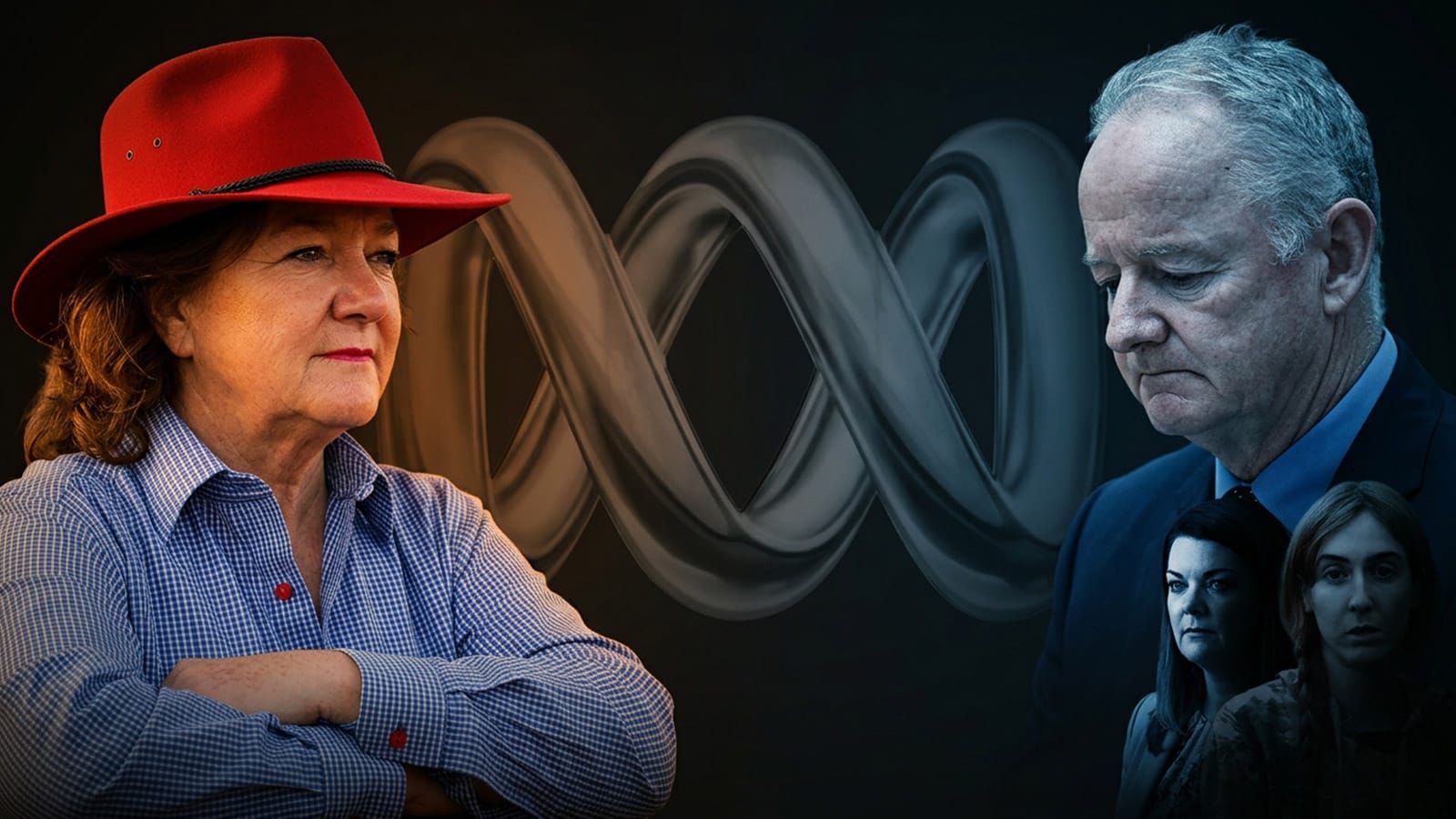
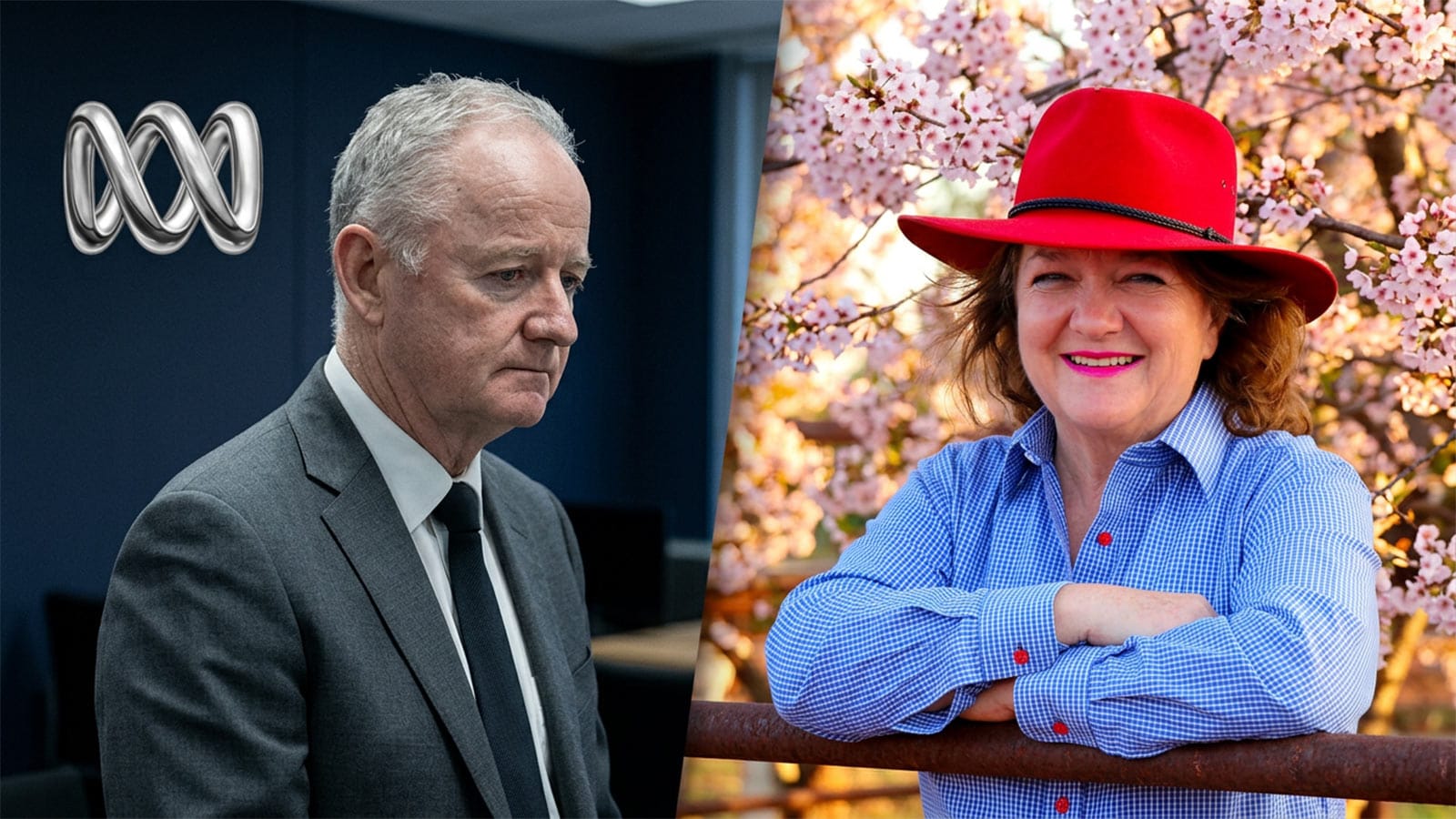
Hancock Prospecting says the ABC Ombudsman's finding on the Race Around the World film describing Gina Rinehart being killed "fails all Australian women and the millions of taxpayers who fund the ABC". The statement came from a company spokesperson and was published on Rinehart's own website on 8 August.
ABC Ombudsman Fiona Cameron released her reasoning on 6 August, and it supports Hancock stating she cleared the film without measuring it against any standard that protects women, because the ABC hasn't written any. Nothing in its rulebook protects Rinehart, and nothing in it protects any other woman either.
Two of the ABC's editorial standards carried the whole assessment, both dealing with harm and offence in general terms, and neither refers to women. The broadcaster's Code of Practice does contain a rule written for the kind of material that went to air, and that rule sits inside the classification the ABC gave the episode. It appears nowhere in her analysis.
The ABC apologised to Rinehart on 6 August and cut the material from its platforms, 25 days after the episode aired, as we reported when the backdown landed. Managing Director Hugh Marks said the ABC would amend its guidance on violence, which is close to an admission that the guidance didn't cover this.
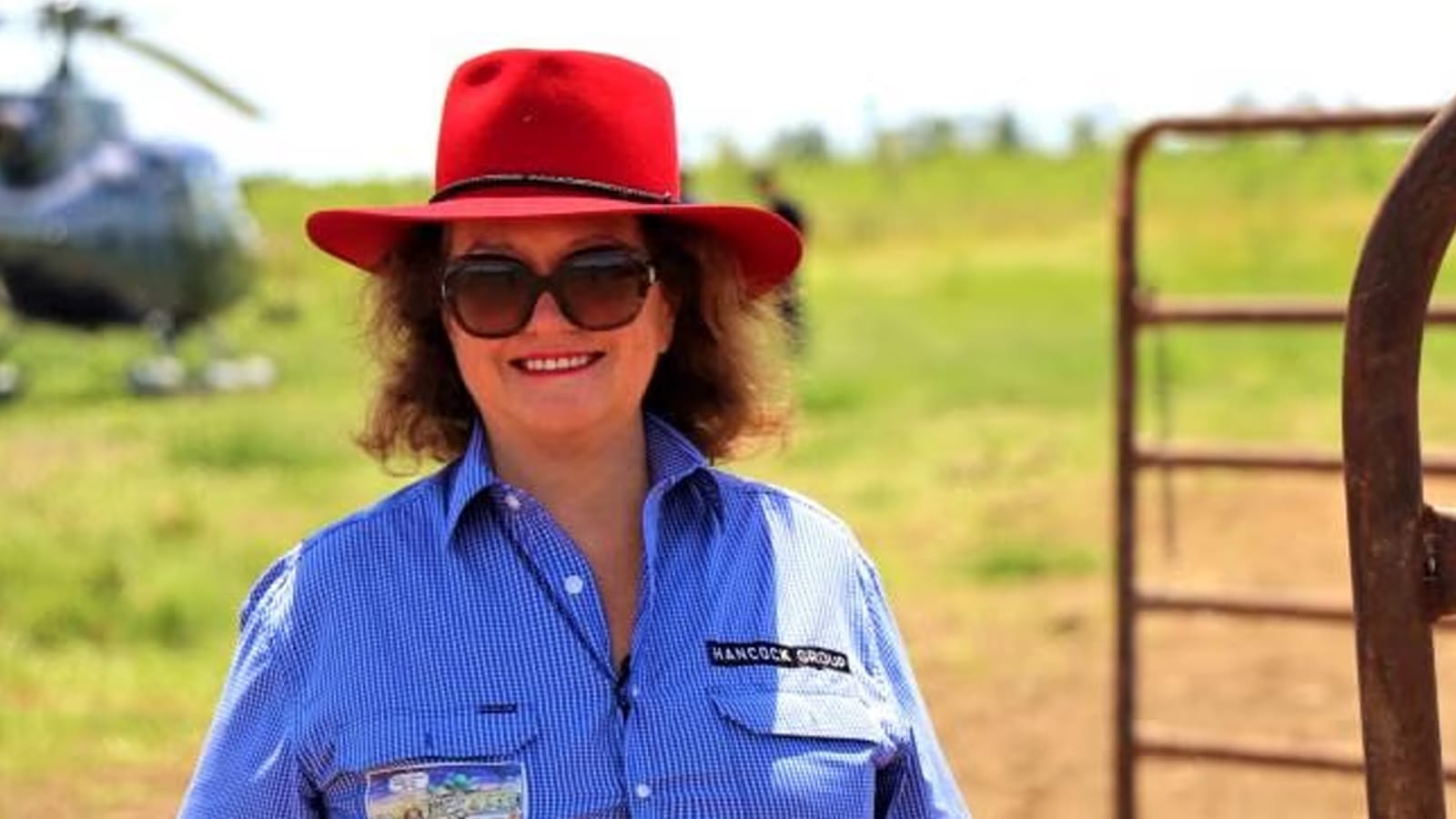
Fiona Cameron found the target was Gina Rinehart's wealth, then turned that into the ABC's defence
Complainants told the Ombudsman the film encouraged violence against women, and her report deals with that directly.
"Violent language directed at a named public figure may have a greater impact on some audiences because violence against women is a significant social concern and at the forefront of community consciousness. However, in context, the target of the satire appeared to be Ms Rinehart's public profile and status within contemporary political and economic debates rather than her gender."
The remarks, she added, "did not draw upon gender-based stereotypes, nor were they framed in terms of hostility towards women as a group".
The complaint was that a named woman had been described being killed, and the reason she was picked is that she's the richest woman in the country. Cameron takes that reason and makes it the ABC's answer, so an attack tied to a woman's wealth or her politics counts as something other than an attack on a woman. The objection only survives if a film goes after women collectively, which means no individual woman is ever reached by it.
Cameron also recorded that some viewers "may nevertheless experience the remarks as more confronting because they were directed at a female public figure", and found that this didn't change her conclusion.
ABC standard 7.1 requires that "content that is likely to cause harm or offence must be justified by the editorial context". Standard 7.6 covers content that could lead to dangerous imitation or worsen threats to health, safety or welfare, and requires the ABC to reduce that risk.
Neither mentions women, or sex, or gender. One News searched the current Code of Practice, dated 31 March 2026, for any standard covering sex, gender, vilification or stereotyping, and couldn't find one. The code does list not discriminating among the democratic principles the ABC commits to, in its opening pages. That appears as a statement of values, and it gives an investigator nothing to measure content against.
So when 8 people complained in the first week and a further 988 followed, the ABC's rulebook offered its umpire two clauses about offence and nothing else.
The ABC classified the episode ''M,'' and the M rule covers verbal references to sexual violence
Near the end of her report Cameron notes the classification as a point in the ABC's favour. "Finally, it is noted that the program was classified M and recommended for viewers aged 15 years and over, with classification information provided at the commencement of the broadcast and in program listings," she wrote.
The Code of Practice sets out what each classification permits, and the ABC binds itself to those guidelines in the same document. It promises it "will ensure all domestic broadcast television programs" outside news, current affairs and sport "are classified G, PG, M or MA15+ in accordance with the guidelines below".
The M guideline includes this line:
"Verbal and visual references to sexual violence may only be included if they are: discreet and infrequent, and strongly justified by the narrative or documentary context."
The material complained about was verbal, the guideline covers verbal references expressly, and it requires them to be discreet.

Her finding lists what she weighed: the program format, the filmmaker's established creative style, the surreal and hyperbolic nature of the film, the absence of any visual depiction of violence, and the criticism from the judging panel. The M guideline on sexual violence isn't on that list, and it doesn't appear in her analysis either. She assessed standards 7.1 and 7.6, and no others.
Whether the film met that guideline isn't for One News to decide. What the two documents show is that the question was never asked.
The editorial standards Cameron applied are internal to the ABC. As we set out in our breakdown of every avenue open to Rinehart, no outside body can force the broadcaster to act on them.
The Code of Practice is different. It's the code the ABC notifies to the Australian Communications and Media Authority under the Broadcasting Services Act, and the classification guidelines sit inside it. Under section 150, someone who has had a response from the ABC and considers it inadequate can go to ACMA without waiting out the usual 60 days. ACMA's guidance says complaints about a broadcast should be made within 3 months, which closes the window on the 12 July episode on 12 October.
The rule that expressly covers what was said is also the only one a complainant can take outside the ABC, and it went untested.
Fiona Cameron's finding rests on a description the ABC gave of its own film
Her report quotes what the broadcaster told her about the segment. "They were not accompanied by any visual depictions of violence," the ABC said of the remarks.
Cameron adopted that description, listing "the absence of any visual depiction of violence" among the reasons the film didn't breach the standards.
Hancock Prospecting says it's wrong. Its statement says the Ombudsman "bent over backwards to endorse the ABC's conduct" and misstated the position on visual content. The company's basis is that the weapon named in the film appeared on screen, and that the vision included an image of Rinehart's head on a stick.
That's the company's account and it hasn't been tested anywhere. What the report does show is that the ABC supplied the factual premise and its own Ombudsman built the finding on it.
The judges calling the line nasty on air became part of the reason it complied
The ABC told Cameron that a judge on the panel had criticised the remarks as easy and nasty, and that this placed them in a broader editorial context. She accepted the point.
"In this case, the metaphor was determined by Race Around the World judges to have failed. The analogy landed badly. This was discussed in the program and formed part of the editorial context in which the film was presented."
The judges' disapproval then appears in her finding as one of the factors supporting no breach, which makes the reasoning circular. On air criticism of the segment ended up helping to justify broadcasting it.
Fiona Cameron leaned on John Safran and a production company to justify what aired
Race Around the World is made by Endemol Shine Australia rather than in house, and she treated that format as part of the justification. Contestants "are encouraged to craft original and unconventional works", her report says, and audience expectations are "materially different from those applying to news, current affairs or factual programming".
She also reached back to 1997, noting that the first season featured John Safran, who "has since become known for his provocative filmmaking style and is now a judge and mentor on the current series". On that reasoning the ABC's own history of provocation works as a defence for whatever follows it.
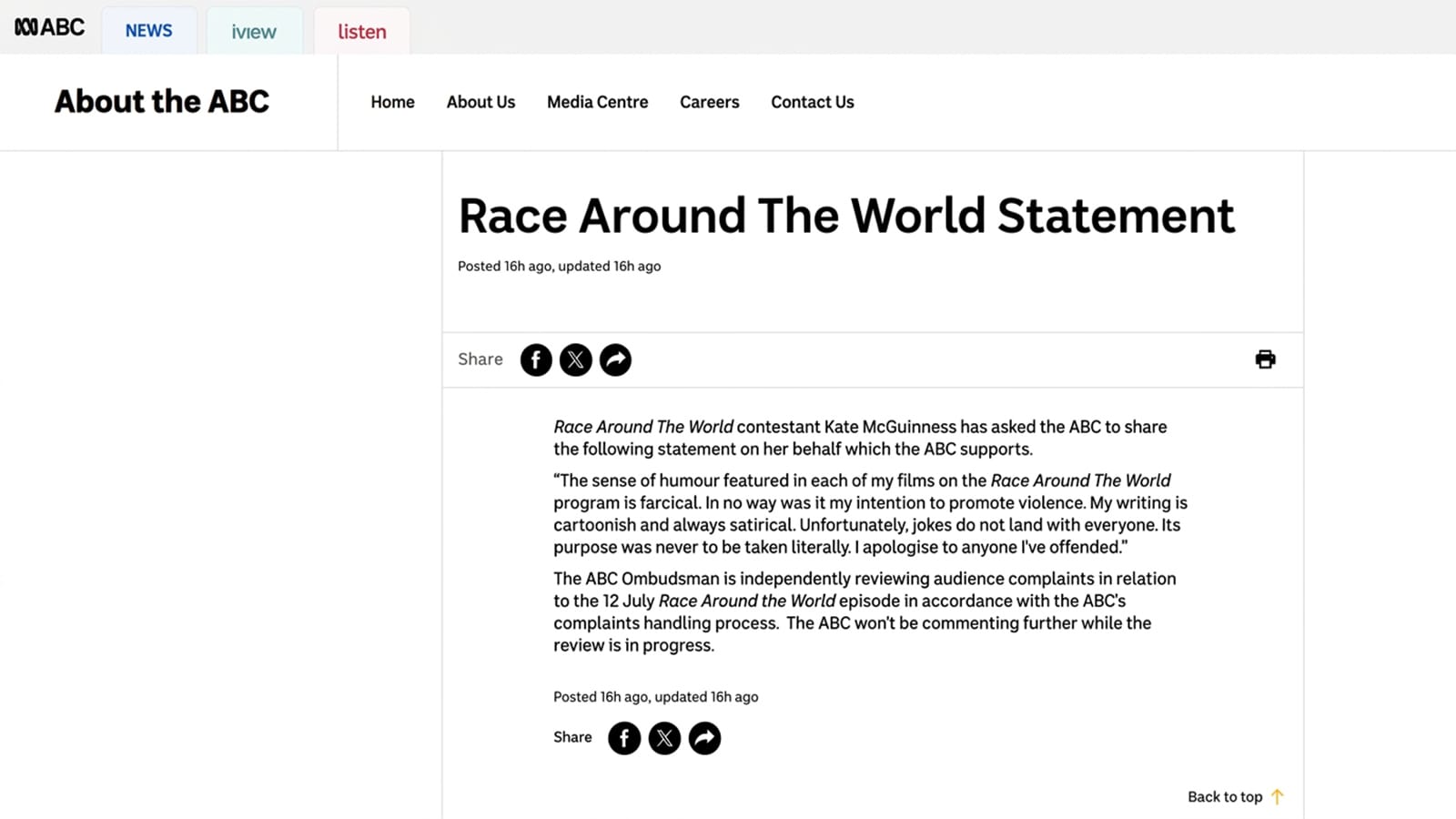
Cameron recorded 8 complaints in the week after the broadcast, then a further 988 once media outlets criticised the film's closing line. She noted that some complainants "encountered the comments outside the full program context", and that her assessment had to consider the content as it was broadcast.
Hugh Marks is now writing the rule he says nobody broke
Marks said the review had considered whether the ABC's guidance "adequately reflects current community expectations" and whether it "sufficiently distinguishes between news and non-news content". His conclusion was that "the ABC will amend its guidance as it applies to violence".
Speaking on ABC Radio North Queensland on 6 August he went further, saying the guidelines will now require that no individual should be the subject of comedy that's violent in its description.
If that rule is needed now, it wasn't there on 12 July, which is the ABC's own explanation for why nothing was breached.
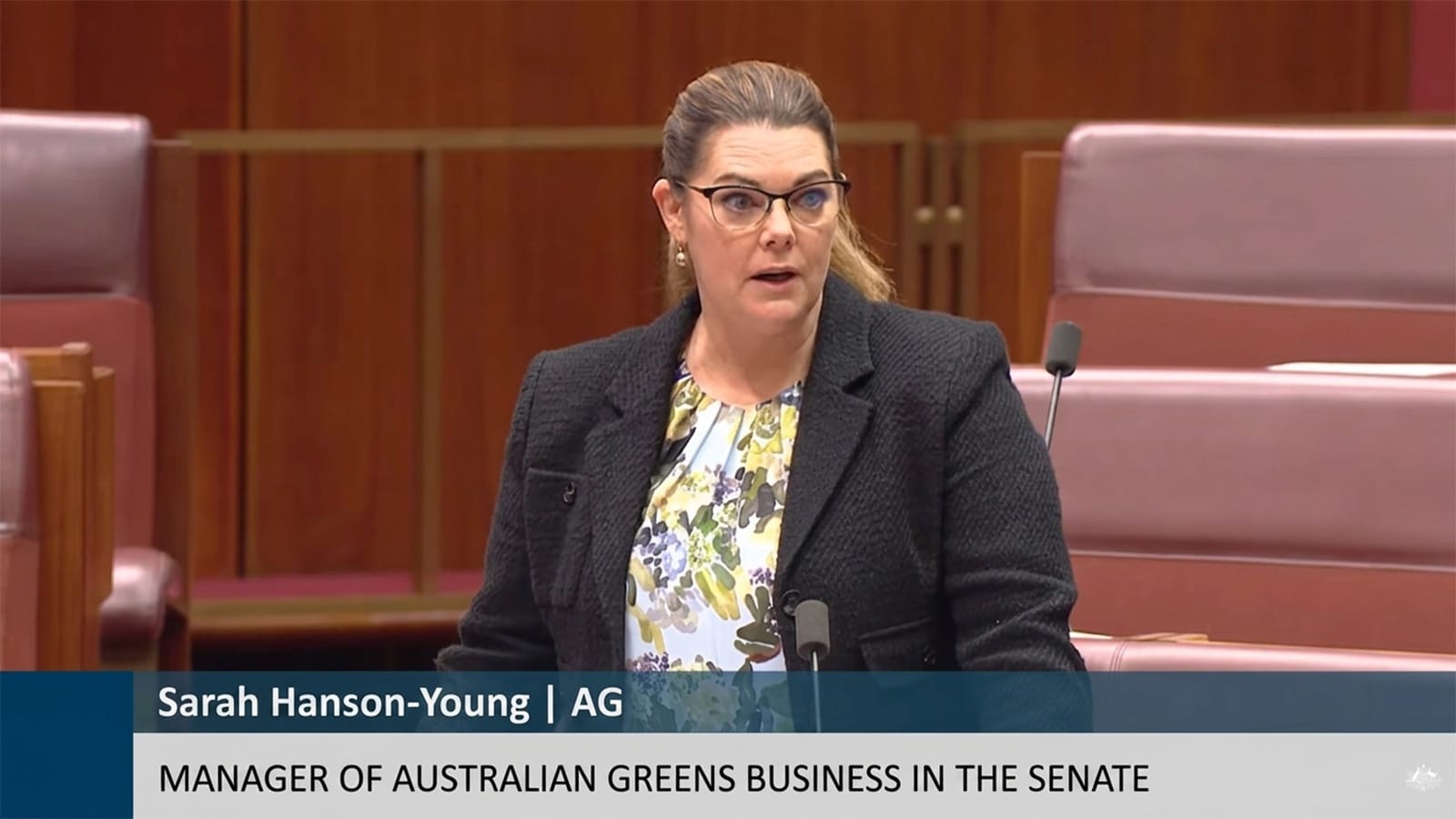
Sarah Hanson-Young called the film disgusting, a fortnight after her own Rinehart remark on the ABC
Greens communications spokeswoman Sarah Hanson-Young called the segment "disgusting" and urged the ABC to apologise, as the broadcaster's own news division reported.
She had her own moment on the ABC first. On 19 July, a week after the film went to air, Insiders showed photographs of Pauline Hanson and Rinehart beside a hotel pool in Sicily. Hanson-Young was on the panel, and said of the pictures: "I saw that . . . one of those images you don't want in your head." Guest presenter Patricia Karvelas didn't pull her up on it. Both Hancock Prospecting and The Sydney Institute's media review describe the remark as mocking Rinehart's appearance.
Hancock is asking for standards that stop this being done to "any woman on the ABC". The rulebook that had nothing to measure the film against has nothing to say about a panellist's comment on a woman's appearance either.
Hancock wants the name of whoever approved it, and Kim Williams still hasn't spoken
The statement turns to the top of the organisation, pointing to "ongoing silence from the ABC Chair Kim Williams, Deputy Chair Lisa Caffery and the ABC Board". The company says it awaits "a detailed account in relation to who approved this unacceptable piece to be aired, and who approved the long delay in its removal". It adds: "The buck stops with the heads of the ABC."
Those are the three people Hancock's lawyers put on notice on 30 July over what the company describes as serious contraventions of criminal and civil law, as covered in our legal action report. No proceedings have been filed and none of the allegations has been tested.
Hancock also points to the Ombudsman's record, saying fewer than 5% of complaints over the last 5 years resulted in a finding that the ABC had breached its standards. The broadcaster's own published figures suggest the company is being generous. In the year to June 2025 it investigated 2,919 complaints and found 56 breaches, which is 2%.
The office Hancock calls internal is one the ABC says decides "independently from ABC content teams, ABC management and the ABC Board". The same paragraph on its website says the Ombudsman "reports to the ABC Board".
The statement closes by thanking the Australians who complained, and who "stood up against the unacceptable actions of the ABC in putting this to air and leaving it on its multi platforms for 25 days".
ABC executives next sit in front of senators at Senate Supplementary Budget Estimates from 26 to 29 October. That's the first forum where somebody can be asked out loud who approved the film and who kept it up for 25 days.