A Senate committee was shown a bet365 promotion in which children wearing the bookmaker's branding ran a relay race for a $1,000 prize, and was then told that Communications Minister Anika Wells's gambling advertising bill wouldn't stop it happening again.
Independent senator David Pocock tabled screenshots of the video, which is publicly available on racing.com, and put them to Kai Cantwell, the chief executive of the industry group Responsible Wagering Australia. Pocock told the hearing the promotion sits outside the government's bill because racing content is carved out of it.
The Interactive Gambling Amendment (Gambling Reform) Bill 2026 is the first serious rewrite of Australia's gambling advertising rules in years, and most of it is tougher than what exists now. The committee was told it would ban betting ads during live sport shown between 6am and 8.30pm, strip betting logos off players' jerseys and out of stadiums, keep celebrities and influencers out of gambling ads, and tighten the rules on digital platforms. It leaves inducements alone, the bonus bets and deposit matches that betting companies hand out to keep customers betting, and it carves out racing content altogether.
The Senate referred the bill to its Environment and Communications Legislation Committee on 1 July, after the Greens argued it didn't go far enough. The committee held two days of public hearings in Canberra on 3 and 4 August and reports on 17 August, after which the bill goes back to a Senate where Labor doesn't have the numbers on its own.
Former Canberra Raiders player Luke Bateman told the inquiry Australians lose about $36 billion a year to gambling, more per head than any other country on earth. Reverend Tim Costello told it that 600,000 Australians aged between 12 and 17 gambled in the past year, which is 30% of the country's teenagers, and that more of them are betting on sport than are playing soccer and basketball combined.
The committee had no better luck with the number at the centre of the bill. Wells's legislation would let gambling ads run three times an hour on television from 6am until 8.30pm, and when Greens senator Sarah Hanson-Young asked the department where that number came from, and whether anyone had advised the government it was safe for children, deputy secretary David Mackay said he didn't know.
The exchange came on 4 August, the second and final day of hearings.
"Whose advice was it that three ads per hour was safe for children or general members of the community?" Hanson-Young asked.
"That was a decision of government that that was what would be included in the bill," replied Sarah Vandenbroek, a first assistant secretary in the department.
Hanson-Young said she understood it was a decision, and asked again on whose advice it was a safe number. Mackay said the package had been settled through cabinet and that he wasn't in a position to go to cabinet deliberations.
"Let me start again, Mr Mackay," Hanson-Young said. "Does the department hold any advice that says three ads an hour is safe for children?"
"We will take that on notice," Mackay said.
"No, do you? You must know."
"I don't know. You asked if we hold it anywhere. I will take it on notice."
She put it two more ways and got the same answer both times. The chair, Labor senator Varun Ghosh, then suggested a way to resolve it, telling Mackay he could say so if he couldn't recall and take the rest on notice. Mackay did that.
"Yes, to my knowledge, not that I recall," he said. "I will take it on notice."
The whole exchange is on the public record and in the committee transcript.
David Pocock showed the betting lobby children in bet365 gear, and Labor's bill wouldn't touch it
Pocock's description of what the screenshots showed was a relay race between young adults and children, with the winners claiming a thousand bucks, and the children dressed in bet365 branding. Some of them, he said, looked as young as 12.
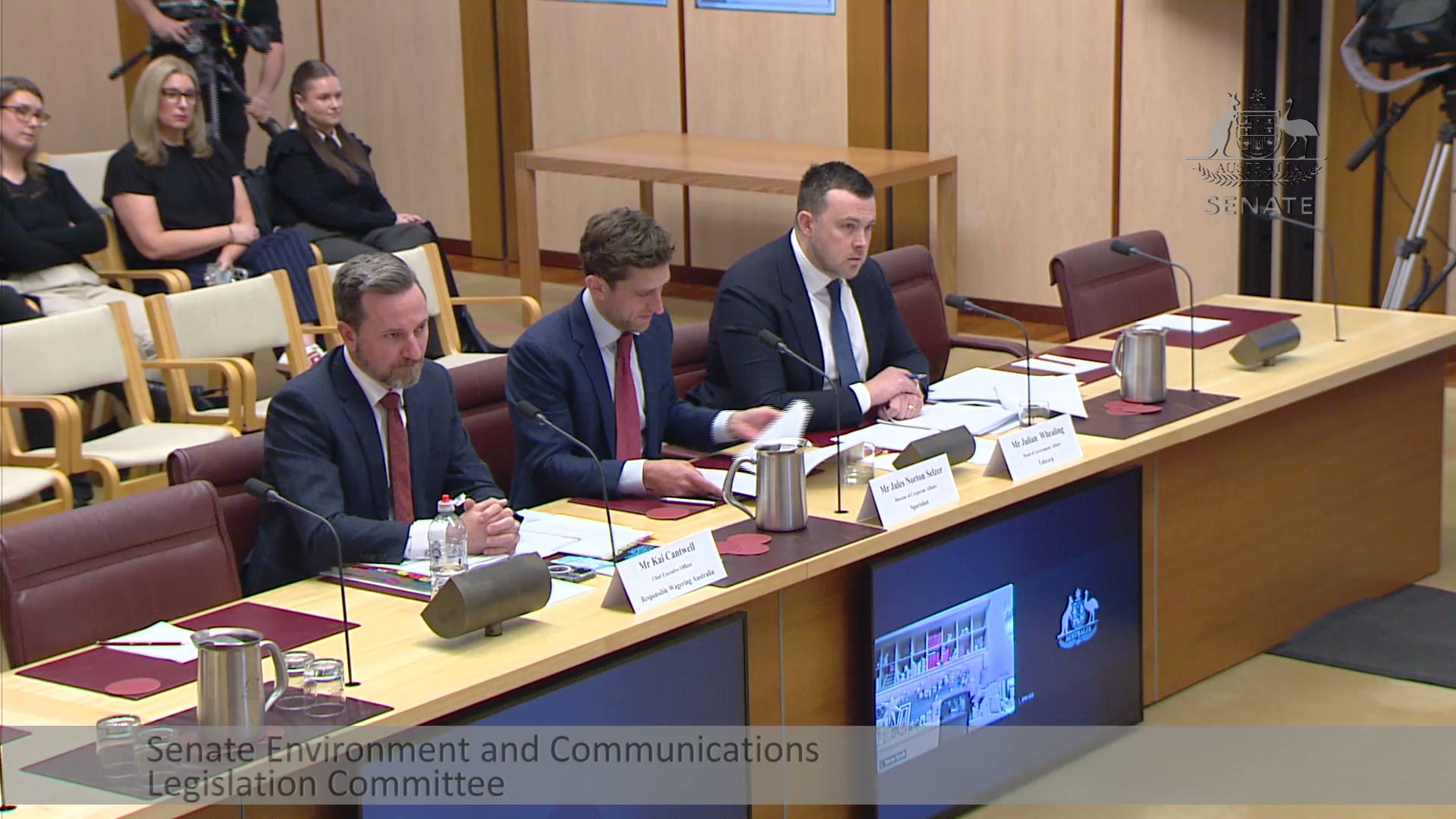
Cantwell said he thought it was the kind of material the bill would deal with. Pocock told him it wasn't, because the promotion ran on racing.com and the government has written a carve out for racing content into its own legislation.
"I am not going to shy away from the fact that you've presented me with pictures of children wearing gambling products," Cantwell said. "That is something I can absolutely take away and raise with my members and address moving forward."
Pocock then asked whether that was an example of the responsible wagering industry Cantwell had described in his opening statement.
"We understand that, in Senator Hanson-Young's words, we may be on thin ice," he said. "Have we always got it right? The answer to that is no."
Pocock's reply was blunter. "Bet365 aren't here. I find this deeply problematic."
The company at the centre of it didn't front the inquiry, and under the bill as drafted, the promotion that produced that admission would remain perfectly legal.
SBS served bet365 ads around a World Cup match it knew was playing in primary schools
The public broadcaster came off no better. Pocock asked SBS about a midday World Cup match between the Socceroos and Paraguay that the broadcaster knew was being live streamed into primary school classrooms around the country, and about the bet365 ads that ran around it.
Sophie Kowald, SBS's acting head of government, policy and regulatory affairs, confirmed the broadcaster was aware a lot of the viewing happened at mass events including schools, and said SBS follows the regulations that apply to live sport. Pocock asked whether any SBS executive had considered, before the stream went out, whether gambling ads should run into classrooms.
"I was not involved in any meetings in relation to that specific game," said Mathew Hancock, SBS's general manager of streaming and digital products. "I'm not aware of any, but there are a number of people at SBS."
Pocock's summary of the position was that broadcasters, including publicly funded ones, will maximise revenue within whatever rules they're given, and that if that means serving bet365 ads to millions of Australian children watching the Socceroos at midday, then the answer is "stuff them. We're going to show those ads because it's general viewing, and we're just going by the rules".
SBS takes taxpayer funding and advertising money at the same time, and it keeps both. Unlike the ABC, the broadcaster is allowed under the SBS Act to sell advertising and sponsorship on top of its Commonwealth funding, capped at 5 minutes an hour on television and radio. The cap has a hole in it, and the World Cup stream went through the hole. By SBS's own description, the Act sets no time or placement rules for its digital services, including SBS On Demand, where the match was streaming. On the service reaching those classrooms, the only limits were SBS's own internal guidelines.
SBS's stated position is that it accepts all advertising that complies with the law, that gambling advertising is highly regulated, and that the revenue funds local content and services for multicultural communities.
The 8.30pm cut off rests on ratings figures, and the data tabled at the inquiry contradicts it
Hanson-Young also asked where the advice came from that children would be safe from gambling ads after 8.30pm. Vandenbroek said the time related to a reduction in viewership from that point onwards, and Ross Adams, a director in the department, pointed to OzTAM figures showing the decline.
Pocock then tabled an analysis of the same OzTAM data by ABC reporter Steve Cannane. It found the average audience of children aged between 10 and 17 in the 7pm to 9pm slot is four times higher than it is between 4pm and 5pm. Once sporting events and awards nights are stripped out, 12 of the 16 highest rating programs for that age group go to air between 7pm and 9pm. Researchers had already told the committee that the overwhelming majority of children keep watching the second half of Friday night football when the game kicks off at 8pm.
"So what evidence do you hold that the 8.30pm watershed actually protects children watching TV, particularly when it comes to sports?" Pocock asked.
"None," Hanson-Young interjected.
Vandenbroek said the department would need to refer back to the data it had already cited, then added that she hadn't seen the Cannane evidence before and that it was something the department could look at.
Labor buried a report written by one of its own MPs, then rewrote the bill for industry
None of this had to happen. In June 2023 a House committee chaired by the late Labor MP Peta Murphy handed down its report, You win some, you lose more, carrying 31 recommendations. Among them were a phased and comprehensive ban on gambling advertising across all media inside three years, and an immediate ban on inducements. Murphy died in December 2023, and three years on neither of those recommendations has been legislated.
Russell Northe, the former Victorian MP who has spoken publicly about his own gambling addiction, put a number on the delay when he appeared on 3 August. Recommendation 16 called for inducements to be banned without delay, he told the committee, and "here we are, 1,132 days down the track, and it's still happening. What carnage has been caused in that time?"
Hanson-Young opened on how the package was put together. She told the committee the minister's office had described it to her as a nine way deal, and asked who the nine players were. Mackay didn't name them and said the department would provide its consultation list on notice. Ruvani Panagoda, the acting assistant secretary running the department's gambling reforms taskforce, said there had been two weeks of targeted consultation from 29 May to 12 June across 10 sectors and more than 80 organisations, with dedicated briefings for the states and territories and for harm reduction advocates.
What the government changed after that consultation is also on the record. Panagoda told the committee that the alterations made between the draft and the final bill answered concerns raised by industry, the Australian Communications and Media Authority, and state and territory governments. Hanson-Young asked whether any change had dealt with the concerns of gambling victims and their families. Panagoda took it on notice. Asked whether she thought there were any at all, she took that on notice as well.
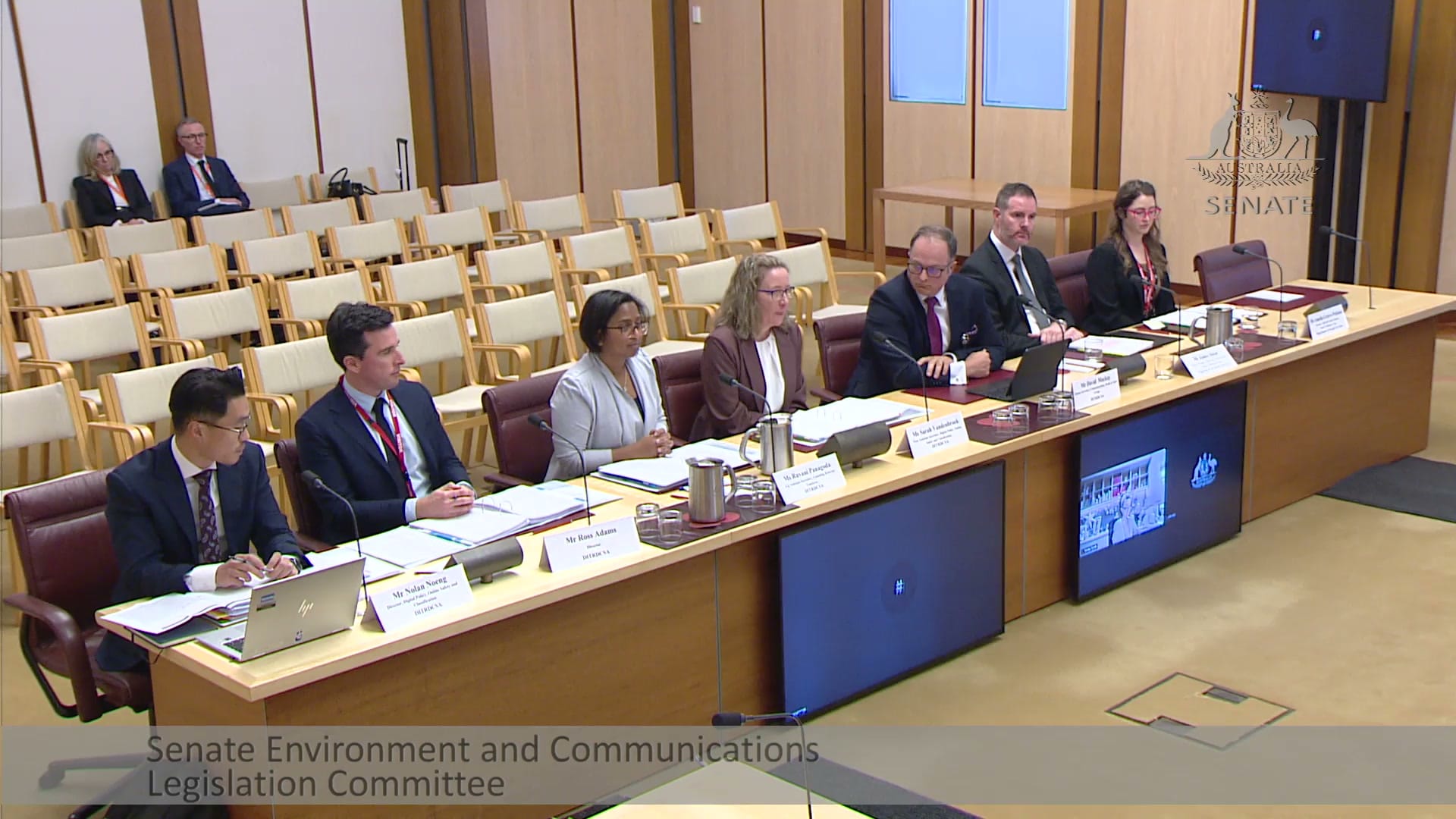
Harm reduction advocates got their briefing, but when it came to what the changes did, industry, the regulator and the states were the ones named and the families weren't.
The industry that got the hearing is also the industry that pays into the system. The Australian Financial Review reported that Sportsbet is the sector's largest political donor, giving $143,000 to Labor and the opposition parties in the 2025 financial year, and that it hosted Labor MP Dan Repacholi and his wife at Parliament's midwinter ball in June. The same report put gambling advertising spending above $187 million in 2024, with $133 million of it going to major broadcasters including Nine and Seven. The AFR also quoted an industry figure, speaking anonymously, who said the measures were "cooked up out of the prime minister's office" rather than the department, and that none of them were in the Murphy report.
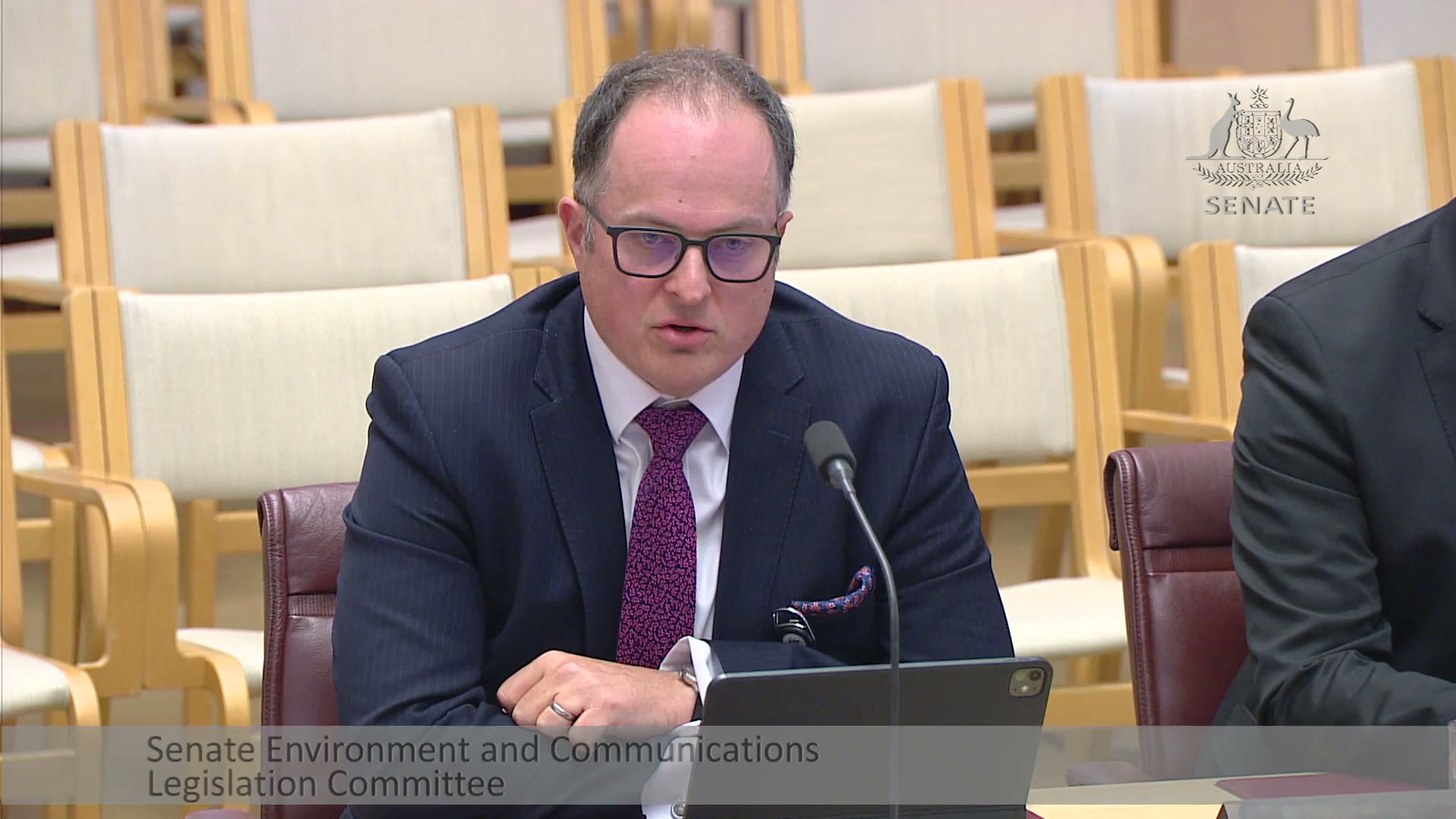
The conflicts run into the committee room itself. Before questioning the betting companies, Liberal senator Sarah Henderson declared she holds accounts with Ladbrokes, Sportsbet, the Lott and Oz Lotto.
Tim Costello alleged a gambler was offered escorts and drugs, and Sportsbet and Tabcorp deny it
The most serious claim of the week came from Costello, who is chief advocate at the Alliance for Gambling Reform, on the first day of hearings. Costello told the committee about a man in Silverwater prison whom he didn't name. According to Costello, the man will plead guilty to stealing $12.3 million over 17 months as a trusted financial adviser, and was turning over more than $20 million a month.
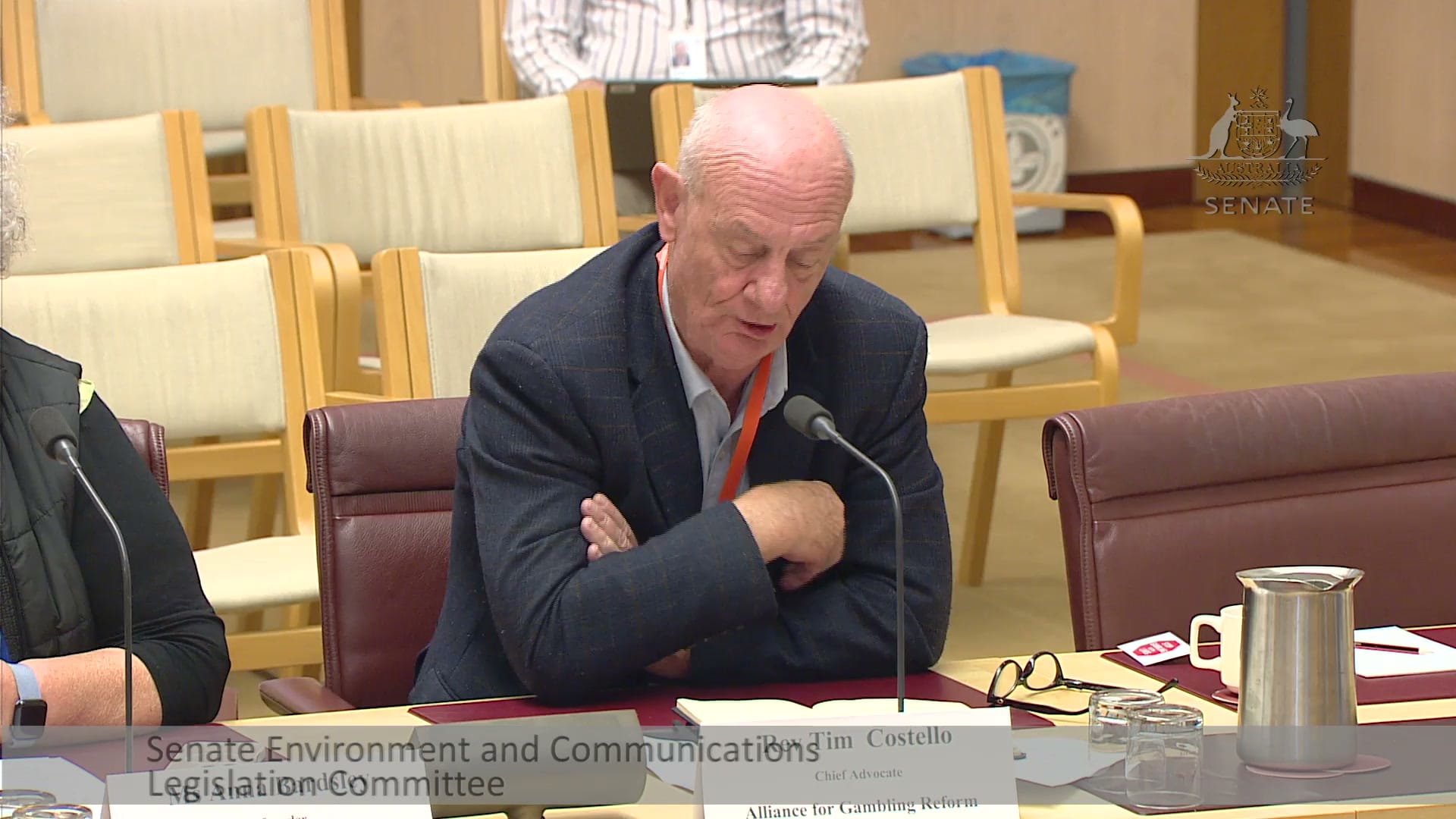
Costello alleged the man was the TAB's biggest customer and Sportsbet's biggest customer at the time, was given $50,000 bonus bets and free accommodation at Star casino, was flown to grand finals, and was asked by VIP managers what drugs he liked. Pressed by Hanson-Young on which companies were involved, Costello named TAB, Sportsbet and, he said he thought, Star casino.
Both betting companies rejected the allegation outright when they appeared the next morning.
"We have zero evidence of the allegations made by Reverend Costello yesterday," said Jules Norton Selzer, Sportsbet's director of corporate affairs. "We have no tolerance for that kind of deplorable conduct, and no information has been provided to us beyond what was referenced yesterday. We would gladly investigate it."
Julian Whealing, Tabcorp's head of government affairs, said the claims "do not in any way form part of Tabcorp's customer offering", that the company has zero tolerance for the behaviour, and that any evidence of illegal activity should be referred to the relevant authorities.
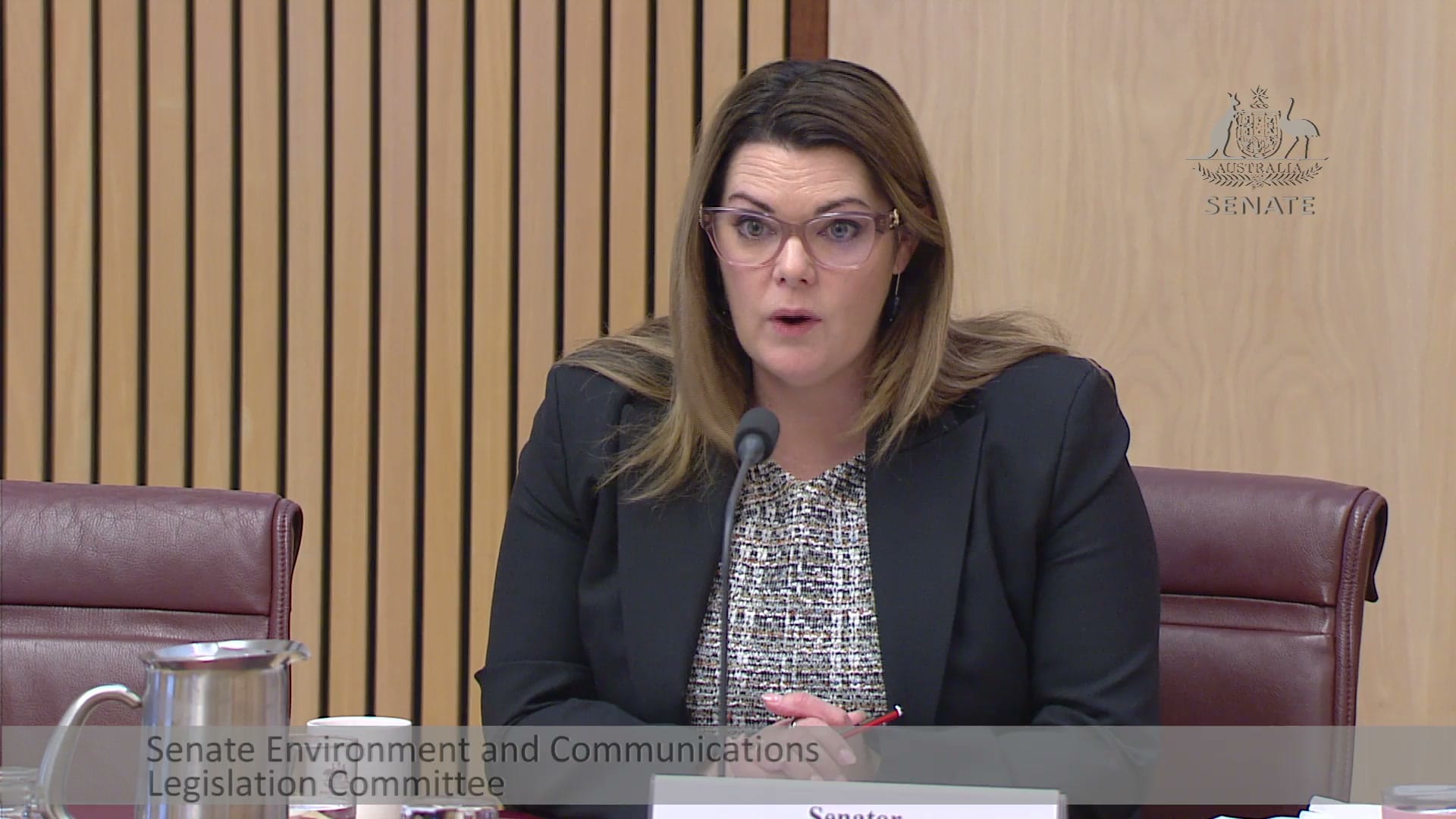
Hanson-Young then pushed Norton Selzer on whether Sportsbet had ever returned money that had been stolen and lost on its products. He said repeatedly that he couldn't comment on individual cases and pointed to the company's obligations under anti money laundering law.
"Your industry only gets to survive based on the social licence that you have, and you're on very thin ice," Hanson-Young told him. "I'm not asking for an individual case, I'm asking if you've ever done it. I have to take that as a no."
The racing industry put the counter case. Graeme Hinton, the acting chief executive of Racing NSW, warned the committee against approaching the issue "only through the lens of ideology and emotion". Further advertising restrictions "could not only destroy the viability of our industry and take away livelihoods, it could result in increased harm", he said. Hinton also told the committee that wagering makes up about 10% of all gambling in Australia, and that poker machines account for most of the losses the bill won't touch.
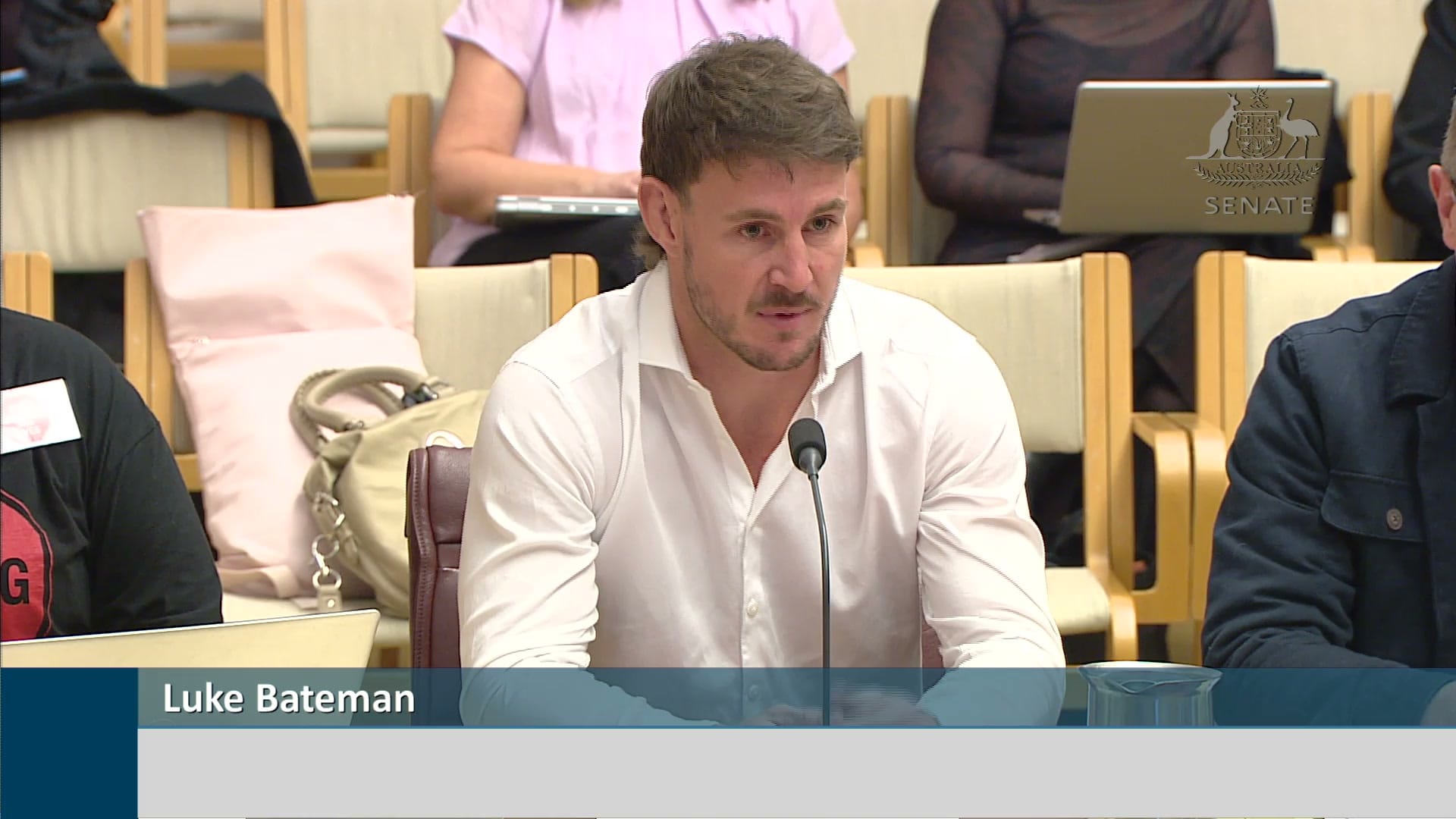
Bateman also told the inquiry that gambling companies had flown him around the country and supplied him with alcohol and drugs while he lost heavily. He later confirmed to the Australian Financial Review that he'd spent six months in 2020 working for the now defunct Southern Cross Bet, handing out deposit matches to new customers. Neither the company nor the job appears anywhere in the transcript of his evidence. Pocock said he didn't believe Bateman had sought to hide anything or mislead the inquiry, and that the disclosure reinforced the weight of his evidence.
The Greens want cannabis legalised, and David Shoebridge objects to being drug tested
Hanson-Young's line of attack on the betting companies leaned heavily on drugs, and she described a VIP manager working out a customer's vulnerabilities as "being a drug dealer and behaving like a drug dealer". Her own party has spent a decade arguing that the drugs in question shouldn't be illegal in the first place.
Her Greens colleague David Shoebridge spent the first weekend of May at Nimbin's MardiGrass cannabis festival, on an expert panel arguing for drug law reform. The Echo reported his remarks, which included the observation that police resources go into Campbelltown, Lismore and Nimbin rather than Double Bay, Bondi Junction or Randwick, which he called "such an obvious class/race social project". He also told the audience that organised crime and police have "a kind of co-dependency" that keeps drug laws in place.
Shoebridge has form on the enforcement side of this too. After being stopped at MardiGrass in 2021, when he was still a New South Wales MP, he wrote publicly that he'd been "randomly" tested twice in a day. He called it a "pointless waste of police resources" and complained about "squads of police and multiple police vans at every entry point drug testing drivers". He also fronts Sniff Off, a Greens campaign that collects and publishes sightings of police drug dog operations so the public can avoid them. His 2023 bill to legalise cannabis nationally was defeated by Labor and the Coalition, and he described the attacks on it from the major parties and One Nation as "cartoonish".
The Greens have argued that position openly and consistently for years, which makes their shock at drugs turning up in a gambling story a curious sort of outrage from a party that wants those drugs legal and the roadside testing wound back. The allegation that matters in Costello's account is that a company worked out what an addicted customer wanted and kept supplying it while he lost $12.3 million that wasn't his, and that would be just as serious if nobody had mentioned a drug at all.
What happens next
Public hearings are over and the committee reports on 17 August. The bill and its companion, the National Self-exclusion Register (Cost Recovery Levy) Amendment Bill 2026, then return to the Senate, where Labor needs either the Coalition or the Greens and the crossbench to pass them. The Greens, who forced this inquiry, are holding out for a complete ban on gambling advertising across print, radio, television and social media, and Hanson-Young has said the bill as drafted won't protect anyone.
What two days of hearings could not establish is where the figure of three ads an hour came from, or who told the government it was safe for children to see them. Mackay undertook to come back to the committee with an answer.
If gambling is causing you or someone you know harm, Gambling Help Online is available 24 hours a day on 1800 858 858.