Australian sheep farmers are paying a 12.5% American tariff because Labor never passed a law stopping goods made by forced labour from entering Australia. Britain, Canada and India passed that law and pay 10%. The goods it would stop at the dock come mostly from China, which buys close to a third of everything Australia sells, and Labor has left the ban out of its own reform plans.
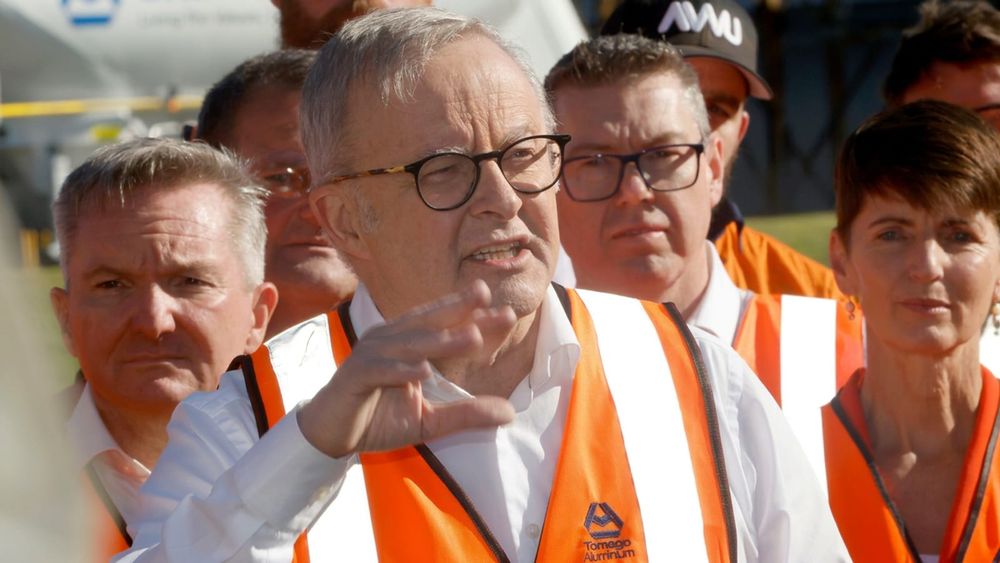
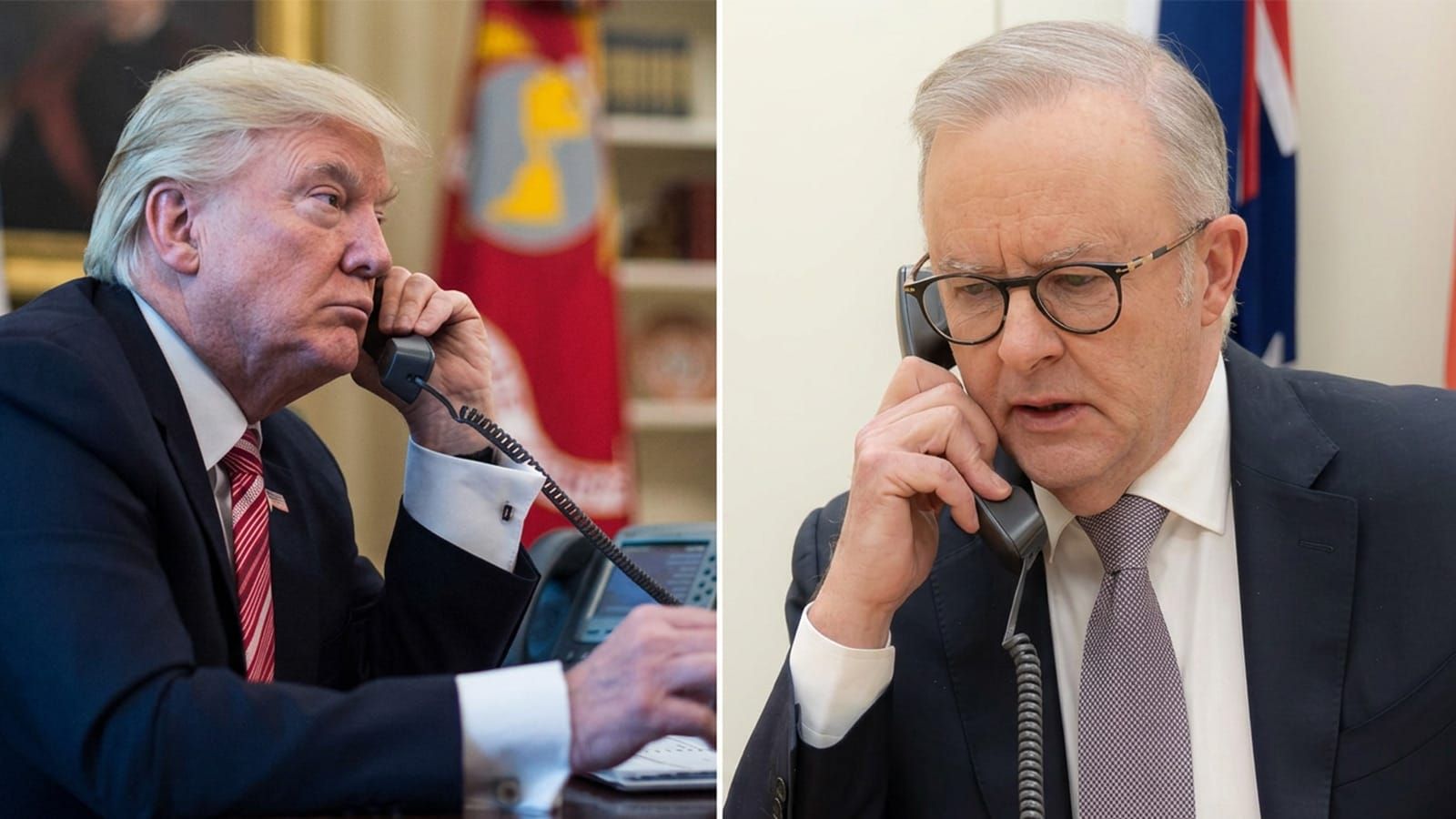
Washington opened its investigation in March and made the final call on 23 July. Australia used none of that time, and on Thursday night Anthony Albanese rang Donald Trump to ask him to lift the tariff as a favour instead. He didn't get it. The Prime Minister told reporters in Canberra on Friday that his ask was that Trump "consider full exemption or at the very least no increase", and that Trump's own position on tariffs hasn't shifted.
"The President, of course, has a different position, that he has expressed many times, but I did ask that Australia's position as a friend of the United States be considered," Albanese said. "The President agreed he would give consideration to my request."
A tariff is a tax charged on goods arriving from another country. The American importer pays it and passes the cost on, which is why Australian lamb now costs more on an American shelf than lamb from a country that met the test.
The United States Trade Representative, the agency that runs American trade policy, opened investigations into 60 economies on 12 March and published its findings on 2 June. Australia was named as one of 54 that had "failed to impose and effectively enforce" such a ban. We covered that finding when it landed.
Albanese has asked for an exemption instead of passing the law
The Prime Minister has run this play before. In February 2025, after the United States put 25% tariffs on steel and aluminium, Trump said an Australian exemption was something he'd give great consideration to. On 11 March 2025 he ruled it out. Albanese called that decision "entirely unjustified" and ruled out any retaliation. He didn't change the law either.
There's no White House account of what was said on Thursday night. A White House official confirmed to News24 that it happened, and everything known about what Trump said in it comes from Albanese.
Britain, Canada and India pay 10% while Australia pays 12.5%
The Americans published the test and the two rates on 2 June, and the final decision came seven weeks later. Seventeen economies ended up on the lower 10% rate: Argentina, Bangladesh, Cambodia, Canada, Ecuador, El Salvador, Guatemala, Honduras, India, Indonesia, Jordan, Malaysia, Mexico, Pakistan, Sri Lanka, Trinidad and Tobago and the United Kingdom. Everyone else pays 12.5%, and that group includes China, Russia and Australia.
The test was a single thing. Have a law banning forced labour goods at your border, or commit to one in a trade agreement with the United States, or run a partial version that keeps some of those goods out. The USTR's own fact sheet notes that some countries enacted bans "in response to these investigations in recent weeks".
Australia argued instead. The government lodged a submission into hearings held from 7 to 9 July, which took evidence from more than 100 witnesses and over 1,600 written comments. The Australian position, put by a spokesperson for Trade Minister Don Farrell, was that we have "robust, comprehensive and world leading legislation" on forced labour and modern slavery. The final decision came on 23 July and Australia stayed on 12.5%.
Michelle Rowland's new law doesn't stop anything at the border
A week before that decision, on 16 July, Attorney-General Michelle Rowland announced changes to the modern slavery laws. Companies turning over more than $100 million will face a new criminal offence if they fail to prevent modern slavery in their supply chains, with a defence available if they can show they took reasonable steps. The size of the fines and what counts as reasonable steps are still to be settled in consultation.
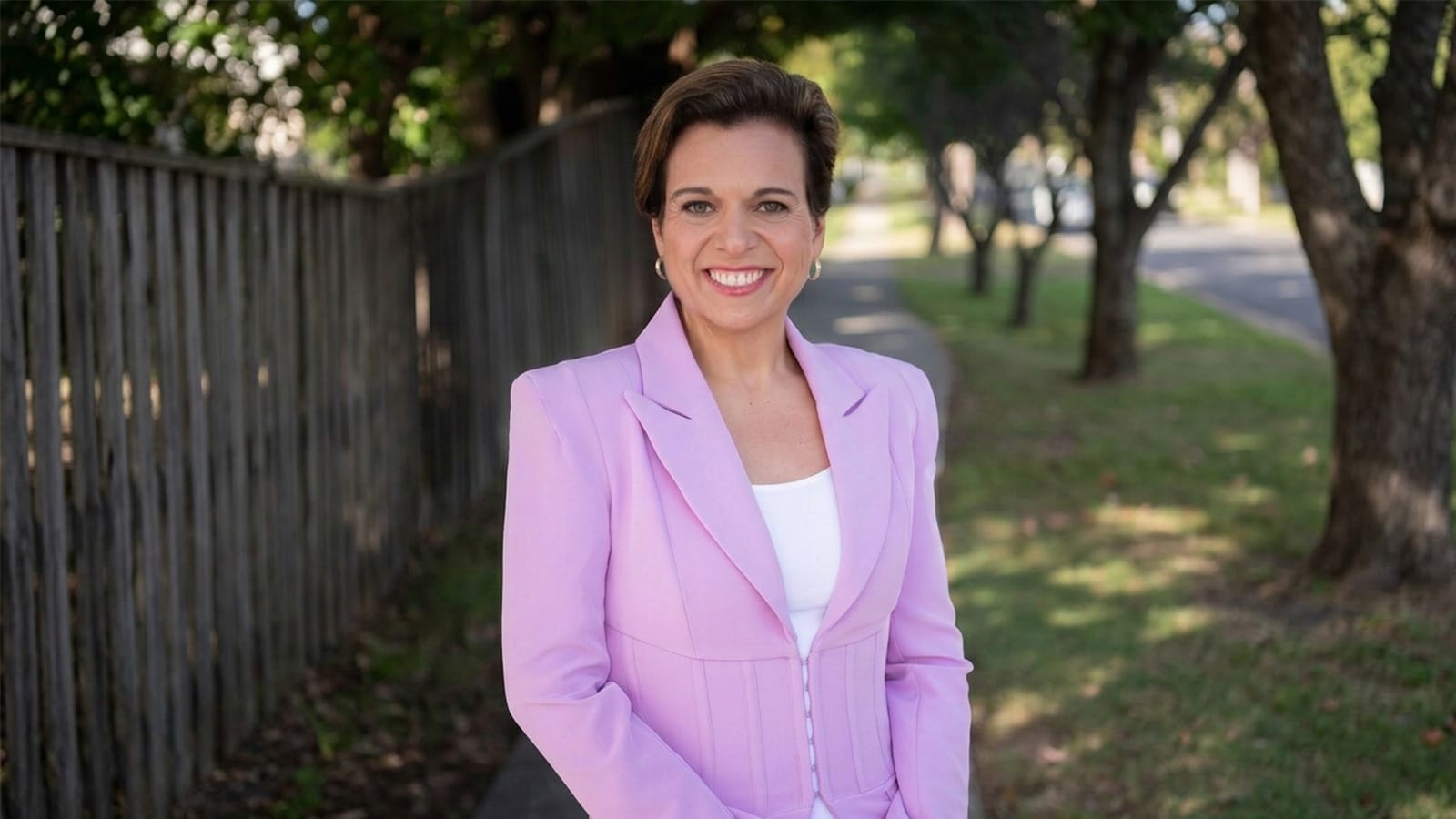
None of that gives anyone the power to turn goods away at the dock. It's an obligation on big companies to manage their own supply chains, which isn't what the Americans were measuring.
It's also what Albanese offered Trump. He told reporters he'd informed the President about "the strengthening that we have put forward as well to look and hold companies accountable for the supply chain process".
He raised the free trade agreement too, telling Trump that "all goods and services are exempt from tariffs to Australia". That deal took effect in 2005 and carries no forced labour commitment. Several countries on the 10% list got there by making exactly that commitment in newer trade agreements with the United States.
Labor's own anti slavery commissioner wants the ban Labor won't pass
The Attorney-General's Department has been consulting on strengthening the Modern Slavery Act since August 2025 and opened a further round in January on mandatory due diligence and high risk declarations. A border ban isn't in either one.
The Act's own statutory review, led by Emeritus Professor John McMillan AO of the Australian National University, landed on Labor's desk in May 2023 with 30 recommendations. McMillan found "no hard evidence that the Modern Slavery Act in its early years has yet caused meaningful change for people living in conditions of modern slavery", and recommended penalties and a mandatory due diligence obligation. Three years on, none of it has been legislated.
The ban isn't some new idea nobody in Canberra had considered. The Senate passed one in August 2021, on a bill from independent senator Rex Patrick. It went to the House of Representatives that November and never came to a vote, and Labor has been in government since May 2022 without bringing it back.
Chris Evans sat in the Senate for Labor in Western Australia for 20 years and was immigration minister under Kevin Rudd and Julia Gillard. This government appointed him to the job in November 2024. Measures to stop goods made by forced labour at the border sit in his strategic plan for 2025 to 2028, and they aren't in the government's consultation.
The reason given, when one is given, is difficulty. The formal government response to the Senate committee in 2022 said a border ban carried significant practical, administration and enforcement challenges and needed extensive scoping and consultation with business. Nothing has replaced that answer since. The United States and Canada both run one, and the European Union's starts by the end of 2027.
China buys almost a third of everything Australia sells
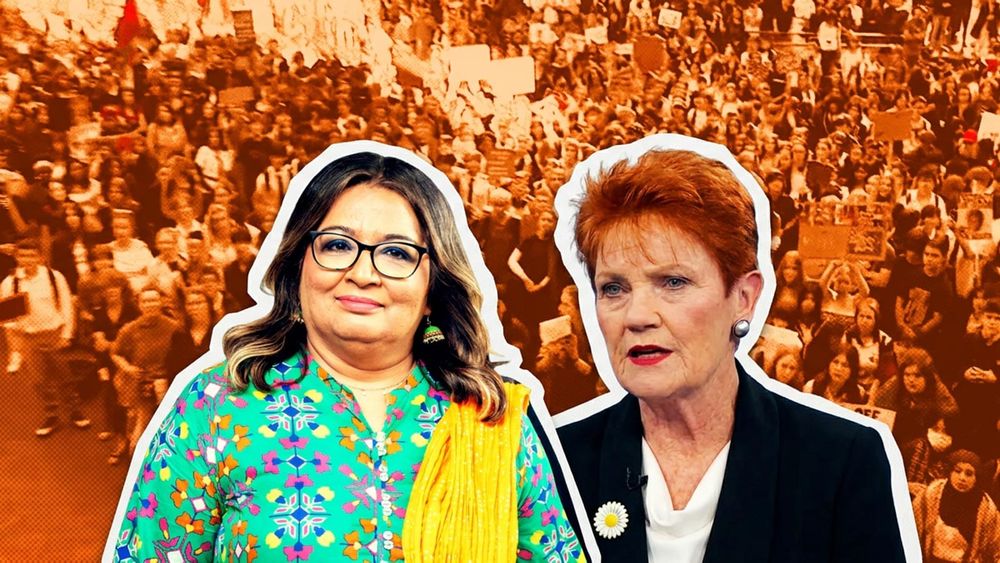
A ban would land on China. It's Australia's largest trading partner by a distance, worth $309 billion in two way trade in 2024 to 2025. That's about 24% of everything we trade with the world, and China buys close to a third of our exports. Around 80% of the solar panels installed in Australia come from China. China refines about 95% of the world's polysilicon, which is the processed silicon at the heart of every panel. Researchers put roughly a third of global supply in Xinjiang, where the United States, Britain and the European Union have all documented forced labour programs targeting Uyghurs. Washington banned Xinjiang imports outright in 2022. Australia banned none of it, and the panels keep arriving into a rollout the government's energy targets depend on. Pauline Hanson wants net zero scrapped altogether, arguing the turbines and panels are made with coal, moved with fuel and backed up with gas.
The Uyghur Human Rights Project's Elijah Pockell-Wilson wrote in July that Australia imported around US$4.82 billion of goods in 2024 from the sectors most exposed to Uyghur forced labour, including cotton textiles and clothing, solar inputs, aluminium and chemicals. His warning was that as America and Europe tighten up, the goods they turn away get sent somewhere that won't.
Sheep farmers are paying for the law Labor never passed
Sheep farmers are carrying this one alone. Beef, gold, copper and pharmaceuticals were exempted, and between them they cover about 70% of what Australia sells into the United States. Lamb, mutton and goatmeat weren't, and went from 10% to 12.5% on 24 July. In the year to 30 June the United States was our biggest market for all three meats, taking 493,000 tonnes of beef, 85,200 tonnes of lamb and 30,776 tonnes of goatmeat.
Australian Meat Industry Council chief executive Tim Ryan said the measure was "unjustified" and "fundamentally fails to recognise Australia's world-leading record on labour standards and worker protections". That's the same case Canberra put to the Americans in July, and it's the one that lost.
Everywhere the alliance depends on Washington, it's been delivering. The US Navy stood up a new command at HMAS Stirling in Western Australia in May and expects 2,300 Americans there by 2030, with American and British submarines rotating through from next year. The first permanent American war stockpile on Australian soil is going into rural Victoria, beyond the range of most Chinese missiles. Trump and Albanese signed a critical minerals framework in October last year covering more than $3 billion in combined public investment, and the Prime Minister says the AUKUS submarine program is "full steam ahead". The tariff is the only piece of it that needs a law passed in Canberra, and Canberra hasn't passed one.
Albanese also pointed Trump to the US$400 million, about $566 million, going into the Sunrise Energy Metals scandium project at Fifield, west of Dubbo, calling it critical to the high heat aluminium alloys used in fighter jets and spacecraft. That money is a conditional loan commitment from the US Department of War's Office of Strategic Capital, not anything out of Canberra, and Sunrise hasn't reached financial close on it yet. New South Wales put in a five year deferral on royalties Sunrise still has to pay in full.
A forced labour import ban passed the Senate five years ago and Labor still hasn't legislated it. Until it does the rate stays where it is and sheep producers keep paying it, while Albanese's plan is to ask Trump for the favour again next month at the UN General Assembly in New York.