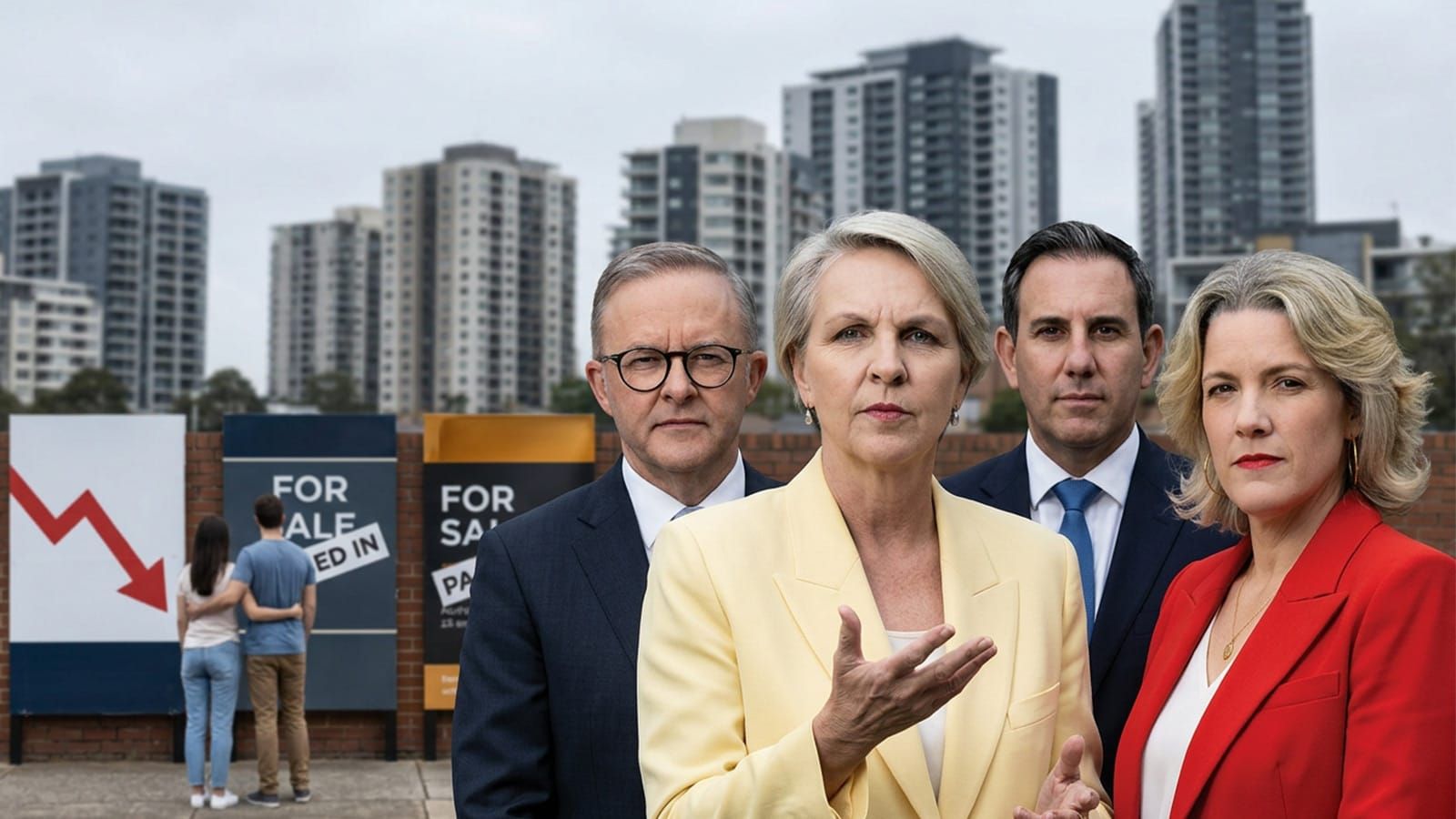
Tanya Plibersek says there's never been a better time to be a first home buyer. So we ran the numbers on one average young Sydney couple: what a bank will actually lend them, what that buys, and what happens to their deposit if prices keep sliding.
Take two 30 year olds. The ABS puts the median total income for a 25 to 34 year old at $63,382. That's $126,764 between them before tax, and about $8,700 a month after tax and the Medicare levy.
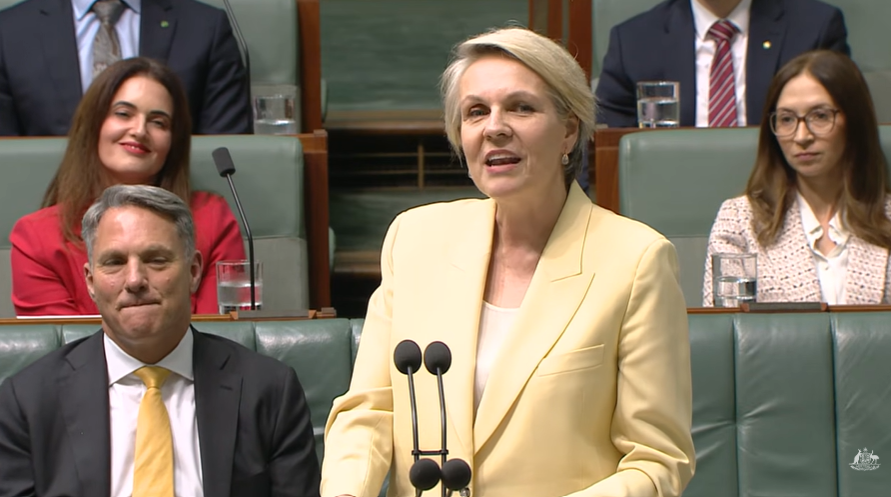
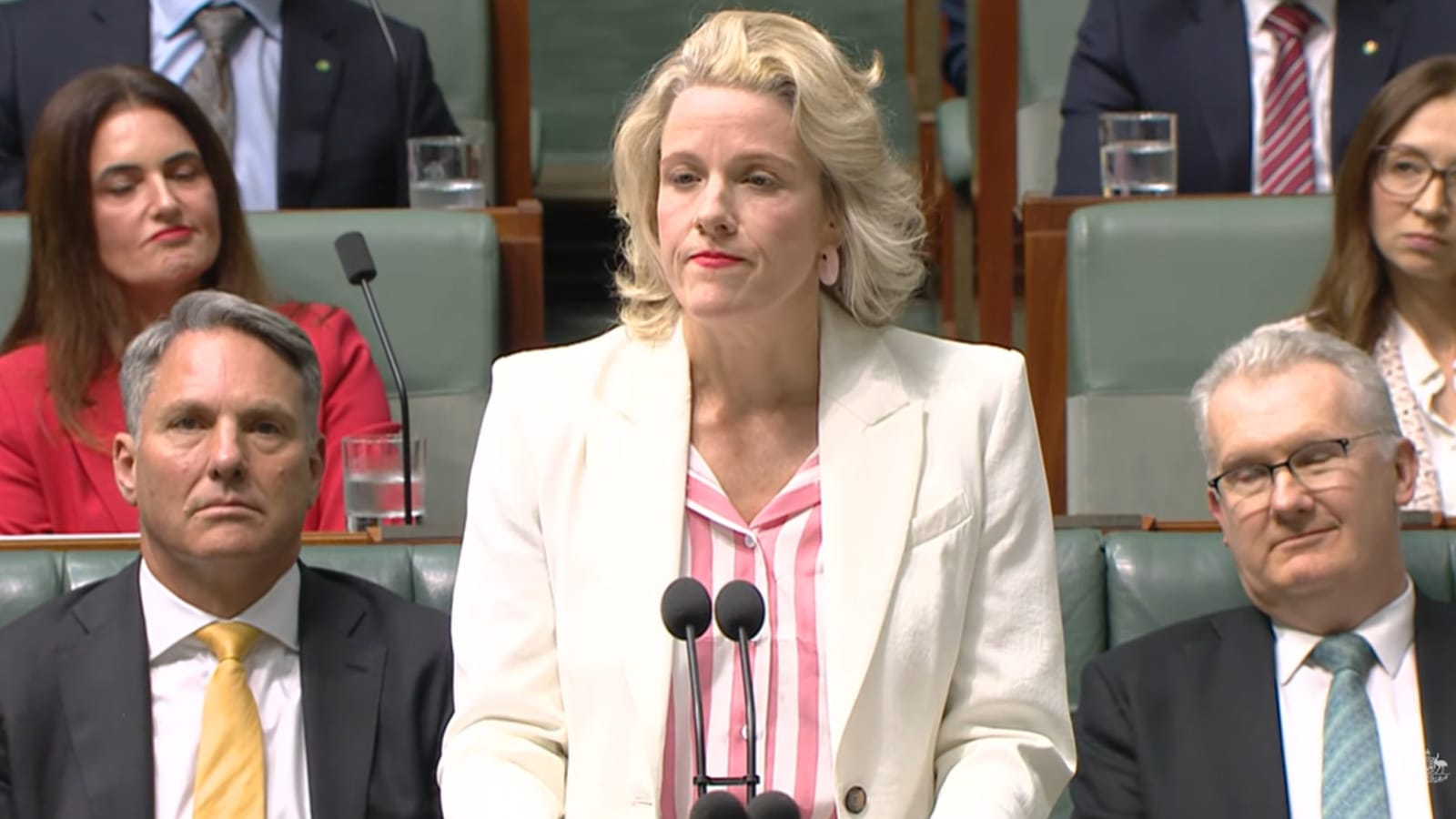
Clare O'Neil was asked four times which way she wants prices to go
Housing Minister Clare O'Neil went on Sunrise in June and was asked, four separate times, whether the government wanted house prices to go up or down. She never landed on an answer until the last one.
"How much does the government want property prices to fall?" host Natalie Barr asked. "Well, that's not what the government wants and that's not the effect of the government's policies," O'Neil said.
Barr tried again. "So you want them to go up?" O'Neil: "What we want to see is sustainable growth, Nat." Asked a third time, she repeated it. By the fourth attempt Barr told her she was confused, and O'Neil got there.
"But I do want to see property prices grow. I want to see them grow sustainably for the country," she said.
So the Housing Minister wants prices to go up. They've fallen four months running instead. That leaves a first home buyer stuck between two ministers. One says this is the moment to buy. The other says the plan is for prices to keep climbing. Right now it's doing neither.
Why the bank stops them at $660,000
A couple on that income can borrow somewhere between $570,000 and $660,000. Two numbers most buyers never see decide where they land.
The first is the going rate. The Reserve Bank's figures put a new home loan at 6.15%. The second is APRA's buffer, a rule that forces lenders to add 3 percentage points on top and check you could still pay. So nobody asks whether this couple can afford 6.15%. They ask whether they'd survive 9.15%.
At the top of their range, that's a loan they can only just carry. The repayment takes 46% of everything they earn after tax, and the bank signs it off only because it believes they'd survive 62%. Anything above 30% counts as mortgage stress.
One claim doing the rounds about the lending rules is wrong. APRA has not brought in a hard debt limit that gets applications knocked back. It said on 28 May that the caps it does have are "not restricting overall bank lending". What's shrinking borrowing power is the rate rises.
The same loan, at both rates:
| The most they can borrow | The median Sydney unit | |
|---|---|---|
| Purchase price | $694,737 | $849,068 |
| 5% deposit | $34,737 | $42,453 |
| Loan | $660,000 | $806,615 |
| Monthly repayment, 6.15% | $4,021 | $4,914 |
| Share of take home pay | 46% | 56% |
| Bank tests it at 9.15% | $5,382 | $6,577 |
| Share of take home pay | 62% | 75% |
Repayments over 30 years. Rate from the RBA, buffer from APRA, take home pay of $8,719 a month worked out from ABS median income after tax and the Medicare levy. The right hand column is the loan no lender will write.
They can't afford the typical Sydney apartment, let alone a house
Add a 5% deposit and $660,000 of borrowing buys a place worth about $695,000. Domain's June report puts the typical Sydney apartment at $849,000 and the typical house at $1.73 million.
That leaves them about $154,000 short of the typical apartment, which is the cheap end of the Sydney market, not the house market. On the bank's test, buying at that price would swallow three quarters of their take home pay. No lender writes that loan.
What's left is a one bedroom unit in Parramatta, Granville, Auburn or Lakemba, or a two bedroom further west at Blacktown, Penrith, Liverpool or Campbelltown. Every one of those is an established apartment, and that rules them out of the only grant on offer.
The only new home they can afford is the one with the riskiest contract
NSW hands first home buyers a $10,000 grant, and Revenue NSW is blunt about the conditions. The purchase price "must not exceed $600,000", and "the grant is not available for established homes". It's new builds, substantial renovations, or off the plan.
So the only route to that $10,000 pushes this couple toward an off the plan apartment under $600,000. That means signing a contract at today's price and settling 18 months to two years later. They'd take delivery in a market that Morgan Stanley chief economist Chris Read has forecast could fall as much as 10%, after Labor's negative gearing and capital gains tax changes.
The one incentive designed to get them into something new is the one that locks in today's price and hands over the keys in a cheaper market.
The stamp duty break is the one piece of help here with no debt attached. Revenue NSW gives first home buyers a full exemption from stamp duty on a home up to $800,000, which covers everything this couple can afford, and saves them more than $20,000 in cash.
Three ways in, and the cheapest one is the most dangerous
The 5% deposit scheme is the one Plibersek was defending. Labor dropped the income caps and place limits on 1 October 2025, so there's no means test and no waiting list. The site says it plainly: "Your income doesn't restrict your access."
Help to Buy is a shared equity scheme, which means the government buys a slice of the home with you and keeps it until you buy it back. It takes up to 30% of an established home, or 40% of a new one. It's capped at $160,000 for a couple, and there are only 10,000 places a year.
On a $695,000 apartment, the most they can reach, the three routes look like this.
| Pathway | Cash needed | The catch |
|---|---|---|
| Help to Buy, 2% deposit | $13,895 | Couple income capped at $160,000, only 10,000 places a year, and the government owns up to 30% of the home |
| 5% deposit scheme | $34,737 | No income cap and no place limit, but a 5% fall wipes out the entire deposit |
| Standard bank loan, 20% | $138,947 | The deposit on its own is more than the couple earns after tax in a year |
Cash needed on a $694,737 purchase. None of the three attracts the mortgage insurance that normally applies to a small deposit, and a purchase at this price pays no stamp duty in NSW.
Sydney has already fallen by the size of their entire deposit
A 5% deposit is wiped out by a 5% fall, and that doesn't take a crash or a recession.
Sydney values were 3.7% below their January peak at the end of June, then fell another 1.4% in July. That puts the market about 5% below where it topped out. Anyone who bought a Sydney apartment in January on a 5% deposit is already at or through the line.
Negative equity isn't just a number on a statement. In Australia the debt follows you rather than the house, so you can't hand back the keys and walk away. Motley Fool chief investment officer Scott Phillips told News24 that this traps people in a "mortgage prison", because banks won't refinance a loan that's underwater. If rates fall next year, the buyers who most need a cheaper repayment are the ones who can't get one.
This is what each step down does to a couple who bought at $695,000 with $35,000 of their own money in it.
| If Sydney falls | The apartment is worth | Where that leaves them |
|---|---|---|
| Nothing | $694,737 | $34,737 in front |
| 5%, roughly where Sydney is now | $660,000 | Deposit gone, nothing left |
| 10%, the Morgan Stanley forecast | $625,263 | $34,737 behind |
Based on a $694,737 purchase with a 5% deposit. The loan stays at $660,000 the whole way down. Selling at a 10% fall costs about $49,242 once agent commission of 2% and legal fees are added.
Two full time wages lock you out of the cheapest door
There's a twist in who qualifies. The $126,764 is a typical figure that includes part time and part year workers. Two people both working full time earn far more. ABS average weekly earnings put a full time adult on about $107,000 a year, or $213,000 for the couple.
That couple is $53,000 over the Help to Buy cap, so the 2% door is shut to them. They can borrow more, so they buy more, so they carry a bigger loan into the same falling market.
So the thinnest deposit and the biggest exposure are reserved for the households least able to absorb a loss. The ones earning enough to take a hit get pushed toward the bigger mortgage instead.
First home buyers are already walking away from it
The scheme has no income test and no place limit, and it saves buyers the insurance premium that normally applies to a small deposit. Take up is falling anyway. ABS lending figures for the March quarter show the number of first home buyer loans fell 4.3% over the quarter, and the value of them fell 6.7%.
The average first home buyer loan in NSW is $860,000. Our couple's ceiling is $660,000.
That $200,000 gap says the average first home buyer in this state isn't an average income couple. They've got family money behind them, or two large full time salaries, or they've stretched somewhere the numbers don't show.
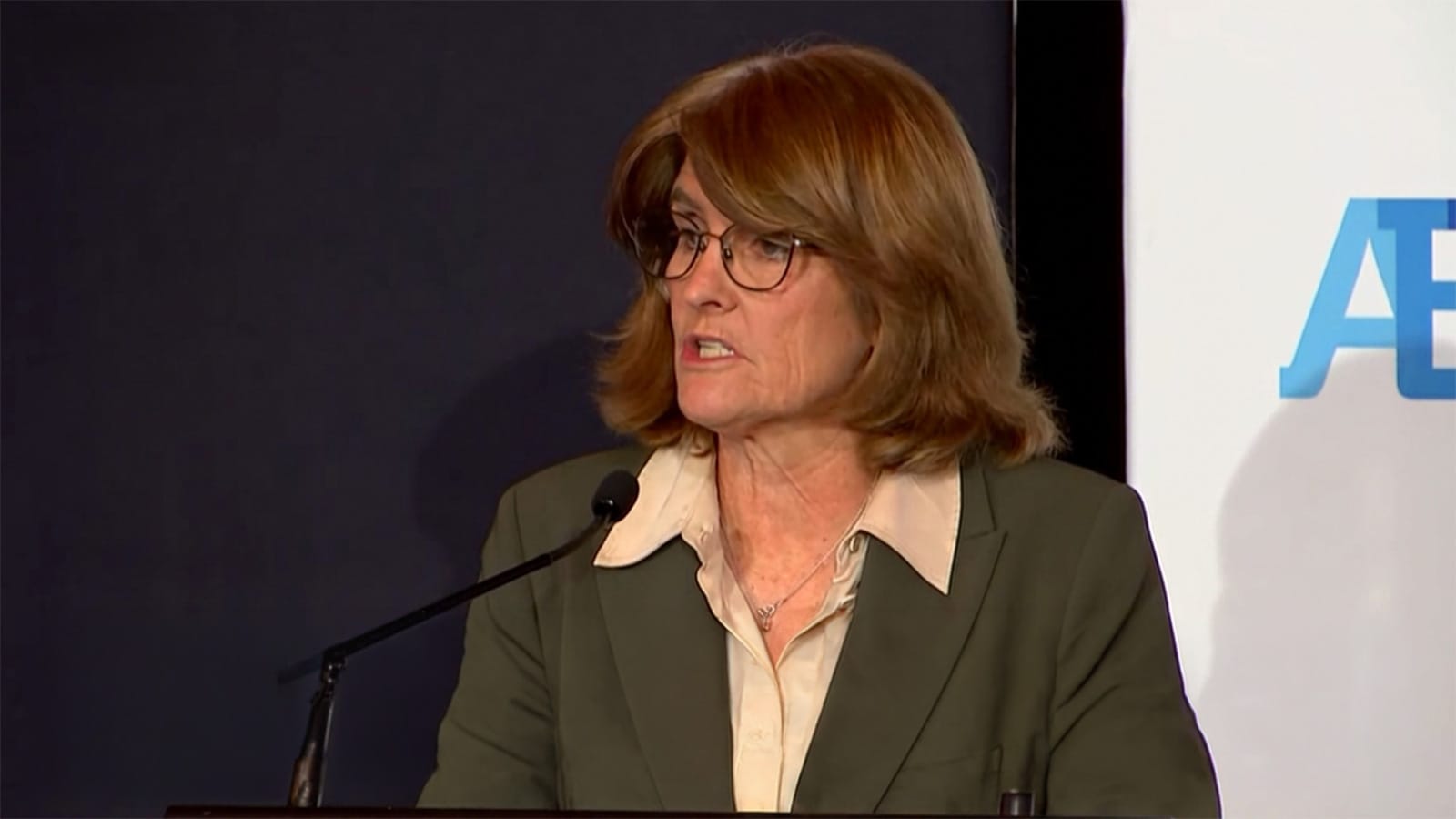
Michele Bullock says prices haven't stopped falling yet
The cash rate is 4.35% after three rises this year, and Reserve Bank governor Michele Bullock has put a fourth on the table, which would take it to 4.60%. The board meets on Monday and Tuesday.
Bullock's own description of where this lands was that prices "might lower a bit, and people might feel more confident to come back into the market". That's the governor describing a floor that hasn't been reached.
Domain got there from the other direction, reporting that this year's rate rises have "materially reduced borrowing capacity" while tax changes have made buyers "more cautious, price sensitive and selective". Sydney's auction clearance rate is 48%, the weakest since April 2020, and a record 29.3% of auctions are now withdrawn rather than sold.
So should you wait
Prices may well keep falling from here. The catch is that borrowing capacity falls with them, because the same rate rises pulling prices down are also shrinking what a bank will lend. A cheaper apartment doesn't automatically become one this couple can reach.
The other half of it is the recovery. Waiting for the bottom means buying at the lowest price, and taking the most capital growth when values climb again. The board sits on Tuesday with a fourth rise on the table, so the rate cycle driving all this hasn't turned.
Whether that trade is worth making is a decision for you and a licensed financial adviser. The tables above show what it costs either way.
Plibersek's own concession was that she "shouldn't have made it sound quite as easy" as she did. On the Bureau's income figures, the Reserve Bank's rate and Revenue NSW's own thresholds, it isn't easy, and the arithmetic doesn't care who's in government.
This article is general information only and does not constitute financial advice. Property markets are unpredictable and individual circumstances vary. Before making any property decision, speak with a licensed mortgage broker and an independent financial adviser who can assess your situation.