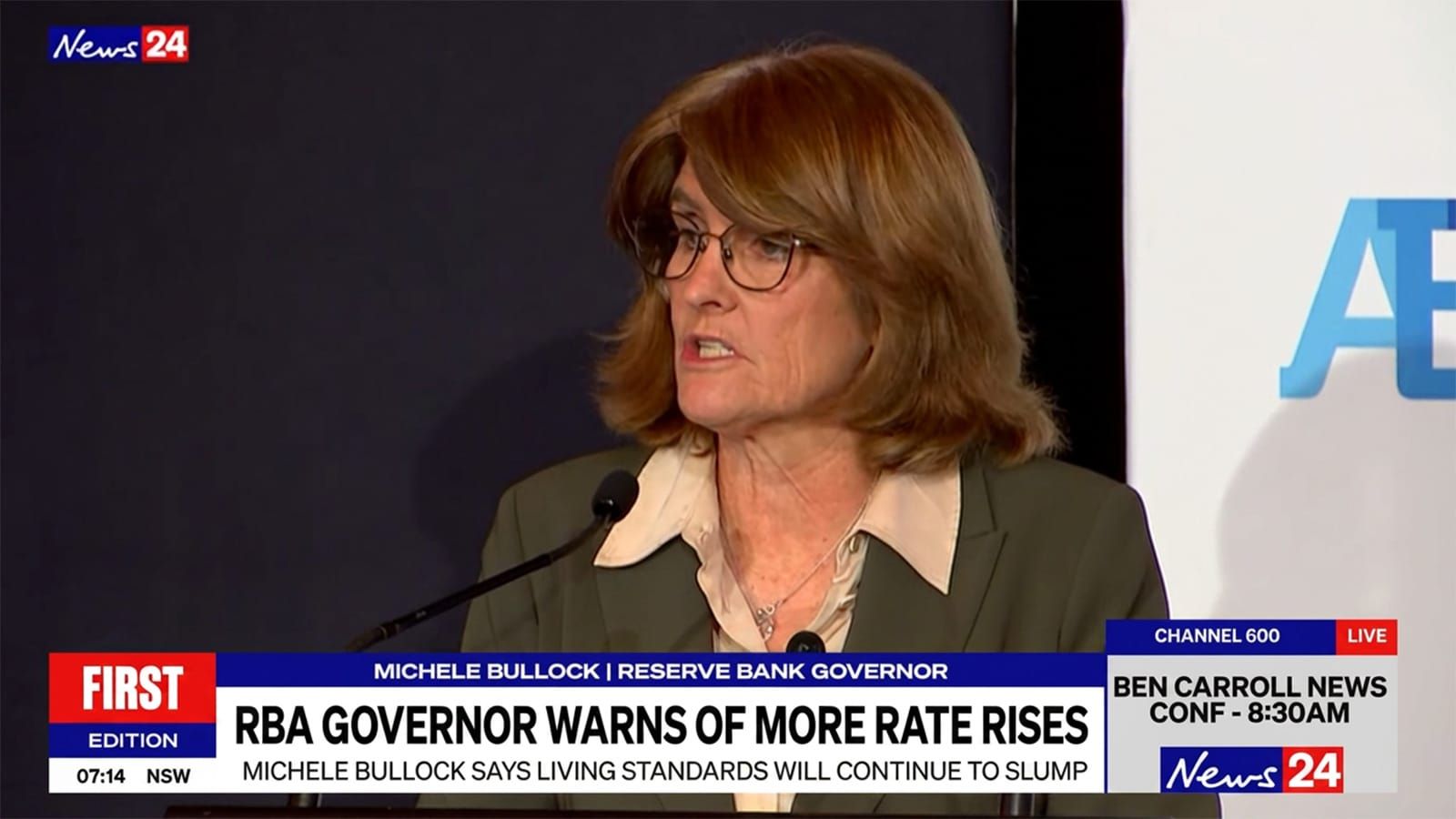
Reserve Bank governor Michele Bullock has warned Australians to brace for a possible fourth interest rate rise this year, and Shadow Treasurer Tim Wilson says the Albanese government's spending is the reason, accusing Labor of "borrowing from tomorrow and spending today" while mortgage holders wear the cost.
Bullock used a speech to the Anika Foundation in Sydney on Tuesday to put another rise squarely on the table. "The board is prepared to act as required to achieve its mandate, including by increasing the cash rate further if needed," she said. The cash rate already sits at 4.35% after three rises this year. A fourth would take it to 4.6%.
The trigger could come as soon as today. June quarter inflation figures land at 11.30am, and economists say an underlying inflation reading of 3.9% or higher could force the board's hand at its meeting on 10 and 11 August. Markets price a one in four chance of a 0.25 percentage point rise.
"If it looks like that inflation is not coming down, then I think the board have some difficult decisions to make in terms of raising interest rates," Bullock said.
Tim Wilson says Labor's "spending addiction" has forced the RBA's hand
Tim Wilson told Peter Stefanovic on News24 this morning that the threat of another rise traces back to the Albanese government, not the Reserve Bank, because Labor keeps "borrowing from tomorrow and spending today" and stoking inflation, "forcing the hand of the Reserve Bank governor".
"They cannot stop their spending addiction. They're inflation junkies, and that's why the Reserve Bank governor has been forced into this position," Wilson said.
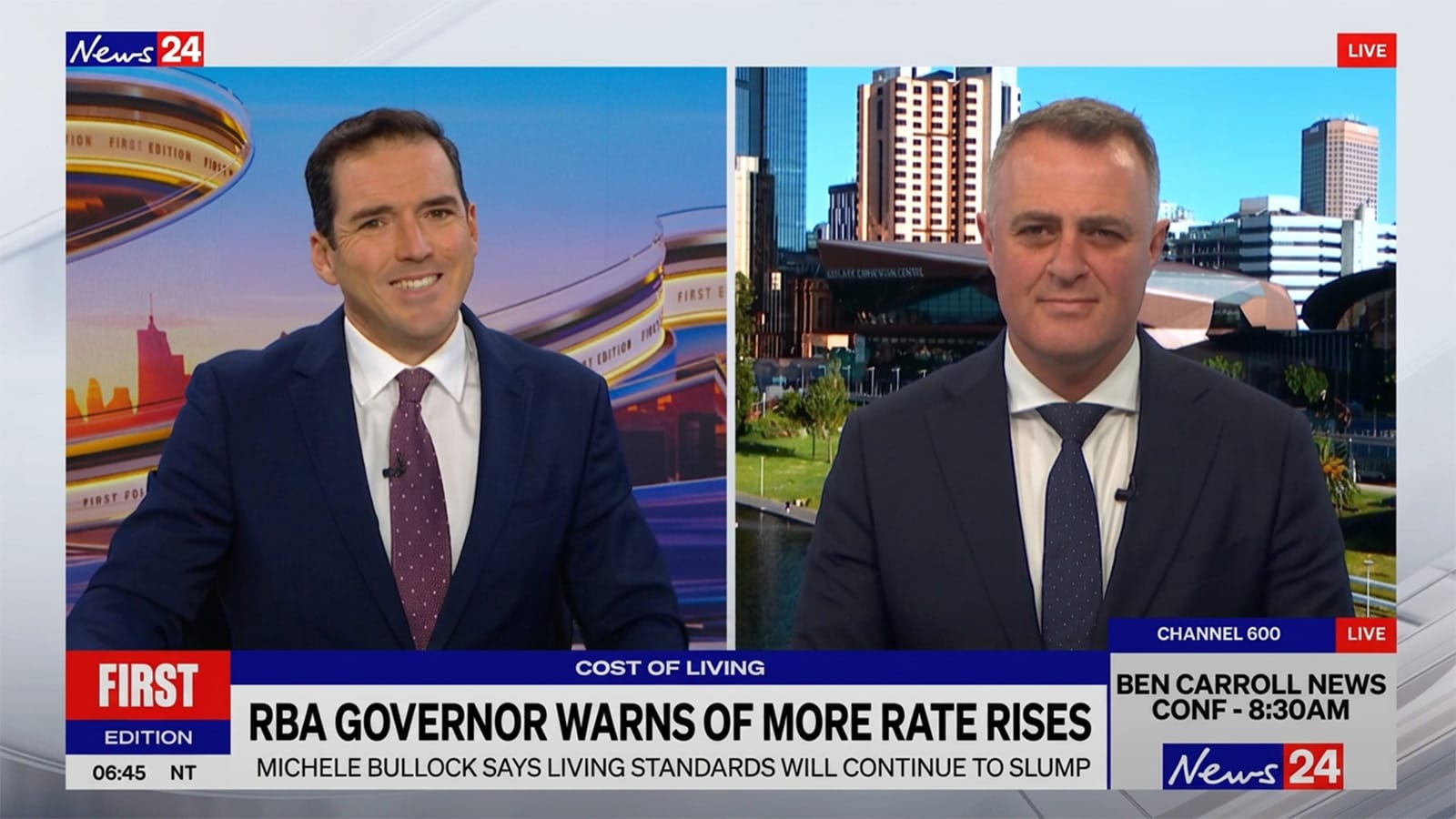
Pressed on whether the war in Iran and dearer fuel were the real culprits, Wilson said Iran only added a temporary spike to "a problem that existed before Iran, it continues during the Iran crisis, and it will continue if Iran ended tomorrow".
The numbers back him on the timeline. Underlying inflation sits at 3.6%, well above the Reserve Bank's 2 to 3% target band, and Michele Bullock herself told Tuesday's lunch the problem predates the conflict, saying "elevated underlying inflation is consistent with ongoing capacity pressures in the domestic economy".
Real wages down 5% and the worst decade for living standards since the 1910s
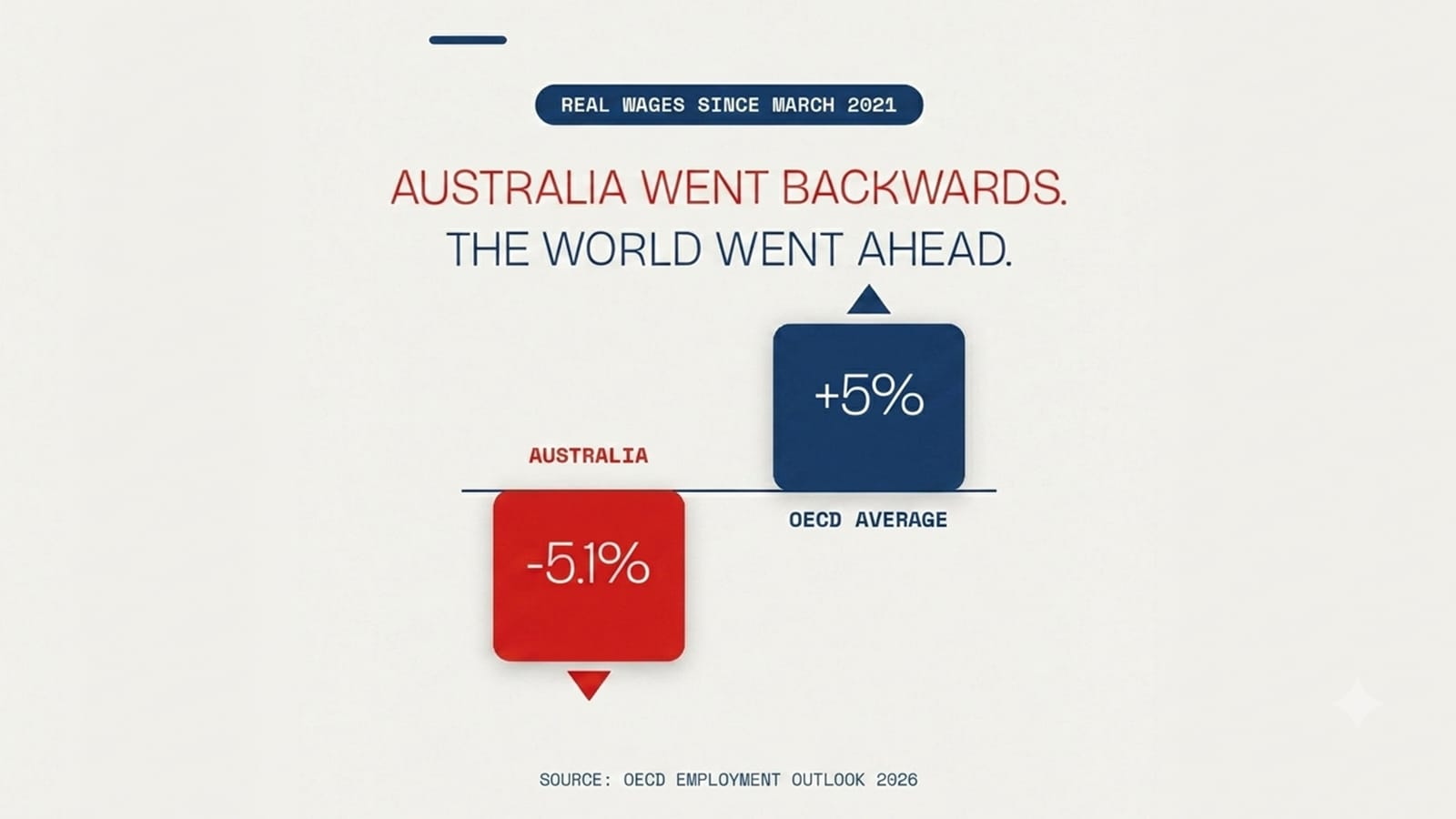
The OECD reported this month that Australian real wages have fallen 5% over the past five years, one of the worst results among its 38 member countries. GDP per person has grown just 4% since 2020, and the Australian Financial Review reports Australia is heading for its weakest decade of living standards growth since the 1910s.
Productivity is why the Reserve Bank says it can't simply grow the country out of trouble. Productivity fell 0.6% in the March quarter and managed just 0.3% growth over the year, against a 1.7% average between 2004 and 2016.
"With continued weak productivity growth, the economy can't grow strongly without putting pressure on inflation. This is a fundamental challenge for the Australian economy over the next few years," Bullock said.
For households, that lands as prices rising faster than pay. "Prices increase, but incomes don't adjust proportionately, which means people can't buy as much as they could before and many households are worse off," Bullock said. It's the squeeze that has pushed the cost of living to the centre of federal politics this year.
Michele Bullock brushed off Jim Chalmers' investment boast
Treasurer Jim Chalmers has hailed the strongest annual rise in machinery and equipment spending in more than two decades as proof business investment is turning around. Michele Bullock said it wasn't "shooting the lights out", and that much of the increase reflected outlays on data centres. It's not the first time Chalmers' numbers have run ahead of the record.
Labor's budget claims its productivity reforms will cut the regulatory burden on business by $10.2 billion a year. Bullock's prescription was blunter: "That's why I, personally, think getting inflation down and low and stable is critical because businesses do better in environments where they're not worrying about cost pressures all the time."
Negative gearing changes have hit housing harder than the RBA expected
Bullock said the housing market has eased by more than the bank forecast in May, pointing to the three rate rises and "recent policy developments", an apparent reference to the Albanese government's changes to negative gearing and the capital gains tax discount.
"People will get used to the new rules. Hopefully, the conflict overseas will die down, and they'll get a bit more confidence. Prices might lower a bit, and people might feel more confident to come back into the market," Bullock said.
The Reserve Bank board meets on 10 and 11 August. Before then comes today's 11.30am inflation number. If it prints at 3.9% or higher, mortgage holders may be one meeting away from a 4.6% cash rate.