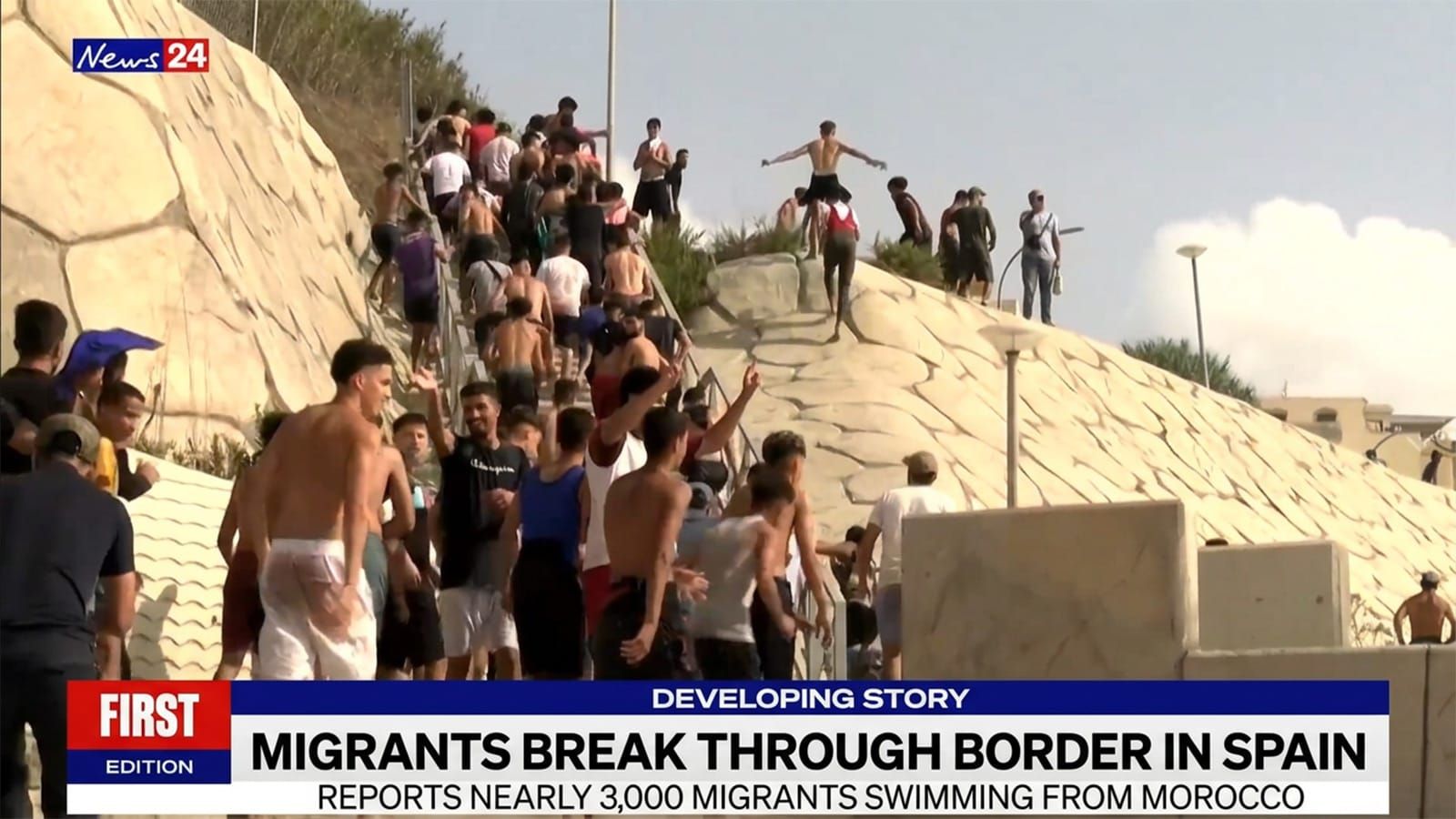
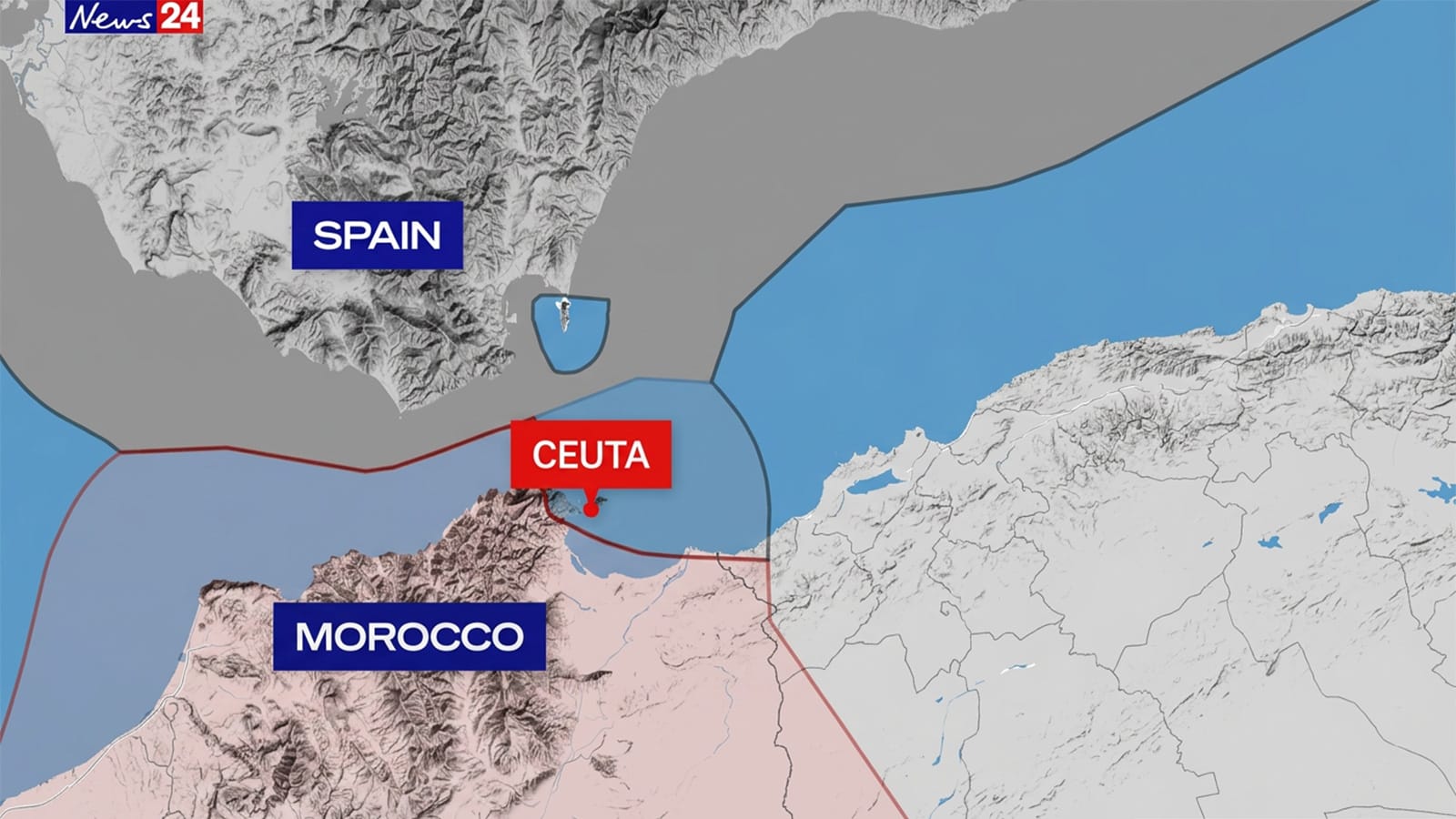
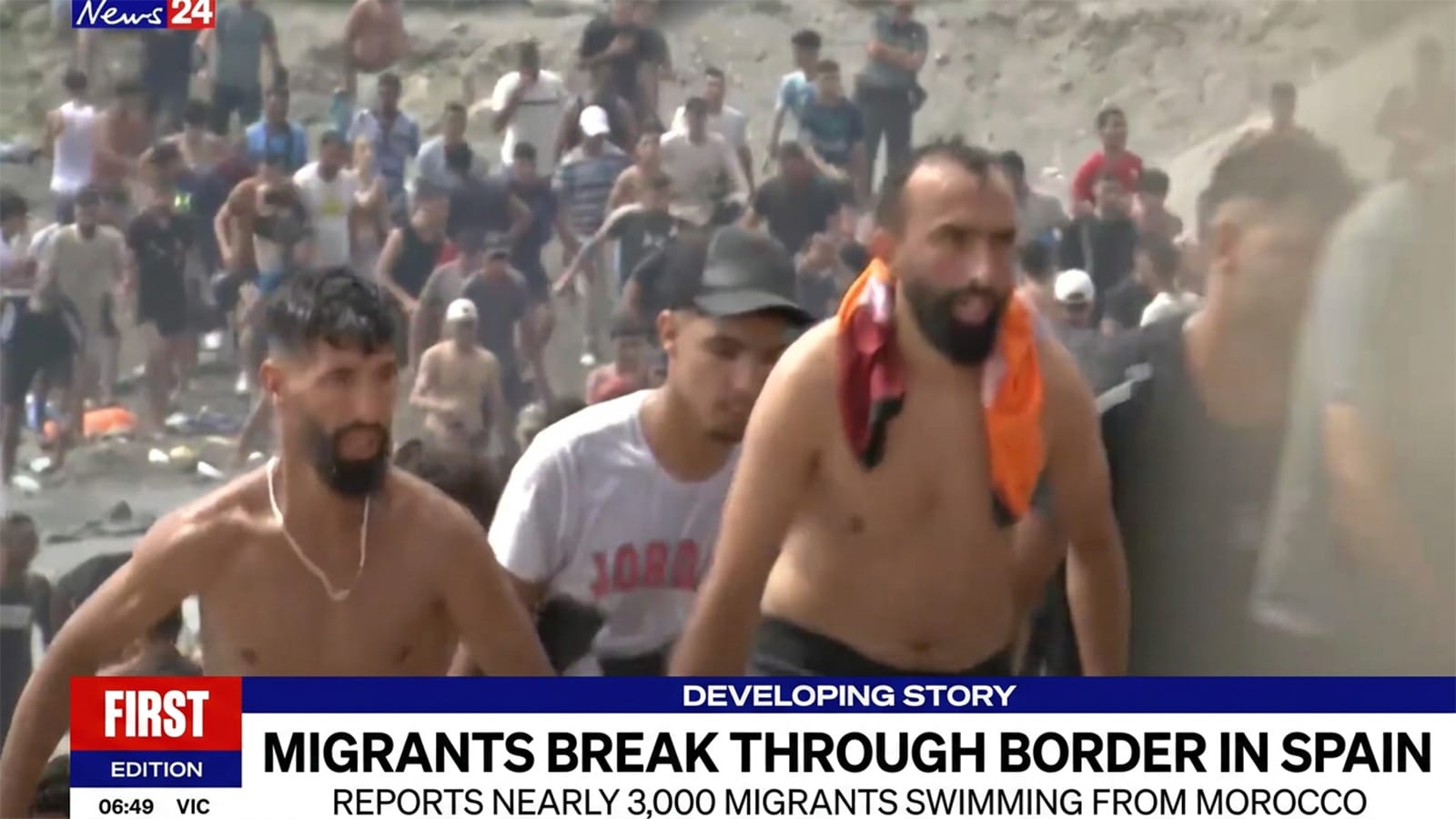
Spanish prime minister Pedro Sánchez was due in Ceuta on Friday alongside interior minister Fernando Grande-Marlaska, with 60 soldiers sent to the border the day before, after thousands of people crossed from Morocco into the Spanish enclave and at least nine died in the water, the Associated Press reported.
El Gobierno de España está volcado en dar una respuesta inmediata a la situación en Ceuta.
— Pedro Sánchez (@sanchezcastejon) July 30, 2026
Estamos movilizando todos los recursos necesarios, trabajando con las autoridades marroquíes e internacionales, y preparando las medidas necesarias para recuperar la normalidad lo antes…
Rachid Sbihi, who heads the association representing Spain's Civil Guard officers in Ceuta, told the agency the border had "totally collapsed". "The situation is absolute chaos," he said. "It's not possible to give precise numbers, but there are thousands of migrants crossing."
Thursday wasn't the start of it. It was the day the numbers got too big to leave out of the reporting.
Video: X. Crowds pour along the fence line and into the water at the Ceuta border on Thursday.
Juan Jesús Vivas says up to 2,000 people swam in over ten days while the official count stayed on zero
Juan Jesús Vivas, who heads Ceuta's city government, says between 1,500 and 2,000 people swam into the enclave in the ten days before Thursday, Al Jazeera reported. He's declared what he calls "an absolute humanitarian and social emergency" and asked Madrid for the army.
News24 reported that state television put the number who crossed on Thursday at between 2,000 and 3,000.
Ceuta's emergency shelter for unaccompanied minors is running at 2,400% over its ordinary capacity, according to Vivas. The adult reception centre holds 512 people, and the Olive Press reports more people are now sleeping outside it than inside.
The trend was in the official figures long before this week. Irregular land entries into Ceuta between 1 January and 15 July reached 2,826, up 149% on the 1,133 recorded over the same period last year.
Over those same seven months, Spain's interior ministry officially recorded no sea arrivals in Ceuta at all. Not a reduced number. Zero, on a stretch of water people were already swimming. Until the 9 July ruling, anyone caught at sea was handed straight back, so they never entered the count as an arrival in the first place.
A Civil Guard officer gave Al Jazeera the timeline in one sentence: "It has been a slow trickle since the Supreme Court's ruling, but today has been an explosion."
Spain's Supreme Court ruled on 9 July that people who swim in can't be turned back, while fence climbers still can
On 9 July the Fifth Section of the Supreme Court's administrative litigation chamber ruled that Spanish immigration law doesn't permit "devoluciones en caliente", or hot returns, of people intercepted at sea trying to reach Ceuta and Melilla, Morocco World News reported.
The line the judges drew is narrow, and it's the whole story. Spanish immigration law allows an immediate rejection only for someone who gets past "established border containment elements, such as fences". Swim around the breakwater at Tarajal beach and you haven't climbed anything, so the fast return doesn't apply to you.
The court also held that drones and thermal cameras detect people but aren't barriers, so they don't trigger the provision either.
What replaces the pushback is the standard deportation process. Identification, legal counsel, the chance to lodge an asylum claim, and months of procedure. Civil Guard officers in Ceuta stopped sea returns straight after the judgment. One told Morocco World News: "Right now we cannot return them. The Supreme Court has clearly said so."
The practical result is that the same border now works two ways. Climb the fence and you can be handed straight back. Swim past the end of it and you're in the system.
Video: X. People run from Tarajal beach onto Ceuta's roads as a patrol boat sits offshore.
Pedro Sánchez announced more than a million regularisation applications four weeks before the border gave way
Sánchez's government adopted the amendment behind Spain's extraordinary regularisation on 27 January, finalised as Royal Decree 316/2026 and published on 15 April, according to Oxford University's Border Criminologies. Applications ran from 16 April to 30 June.
Madrid estimated 500,000 people would qualify. On 30 June, the day applications closed, Sánchez announced that more than a million people had applied, double the government's own forecast.
"The more than one million applications submitted show how necessary this recognition of rights and responsibilities was," Sánchez said, according to Euronews. He's argued that migrants sustain Spain's economy, its welfare system and its pensions as the population ages, and accused the Spanish right of "fuelling fear (and) stirring up xenophobic discourse that does not solve any problem".
One thing needs saying plainly, because it cuts against the easy version of this story. The regularisation doesn't cover anyone who swam in this month. Applicants had to prove five months of continuous residence in Spain before 1 January 2026, plus a clean criminal record. Nobody who crossed at Tarajal in July is eligible, and authorities have three months from the closing date to work through the applications they've received.
The argument Sánchez's opponents are making isn't about the eligibility rules. It's about what a government signals when it legalises a million people who arrived outside the system, four weeks before its own court removes the tool used to turn the next ones around.
Alberto Núñez Feijóo wants article 23 invoked, Santiago Abascal calls it an invasion
Alberto Núñez Feijóo, leader of the opposition Partido Popular, asked Sánchez to immediately activate article 23 of the National Security Law, declare the situation one of interest to national security, close the border, mobilise the army and lean on Morocco and the European Union, El Constitucional reported.
Vox leader Santiago Abascal called the crossings an invasion and put the blame on Sánchez's government. Abascal also tied the arrivals to violent crime without offering evidence for it, and that claim isn't repeated here.
Spain's interior ministry has refused the emergency declaration. The legislation covering national emergencies doesn't treat migration flows as a national security risk, the ministry says, though it has promised more resources and says administrations are coordinating to respond "with speed and efficacy".
Giorgia Meloni and Antonio Tajani are talking about suspending Schengen with Spain
Italian foreign minister Antonio Tajani posted that he was "in favour" of closing the free travel zone with Spain, saying irregular immigration "poses a threat to national security", Euronews reported.
Prime minister Giorgia Meloni went further. In a post on X written in Italian, she said she'd spoken with interior minister Matteo Piantedosi, and then set out what Rome is prepared to do.
The images coming from Ceuta are striking and demonstrate, once again, that uncontrolled illegal immigration poses a concrete threat to the security of Europe's borders. Italy will not stand by and watch. We are convening the relevant bodies, and following these meetings, we are prepared to intervene with extraordinary measures to defend the borders and the safety of citizens, including the suspension of the Schengen area with Spain.
Le immagini che arrivano da Ceuta sono impressionanti e dimostrano, ancora una volta, che l’immigrazione clandestina fuori controllo rappresenta una minaccia concreta per la sicurezza dei confini europei.
— Giorgia Meloni (@GiorgiaMeloni) July 30, 2026
Mi sono confrontata con il Ministro dell’Interno Matteo Piantedosi.…
Tajani went at the amnesty directly, calling Spain's regularisation of more than 500,000 undocumented migrants profoundly wrong. Deputy prime minister Matteo Salvini backed the call to suspend Schengen. Spain summoned Italy's ambassador over it, Türkiye Today reported.
Sánchez's own post, written in Spanish, is the answer from Madrid. His government is "fully committed to providing an immediate response" in Ceuta, he wrote, and is mobilising resources alongside Moroccan and international authorities to "restore normality as soon as possible", according to Euronews. He said he'd conveyed the same to Vivas.
That's one European government proposing to reimpose border controls on another over a court ruling in Madrid. European commissioner for migration Magnus Brunner said protecting the bloc's external borders remains "a crucial part of our efforts to fight illegal migration", and the commission offered operational support through Frontex.
The White House weighed in as well. Spokeswoman Ana Kelly blamed the crisis on what she described as Spain's globalist far left policies, and said governments running that model should change course, according to Libertad Digital.
Nigel Farage says the young men crossing at Ceuta will be heading for Calais next
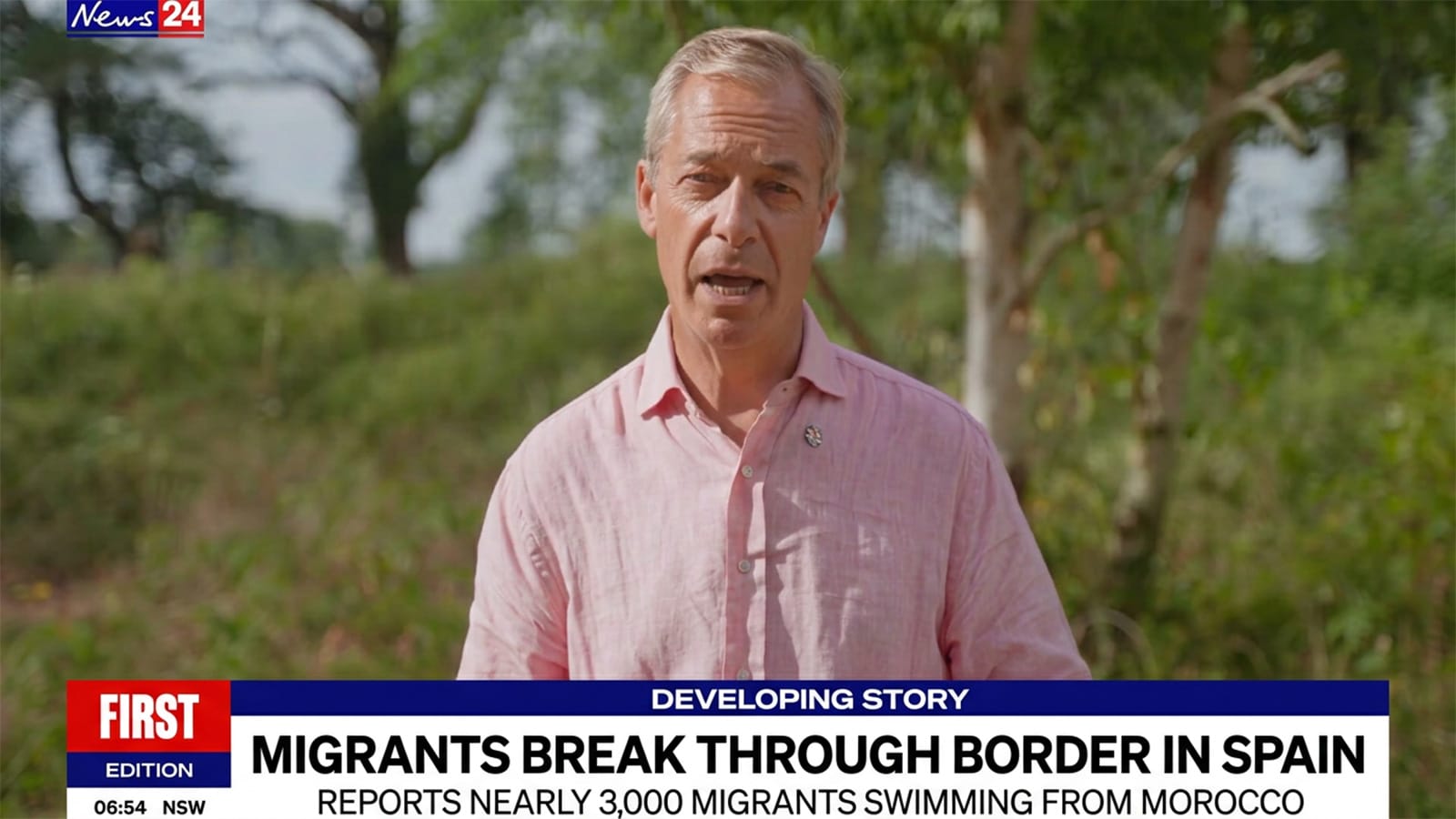
The response that landed hardest in Britain came from Reform UK leader Nigel Farage, who recorded a video address as the footage spread.
It's time to wake up everybody. Sadly, the Tories failed us. Labour have failed us. Believe me, unless we get a Reform government, those scenes you are seeing in Spain today, many of those young men, lots of them dangerous, will be heading towards Calais and coming to our country.
Farage offered no evidence for the characterisation, and it's his claim rather than an established fact. Reform's home affairs spokesman Zia Yusuf said many of those crossing would end up drawing on Britain's welfare system.
The timing is awkward for Britain's new prime minister. Andy Burnham was sworn in on 20 July, replacing Keir Starmer, and had been in Downing Street barely a week when Ceuta's border gave way. News Corp Europe correspondent Sophie Ellsworth told News24 that Burnham still hasn't addressed the migrant issue, and that these pictures will only strengthen Farage's argument.
Spain says Morocco is cooperating, and blames people smuggling networks for reading the judgment
Spain's interior ministry says Morocco is cooperating "loyally and permanently" and that Moroccan police are stopping numerous people trying to cross. Both governments have agreed to work towards the return of everyone who entered Ceuta illegally, though no timeline and no figures have been made public.
The ministry blames people smuggling networks for exploiting the Supreme Court judgment, Al Jazeera reported. Moroccan authorities haven't commented publicly, and Morocco's interior ministry didn't respond to the Associated Press.
Some Moroccan activists doubt the ruling explains the surge at all, arguing most of the people crossing would never have heard of a Spanish court decision. Achraf Maimouni of the Moroccan Association for Human Rights in northern Morocco called the situation "exceptional" and said the Tarajal border "was opened under unusual circumstances this morning and people crossed".
That phrasing matters, because Ceuta has been here before. In May 2021 more than 8,000 people entered in two days after Morocco was accused of easing its border controls during a diplomatic row with Madrid over Polisario Front leader Brahim Ghali. Vivas has the same fear now. "If this isn't corrected, in a month we'll be back where we were in May 2021," he said.
The Ceuta lesson for Australia is about who actually decides removals
No parliament voted for what happened at Ceuta this month. No minister announced a change. A court read the wording of a law already on the books, found that people swimming around a fence weren't covered by it, and the enforcement option was gone inside a fortnight.
Australian readers have watched courts weigh removal consequences here too. In July a Queensland judge factored the risk of deportation into a Toowoomba sentencing, and the offender walked out with a wholly suspended sentence.
One Nation leader Pauline Hanson made a version of the same argument from Luton this month, telling the camera she didn't want Australia to become like the England she was walking through. Ceuta is the sharper version of it, because there the gap between the law as written and the border as enforced closed in a single judgment.
Spain's interior ministry publishes its next migration report on 3 August. It'll be the first official count covering the period since the Supreme Court ruled, and the first test of whether the sea arrivals column for Ceuta still reads zero.