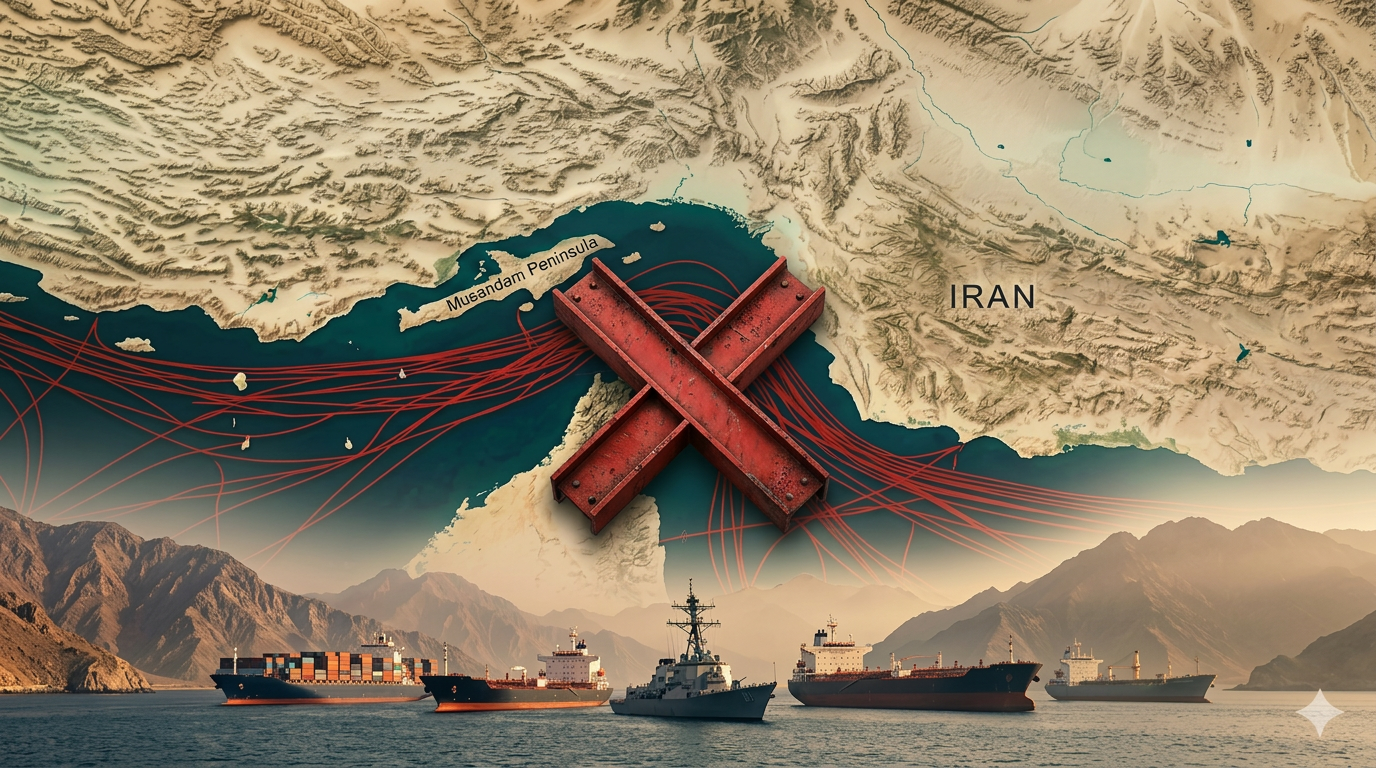
Iran's central military command, Khatam al-Anbiya Central Headquarters, announced on Saturday that the Strait of Hormuz is closed again. The reason given is Israel's overnight airstrikes on southern Lebanon, which Tehran says breach the first clause of the 14 point Islamabad Memorandum of Understanding it signed with the United States days ago.
The MOU's first article commits both sides to "the immediate and permanent termination of military operations on all fronts, including in Lebanon." Israel isn't a party to the document. Israel says the document doesn't bind it. And Israel spent Friday night and Saturday morning striking more than 80 Hezbollah targets in southern Lebanon, killing dozens of Hezbollah fighters according to the IDF and at least 32 Lebanese, including a family of four in the Tyre district.
Iran's response was to threaten the world's most important oil chokepoint. US Vice President JD Vance said there's "no evidence" the strait is actually closed. US Central Command went a step further, saying commercial traffic in the strait actually increased on Saturday, with 55 merchant ships moving more than 17 million barrels of oil and US forces continuing to operate in the area to support freedom of navigation.
So Iran's declared a closure that, on the water, isn't yet a closure. That's its own tell, and we'll come back to it. We tracked the same on-paper-versus-on-the-water pattern right through our live coverage of the war.
The full text of Iran's Saturday statement and what it actually demands
Iran's military command, in the statement carried by state broadcaster IRIB, said the closure was a response to:
"the United States' bad faith and its clear breach of its commitments by failing to implement the first article of the memorandum ending the war, and in response to the continuous and ongoing violation of the ceasefire by the Zionist regime in southern Lebanon."
It described the closure as a "first step" and warned that "if the aggression continues, further steps will be planned and taken to force the enemy to comply with its obligations." Iran's Persian Gulf Strait Authority, the body set up earlier in the war to administer a closure international law says it cannot impose, has reopened its compulsory online clearance system for vessels seeking to transit.
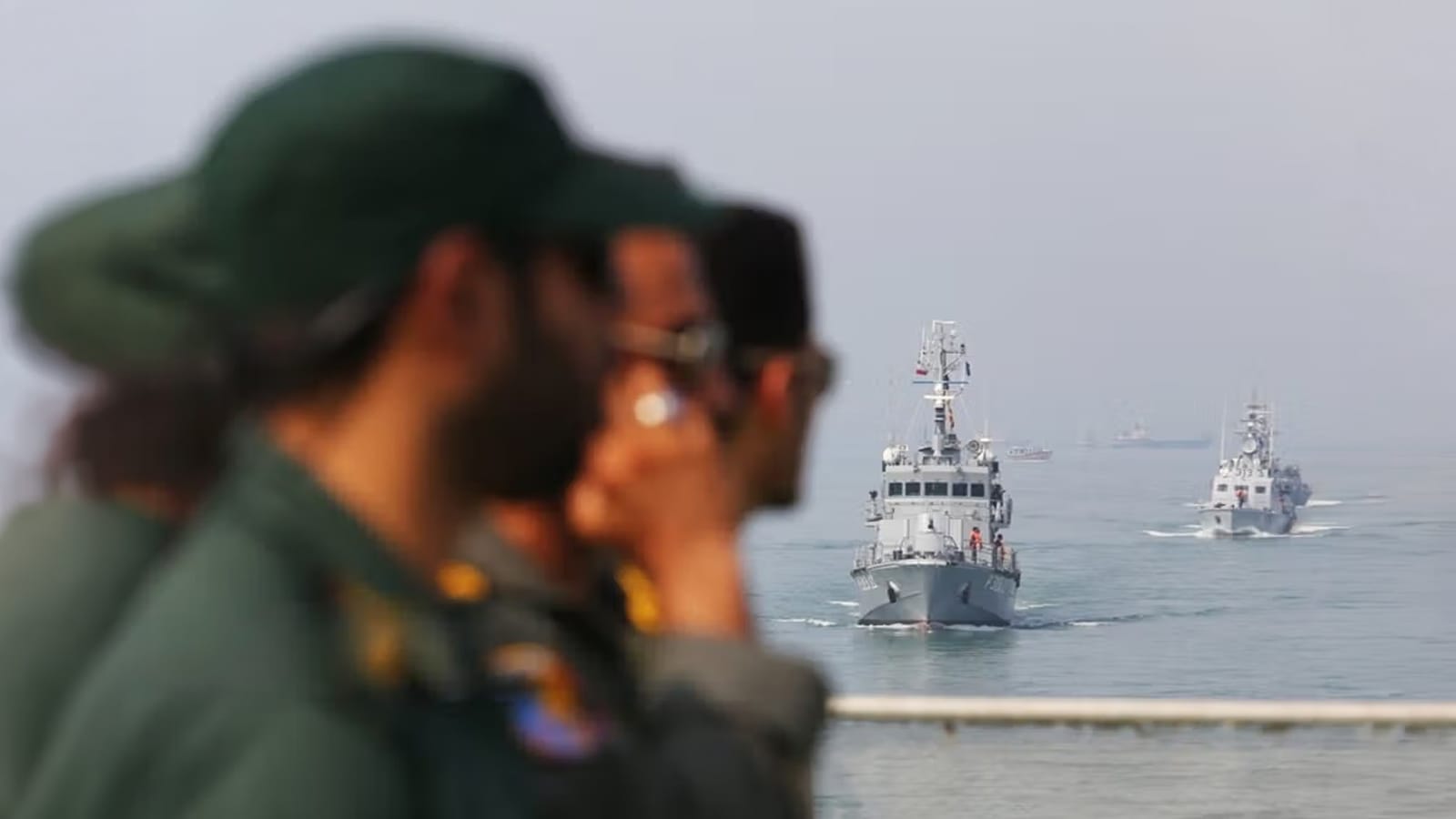
So on paper Tehran is requiring every ship to register, on the water US Navy escorts are still moving convoys, and CENTCOM is publicly contradicting the closure announcement. The strait now has two managements again, which is exactly where it sat through most of the war.
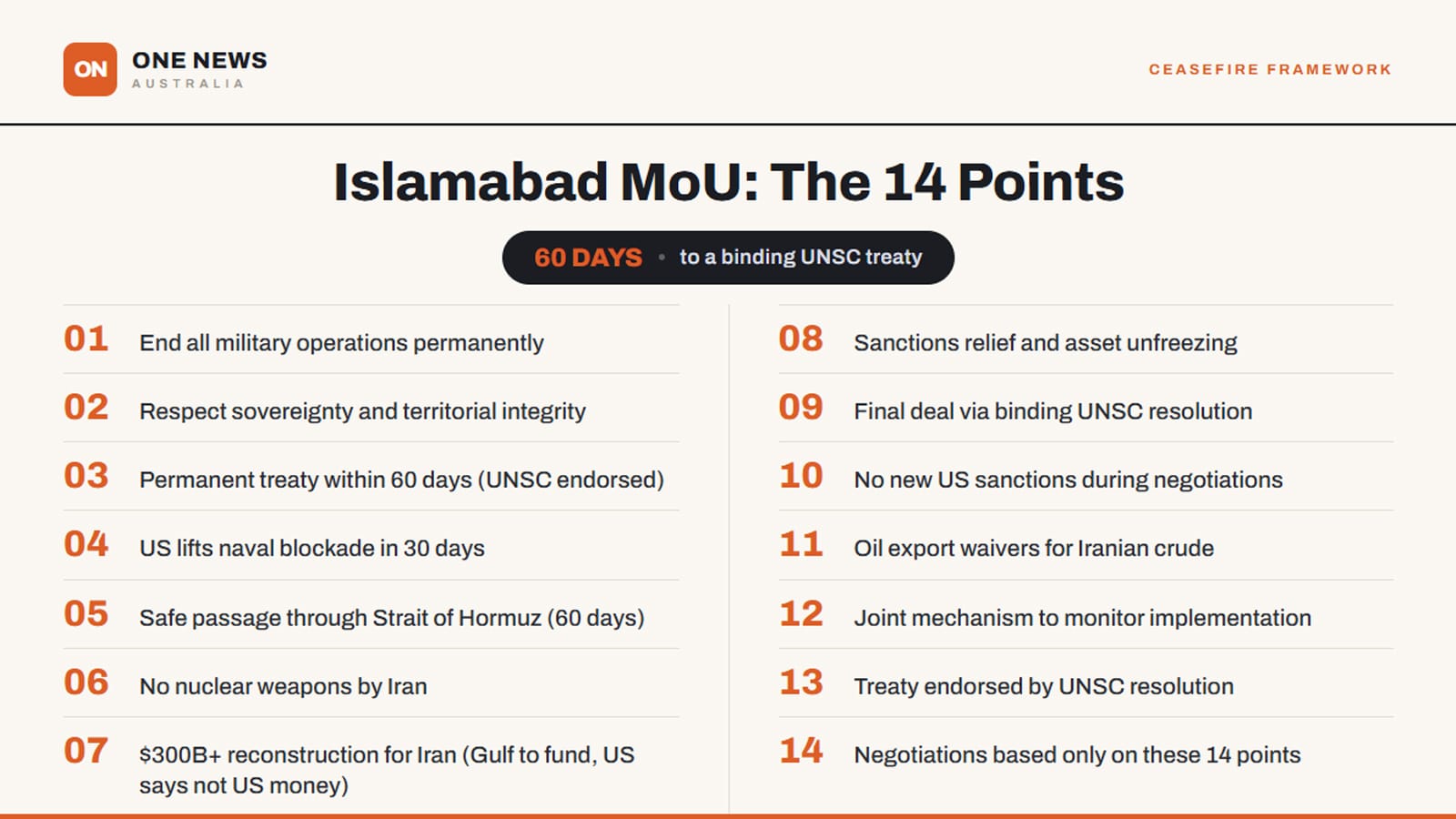
What the 14 point Islamabad MOU actually commits both sides to
Trump and Iranian President Masoud Pezeshkian digitally signed the interim memorandum on Sunday 14 June, then signed remotely on 17 June, Trump at the Palace of Versailles during a dinner hosted by French President Emmanuel Macron, Pezeshkian in Tehran. The document is short, around a page and a half, with the substantive detail to be negotiated during a 60 day window. It builds on the framework under which Trump declared the deal complete and lifted the US naval blockade.
The headline commitments, as confirmed by US officials and matched by Iran's published text:
- Article 1: immediate and permanent termination of military operations on all fronts, including Lebanon
- Reopening of the Strait of Hormuz, toll free for 60 days
- Iran reaffirms it won't develop nuclear weapons, with stockpiled enriched uranium downblended on site under IAEA supervision
- US lifts primary, secondary and UN Security Council sanctions if a final deal is reached
- US dismantles its naval blockade of Iran within 30 days
- A reconstruction and development package of "at least $300 billion", funded not by the US but by Iran's Gulf neighbours through what Vance has called the Gulf Coast Coalition, conditional on Iranian compliance
- Article 13 sequences the deal so formal final status talks only begin once the ceasefire, blockade lift and Hormuz reopening in the earlier articles are actually being implemented, which is the lever Israel's Lebanon strikes are now pulling on
The technical talks were set to start Friday. Israeli strikes on Beirut and southern Lebanon delayed them. They are now set to resume Sunday in Bürgenstock, Switzerland, with US special envoys Steve Witkoff and Jared Kushner already on the ground and Vance expected to fly in this week.
Why Netanyahu says the deal Trump signed doesn't bind Israel
Israel isn't a signatory and never was. The day after the MOU was announced, Israeli Defence Minister Israel Katz vowed Israeli troops will stay in southern Lebanon "indefinitely". National Security Minister Itamar Ben Gvir said, "Trump's agreement does not bind us."
Prime Minister Benjamin Netanyahu, in his first press conference after the deal was announced, said Iran wouldn't be allowed to obtain a nuclear weapon "with an agreement or without an agreement." At the G7, Trump told reporters he wasn't happy with how Israel was handling its war with Hezbollah, calling Israel's weekend strike on Beirut "vicious" and "too much."
The opposition in the Knesset is no kinder. Yesh Atid MK Ram Ben Barak called the agreement "the best thing that has happened to Iran in a generation." Blue and White chair Benny Gantz called it a "strategic failure." Israeli officials briefed that the deal was "bad" for Israel, with the Mossad chief reportedly calling it "very bad" and a "strategic disaster." Netanyahu himself avoided criticising the deal publicly, claiming the war's main goals had already been achieved.
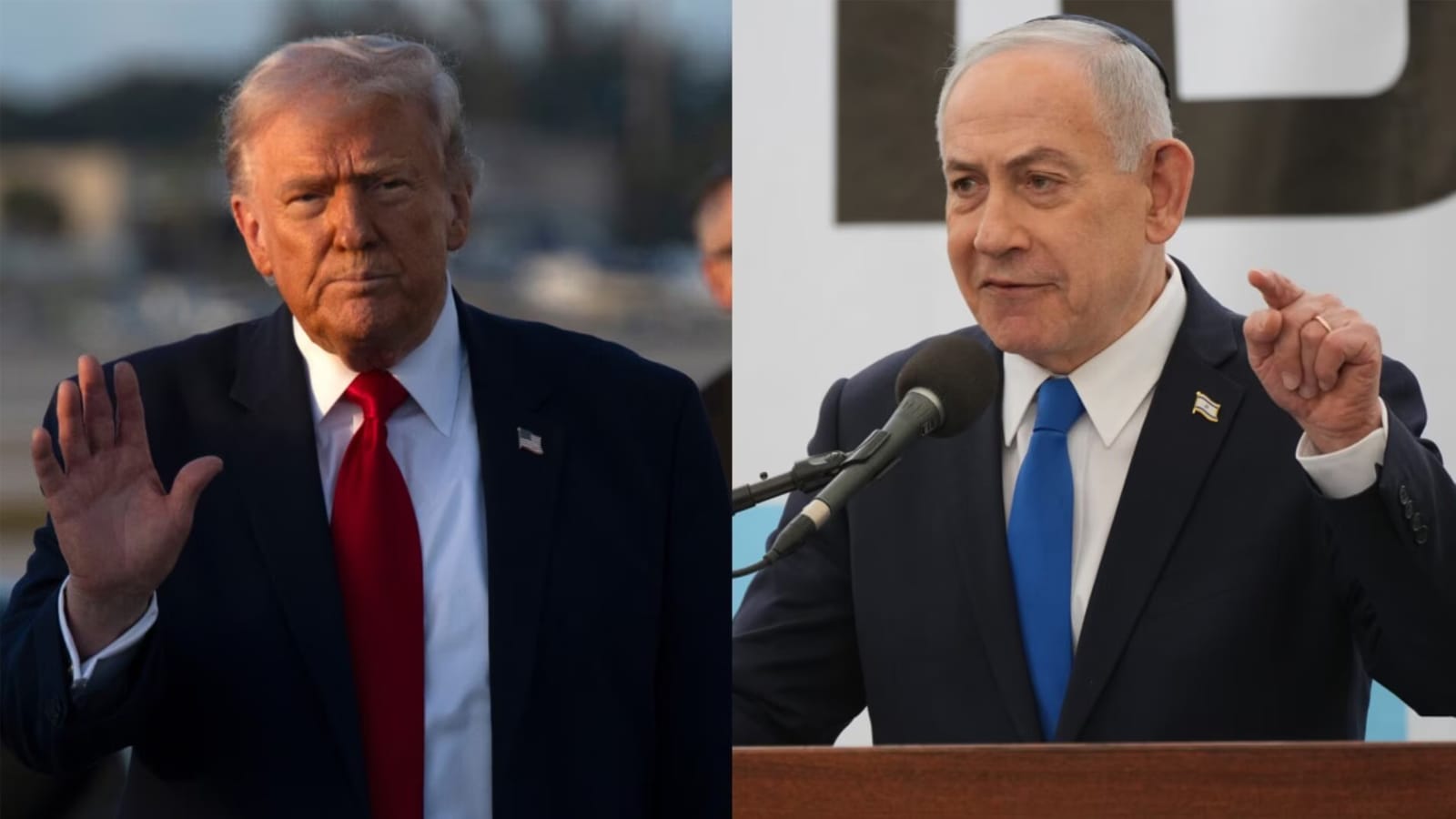
That's the crack in the deal. The Americans built a framework that requires Israel to stop fighting Hezbollah, and they signed it without Israel at the table.
Iran's 'ring of fire' around Isreal and why they won't stop hitting Hezbollah
For roughly four decades, the Islamic Republic spent hundreds of billions of dollars building an arc of armed proxy groups around Israel. The architect was IRGC Quds Force commander Qassem Soleimani, killed by a US drone strike at Baghdad airport in January 2020. His successors finished the job.
The strategy runs like this:
- Hezbollah in southern Lebanon to Israel's north, founded by the IRGC over 40 years ago and the strongest non-state military force in the world
- Hamas and Palestinian Islamic Jihad in Gaza to Israel's south
- The Houthis in Yemen to the southeast, attacking civilian Red Sea shipping
- Iranian backed Shia militias in Iraq and Syria to the east
- Iran itself, supplying missiles, money, training and command
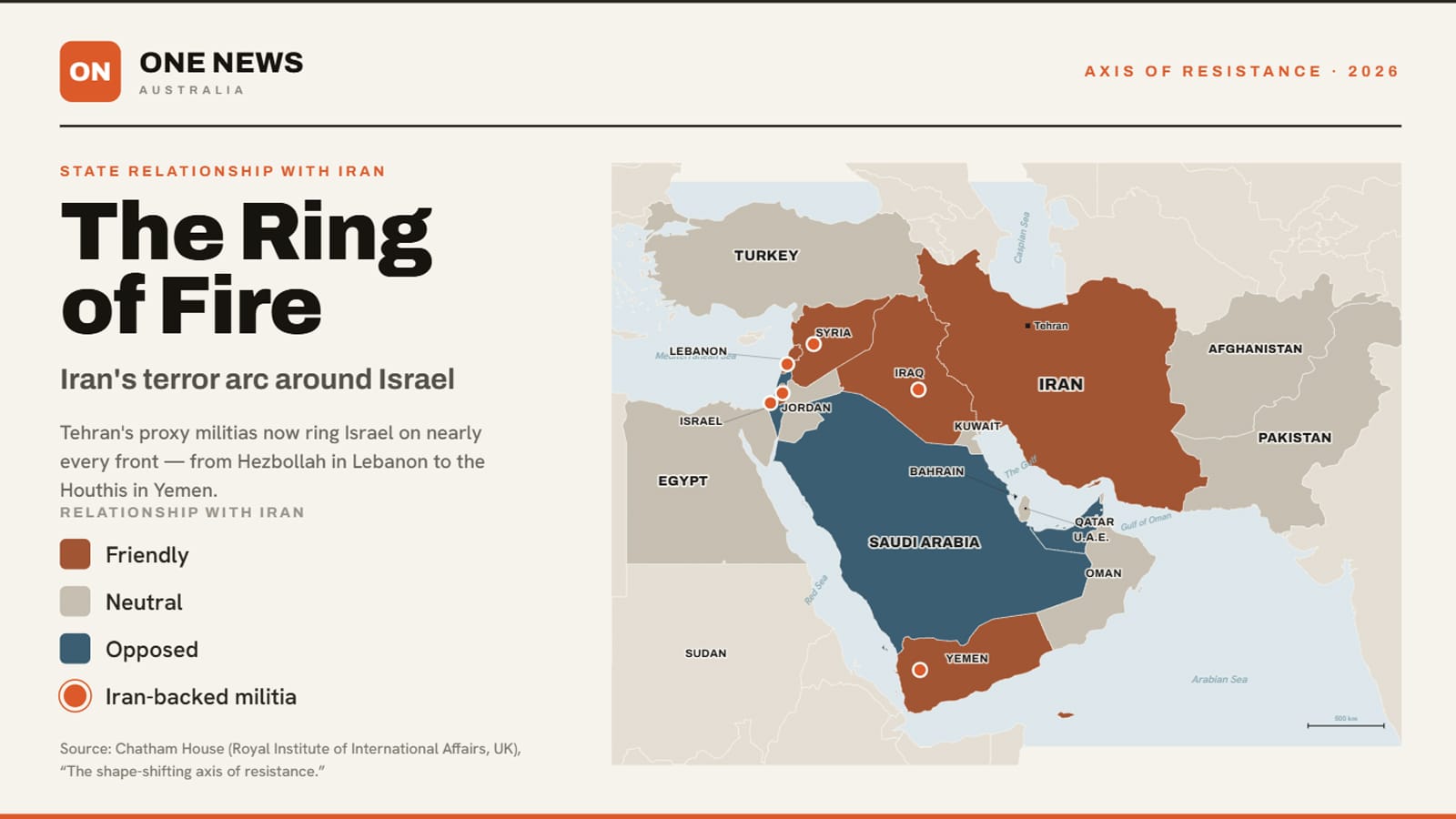
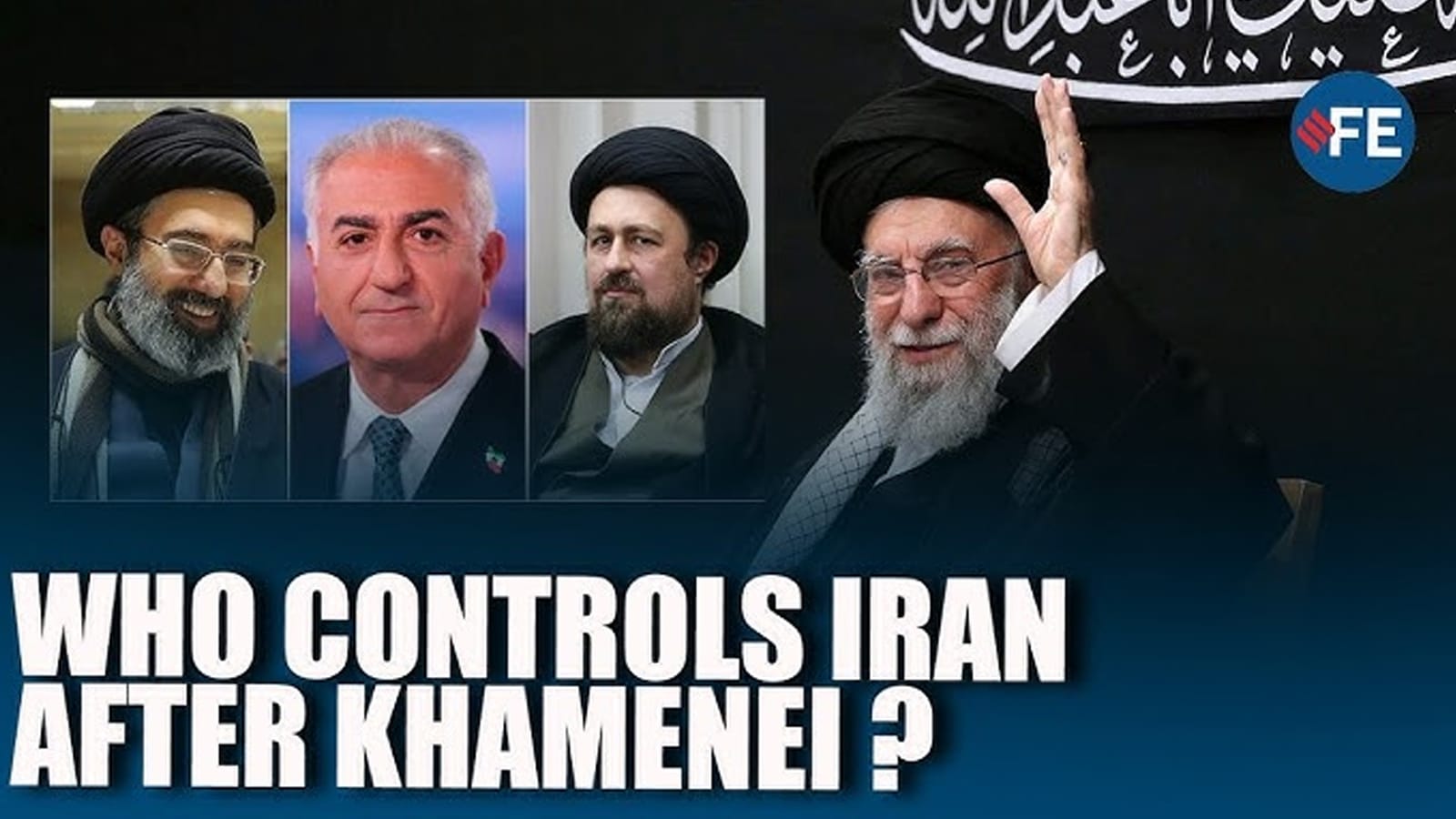
The doctrine was never hidden. Iran's Supreme Leader Ali Khamenei, killed by US and Israeli strikes on 28 February 2026, told Iranian state media in 2024 that "our region was very much in need of this attack," speaking of the 7 October 2023 Hamas assault. Iranian Quds Force commander Esmail Qaani told state TV earlier this month that Hezbollah's power in Lebanon has not been fully revealed, saying "everything you have seen from Hezbollah in Lebanon is only the tip of the iceberg."
So when Netanyahu says the Lebanon campaign isn't optional for Israel, he's not posturing. From 8 October 2023, the day after the Hamas attack, Hezbollah fired daily into northern Israel and displaced more than 60,000 Israelis from their homes for over a year. Israel's stated view is that the only thing the ring of fire respects is force, and the only window to finish the job is now.
The trigger nobody in international media wants to keep in the story: 7 October 2023
On 7 October 2023, the al Qassam Brigades, Hamas's military wing, launched a coordinated attack on Israel from Gaza. Hamas fighters breached the border by land, sea and paramotor, hitting Israeli military bases, kibbutzim and the Supernova music festival being held in a forest near Kibbutz Re'im during the Jewish holiday of Shemini Atzeret.
The festival site was the largest single massacre. 378 people were killed at Supernova alone, 344 of them civilians, and another 44 were kidnapped and dragged into Gaza alive. Across all sites that day, around 1,200 people were murdered, the great majority civilians, and 251 were taken hostage including babies, children, elderly Holocaust survivors and foreign nationals.
In May 2026, an Israeli civil commission published a report of around 300 pages titled Silenced No More, documenting that sexual and gender based violence on 7 October was "systematic, widespread, and integral" to the attack. It identified recurring patterns including rape, gang rape, sexual torture, mutilation, forced nudity, and executions tied to sexual violence, repeated across the Nova site, the kibbutzim, roads, military bases and inside Gaza captivity.
That's why Israel went into Gaza. It's also why Iran's regional fans have spent two years trying to redirect the story.

Was Israel always there? The land question, and some ancient history
Jews are indigenous people of the land that's now Israel; not because they were the first humans there, and not because they're the only people with deep roots in it, but because this is where they came into being as a people at all. Before the Israelites existed, the land was home to the Canaanites, the Bronze Age peoples spread across what's now Israel, Lebanon and the country around it.
The Israelites didn't arrive from somewhere else and drive them out, they grew out of them, local Canaanite communities in the hill country who became a distinct people with their own language and their own God. That same ancient stock also runs in today's Lebanese and Palestinians; Canaanite descent isn't unique to the Jews.
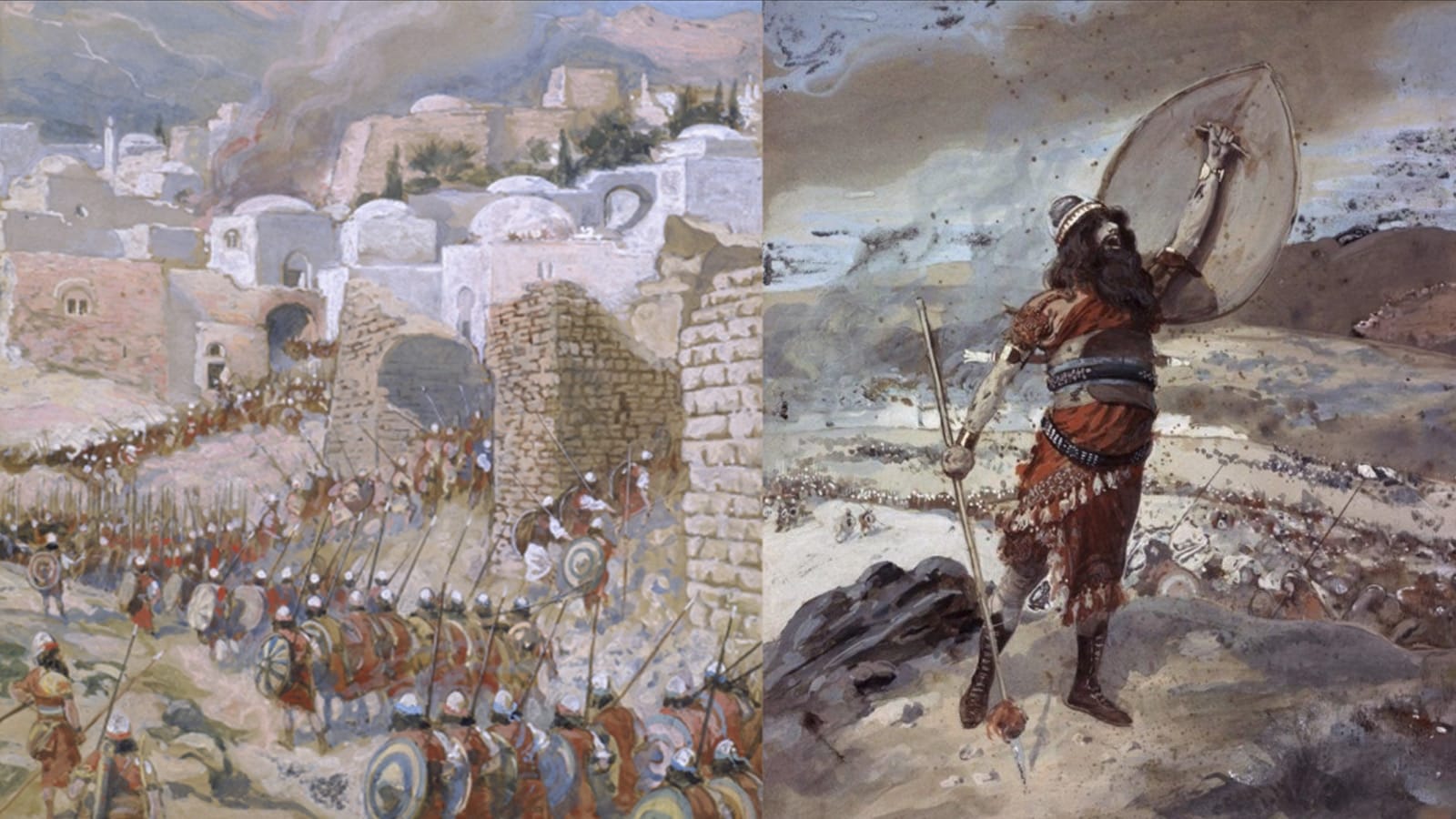
What is distinctive is that the Jewish people, the Hebrew language and the Jewish religion all began in that one specific land, the first written mention of "Israel," on Egypt's Merneptah Stele, is more than 3,200 years old and already names them as a people living there. Jerusalem has sat at the centre of Jewish prayer three times a day, every day, through 2,000 years of exile. Whoever conquered the place, and many did, there was never a stretch when Jews stopped living in it. That's what makes them native to it, not newcomers who showed up in 1948.
That's the point the "they weren't there first" argument completely misses. Nobody claims the land was empty. It claims the Jews are from there and the long parade of empires that came after were the outsiders.
After the destruction of the Second Temple by Rome in 70 AD, most Jews were dispersed across Europe, North Africa and the Middle East. A Jewish community remained in the land continuously. The territory itself passed through Roman, Byzantine, early Arab, Crusader, Mamluk and Ottoman rule, with the Ottoman Empire holding it for around 400 years up to World War I.
When the Ottomans collapsed in WWI, the British took the area as a League of Nations mandate, formalised in 1923. The 1917 Balfour Declaration committed Britain to facilitating a national home for the Jewish people in Palestine. Jewish immigration accelerated through the 1920s and 1930s as European antisemitism ramped up, with Jews legally purchasing land from Ottoman, absentee Arab and local landlords.
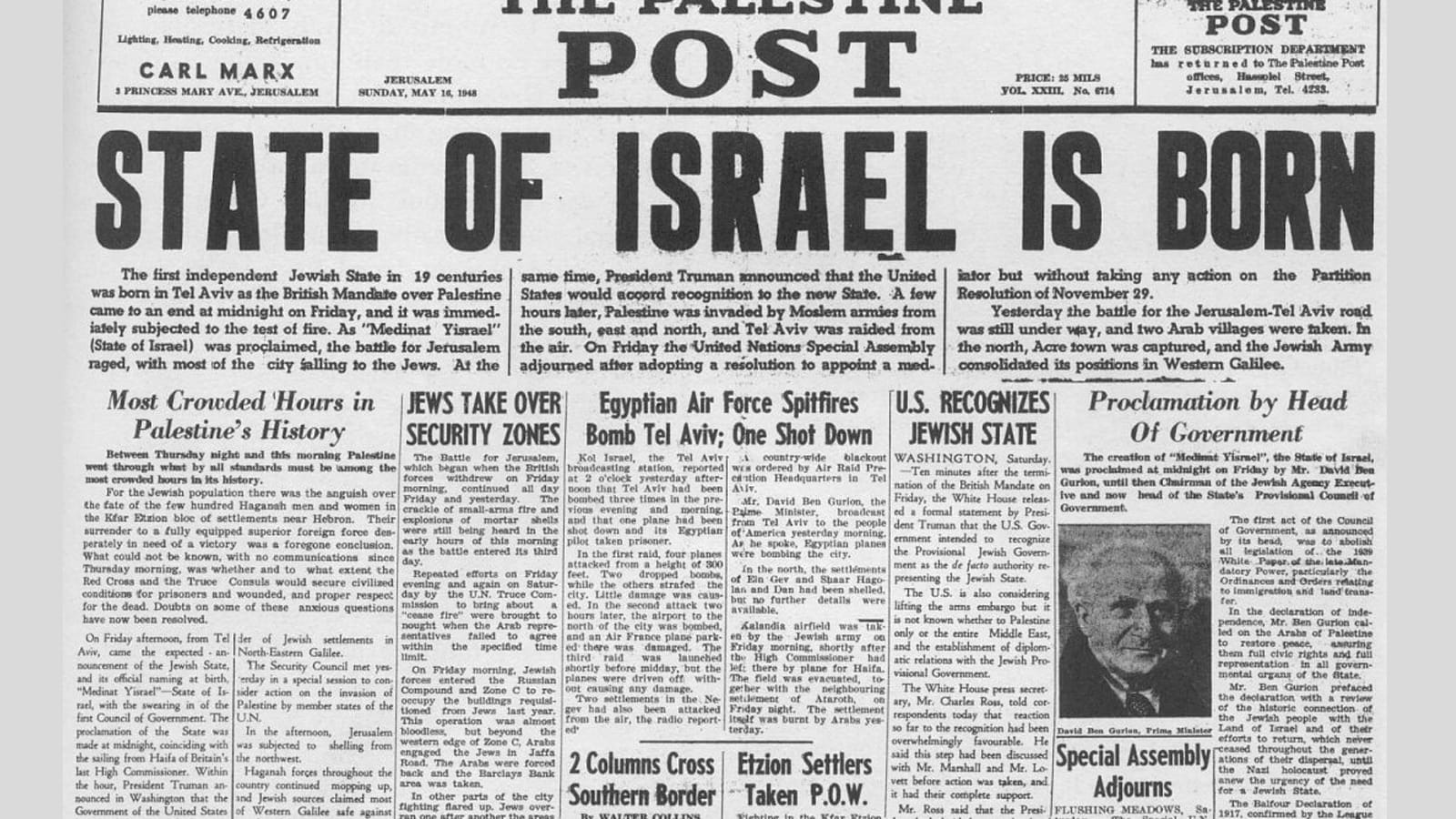
In 1937 the British Peel Commission proposed partition. The Jewish leadership accepted the principle of partition while rejecting the specific boundaries. The Arab leadership rejected it outright. After WWII and the Holocaust, the question came to a head. In November 1947, UN General Assembly Resolution 181 proposed splitting the Mandate territory into a Jewish state and an Arab state, with Jerusalem under international administration. Jewish leaders accepted. Arab leaders rejected it again.
Israel declared independence on 14 May 1948. The next day, five Arab armies invaded, Egypt, Jordan, Syria, Lebanon and Iraq. Israel won. Hundreds of thousands of Palestinian Arabs fled or were expelled in the war that followed, and roughly the same number of Jews were expelled from Arab countries across the Middle East and North Africa, most ending up in Israel.
Egypt then occupied Gaza for 19 years. Jordan annexed the West Bank for 19 years. Neither offered Palestinians a state during that time. That fact alone is one of the most quietly damning details of the whole story.
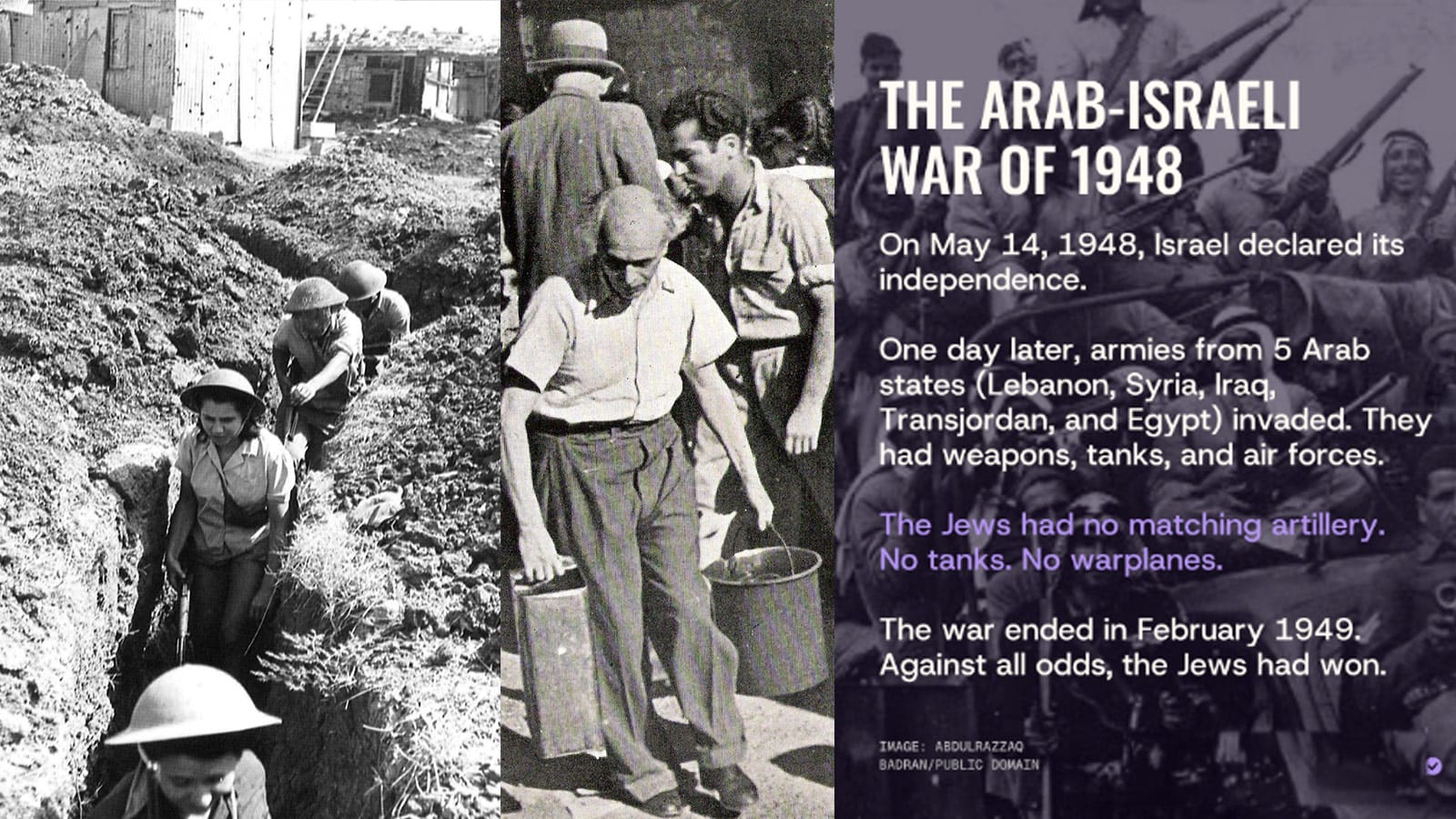
In 1967, Egypt closed the Straits of Tiran, expelled UN peacekeepers and massed armies on Israel's borders. Israel struck first, won the Six Day War in less than a week, and captured Gaza from Egypt, the West Bank and East Jerusalem from Jordan, the Golan Heights from Syria, and the Sinai. The Sinai was returned to Egypt under the 1979 peace treaty. Most of the rest is what people still argue about.
So no, Israel wasn't simply "given" land at someone else's expense. The 1947 partition offered both peoples a state. One side took the deal. The other side went to war, lost, went to war again, lost again, and then spent the next 50 years building, funding and arming proxy groups to try to reverse the result militarily.
Who is the bad guy here? Honest answer
The Islamic Republic of Iran is a theocratic dictatorship that, by Amnesty International's count, executed at least 972 people in 2024, around 64% of all recorded executions worldwide and the highest national total Amnesty has logged in years. Its statutory marriage age for girls is 13, and younger with a father's permission and a judge's signature. Stoning remains the statutory punishment for adultery. The regime killed large numbers of its own citizens protesting in January 2026, with Trump publicly citing 42,000 dead, a figure independent monitors put far lower. It's still hanging protesters on charges of "waging war against God."
The execution rate has only accelerated. Amnesty International recorded at least 2,159 executions in Iran in 2025, more than double the 2024 total, with the regime using what it calls "wartime conditions" to intensify the crackdown through mass arbitrary arrests, accelerated unfair trials and politically motivated hangings. The dead include dual nationals, women and ethnic minorities through the exact months Tehran was negotiating with Washington. One News has covered the execution surge running alongside Iran's World Cup PR push and the Trump deal. The MOU buys 60 days of paper peace. It doesn't buy a new regime.
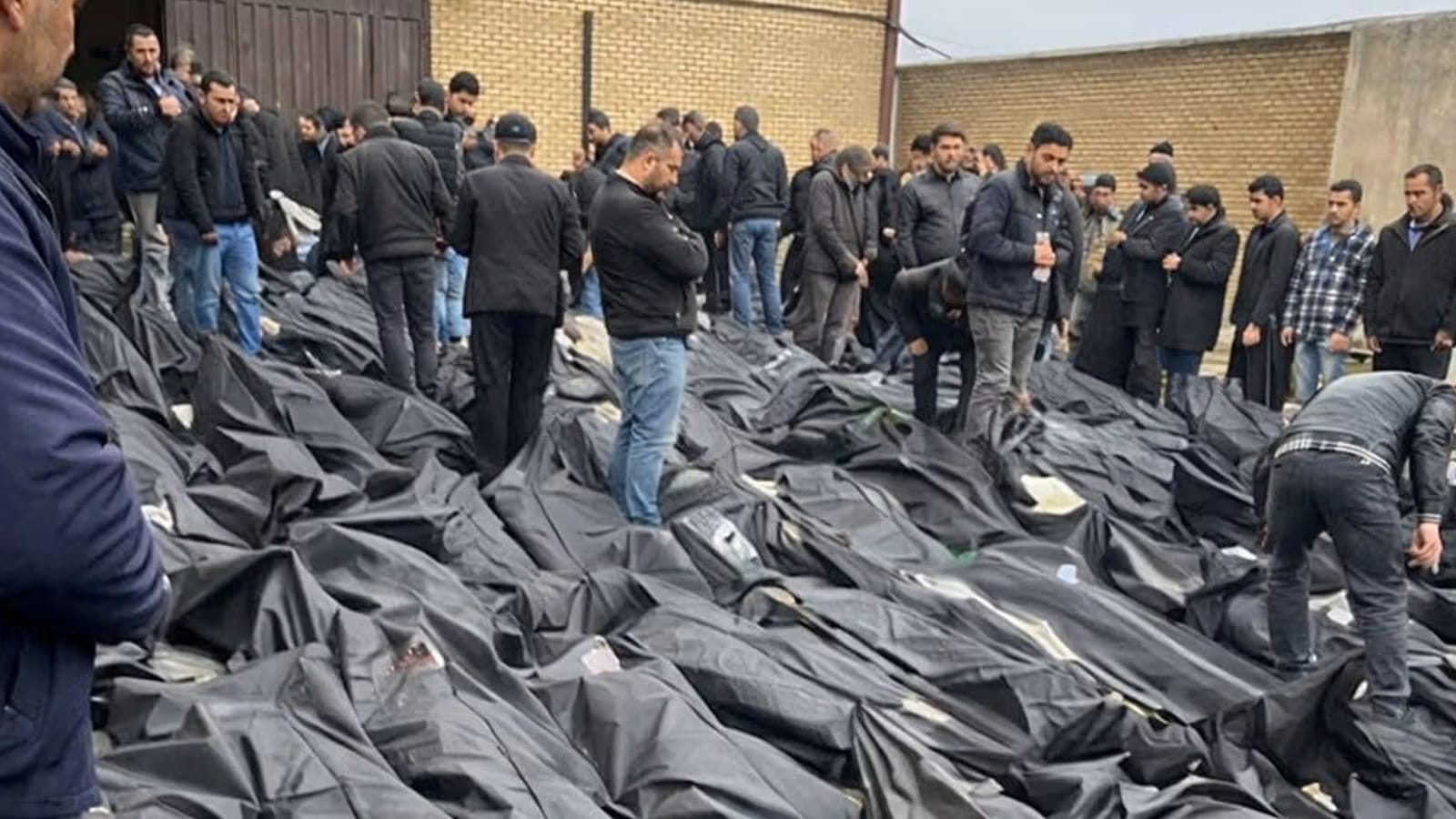
Hamas, Hezbollah and the Houthis are all designated terrorist organisations under Australian law. Hamas's founding charter calls for the destruction of Israel. On 7 October 2023 its fighters massacred 1,200 civilians and took 251 hostages. The Houthis fire missiles at civilian shipping in international waters, and their official slogan, written on their flag, reads "death to America, death to Israel, a curse upon the Jews."
Israel is a parliamentary democracy with regular elections, an independent judiciary, a free press, a vibrant opposition that routinely calls its prime minister names that'd land you in jail in Tehran, and a population that includes around 2 million Arab citizens who vote, hold parliamentary seats and serve as judges. Israeli campaigns in Gaza and Lebanon have killed many civilians, and that's the legitimate part of any honest critique. That critique has to live alongside the historical record.
Six million Jews were murdered by Nazi Germany between 1933 and 1945, the foundational catastrophe that drove the creation of a Jewish state in the first place. Five Arab states invaded Israel the day after independence in 1948.
Around 850,000 Jews were forced out of Egypt, Iraq, Yemen, Libya, Syria and Morocco over the next two decades, with their property confiscated and almost none of them ever returning.
Egypt and Syria launched a surprise attack on Yom Kippur in 1973.
On 7 October 2023, Hamas committed the largest single day massacre of Jews since the Holocaust, with 378 people murdered at the Nova music festival at Re'im, 344 of them unarmed civilians, and another 44 dragged into Gaza as hostages.
Hezbollah opened fire on northern Israel from 8 October. The festival was the straw that broke the camel's back.
Israel's military response in Gaza and Lebanon has since killed more than 73,000 Palestinians by the Hamas-run Gaza Health Ministry's count, a figure the IDF broadly accepts and the Lancet Global Health journal independently corroborated. Pretending the two sides of this war are morally equivalent because both have body counts is the kind of analysis you get when you've already decided who the bad guys are and need the numbers to cooperate.
Israel's military response in Gaza and Lebanon came after seven decades of being told to disappear. Pretending the two sides of this war are morally equivalent because both have body counts is the kind of analysis you get when you've already decided who the bad guys are and need the numbers to cooperate.
There are bad guys here. They aren't hard to identify if you're prepared to look.
Where this lands next. Three scenarios
The likely one is the Sunday talks in Switzerland push through, Vance flies in, Israel quietly dials down the Lebanon strikes under US pressure, Iran quietly "reopens" a strait that traffic's moving through anyway, and the deal holds long enough to get oil flowing and the 60 day window started. That's the path Witkoff and Kushner are already walking.
The possible one is Netanyahu refuses to back off Lebanon, Iran walks publicly from the final agreement talks, and the strait stays in legal limbo while the side routes through Omani and Iranian waters keep moving. Cash flow for Iran, plausible deniability for everyone else, no peace.
The bad one is a Hezbollah counter strike on northern Israel triggers a full Israeli ground push, Iran fires direct, the MOU collapses, the strait closes for real, and the US has to choose between rejoining the war and watching the deal it just sold burn. Bowsers go back up, oil goes back to $140 a barrel, and Australians find out what an actual energy crisis looks like.
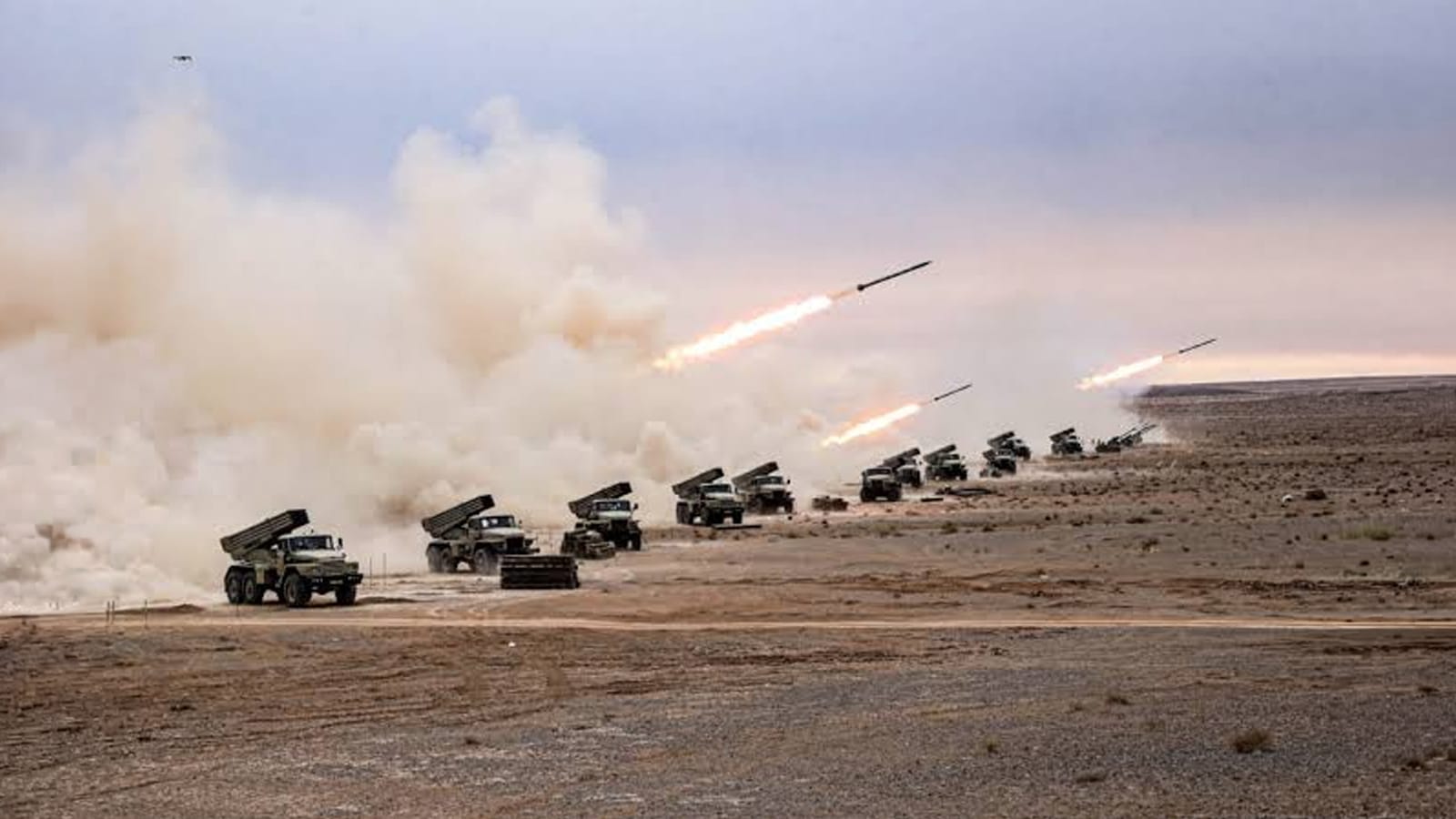
What this means for Australia
Australia imports roughly 90% of its refined fuel, runs two operating refineries and holds 36 days of petrol, 32 days of diesel and 29 days of jet fuel by the Energy Minister's own count, much of that still on tankers between Singapore and Fremantle rather than in silos on Australian soil. The refined fuel Australians actually use comes from Asian refineries in Singapore, South Korea and Japan, which get their crude through Hormuz.
The fuel security gap isn't new and Anthony Albanese knew it. As Opposition Leader in 2020 he told ABC News Australia was "significantly in breach" of its IEA obligation to hold 90 days of fuel reserves, warning the country shouldn't
"be dependent upon circumstances which may be beyond our control" because "any particular international incident, be it military conflict or other issues, will mean that we run out of fuel."
The Morrison government had bought 1.7 million barrels of crude at pandemic prices in 2020, worth less than two days of Australian consumption, and stored it in the US Strategic Petroleum Reserve. Angus Taylor sold every barrel of it in March 2022 as part of the IEA's coordinated response to Russia's invasion of Ukraine, in the run up to the election the Coalition then lost.
Albanese took office in May 2022 with the reserves already gone and the IEA 90 day obligation already breached. Four years on, the stockpile hasn't been replaced. Some new diesel storage went in. The Asian refining dependency that puts Australian motorists at the mercy of Hormuz still sits exactly where the previous government left it. The pain coming at the bowser in the next few weeks was preventable. Both sides of politics get the bill. The Prime Minister was warning about this exact scenario in 2020.
A sustained closure pushes pump prices past where they've already been, drives the diesel reserve toward genuine rationing territory, and slows the trucks, trains and mining equipment that move food, freight, ore and fuel across this country. The supermarket shelves stay full because diesel keeps moving them. Without diesel they don't. That's the part the Albanese government keeps not preparing for.
Trump rated Australia's support during the war as "not great" and said flat out "Australia didn't help us." The Prime Minister's official statement on the deal commended Pakistan, Qatar, Saudi Arabia and Türkiye by name. The United States, which fought the war, broke the blockade, escorted the convoys and brokered the framework, wasn't thanked by Anthony Albanese. Donald Trump, who personally signed the document, wasn't mentioned. Australia's fuel supply chain depends on the US Navy keeping those lanes open. Albanese thanked everyone except the people doing the keeping.
There's a reason for the silence and it's related to energy resources, the digital play and China. One News has mapped the architecture of it here. The war Trump just ended wasn't really about Iran. It was about China. Iran was selling more than 80% of its oil exports to Beijing at sanction busting discounts, funding the IRGC, the Belt and Road, the Chancay port and a proxy network that ran from Caracas to Pyongyang. Canberra picked a side. It wasn't the side that built ANZUS or is about to hand us nuclear submarines.
And the part nobody's surprised by
Iran built a 40 year ring of fire around Israel. Hamas pulled the trigger on 7 October 2023. Hezbollah opened a second front the next day. The Houthis joined in. Iran itself fired directly at Israel in April 2024 and again on 1 October 2024. The US and Israel finally went in on 28 February 2026 and ended the Islamic Republic's nuclear program, killed Khamenei, broke the proxies and forced the regime to the table.
Then the regime did what the regime always does. Signed the document with one hand. Closed the strait with the other. Threatened revenge for Khamenei in the same week its president was signing the deal. Hanged two protesters at dawn the morning after the signing. Sent its central bank governor to Moscow before the ink dried.
Trump's MOU isn't the end of the story. It's the cease fire between the rounds. This regime will keep testing the deal until it finds out what the Americans will and won't do, the Israelis will keep killing Hezbollah commanders until told to stop in a way they can't ignore, and the Strait of Hormuz will keep opening and closing on the regime's mood until someone takes the strait out of the regime's hands entirely.
Nobody's surprised. That's how this regime works. That's how it's worked since 1979.