The outrage is the distraction. The ships are the distraction. While the media profits from both and Australia looks the other way, the most significant power play in modern history is running underneath it all.
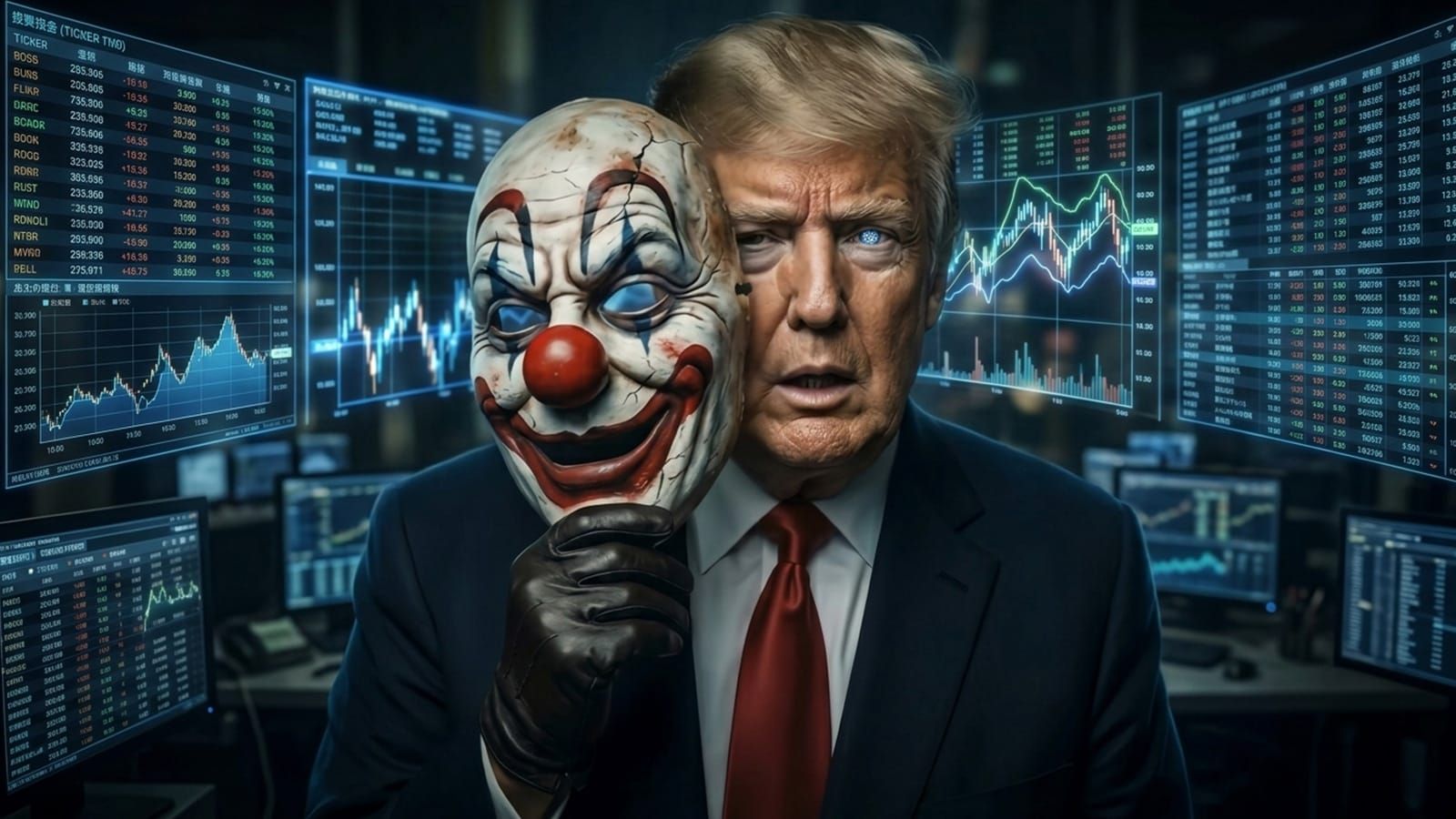
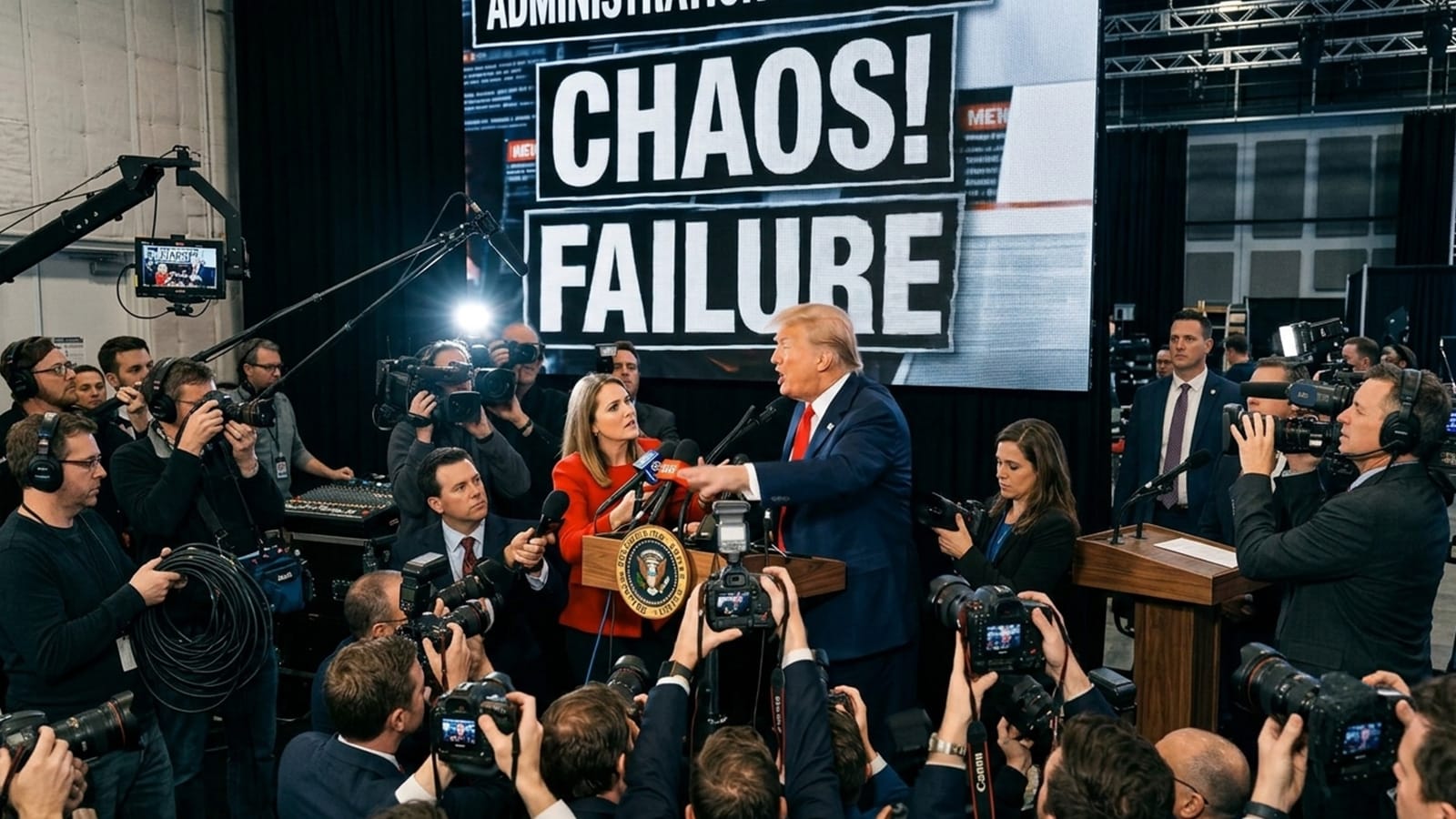
Here's something worth understanding before you read a single headline about the Iran war: outrage is the most profitable product in the history of media. Every Trump press conference clip, every diplomatic blowup, every seemingly ''clown act'', every tweet that sends a journalist into a spiral generates clicks, views, shares and advertising revenue. The chaos isn't incidental to the coverage. For most outlets, the chaos is the business model.
Trump knows this. He's been playing it for a decade. The louder the outburst, the more cameras point at the outburst, and the less anyone is asking what's actually being built while the cameras aren't looking.
So while the mainstream press has spent the whole year breathlessly covering every escalation, every ceasefire rumour, every market swing and every Trump one liner about Iran, they've missed the architecture underneath. Not because they're stupid. Because the architecture doesn't generate outrage, and outrage is what pays the bills.
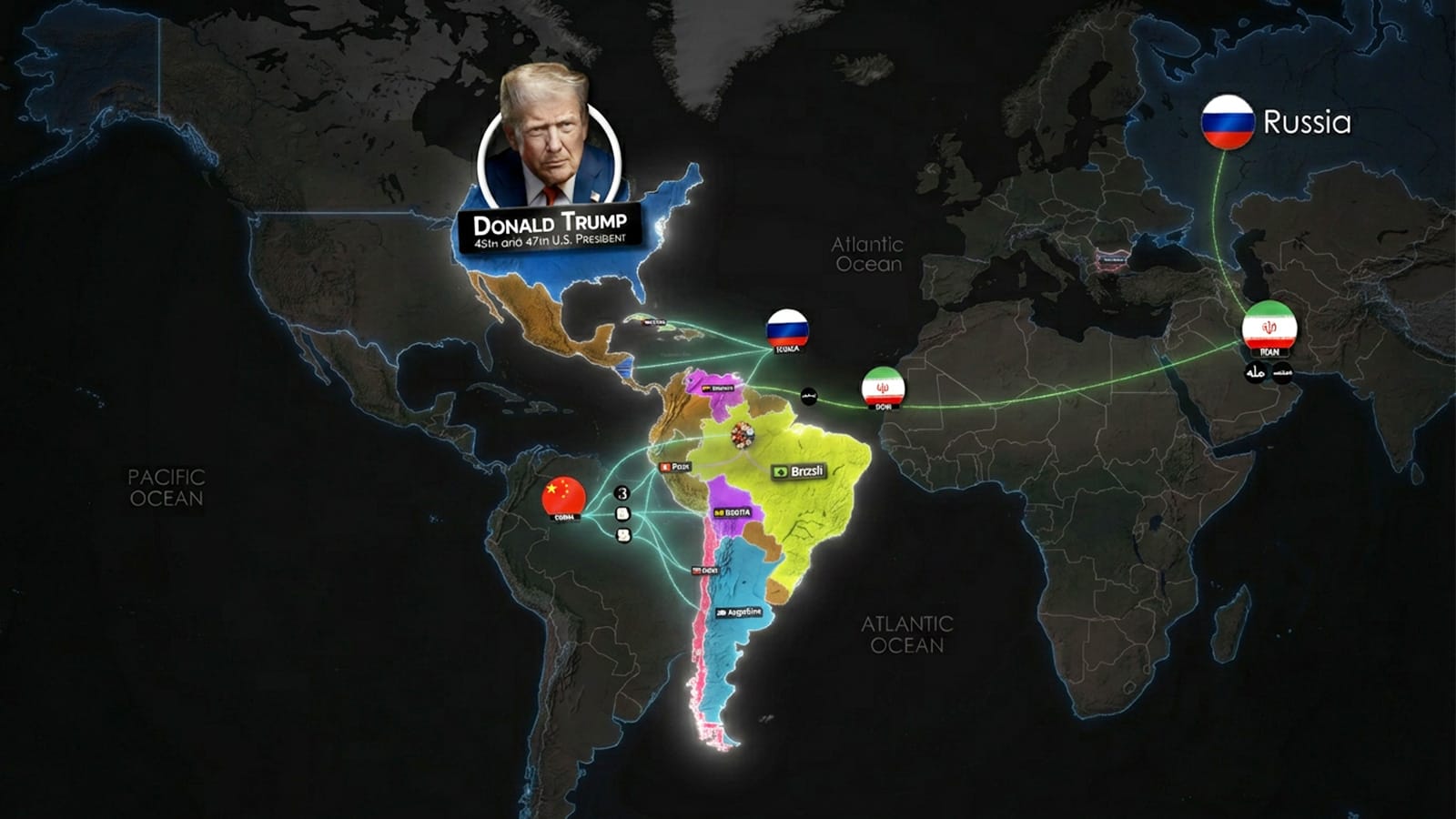
Three countries in six months. Venezuela, Iran, Cuba. Every single target has the same fingerprint: China. This isn't improvised foreign policy driven by a president who can't control himself. It's the most methodical power play since the end of the Cold War, and the mainstream press is making money hand over fist covering the surface through clickbait on outrage, while the strategy runs underneath it.
This is the timeline.
How China Quietly Built a Parallel World Order
While the Bush, Obama and Biden administrations collectively turned inward, China spent twenty years building something the Western press never bothered to cover properly: a global energy and resource empire constructed through ports, pipelines, mining deals, debt traps and trade agreements, largely in countries Washington had written off.
Trump's first term raised the alarm but couldn't arrest the momentum. Biden's response was to propose a rival to Belt and Road that never got funded, while Beijing quietly inaugurated the Chancay megaport, locked up the lithium triangle and nearly tripled its intelligence footprint in Cuba. This is what happens when three administrations fall asleep at the wheel and leave the bill for a fourth to pay.
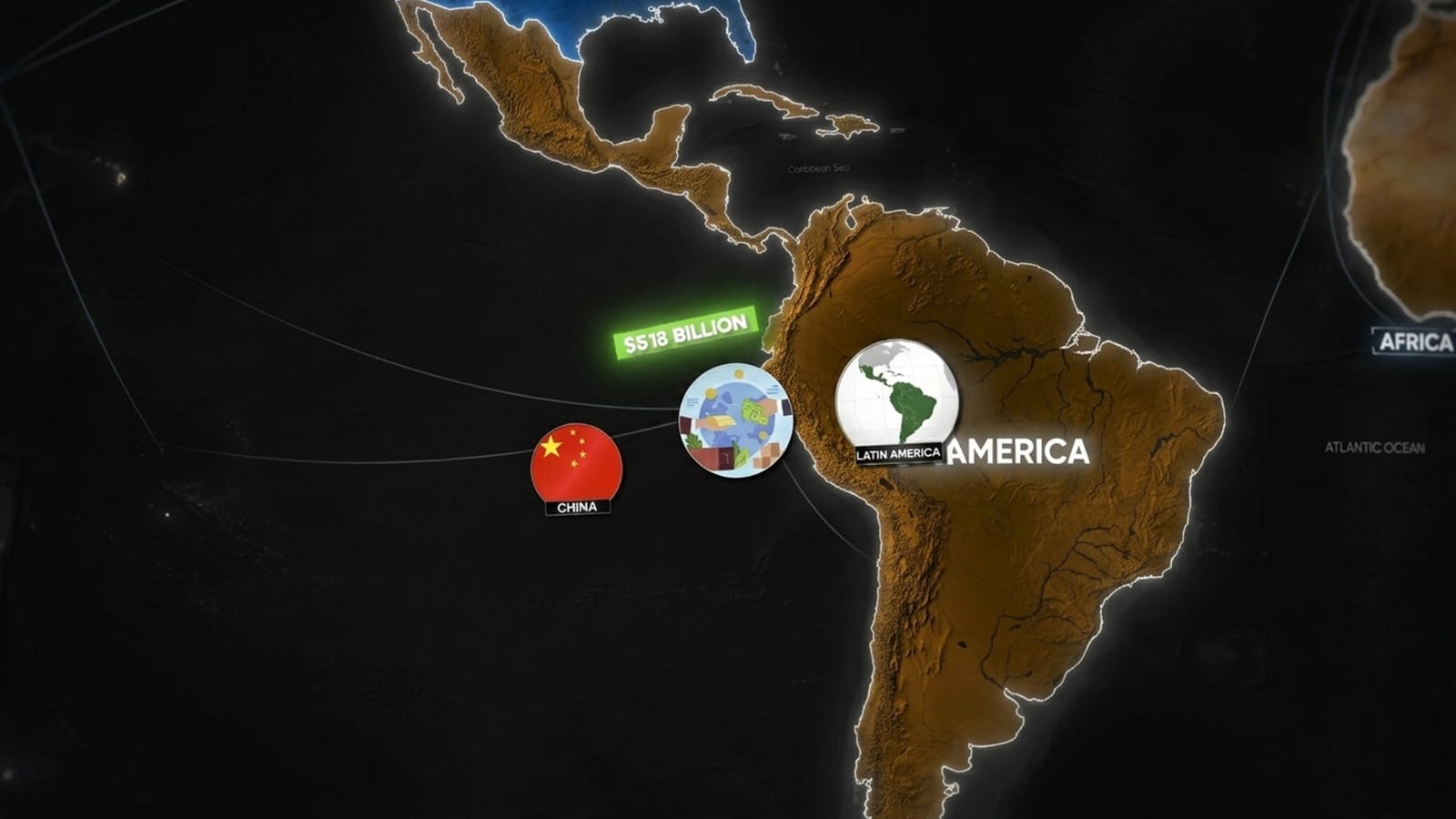
China Latin America trade stood at roughly $10 billion in 2000. By 2024 it had hit a record $518.47 billion, according to China's Ministry of Commerce. More than 20 Latin American countries joined China's Belt and Road Initiative. Chinese companies locked up lithium in Bolivia, Chile and Argentina, copper in Peru, iron ore in Brazil and oil in Venezuela. By the time anyone in Washington noticed, Beijing had become South America's largest trading partner.
The energy dependency China built across Asia is just as striking. The US Geological Survey confirms roughly 20% of the world's daily oil supply moves through the Strait of Hormuz. China receives 37.7% of all oil transiting that single waterway. Japan sources 94 to 95% of its crude oil from the Middle East. India draws roughly 60% from the same region. South Korea, Taiwan and most of Southeast Asia are similarly exposed.
China's specific dependency on Iranian oil is the detail that matters most here. According to Kpler data cited by Columbia University's Centre on Global Energy Policy, China imported approximately 1.38 million barrels of Iranian crude per day in 2025, accounting for around 13% of its total crude imports. China bought more than 80% of everything Iran shipped. It did so at steep discounts, with Iranian crude relabelled as Malaysian or Omani oil to avoid US sanctions. For China, Iranian oil wasn't just cheap energy. It was a strategic lever.
That lever is now gone courtesy of President Trump.
Venezuela: The First Move
The sequence began in January 2026 with Operation Absolute Resolve, the US capture of Venezuelan President Nicolas Maduro. In a single operation, Washington removed the leader of China's cheapest and most reliable alternative oil supplier in the Western Hemisphere, placed him before US courts on narcoterrorism charges and simultaneously cut off Venezuelan oil exports to Cuba, which had depended on Caracas for subsidised fuel.
Russia, which had invested heavily in Maduro's security apparatus and air defence systems, did nothing. The message was blunt: proximity to the US hemisphere means proximity to US consequences, and Moscow can't protect its partners in America's backyard regardless of how much it's spent.
Trump simultaneously moved on the Latin American minerals picture. Washington offered Argentina a $20 billion economic lifeline, sidelining Chinese influence in one of the three countries that make up the lithium triangle. Talks opened with Brazil, the world's largest rare earth reserve holder. Peru, where Chinese state shipping company COSCO operates the $1.3 billion deepwater port of Chancay, came under direct US pressure, with the State Department publicly warning Canberra it was "concerned" about Chinese control of critical Peruvian infrastructure.
The lithium triangle, spanning Argentina, Chile and Bolivia, holds between 60 and 70% of the world's lithium reserves according to multiple geological surveys. Chinese companies had invested more than $16 billion in South American lithium projects between 2018 and 2024.
China controls approximately 60% of global lithium processing capacity and 77% of battery cell manufacturing. The entire electric vehicle supply chain for the next century runs through these deposits. Trump's revival of the Monroe Doctrine, now officially dubbed the "Donroe Doctrine" by the White House, is a direct play to close China out of that supply chain before it becomes permanent.
Iran: The Energy Throat
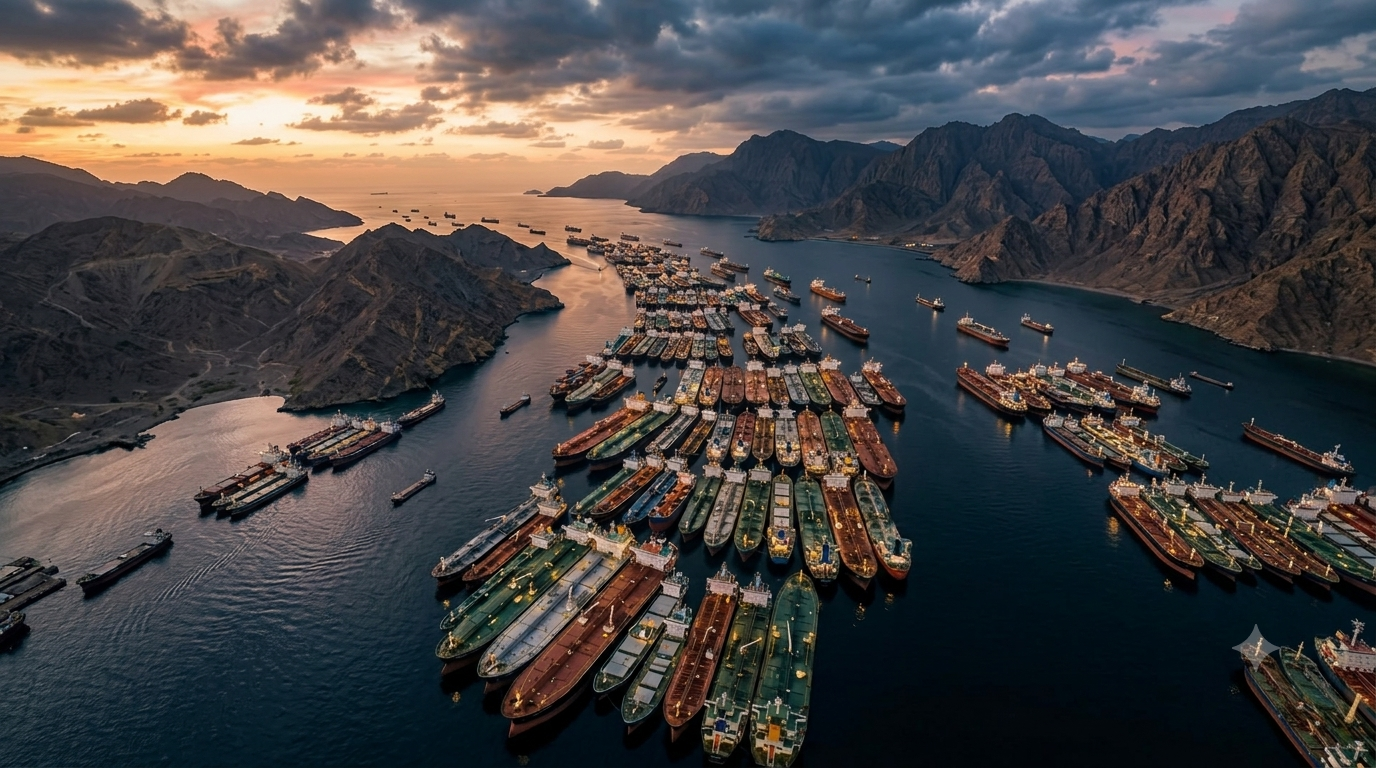
On 28 February 2026, the United States and Israel struck Iran. Within 48 hours, the Strait of Hormuz, the chokepoint through which a fifth of the world's daily oil supply flows, had effectively closed. The world's four largest shipping lines, Maersk, MSC, CMA CGM and Hapag-Lloyd, suspended transits. More than 150 tankers anchored outside the strait rather than risk attack. As of 8 June 2026, just 10 vessels per day were transiting against a pre-crisis baseline of 95.
The strategic logic from Israel's perspective is straightforward and has been documented at length by defence analysts. Iran had spent two decades building what Jerusalem describes as a "ring of fire": Hamas in Gaza, Hezbollah in Lebanon, Shiite militias in Syria and Iraq, and the Houthis in Yemen, a coordinated proxy architecture designed to surround Israel with continuous pressure and create the conditions for its eventual collapse. October 7 triggered the unravelling of that architecture. The Iran war is the final move to dismantle the headquarters.
But the energy dimension is the part Washington's critics aren't adding up.
The US entered 2026 as the world's largest oil producer, pumping 13.58 million barrels per day according to the US Energy Information Administration, comfortably ahead of Russia at 9.87 million and Saudi Arabia at 9.51 million. The Trump administration had spent 2025 systematically rebuilding the Strategic Petroleum Reserve after the Biden era drawdown, bringing it from 347 million barrels back to 415 million barrels by early March 2026.
When the Strait closed, the countries who felt it hardest were precisely those holding the most US debt and running the most trade surpluses against America: China, Japan and the European Union. Japan's entire industrial economy depends on Middle Eastern crude it can no longer reliably ship. China's manufacturing base, built on the assumption of cheap Iranian oil through a now closed strait, is under acute supply pressure for the first time in the post reform era.
If and when the Strait reopens, it will reopen on terms Washington controls. The US Navy is the only force capable of clearing the mines and providing the escort operations that make commercial transit viable again. Gulf states that once moved oil freely, without asking anyone's permission, are now waiting for a signal from Washington before they can move anything. That is not an accident.
The Financial Dimension
The financial dimension compounds the strategic one. On 17 March 2026, US gross national debt exceeded $39 trillion for the first time. Of the roughly $9.3 trillion held by foreign creditors, the breakdown of the biggest holders looks like this:
- Japan: $1.2 trillion, the largest single foreign holder at 12.8% of all foreign held US debt
- United Kingdom: $895 billion at 9.3%
- China: approximately $700 billion at 7.4%, down significantly from a peak of nearly $1.3 trillion a decade ago as Beijing has been quietly reducing its exposure
- European countries collectively hold close to 40% of all foreign owned US debt
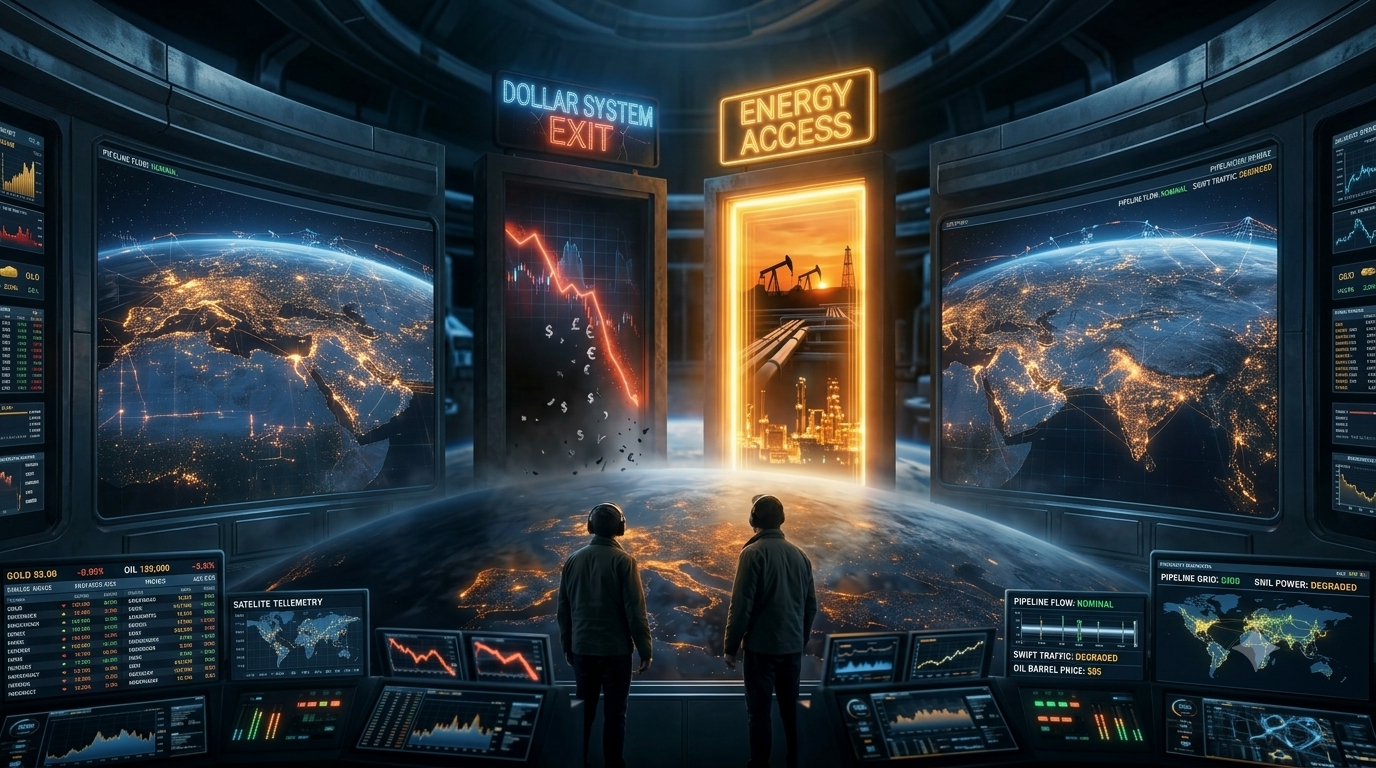
Every one of these creditors is now simultaneously watching their US dollar reserves depreciate as the Trump administration pursues a managed dollar devaluation, and scrambling for American energy because the Strait of Hormuz is closed. Gold's share of global central bank reserves surpassed US Treasuries in late 2025 for the first time since 1996, which tells you exactly how much confidence foreign central banks currently have in the existing arrangement.
The countries holding the most US debt are the same countries most exposed to the Hormuz closure. That's not a trap Trump constructed. It's leverage that was always sitting there, and Washington is now using it.
The Dollar, the Debt and the Digital Play
There's a final dimension to this that almost nobody in the mainstream press is connecting up, partly because it requires holding three uncomfortable thoughts at once.
Because the US is carrying more than $39 trillion in national debt, Trump's chief economic adviser Stephen Miran has publicly argued for a managed dollar devaluation as the mechanism to make that debt more manageable. The dollar index has already fallen from 110 to the mid-90s. Whether by design or consequence, the countries holding the most US government debt, China, Japan and Europe, are watching their reserves depreciate in real terms at the same time they're scrambling for American energy.
Meanwhile, on 6 March 2025, Trump signed an executive order establishing a US Strategic Bitcoin Reserve, directing the Treasury Department to hold approximately 207,000 Bitcoin seized from criminal and civil asset forfeiture as a permanent national reserve asset. The White House's own AI and Crypto Czar David Sacks described it as "a digital Fort Knox."
One month before that executive order, Eric Trump and Donald Trump Jr. had founded American Bitcoin Corp, a Nasdaq listed Bitcoin mining company that by May 2026 held more than 7,300 Bitcoin valued at roughly $592 million. The company operates nearly 90,000 mining machines across facilities in Texas, New York and Alberta. Eric Trump has described its mission as building "American owned, professionally operated hashrate."
Source: @erictrump on Instagram
In summary, here is what's happening with the world's money. The administration is deliberately weakening the US dollar to inflate away America's $39 trillion debt in real terms. A weaker dollar makes that debt cheaper to service and foreign held US assets worth less. At the same time Trump signed an executive order making Bitcoin a US national reserve asset, positioning it as the new store of value. One month before that order, his sons founded a Bitcoin mining company now worth roughly $592 million. The dollar goes down. Bitcoin goes up. The US government holds Bitcoin. The president's sons hold Bitcoin.
Whether that is a coherent strategy to transition the world's reserve currency or an extraordinary conflict of interest is a question every Australian with superannuation in US dollar funds should be asking with their finanical planner.
The Iran War's Hidden Casualty: The Helium Supply
One consequence of the conflict that received almost no mainstream coverage is the collapse of global helium supply. Qatar's Ras Laffan Industrial City, the world's largest LNG facility and the source of roughly one third of global helium output, was struck by Iranian ballistic missiles on 18 and 19 March 2026. QatarEnergy declared force majeure. Damage is expected to take three to five years to repair.
Helium is not a party balloon gas in an industrial context. It's a non-substitutable input in semiconductor manufacturing, used in chipmaking clean rooms, MRI machines, rocket assembly and high capacity hard drives. TSMC, Samsung and SK Hynix rely on Qatari helium for more than 60% of their supply. Spot helium prices surged 70 to 100% in the weeks following the strikes. Western Digital's CEO confirmed the company had sold out of hard drives for all of 2026.
The US is the world's largest helium producer, at 81 million cubic metres annually versus Qatar's 63 million. American producers are now the swing suppliers in a market where Asian competitors are scrambling. That outcome, whether engineered or incidental, lands entirely in Washington's favour.
The World Cup Window and the November Clock
Trump has publicly and repeatedly stated that the November midterm elections won't make him rush into a deal. "I don't care about the midterms," he told a Cabinet meeting in late May. Iran's negotiators have noted, according to former nuclear negotiator Robert Malley speaking to Democracy Now, that every time Trump says he doesn't care about the midterms, Tehran interprets it as evidence that he does.
The calendar matters here. The FIFA World Cup began on 11 June across the United States, Canada and Mexico. It runs until 19 July. The US is hosting this tournament. Trump is the president hosting it. For six weeks, the American public's attention moves to sport. That's the window in which a deal, a significant escalation or a major announcement could land with dramatically reduced political noise.
The midterms are in November. The economic pressure of high fuel prices, reignited inflation and rising costs of goods is already showing up in polling. Democrats are publicly confident of recapturing at least one chamber, according to Foreign Policy analysis. Trump needs the Strait open and fuel prices falling before November. Iran knows it and is running out the clock.
Whoever blinks first loses. Right now, Tehran is betting Washington blinks first. Washington is betting Iran's economy collapses first. The data suggests the US is better positioned to wait, but not indefinitely.
Cuba: The Intelligence Piece
Cuba is not a military target. It's an intelligence target, and that distinction matters.
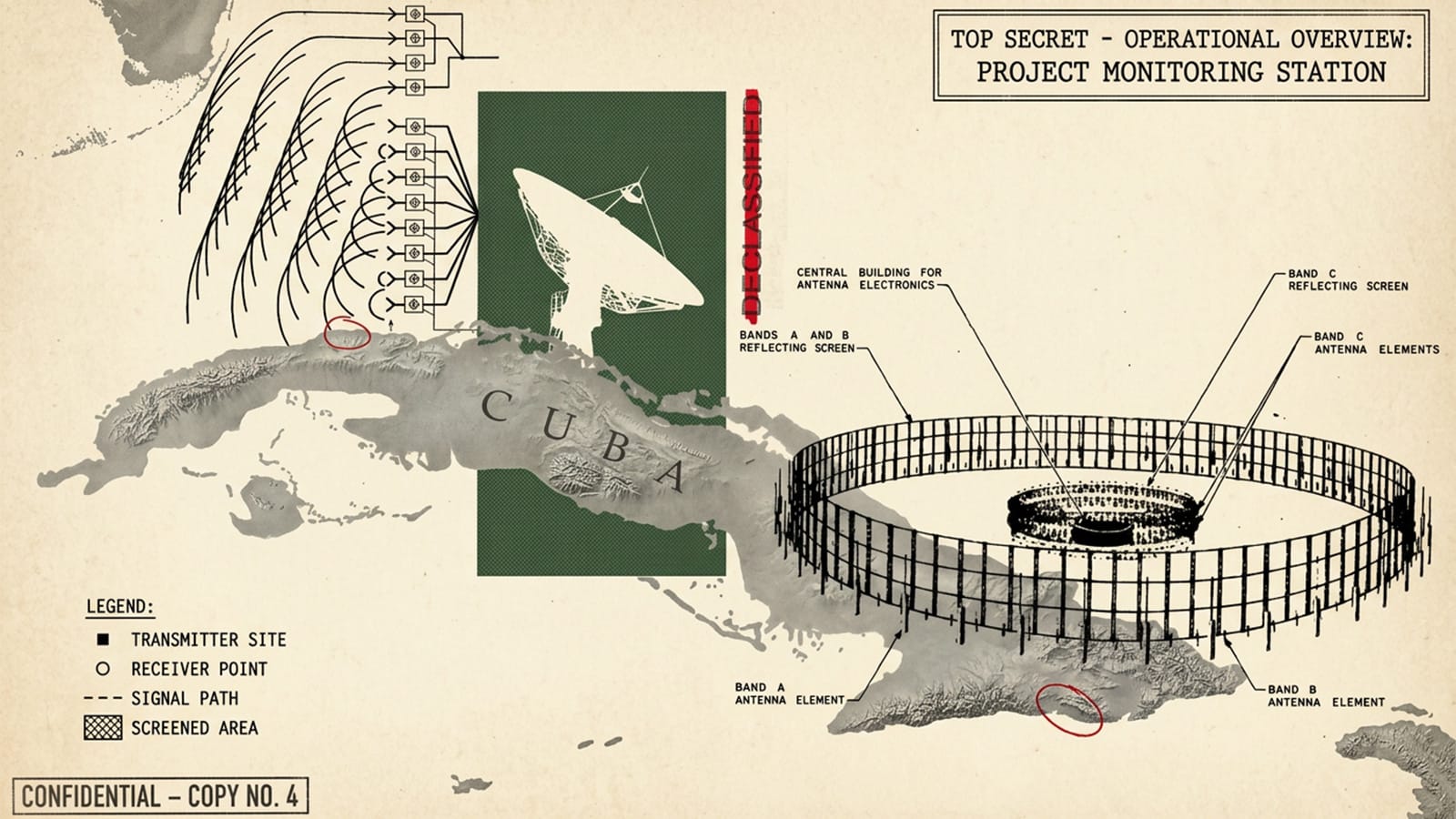
The Center for Strategic and International Studies has identified four Chinese signals intelligence facilities in Cuba: Bejucal, Wajay and Calabazar near Havana, and El Salao near Guantanamo Bay. A May 2025 CSIS satellite analysis documented major new construction at Bejucal, where a new circularly disposed antenna array nearly twice the size of its predecessor is under construction. These systems, designed for high frequency direction finding, are capable of tracking signals from thousands of miles away. US Secretary of State Marco Rubio has publicly acknowledged that Cuba hosts Russian and Chinese intelligence infrastructure near Florida.
Since 2023, China and Russia nearly tripled their intelligence personnel in Cuba, according to officials familiar with classified US assessments cited by the Wall Street Journal. The facilities are positioned to monitor Naval Air Station Key West, Homestead Air Reserve Base, and the testing ranges across the Gulf. Congress mandated in the December 2025 National Defense Authorization Act that the Pentagon report on these capabilities by June 2026.
On 1 May 2026, Trump signed Executive Order 14404 expanding US sanctions on Cuba's military regime. He told a Forum Club event in West Palm Beach that the US would be "taking over" Cuba "almost immediately," adding: "I like to finish a job." He specifically referenced Iran, indicating Cuba is the next operation once the Middle East situation resolves.
China responded by shipping 60,000 tonnes of rice to Cuba on 26 May. Beijing condemned the US blockade the following day. The lines are drawn.
The Antarctic Dimension
While every camera in the world is pointed at the Strait of Hormuz, China has been quietly completing its most strategically positioned intelligence facility yet, directly south of Australia and New Zealand.
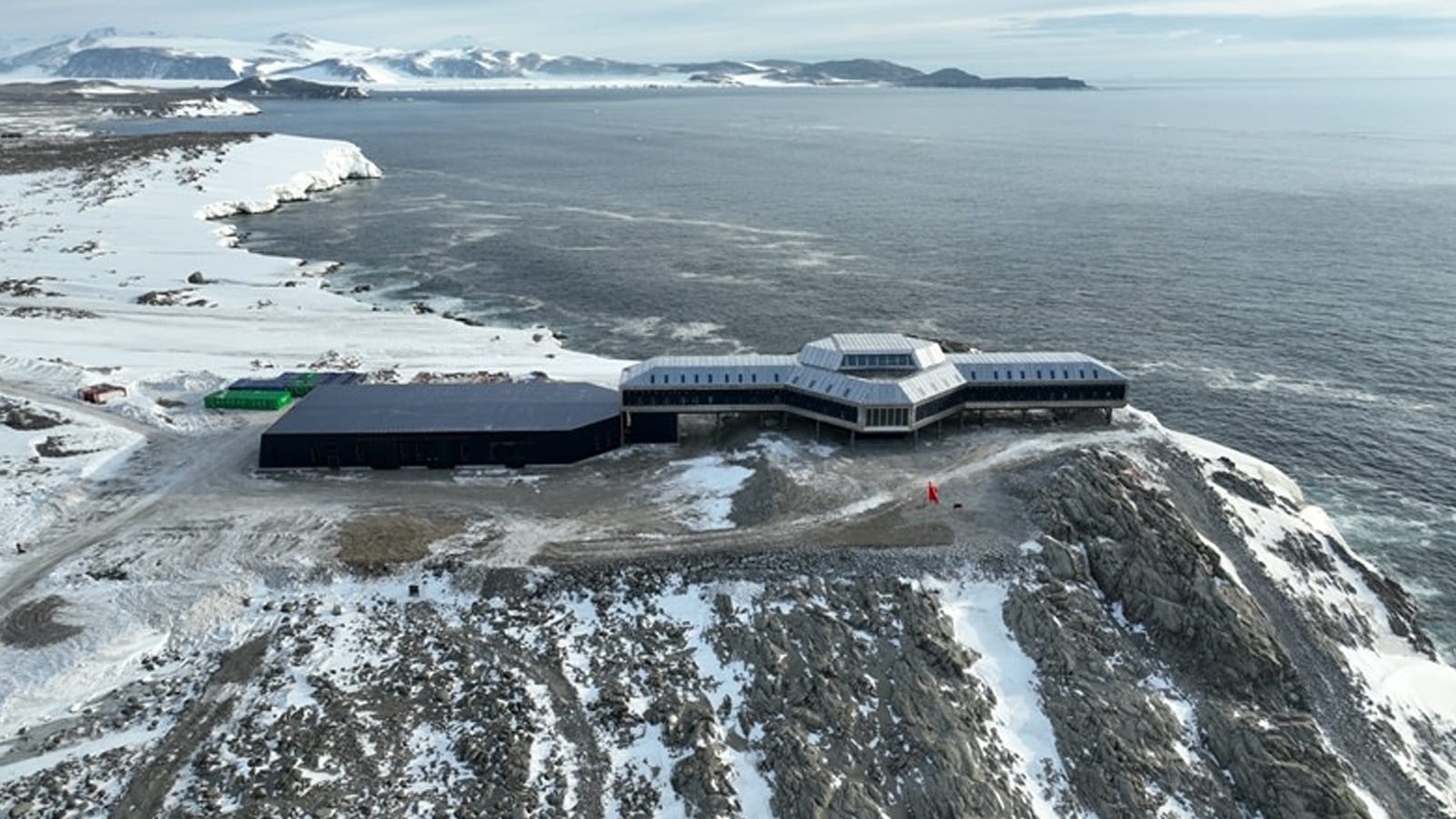
China's Qinling Station on Inexpressible Island in the Ross Sea became operational in February 2024 and reached full completion in early 2026. It's China's fifth permanent Antarctic research station and its first capable of year round occupation due south of Australia. According to a CSIS report published in April 2024, the station's position enables it to collect signals intelligence from US allied Australia and New Zealand, and gather telemetry data on rockets launching from newly established space facilities in both countries. Australia has a satellite launch facility in the Northern Territory. New Zealand's space industry is growing rapidly.
The station covers 5,244 square metres and can house up to 80 personnel in summer. It includes a satellite ground station. Chinese company COSCO is simultaneously building what it describes as a transcontinental railway linking the Chancay port in Peru to the broader South American continent, positioning Chinese controlled infrastructure to move minerals from the lithium triangle directly to Chinese ships without touching a US aligned port.
China has now lodged environmental evaluation documents for a sixth Antarctic research station at Marie Byrd Land. The US, by contrast, is proposing to cut 70% of its polar science funding under the National Science Foundation's 2026 budget. Australia, in the assessment of multiple analysts, has been "asleep at the wheel."
The Space Race Is Not About Space
The final piece of the puzzle is the one being discussed almost entirely in the wrong context.
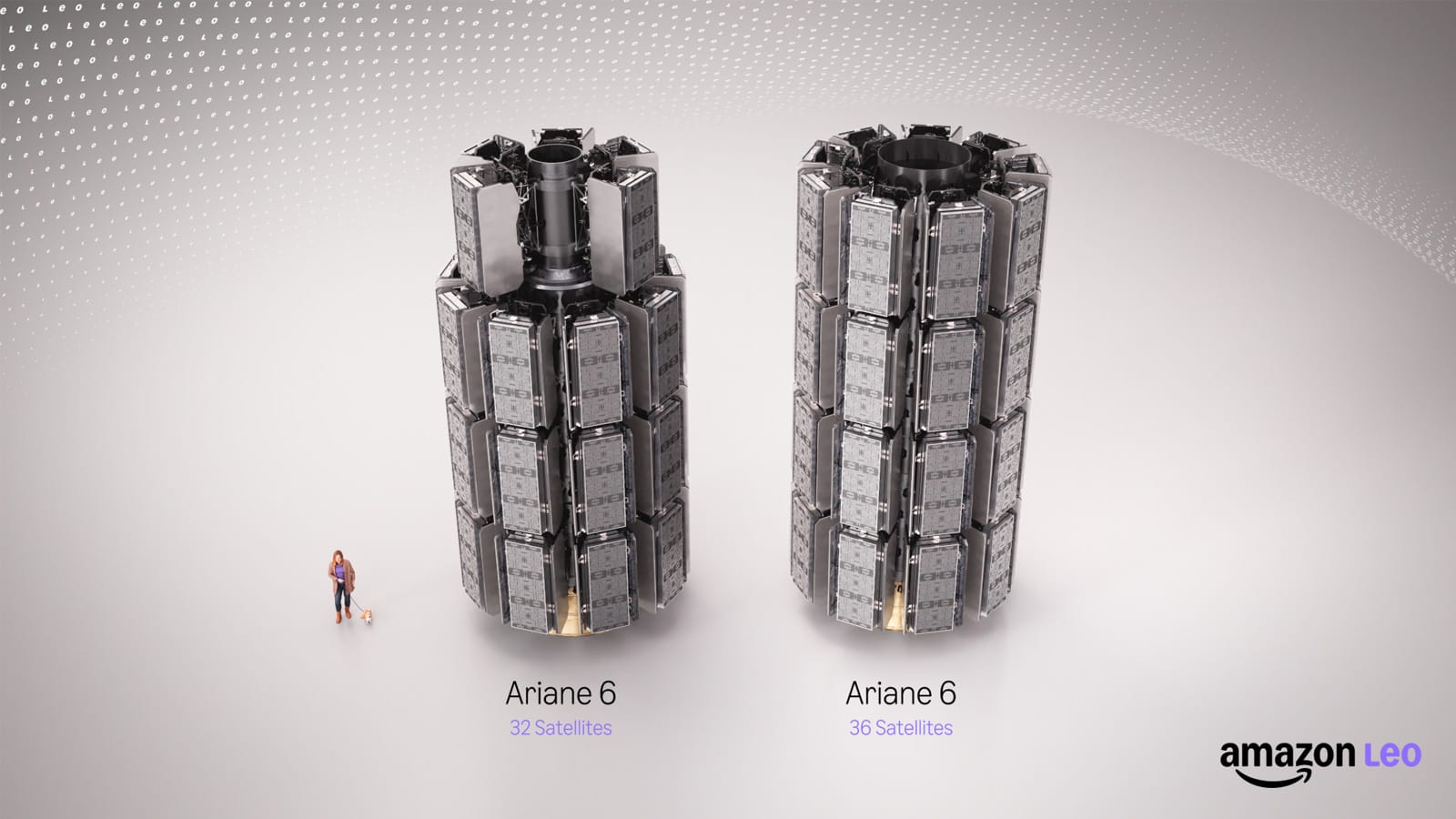
Amazon has been launching LEO satellites at scale. China's Guowang network is surging into orbit. Elon Musk's Starlink already provides global coverage. The framing in most coverage is bandwidth, faster internet, streaming. That's not what this is about.
The US, China and several allied nations are building space based infrastructure that operates independently of the undersea cable network that currently carries the vast majority of global internet traffic. Those cables run through chokepoints: the Strait of Malacca, the Red Sea, the Persian Gulf, the waters around Taiwan.
Many of those chokepoints are now contested or threatened. A conflict scenario that disrupts undersea cable infrastructure doesn't disrupt satellite networks. The nations with the most comprehensive satellite coverage maintain communications, financial systems, military coordination and intelligence operations regardless of what happens to the physical internet.
This is why the billionaires are going to space. It's not about ego or tourism. The people who understood the trajectory of great power competition earliest moved their capital and their infrastructure off the vulnerable network and onto the one that can't be cut with a ship's anchor or a submarine.
Australia sits blindly in the middle of this contest. Chinese signals intelligence from Antarctica monitors our satellite launches. Chinese controlled ports handle our mineral exports. Our AUKUS commitments tie our submarine capability, and our helium dependent semiconductor supply chains, to the outcome of a conflict we didn't start and don't fully control. Albanese's response has been to insist AUKUS is "full steam ahead" while doing nothing about the Chinese station sitting directly south of us.
Andrew Hastie, the man supposedly running Australia's shadow defence, has spent the last month calling Pauline Hanson "MAGA first" on morning television. And Greens defence spokesman David Shoebridge wants to scrap the submarines entirely and send Australia into someone else's knife fight with a strongly worded letter. While Trump reshapes the world's energy order, Canberra is bickering about optics and sitting on the fence instead of standing with our most important ally.
What Comes Next
The sequence, Venezuela, Iran, Cuba, is not complete. Each move has stripped China of something specific: Venezuela removed its cheapest alternative oil supplier in the Western Hemisphere. Iran's Strait closure cut off cheap Iranian crude and choked the energy supply of China's largest creditors simultaneously. Cuba, if it follows the trajectory Trump has signalled, removes China's primary signals intelligence platform 90 miles from Florida.
What remains is the minerals question. The lithium triangle, the rare earths of Brazil, the copper of Peru, these are the inputs on which the next century's technology economy runs. China has spent years locking in those supply chains through infrastructure, debt and trade deals. Trump's Donroe Doctrine is explicitly designed to roll that back, by offering US aligned financing and security guarantees to countries that choose Washington over Beijing.
The world didn't change on 28 February when the first missiles hit Iran. It changed over twenty years of incremental Chinese strategic expansion while Washington looked the other way. What's happening now is the correction. It's messy, it's expensive, and it was always going to be, because nobody addressed it when it was manageable.
The ships in the strait are a symptom. The war is about who controls the energy, the minerals and the communications infrastructure that the next fifty years runs on.
China knows it. Tehran knows it. The question is whether Canberra does.
Sources:
- https://www.exiger.com/perspectives/iran-war-disrupts-one-third-of-global-helium-supply/
- https://www.cnbc.com/2026/06/07/iran-war-100-days-trump-stocks-sp500-bonds-oil.html
- https://www.cnbc.com/2026/05/30/iran-war-inequality-affordability-ceasefire-analysis.html
- https://straits.live/
- https://www.cnn.com/2026/06/03/politics/trump-iran-war-peace-deal-analysis
- https://www.npr.org/2026/05/27/nx-s1-5836202/trump-cabinet-meeting
- https://foreignpolicy.com/2026/05/20/trump-war-iran-wreck-economy-oil-energy/
- https://www.ecns.cn/news/cns-wire/2025-05-14/detail-ihernfey9435916.shtml
- https://www.brookings.edu/articles/chinas-strategy-for-latin-america-and-the-trump-corollary/
- https://moderndiplomacy.eu/2026/01/13/chinas-dependence-on-iranian-oil-strategic-leverage-and-exposure/
- https://www.energypolicy.columbia.edu/implications-of-the-conflict-in-the-middle-east-for-chinas-energy-security/
- https://visualcapitalist.com/charted-oil-trade-through-the-strait-of-hormuz-by-country/
- https://www.visualcapitalist.com/ranked-worlds-biggest-producers-of-crude-oil/
- https://www.csis.org/analysis/what-are-implications-iran-conflict-japan
- https://www.foxnews.com/politics/china-linked-spy-expansion-cuba-raises-alarms-near-key-us-military-bases
- https://www.newsweek.com/donald-trump-us-take-over-cuba-11905781
- https://www.whitehouse.gov/fact-sheets/2026/05/fact-sheet-president-donald-j-trump-imposes-sanctions-on-cuban-regime-officials
- https://www.csis.org/analysis/china-makes-progress-its-fifth-antarctic-research-station
- https://features.csis.org/hiddenreach/china-polar-research-facility/
- https://www.gisreportsonline.com/r/donroe-doctrine-china/
- https://www.tomshardware.com/tech-industry/semiconductors/the-global-helium-shortage-is-a-direct-threat-to-chipmaking
- https://oilprice.com/Energy/Energy-General/Iran-War-Triggers-Helium-Shock-Threatening-Global-Chip-Supply.html
- https://time.com/article/2026/05/26/abraham-accords-trump-peace-deal-us-israel-iran-war/
- https://www.aljazeera.com/sports/2026/6/4/world-cup-2026-what-are-the-key-dates-from-the-opening-match-to-the-final
- https://www.piie.com/blogs/realtime-economics/2026/latin-america-vise-trump-corollary-vs-chinas-2025-policy-paper
- https://undisciplinedenvironments.org/2025/03/11/chinas-expanding-footprint-in-south-americas-lithium-triangle/