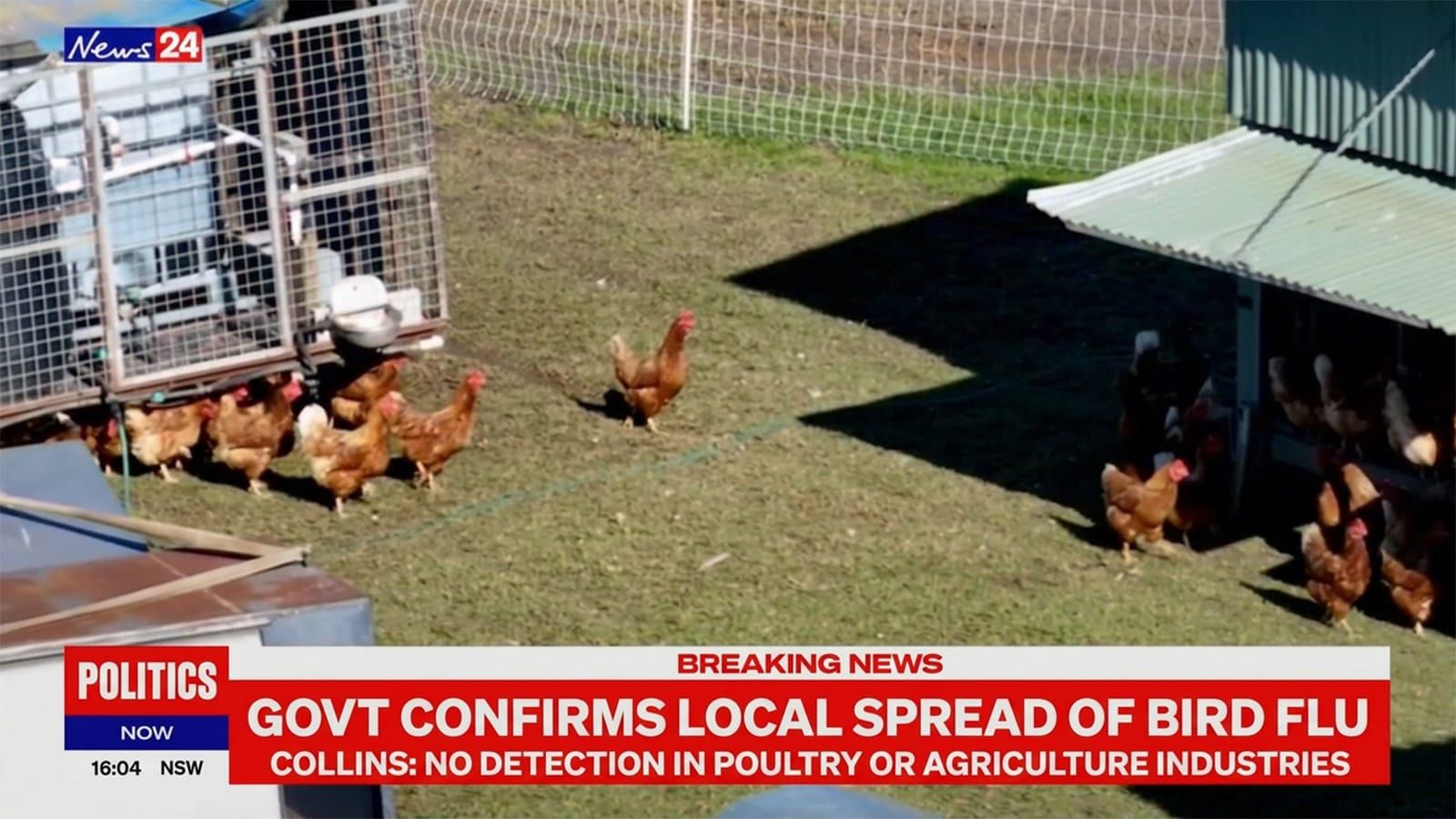
News24 has reported that bird flu is now spreading between birds that live in Australia, after Agriculture Minister Julie Collins confirmed the first local transmission of the H5N1 strain in Australian wildlife. For anyone who buys eggs or a roast chook, the news matters for one plain reason: what it could do to what's on the shelf, and what you pay for it.
Here's the part that should settle nerves first. Properly cooked eggs and chicken are safe to eat. Health and food safety authorities are clear that normal cooking temperatures kill the virus, and the human health risk from H5N1 comes from close contact with sick or dead birds, not from food that's been cooked. So the question for shoppers isn't really safety. It's supply and price.
Your cooked eggs and chicken are still safe, the real risk is to supply and price
The virus that's just been confirmed spreading here lives in wild birds. It becomes a food problem only if it gets into the commercial sheds where our meat chickens and laying hens are kept. When that happens, the standard response is to cull the affected flock to stop the spread, and that's what thins out supply and pushes prices up.
Nothing in the current detections points to that yet. The confirmed spread is in wildlife, and the job now is keeping it out of farms.
Julie Collins confirms H5N1 is now passing between birds that live here
Collins said the Consultative Committee on Emergency Animal Diseases had met and agreed, based on testing and sequencing by the CSIRO lab, that some local transmission had occurred between a number of greater crested terns that are resident in South Australia. It's the first time the H5 virus has been shown moving bird to bird on Australian soil, rather than arriving with migratory birds.
"We do expect with this local transmission that there will be further detections in Australian wildlife," Collins said.
Chief Veterinary Officer Beth Cookson called the finding "concerning" and said it "may mean we start to see wider spread among wild birds and other susceptible wildlife." There are 27 confirmed H5 detections nationally so far, with 14 in South Australia, 10 in Western Australia, two in New South Wales and one in Queensland.
Cookson pointed straight at what's happened overseas. "We do know from the overseas experience that once the virus becomes more widespread in wild bird populations, it will not be possible to avoid losses in susceptible wildlife in the natural environment," she said. As the last continent to detect H5, she said, "we have learnt from the experiences abroad and invested in our preparedness."
How bird flu empties shelves: Australia already lived a version of it in 2024
Australians don't have to imagine the shelf impact. In 2024 a different strain, H7, hit egg farms in Victoria, more than half a million hens were destroyed, and Coles put a two carton limit on eggs across most of the country. McDonald's even shortened its breakfast hours. That was a home grown outbreak of a different virus, but the mechanism is identical: infected flocks get culled, and it takes laying hens at least 18 weeks to come back into production, so the gap on the shelf drags on well after the culling stops.
H5N1 is the bigger, global strain the rest of the world has been fighting. If it reaches Australian poultry, the 2024 episode is the template for what shoppers would feel.
The United States shows where this can go: over 100 million birds and an egg price rollercoaster
The clearest warning sits in the United States, where H5N1 has run through poultry since February 2022. More than 100 million farm birds have been culled, most of them laying hens, and that's what drove the American egg crisis: record prices, bare shelves, and purchase limits at major chains.
Prices there had actually recovered, falling by around 45% year on year by early 2026 as flocks rebuilt. Then fresh outbreaks hit poultry across 12 states in June 2026, and the price pressure started building again heading into their summer. Four years in, American eggs are still on a rollercoaster, but prices are down in general.
The US virus also did something new. It jumped into dairy cattle in 2024 and has since turned up in more than 1,000 herds. Pasteurised milk stays safe, because pasteurisation kills the virus, but it showed the strain can move beyond birds.
Europe, Asia and the human cases: where the virus is right now
Europe is deep in it. Across the 2025 to 2026 season, 16 countries logged 283 outbreaks in commercial poultry, with Poland worst hit, followed by Germany, Italy and France. The virus swept down through the Americas and into the sub-Antarctic before this, killing tens of thousands of sea lions, seals and seabirds, the mass wildlife toll Cookson is now warning could start here.
Human cases stay rare and tied to animal contact. Between August 2025 and June 2026, 12 people caught H5N1 across Bangladesh, Cambodia and India, and three died. In the United States, 71 people have been infected since the dairy outbreak began, with two deaths, almost all farm and dairy workers. Health authorities have found no sustained spread from person to person, and the US Centres for Disease Control rates the risk to the general public as low.
⚠️What Australians are being asked to do
The official advice is simple: avoid, record and report. Don't touch sick or dead birds, note where and when you saw them, and report them to authorities so surveillance can track where the virus is moving.
For now the message on the kitchen bench holds. Cook your eggs and chicken properly and they're safe to eat. The thing to watch isn't your fridge, it's whether this virus reaches a poultry farm, because that's the moment it stops being a wildlife story and starts being a price at the checkout.