One in five Australian households can't afford to keep the lights on. That's the finding of Energy Consumers Australia, the peak body for household energy customers, and it lands in the same fortnight Anthony Albanese signed off on shipping Australian uranium to India so that a country of 1.4 billion people can run on the cheap, reliable, zero-emissions power he still won't let Australians have.
And the safeguards meant to stop this wave of AI data centres from dumping their power and water costs onto your bill? They don't exist yet. Today Albanese promised to legislate them, but not until next year, while he fast tracks approvals now, the centres already running answer to nothing, and the clean energy he says will power them all hasn't been built. He's approving the demand before he's built the supply, or the rules.
Here's the part that should end the argument. Labor has bet the whole grid on its renewables rollout, yet the government's own allies at the Climate Council now admit the data centre stampede could delay that shift to clean energy. Albanese is waving through demand his clean power cannot supply and, by his own side's admission, cannot catch up to. His policy has failed on its own terms, and the only thing that runs a data centre around the clock is the reliable nuclear he ships to India and bans at home.
The numbers are brutal. One in five households are in energy hardship or on the brink of it, and the same share are skipping meals to stay afloat, according to Energy Consumers Australia.
In one of the most resource-rich nations on earth, a fifth of the country is choosing between dinner and the power bill.
The figures are just as grim. The average household energy debt sits at $1,367, with electricity prices up 220% since 2004. For some families, bills have landed a thousand dollars higher than what the government promised.
That promise matters. At the 2022 election Labor campaigned on cutting power bills by $275 a year by 2025. Four years on, the cut never arrived and the debt keeps stacking up.
Video: Centre for Independent Studies. Energy analyst Zoe Hilton warns Australians that more energy price hikes are coming.
Albanese has cheap, reliable power for India and blackouts for you
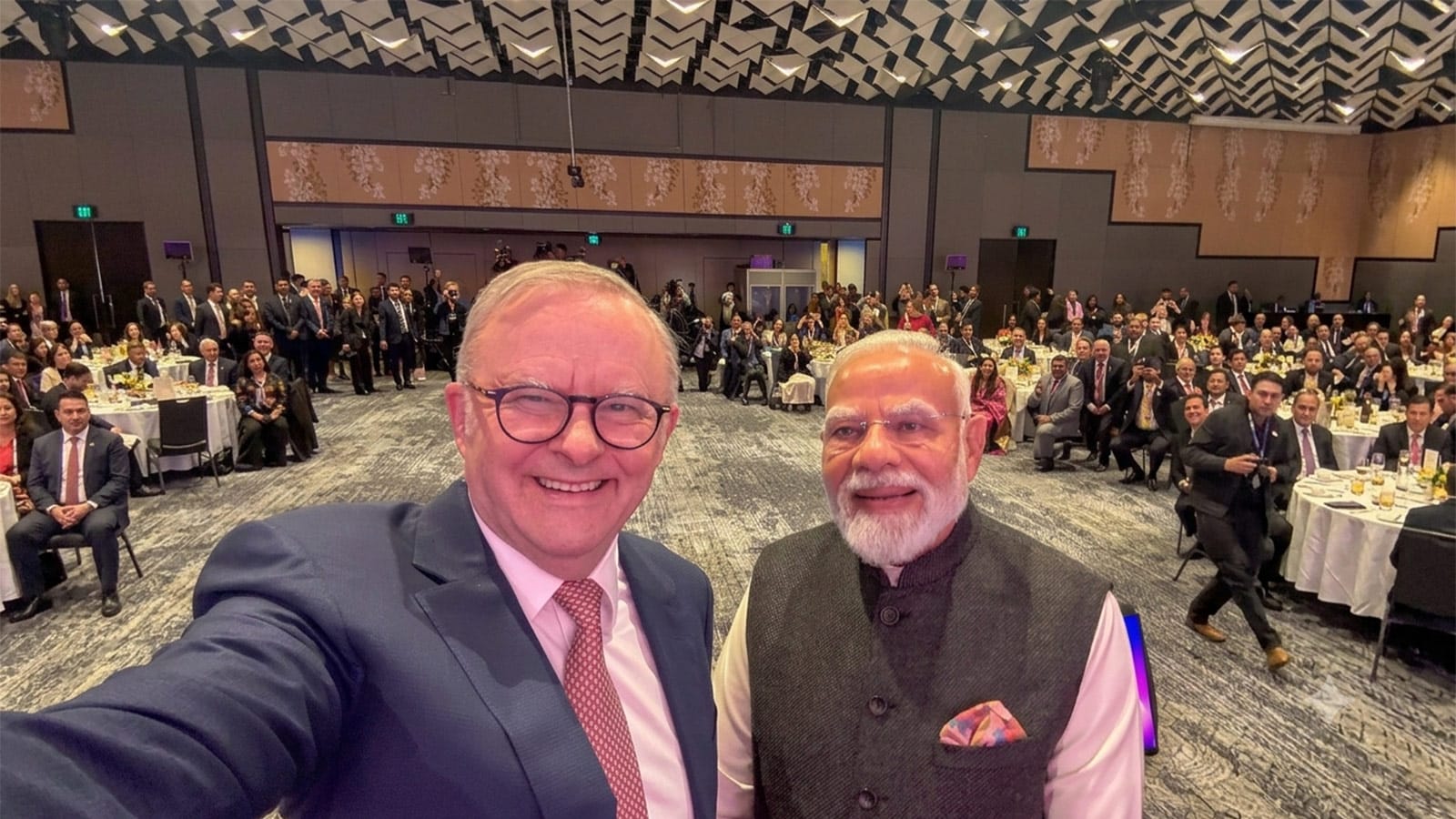
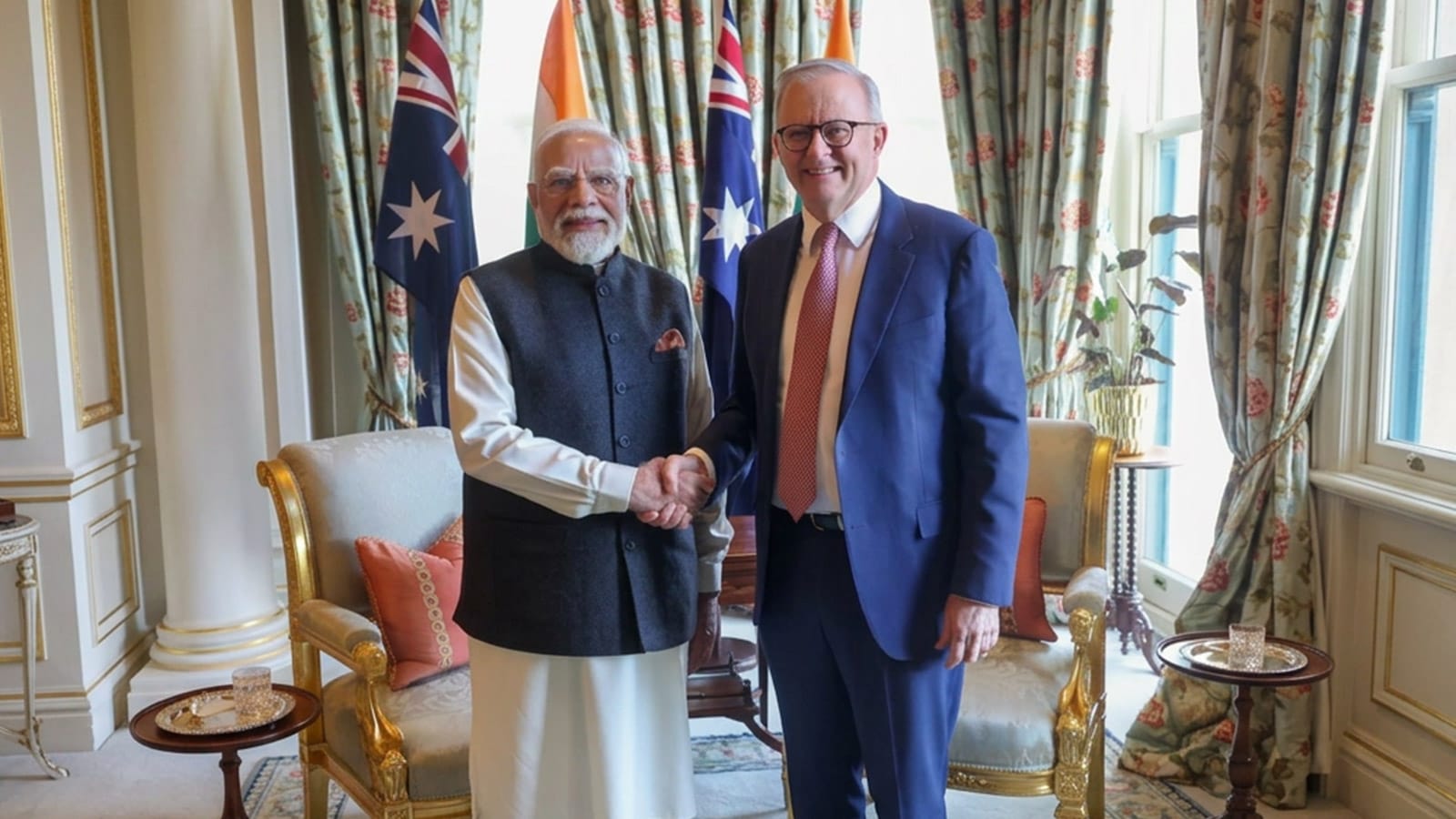
Here's where it curdles. In the same window that a fifth of the country slid into energy hardship, Albanese was in Melbourne with Indian Prime Minister Narendra Modi, putting his name to an arrangement to export Australian uranium for India's nuclear power stations. As we reported at the time, the same Prime Minister who's happy for India to run on Australian uranium keeps nuclear energy banned at home and won't lift the moratorium.
It's the cleanest double standard in Australian politics. Cheap, zero-emissions baseload is good enough for 1.4 billion Indians, and off limits for the one in five Australians skipping meals to pay Chris Bowen's power bills.
Bowen 'expects' the data centres to pay, but he hasn't made them
Then there's the other set of customers being waved to the front of the queue. This week Albanese is in Sydney to launch a new Office of AI inside his own department, a central body to smooth the path for the wave of artificial intelligence data centres being built across the country. These are enormous facilities, some drawing as much electricity as a small city, plugged into the very grid households are being told to go easy on.
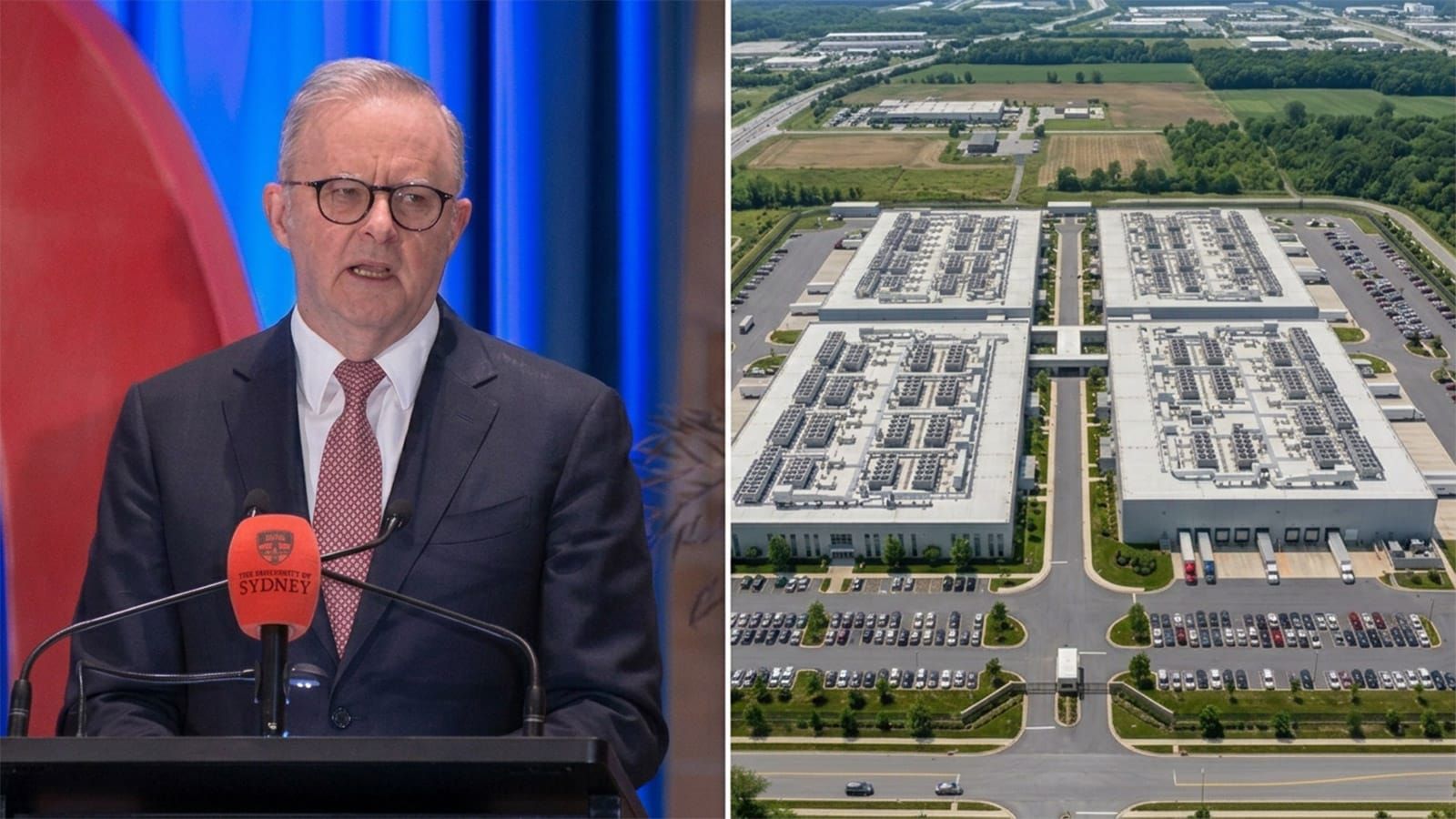
Albanese isn't hiding the hurry. Spruiking his AI plan at the University of Sydney, he lined himself up alongside Medicare, the eight hour day and superannuation, then said the quiet part out loud: "We can set the terms. We can determine AI's social license, but we have to do it now." That rush is the whole problem. He wants the data centres waved through before anyone has worked out what they'll do to your power bill or your water, and he's calling it a legacy to rank with Medicare while one in five households skip meals.
The government swears you won't pay for it. In a joint statement from Bowen and two other ministers, the wording is careful:
"The Albanese Government expects data centres and AI infrastructure operators to underwrite new renewable power supply, pay their full share of new grid connectivity so costs are not passed to consumers or businesses."
For now, it's an expectation, not a law. Today Albanese promised that will change, pledging a legal obligation for operators to underwrite a new power supply so "no costs are passed on to homes or businesses," with data centres made "net generators, not net users." It sounds airtight. So did the promise to cut your power bill by $275. That law won't reach parliament until early next year, long after the approvals he's fast tracking today are signed off, and it does nothing about the 160-odd data centres already plugged into your grid.
Even the former Greens leader says Labor is rushing it
You don't have to be a Coalition voter to see the problem. Adam Bandt, who led the Greens until he lost his seat last year and now runs the Australian Conservation Foundation, has torn into the plan to fast track data centre approvals, saying the Prime Minister "has his priorities wrong" and warning the rush "has the potential to derail Australia's clean energy transition."
At the moment, AI cowboys are acting like they can march into Australia and construct these droning, temperature-controlled, windowless factories wherever they want, regardless of the impact on nature, our scarce water resources and the climate.
His fix is what Labor now says it will legislate next year, once the approvals are already waved through: developers should be "compelled to build the renewable energy and water recycling infrastructure to service it." Data centres, he said, must be made to bring their own clean energy, not compete with households and push up their power bills.
Where the data centres are, whose water they drink, and why your bill is next
So what is a data centre, and why should your power bill care about one? It’s a giant shed full of computers that run the websites, apps and AI tools we all use. They never switch off, so they pull electricity 24 hours a day and swallow huge amounts of water to stop the machines cooking. Australia already runs 162 of them, and almost all of them sit in and around Sydney and Melbourne.
That 162 is AEMO's tally of centres big enough to move the grid. Industry directories count more than 250 facilities all up, almost all of them hugging the east coast near the power network and the subsea cables that carry our internet. Here's where they cluster:
- Sydney, the biggest hub: the western suburbs of Eastern Creek, Erskine Park and Marsden Park, where CDC's Marsden Park campus is set to be the southern hemisphere's largest at over 500 MW.
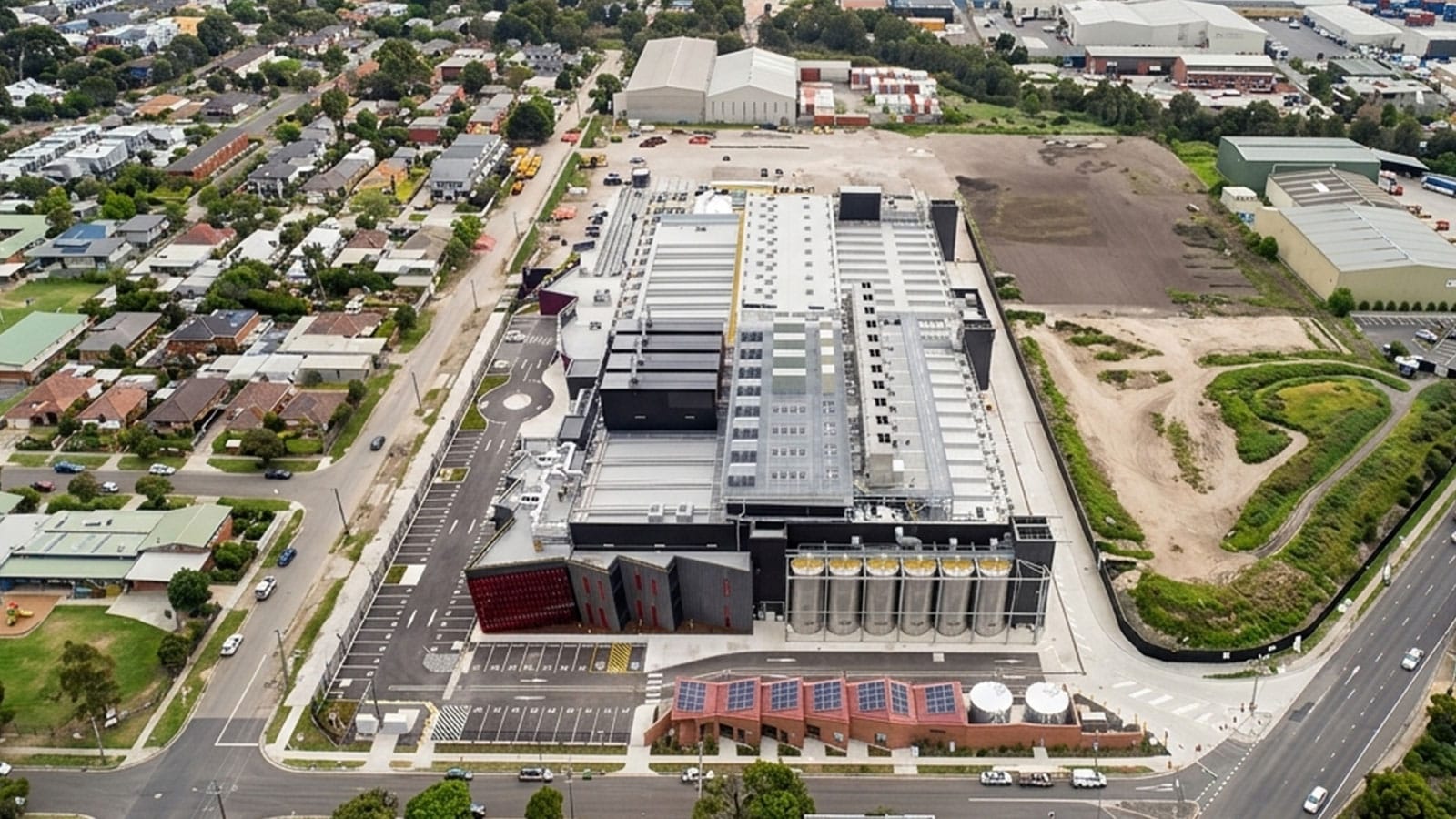
- Melbourne, the second hub: the western and south-western suburbs, including Port Melbourne, Footscray and Laverton North.
- Canberra, the secure government hub: Fyshwick and Mitchell.
- Brisbane: the CBD and nearby nodes such as the Polaris centre.
- Perth: the key cable landing point for connections into Asia.
- Adelaide: an emerging tech and defence hub.
| What we’re measuring | Where it is now | Where it’s heading |
|---|---|---|
| Electricity used | About 4 TWh a year, roughly 2% of the national grid | About 12 TWh (6%) by 2030, and 34 TWh (12%) by 2050 |
| Data centres running | 162 across Australia, almost all in Sydney and Melbourne | Capacity roughly doubling by 2030 |
| Sydney’s drinking water | About 3.5 billion litres a year, under 1% of supply | Up to 25% of Sydney’s water by 2035 |
| How they’re powered | About 70% renewables, 30% still coal and gas | More coal and gas for longer unless new renewables are built |
| Your power bill | — | Wholesale prices 20%+ higher by 2035, up to 26% in NSW |
Sources: AEMO (electricity and site numbers), Sydney Water (water), Climate Council (power mix and price modelling).
Here’s the part Chris Bowen leaves off the announcements. The Climate Council, no friend of the Coalition, modelled what happens if these centres plug in before the new renewable power is built to match them. Its finding: wholesale electricity prices more than 20% higher across the main grid by 2035, and up to 26% higher in New South Wales and 23% in Victoria. That increase flows straight through to household bills.
And now Labor's own side has admitted the problem. The same Climate Council warned today that the data centre surge "could delay this shift" to clean energy, the very transition Albanese has staked the whole grid on. Its chief executive Amanda McKenzie said that unchecked, this growth means "soaring prices" unless enough new renewables are built to match. So Albanese is fast tracking an army of power hungry data centres that his clean energy plan cannot yet feed, while the people who cheer that plan concede it will be set back to run them. His own energy transition cannot carry the demand he is rushing to approve.
Then there’s your tap. Sydney’s data centres already drink about 3.5 billion litres of clean drinking water a year, and ten approved projects in Western Sydney alone would use up to 9.6 gigalitres a year, close to 2% of the city’s entire supply. NSW has no binding rule forcing them to use anything but drinking water. A former Sydney Water scientist warned there’s already a shortfall between supply and demand, and that their thirst in a drought will be a serious problem.
This is the same fight now raging in Ireland, where families cop hosepipe bans while data centres soak up about a fifth of the nation’s electricity. Australia is heading down the same road, without the warning label.
Queensland shows the choice Labor won't make
Look north for the tell. In Queensland, LNP Premier David Crisafulli is chasing the very same data centres, telling his party's convention the state would be only the second in the country to let big tech run on cheaper coal as well as renewables.
Brisbane has just 24 of these centres today, a fraction of Sydney's and Melbourne's, and cheaper land is pulling in multi-billion-dollar interest. Critics warn the rush could still push Queensland power prices up 14% within a decade, and there's no dedicated planning policy yet, so councils wave the sites through as ordinary commercial buildings.
The contrast with Canberra couldn't be sharper. Queensland's LNP wants the data centres and is keeping cheap, reliable coal on the table to run them, which is how you add demand without torching household bills. Federally, Labor wants the same investment and the same AI headlines, but it rules out new coal, bans nuclear, and dumps the load onto a renewables rollout that's already lifting your power bill. Any price pressure these centres bring is a mess Labor's own energy policy made. The demand is coming either way. Labor just won't be honest about who pays for it.
Chris Bowen blames the Coalition while the bills keep climbing
In that same release, Bowen couldn't help himself.
"Data centres have great potential to support our grid and expand new renewable investment, but it's important we work together... so that we can continue to keep our system secure and energy prices low for all consumers."
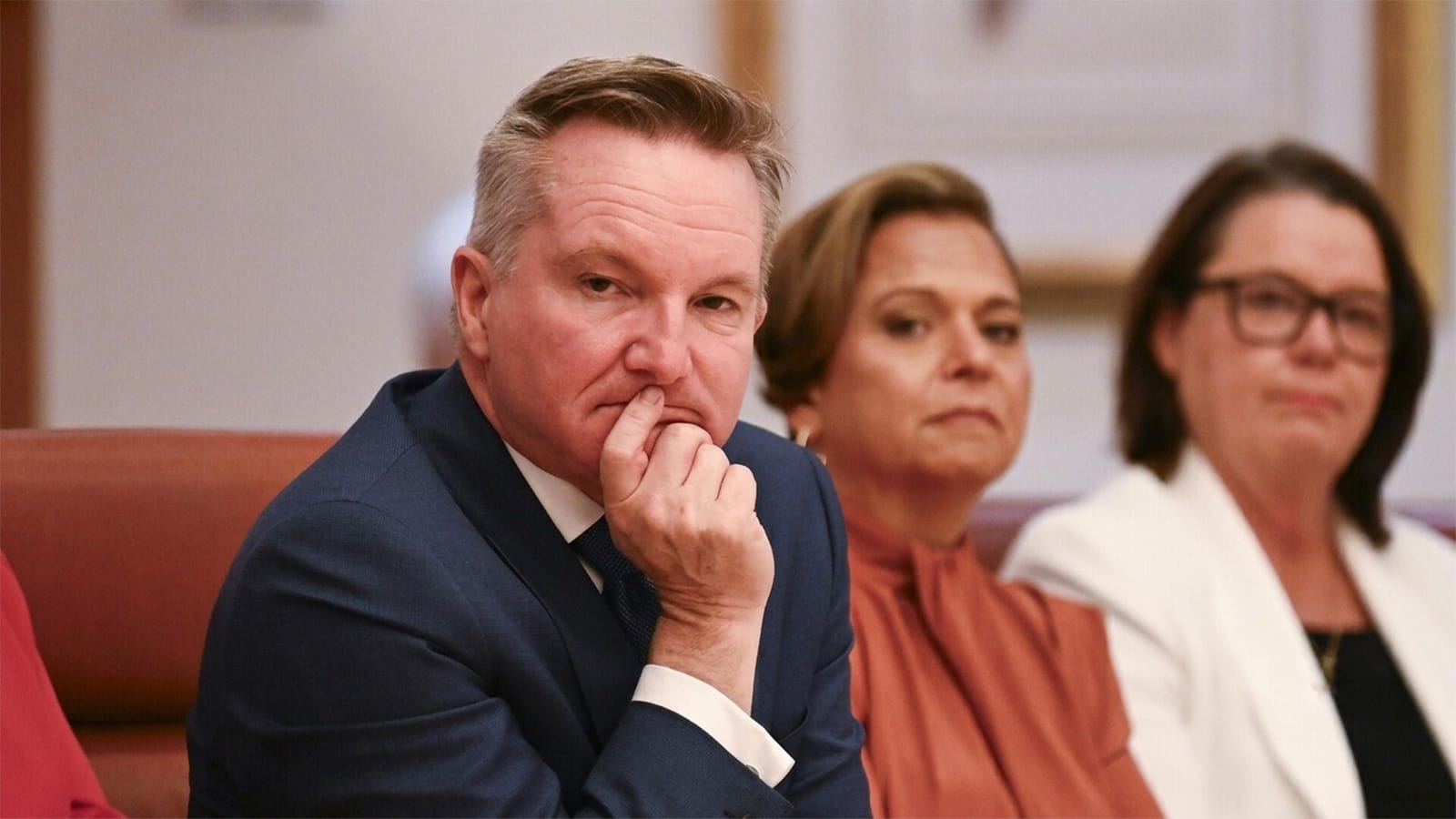
Energy prices low for all consumers. Tell that to the one in five who can't pay. Earlier this month Bowen blamed the Coalition for rising power prices, even as modelling cited by the opposition put the cost increase since Labor's election at $22.7 billion. Pressed on whether the government had underestimated the cost of the renewables rollout, he fell back on the same script, insisting the transition was making "very good progress".
Progress for whom? Not for the household $1,367 in debt to its energy retailer.
Elon Musk is spending billions to get his data centres off the grid
Here's how real the power and water squeeze has become. The biggest names in technology have decided the cheapest place to run AI might not be on Earth at all. In February, SpaceX absorbed Elon Musk's AI company xAI in a $1.25 trillion deal, the largest merger in history, and Musk said one of the main reasons was to build data centres in orbit. SpaceX has since asked US regulators to launch up to a million solar-powered compute satellites, and in June it revealed the first, a 70-metre machine that cools itself straight into the vacuum of space. Google is testing its own orbital data centres by 2027, and Jeff Bezos reckons gigawatt facilities will be running in space within a decade or so.
Video: Space.com. Elon Musk explains how SpaceX could build solar powered AI data centres in orbit.
The logic is brutally simple. In orbit the sun never sets, cooling is free, and there's no suburban grid to overload and no city's drinking water to drain. As one CNBC headline put it, no one wants AI data centres on Earth. The richest engineers alive are pouring hundreds of billions into getting these machines off the grid and away from the taps, at the very moment Chris Bowen is racing to plug more of them into Western Sydney's.
None of this is bad luck. It's a set of choices. This is the same government that, as One Nation surged in the polls, chose to formalise Welcome to Country ceremonies rather than grip the cost of living. It's the same Prime Minister whose satisfaction rating is underwater in every state. Voters can see exactly where they sit in the pecking order.
Albanese has found reliable power for Modi's India. He's clearing the grid and standing up a whole new office for the AI data centres. The one in five Australians skipping meals to keep the lights on are still waiting for someone in Canberra to remember they exist.