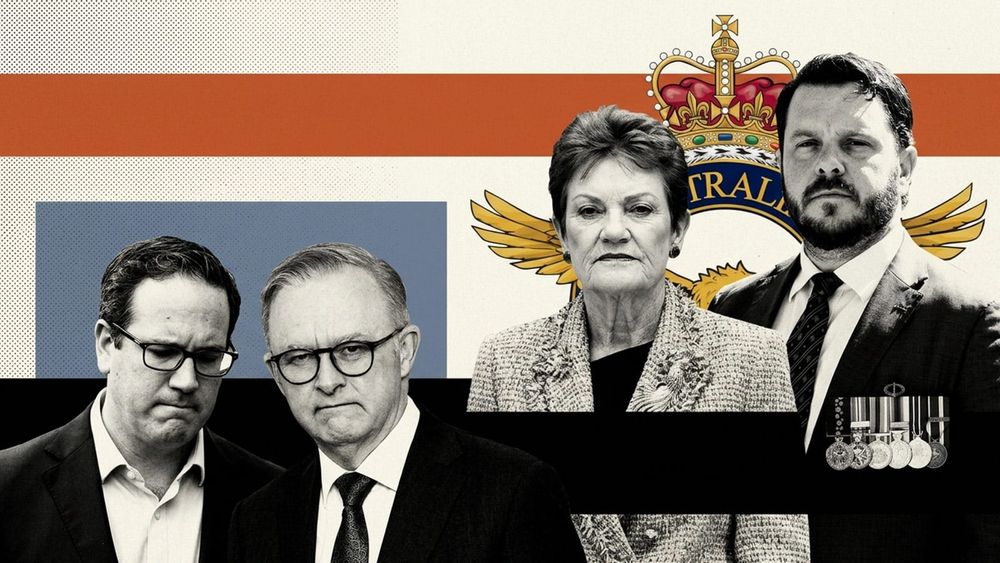
Labor senator Dorinda Cox told the Senate on Tuesday there is no widow tax, no divorce tax and no tax on escaping violence, yet her own government had published draft legislation to abolish the widow tax seven days earlier.
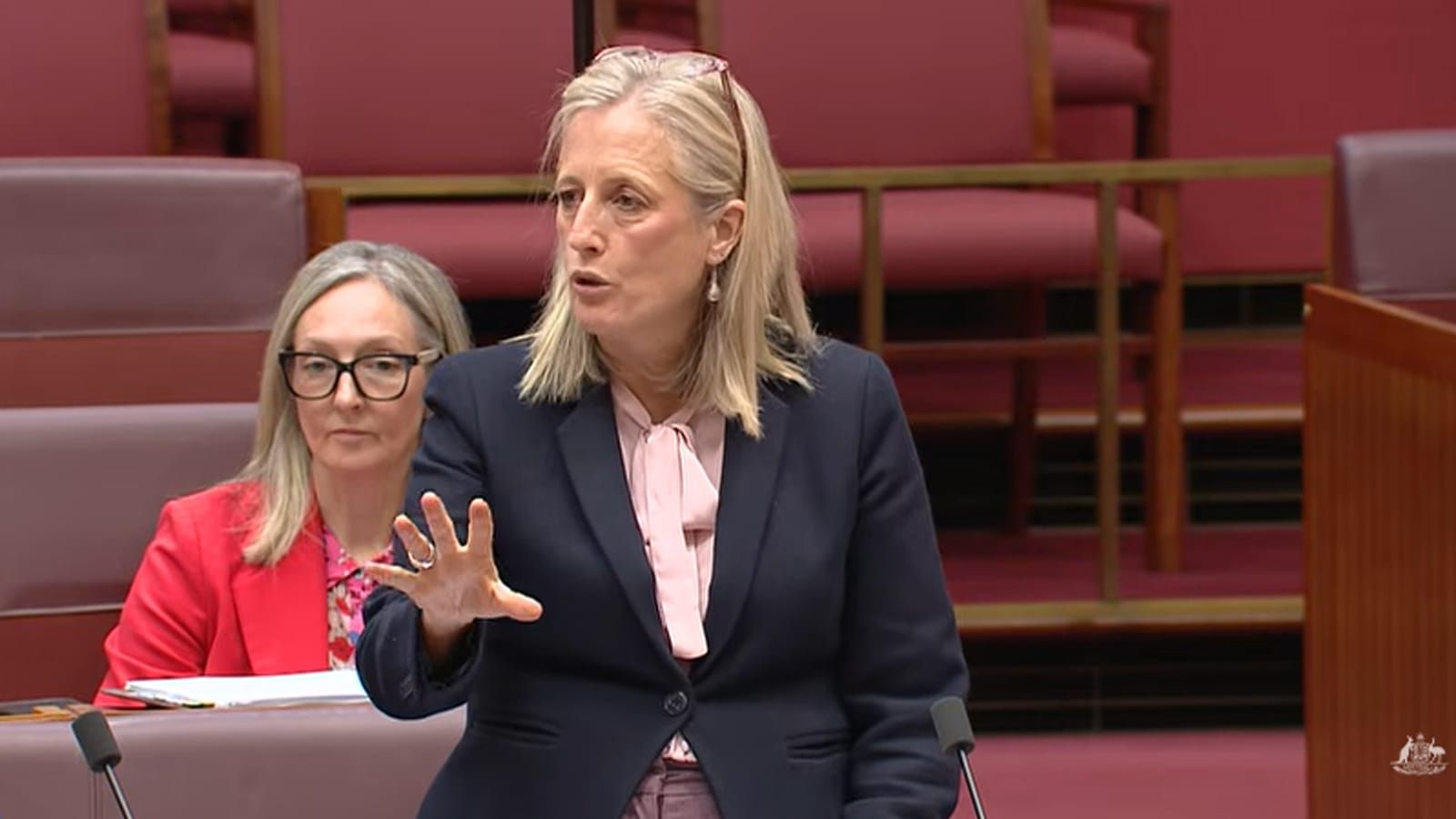
Four hours before she said it, Finance Minister Katy Gallagher, who also holds the women's portfolio, had assured the same chamber the government would deal with the problem in that very draft. Gallagher dismissed the push to debate it as "a political stunt".
Both statements can't be true, as governments don't draft fixes for taxes that don't exist.
The widow tax is the name for what a set of changes Labor passed in June does to ordinary people. It can hit you when your husband or wife dies, when your marriage ends, or when you're trying to rebuild after leaving a violent partner.
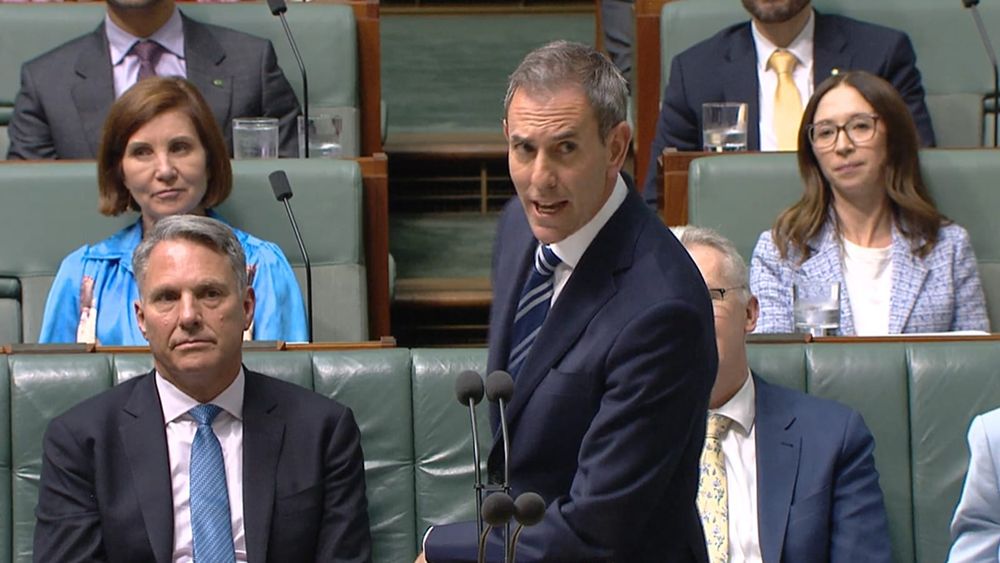
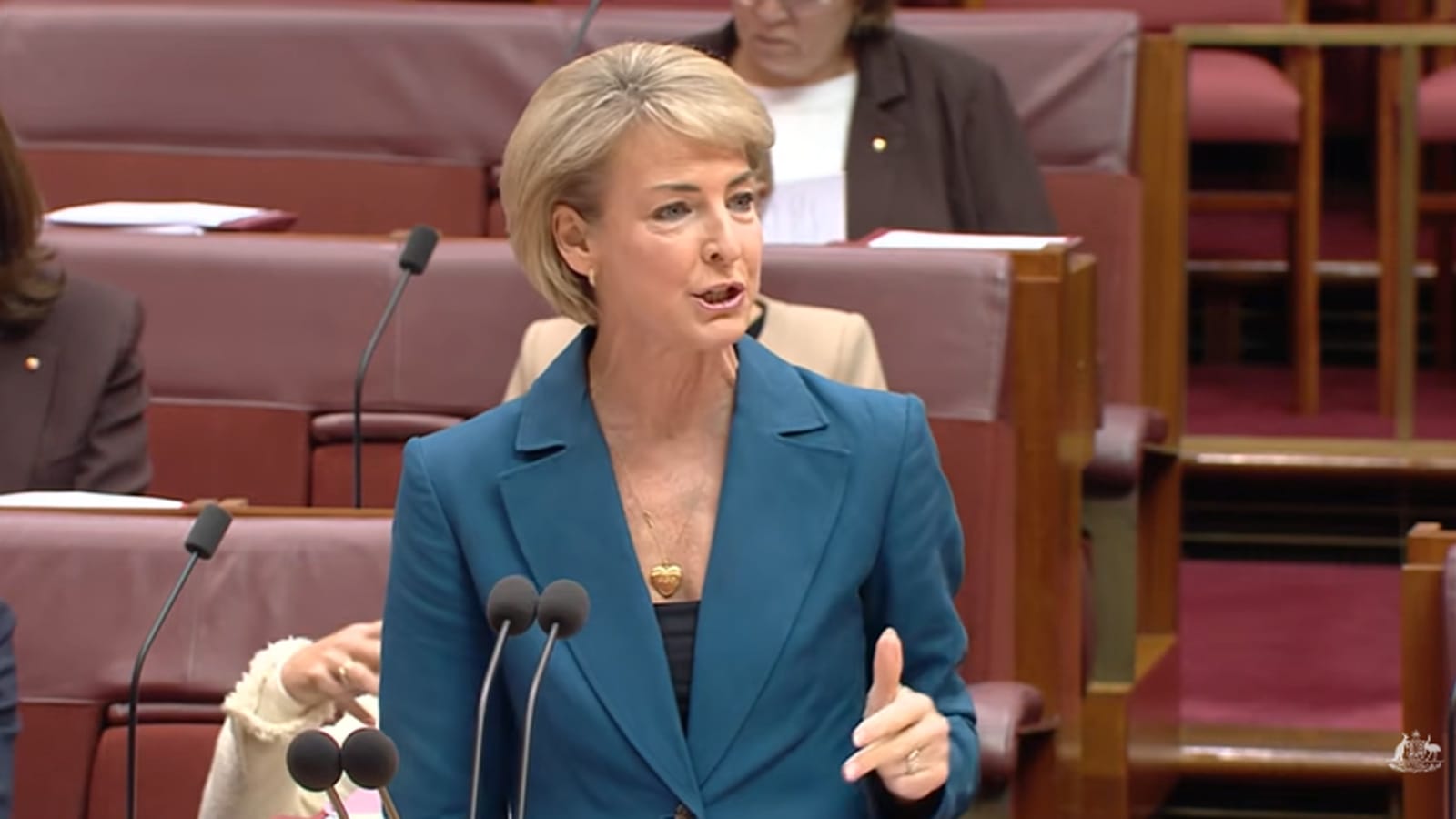
Opposition Leader in the Senate Michaelia Cash moved on Tuesday morning to suspend standing orders so the Senate could debate it. At 12.37pm that went down by 37 votes to 25. She came back after question time with a separate urgency motion, and at 4.24pm that one went down too, by 34 votes to 24. Labor and the Greens voted together both times.
What happens to you if your partner dies, or your marriage ends
Labor's changes to negative gearing and capital gains tax passed in June and start on 1 July 2027. Investment properties owned before 7.30pm on 12 May 2026, budget night, were meant to be protected under what's called grandfathering. That protection attaches to each share in the property rather than to the people who own it, which is where the problem starts.
Say you and your husband own an investment property together. You hold half each, and each half carries its own protection. He dies, his half comes to you, and the tax law treats that half as though you'd just bought it, after budget night. The protection on it is gone, and losses on that half can no longer be offset against the rest of your income. The same thing happens in a divorce, when a Family Court order or a binding financial agreement moves his share across to you.
The law doesn't care who died or who left, so it catches men in exactly the same way. A widower inherits the identical problem, and so does a divorced father who keeps the property in the settlement.
Video: Senate broadcast, via ParlView. Highlights of the two widow tax debates in the Senate on 11 August 2026, with Michaelia Cash, Bridget McKenzie, Katy Gallagher, Pauline Hanson, Anne Ruston, Dorinda Cox and Jane Hume.
The family home isn't touched, because it only applies to investment property, and the damage doesn't wait for 2027, because lenders are already pricing it in. Deputy Opposition Leader Jane Hume raised the case on Tuesday afternoon, crediting independent senator David Pocock. On Hume's account, Pocock was contacted by a 44-year-old victim of domestic violence who couldn't get finance on an investment property she co owned with her former partner and was due to receive in her divorce settlement. The woman can't be identified for privacy reasons, so her case rests on what Pocock says he was told. Cash, raising it that morning, put it as a woman who had "reportedly" been unable to refinance.
"Australians operate on what the law says today, not what the law might say tomorrow," Hume said. "A widow refinancing an investment property cannot simply say to her bank: 'Don't worry. The government say they're going to fix this eventually, so you don't need to worry about me.' It doesn't work that way."
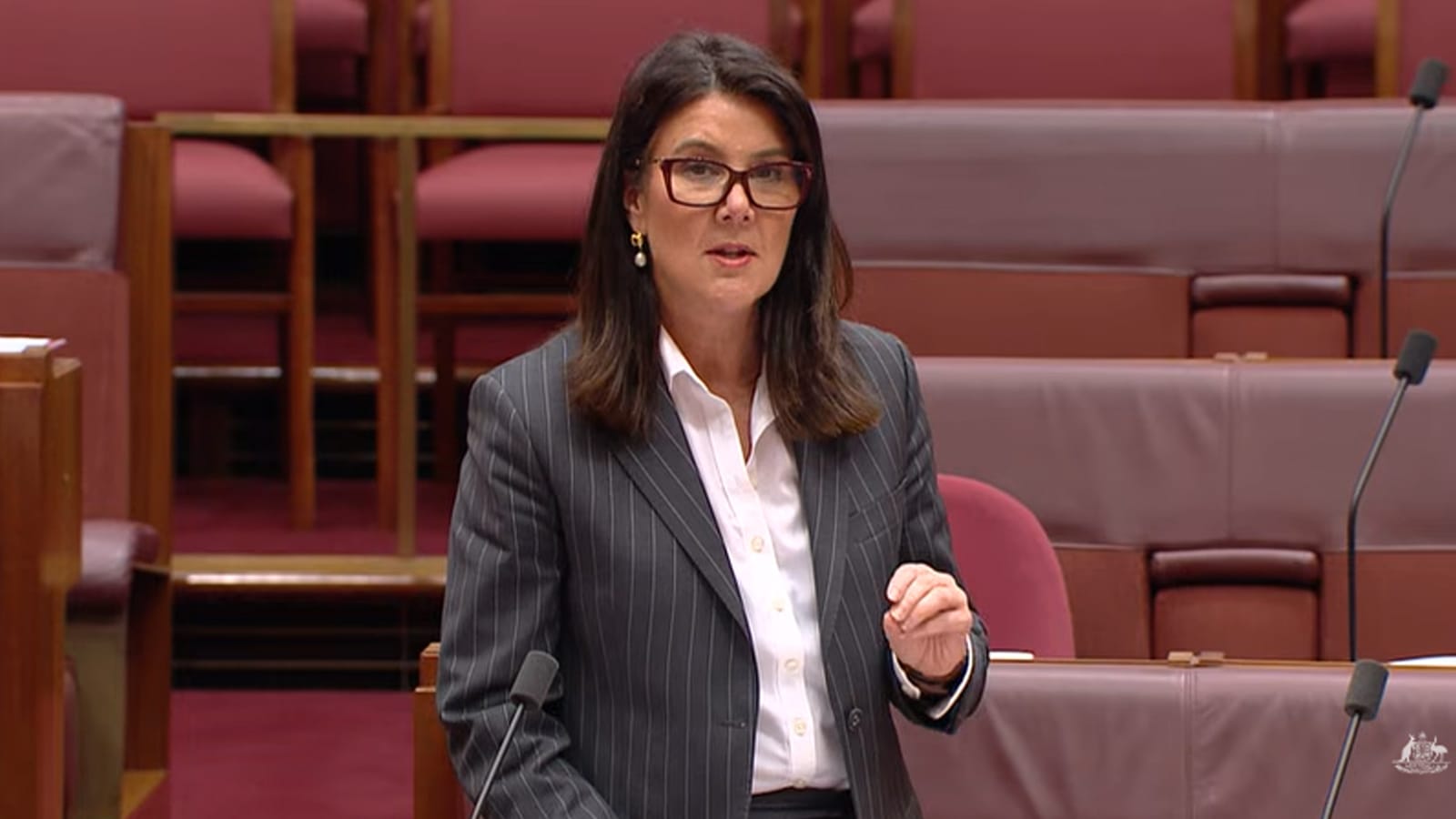
Katy Gallagher the Minister for Women called the debate a political stunt
Gallagher's entry in Hansard lists her as Minister for Finance, Minister for the Public Service, Minister for Women, Minister for Government Services and Manager of Government Business in the Senate.
She said the government wouldn't back the suspension, that the draft legislation was out for consultation until 21 August, and that a run of bills is normal for tax reform. "When new GST legislation was introduced, there were 30 bills that followed and were passed to implement that tax reform," she said.
She then called the attempt to debate it "a political stunt" that "isn't actually going to deliver the change". The minister responsible for women used that phrase about a debate on a tax that catches widows, divorcees and women leaving violent partners.
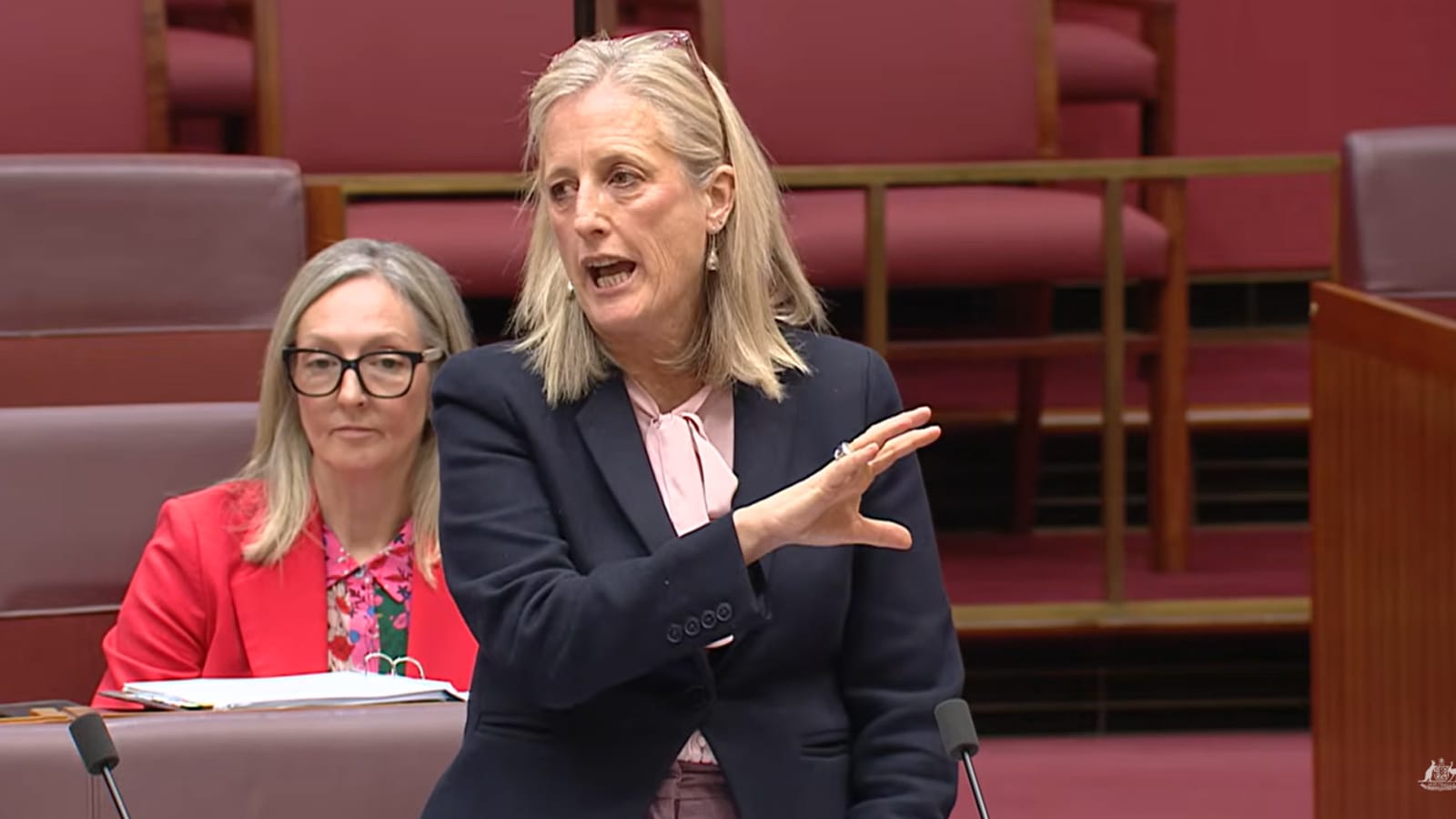
Dorinda Cox denied the tax exists while her own government consulted on abolishing it
Cox, a Western Australian senator who left the Greens for Labor in 2025, opened her speech on her own background. "At the age of 17, I joined the Western Australia Police Force," she said. "I've worked alongside women and families living through family and domestic violence, and the stories that women have trusted me with have never left me."
She accused the Coalition of taking "some of people's hardest moments" and using them "as cover to defend an outdated tax concession for property investors".
She then set out the problem in her own words. "The Albanese Labor government will not allow victims, a widow and someone going through relationship breakdown to lose existing negative-gearing treatment simply because ownership of a property transfers," she said. "We said that we would address this in the next tranche of legislation, and that is exactly what we are going to do. Last week we released the draft legislation."
Later in the same speech she said it doesn't exist.
"There is no widow tax. There is no divorce tax. There is no tax on escaping violence."
The draft Cox was talking about was released by Treasurer Jim Chalmers on 4 August and is open for consultation until 21 August. It exists to preserve "existing eligibility for negative gearing or treatment as a new build in certain circumstances, including for residential dwellings acquired from a spouse as a result of inheritance or relationship breakdown".
Hume answered her 16 minutes later, in the same debate. "Senator Cox was incorrect. There is a widows tax. It's no-one's imagination. It is there, and it is a divorcee tax and a tax on survivors of domestic violence."
Labor voted this fix down in June and only wrote it after a domestic violence victim was refused a loan
Cox told the Senate the fix had been the plan all along, and that Labor would deal with it in the next tranche of legislation.
The plan on 29 June was to vote it down. The Coalition put a written fix to the chamber that day, drafted as a whole new division of the tax law and circulated as sheet 3909 in Nationals senator Matt Canavan's name. Labor and the Greens defeated it 32 votes to 25. Through late June, government ministers were publicly insisting there was no problem to fix.
Nothing in the law changed between then and 4 August. What changed in between was the volume of the complaints and the arrival of a named casualty. Pocock wrote to Chalmers on 3 August about the domestic violence survivor who couldn't refinance. Treasury published the draft legislation the following night.
Labor then voted twice on Tuesday to stop the Senate debating any of it.
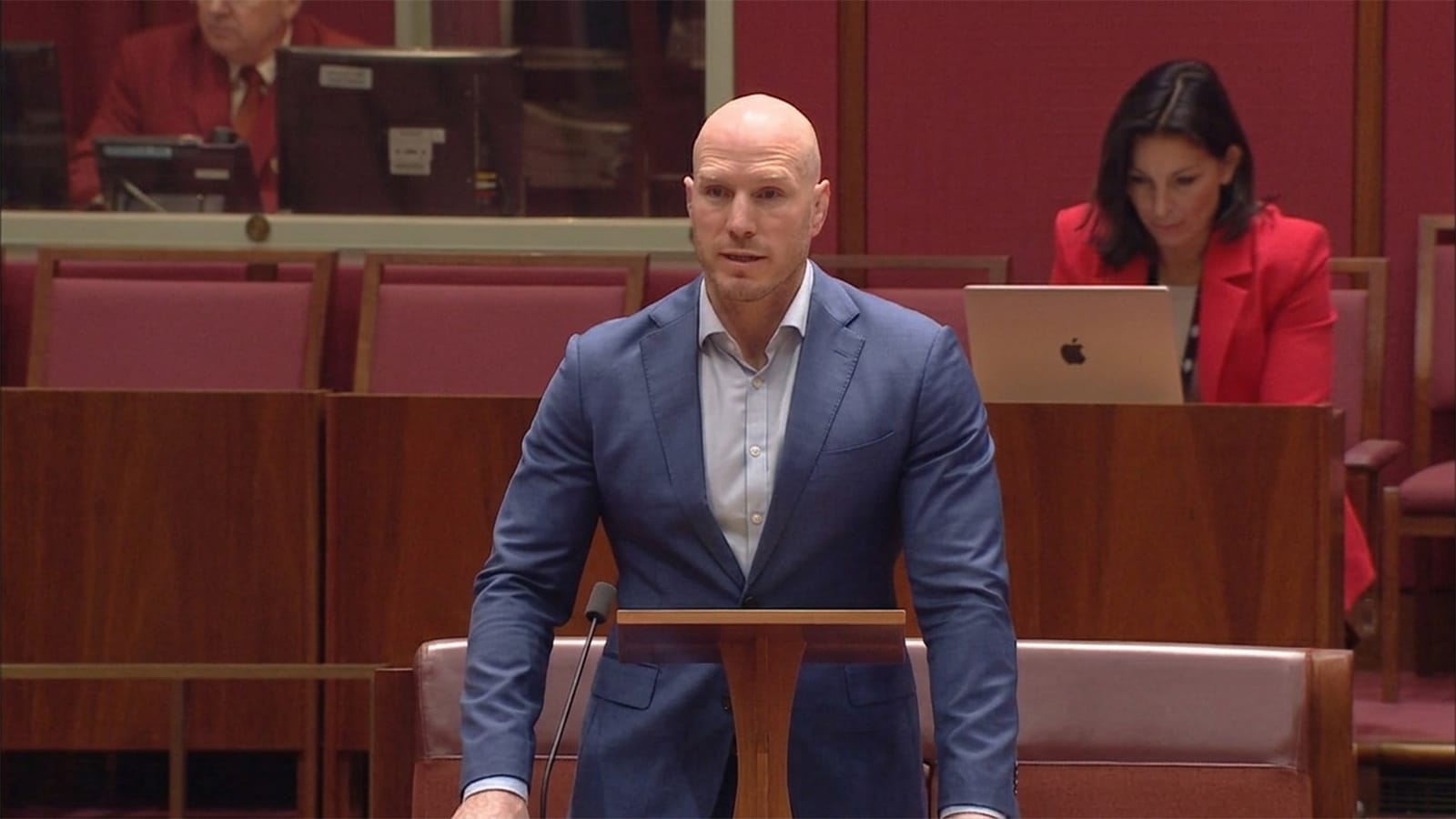
Labor says the banks can already act on it, but four lenders moved in the other direction
Gallagher's answer on urgency was that the lenders had already been squared away.
"Treasury has been talking with all of the major lenders, as well as the Customer Owned Banking Association," she said. "They are clear about the policy intent, and the banks have confirmed they can take account of the policy decision in the decisions they make without the law having actually passed the parliament."
Cox repeated it that afternoon: "Treasury have consulted banks, which confirmed that they can account for the policy in lending decisions."
No bank has said this publicly, and neither has the Customer Owned Banking Association, while Chalmers's own announcement of the draft legislation on 4 August makes no mention of lenders at all.
Macquarie, NAB, Great Southern Bank and the non bank lender Brighten all tightened their investor serviceability rules within weeks of budget night, well before the law passed. NAB told brokers that while "these changes are not yet legislated, they represent a known and foreseeable factor". Every one of those changes took a benefit away, and Labor's argument depends on lenders doing the reverse for a protection that isn't law yet.
Independent senator David Pocock, who brought the domestic violence survivor's case forward, said on 5 August it was "critical that lenders are able to consider preserved benefit in assessing loan serviceability in decisions they are making now and in coming months". He wouldn't have needed to ask if the lenders had already agreed to it.
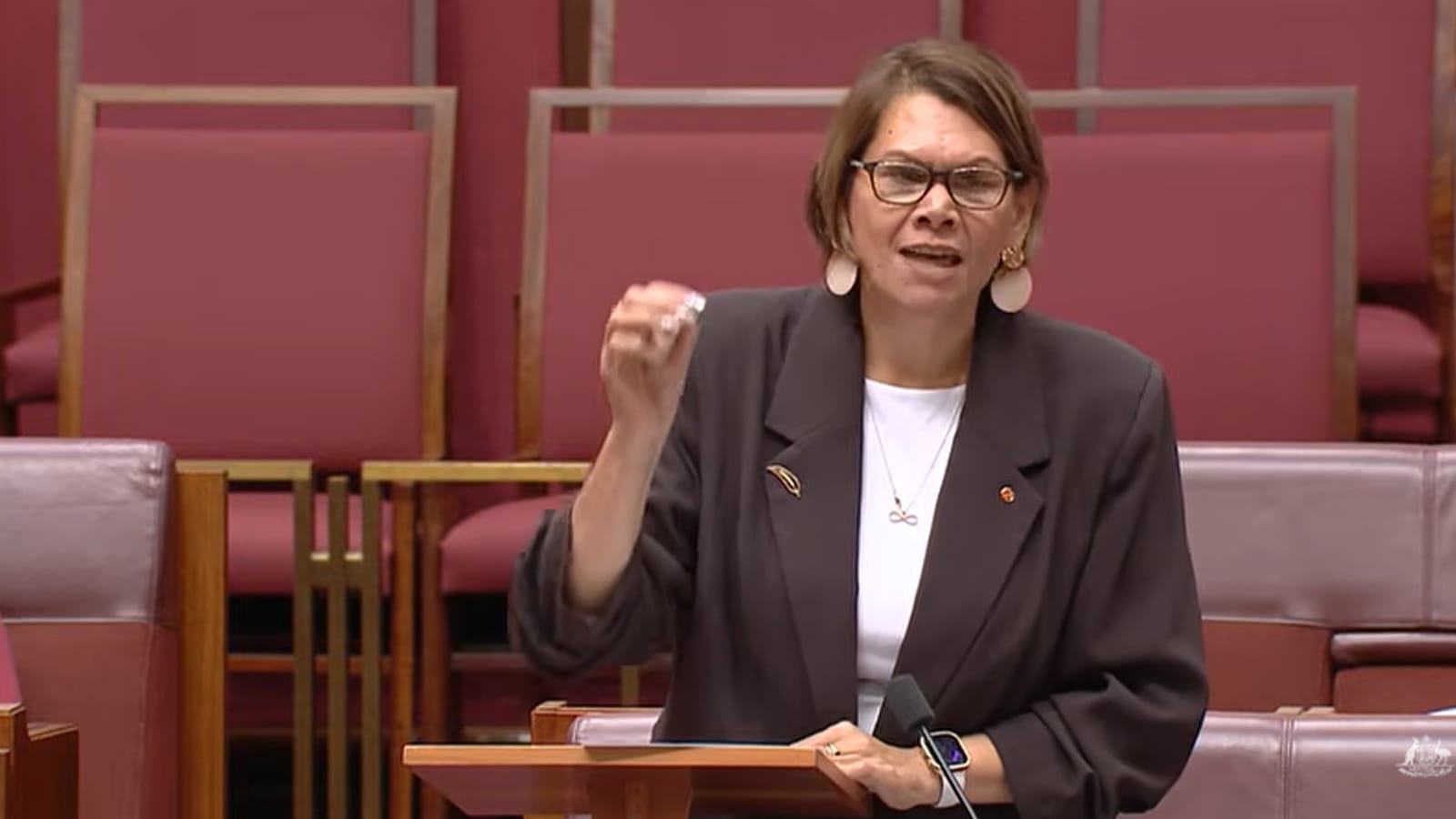
Asked about a tax, Katy Gallagher and Dorinda Cox both answered about something else
Neither minister spent much of her time on the question in front of the chamber, which was whether the Senate should debate a tax that's still law.
Gallagher's answer to McKenzie was about domestic violence funding. "All of our measures that we have to deal with that, you have opposed," she said. "If, as you say, that is your driving concern, then you should also have supported all of the other programs that we are doing to deal with women, safe accommodation, supply of accommodation and supports for women who are in that situation." She then moved to the Coalition's position on the original package: "you didn't support the tax reform that we introduced, and this is another way for you to continue that argument now."
Cox did the same thing that afternoon, listing "more than $4.4 billion under our National Plan to End Violence against Women and Children" and offering a different debate altogether. "If the coalition wants to come in here and debate which party supports Australian women then let's have that debate."
Nobody had asked either of them about domestic violence funding, and neither figure is in dispute, but that wasn't what the Senate was being asked to decide.
Gallagher also cut herself off mid sentence to tell Cash, "That's not what I said, Senator Cash. You can continue to repeat it, but it's not what I said." She never said what the misrepresentation was, and Hansard records Cash's interjections only as "Senator Cash interjecting", so the official record doesn't carry it either.
Pauline Hanson and Anne Ruston both offered the Greens a way to vote for it
The Greens' stated reason for voting no was paragraph (c) of Cash's motion, which called on the government to axe the tax changes outright. McKim said the Coalition had written it that way on purpose.
"This motion is drafted in such a way that the Greens couldn't possibly support it, and members of the opposition know that full well," McKim said. He accepted the impacts were real, described the group caught by them as "actually far broader than widows", and said he looked "forward to that occurring in due course".
One Nation leader Pauline Hanson called it. "If he really wanted to, he could split the vote, take provision (c) out of it and vote for the rest, if the Greens really believe that this is an injustice to the people out there," she said. "I don't believe what the Greens have said here at all."
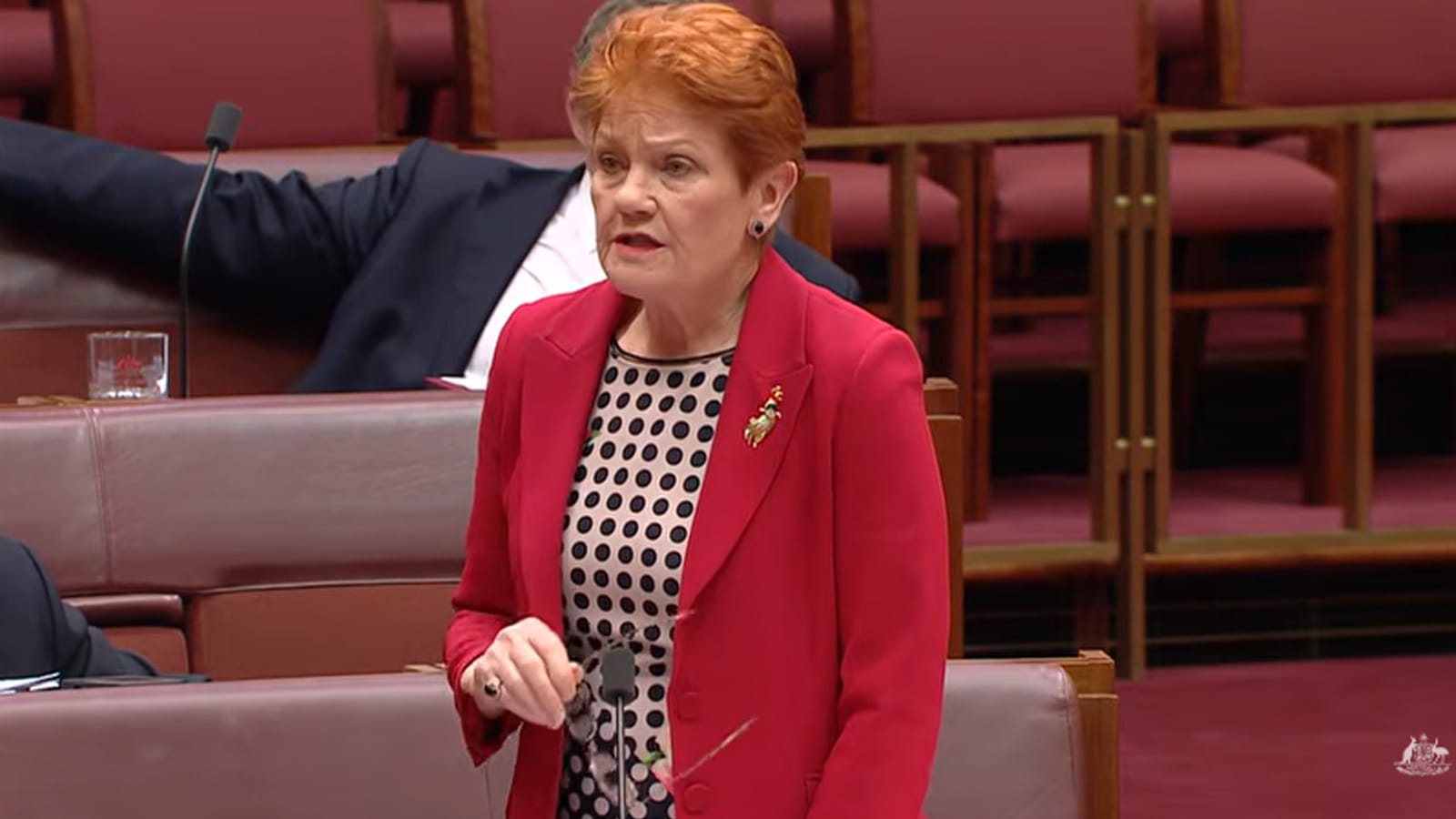
Deputy Opposition Leader in the Senate Anne Ruston put the same offer on the table. "Remove part C of this motion, and let's vote on that," she said. "But I doubt that that's what they're going to do."
The Greens didn't move it, even though they were handed the mechanism twice on the record, in the space of five minutes, and both motions went down with Greens votes sitting in the noes.
None of this is new, because the Greens had already helped defeat the written fix on 29 June. Two days later Greens leader Larissa Waters said her party backed abolition and hadn't known the provision was in the bill it helped pass.
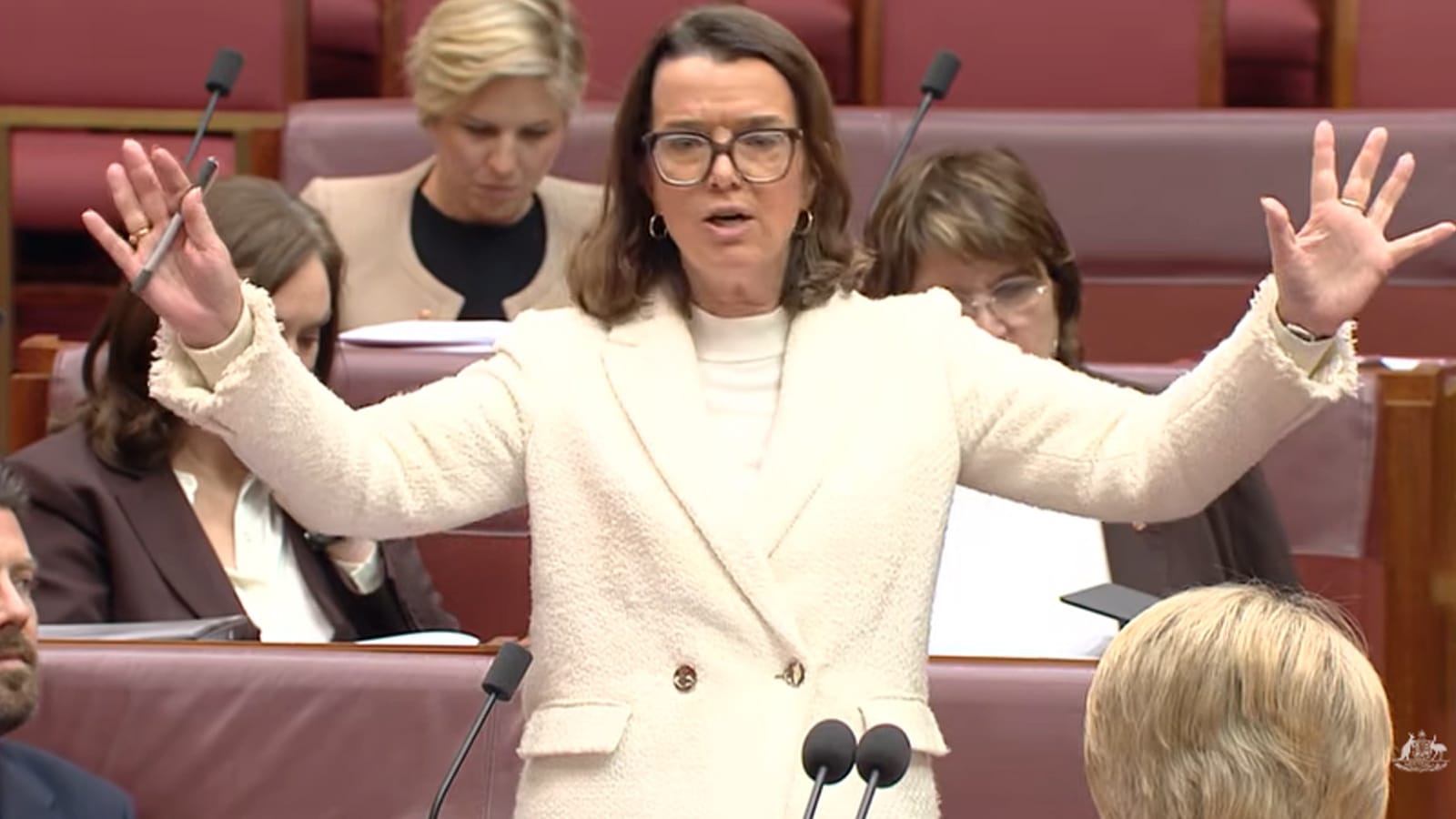
Bridget McKenzie says Labor got the advice and legislated anyway
Nationals Senate leader Bridget McKenzie said the government knew exactly what its bill would do. "You knew prior to that budget that this widow's tax, this divorcee's tax, would impact those people, yet you did it anyway, because you thought no-one would notice, because you actually don't care," she said.
She called it "derelict legislation" and said pressing ahead showed "a careless and callous disregard" for people going through divorce, separation and bereavement. She also pointed out there was room in the day to deal with it: "I have looked at the Red. There's not a lot on here that can't be delayed."
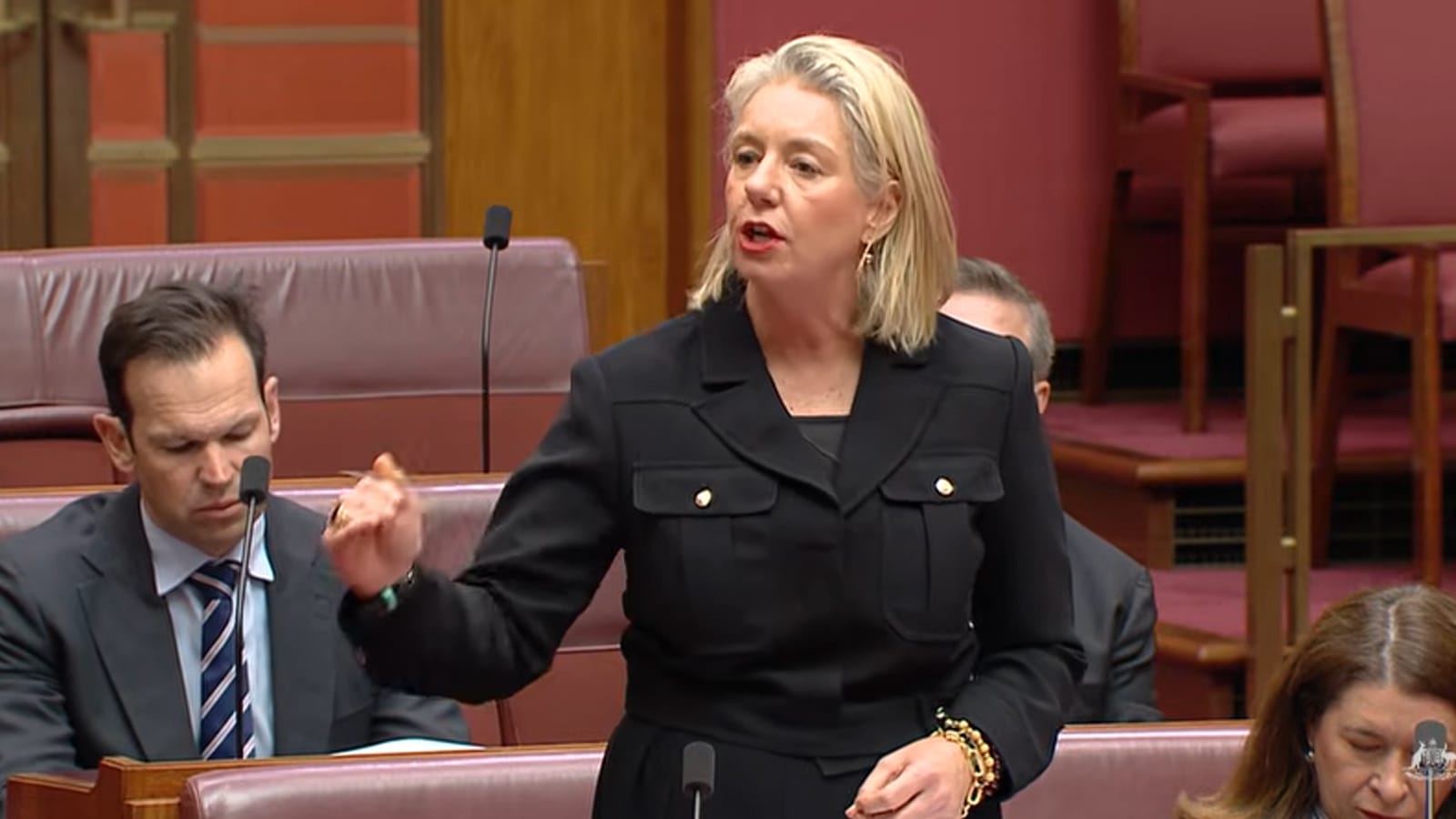
Cash put the same charge to the government in the morning debate. "What kind of a prime minister legislates a widow's tax?" she asked. "Those opposite were actually told this prior to legislating. These concerns were raised, they laughed. They said it would never happen. Well, guess what? It did happen." She finished on the warnings the government was given: "You were warned, you ignored the warnings."
Ruston said the legislation "contained elements that actually made victims of victims", and put the money at the centre of it. "Now, because Jim Chalmers's bottom line ain't looking so good, they have decided they are going for a tax grab from Australians but particularly from vulnerable Australians."
Hanson called it "a tax grab by an incompetent government that can't control its own spending".
By Labor's own account the money isn't going on the debt. Cox said in the same speech that the reforms are "also helping to fund tax cuts to 13 million working Australians". The May Budget recorded a deficit of $31.5 billion, gross debt of $1.05 trillion and net debt of $616.9 billion.
What happens now, and why the fix has a poison pill in it
Consultation on the draft legislation closes on 21 August. The Senate sits on 17, 18, 19 and 20 August, so the window shuts the day after parliament rises.
Cox told the Senate that "capital gains tax rollover interactions will also be addressed in the further legislation", which means the capital gains half of the problem isn't in this tranche at all. It's waiting on a bill after this one, which hasn't been drafted, hasn't been consulted on and has no date. Treasury's wording is careful in the same direction, preserving eligibility "in certain circumstances", without saying which circumstances those are.
The same exposure draft also carries the 30% minimum tax on capital gains and the trust measures, which the Coalition has said it won't back. Hume said Labor had "bundled it with legislation that deals with trusts and other tax changes that they know that the coalition won't support".
Gallagher said she expected "absolutely no hold-up to that legislation passing this chamber" once it arrives. Until it does, the widow tax is the law, and the people it catches are living under the version that passed in June.