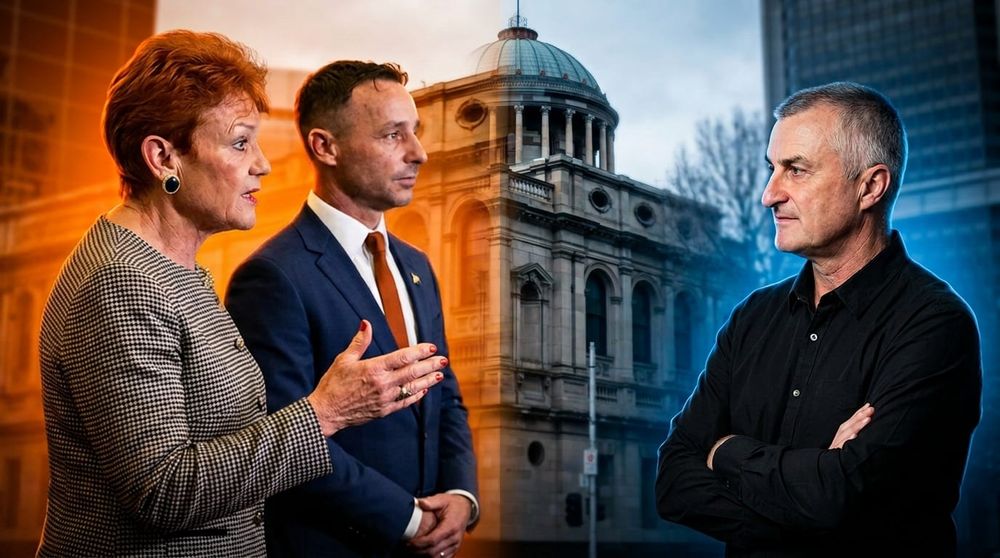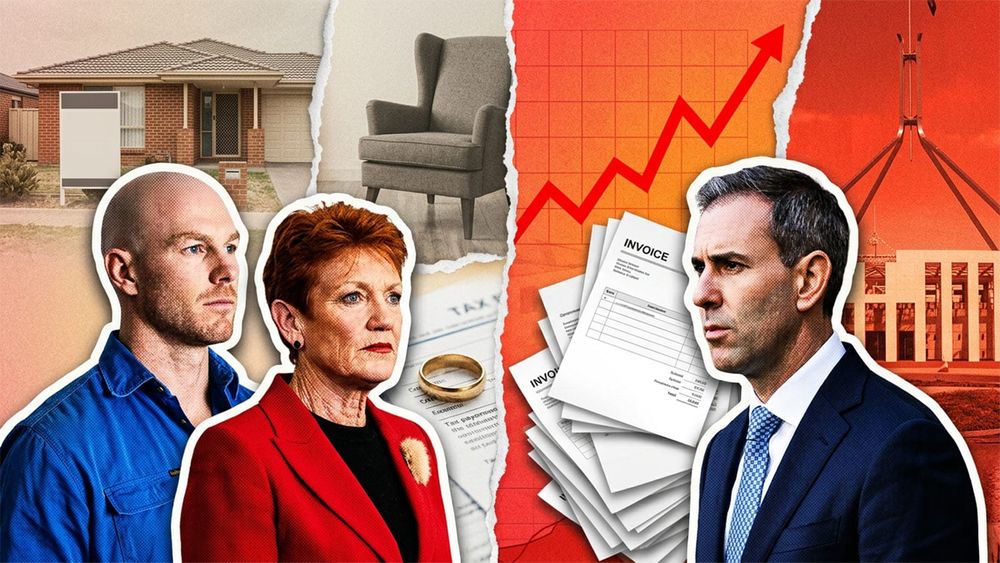
On 25 June, Treasurer Jim Chalmers' government told the Senate it would deal with the so called widow tax in later legislation. Four days later Labor and the Greens voted a written fix for it down. The amendment ran to a whole new division of the tax law, drafted, circulated in Nationals leader Matt Canavan's name as sheet 3909, and put to the chamber. It lost 32 to 25.
UPDATE, 5 August: On the night of 4 August, hours after this story was published, Jim Chalmers released draft legislation that abolishes the widow tax. It covers a surviving spouse, a surviving co owner and a transfer following a relationship breakdown. It is not law, it is written for a bill that has not been introduced, and the consultation on it closes on 21 August, the day after parliament rises. One Nation, David Pocock, the Coalition and the Greens all say they will move to force the abolition through the Senate when parliament returns on 11 August.
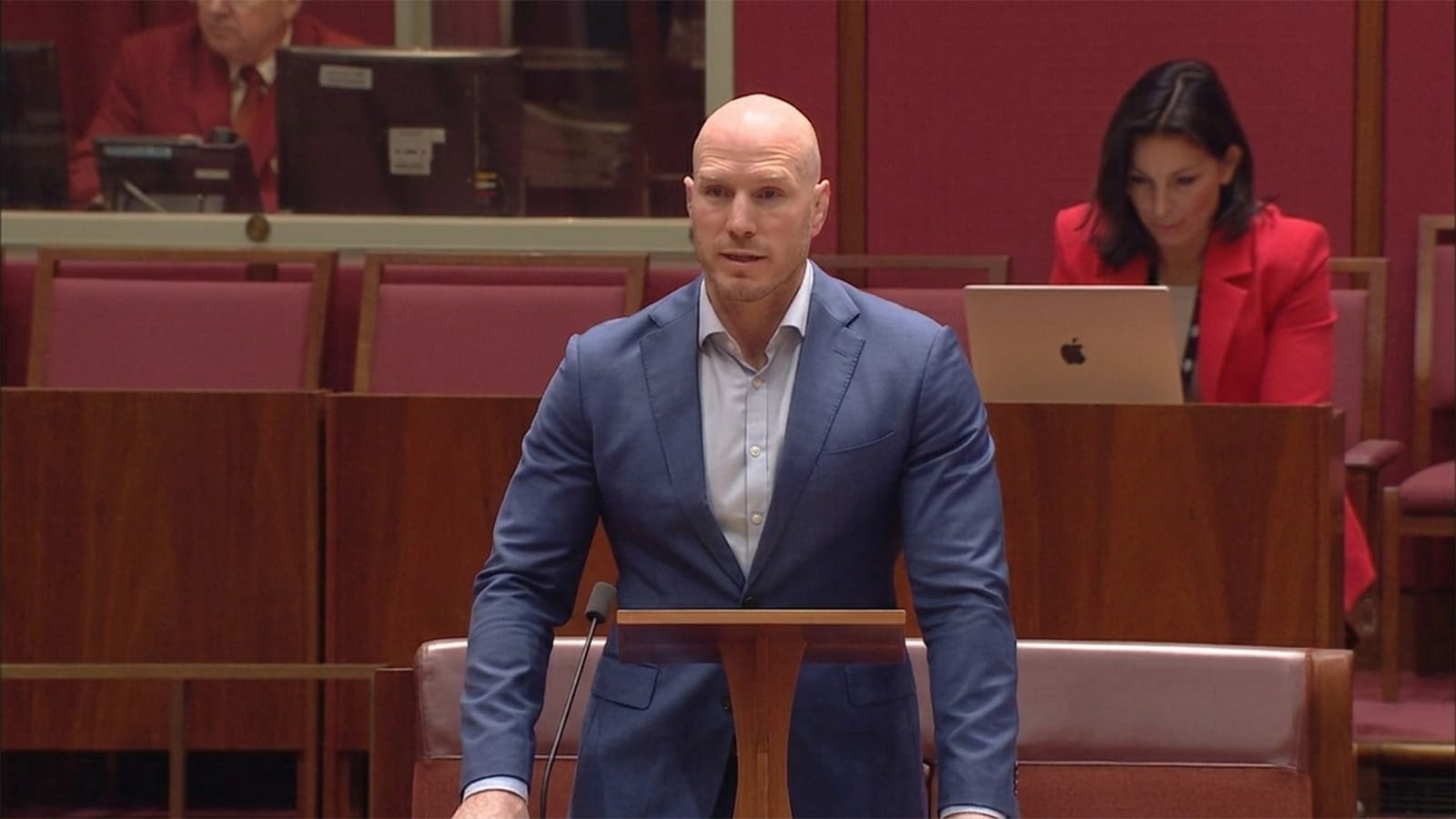
Five weeks on the tax is still law, and independent senator David Pocock says it now has a face. A 44 year old woman leaving a violent relationship, who has asked to stay anonymous, was pre approved for finance before the bill passed and has since been knocked back by three lenders. She told Pocock she may have no option other than to sell the only investment property she owns.
"The practical consequence is devastating," she wrote. "This would effectively force me to lose a key retirement asset that I have spent more than 15 years building, at a time when I am already navigating the financial and emotional consequences of leaving a domestic violence relationship."
Pocock wrote to Chalmers and Finance Minister Katy Gallagher on Monday 3 August. On Tuesday night Treasury published draft legislation that does abolish the widow tax. The Treasury consultation page now carries it, with consultation open until 21 August. Parliament comes back on 11 August for a fortnight, and it rises the day before that consultation closes, so the fix cannot become law in it.
The whole timeline in one place, before we take it apart
There are 3 threads running through this: what the tax does, how it got through the Senate, and what the government promised in exchange. Here they are in order. Everything below this table is the detail behind it.
| When | What happened |
|---|---|
| 12 May | Budget night. Anyone who already owns an investment property is told they're protected from the negative gearing and capital gains changes. |
| 16 June | Treasury tells a Senate inquiry the protection is lost the moment one owner's share transfers, and that divorce hasn't been ruled out. |
| 19 June | Pocock's committee recommendation asks that the protection stay with the asset on a death or a Family Court order. It goes nowhere. |
| 25 June, morning | A minister says on radio that nothing is changing. The Treasurer introduces the next tranche of tax legislation with nothing in it for widows. The government then undertakes in the Senate to fix it "in subsequent legislation". On the strength of that undertaking, and only because of it, Pocock withdraws the two amendments that would have fixed it himself, telling the chamber he'll take the commitment "in good faith". |
| 25 and 26 June | The bill passes and gets royal assent. The widow tax is law. |
| 29 June | The Coalition puts a drafted fix to the Senate. Labor and the Greens vote it down 32 to 25. |
| 3 August | The first known casualty goes public: a 44 year old woman leaving a violent relationship, knocked back by three lenders. Pocock writes to Chalmers and Gallagher. |
| 4 August | Chalmers publishes draft legislation abolishing the widow tax. It is not law, it is written for a Tax Reform No. 3 Bill that does not exist yet, and consultation on it closes on 21 August, the day after parliament rises. |
What the widow tax does to an investment property you already own
Start with what the government promised. Anyone holding an investment property before 7.30pm on 12 May 2026 was told they'd be carved out of the negative gearing and capital gains changes that start on 1 July 2027. Keep the property, keep the old rules. That promise is called grandfathering, and it's the whole basis on which a lot of couples decided to sit tight. The Australian Financial Review, which reported the flaw in June, puts the number of jointly owned investment properties caught by it at about 680,000.
Two things sit under that promise; negative gearing is the rule that lets you take the yearly loss on a rental, where the rent doesn't cover the interest and the bills, straight off your taxable income. The capital gains discount is the rule that halves the profit you get taxed on when you eventually sell.
The catch is that the protection attaches to the ownership interest rather than to the person. A couple who own a rental together own it as two halves, and each half carries its own protection for as long as that owner keeps holding it.
An owner stops holding their half in two ordinary situations, and neither of them is a decision about tax. They die, or they sign their half over in a separation. Either one is enough to set this off.
| What happens | The rule you bought under | The rule Chalmers legislated |
|---|---|---|
| You both keep holding | Nothing changes. You keep negative gearing and the old capital gains treatment. | Nothing changes either. Both halves stay protected for as long as you both hold them. The tax only bites when something happens to one of you. |
| One of you dies | You inherit their half. No tax event, and the treatment carries on with the property. | Your own half stays protected. The half you inherit counts as bought on the day of the death, after budget night, so its protection is gone. |
| You separate | A Family Court order moves your ex's half to you with no tax triggered at all. | Same as a death. The half that moves counts as a fresh purchase and loses its protection. |
| The negative gearing cost | Every dollar of loss on the whole property comes off your taxable income in the year you make it. | The losses on the transferred half get quarantined. In the explanatory memorandum's words, that new interest is "subject to the requirement to quarantine losses". You don't lose the deduction forever, but you can't use it against your wages now. |
| The capital gains cost | The 50% discount applies to the gain on the whole property. | On the transferred half, gains from then on lose the 50% discount and fall under the new inflation indexed rules with a minimum rate of 30%. |
| Who it lands on | Nobody, because a death or a separation was never a tax event. | Overwhelmingly women, because women more often outlive their partner and more often end up keeping the property in a settlement. |
Treasury confirmed it on 16 June, and the bill passed 9 days later
None of this was discovered late. At the Senate economics committee hearing in Sydney on 16 June, Pocock asked Treasury directly whether grandfathered arrangements survive a death or a divorce. Robb Preston, an assistant secretary in Treasury's tax analysis division, answered on the record.
"In the event of a transfer of an interest or part of an interest, the new owner of that part of an interest would no longer benefit from the exemption."
Pocock asked whether that included divorce. Preston said divorce hadn't been ruled out in the legislation.
Three days later, on 19 June, Pocock put it in writing in his additional comments to the committee's report. His recommendation 3 asked that where an asset carries a grandfathered concession and ownership transfers because of a divorce or the death of one joint owner, the concession stays with the asset. That's the fix, in one sentence, 6 days before the bill passed.
He also had the fix written as amendments, on sheets 3878 and 3898, ready to move on the floor. They were never voted on. To understand why, you have to follow what happened in the chamber on the morning of 25 June.
Andrew Leigh told Canberra radio nothing was changing, at 7.19am on the morning of the vote
The day before, Pocock had put it to Gallagher directly in question time. Why does a transfer caused by a death or a divorce count as a change of ownership at all? Gallagher defended the design. The rules were "reasonable arrangements", she said, and "consistent with the existing arrangements in the tax system around the acquisition of assets".
Pocock came back at her twice. Wasn't it disingenuous to call it consistent when you keep the 50% discount today and lose it tomorrow if your spouse dies? Then: does the government concede women will be hurt most, given they retire with 20% less super and outlive men? Gallagher answered the second one by listing what women raise with her, which was superannuation, violence against women, health and housing. She didn't say yes or no.
The next morning the government was still saying it in public. At 7.19am on 25 June, Assistant Minister for Productivity, Competition, Charities and Treasury Andrew Leigh was on ABC Radio Canberra, which is Pocock's home market and Leigh's own, being asked about it by Ross Solly.
Solly put it plainly: jointly owned investment properties would lose the grandfathered exemption if one owner died or the couple divorced. Was that Leigh's understanding?
"Well Ross, the existing arrangements in the tax system cover the acquisition of assets. We're not changing those arrangements."
Solly pushed. If someone inherits half a house from a partner who's died, do they lose the protection others keep? Leigh said he didn't want to give tax advice on what sounded like a specific question, then added: "There is not a change to the general arrangements which have to do with inheritances and assets. There's certainly no change in inheritance taxation as part of these rules."
That last part is true on its own terms. Australia has no inheritance tax and this Act didn't create one. It just isn't what Solly asked. Solly went again, twice, on whether the outcome was fair.
"Well Ross, the fundamental unfairness is a generation of young Canberrans struggling to break into the housing market."
Pressed a third time, Leigh returned to the same line: "this is how the existing arrangements in the tax system currently work in the acquisition of assets. We're not making changes to those." He was careful and he never denied the mechanism outright. He also never once conceded there was a problem.

Four hours and 28 minutes later, Gallagher told the Senate the government had known about it
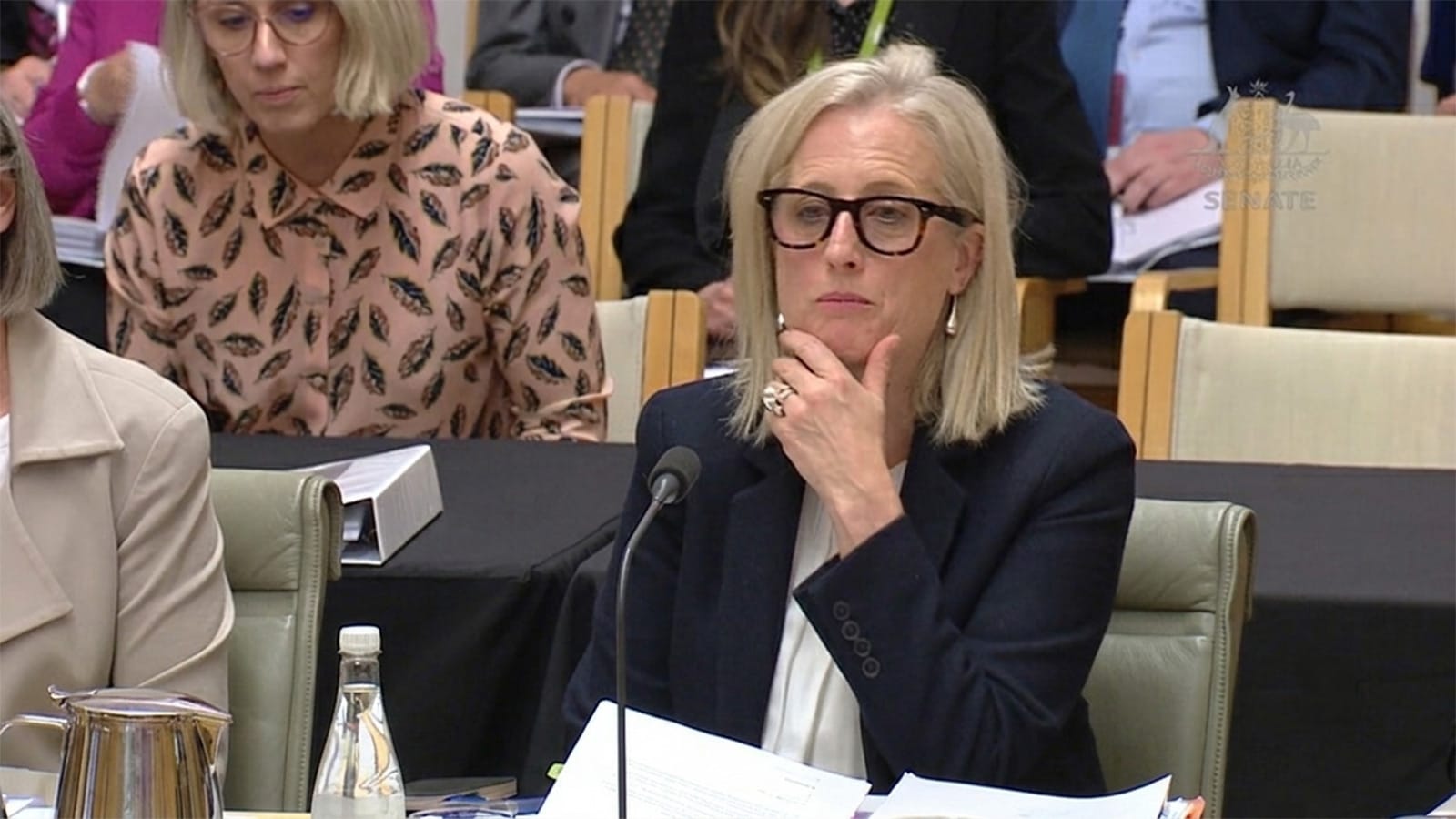
At 11.47am, tabling the government's own amendments, Gallagher told the committee this.
"We were aware of some of the issues that Senator Pocock is raising around grandfathering and shared ownership. We are working through them in the usual way, and we intend to address the arrangements for jointly owned assets in circumstances like inheritance or divorce in subsequent legislation."
She was careful with it. In the same speech she said of the previous day's answers, "In both answers that I and the Treasurer gave yesterday we took care around our response given", and she kept defending the design, saying the core arrangements were consistent with the existing system. The undertaking was to address it in "subsequent legislation". No bill was named and no date was given.
At 12.56pm, 69 minutes later, Pocock withdrew sheets 3878 and 3898.
"I have been provided with assurances from the government in this chamber earlier, including by Minister Gallagher, that they will address the issues I've raised regarding the need to preserve grandfathered CGT and negative gearing concessions in the case of death or divorce and will give effect to this in the next tranche of legislation."
Note the gap. Gallagher had said "subsequent legislation". Pocock understood it as "the next tranche of legislation". That distance between the two is where this whole thing now sits.
He wasn't happy about it even as he did it. "I don't think this is ideal," he told the chamber. "This should have been sorted out in this primary legislation." He said he was taking the commitment "in good faith", and noted that dropping the amendments meant "a couple of votes less in the guillotine", the timetable that was cutting off debate and forcing the votes through. He also put on the record that the government's account of itself didn't match its own conduct.
"They're saying that this is something that they knew about all along and were going to address, and yet, just this morning, we had ministers on the radio saying that it wasn't an issue and it was just how the system worked and there was nothing to see here."
He closed with a line that has aged badly: "I look forward to seeing the government deliver it in the next tranche of legislation." The bill passed the Senate that afternoon with 30 government amendments and 3 Greens amendments agreed to. Pocock's two, the only ones that dealt with death and divorce, weren't in the bill because he'd taken them off the table.
One morning, four positions: what the government was saying while the deal was being done
Everything that decided this happened inside 6 hours on 25 June. Put the clock beside it and the government's public line and its private assurance were running in opposite directions the whole time.
| Time | What happened | What it meant |
|---|---|---|
| 7.19am | Andrew Leigh on ABC Radio Canberra: "We're not changing those arrangements." Pressed three times, he never concedes a problem. | The public line, hours before the vote, is that there's nothing wrong. |
| 9.01am | Chalmers introduces the Tax Reform No. 2 Bill in the House, calling it "the next step" and "the next important part of our plan". | The next tranche is now before the parliament. It contains loss carry back, the instant asset write off and a rugby league tax exemption, and nothing on death or divorce. |
| 11.47am | Gallagher tells the Senate the government "was aware" of the issue and intends to address inheritance and divorce "in subsequent legislation". | 4 hours and 28 minutes after Leigh, the first concession. No bill named. No date given. |
| 12.56pm | Pocock withdraws sheets 3878 and 3898, saying he takes the commitment in good faith and it means "a couple of votes less in the guillotine". | 69 minutes after the undertaking, the only amendments dealing with death and divorce come off the table. |
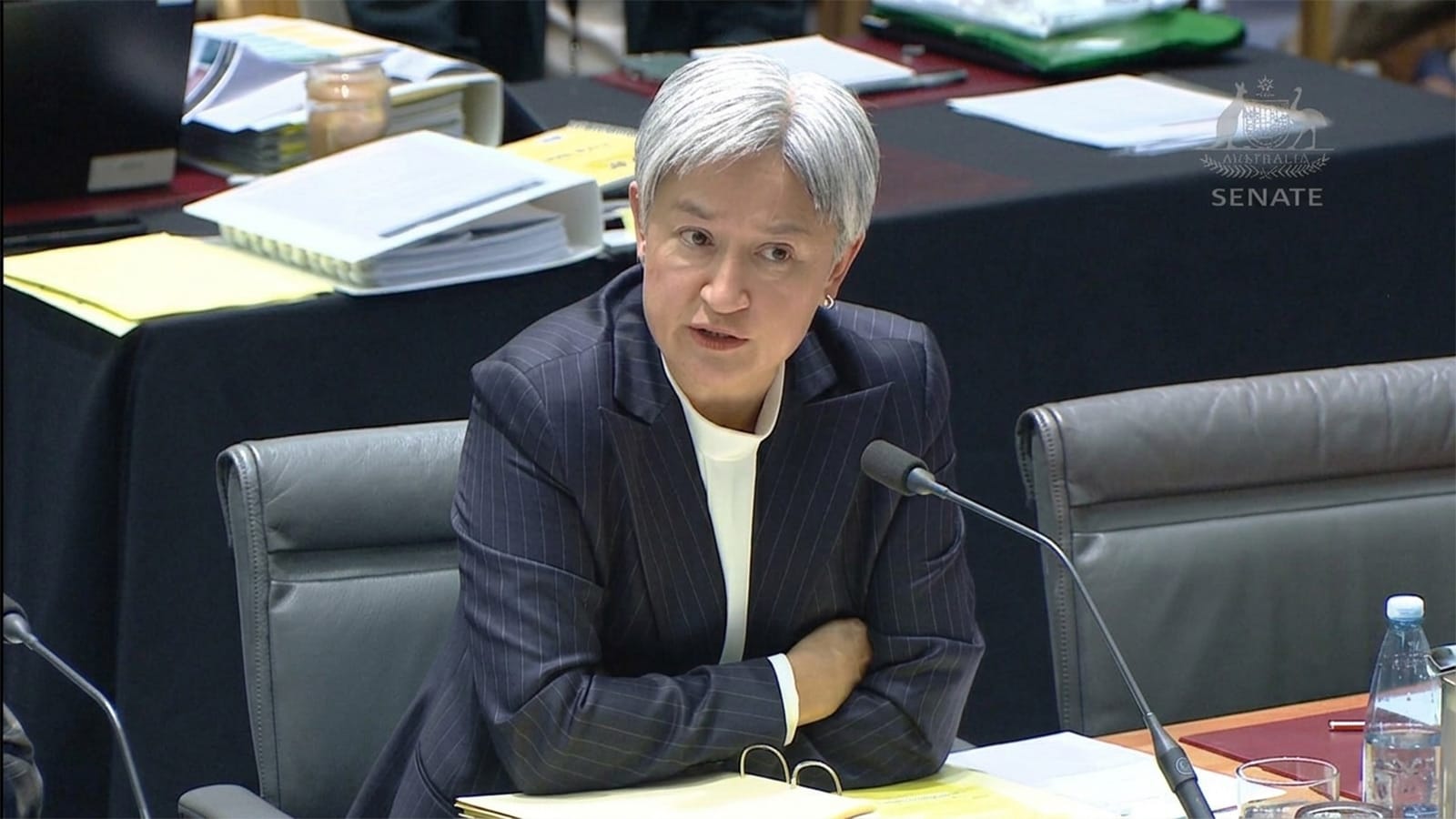
| 2.26pm | Jane Hume asks Penny Wong in question time why a death is being used as a trigger to take the concession away. Wong answers on income tax cuts and the gender pay gap. | The vote is already done. The government never answers the question in the chamber. |
| Afternoon | The bill passes both houses. Royal assent follows the next day as Act No. 49 of 2026. | The widow tax is law, and the amendments that would have stopped it were withdrawn 3 hours earlier. |
The government has a defence and it's worth stating. Gallagher never named a bill or a date, the words were "subsequent legislation", and the law doesn't start operating until 1 July 2027, so on a strict reading nothing is late yet. Pocock thanked the Treasurer's office and his staff for working on it, and the government says a draft is coming.
What that defence doesn't reach is 29 June. Four days after undertaking to address inheritance and divorce, the government was presented with a drafted provision doing exactly that and voted it down. It could have taken the win and moved on. Pocock, who gave up his amendments on the strength of the undertaking, voted for the Coalition's version. He's now written to the Treasurer asking for the same thing a third time.
Penny Wong was asked about it as the bill passed and answered on the gender pay gap
At 2.26pm on 25 June, with the vote barely finished, Deputy Opposition Leader Jane Hume asked Penny Wong: why is the government using the death of a spouse as a trigger to take away grandfathered treatment, and why should Australian women face higher taxes in their time of grief.
Wong spent her answer on income tax cuts for 13 million Australians. Hume raised a point of order on relevance. Wong then repeated the undertaking Gallagher had given in the same chamber that morning.
"In relation to the issues that were raised by the senator, and I think Minister Gallagher discussed yesterday, I can indicate the government does intend to address these issues in subsequent legislation."
On both follow ups Wong answered by listing wage rises for early childhood educators and aged care workers, and movement in the gender pay gap. She didn't come back to the widow tax. The Act was given royal assent the next day as Act No. 49 of 2026.
Four days later the fix was on the table in full, and the Senate voted it down
On Monday 29 June the Coalition took the government at its word. Debating a separate tax bill, Canavan flagged the amendment from the floor: "We will give the government a chance to do what it says it wants to do, get rid of the widow tax."
Sheet 3909 went a good deal further than a protest vote, because it inserted a whole new Division 129 into the Income Tax Assessment Act, headed "Retaining CGT concessions in relation to CGT assets that are inherited or acquired because of relationship breakdown etc." It let anyone who inherited an asset, or acquired it under a Family Court order, choose the concession they would have had if the Tax Reform Act had never been passed. A second part did the same job for negative gearing.
The President put the question at 6.09pm, and a minute later the Senate divided. A division is the Senate's formal count, where senators cross the floor to one side or the other and every name is recorded. Hansard writes a yes vote as an "aye" and a no vote as a "no".
| The vote | Who | What it meant |
|---|---|---|
| Voted yes, 25 | The Coalition, One Nation's Pauline Hanson, Malcolm Roberts and Tyron Whitten, Ralph Babet, and David Pocock. | Voted to keep the concession with the asset through a death or a Family Court order. |
| Voted no, 32 | Labor, including Finance Minister Katy Gallagher, and the Greens, including leader Larissa Waters, Sarah Hanson-Young, Nick McKim, David Shoebridge, Mehreen Faruqi and Barbara Pocock. | Voted the fix down, by 7 votes. In the Senate's own words, the question was negatived. |
| Then what | The bill passed both houses the same day and was assented to on 30 June as Act No. 58 of 2026, with no schedule of amendments. | The widow tax stayed exactly as it was, and it's still there today. |
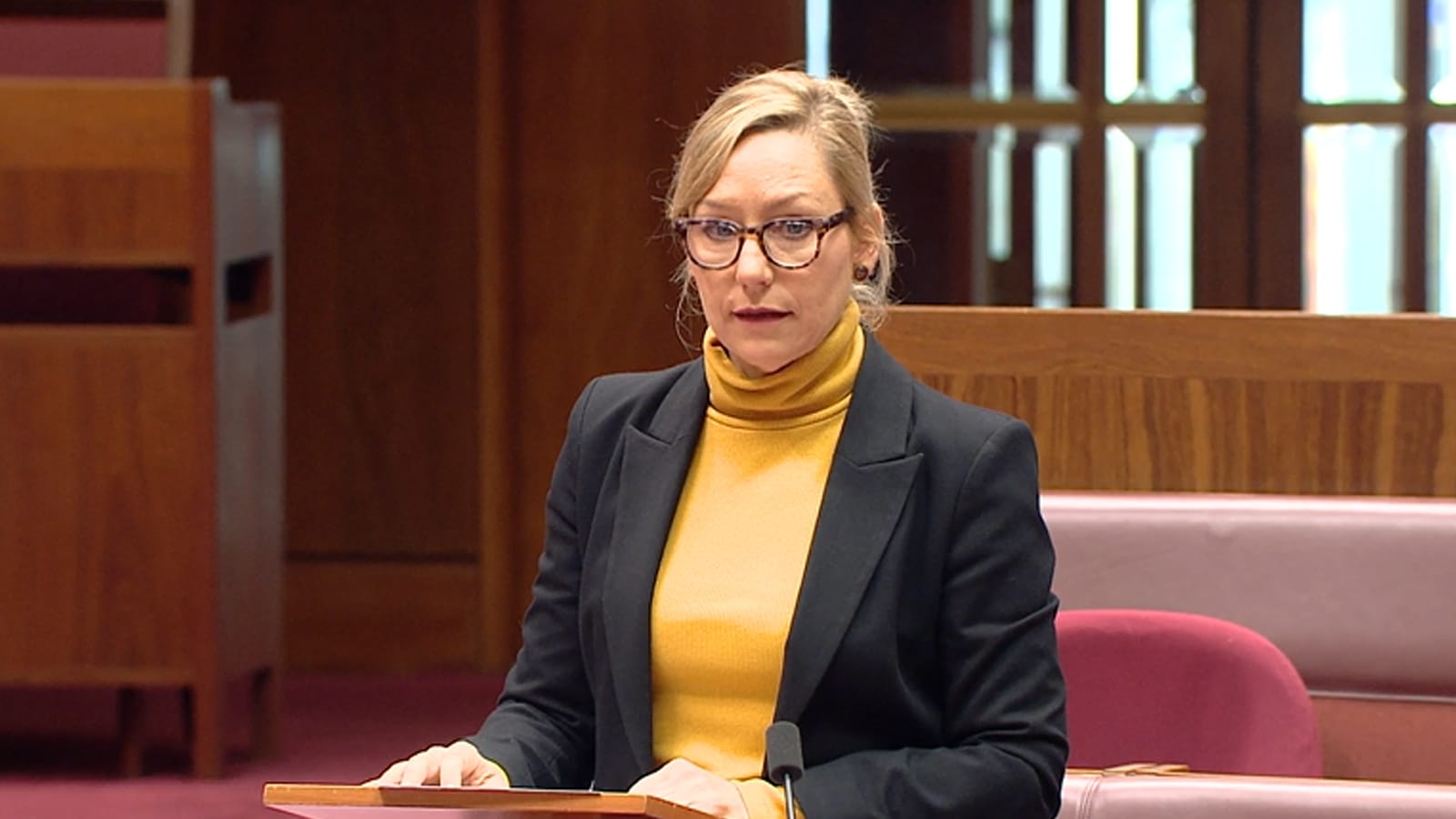
Two days after that vote, Greens leader Larissa Waters said her party would back abolishing the provision, and that the Greens hadn't known it was in the bill they helped rush through. "The government certainly didn't point it out," she said, in comments reported by the Australian Financial Review. Treasury had pointed it out, at a public hearing, on 16 June.
40 days on, the deal hasn't been honoured, and the next tranche has a tax break for a rugby league team
So has the government done what it said it would do? Not yet, and the record on that is unambiguous.
Take Pocock's reading of it first, the next tranche. A next tranche already existed on the day he withdrew. The Treasury Laws Amendment (Tax Reform No. 2 Bill) was introduced into the House on 25 June, the same day the widow tax cleared the Senate.
The Parliamentary Library's own digest, published on 28 July, calls it "the second tranche of proposed legislation to implement the Government's 2026 to 27 Budget tax reforms". It runs to three schedules: a loss carry back offset for companies turning over less than $1 billion, a permanent $20,000 instant asset write off for small business, and an income tax exemption for players and staff at the new Papua New Guinea Chiefs rugby league club through to 2035.
The digest sets those three schedules out in full, and not one of them touches death, divorce, joint ownership or grandfathering.
Here's the part that matters most, because that bill still hasn't passed. Chalmers introduced it and then it stopped, and its status on the parliamentary record today is still "Before Reps". Its provisions went to the Senate economics committee, which reports on 13 August. So the vehicle the government said it would use is sitting in the House right now, open and unpassed, and 40 days on nobody has put the widow tax fix in it.
Now take Gallagher's wording, subsequent legislation, which is looser and gives the government more room. On that reading the promise still isn't broken, only unmet. But 4 days after she gave it, the Senate had a drafted fix for exactly the thing she'd undertaken to address, and the government voted it down. Whatever "subsequent legislation" was meant to cover, it didn't extend to letting somebody else's version through.
Treasury published the draft on the night of 4 August, 40 days after the undertaking. It is written for a Treasury Laws Amendment (Tax Reform No. 3) Bill that does not yet exist, and Treasury's own consultation page calls that No. 3 Bill, rather than the No. 2 Bill sitting in the House, "the second stage of the reforms".
Three women, one property, and the bill each of them gets handed
All of that is process. Here's what it does to somebody. Take one ordinary rental and run it through the three life events that set the tax off, so you can see where the money actually goes. A couple bought an investment property together in 2012 for $520,000. It's worth about $1,100,000 now. It brings in $32,000 a year in rent, and interest, rates, insurance, agent fees and depreciation come to $47,000, so it runs at a $15,000 loss each year. That loss splits down the middle, $7,500 against each half.
These are illustrations, not a forecast of anyone's tax bill. What they show is the shape of it.
| Her situation | What happens to the property | What it costs her |
|---|---|---|
| Nothing happens | They're both alive and still together, so both halves stay grandfathered. | Nothing. She and her partner keep deducting the full $15,000 loss against their incomes and keep the 50% discount on the whole gain. This is the only version of the story where the promise holds. |
| He dies in 2028 | She owns the whole property. Her original half keeps everything. The half she inherits is treated as bought in the year he died. | $7,500 of the yearly loss stops coming off her wages and goes into quarantine, waiting on a future profit or a sale. On the half she inherited the 50% discount is gone, so a $200,000 gain on that half is taxed on close to the full amount rather than half of it, at a minimum of 30%. |
| She divorces | She keeps the property in the settlement. Her ex signs his half over under a Family Court order, and that half counts as a fresh purchase on the day it moves. | Identical to the widow. The Family Court order is what triggers it, which means her tax outcome is decided by the settlement she needed in order to leave. |
| She's fleeing violence | This is the case in front of Pocock right now. To complete the settlement she has to refinance the loan into her own name. | The lender works out what she can afford on her own. From 1 July 2027 she can't negatively gear the half she's taking on, so the tax benefit the lender was counting as capacity drops out of the sum. Her pre approval was pulled and three banks said no, and not on credit history, income or the value of the property. |
| She's not affected | None of this touches the family home, which stays exempt, and none of it touches anyone buying a newly built dwelling. | It only reaches people who already own an ordinary rental and then have a death or a separation in the family. That's the entire target. |
The lending point is the one that catches people out, because it's already happening 11 months before the law starts. A bank doesn't wait until 1 July 2027 to assess a 30 year loan. It prices the loan against the rules that will apply over its life. Pocock told Chalmers that family law practitioners in the ACT are seeing the same behaviour from lenders, and that it's "impacting family law outcomes". We set out how the grandfathering breaks in our June explainer, and what the same Act does to a share portfolio when someone dies in our piece on the death tax trap.
This is the fourth thing in the same package the government has had to go back and fix
The pattern is the point. The package was written for a budget, given a two day Senate inquiry, and voted through before the month was out. Since then the government has been unpicking it a piece at a time.
| The problem | What it was, and who raised it | Where it landed |
|---|---|---|
| Trusts written into wills | A 30% minimum tax on testamentary trusts, the structures families use to pass money to their children. Farmers and family businesses called it a tax on dying. | Dropped on 18 June, 8 days before the Act got royal assent, at a cost of $475 million over 4 years together with a matching small business concession. |
| What counts as a new home | The law never defined a "new residential dwelling", the one thing that decides who keeps negative gearing. Raised by every property peak body, and by Pocock's recommendation 2. | Conceded on 18 June. The definition went into the primary legislation and some of the ministerial discretion was wound back. |
| Start ups | Founders and early investors were swept into the capital gains changes nobody had consulted them on. The Tech Council of Australia and AusBiotech both objected. | A separate Treasury consultation ran from 18 June to 10 July. Small business also got its concession threshold lifted from $2 million to $10 million. |
| Family trusts | A 30% minimum tax on discretionary trusts, flagged by the accounting and small business sector. | Still being reworked. Treasury consulted through July and the government says it goes into a later tranche. |
| The widow tax | Grandfathering lost on a death or a divorce. Raised by Treasury itself on 16 June, by Pocock on 19 June, and by the Coalition on 25 and 29 June. | Promised on 25 June, then voted down on 29 June. Drafted on 4 August, 40 days later, once the first known casualty went public. Still law, and still not before the parliament. |
Pocock's letter says the fix can't be delayed past August. The government still hasn't said whether it will move in the fortnight that starts on 11 August, and the consultation on its own draft doesn't close until 21 August, the day after that fortnight ends. The 44 year old woman who wrote to him is trying to settle a property division now, with lenders assessing her against a law the government has already accepted shouldn't say what it says.
This article is general information only and not financial, tax or legal advice. Everyone's circumstances are different and these rules are complex. Before acting, speak to a registered tax agent or a licensed financial adviser about your own situation.