🔴UPDATE, Wednesday: America's answer came at 1am Tehran time
The response arrived within roughly 24 hours of Trump's Truth Social post. On the President's orders, US Air Force and Navy aircraft struck Iranian air defence systems, ground control stations and surveillance radar sites near the Strait of Hormuz, with CENTCOM describing the mission as a proportional response to unjustified Iranian aggression. The strikes began at 5pm Washington time, 1am in Iran, and were finished by the evening. Iranian state media reported explosions on an island in the Strait. Scripps News LiveNOW from Fox
Read that target list again. Iran shot down an Apache, so America destroyed the radar and control infrastructure that lets Iran shoot anything down. No cities, no civilians, no oil fields, just the precise removal of the capability that was used. Trump called the response "very strong, very powerful" while simultaneously telling the Wall Street Journal the shootdown "wasn't a big deal". Both things are true, and that's the point. The IRGC fired back toward US targets, Araghchi vowed nothing would go "unanswered", and the White House assessment is that none of it derails the talks. This is what enforcing your own red lines looks like when you wrote them properly in the first place. Fox News
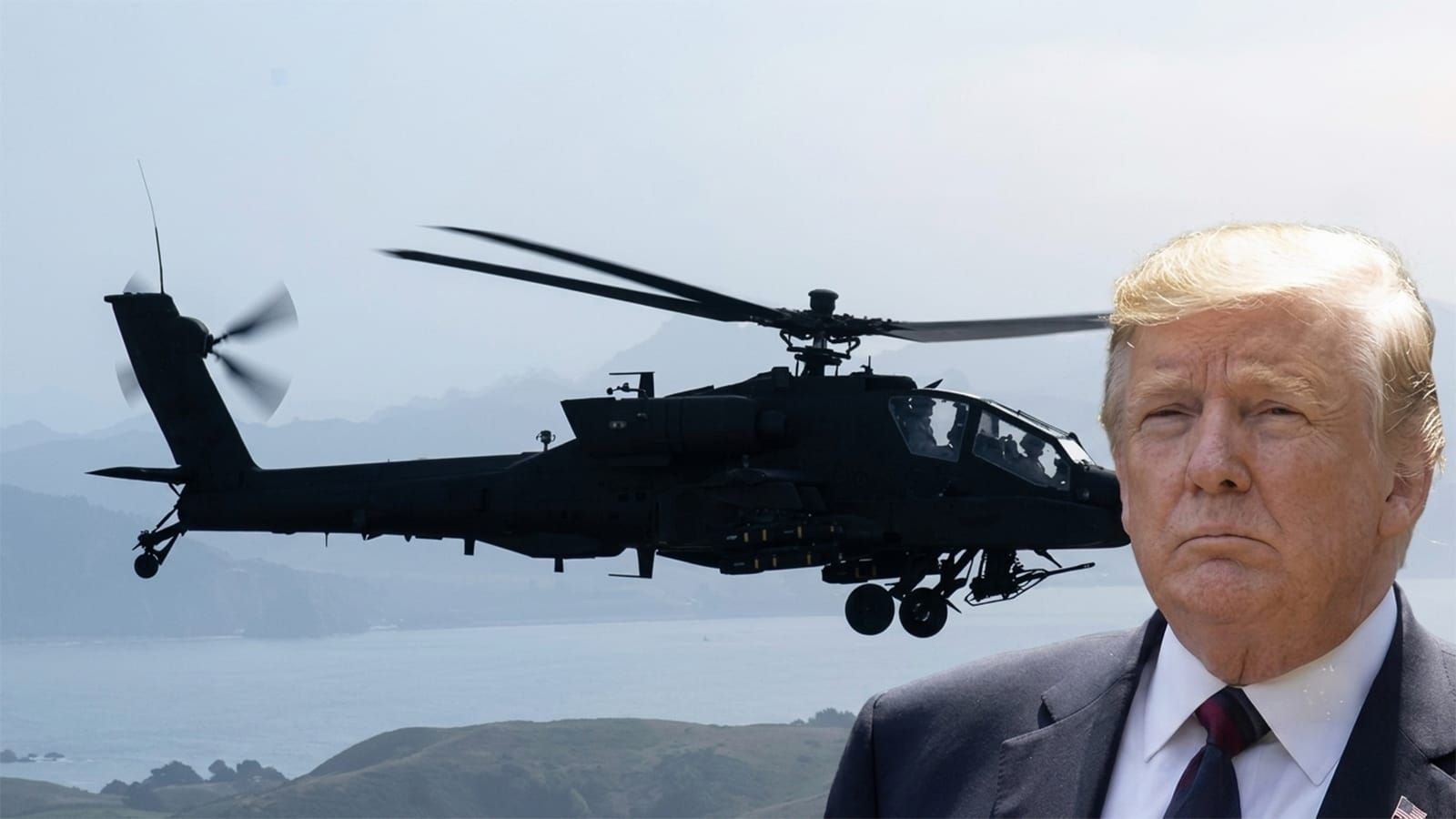
Late Monday evening Washington time, a US Army AH-64 Apache went down while patrolling near the Strait of Hormuz. US Central Command confirmed the helicopter went down at 7:33pm ET on 8 June, and the two crew members were rescued about two hours later. By Tuesday, President Trump had told the world exactly who he holds responsible. NPR
"I have just been informed by our Great Military that last night the Iranians shot down one of our highly sophisticated Apache Helicopters while patrolling over the Strait of Hormuz," Trump posted to Truth Social. "There were two pilots involved, both are safe and uninjured. Nevertheless, the United States must, of necessity, respond to this attack."
Two US officials told CBS News that initial indications point to an Iranian drone bringing the Apache down, though one official said it wasn't yet clear whether the drone deliberately attacked the helicopter. It's the second confirmed loss of a crewed American aircraft to Iranian fire since the war began in February, after an F-15 went down over southern Iran in April. CBS Newseuronews
The rescue itself made history. The recovery marked the first publicly known use of a drone boat by the US military to retrieve personnel. The 24 foot unmanned vessel, a Corsair built by Saronic Technologies, was assigned to the Navy's Task Force 59, the first uncrewed and AI focused unit covering maritime security across the Strait of Hormuz and the Suez Canal. While Iran was knocking an Apache out of the sky, an American robot boat was pulling the crew out of the water. That contrast tells you most of what you need to know about how this war ends. euronewsNPR
Iran, predictably, denies everything. Sky News reported Iran's deputy foreign minister told Al Jazeera that Tehran wasn't responsible. Foreign Minister Abbas Araghchi went further on X without quite claiming or denying anything, saying foreign forces near Iranian territory are "at constant risk on account of their own human errors, plain accidents, or potentially being caught in crossfire". He also argued the Strait of Hormuz shouldn't be considered international waters at all, calling it shared between Iran and Oman and "located thousands of miles away from U.S. shores". Shoot it down, deny it, then question whether the airspace was even legal to fly in. That's the playbook, and it's been the playbook since February. CNBCCBS News
The terms Washington has actually set
Unlike Iran, the United States has been unusually transparent about its terms in this war, and they're worth setting out plainly because they explain why this incident may not blow up the negotiations.
The red line is American lives. Trump has reportedly said privately he won't throw out the ceasefire, which remains nominally active despite repeated outbreaks of fighting, unless US troops are killed. He said publicly last week he'd restart offensive operations if Iran killed more US troops, which hasn't happened. Both Apache pilots walked away. The attack was hostile, but it didn't cross the line Trump himself drew, which is why his response will be calibrated rather than cataclysmic. CNBCWashington Examiner
Beneath the red line sits a structure of enforcement. The US is running a naval blockade on Iranian ports in the Gulf of Oman, and Trump posted Monday that the blockade won't be lifted "until a 'Final Deal' is reached". A White House official summed up the posture after Iran's missile launches at Kuwait and Bahrain last week: thanks to Operation Epic Fury, Economic Fury and the Hormuz blockade, Trump "holds the cards" and has all the time he needs. The principle underpinning the draft deal, in the administration's own words, is "relief for performance": the faster Iran clears its mines and lets shipping resume, the faster the blockade lifts. CNBC + 2
So the American rules of engagement, as publicly stated, run like this. Defend the force. Respond proportionately to attacks that don't kill Americans. Escalate decisively if they do. Keep the economic noose tightened until Tehran performs. It's a coherent framework, and Iran has spent a hundred days probing the edges of it without quite tipping over.
Does Iran follow any rules of engagement?
Iran doesn't publish rules of engagement in any Western sense, but it announces them when convenient. In March, the regime's Khatam al-Anbiya central military headquarters declared that any strike on Iranian civilian infrastructure would trigger a shift in its "rules of engagement", warning the next stages of its operations would be far more devastating.
What Iran actually practises is calibrated deniability. Drones rather than missiles where attribution is murky. Proxies rather than its own flag where possible: the weekend's escalation began with Hezbollah rockets into northern Israel, an Israeli strike on a Hezbollah command centre in Beirut's Dahieh district, and only then direct Iranian missiles, the first time since the war began that Iran retaliated directly for an Israeli operation against Hezbollah.
On Friday, Iran fired seven ballistic missiles toward Kuwait and Bahrain after those two countries shot down four Iranian attack drones; six missiles were intercepted and the seventh missed. Every move sits just below the threshold that would trigger the full American response. The Apache shootdown, with both pilots surviving, fits the pattern exactly. Whether by luck or design, Iran keeps attacking in ways that injure American pride without taking American lives. Washington ExaminerWashington Examiner
This is a regime that mines an international waterway, declares the waterway isn't international, fires on its neighbours, denies firing on its neighbours, and then complains about Western aggression. The Geneva Conventions were written on the assumption that both sides would accept restraint because the other side did the same. Iran never made that bargain and never pretended to.
Which brings us back to Australia's rulebook
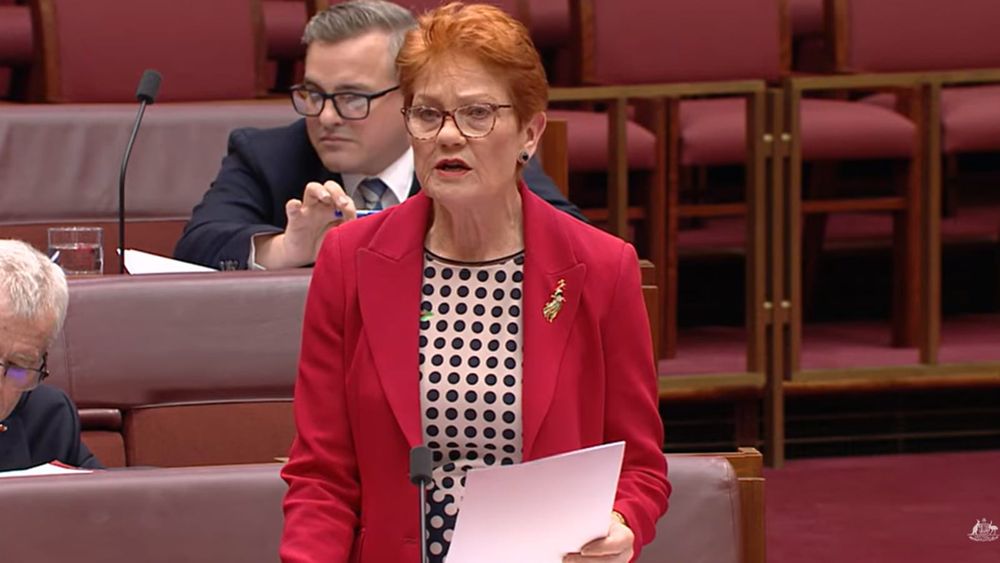
We covered this at length yesterday in our piece on David Shoebridge's Senate Estimates performance against Pete Hegseth, and the Apache incident only sharpens the point. The Americans patrolling the Strait operate under a framework their own government wrote, with red lines their own president set, against an enemy everyone acknowledges follows no rules at all. Australia's soldiers and sailors operate under a stack of obligations built for a war that ended in 1945: the 1949 Geneva Conventions, Additional Protocol I that Hawke ratified in 1991 and that Reagan rejected as fundamentally flawed, the Rome Statute that Howard signed and the Americans walked away from, and Division 268 of the Criminal Code that currently has Ben Roberts-Smith sitting in Silverwater.
Iran's foreign ministry has declared Australian military assets in the Persian Gulf legitimate targets. If an Australian helicopter goes down in that Strait tomorrow, the crew's actions on the way down will be judged against Additional Protocol I and Division 268. The drone that shot at them answers to nothing. That asymmetry is the entire argument for the rewrite Canberra refuses to have, and every incident like Monday's makes the refusal look more negligent. Hegseth said it out loud. The Apache just illustrated it.
Why Tehran isn't in a hurry
Here's the part of this war the wire copy keeps missing. Iran doesn't particularly want a deal right now, and the reason is sitting on the American political calendar. Tehran is stalling, and it's stalling for the midterms.
The midterms are in November. The conflict has polled badly for Republicans, not because the strategy is failing but because voters are reacting to the price at the bowser while the press feeds them outrage instead of architecture. Nobody filling up their ute in Ohio is being told the blockade is strangling China's cheap oil supply or that the Strait reopens under American control. They're being told fuel is expensive and Trump did it.
Tehran watches the same polling everyone else does, and it has drawn the obvious conclusion: if the pain runs long enough, American voters might do for the regime what its military can't. Trump told a Cabinet meeting in late May that he doesn't care about the midterms, and at the same meeting described Iran as "negotiating on fumes". As former US negotiator Robert Malley observed, every time Trump says he doesn't care about the midterms, Tehran reads it as evidence that he does. PBS PBS
Iran's behaviour matches that read. On 1 June, Iranian state media announced Tehran would stop exchanging messages with the US through intermediaries and move to fully close the Strait, while activating other fronts including the Bab al-Mandeb. Then a week of attacks: drones at Gulf states, missiles at Israel, and now an Apache in the water. This isn't a regime desperate to sign. It's a regime playing for time, taking shots calibrated to stay just under Trump's red line while it waits for November to do its work. CNBC
Even Trump's domestic critics have accidentally confirmed the stalling thesis. Democrat congressman Jake Auchincloss argued Iran now sees its control over the Strait as more strategically vital than a nuclear weapon, and claimed the closure has handed Tehran the upper hand. He's half right. The Strait is the only card Iran has left, which is exactly why it's dragging the clock instead of dealing. But mistaking that for the upper hand is the kind of analysis you get from people who think holding your own economy hostage is leverage. Iran is burning what's left of its oil revenue, its currency and its proxies to keep a waterway shut, while the White House position is that Trump "holds the cards" and has all the time he needs. house.gov Washington Examiner
Tehran is betting the political pain of high fuel prices forces Washington to blink before November. Trump is betting Iran's economy collapses first, or whatever strategic step he has left up his sleeve, and unlike Tehran, he's holding the world's largest oil production, a rebuilt strategic reserve and a navy parked on Iran's export routes while he waits.
One side of this table is absorbing short term pain for long term position. The other is liquidating its last asset to buy time and calling it strategy. The ayatollah's entire plan is now a hope that American voters bail him out in five months.
Why Trump is there at all: the China chokehold
Which is the question almost nobody covering Monday's shootdown bothered to ask. Why is an American Apache patrolling the Strait of Hormuz in the first place?
We laid out the full architecture in From Venezuela to Antarctica: Trump's Real Target Is China's Global Energy Stranglehold, and the short version is this. Roughly a fifth of the world's daily oil moves through that Strait, and China takes nearly 38% of everything that transits it. Before the war, China was buying more than 80% of Iran's crude exports at steep discounts, around 1.38 million barrels a day, relabelled as Malaysian or Omani oil to dodge sanctions. Cheap Iranian crude wasn't just energy for Beijing. It was a strategic subsidy underwriting the manufacturing base of America's chief rival.
The closure of the Strait cut that subsidy off, and it cut it off for China, Japan and Europe, the same countries holding the bulk of America's foreign held debt, while the US sits comfortably as the world's largest oil producer with a rebuilt Strategic Petroleum Reserve.
When the Strait reopens, it reopens on terms Washington controls, because the US Navy is the only force capable of clearing Iran's mines and escorting commercial traffic back through. The draft deal makes that explicit: Iran clears the mines, shipping resumes, and sanctions relief flows only as fast as Iran performs. The Apache wasn't loitering over that waterway for fun. It was part of the apparatus enforcing a blockade designed to make sure the world's most important energy chokepoint changes hands. Axios
The parallel world order Beijing built while Washington slept
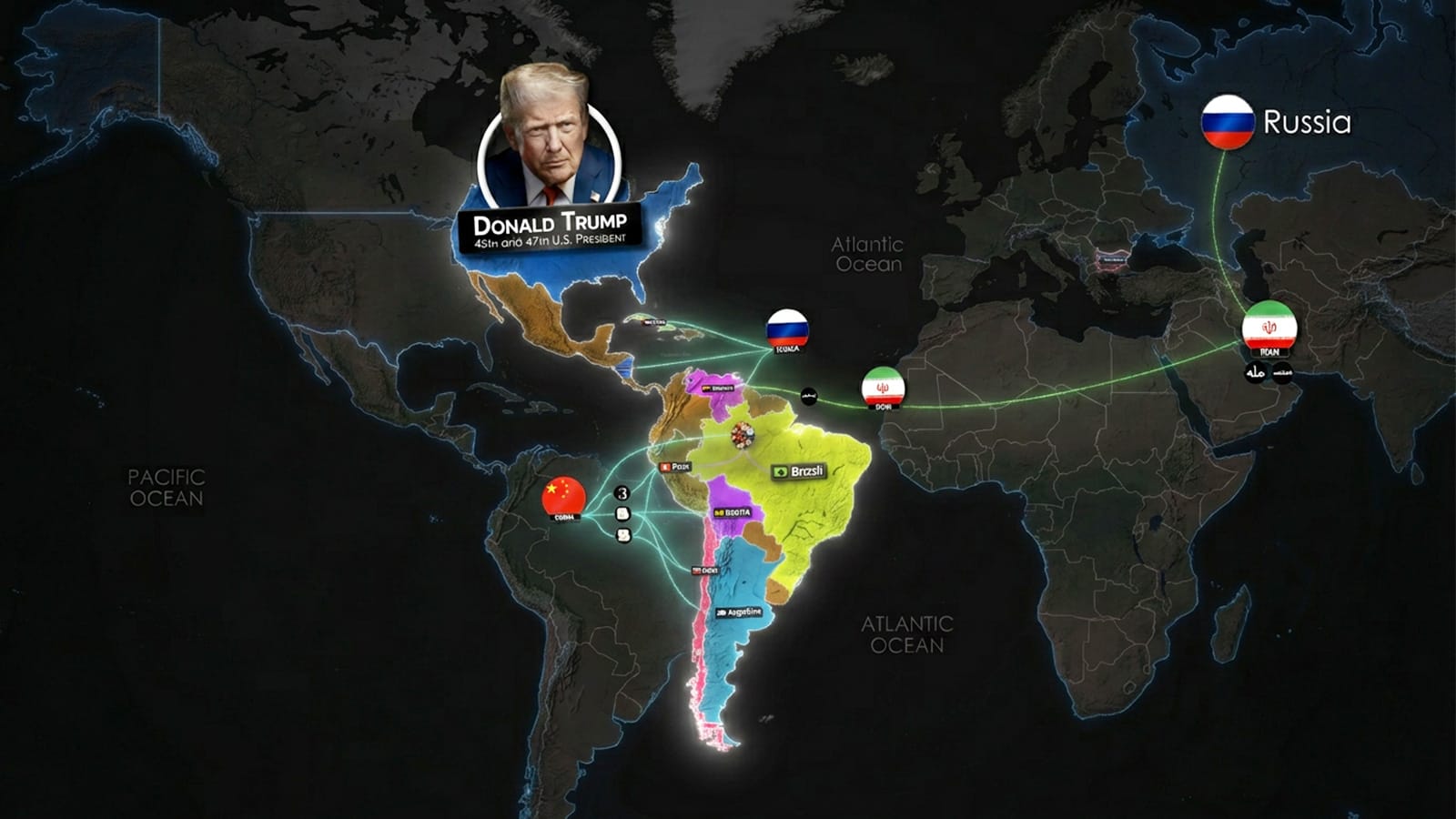
None of this happens in a vacuum. While the Bush, Obama and Biden administrations collectively looked inward, China spent twenty years building a parallel world order through ports, pipelines, debt traps and mining deals. Trade between China and Latin America went from roughly $10 billion in 2000 to a record $518 billion by 2024. More than twenty Latin American countries signed onto the Belt and Road.
Chinese companies poured over $16 billion into South American lithium alone, locking up the lithium triangle across Argentina, Chile and Bolivia, the copper of Peru, the iron ore of Brazil and the oil of Venezuela, while building the Chancay megaport to ship it all home. Beijing stripped a continent of its minerals while Washington wrote it off, and ended up controlling about 60% of global lithium processing and 77% of battery cell manufacturing.
That's the empire Trump is now dismantling piece by piece. Venezuela's regime decapitated in January and its oil lifeline to Beijing severed. Argentina pulled into Washington's orbit with a $20 billion lifeline. The Donroe Doctrine explicitly reasserting the hemisphere. And Iran, the energy throat of the whole arrangement, blockaded until it signs. The Apache that went into the water on Monday is a small entry in a very large ledger, and the ledger reads the same on every page: China loses access, Washington gains leverage.
What happens next
Trump says the deal is days away, a "very, very good deal" with the Strait reopening "immediately upon signing", and he was saying so within hours of the shootdown. He's made similar claims throughout a war that crossed the 100 day mark on Sunday, and no deal has yet emerged. The response he's promised will come, and his own stated rules tell you its shape: proportionate, capability focused, designed to punish without handing Tehran the dead Americans it would need to claim a real escalation. CNBC
The bigger picture hasn't moved an inch. Iran is running out the clock toward November. Trump is running a blockade he believes wins on any timeline. And Australia, whose assets Iran has already declared fair game, is still sending its people into that theatre under a rulebook written for 1945. One side of this war updated its rules for the enemy it actually faces. Ours hasn't. Monday was a reminder of which side our people would rather be on when something falls out of the sky.
Sources:
- https://www.cnbc.com/2026/06/09/trump-iran-helicopter-hormuz-strait.html
- https://www.cbsnews.com/live-updates/iran-war-trump-peace-deal-israel/
- https://www.nbcnews.com/news/us-news/pilots-fine-us-military-helicopter-goes-down-strait-hormuz-rcna349137
- https://www.npr.org/2026/06/09/nx-s1-5851482/trump-pilots-us-helicopter-crash
- https://www.npr.org/2026/06/09/nx-s1-5851845/trump-confirms-iran-shot-down-helicopter-says-u-s-must-respond
- https://www.euronews.com/2026/06/09/trump-vows-response-after-iran-shoots-down-us-apache-helicopter
- https://www.cnbc.com/amp/2026/06/09/trump-iran-war-deal-days.html
- https://www.washingtonexaminer.com/policy/defense/4598962/iran-attacks-israel-lebanon-hezbollah-trump-red-lines/
- https://www.axios.com/2026/05/24/iran-deal-strait-hormuz-sanctions-nuclear
- https://www.cnbc.com/2026/06/01/iran-us-negotiations-strait-of-hormuz.html
- https://www.pbs.org/newshour/politics/watch-live-trump-holds-cabinet-meeting-during-negotiations-to-end-the-iran-war
- https://auchincloss.house.gov/media/in-the-news/house-democrat-irans-control-of-strait-of-hormuz-more-strategically-vital-than-nuclear-weapon
- https://www.cnn.com/2026/05/10/world/live-news/iran-war-news
- https://www.onenewsaustralia.com/trump-iran-war-china-energy-venezuela-cuba-antarctica/
- https://www.onenewsaustralia.com/hegseth-shoebridge-rules-of-engagement-rewrite/