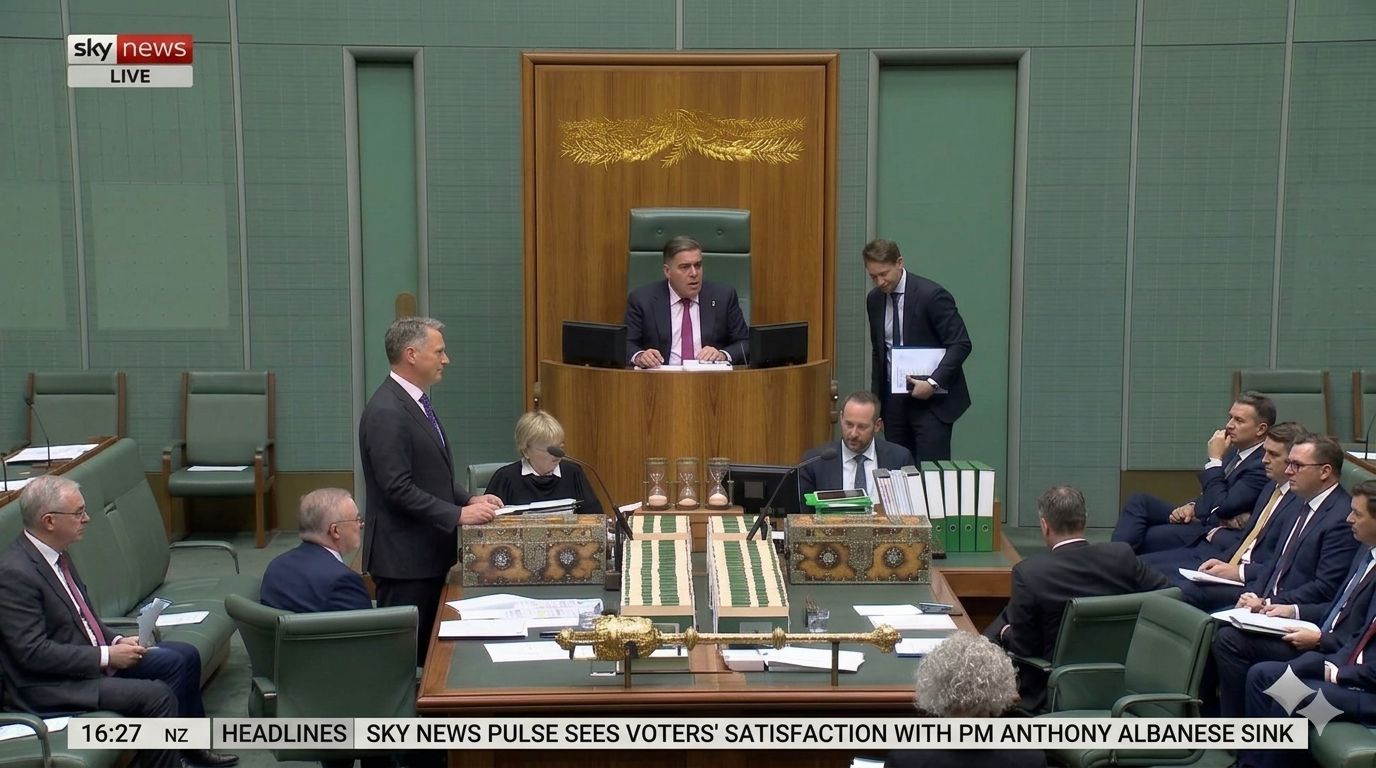
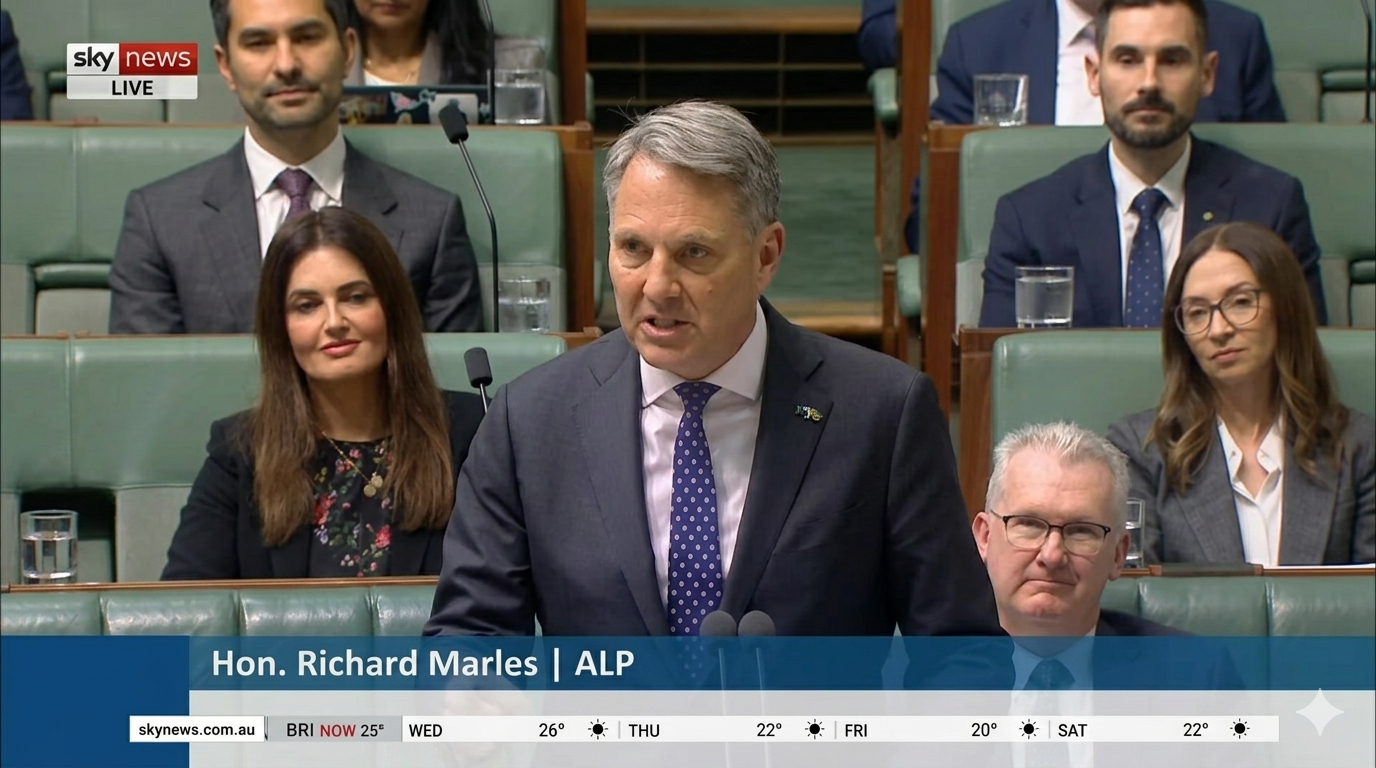
Andrew Hastie was thrown out of Question Time on Wednesday under Standing Order 94A, ordered out for heckling Defence Minister Richard Marles. Speaker Milton Dick said he didn't know why Hastie was interrupting, because Dick was at that moment ruling in the Opposition's own favour on a point of order. Even a procedural win couldn't get him to stop opening his mouth.
That was the visible drama. The bigger story was the run of misleading claims rolling off the Labor benches. Here's where they didn't survive a check.
Albanese on migration
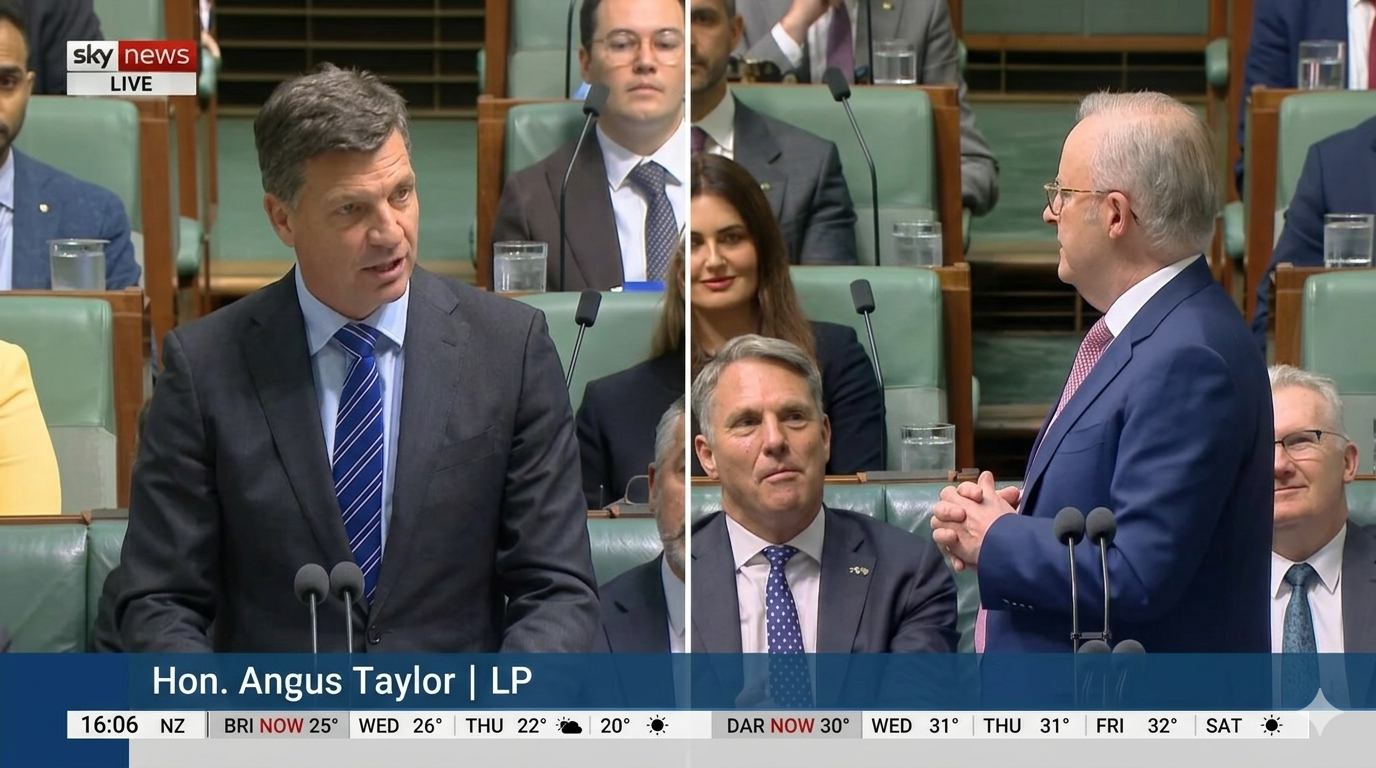
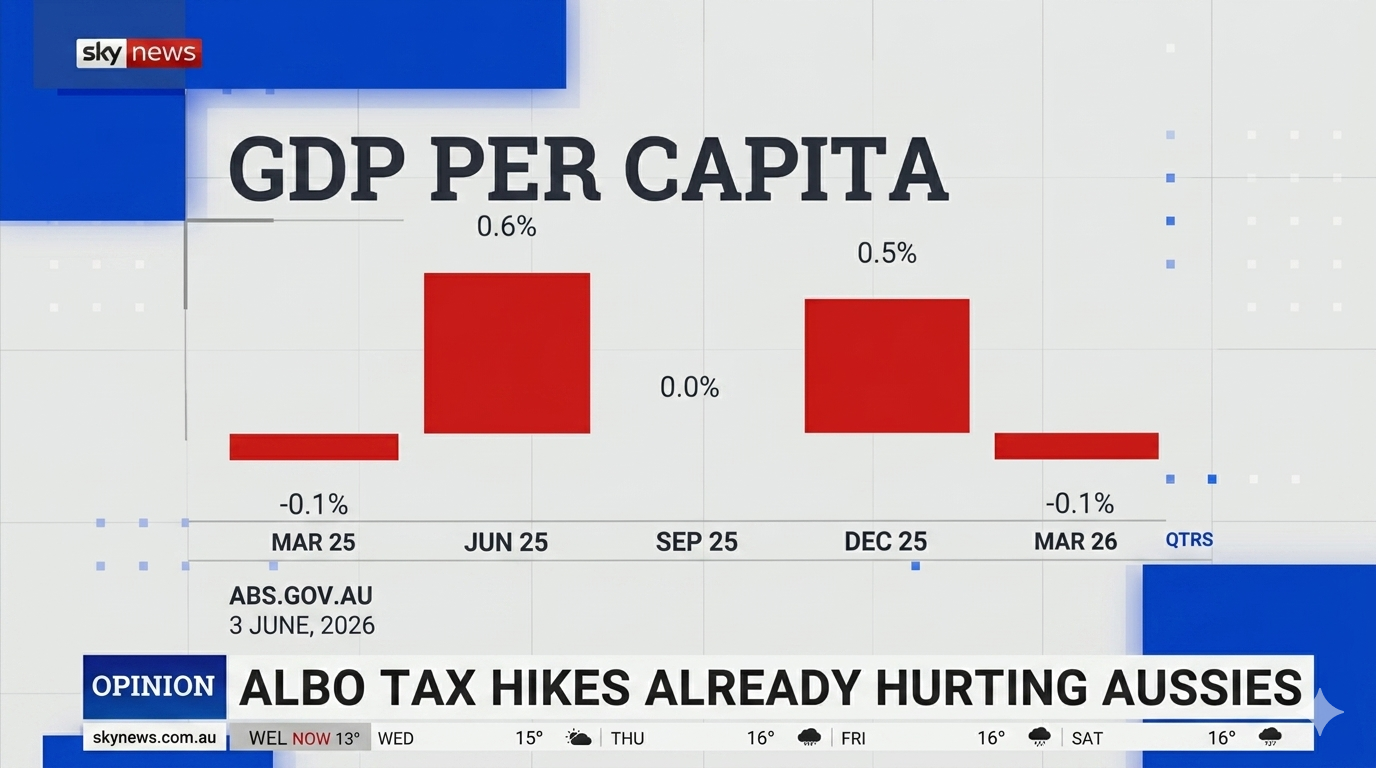
Opposition Leader Angus Taylor opened with the question Labor doesn't want asked. On Labor's watch more than 1.4 million migrants have come in, GDP per capita has gone backwards for the 10th time out of 15 quarters, and his question was simple: why is out of control migration Labor's only growth strategy.
Albanese didn't answer it, and for most of his response, he didn't even face the Opposition Leader. He turned to address his own backbench, delivering his points to Labor MPs across the chamber rather than the man who'd asked the question. He pivoted to the Iran war, fuel security, and the 28 February event that triggered the global oil shock. None of that addressed migration. When he did get back to it, he claimed migration had fallen 45%.
The two figures aren't talking about the same thing. Taylor's 1.4 million is the cumulative number of migrants who've come in under Labor's whole term. Albanese's 45% is the drop in net overseas migration from the 2022 to 23 financial year peak to the 2024 to 25 result. ABS data confirms the annual figure fell from 536,000 to 306,000, so the 45% is roughly true.
What Albanese left out is that the 536,000 starting point was the highest net overseas migration on record, hit in his first full year of office. The annual rate has fallen because it had nowhere to go but down. The cumulative number, 1.4 million, hasn't fallen at all. It keeps growing.
That's the question Taylor was actually asking. The 1.4 million people who've arrived under Labor are already here, already housed, and their demand has run past the supply pipeline meant to absorb them. The Housing Accord is on track to fall 262,000 dwellings short of its own target. Sydney and Melbourne prices are now falling because borrowing capacity has been squeezed, not because demand has eased. That's the housing crisis. The Prime Minister picked the one stat that lets him claim something is falling.
Albanese on living standards and wages
Late in Question Time, Taylor asked the Prime Minister directly about living standards going backwards. The Prime Minister responded by accusing the Opposition of "talking Australia down" and called Taylor "Temu Abbott", a swipe comparing the new Opposition Leader to former Liberal prime minister Tony Abbott.
Then he claimed Labor had delivered "higher wages, as a result, of the 4.7%". The Fair Work Commission's Annual Wage Review decision yesterday lifted modern award rates by 4.75% and the National Minimum Wage by 6%, from 1 July 2026. That decision applies to about 2.7 million workers, roughly 21% of the workforce. Award covered wages are about 11.2% of the national wage bill.
The Liberal Party's response to the same decision noted real wages have gone backwards 3% since Albanese took office. The RBA is forecasting inflation of 4.8% by June 2026. A 4.75% award rise next to 4.8% inflation isn't a real wage increase, and it doesn't reach the 78% of workers who aren't on awards. Albanese's "higher wages" line was a minimum wage decision, repackaged as something it isn't.
He didn't address GDP per capita going backwards. That was the question.
Chalmers on productivity
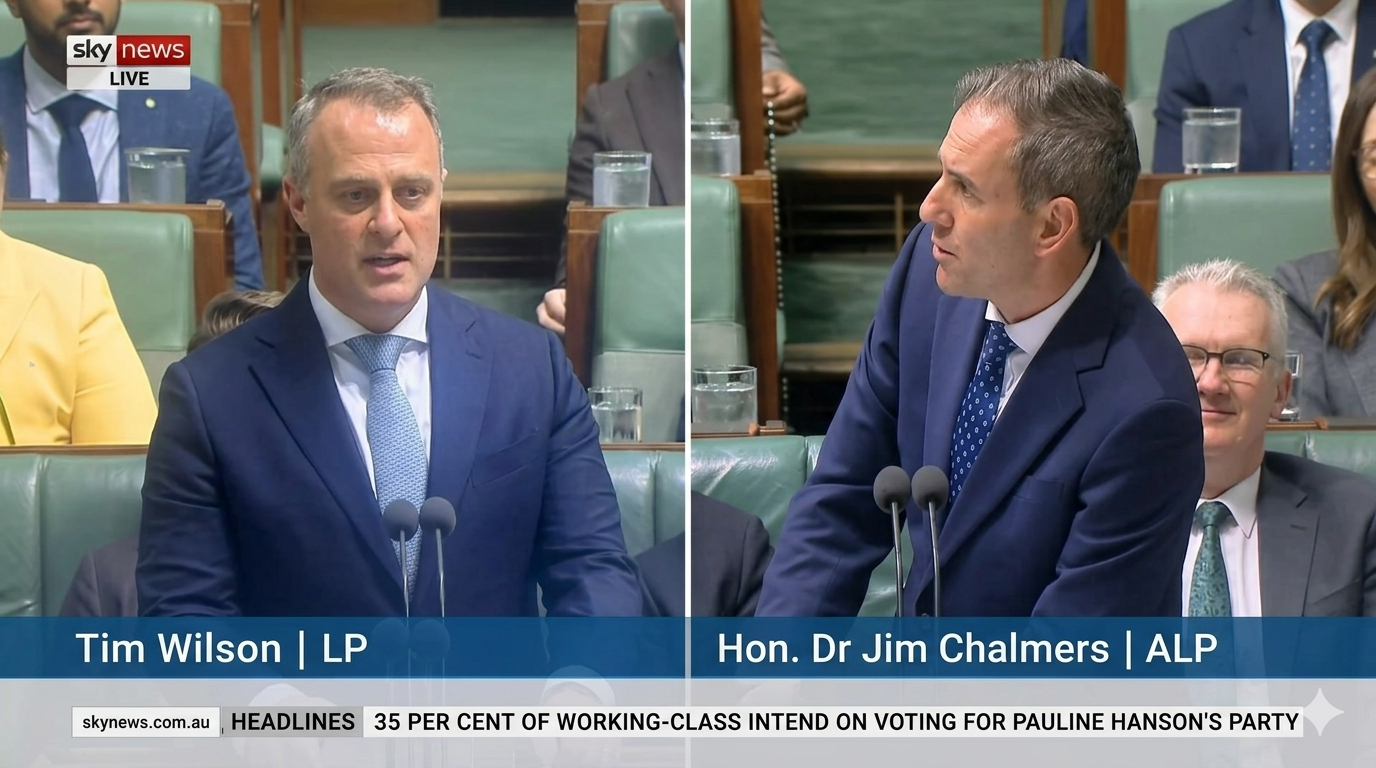
Treasurer Jim Chalmers told the House the productivity question was "such a gift" and listed three reasons he was pleased to receive it. Like the Prime Minister, he then delivered most of the attack on Shadow Treasurer Tim Wilson's 5% claim to his own backbench rather than to Wilson, who'd actually asked the question. Chalmers said the 5% calculation includes the March 2022 quarter, when productivity fell 2.3%, and Labor wasn't elected until 21 May 2022. Fair point on the start date.
What Chalmers didn't say is that today's ABS national accounts show productivity fell another 0.6% in the March 2026 quarter alone, for annual growth of just 0.3%. Deloitte Access Economics has tracked the longer trend: labour productivity has fallen 5.7% since March 2022, made up of a 3.1% fall in market sector productivity and a 9.0% fall in non market productivity. Non market sector productivity now sits at a near 20 year low. The non market sector includes government, healthcare and education, which is where Labor has expanded employment the hardest.
The Productivity Commission's own data shows labour productivity declined over 6% between March 2022 and June 2023 before flatlining. Australia has dropped to 18th of 69 nations in the IMD World Competitiveness Yearbook 2025. On corporate use of digital tools, Australia ranks 54th.
Productivity Commission chair Danielle Wood has said this is Australia's worst productivity period on record. Chalmers' framing was that the 5% figure is unfair because it includes one Coalition quarter. The trend underneath the figure is the trend that's eating real wages, regardless of which quarter you start from.
Clare O'Neil on the 5% deposit scheme
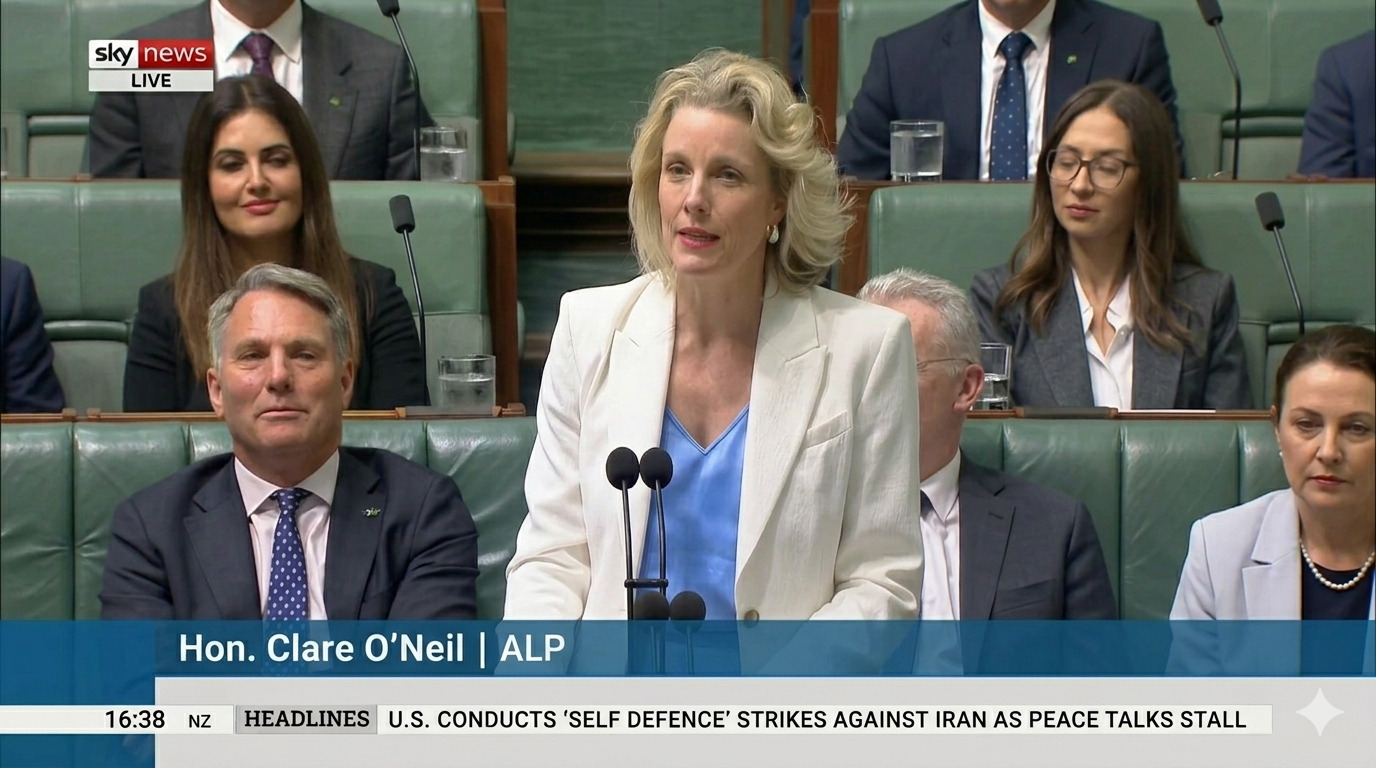
Housing Minister Clare O'Neil told the House that 250,000 Australians have now used the 5% deposit scheme, saving $2.3 billion in lenders mortgage insurance. She said 70% of users are ahead on their repayments and 1 in 4 has built up enough equity to leave the scheme.
The scheme isn't Labor's. The Home Guarantee Scheme was launched by the Morrison government in January 2020. Housing Australia confirmed it passed the 200,000 mark in January 2025, well before O'Neil's speech. The Liberal Party took the same 200,000 figure into the 2025 election as a Coalition achievement. Labor expanded the scheme on 1 October 2025 by removing the cap on places and income limits. Six years of the program now gets rolled into O'Neil's Labor era number.
The equity story is where it gets harder. The RBA has raised the cash rate three times in 2026, in February, March and May, taking it from 3.60% to 4.35%. Cotality has Sydney values down 1.5% over the past three months and the top quartile of Sydney's market has fallen five months in a row. ANZ has now revised its Sydney forecast to a fall of up to 6% in 2026, with Melbourne down up to 4%.
Equifax data released this week shows first home buyer 90 day mortgage arrears are at a seven month high and are nearly double those of other borrowers. Recent buyers who took the 5% deposit option in Sydney late last year are the most exposed, because they borrowed up to 95% of the property value just before three rate rises and prices started falling in their segment.
The other side of the squeeze is borrowing capacity. APRA has kept the 3% serviceability buffer in place, meaning loans are assessed at the loan rate plus 3%. From February 2026, APRA also activated a debt to income limit, capping the share of new mortgages with DTI of 6 or more at 20% of new lending. Modelling by the Finance Brokers Association of Australia estimates that even a 0.5% cut to the buffer would unlock $276 billion in borrowing capacity and help up to 400,000 first home buyers. The cut hasn't come.
So the picture O'Neil left out: prices falling in the markets where buyers used the scheme most, repayments rising on every rate hike, arrears climbing for first home buyers, and borrowing capacity tightened by APRA. Anyone who came in on a 5% deposit in late 2025 is paying more, owns less, and can't refinance into more headroom. The "equity gains" line works in a market that's rising. Sydney and Melbourne have stopped rising.
Marles on selling Defence land
Marles defended the sale of 67 Defence sites, including parts of HMAS Penguin at Middle Head, telling the House that many properties were "vacant, decaying, underutilised and costing millions of dollars to maintain."
Independent Warringah MP Zali Steggall asked the question. She reminded the Prime Minister that in 2021 he invoked his Labor mentor Tom Uren in arguing Sydney Harbour should stay in public hands. Marles answered instead, and the Speaker pulled him up twice for straying off the question and onto opposition policy.
The numbers behind the sale: the Defence Estate Audit identified about $3 billion in gross revenue and $1.8 billion net after $1.2 billion in transition costs. Defence has confirmed proceeds go back into the Defence budget to fund National Defence Strategy priorities including AUKUS. Sydney Harbour land is being sold at market value, mostly to private developers, to fund operating costs that Labor's own spending priorities have generated. Liberal Senator Sarah Henderson has argued the sales weaken national security at a time of rising global instability. ASPI has noted transparency on how the proceeds are actually allocated has dropped, with land sale revenue now bundled in with weapons and vehicle disposals in the Defence accounts.
The pattern
What ran through the day was a refusal to answer what was actually asked. Albanese was asked about migration. He pivoted to the Iran war. Asked about living standards going backwards, he called Taylor "Temu Abbott" and delivered the line to his own backbench rather than across the chamber. Chalmers, asked about Tim Wilson's 5% productivity figure, spent his time attacking the start date Wilson used rather than the 5.7% decline since March 2022 that sits beneath it. Clare O'Neil wasn't asked anything difficult, and used the time to claim credit for a Coalition scheme.
Taylor's claim that GDP per capita has now gone backwards in 10 of the 15 quarters Labor has been in office is consistent with the ABS data on the per capita recession. Today's release added another quarter to that count. The Prime Minister had three hours after the data came out at 11.30am to address it. He used the time to call Taylor names.
Sources:
- https://thenightly.com.au/politics/australian-news-and-politics-live-senators-challenge-meghan-quinn-over-aukus-optimal-pathway-c-22375295
- https://www.abs.gov.au/statistics/people/population/overseas-migration/sort
- https://www.abs.gov.au/media-centre/media-releases/annual-net-overseas-migration-falls-first-time-borders-reopened
- https://www.pc.gov.au/media-speeches/articles/labour-productivity/
- https://www.deloitte.com/au/en/services/economics/blogs/dae-employment-forecasts-jobs-sorted.html
- https://www.aicd.com.au/good-governance/organisational-strategy/long-term-strategic-plan/how-to-navigate-australias-productivity-crisis-through-strategic-governance.html
- https://ministers.dewr.gov.au/rishworth/award-and-minimum-wage-workers-receive-least-475-pay-increase
- https://www.liberal.org.au/2026/06/02/fair-work-commission-annual-wage-decision
- https://www.housingaustralia.gov.au/media/200000-australians-enter-home-ownership-through-home-guarantee-scheme
- https://www.liberal.org.au/policy/our-plan-for-housing-and-home-ownership
- https://tradingeconomics.com/australia/corelogic-dwelling-prices-mom
- https://www.macrobusiness.com.au/2026/06/aussie-first-home-buyers-left-stranded-in-negative-equity/
- https://www.macrobusiness.com.au/2026/05/mortgage-stress-ripples-across-sydney/
- https://www.apra.gov.au/news-and-publications/apra-announces-update-on-macroprudential-settings
- https://www.apra.gov.au/activating-debt-to-income-limits-as-a-macroprudential-policy-tool
- https://www.minister.defence.gov.au/media-releases/2026-02-04/delivering-future-defence-estate
- https://www.aspistrategist.org.au/promises-proceeds-and-posture-why-the-defence-estate-audit-matters/
- https://www.zalisteggall.com.au/zali_steggall_mp_asks_the_deputy_pm_about_the_future_of_hmas_penguin