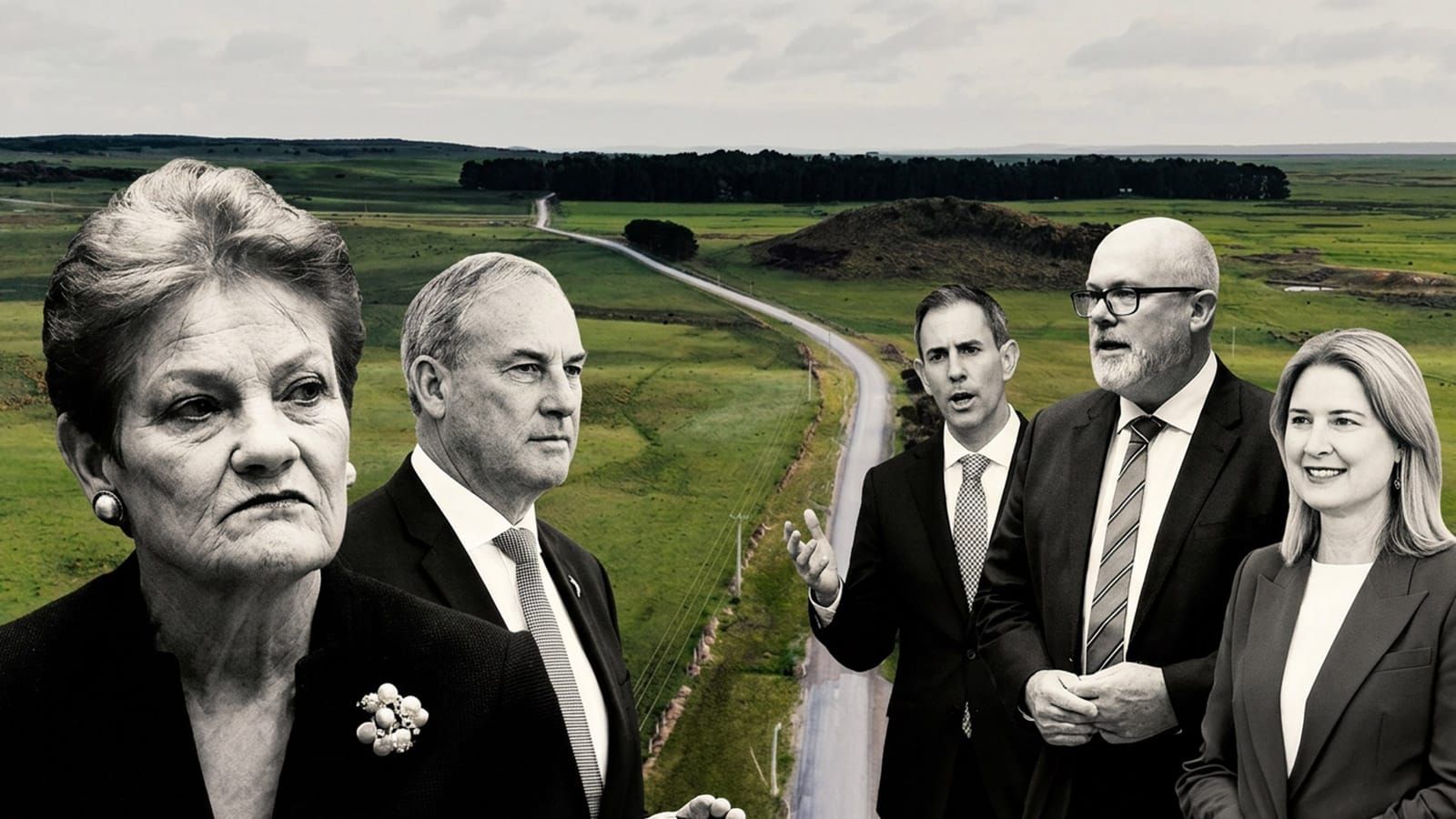
Pauline Hanson has demanded the Albanese government explain why $69 million in taxpayer capital was funnelled to a British backed syndicate buying Tasmania’s largest farm, all to destroy productive agricultural land in pursuit of net zero carbon credits. Meanwhile, the minister sent to field her questions, Tim Ayres, could not even confirm if the green bank chairman at the heart of the deal declared a conflict of interest to the board that authorised the sale.
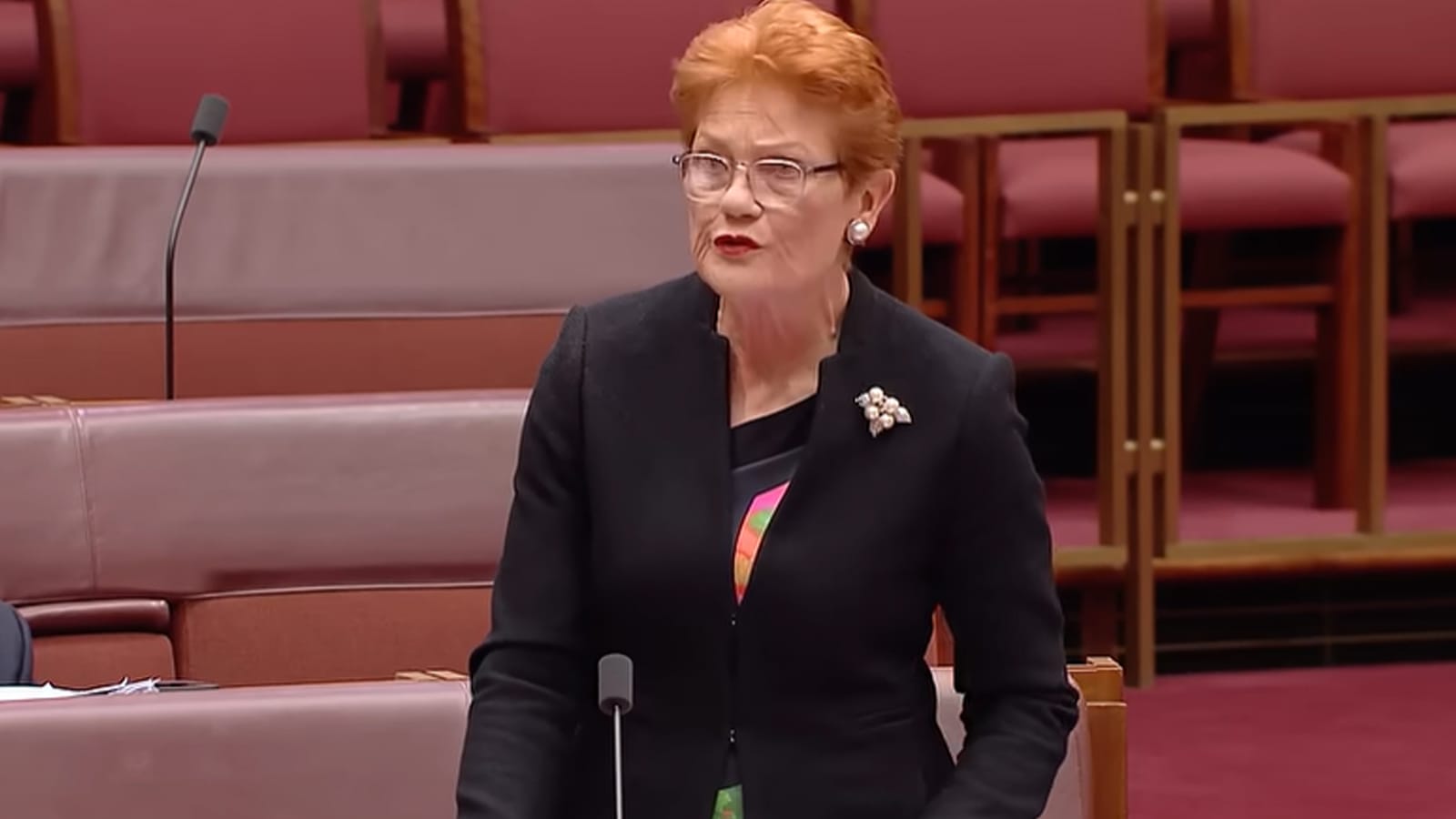
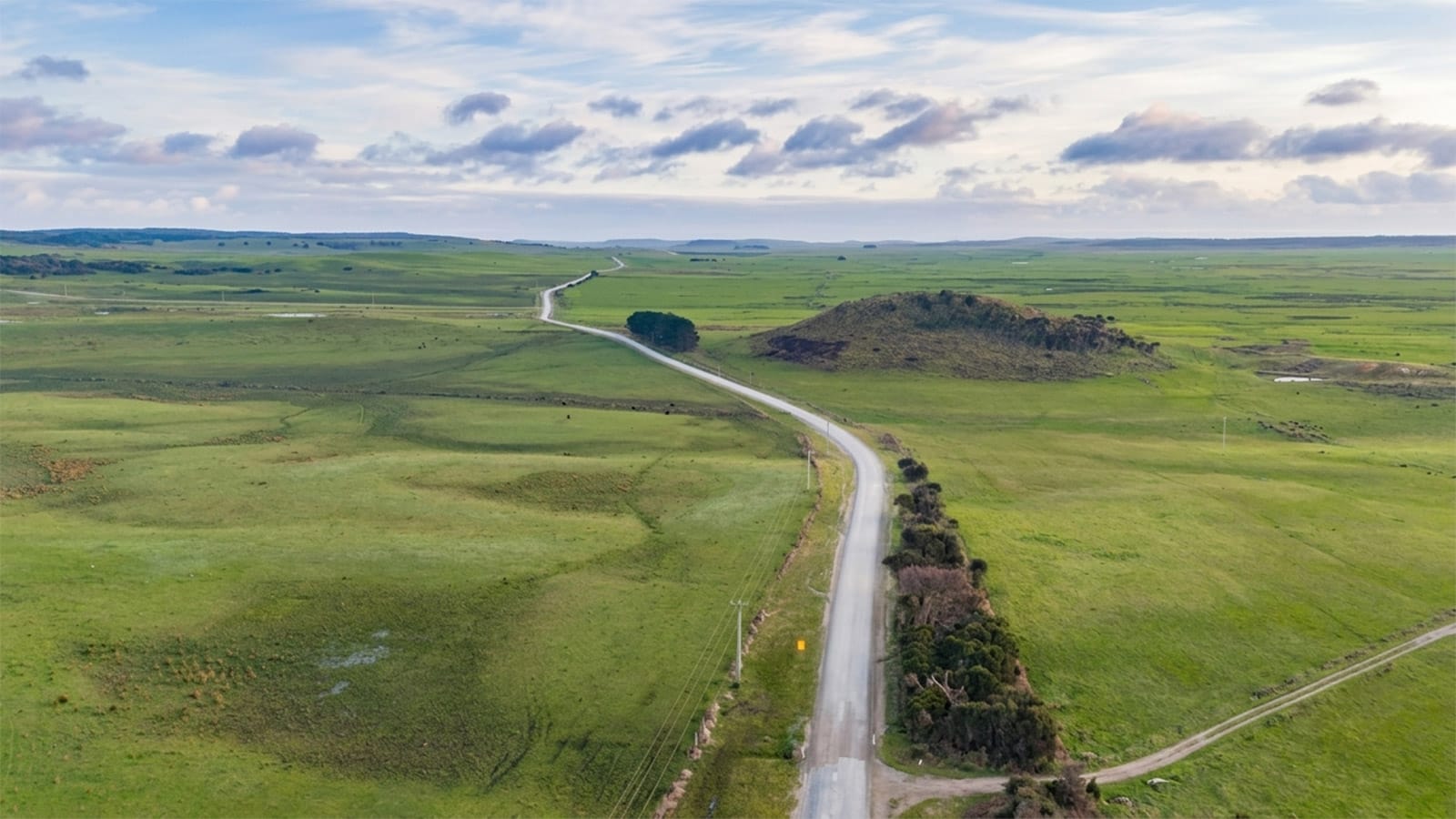
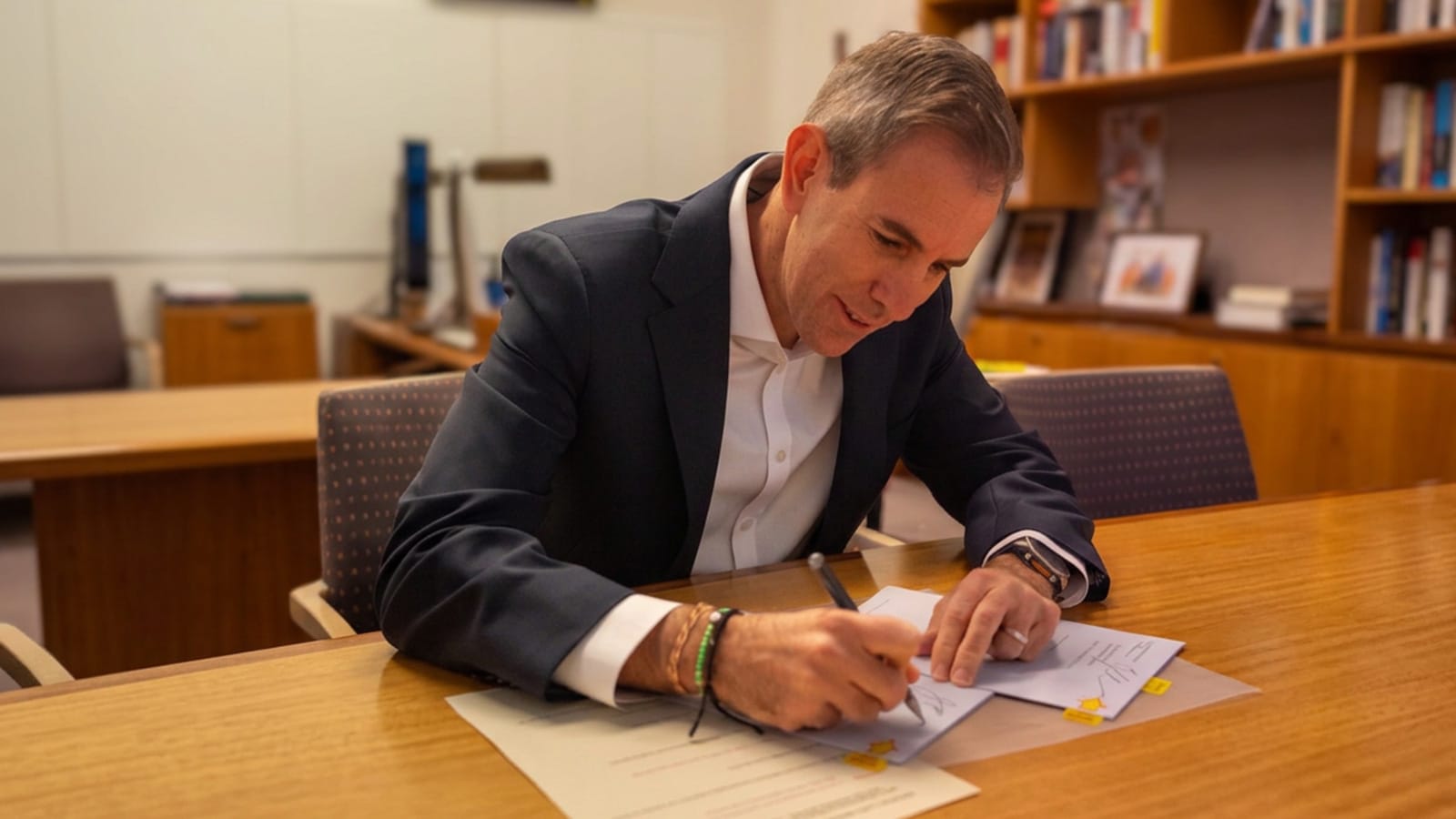
Hanson cornered the government in the Senate on Thursday, 13 August, just five weeks after Treasurer Jim Chalmers signed off on the foreign acquisition of Rushy Lagoon: a massive 21,745 hectare beef, dairy, sheep, and cropping property near Cape Portland in Tasmania’s far north east.
The buyer, Tasmania Natural Asset Trust, is spearheaded by UK forestry manager Gresham House alongside British asset giant Aviva Investors and the Commonwealth’s own Clean Energy Finance Corporation. Under the trust's plans, roughly 9,000 hectares of prime food producing land will be wiped out and blanketed in radiata pine plantations to generate corporate carbon credits under the government's net zero agenda.

"I won't stay silent while productive farmland is sold off and converted into carbon credit schemes," Hanson declared, pointing out that local Australian bidders who wanted to keep the farm producing food were aggressively outbid by foreign buyers backed by millions in government subsidies.
"Australians are already facing rising grocery prices and growing pressure on our food supply. Every acre of productive farmland matters. Instead of supporting Australian farmers and strengthening our food security, this government is helping drive a net zero agenda that puts carbon credits ahead of food production."
The controversial deal first hit headlines after Gerard Rennick and Heston Russell exposed the transaction on the Karl Stefanovic Show. Since then, Senate scrutiny has uncovered a tangled web of public finance: a second layer of federal grant funding, a chairman sitting on both sides of the transaction table, and an official parliamentary inquiry that Labor and the Greens are actively blocking from launch.
Video: Pauline Hanson's Please Explain, via YouTube. Pauline Hanson used Question Time on 13 August to ask what business the government's green bank had turning Australian farmland into carbon credits, and told the Senate the deal "stinks all the way from Tasmania to Canberra".
Hanson Confronts Foreign Interference; Ayres Deflects with Soil Grades
When pressed on who authorised public intervention in the sale, Minister Tim Ayres deflected. He chose to lecture the Senate on dirt instead.
Hanson initially aimed her broadside at Environment Minister Murray Watt. Watt dodged the hit, claiming responsibility belonged to either the Treasurer or the Minister for Climate Change, and invited Hanson to pick her target. Following a sharp clash with the Senate President, Hanson redirected the question to Ayres, representing the Minister for Industry and Innovation.
"Minister, what business does your agency have in interfering in land purchases, encouraging foreign companies to turn Australia's productive farmland into carbon credits and putting our national food security at risk?" Hanson demanded.
Ayres offered a bureaucratic defence: Rushy Lagoon would remain a working property, blending agriculture, commercial forestry, and land restoration. His primary shield was soil quality. Pointing to Tasmania's land classification scale, which rates agricultural quality from Class 1 down to Class 7, Ayres insisted Rushy Lagoon sits on Class 5 and 6 ground. That means state policy does not protect it as prime agricultural land.
He then attempted to pin the carbon blueprint on the Coalition, citing a July 2020 map published by former minister Angus Taylor that earmarked northern Tasmania as a streamlined forestry hub for carbon offset projects. "That was the Liberal plan for Rushy Lagoon," Ayres claimed.
When Hanson asked whether replacing food production with net zero carbon schemes was now formal government policy, Ayres claimed he did not fully understand the question. He retreated to job projections, claiming the five year planting phase would generate roughly 190 jobs in northern Tasmania.
Fifty minutes later, Hanson took to the floor for a five minute rebuttal:
"The deal over Rushy Lagoon stinks all the way from Tasmania to Canberra," Hanson declared.
She told the Senate the 21,745 hectare property had been on the market since 2018, attracting bids from Australian buyers of between $70 million and $75 million.
"This dirty deal has effectively lifted the value of the purchase to $142 million, about twice as much," Hanson said. "Local buyers, Australian buyers, were priced out of the property."
"That Is How Stupid This Net Zero Is": Carbon Credits Now Pay More Than Food
The reason a British fund could pay $142 million for a farm that Australian bidders valued at $70 million to $75 million comes down to what the land is allowed to earn. Run it as a farm and it earns what beef, milk, lamb and grain are worth. Put 12 million pine trees on it and register them under the carbon credit scheme and it earns Australian Carbon Credit Units as the trees grow, years before a log is cut, with the Commonwealth putting up $69 million of the purchase and another $8.8 million for the seedlings.
Hanson made that the whole of her case in the Senate. She called it Labor's "obscene net zero obsession" and said the government was "sacrificing our farms and food security on the altar of climate change", then told the chamber the property would produce nothing once it went under trees, because "it's all about carbon credits" and "that's how stupid this net zero is. It has got to the stage where we are shutting down productive farmland."
She put the same point to Ayres as a direct question, asking whether it's now government policy to replace productive farmland with carbon credit schemes in pursuit of net zero. Ayres told her he wasn't sure he fully understood the question and went back to the jobs figure.
"We're already a net importer of fresh food, seafood and dairy products. Labor thinks food comes from supermarkets. We know food comes from the hard work of our farmers, the same farmers who have been fighting a losing battle against Labor for the last four years."
One Nation's whip in the Senate, New South Wales senator Sean Bell, took the argument further the same day and put a policy behind it. He told the chamber Labor had built "a twisted system where carbon credits, taxpayer finance and net zero targets create a sick incentive to destroy productive farmland jobs and regional communities", and that Rushy Lagoon is what that system produces.
"This is why One Nation will scrap net zero. We will end the obsession with net zero."
Bell put the total Commonwealth contribution at almost $80 million across the equity stake and the grant, and asked the question the local industry has been asking since July. "If Canberra was prepared to put that much money behind the purchase of Rushy Lagoon, where was the support available to Tasmanian farmers who wanted to keep this as an agricultural asset?"
Who Sold Rushy Lagoon, Who Bought It, and Who Is Paying for the Trees
The seller is New Zealand's Pye family, who acquired Rushy Lagoon in 1996 and built it into Tasmania's largest agricultural holding. Operating across 1,170 hectares of irrigated land backed by 12,500 megalitres of water entitlements, the property carries massive beef and dairy capacity. Pulse Tasmania reported the farm hit the market in October 2024 with final bids closing in November 2025. Hanson confirmed in the Senate that the property had been listed periodically since 2018 without securing a buyer, a history Ayres seized upon to argue the holding was already foreign owned.
The buyer is the Tasmania Natural Asset Trust, a fixed unit trust registered in Sydney on 31 October 2025 and managed by Gresham House, the largest forestry asset manager in Britain. On the ground, Tasmanian asset manager Jonno Craven oversees operations alongside Gresham House associate director Dorian van Raalte. Financial backing flows from British giant Aviva Investors and the Clean Energy Finance Corporation, a Commonwealth bank owned directly by Australian taxpayers.

Federal money enters the picture through the Department of Agriculture, Fisheries and Forestry, which manages the grant program funding the tree seedlings. Its Support Plantation Establishment initiative controls a $73.45 million pot allocated over four years to drive new forestry projects, yielding the $8.8 million grant secured by the trust. The minister heading the department is Julie Collins, the federal Labor member for the Tasmanian electorate of Franklin.

Liberal Senator for Tasmania Richard Colbeck, who previously held the federal forestry portfolio as parliamentary secretary and assistant minister, declared his firm opposition in the Senate: "You would have expected me, as someone who’s a former forestry minister and who’s worked in the agriculture portfolio, to be supporting this project, but I’m not."
Anatomy of a Buyout: How the Rushy Lagoon Deal Was Assembled
The Commonwealth stepped in to bankroll the foreign buyer twice before Treasurer Jim Chalmers granted ultimate ownership approval. A breakdown of key events reveals how public funds cleared the path for the transaction:
| When | Who did what |
|---|---|
| October 2024 | The Pye family of New Zealand put Rushy Lagoon on the market, with final bids due in November 2025. |
| 31 October 2025 | The Tasmania Natural Asset Trust is registered in Sydney as the vehicle to buy the farm. Gresham House, Britain’s largest forestry asset manager, runs it. |
| 5 November 2025 | The trust asks the Department of Agriculture for an $8.8 million grant to pay for seedlings, on the day the round closes and less than a week after it was registered. |
| May 2026 | The Department of Agriculture approves the $8.8 million. The trust still doesn’t own Rushy Lagoon and has no approval to. |
| 8 July 2026 | Treasurer Jim Chalmers approves the sale to the trust on the Foreign Investment Review Board’s advice, during the winter recess, and the Clean Energy Finance Corporation announces its $69 million stake the same day. |
| 12 to 13 August 2026 | Pauline Hanson demands answers in Question Time, Richard Colbeck’s motion for an inquiry stalls, and the Senate orders the grant paperwork handed over. |
| Midday, 18 August 2026 | Deadline for the government to produce the documents. Settlement still hasn’t happened and neither payment has been made. |
Deconstructing the $142 Million Buyout: How Taxpayers Outbid Australian Farmers
Commonwealth funds directly bankrolled the winning offer, putting $69 million of public money into the $142 million purchase, with a further $8.8 million grant on top of it.
The Clean Energy Finance Corporation injected $69 million as an equity partner. Rather than issuing a standard loan, the government green bank took a direct ownership stake, with Senator Richard Colbeck confirming to the Senate that the corporation holds a 49% share in the buying entity.
Compounding that outlay, the Department of Agriculture, Fisheries and Forestry awarded an additional $8.8 million grant directly to the buyer to cover plantation costs.
In total the Commonwealth committed $77.8 million to the project, being the $69 million equity stake inside the purchase and the $8.8 million grant sitting on top of it. According to figures presented by Senator Pauline Hanson, Australian buyers were bidding between $70 million and $75 million of their own money. The taxpayers' $77.8 million contribution alone surpassed the highest total offer put forward by domestic farmers for the entire holding.
The bids, side by side
What Australian buyers were bidding, on Hanson’s figures
| About $75 million |
The winning bid, $142 million
| $69m taxpayer | $73m private |
The orange block is the Clean Energy Finance Corporation’s equity stake, which Senator Richard Colbeck puts at 49% of the buyer. On top of the purchase price sits a further $8.8 million Commonwealth grant to pay for the trees, taking public money committed to the project to $77.8 million. The taxpayer stake alone is close to what Australian buyers were bidding for the entire property.
Signed Off in the Dark: Zero Public Oversight on Taxpayer Millions
The Australian public had no seat at the table and no say in the expenditure. Treasurer Jim Chalmers approved the transaction on 8 July 2026, during the parliamentary winter recess, while the Clean Energy Finance Corporation announced its $69 million taxpayer funded equity stake on the very same day. By avoiding parliamentary debate before it was signed off, the government deployed tens of millions in public funds without oversight, leaving local farmers blindsided to discover their own tax money had been used to price them out of Australia's agricultural landscape.
Food Production Gutted as 9,000 Hectares of Prime Farmland Are Wiped Out for Pine
Under the foreign backed proposal, 12 million radiata pine seedlings will be planted across 9,000 hectares over five years, alongside roughly 1,000 hectares set aside for environmental restoration. Local asset manager Jonno Craven claims beef cattle will remain on the unplanted ground, alongside potential cropping, agritourism, and the potential reactivation of a regional sawmill.
Yet across those 9,000 hectares, active production of beef, milk, lamb, and grain will come to a complete halt, dealing a blow to national food security at a time when Australia already imports more fresh food, seafood, and dairy than it exports. Part of the property also overlaps the internationally protected Lower Ringarooma River Ramsar wetland site.
The core financial engine of the deal relies on paper offsets:
- Carbon Credit Generation: A single credit represents one tonne of carbon dioxide sequestered or avoided. As trees grow, they generate credits that corporations and governments purchase to offset their own emissions on paper, which is the core mechanism driving net zero targets.
- Forecast Yields: Rushy Lagoon is projected to generate 3.2 million carbon credits and approximately 5 million tonnes of certified commercial timber over the plantation's lifespan.
- Additional Revenue: The trust intends to claim biodiversity credits under the federal Nature Repair Market, securing revenue streams years before a single tree is harvested for local processing.
Senator Pauline Hanson forcefully rejected the government's claim that the site remains an agricultural asset. Responding directly to Minister Tim Ayres in the Senate, Hanson pulled no punches:
"Minister Ayres said that this is about farming. No, it’s trees. You’re not farming food. You’re destroying very productive land that produces food for Tasmania, and for Australia for that matter, for carbon credits."
Dual Roles Raised in Senate: Hanson Questions the Chairman Who Sits on Both Boards
At the centre of Hanson’s questions is Steven Skala, who simultaneously serves as Chair of the Clean Energy Finance Corporation, the green bank that committed $69 million in public equity to the buyer, and as a member of the Foreign Investment Review Board, the panel tasked with scrutinising the purchase. Treasurer Jim Chalmers reappointed Skala to his Foreign Investment Review Board role in September 2025 for an additional year, with official notices highlighting his continuous leadership of the green bank since 2017.

The overlap prompted fierce questioning from Senator Pauline Hanson, who demanded the government clarify whether Skala formally declared a conflict of interest, whether he recused himself from the decision making process, and whether Ministers were kept informed.
Minister Tim Ayres initially skirted details in the chamber: "Well, of course it wasn’t advised to me, Senator Hanson," noting he was merely representing Climate Change Minister Chris Bowen. Ayres later told the Senate he had been advised that declarations were lodged and recusals occurred, though he gave no further detail to the chamber.
Unsatisfied by the minimal response, Hanson pressed the issue on the Senate floor: "Did Steven Skala recuse himself, or did they know he had a conflict of interest in being on the clean energy department board plus FIRB? A few answers are needed here."
"Verging on Corruption": $8.8 Million Seedling Grant Alleged to Breach Guidelines
Operating completely separately from the $69 million equity injection, a secondary $8.8 million taxpayer grant has come under fire in the Senate, with Liberal Senator Richard Colbeck alleging the approval broke two explicit program rules.
The funding stems from the federal Support Plantation Establishment program, a $73.45 million initiative created to spur softwood and hardwood forestry. Speaking in the Senate on 12 August, Colbeck revealed that the Tasmania Natural Asset Trust submitted its application on 5 November last year, the final day of the funding round, and less than a week after the trust was formally registered. Approved in May, the $8.8 million allocation dwarfed every other recipient, coming in at more than triple the next largest grant of roughly $2.3 million.
Colbeck argues the grant violates core program criteria on two fronts:
- No Proven Land Rights: Guidelines require applicants to show secured, long term access to the site. The trust owned no part of Rushy Lagoon when applying or when the grant was authorised.
- Corporate Entity Restrictions: Section 4.3 strictly debars Commonwealth corporate entities from applying. The Clean Energy Finance Corporation, a direct Commonwealth corporate entity, holds a 49% stake in the acquiring trust.
"The government has effectively delivered to itself an $8.8 million grant in contravention of the guidelines," Colbeck declared to the chamber. "If this is not corrupt, it’s verging on corruption."
Colbeck has formally referred the matter to the Auditor-General for investigation. With financial settlement pending, the funds have not yet been disbursed.
The trust defended its timeline to local media, explaining that seedling preparation requires long lead times, necessitating early application while foreign investment approvals were pending. Representatives maintained that extensive due diligence was performed and that the grant round operated as an open, competitive process alongside other successful local enterprises.
Labor and Greens Team Up to Block Parliamentary Probe Into Rushy Lagoon
A proposed Senate investigation into the controversial sale and taxpayer grant has stalled in parliament after debate was cut short by the adjournment, with Colbeck telling the chamber that both Labor and the Greens are opposing it.
On 12 August, Senator Richard Colbeck moved to refer the transaction and the $8.8 million grant to the Rural and Regional Affairs and Transport References Committee for a full inquiry, targeting a final report by 30 November. Colbeck drafted a twelve point terms of reference aimed at examining the blow to local agricultural output, national food security safeguards, the rigour of FIRB assessments, and the environmental fallout of covering 9,000 hectares in radiata pine.
Debate ran out the clock into the adjournment and the government has not allowed the motion to resume. Colbeck said he could not follow the Greens’ position, given the land holds internationally protected Ramsar wetlands:
"The first 30 years of a tree plantation's growth are the heaviest on water use," Colbeck told the Senate, warning that expert advice indicates the pine forest will drop local water tables and damage the fragile ecosystem.
Labor Senator Helen Polley repeatedly interrupted Colbeck to shift blame onto Tasmania's Class 5 and 6 land ratings, though the Acting Deputy President dismissed her interventions as debating points.
Colbeck also ripped apart the government's employment claims, challenging Minister Tim Ayres' promise of 190 regional jobs: "There won’t be 109 jobs even in the planting. Then there’ll be 30 years of growth where there might be four or five jobs."
With federal scrutiny shut down in Canberra, Tasmanian Premier Jeremy Rockliff stepped in to establish a state parliamentary select committee to investigate the sale, releasing its official terms of reference this month.
Senate Forces File Surrender as Pressure Mounts on Chalmers to Freeze Settlement
The Albanese government faces a strict Senate deadline to hand over internal correspondence after completely stonewalling an earlier parliamentary disclosure order.
A late June order demanding all Clean Energy Finance Corporation files on the transaction expired without a single page produced. Senator Richard Colbeck condemned the silence on 12 August: "The government’s completely ignored it. Not a single peep from this government."
In response, the Senate passed two binding orders without dissent, establishing a firm deadline of midday, Tuesday 18 August. The orders compel the surrender of every document, message, and text message held by the Department of Agriculture regarding the controversial $8.8 million grant, as well as all agricultural assessments backing the carbon credit approvals for the 9,000 hectare pine conversion.
Minister Jess Walsh tabled documents relating to the orders, and what is in them has not been reported.
With financial settlement still pending and taxpayer funds unreleased, Senator Pauline Hanson urged Treasurer Jim Chalmers to intervene, comparing the transaction to the controversial lease of Port Darwin and declaring that the deal "stinks for Australia's best interests."
"I’m calling on Jim Chalmers to respond, because the deal hasn’t finally gone through," Hanson declared. "Apparently the money hasn’t changed hands. I want to know: is he going to rethink this?"
The Remaining Levers: What Could Still Freeze the Deal
Stopping the acquisition now hinges entirely on financial execution. The core land transfer remains a private contract between the Pye family and the acquiring trust, putting direct cancellation beyond the reach of a Senate vote. Local asset manager Jonno Craven confirmed in mid July that contract signing was imminent, while Senator Pauline Hanson verified in the Senate on 13 August that financial settlement has not occurred and funds have not yet cleared.
The federal government still controls two powerful financial levers to halt Commonwealth involvement:
- The $69 Million Equity Injection: The Clean Energy Finance Corporation board retains control of its $69 million equity drop until the transaction officially settles.
- The $8.8 Million Forestry Grant: The Department of Agriculture's grant money remains unreleased, as funds are disbursed on a matching basis only after planting actively begins.
While Treasurer Jim Chalmers retains the authority to withhold public funds, overturning the Foreign Investment Review Board approval poses a far steeper legal challenge. Under the Foreign Acquisitions and Takeovers Act, the Treasurer holds powers to vary approvals or order divestment, but the power to force a sale is built around national security risks emerging after the event. With no national security grounds raised and the Auditor-General's inquiry limited to an administrative audit rather than cancellation authority, withholding taxpayer capital remains the primary mechanism to stall the transaction.