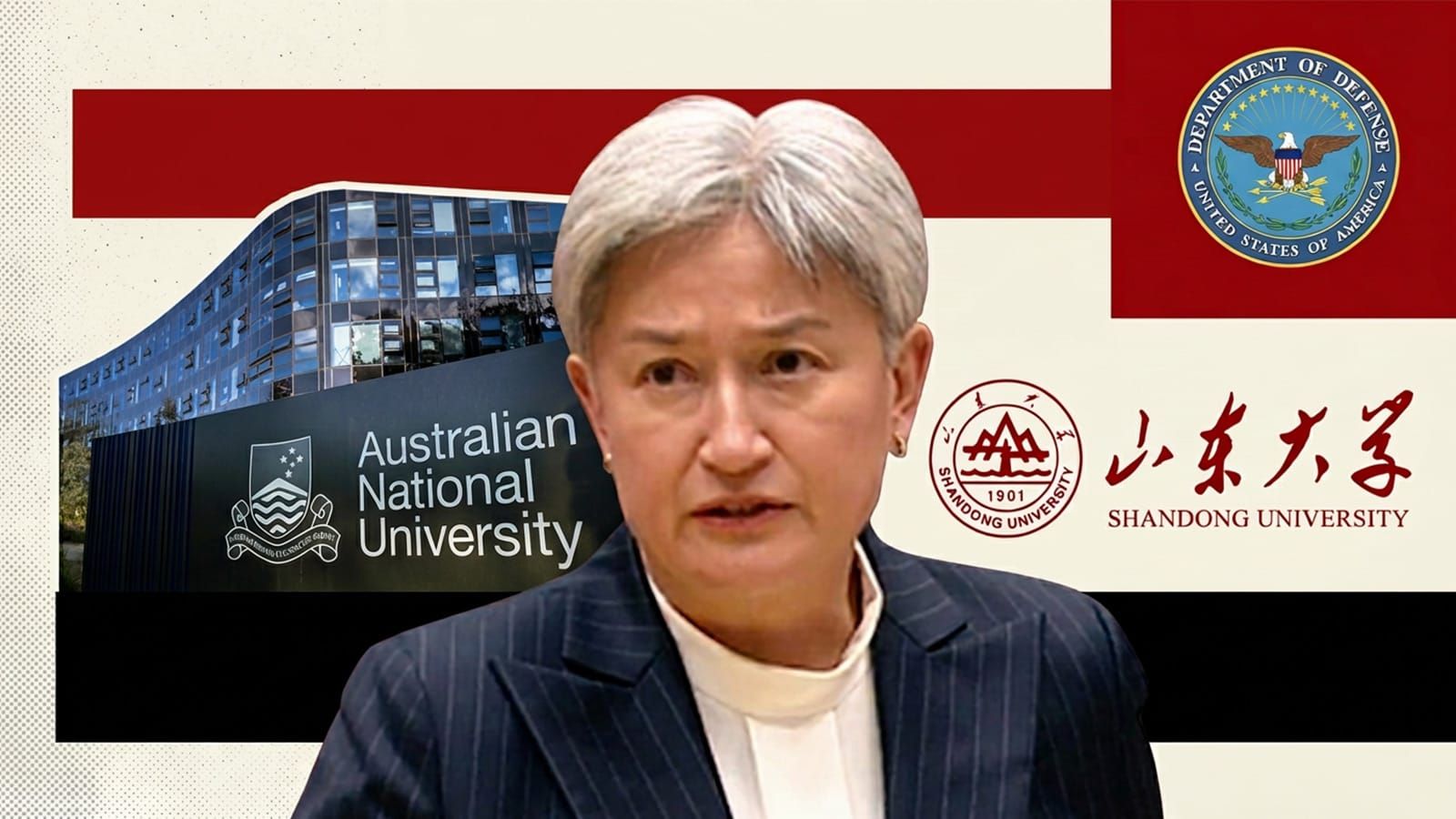
Foreign Minister Penny Wong has finally axed the Australian National University’s joint college with Shandong University in China. The decision comes despite public data from the Defence-funded Australian Strategic Policy Institute linking Shandong directly to the agency overseeing China’s nuclear weapons program.
While Wong held full statutory power to veto this partnership from the moment she took office, action was taken on 10 August; exactly two weeks after the US Pentagon placed Shandong University on a foreign entity blacklist.
The delay left Australia’s premier security training hub, home to the National Security College, the Defence Institute, and a joint lab with the Australian Signals Directorate, operating alongside an institution tied to foreign military research.
The geographic and institutional overlap made the situation indefensible. ANU does not just host general national security courses; it runs a dedicated joint laboratory with the Australian Signals Directorate (ASD), the nation’s premier cyber defense and signals intelligence agency.
Meanwhile, ASPI data shows Shandong University’s core military specializations in China are cryptography, code-breaking, and cyber operations. For years the agency that runs Australia's signals intelligence has shared a campus with a university whose listed research areas include cryptography and cyber.
Video: News24. Australia terminates university partnerships with China over national security concerns.
The 1,200 Student Pipeline ANU Will Not Account For
The cancelled agreement allowed Chinese students to spend three years studying at Shandong University before transferring to ANU’s main Canberra campus for their final two years. Citing national security risks, Foreign Minister Penny Wong declared the joint venture invalid and legally unenforceable, forcing ANU to dismantle the operation by 18 January 2027.
Built with capacity for 1,200 students, ANU has refused to state how many individuals passed through or remain enrolled under the arrangement, offering only that it will comply and transition affected students into standard courses. Demonstrating the broader scope of foreign interference risks, Wong also cancelled a University of Queensland project with the Chinese Academy of Sciences, ending a second joint research project in the same week.
The register records the agreement as terminated on 10 August and marks it invalid and unenforceable from that date, using powers in the Foreign Relations Act that let the Minister make declarations about arrangements already in operation.
Inside the Chinese Military Uni ANU Partnered With
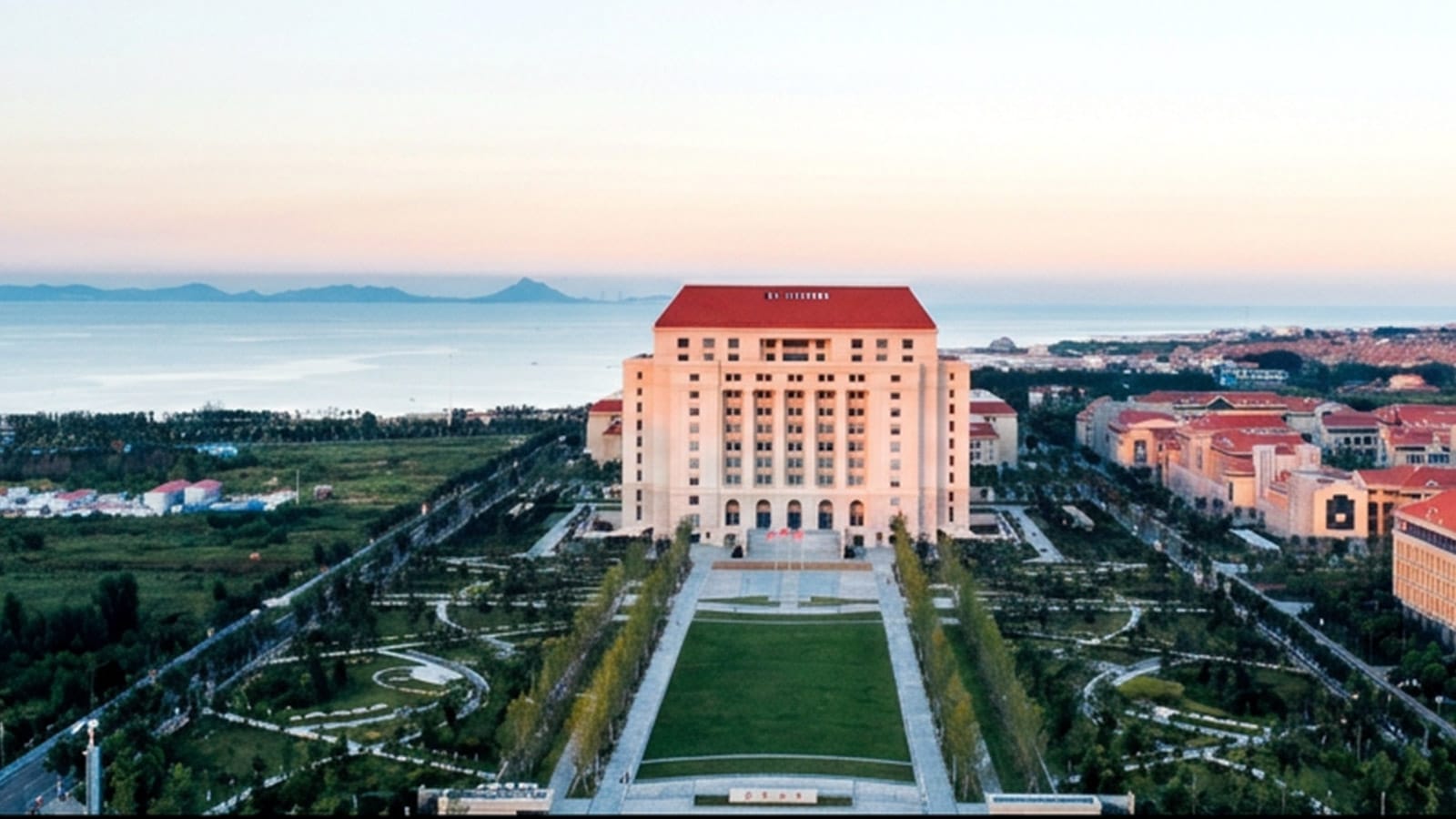
Shandong University is no civilian campus; it is a long standing defense asset for Beijing. Security tracking databases maintained by ASPI have exposed Shandong’s direct integration with the Chinese Academy of Engineering Physics, the primary agency driving China’s nuclear weapons research, development, and testing.
Walker-Munro says ASPI research found Shandong was granted secret level security clearance two decades ago to research and build classified weapons and technology, and that it runs laboratories in code breaking, information security, chemical biology and remote sensing, while ASPI's public database also lists unmanned aerial vehicles, which are drones, among its research areas. Brendan Walker-Munro, an associate professor at Southern Cross University who works on research security, warns that Australian academic collaboration with the institution risks feeding technical research into foreign military hardware.
When the US Pentagon formally added Shandong to its security blacklist of 130 entities in late July, it explicitly warned that foreign university partnerships significantly elevate the risk of state sponsored research theft. Yet despite these public intelligence warnings and weapons links, ANU was merely one node in a widespread national vulnerability, with 116 agreements between Australian universities and Shandong listed on the government register and no decision recorded against them.
Nine Years of Exposure and Four Years of Ministerial Silence
The paper trail began on 16 February 2017 when ANU first partnered with Shandong University, followed by subsequent agreements in March 2018 and December 2022. While early deals predate federal veto powers, the entire landscape shifted in 2021 when the Foreign Relations Scheme came into force, creating a public register and giving the Foreign Minister direct power to cancel risky arrangements.
Foreign Minister Penny Wong possessed full statutory authority to terminate the deal from the day she assumed office in May 2022. Even worse, the third agreement was signed on 31 December 2022, seven months into her term.
For more than 4 years, the Minister left the partnership untouched. Labor only moved to veto the arrangement after the US Pentagon added Shandong to its national blacklist, exposing how Australian authority was shelved until American intelligence forced Canberra to act.
| When | What happened | Could Canberra have stopped it? |
|---|---|---|
| 16 Feb 2017 | ANU signs its first agreement with Shandong University | No, the law did not exist |
| 30 Mar 2018 | Second agreement, establishing the joint college | No, the law did not exist |
| Nov 2019 | ASPI publishes its public database of Chinese universities and their military links | Warning now public |
| 2021 | The Foreign Relations scheme starts and the deal goes on the public register | Yes, from here on |
| 31 Dec 2022 | Third agreement signed, 7 months after Wong became Foreign Minister | Yes |
| Late Jul 2026 | The Pentagon blacklists Shandong University | Yes |
| 10 Aug 2026 | Wong terminates the agreement | She does |
Dates from the Foreign Arrangements public register and ASPI, with the orange rows marking the years in which the Foreign Minister held the power to act.
Penny Wong’s Blatant Double Standard on Foreign Research
The Foreign Minister’s enforcement push contains a glaring contradiction. In the same week she cancelled a University of Queensland project because of its ties to the Chinese Academy of Sciences, she left another agreement involving the exact same Chinese body completely untouched.
The Research Collaboration Agreement Project on Light Energy brings together Shandong University, the Chinese Academy of Sciences, and Australia's own Defence Science and Technology Group. CSIRO, the Reserve Bank of Australia, and four Australian universities are also locked into the agreement.
While the project studies basic science regarding how light behaves, it connects Australian defence scientists to an institution blacklisted by the US Pentagon. The Minister has recorded no decision against it, and it sits on the public register today with nothing entered against it either way.
| Australian parties | Foreign parties | Action taken elsewhere |
|---|---|---|
| Defence Science and Technology Group | Shandong University, China | ANU college terminated, 10 Aug 2026 |
| Reserve Bank of Australia | Chongqing Institute of Green and Intelligent Technology, Chinese Academy of Sciences | Chinese Academy of Sciences project at UQ cancelled, Aug 2026 |
| CSIRO | Institute of Chemistry, Chinese Academy of Sciences | Chinese Academy of Sciences project at UQ cancelled, Aug 2026 |
| University of Sydney | Huazhong University of Science and Technology, China | None |
| UNSW | University of Ulm, Germany | None |
| University of Melbourne | University of Bayreuth, Germany | None |
| RMIT | University of California System, United States | None |
Research Collaboration Agreement Project on Light Energy, commenced 1 January 2017, taken from the Foreign Arrangements public register, which records no decision of any kind against this agreement itself.
The Bill That Rewrites the Rules
Pending legislation will dramatically expand ministerial authority, allowing Foreign Minister Penny Wong to kill any university deal whenever she deems it contrary to the national interest, shifting the legal threshold beyond traditional diplomatic damage.
The bill also integrates ASIO directly into the process, allowing security agencies to brief the Minister on university ties behind closed doors. Universities will receive no advance notice of these secret assessments and will have no access to a tribunal to appeal her final decisions.
At the same time, the changes will trigger a massive drop in public accountability by slashing reporting requirements. Partnerships with Five Eyes intelligence partners, including the United States, Britain, Canada, and New Zealand, will be completely exempt from public registration.
The practical outcome of these amendments is the creation of a permanent shadow register. By exempting Five Eyes partners from public reporting requirements, the government will remove from public view a category that officials told a parliamentary committee makes up roughly 51% of the notifications getting the closest look. Combined with non-appealable ASIO veto powers operating behind closed doors, the new law strips away public accountability. It leaves Australians unable to see which foreign arrangements have been examined and which have never been looked at.