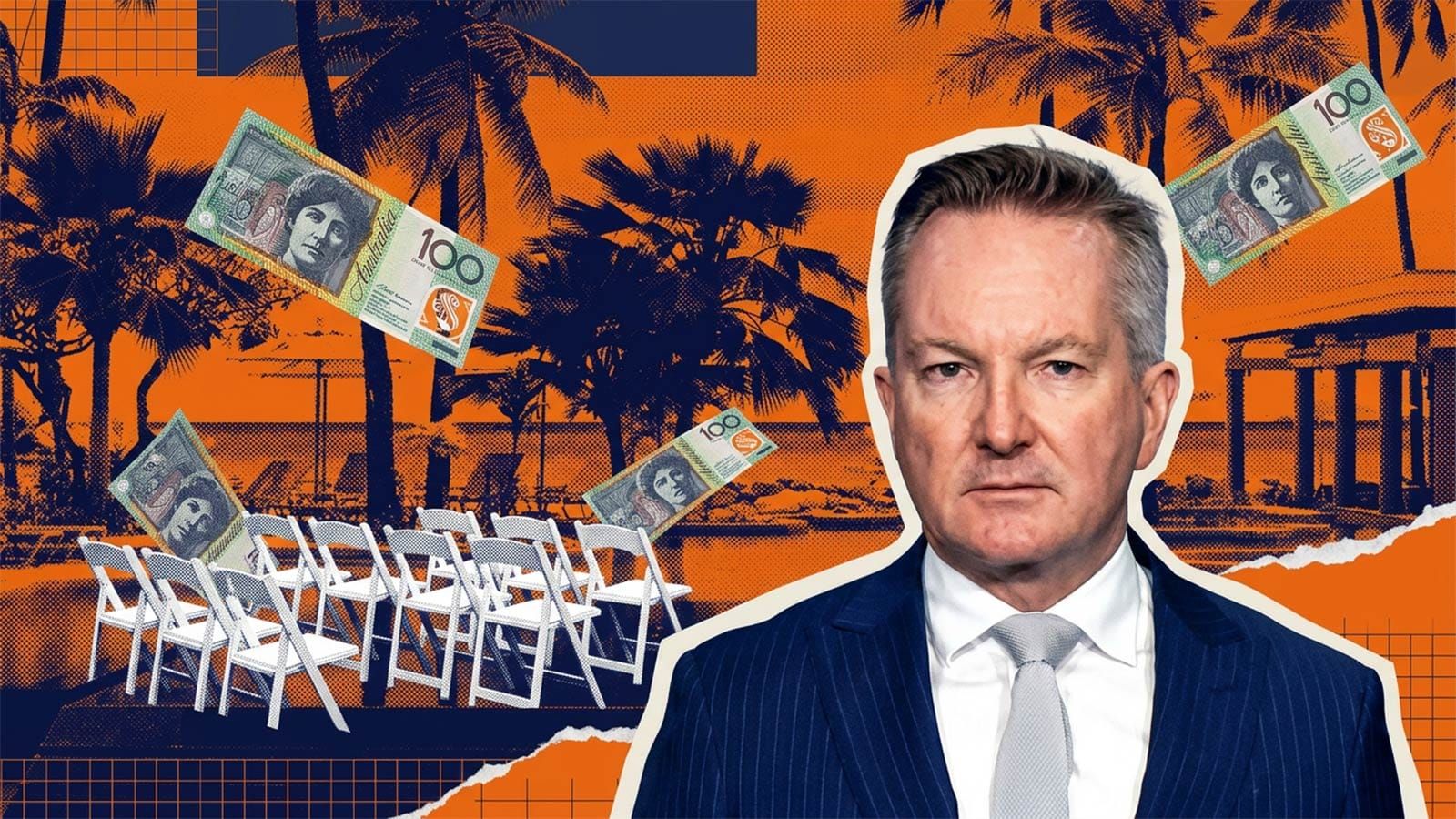
World leaders are set to snub an Australian-organised United Nations climate summit in Fiji, despite months of planning by Climate Change Minister Chris Bowen and more than $150m in taxpayer money, The Australian reports. It is the most visible example of Albanese government spending that the opposition says keeps climbing while families are hit with record power bills.
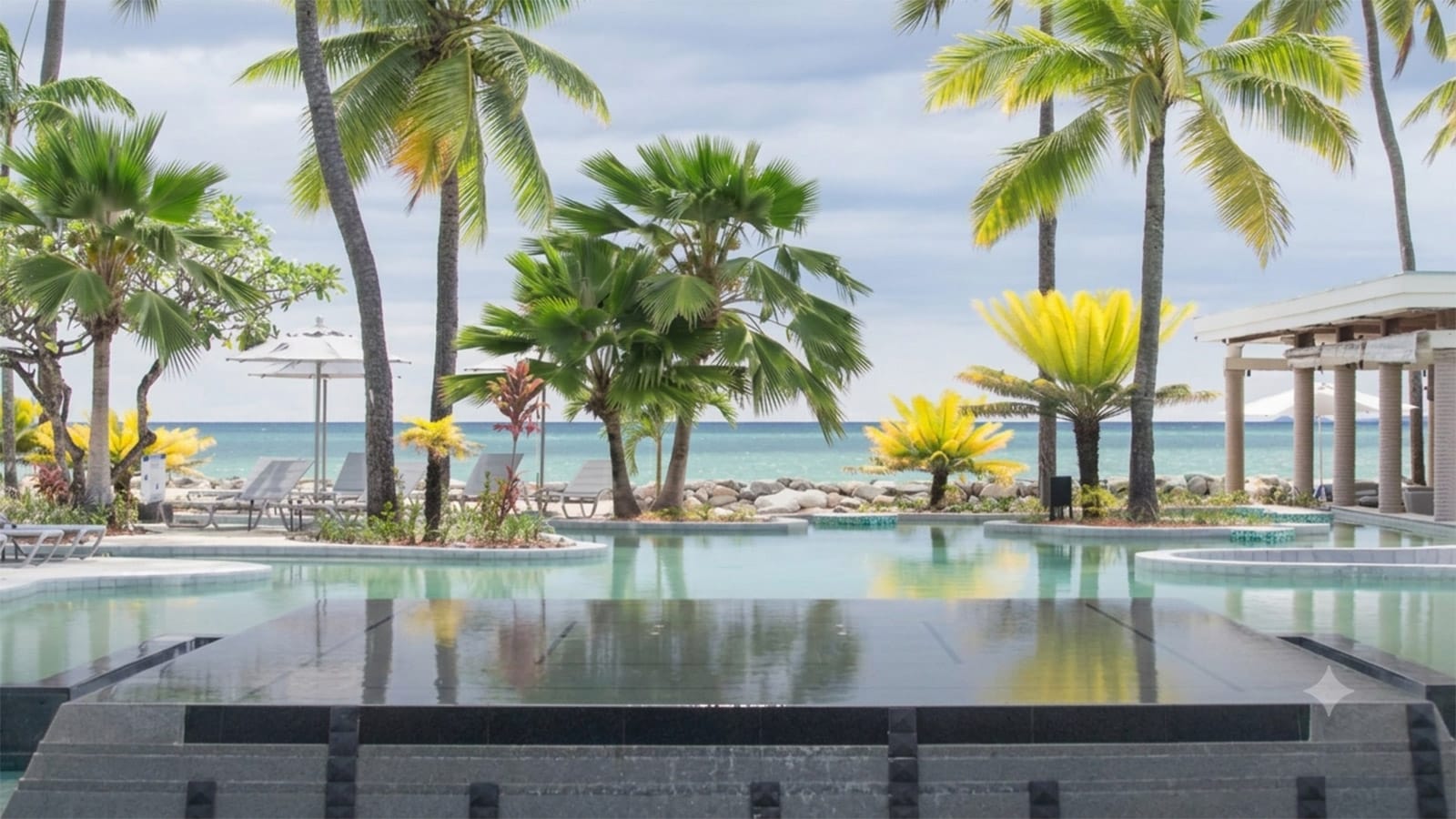
The Australian has revealed Mr Bowen's office spent $4.2m booking foreign officials into five-star Fiji resorts, on top of almost $500,000 in travel in the first four months of the year, and signed a $415,644 contract in early June with a firm, Iconic Holdings, that specialises in "behaviour change campaigns".
Opposition energy spokesman Dan Tehan has branded the summit a "farce", calling on Anthony Albanese to stand Mr Bowen aside over a conference "that no one wants to come to".
A pre-COP is the warm-up meeting held before the main UN COP climate conference. Australia is hosting this one in Fiji on October 5 to 8, with a side trip to Tuvalu, after ceding the full COP31 summit in November to Turkey. Under that compromise deal Mr Bowen was named COP31 "president of negotiations". Prime Minister Anthony Albanese, who skipped the annual UN climate conference every year of his prime ministership, is now expected to attend both events.
Why nobody is coming
The problem is that almost no one wants to come. The Australian reports the government cannot lock in a single head of government or head of state from outside the Pacific. Diplomatic sources point to long travel times, crowded leaders' schedules, and the awkward reality that the main COP31 summit runs in Turkey just five weeks later.
However, the failure most squarely at Australia's own door is the invitation strategy itself. Canberra pitched its invitations at prime ministers and presidents rather than foreign and climate ministers, causing surprise in international capitals. "Foreign ministers are not being considered," one source said.
The effect is that ministers who might have filled the room were never asked, while the heads of government who were invited are not coming. Chris Bowen's department has not explained who made that call or why. Mr Bowen himself conceded last month that modern COPs deliver no "massive breakthroughs" and are "more iterative", which makes a warm-up event even harder to sell to a world leader's diary.
Mr Bowen would not confirm how many leaders would attend, stating, "Australia does not announce the travel plans of other nations." He said the government still hoped the event would draw "a range of actors and leaders, across government, industry and civil society", defending his role as "middle-power diplomacy at its absolute best". He added that a "quiet majority" of Australians wanted climate action and were buying electric vehicles and home batteries, while reiterating he would not seek to curtail Australia's coal or gas exports.
What the Fiji summit is costing
Budget estimates put the bill for Mr Bowen's COP role in 2026 at more than $150m, a figure the opposition rounds to $152m. To run it, Mr Bowen has set up an "Office of the Presidency" inside his department with 100 full-time staff. That office is behind the five-star resort bookings, the travel bill and the "behaviour change" contract detailed above.
Opposition Leader Angus Taylor said taxpayers were funding an "empty room" in Fiji while power bills were up a record 40% and a record number of households were on hardship plans.
"It's time to scrap net zero and get back to having a plan for cheap power and energy abundance."
Addressing the spend in a News24 interview Mr Tehan revealed Mr Bowen's department sent its own bureaucrats to Fiji to scope out the resorts, despite Australia already having an embassy there.
"He sent bureaucrats from his own department over to scope this when we have an embassy in Fiji. How is this value for money?"
Mr Bowen's department defended the $4.2m booking, stating the three resorts are "the only suitable locations that can meet the scale of this event" and that the money effectively locks in rooms as a deposit to be recovered from attending countries. However, Mr Tehan argued that claim fell apart at Senate estimates:
"They were asked in Senate estimates, well, who will pay to help with the cost recovery? They said, well, Turkey will. They couldn't name anyone else."
Mr Tehan questioned why taxpayers were "sending and paying for activists to go to these meetings," pointing to the 244,000 Australians facing energy hardship and the government's unfulfilled promise of a $275 power bill cut.
The backdrop: power bills still climbing
The spending fight lands as electricity prices keep rising. Australian Bureau of Statistics figures for the June quarter showed underlying inflation stuck at 3.6%, above the Reserve Bank’s 2 to 3% target band, with energy among the costs still squeezing households. Dan Tehan, speaking to News24 host Chris Kenny, said Labor’s promised $275 cut to power bills was “finished”.
"All we hear from Chris Bowen is that they're going down and it just doesn't add up. What we see today in the inflation figures, quite clearly, is that they continue to go up."
Mr Tehan told News24 that more than 240,000 Australians were dealing with energy hardship, that businesses had been “forced to shut down, close, or lay workers off because of higher electricity prices”, and that households faced a “double whammy” of higher bills and the threat of higher interest rates if electricity inflation persisted. He also renewed the Coalition’s push for nuclear power, saying “the ban goes” under a Coalition government.
Treasurer Jim Chalmers said the numbers were “encouraging” and had come in lower than anticipated, while conceding “people are still under pressure” and inflation was “still higher than we would like it to be”.
The spending under fire
The Fiji summit is just one line in a broader list of expenditure facing scrutiny:
| Spending item | Cost (taxpayer) | Detail |
|---|---|---|
| Chris Bowen’s COP31 role, 2026 | $152m | Whole-of-year COP presidency, run by a 100-staff “Office of the Presidency”. Within it: $4.2m on Fiji five-star resorts, ~$500k travel (first four months) and a $415,644 “creative and digital” contract to Iconic Holdings. Opposition figure; government says “more than $150m”. |
| “Every Little Bit Helps” fuel ad campaign | $20m | Albanese government blitz urging drivers to walk and remove roof racks. Widely mocked. |
| “Future Made in Australia” advertising | $24m | Ads promoting the government’s signature policy. Part of $204.1m in campaign advertising in 2024-25. |
| Community Language Schools program | $25m | Federal, more than 15 Asian languages for Years 7 to 12, with grants also flowing to community language schools teaching primary and high school students. Part of $40.6m committed since 2023. |
| Multiculturalism as standing policy | $435m+ a year | The standing Commonwealth budget line for multiculturalism: grants, ethnic media, language schools and a taxpayer-funded broadcaster, as One News has reported. |
| Net zero programs | $9bn+ a year | Annual climate and net zero program spending, up from $1.7bn a year in the last Coalition budget. Labor has never published a total cost of net zero. |
| NDIS fraud and misuse, unrecovered | Up to $6bn a year | The Australian Criminal Intelligence Commission's estimate of annual NDIS misuse, including by organised crime. The Fraud Fusion Taskforce has stopped just over $60m and secured 24 convictions since 2022. |
| Victorian multicultural grants | $4.9m | Allan government grants to nearly 200 groups across 46 ethnic and 15 faith communities. |
| Welcome to Country ceremonies | ~$450,000 | Across federal departments over three years, per Senate estimates reporting. |
| TOTAL | ~$15.7bn | Every item above combined. |
The real money: windmills that are not turning
The Fiji figures are small compared to the broader energy transition. The government's flagship Capacity Investment Scheme underwrites around $67bn of new wind and solar, with taxpayers guaranteeing project returns. Additionally, Rewiring the Nation commits $20bn of public money to grid upgrades.
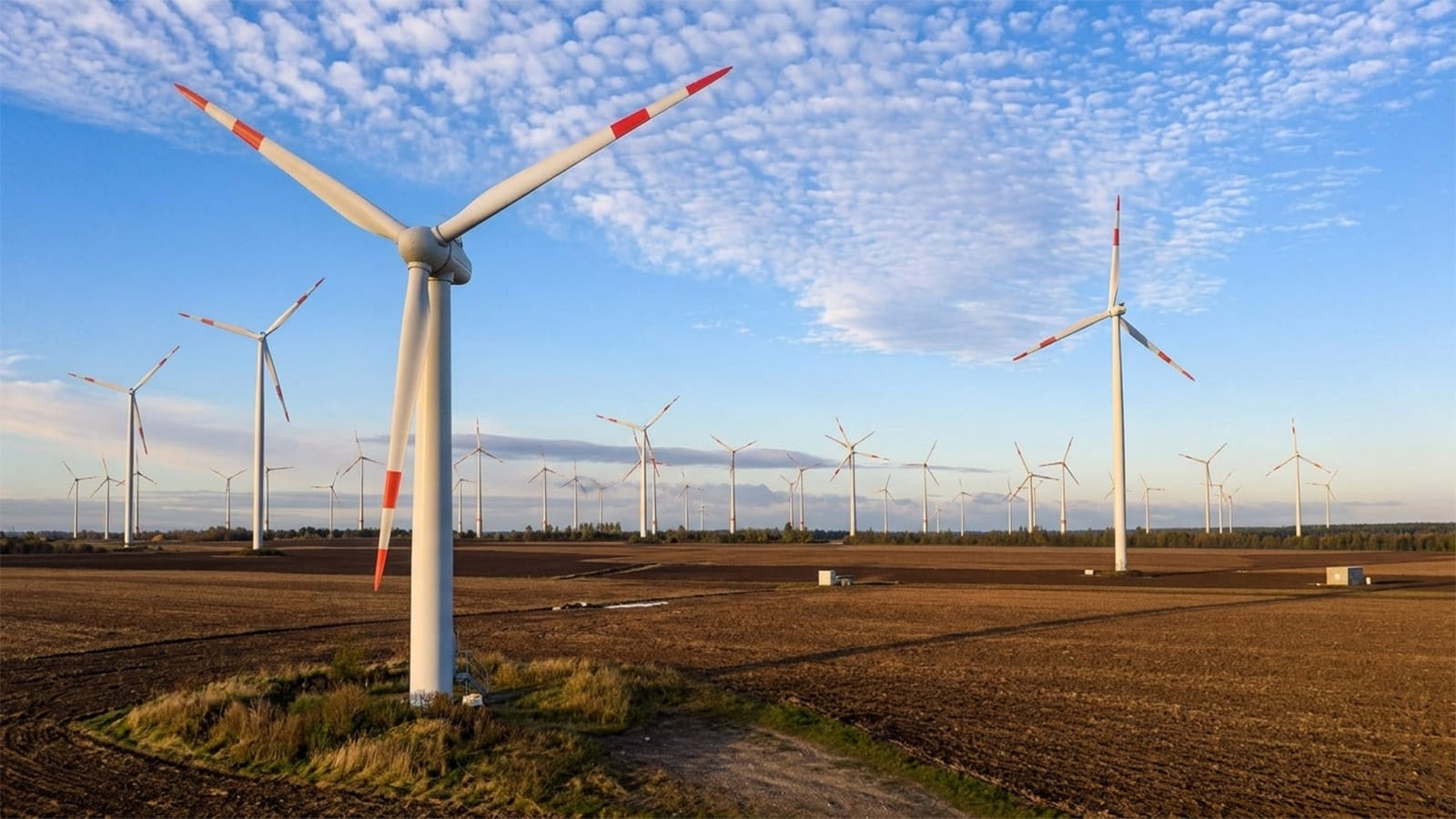
The trouble is delivery. Analysis by consultancy Rystad Energy, reported by Queensland Country Life, found only 788 megawatts of the 12.9 gigawatts of wind capacity backed by the scheme has reached financial close, the point where a project locks in the funding to start building. Not one of the 15 flagship wind farms in the scheme has begun construction, and new large-scale wind and solar commitments fell 46% in 2025.
Put plainly, taxpayers are underwriting tens of billions for renewable projects that have largely not begun construction.
A net zero bill Labor has never published
While public funding continues to move, the federal government has not published a total cost breakdown for net zero. Analysis by the Institute of Public Affairs found annual federal spending on climate and net zero programs has jumped from $1.7bn a year in the final Coalition budget of March 2022 to more than $9bn a year now—a more than fivefold increase totaling roughly $25bn spent under the current administration.
The 2026-27 Budget added $18.2bn in new net zero spending over the medium term, even as the government clawed back $1.3bn in uncommitted funds from stalled initiatives like Hydrogen Headstart, Solar Sunshot, and the Battery Breakthrough Initiative. These figures exclude the off-budget $67bn Capacity Investment Scheme and the $20bn Rewiring the Nation fund.
The NDIS billions nobody gets back
Then there is the waste nobody even disputes. The Australian Criminal Intelligence Commission has estimated that up to $6bn a year in National Disability Insurance Scheme payments may be misused, including by organised crime syndicates, out of a scheme costing $52bn this financial year. Against that, the government's Fraud Fusion Taskforce has stopped just over $60m in estimated fraud and secured 24 criminal convictions since it was set up in November 2022, with 660 investigations still active. On the ACIC's own numbers, that is roughly one dollar stopped for every hundred potentially going out the door, year after year.
Ads, grants and older waste
The smaller items still add up. The Albanese government spent $20m on the “Every Little Bit Helps” fuel campaign, ads urging drivers to walk or remove their roof racks that were widely mocked. It ran about $24m promoting its “Future Made in Australia” policy, part of $204.1m in taxpayer-funded campaign advertising in 2024-25.
On community programs, the federal government committed $25m to Community Language Schools teaching Asian languages, while in Victoria the Allan government handed $4.9m in grants to nearly 200 multicultural groups, as One News reported at the time. All of it sits on top of the standing multiculturalism line in the Commonwealth budget, worth more than $435m a year across grants, ethnic media, language schools and a taxpayer-funded broadcaster, as One News set out in its explainer on multiculturalism as policy. Older examples the opposition still points to include the roughly $450m cost of the failed 2023 Voice referendum and a $620,000, two-year contract for a personal speechwriter in then-minister Bill Shorten’s department, revealed at Senate estimates.
What the government says
The government rejects the "waste" label and calls the spending an investment. It says the fuel ads gave drivers practical information, the language funding builds skills, and the renewable underwriting will lower power bills over time. Treasury points to a record budget position and argues rising departmental costs reflect demand in areas such as the National Disability Insurance Scheme, not administrative waste.
One point matters for the record. The COP role, the fuel ads, the language program, the renewable schemes and the Welcome to Country spending are all federal, while the $4.9m multicultural grants are a Victorian program. All are Labor, but federal and state budgets are separate.
Whether voters see practical investment or waste, the numbers keep climbing, and for now the world is not rushing to Chris Bowen’s Fiji summit.