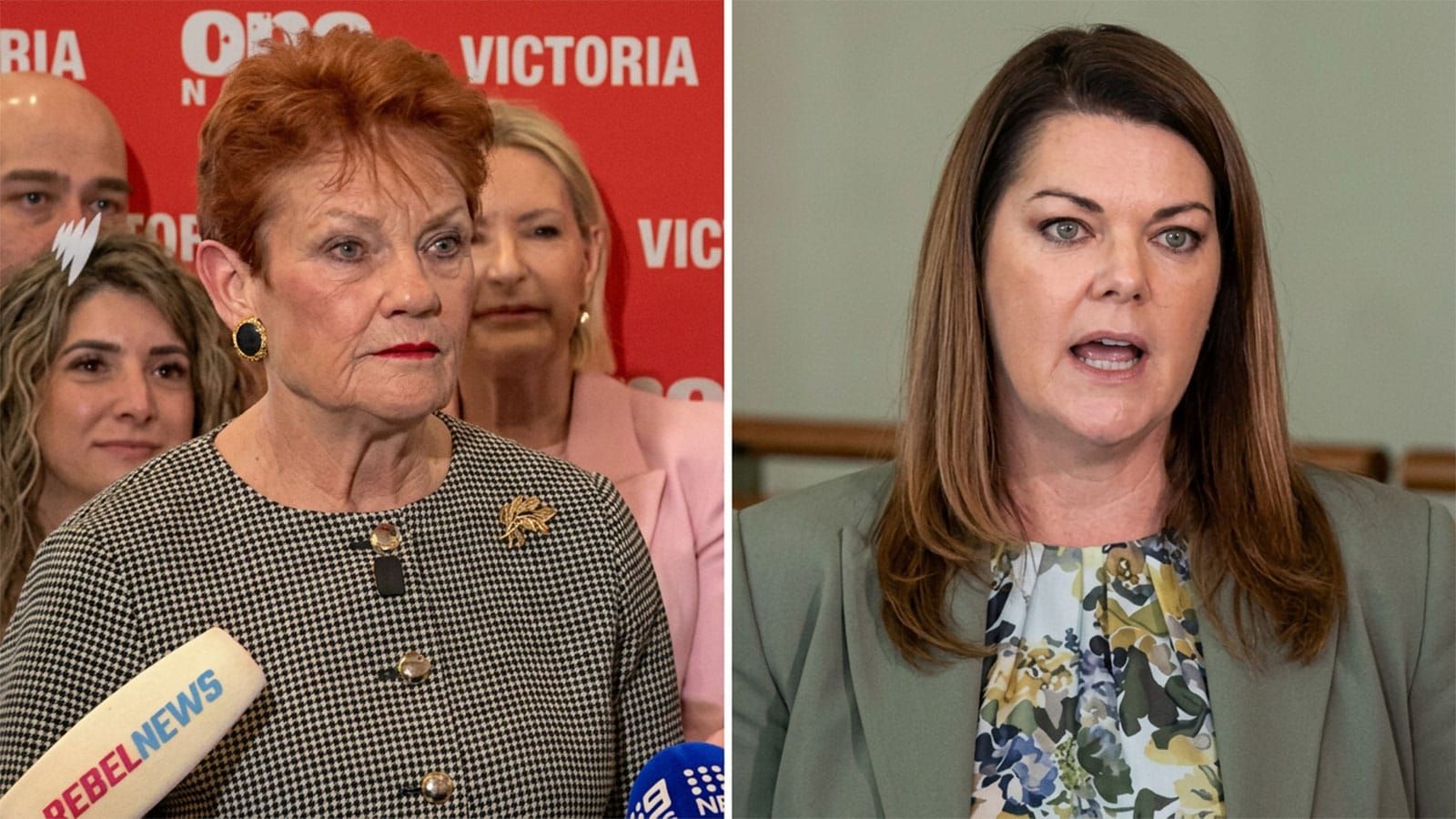
Greens senator Sarah Hanson-Young has branded One Nation leader Pauline Hanson a "political coward" for barring the ABC and The Guardian from her Victorian campaign launch in Melbourne on Monday, in remarks she put on the agenda herself at a press conference about something else.
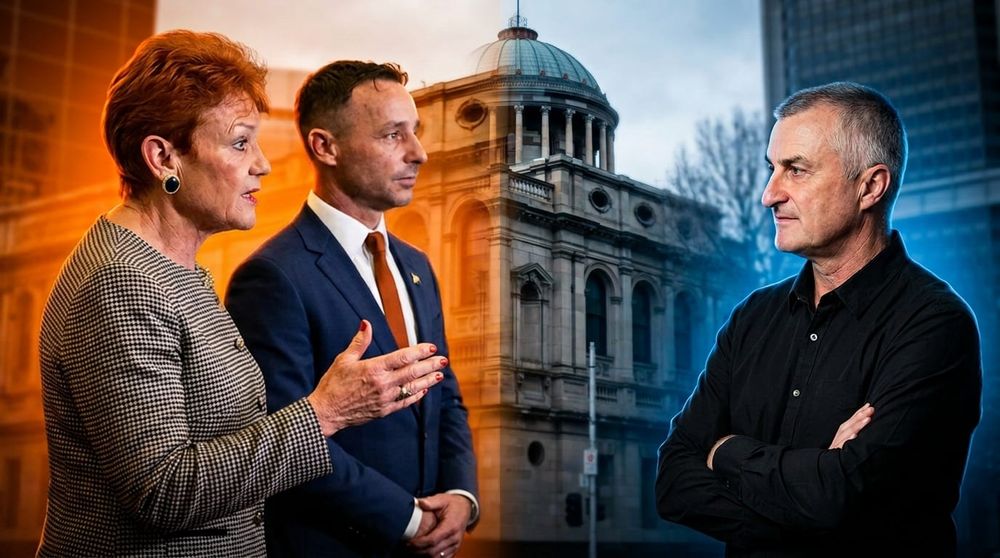
The footage doing the rounds, cut by SBS, runs the two senators one above the other. Hanson on the top half explaining why she shut the outlets out, Hanson-Young on the bottom half calling her a coward for it.
What Hanson is refusing to hand over has a name most Australians would recognise on sight, because Married At First Sight made it famous. Nobody needs to invent a quote. You take what a person genuinely said and lift it off the question that produced it. Set it beside something said at another moment, and the audience arrives somewhere the speaker never went. Every individual word survives a fact check, but the meaning and context behind it doesn't match the full episode.
On a reality show that gets you a contestant complaining about a villain edit, and MAFS contestants have been doing exactly that for years. However badly it goes for them, they signed a contract and knew what they were joining. Hanson's candidates signed nothing. Neither did the Victorians who vote on 28 November, and who only ever see the version that reaches them.
The part that should trouble people is that there's nobody to take it to. The Australian Press Council, which covers the newspapers, can't fine anyone or order a cent in compensation. Its strongest sanction is making the paper print the adjudication, and membership is voluntary. The ABC isn't licensed the way a commercial broadcaster is. It's created by its own Act, so when ACMA finds it has breached the code, the regulator can only recommend the ABC do something about it. If the ABC sits on that for 30 days, ACMA can write to the Minister. That's as far as the enforcement goes.
Which leaves one lever. If a newsroom can shape what somebody said into something they didn't say, and no regulator can do more than post a letter about it, one move is left. The person on the end of it stops supplying the raw material. That is all a ban is, and the public lost nothing by it, because Rebel News streamed the full 37 minutes and it's still up, uncut. What Hanson withheld was the footage two newsrooms would have cut down afterwards.
Hanson-Young's objection is that everybody should get to ask questions. It's worth knowing what she did herself when the answers went against her.
Video: SBS. Pauline Hanson on why she barred the ABC and The Guardian, with Sarah Hanson-Young's response below.
Hanson-Young wasn't answering a question about One Nation when she said it. She introduced the subject, opening with the words "what I do want to say about One Nation", before setting out what Hanson had done that morning.
"What I do want to say about One Nation is I understand that today Pauline Hanson has stood up in Victoria to announce her candidates and has blocked certain media from attending her press conference."
Then came the charge, and it arrived in two parts. The first was about scrutiny.
"I mean, this is a person who is running scared of scrutiny, a politician who thinks that she should have the right to say whatever she wants, but no one else should have the right to ask questions."
The second was the line that got picked up everywhere.
"I mean, Pauline Hanson is showing herself to be a political coward by hiding from certain media because she doesn't like questions from journalists. And this is a very, very bad start to any political campaign."
That's the whole of it. Four sentences, nothing offered in support beyond the fact of the ban, and no mention of the full story where the press conference in question ran 37 minutes with hostile questions taken from everyone still in the room.
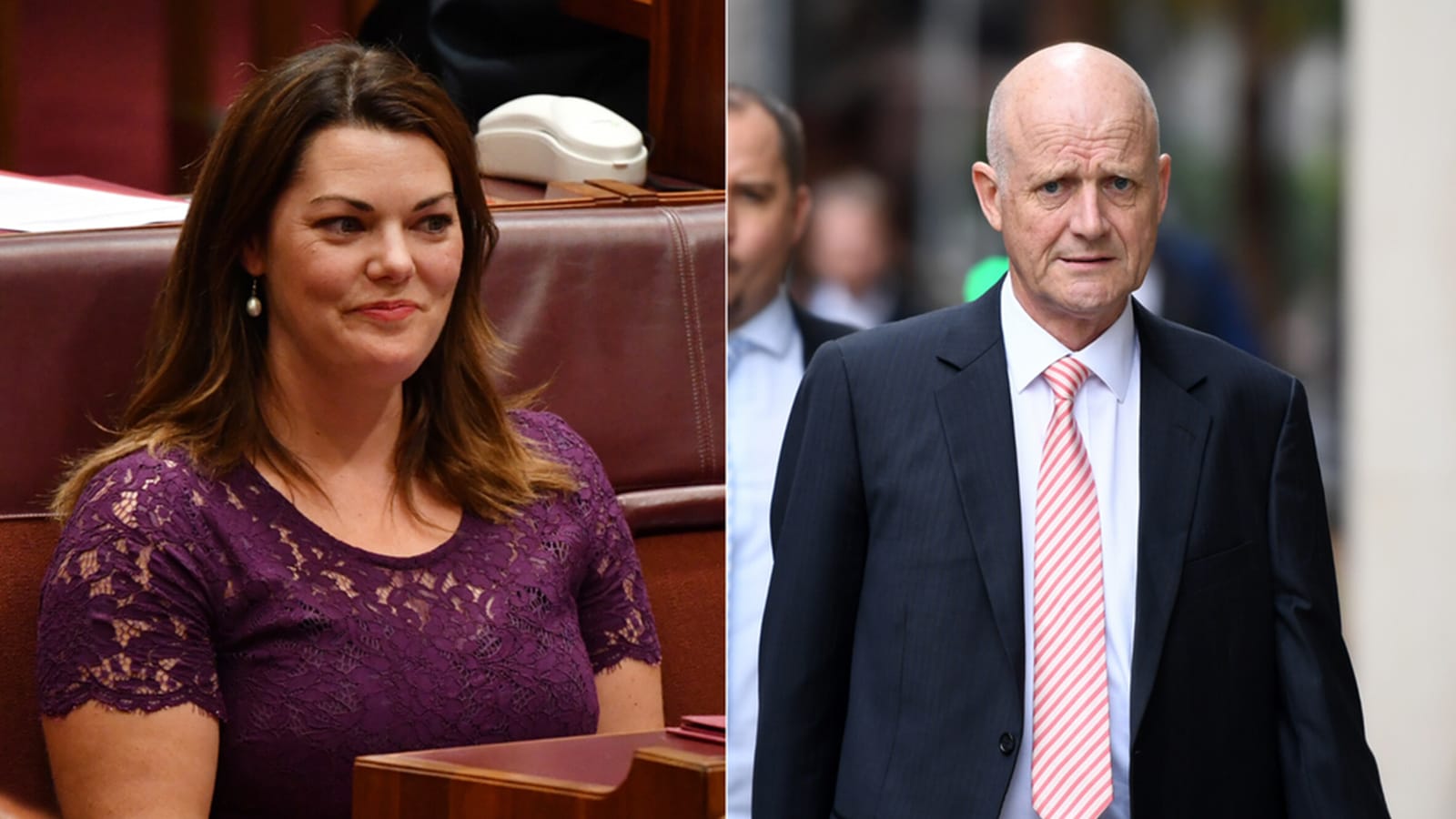
Sarah Hanson-Young took David Leyonhjelm to the Federal Court over words, and won $120,000
Here's the part the split screen leaves out. In 2018 Hanson-Young sued the then Liberal Democrats senator David Leyonhjelm over remarks he made about her. What he said on the floor of the Senate was covered by parliamentary privilege and she couldn't touch it. What she could sue over, and did, was what he said afterwards to the media: interviews with Melbourne radio station 3AW and the ABC's 7.30 program, and a statement he posted online, all between 28 June and 2 July that year.
Justice Richard White of the Federal Court found for her. Leyonhjelm's defences of justification and qualified privilege both failed, and in November 2019 she was awarded $120,000 in damages. He appealed and lost, the Full Court dismissing it on 3 March 2021. He went to the High Court, which refused him special leave on 17 June 2021.
There's nothing improper in any of that. It's the ordinary recourse of anyone who believes a published claim about them was false and did damage, and three courts agreed with her.
It's that the standard she won under isn't the one she's extending to Hanson. Hanson-Young's case was that words published about her were wrong, and that being wrong carried a cost. Hanson's complaint on Monday was that words published about her were wrong. What separates the reception of those two positions is who was making the complaint.
What Pauline Hanson said on the top half of the same screen
The clip carries Hanson's statement as well, given to a journalist who asked whether every outlet should have access to a press conference held by a party saying it means to form government at the 28 November state election.
"That democracy doesn't happen on the ABC at all, and I'm sick of it, it's not fair and just in their reporting. So if you want to criticise and have a go at me, not putting the truth across, you're not giving me the truth of democracy either, and so therefore, no, I'm not going to have them."
She said she'd done it before, telling the room she'd denied the ABC entry to her events for eight months in 1996. She'd also flagged this one in June, after her National Press Club address, when she said both outlets would be barred from her future events. Two months later she did it.
"I'm not putting up with the spin, gotcha moments, wanting to have a go at me, or treat us totally different to what you do to the other major political parties. Enough is enough. You give me a fair go, I'll give you a fair go back. The ABC never does."
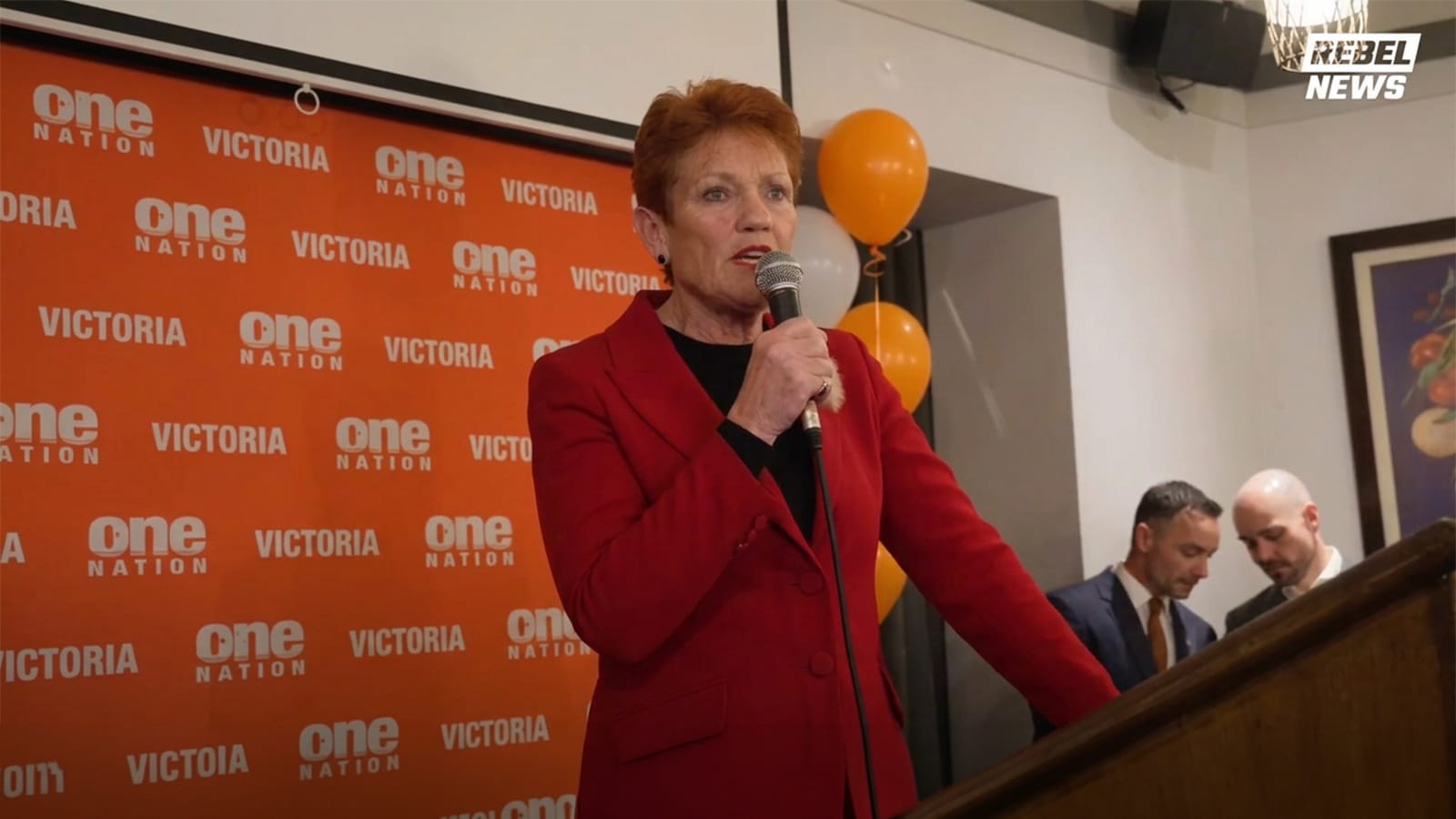
Warren Pickering flagged legal action over fabrication, which is what Sarah Hanson-Young actually did
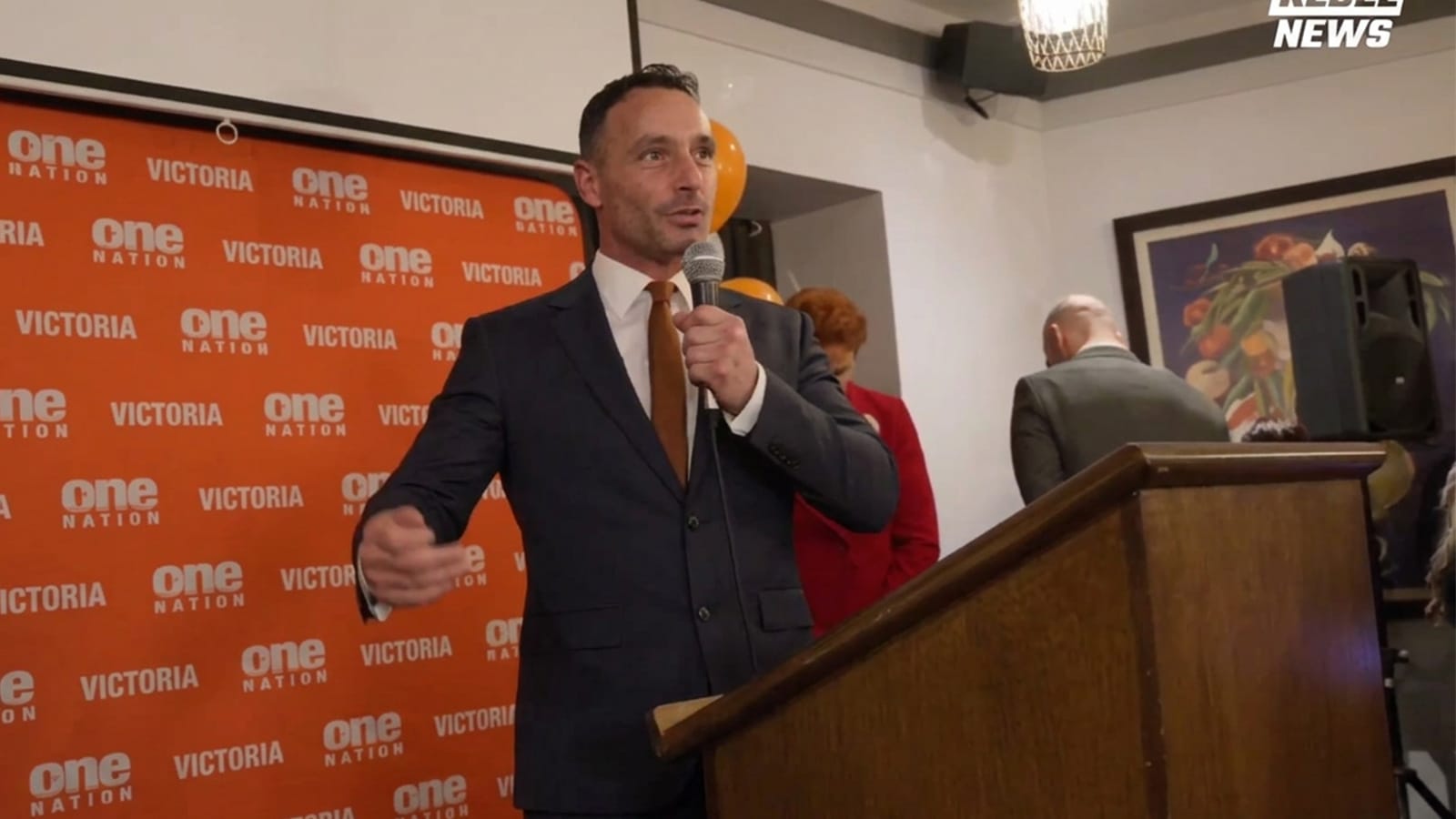
At the same launch, One Nation's Victorian leader Warren Pickering set the boundary out loud, and it was narrower than the coverage suggested.
"We expect and invite a healthy amount of scrutiny of our candidates and our policy positions. However, any blatant character assassination attempts based on fabrications of our candidates will be met with swift legal action."
Scrutiny of the candidates and the policies is expressly invited. Fabrication about them draws a solicitor. That's a defamation action, and it's the identical remedy Hanson-Young used against Leyonhjelm and won on.
Most of the eight candidates announced on Monday are private citizens. They were selected from about 1,200 expressions of interest and none of them has held public office. Telling a newsroom that inventing things about them will end up in court is the standard every publisher in Australia already works under, including this one.
Amanda Rishworth told Pauline Hanson to turn up, Anthony Albanese managed "misguided"
Hanson-Young wasn't alone, though she was the loudest. Employment and Workplace Relations Minister Amanda Rishworth was asked about it on Tuesday and said Hanson should front up.
"I'm not sure who was left at her press conference, but, quite frankly, you need to be accountable. You need to turn up. Sometimes the questions are uncomfortable."
Anthony Albanese called the exclusion "misguided". The Guardian said holding public figures to account is "the role of a free press and an essential part of the democratic process", and that its journalists "should be able to ask questions in the public interest and not be deterred from doing their job". The Age called the ban "unorthodox", while the ABC didn't comment.
Writing in The Conversation on Tuesday, University of Melbourne journalism academic Denis Muller argued the response had been far too soft, and noted that in the three months since Hanson first flagged the bans there had been nothing from the Opposition Leader, the Australian Press Council or the heads of the major media companies.
One News has three examples on file where the tape didn't match what was printed
The reason Hanson's complaint about coverage isn't abstract is that the gap between the recording and the write up has been documented, repeatedly, in the past two months alone.
- In July she was accused of victim blaming over a 4BC interview on domestic violence, until One News listened to the full audio and found she'd called the violence "wrong" and "absolutely wrong" in answers no outlet printed.
- Seven's Spotlight promoted an immigration story and aired something else.
- Coverage of her Senate colleague Malcolm Roberts cut four sentences that undercut the story being told.
The row that produced the ban follows the same shape. The Sydney Morning Herald and The Guardian both reported Hanson's podcast comments about 1973 as her lamenting the end of the White Australia policy. Her position, which she'd already put on the record in July when The West Australian's Christopher Dore put it to her at a sold out Perth breakfast, is that she's talking about how governments handled immigration after the policy ended, not about the policy itself. "No, it's not. It's got nothing to do with that," she said at the time. The room booed him.
There is no regulator coming, which is why Pauline Hanson shut the door instead
The charge against Hanson is that she restricted what the public gets to see, but the 37 minutes say otherwise. Rebel News carried the whole conference from start to finish, hostile questions included, and it's still online, so every write up from that afternoon can be checked against what was actually said.
Video: Rebel News. Behind the scenes, Pauline Hanson arrives in Melbourne to announce One Nation's Victorian candidates.
What she restricted was the supply, and she's entitled to, because nobody has a right to a chair at an event they didn't organise and didn't pay for. She gave both outlets two months' notice in June that it was coming.
The alternative she's being urged towards doesn't exist. There is no regulator with the power to make any of this right. The Press Council can't impose a penalty. ACMA can send the ABC a recommendation and then send the Minister a report. Defamation is the one remedy with real teeth, and the cost of running one puts it beyond most of the people it might protect.
So the choice on Monday came down to the ban or nothing at all, because a working system of accountability was never on the table. She took the ban.