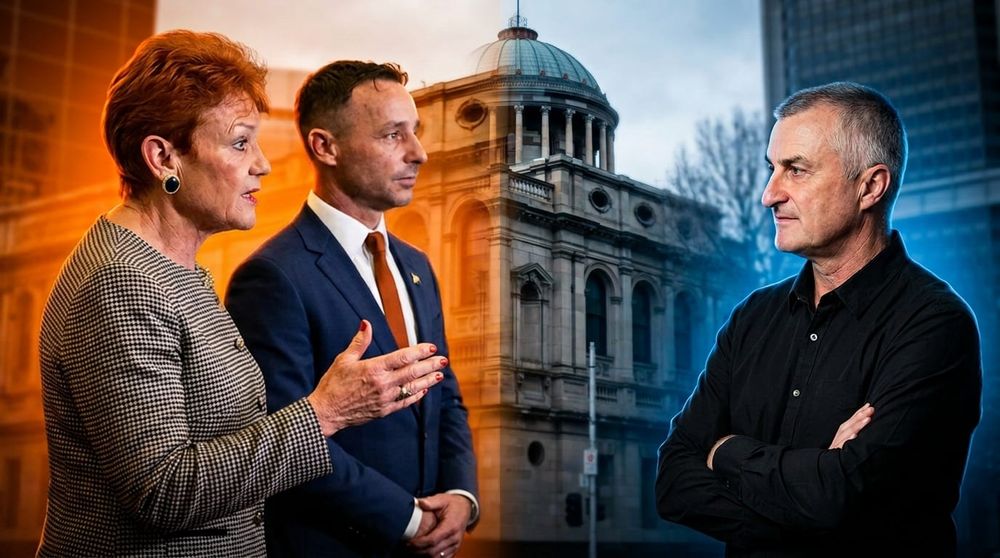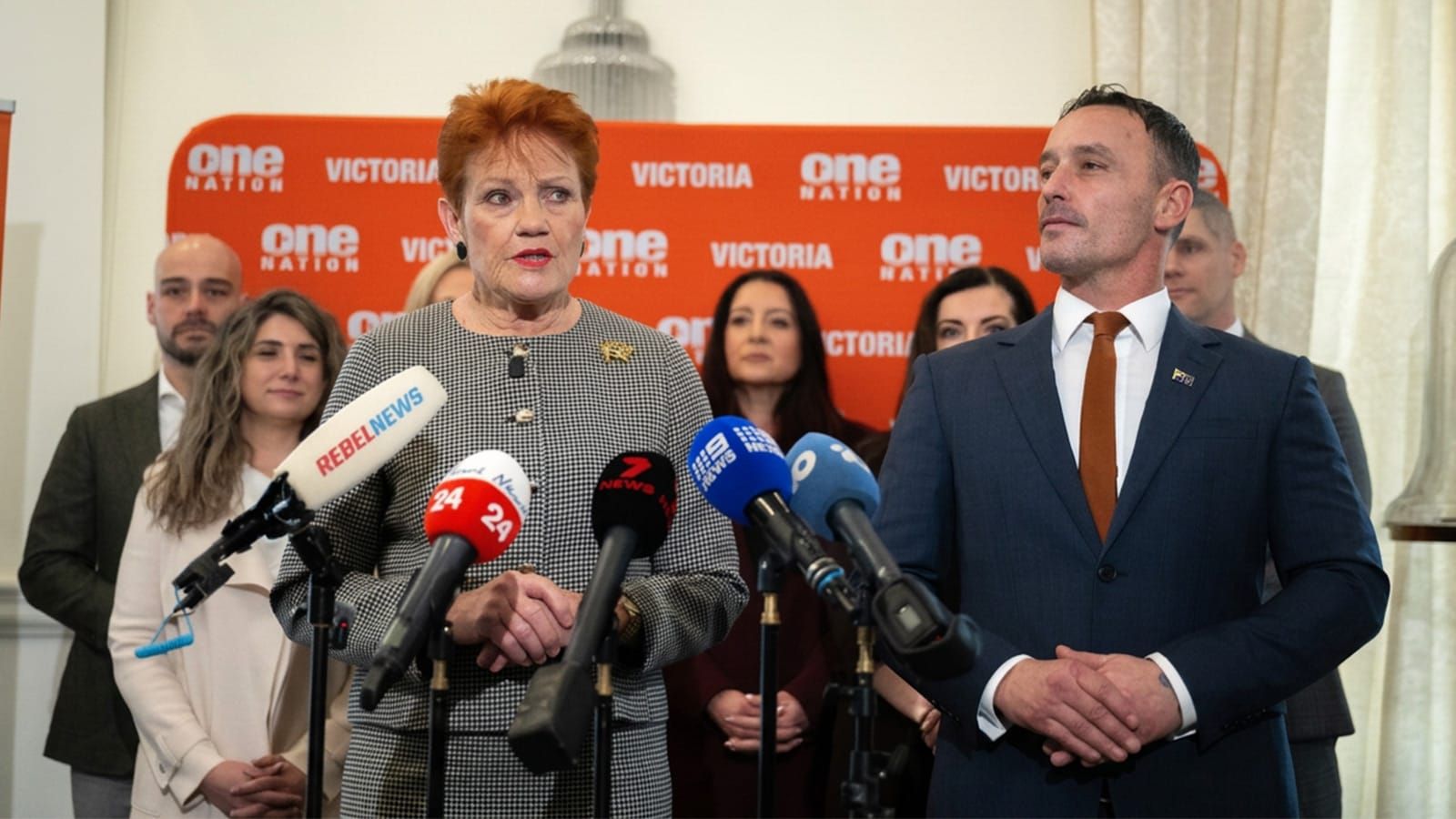
Pauline Hanson denied the ABC, The Guardian, The Age and The Sydney Morning Herald entry to her Victorian candidate launch in Melbourne on Monday. Every word she said reached the public anyway, because Rebel News was in the room with a camera running. What went out was the full press conference, unedited, rather than the cut down version readers normally receive from the outlets that were turned away.
It was Rebel News reporter Avi Yemini who asked the question that produced it. The One Nation leader was unveiling the party's Victorian ticket for the 28 November state election when Yemini put it to her plainly: “Can you just explain why ABC is not here, just so we know?”
“ABC were denied entry into here, and The Guardian. I'm not putting up with their rubbish, I'm not putting up with their spin, their lies whatsoever. I want truth and honesty. You get it from me, I expect it back from the media.”
What followed was more than 15 minutes of open questions on policy, costings, candidate vetting, coalition arithmetic and her own record, put by reporters who were plainly not on her side. She answered all of it, with nothing held back for a friendlier room. This is how it unfolded.
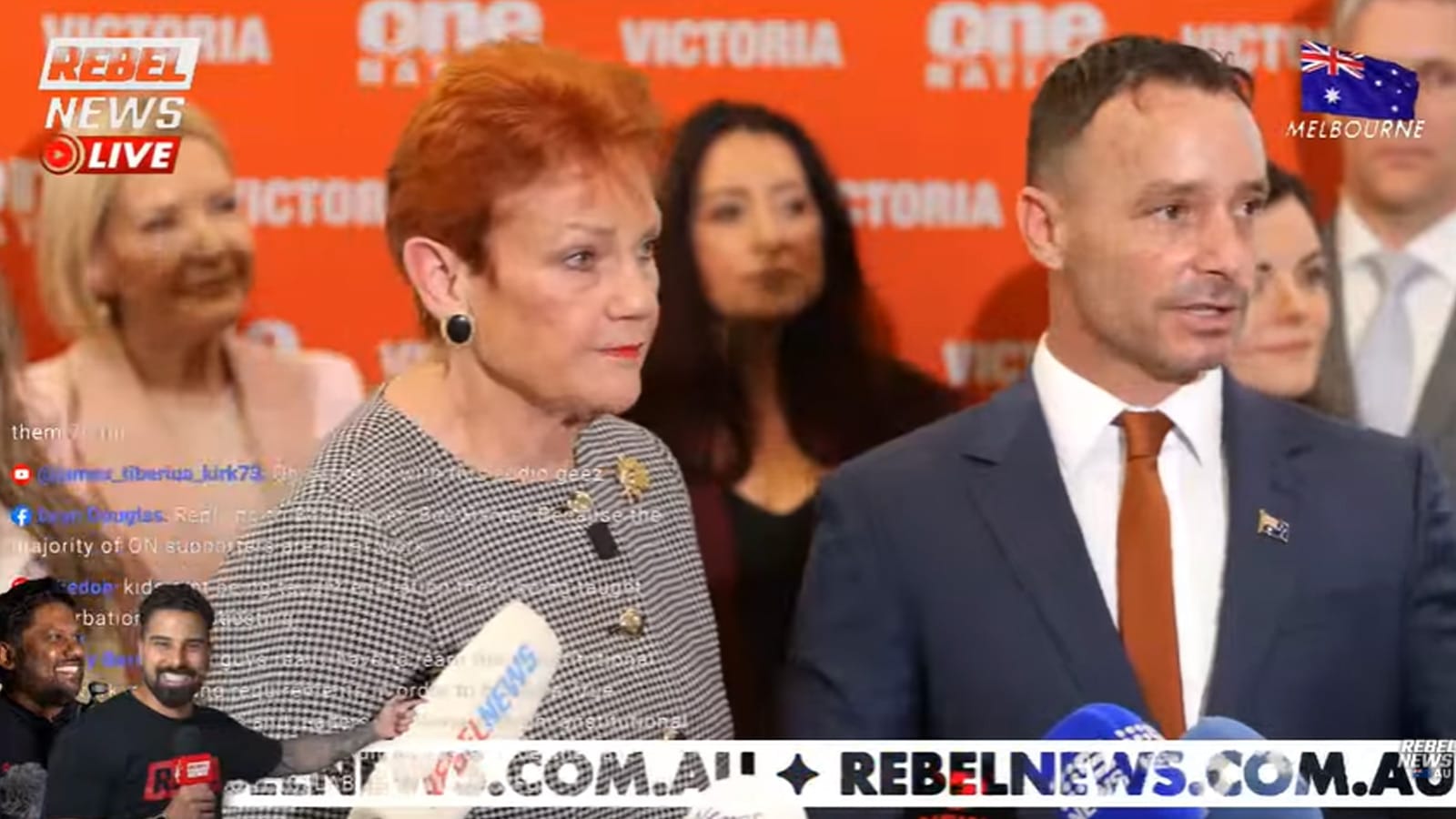
Warren Pickering answered first, and drew the line at fabrication, not at scrutiny
Thirteen seconds after Senator Hanson finished, her Victorian leader Warren Pickering stepped in to make the boundary explicit, and the wording matters because it's narrower than the headlines suggested.
“We expect and invite a healthy amount of scrutiny of our candidates and our policy positions. However, any blatant character assassination attempts based on fabrications of our candidates will be met with swift legal action.”
Scrutiny of the candidates and the policies is expressly invited. What's off limits is fabrication about the candidates, most of whom are private citizens who put their hands up four months ago and have never held public office. Eight of them were announced on Monday out of about 1,200 expressions of interest, after what Senator Hanson called an extensive vetting process.
Telling a newsroom that inventing things about a first time candidate will draw a solicitor isn't a threat to journalism. It's the standard every publisher in the country already operates under, including this one.
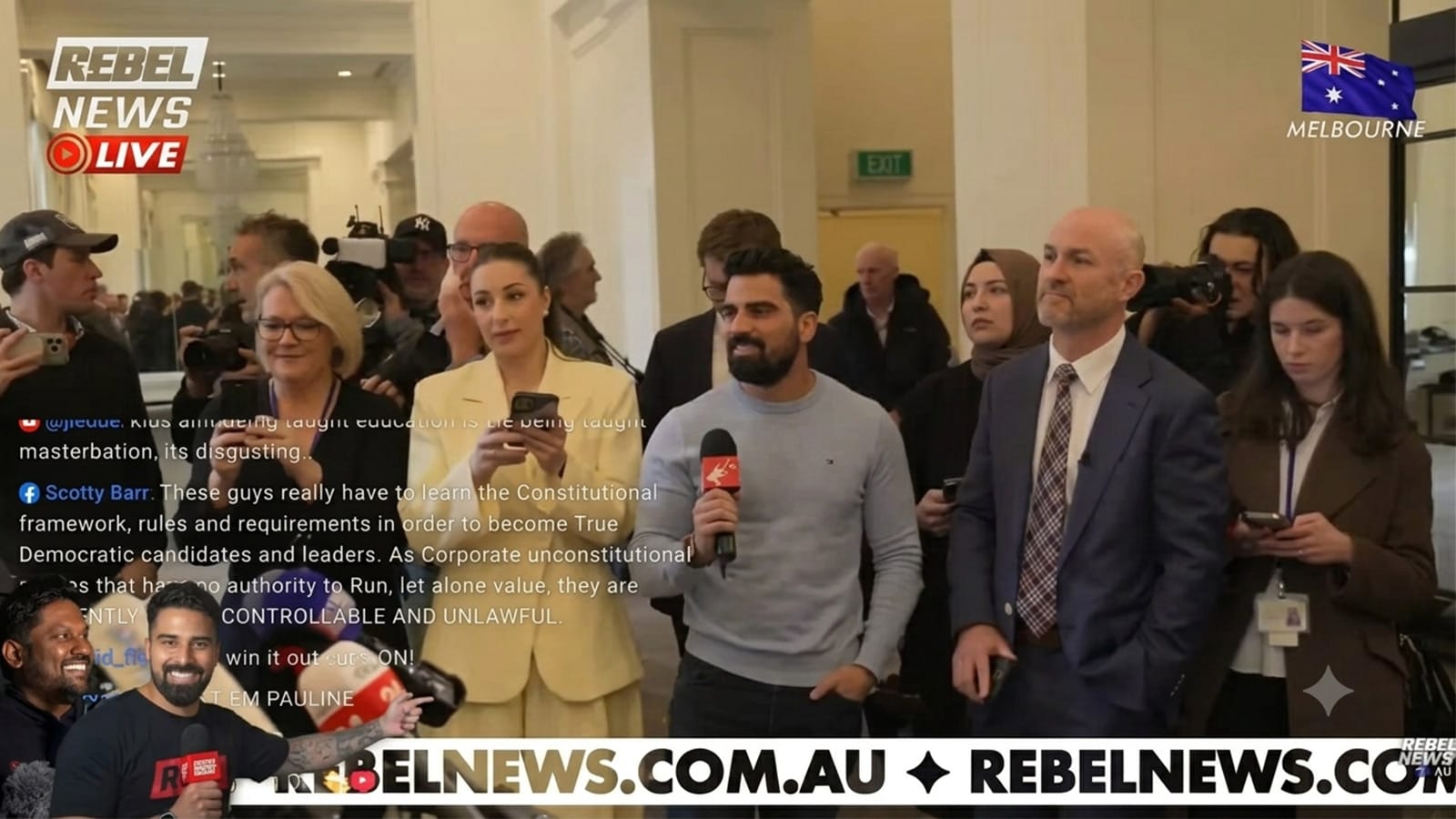
Avi Yemini asked the press pack where its outrage was when Rebel News was the one shut out
Yemini hadn't asked it for himself. A journalist standing to his left had been trying to put the democracy question to Senator Hanson and couldn't get in. By his own account he turned around, checked whether she wanted another crack at it, and when she declined he asked on her behalf. His next question was aimed at the people doing the writing, and One News could find no trace of it in the Monday write ups by News24, news.com.au or Nine.
“Do you think the media that's upset about the fact that the ABC and The Guardian and The Age are not invited to this, that weren't upset when Daniel Andrews revoked, let's say, Rebel News, dragged them out of Parliament, they weren't upset then about freedom of the press and are suddenly upset? Do you think that they should take a look in the mirror?”
Yemini was asking about his own case, and the history checks out. Avi Yemini applied for a Victorian Parliament media pass in March 2021 and was refused that July, without reasons. He took it to the Supreme Court of Victoria and lost: on 16 December 2022 Justice Tim Ginnane upheld the refusal, finding the decision was an exercise of parliament's privilege to control access to its own precincts. Rebel News says Yemini was also removed by police from a Daniel Andrews press conference in 2021 at the request of the Premier's office.
A working reporter was kept out of the Victorian Parliament for 20 months and beaten in the Supreme Court, and the industry barely raised its voice. A senator declines to hand a chair to two newsrooms at an event her own party organised and paid for, and it's a democratic emergency by lunchtime.
Another reporter cut in to say there was plenty of media in the room and to ask whether Senator Hanson was really troubled by the ABC's absence. Her answer pointed straight back at the journalist who'd been trying to raise it all along. “This lady was.”
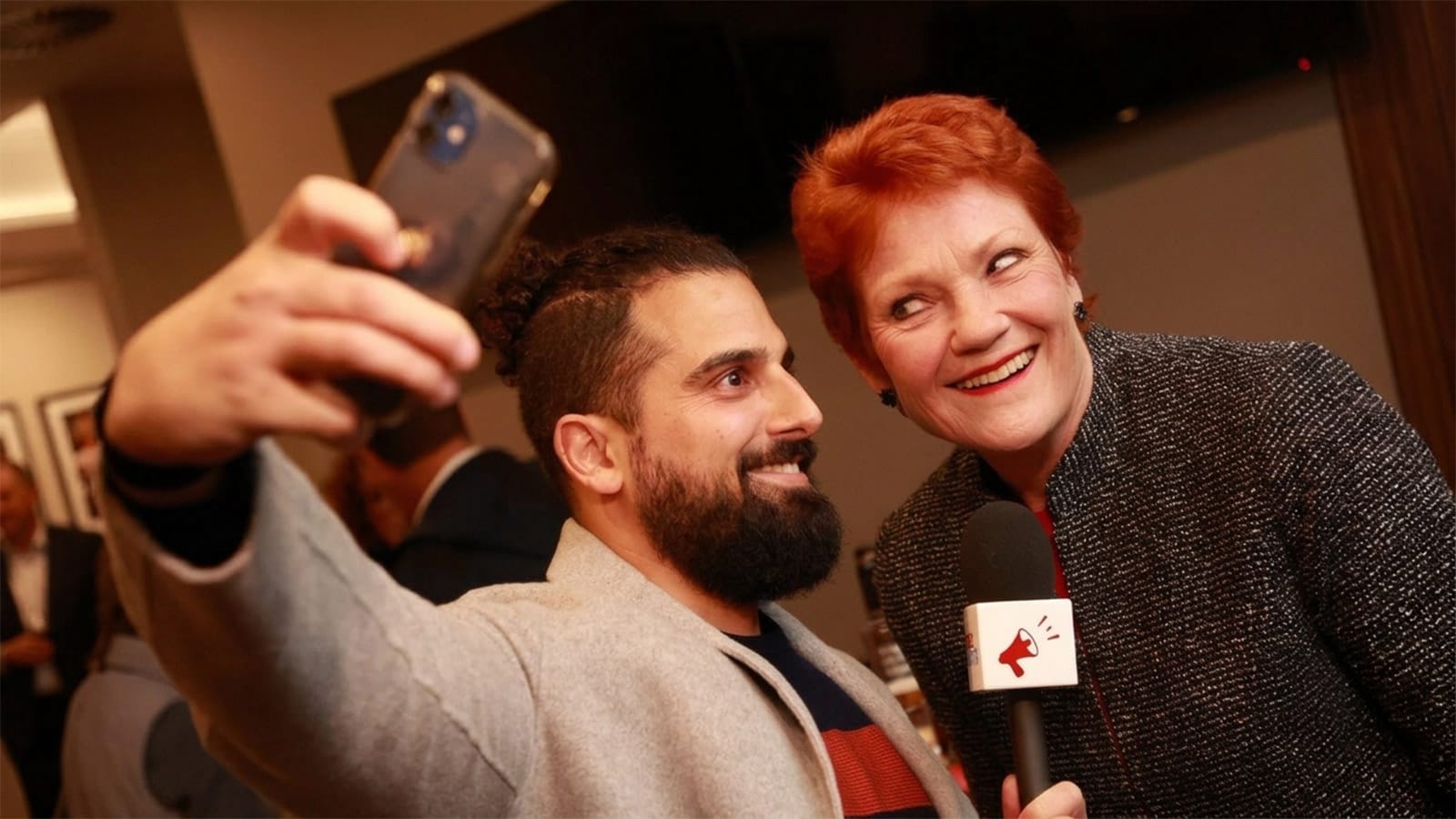
Pauline Hanson says she banned the ABC for eight months in 1996, and told them in June this was coming
That gave the shut out journalist her opening, and she took it. She asked whether, in a democracy, all media should have access to a press conference, particularly for a party saying it intends to form government in November. Senator Hanson's answer was that the ABC is in no position to ask.
“That democracy doesn't happen on the ABC at all, and I'm sick of it, it's not fair and just in their reporting. So if you want to criticise and have a go at me, not putting the truth across, you're not giving me the truth of democracy either, and so therefore, no, I'm not going to have them.”
This wasn't improvised. She said she'd done it before.
“This isn't the first time I denied them entry into my meeting, polls and everything, in 1996 for eight months, and the same will go for The Guardian.”
She also flagged it in June, after her first National Press Club address, when she said the two outlets would be barred from her future events. The press gallery committee issued a statement at the time. Two months later she did exactly what she'd said she'd do, which is a kind of consistency the people objecting rarely credit her with.
“I'm not putting up with the spin, gotcha moments, wanting to have a go at me, or treat us totally different to what you do the other major political parties. Enough is enough. You give me a fair go, I'll give you a fair go back. The ABC never does.”
Chris Kenny had the last question, and Pauline Hanson answered it with Rebel News
The final exchange belonged to News24 host Chris Kenny, who asked whether banning the national broadcaster would stop her message reaching regional Victoria. Senator Hanson didn't hesitate.
“We've got Rebel News here. I'm happy with them.”
Kenny's question assumed the ABC is the road to regional Australia. Monday's answer was that the road now runs through a phone.
Rebel News carried the event live on its Australian channel from Senator Hanson's arrival to the final question, a broadcast running 37 minutes. It's still up and nobody has cut it. Anyone in Victoria who wanted to judge her answers could watch her give them, for nothing, without a single masthead standing in between.
Which turns the complaint on its head. The charge against Senator Hanson on Monday was that she'd restricted what voters get to see. What actually happened is that every quote in every hostile write up that afternoon came out of a room the public could watch, so readers can check those write ups against the tape.
Because Rebel News was allowed in, the version that reached the public was the complete one. Every question and every answer, in the order they were asked, with nothing trimmed to fit a line a newsroom had already settled on before it walked in the door.
That is not what readers normally get. What normally arrives is the edit, the few seconds that carry the angle, with the part of the answer that complicated it left out. One News has documented that happening to Senator Hanson three times in the past month alone, and those cases are set out further down. On Monday there was nothing left to argue about, because the tape is public and it's whole.
Video: Rebel News. Behind the scenes, Pauline Hanson arrives in Melbourne to announce One Nation's Victorian candidates.
What the Herald and The Guardian published about White Australia, and what Pauline Hanson actually said
The row that got the two mastheads banned comes down to one old policy and one year.
The White Australia policy was the old immigration rule that kept non white migrants out of the country. Gough Whitlam's Labor government scrapped the last of it in 1973. Asked on a podcast when Australia's immigration problems began, Senator Hanson named that year. She said that once the policy went, governments “started bringing in the different migrants”, and that the Europeans who arrived after the war settled in more easily than those who came later. She has made the same point many times since. Her complaint is about how governments ran immigration after 1973, not about the colour bar that ended that year.
She'd already had the same thing put to her in July, when The West Australian's editor in chief Christopher Dore suggested at a sold out Crown Perth breakfast that her immigration policy was a version of White Australia. The room booed him. “No, it's not. It's got nothing to do with that,” she said.
The Sydney Morning Herald and The Guardian both reported her podcast comments as Senator Hanson lamenting the end of White Australia. She rejects that outright, says she has never supported the policy, and accused what she called “leftist organisations” of trying to discredit her. Saying governments made a mess of immigration after the policy ended isn't the same as wanting the policy back, and that difference is the whole argument.
She's had cause to say the tape and the coverage don't match before. In July she was accused of victim blaming over a 4BC interview on domestic violence, until One News listened to the full audio and found she'd called the violence “wrong” and “absolutely wrong” in answers no outlet printed. The same month, four sentences that undercut the story were cut from coverage of her Senate colleague Malcolm Roberts. When The Guardian ran a piece on her Socceroos comments, its own readers filled the comments arguing her point for her.
That's the record behind Monday's guest list. She didn't shut anyone out for asking hard questions, and she took plenty of them from the reporters who were in the room.
The ABC, The Age and the Herald are on the public tab. Rebel News couldn't take a cent if it asked
There's a detail in this that changes how the press freedom argument reads. Three of the four outlets shut out on Monday are funded, wholly or in part, by the taxpayer.
The ABC is the obvious one, funded by the taxpayer to the tune of $1.2 billion a year, with the SBS alongside it, both separate to this fund. Nine Entertainment, which owns The Age and The Sydney Morning Herald, collected $16,126,110 across two grants from the Albanese Government's $67.6 million Journalism Assistance Fund. The scheme part pays the wages of more than 2,000 journalists across 184 private newsrooms until March 2028. Not one of those newsrooms has to tell readers it's on the books.
The Guardian isn't funded, because it couldn't be. The rules barred any foreign controlled Australian entity, which locked out The Guardian, controlled from London, along with News Corp's mastheads and News24.
Rebel News was barred by the identical rule, being Canadian owned. So the outlet that turned up to Senator Hanson's launch and put the whole thing online for nothing takes no money from the government it covers, and under the current rules it can't.
When a taxpayer funded broadcaster and a masthead group holding $16 million of Commonwealth money argue that a politician owes them a chair, the public is entitled to ask who's actually dependent on whom.
Clause 49 is the real press freedom story, and it has nothing to do with a guest list
While Monday's argument was about who gets into a hotel function room, the actual machinery of media control is being drafted elsewhere. Labor's draft national platform hands the media regulator ACMA the job of policing bias across Australian media. The commitment in Labor's current platform to “foster appropriate privacy, defamation and press freedom laws” has no equivalent in the new draft's media section. The same chapter commits Labor to truth in political advertising laws.
One is a senator deciding who she'll take questions from at her own launch, with the whole thing streamed live regardless. The other is a government writing itself the power to rule on bias across every newsroom in the country, backed by $10.5 million for ACMA to measure media diversity. Only one of those survives a change of government and applies to everybody.