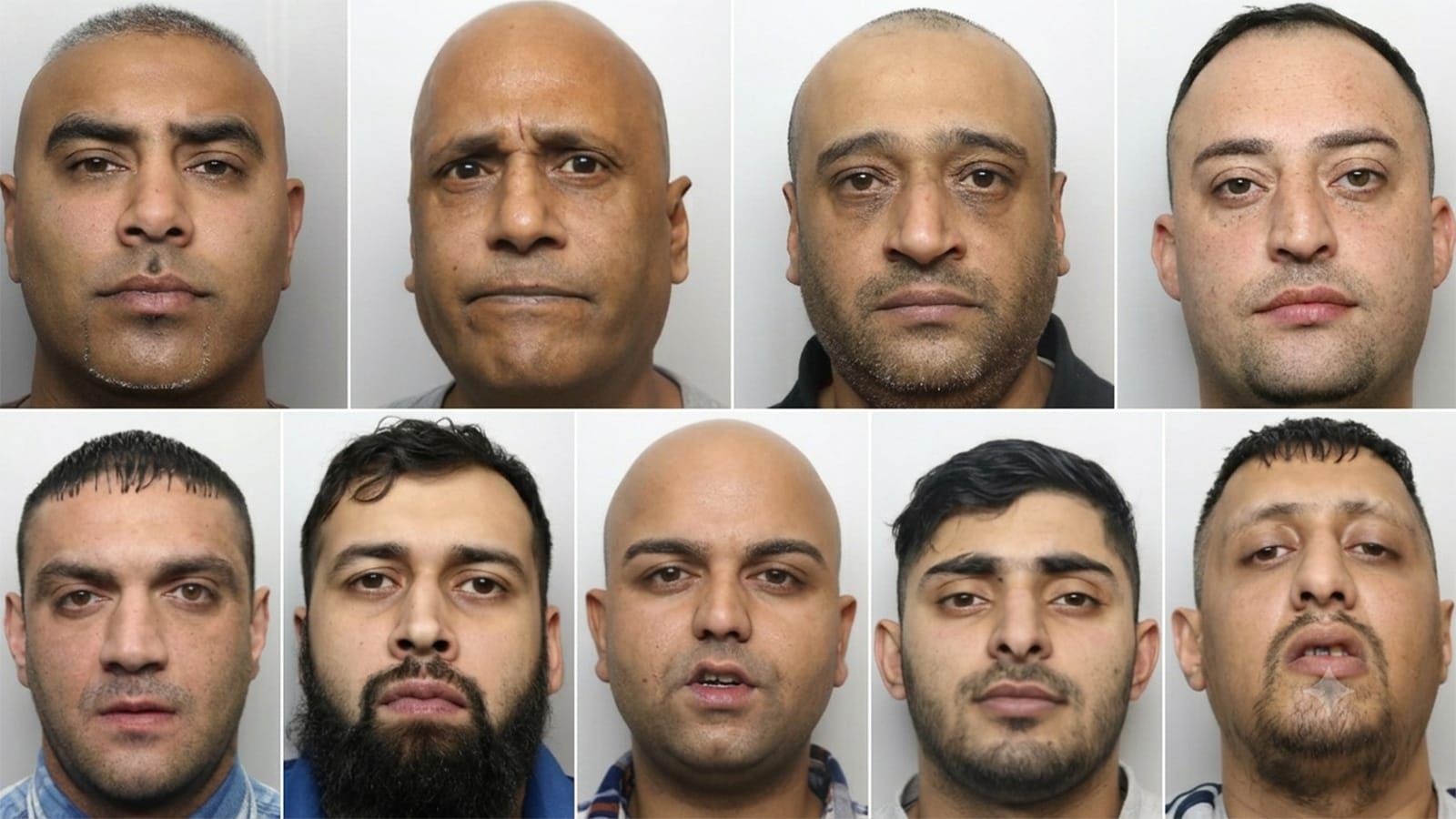
UK grooming gang survivors with over 250,000 alleged victims in Britain have been told their convicted rapists could walk free early, despite a government promise that the most serious offenders would be excluded from its new early release scheme.
Two women who were raped as children by organised gangs, and who waived their anonymity to expose what was done to them, have received official letters confirming their abusers are now being assessed for release after serving as little as a third of their sentences. It is the latest chapter in a scandal One News Australia reported in full last week, and one the Australian media has again left almost entirely untouched. The abuse was documented in the privately funded Rape Gang Inquiry Report, which readers can download and read in full.
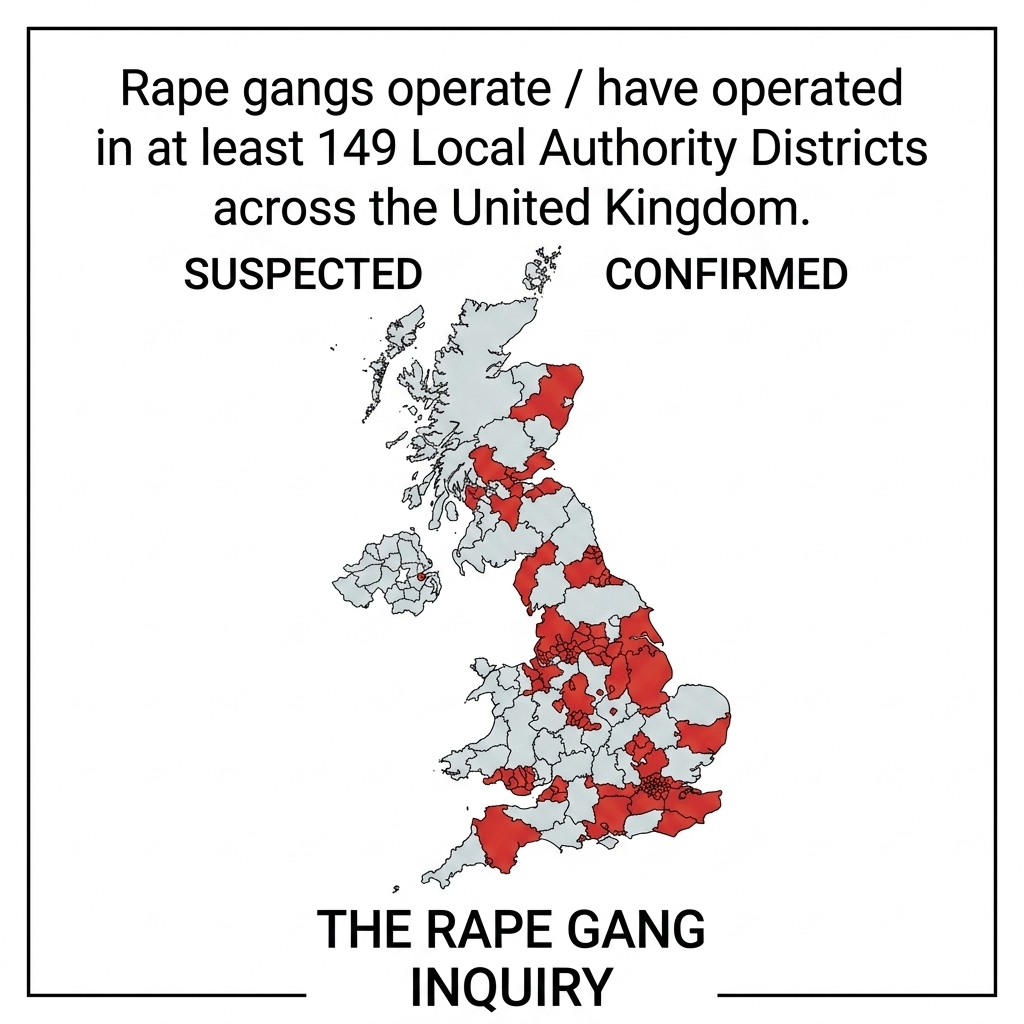
Survivor, Fiona Goodard was told her rapists are coming out
Fiona Goddard was a child when she was groomed and raped in Bradford. Seven men were convicted in 2019 of a catalogue of sexual offences against her and other girls. This month she received a letter telling her those abusers are being assessed for early release under Labour's Sentencing Act 2026.
She told GB News the news had turned her life upside down. Just last year, she said, she was told the men would serve 50% of their sentences. Less than 12 months later, a second letter arrived saying they were being assessed for release at 33%, which could mean six of her abusers are eligible from September. Goddard said the letters had triggered trauma she thought she had dealt with. Her hair has started falling out, she cannot sleep, and she is considering moving away from the area her abusers come from because she no longer feels safe.
She has called for rapists and child sex offenders to be made exempt from the Act, pointing out that earlier sentencing changes did exactly that. “Previous legislation updates did exempt them,” she said, “so why has this one not?”
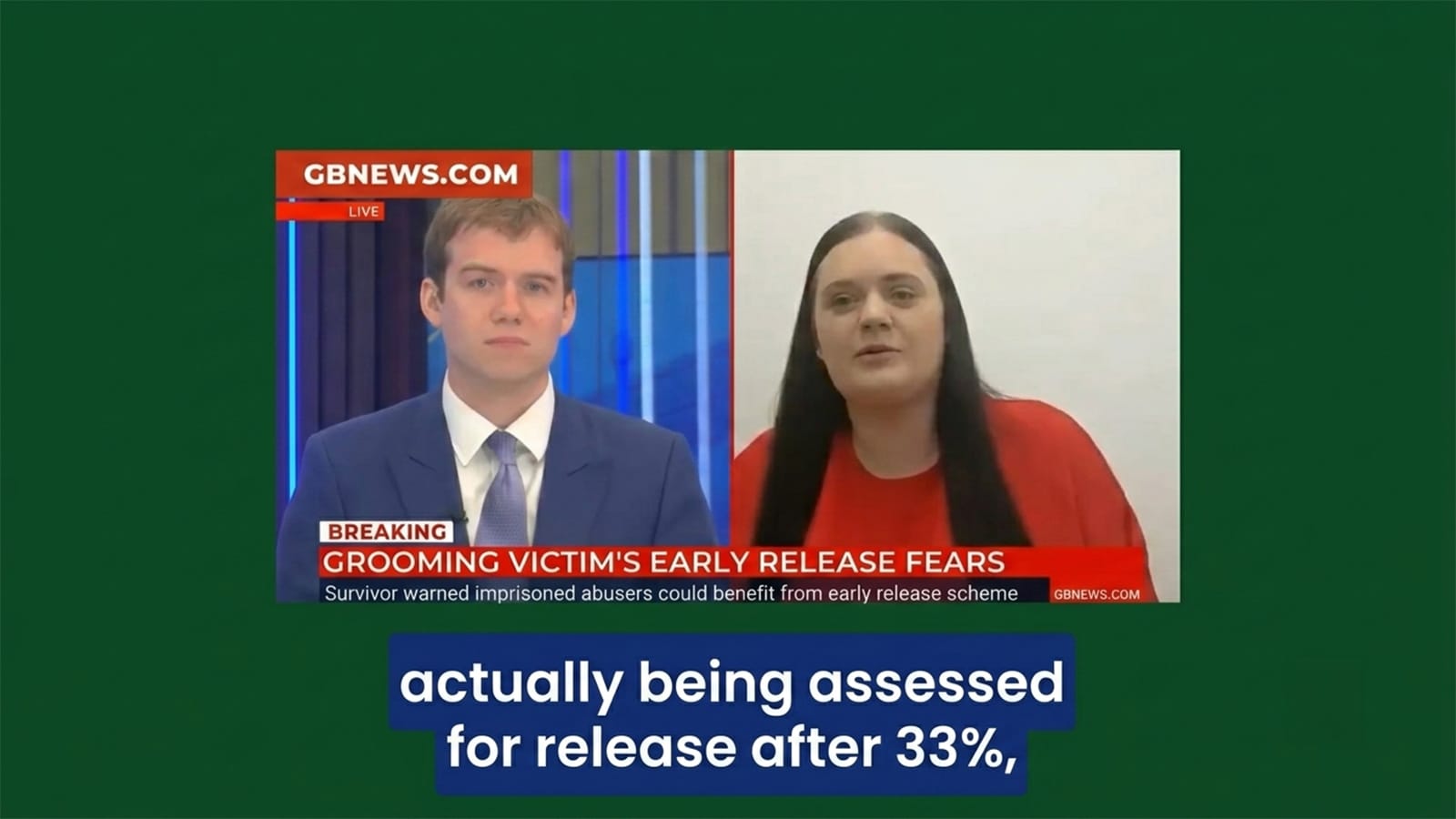
In the town where girls were doused in petrol, Sammy Woodhouse's abuser could now be released early
Fiona Goddard is not alone. Sammy Woodhouse, the Rotherham survivor who waived her anonymity and helped force the original scandal into the open, has learned that her own abuser is being considered for early release. Arshid Hussain, the ringleader who abducted and raped her as a child, was jailed in 2016 for 35 years after being convicted of 23 child sexual offences. Under the new scheme, campaigners warn he could be out in a fraction of that time.
The Jay Report laid out what that contempt meant for the children living it. Girls were doused in petrol and threatened with being set alight if they talked, threatened with guns, abducted and beaten, and forced to watch the violent rape of other girls so they understood what waited for them if they spoke. Children of 11, 12 and 13 were raped by groups of men, trafficked to other towns at night and sent back to school the next morning, and when they finally reported it they were treated by police and social workers as the problem rather than the victims. One of those children was Sammy Woodhouse.
What the law actually says, and what survivors were told
The Sentencing Act 2026 came into force in March. It allows prisoners serving standard sentences to be released at the 33% point of their term under an “earned progression” model, rather than the previous halfway point.
On paper, the Act excludes the most serious cases. Serious sexual offences, including rape, serious violence and terrorism, are listed as exempt and are supposed to remain at 50% or two-thirds. The government said as much in Parliament, insisting nothing in the legislation changed the position for prisoners convicted of the most serious crimes.
The letters landing on survivors' doormats have told a different story. Women raped as children by convicted gang members are being formally notified that those same men are being assessed for release at 33%. Either the exemptions do not cover the men who abused them, or the promise made to Parliament has not held. For the survivors, the distinction makes no difference. The men who raped them are being let out early.
The political row
The contradiction has reignited the fight in Westminster. Shadow Home Secretary Chris Philp said the scandal had “just got worse,” accusing the government of letting men from the rape gangs out early after promising they would not be. Shadow Justice Secretary Nick Timothy has written to Justice Secretary David Lammy over Fiona Goddard's case.
In the Commons on 18 June, Conservative MP Mims Davies raised Goddard's testimony directly, telling the House: “These are Labour's choices, and we warned about them.” Conservative leader Kemi Badenoch has urged the government to amend the Act so that no one involved in grooming gangs can qualify for early release. Philp has gone further, calling for emergency legislation to close the gap before any of the men walk free.
The government has not amended the Act.
A scandal that keeps being made worse
This is the same scandal documented at length in the privately funded Rape Gang Inquiry Report, which found that police, councils and successive governments looked away for decades while children were raped and trafficked. The institutions that failed these girls the first time are the same institutions now sending their abusers home early. Survivors who were betrayed as children, then told for years that nothing could be done, are being betrayed again as adults.
Tommy Robinson exposed it. Karl Stefanovic interviewed him and lost his job
None of this reached the public by accident, and the people who forced it into the light have paid a higher price than many of the men who did the abusing.
Tommy Robinson is named in the Rape Gang Inquiry Report as one of the figures who dragged the scandal into public view, years before the institutions would admit it was happening. He has spent more than a decade arguing a single, blunt message to anyone who would listen: this is what happens when a country loses control of its borders and then refuses to police what comes with it. For saying it, and for filming outside a grooming gang trial in 2018, he was jailed. The councils that covered it up kept their pensions. The police who filed raped children as runaways kept their ranks. The man pointing at the crime went to prison.
CANCELLED: The Full Karl Stefanovic and Tommy Robinson Interview now live on Pauline Hanson's Please Explain.
That campaign went global. The grooming gang scandal became an international story in 2025 after Elon Musk amplified it to hundreds of millions of people, and the privately funded Rape Gang Inquiry was crowdfunded by more than 23,000 ordinary donors precisely because they no longer trusted the state or the media to tell them the truth. Robinson's argument, once dismissed as far right agitation, is now the documented finding of a 219 page report and a government commissioned audit.
Then it reached Australia. This week Channel Nine presenter Karl Stefanovic interviewed Robinson on his independent podcast. The conversation was exactly the kind the public is told it must not have, and it lasted barely a day online. The interview was scrubbed from YouTube, Spotify and the podcast feed overnight, with no one publicly admitting they pulled it. Stefanovic resigned as Nine moved to remove him from Today. One of the most recognisable broadcasters in the country lost his job for sitting down with the man who helped expose the mass rape of children, and the interview itself was wiped. The only reason any of it survived is that copies were reposted on X, including by Pauline Hanson.
This is the suppression in real time. The same instinct that protected the gangs in Britain for decades, the terror of being called racist, the preference for a quiet narrative over an ugly truth, is now operating in Australian newsrooms. The story is not being debated and rebutted. It is being made to disappear.
Australia got the Skaf gang right once. It may not have the nerve again
What happened to Karl Stefanovic is not a one-off. It is the same reflex that kept Britain silent for decades, now operating inside Australian media, and it should unsettle anyone who assumes this country is immune.
Australia is running one of the highest migration intakes in its history, with net overseas migration adding well over a million people in three years, while much of the political and media class treats any question about who is arriving, and whether the country can absorb them, as something close to a thought crime. One Nation has warned for close to 30 years that a nation which loses control of its borders, and then loses the nerve to talk honestly about the consequences, ends up failing the very people it claims to protect. Britain is the proof. Its children paid first.
Australia still has the chance Britain threw away. We caught the Skaf gang early and prosecuted it hard, in open court, naming exactly what it was. The question is whether we still have the will to do that, or whether we have decided, like Nine, that some stories are safer buried. One News Australia has made its choice. We will not be silenced, we will not look away, and we will keep telling you exactly what happens when a country stops controlling who it lets in. The people who want this story to vanish are counting on your silence. They will not get ours.