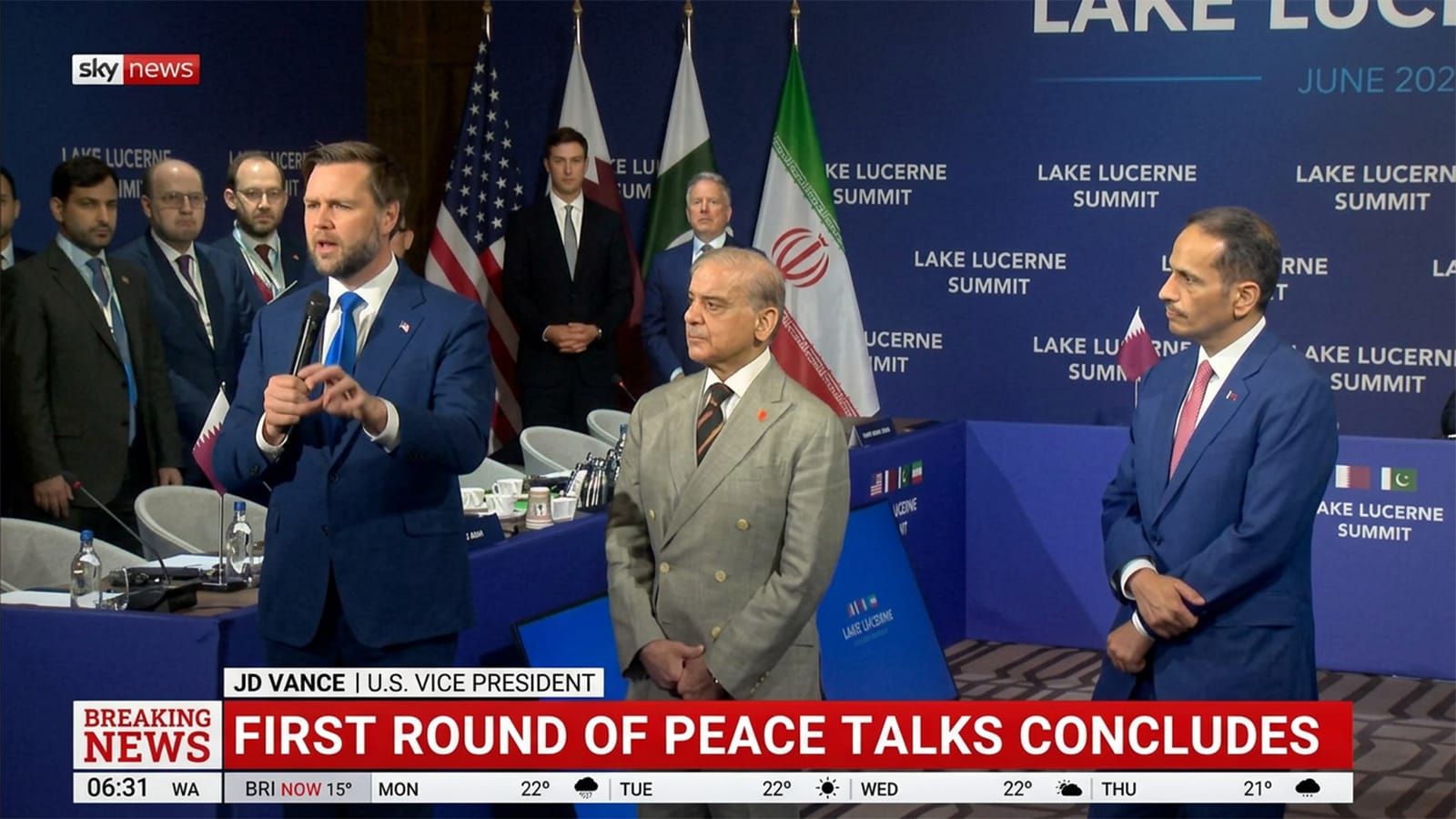
US President Donald Trump has threatened to take over the Strait of Hormuz and take a 20% cut of the oil that passes through it, just hours after his own Vice President JD Vance declared the Switzerland talks had made "great progress." It looks like chaos. It works like leverage.
Video credit: Fox News via Trey Yingst. Coverage of the Bürgenstock talks, where Trump threatened to take over the Strait of Hormuz as Iran walked out.
Vance offered the outstretched hand while Trump swung the stick
In Bürgenstock, Vance said Trump had asked him to "turn over a new leaf" and extend "an outstretched hand" to the Iranian people, promising to "fundamentally transform" the relationship if Tehran gave up its nuclear weapons ambitions and its role as a driver of regional instability.
At almost the same moment, Trump was threatening to blow Iran apart. The good cop and the bad cop weren't a mixed message. They were the message.
What Trump actually said: take the strait, collect the tolls, keep 20% of the oil
Trump told Fox News the United States could become the "guardian angel" of the Strait of Hormuz and take 20% of the oil moving through it. "We may take over the strait, if we have to," he said, floating a transit toll on foreign vessels once the 60 day ceasefire window expires, to reimburse what he called past and future US security costs.
He was blunter about the alternative. Trump said he'd told Iranian officials overnight that if they shut the strait, "you won't have a country," and warned they wouldn't even make it home.
Iran closed Hormuz as leverage, then bristled at being out-leveraged
Iran came to Switzerland wanting to talk about the Lebanon ceasefire, and closed the Strait of Hormuz as its bargaining stick. It didn't enjoy being met with a bigger one. Iranian President Masoud Pezeshkian said Iran "will not give up our right to enrichment," accusing Trump of demanding unconditional surrender.
Trump's reply, again on Fox: "He better watch his mouth. He better shape up, or we'll take over the rest of the country." Iran's chief negotiator took to social media to warn Washington to mind its language, and Iranian media reported the delegation may have walked out of Bürgenstock barely a couple of hours in.
Trump says this is only a ceasefire extension, and that he holds the cards
For all the noise, Trump was clear about what the memorandum of understanding is and isn't. He told Fox News it's a ceasefire extension, not the final deal, said "I hold the cards," and spelled out his timeline: "I have a 60 day option, and I can do whatever I want after that." He added that 19 million barrels of crude left the Persian Gulf the previous day as a result of the MOU.
Vance put the same point in softer words, saying "the opening of the Strait of Hormuz, the ending of the Iranian nuclear program, all of these things have already been accomplished." The two sides have set the accord signing for Friday in Geneva.
Why this isn't Trump losing, whatever the headlines say
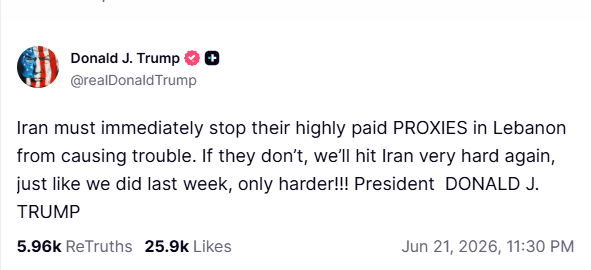
The easy read is that the deal is collapsing and Trump has lost control. That read misses the design. Every Iranian breach, closing the strait, storming out of the room, Pezeshkian’s enrichment defiance, hands Washington the next pretext to take more, on its own terms. Tehran thinks it’s holding leverage. It’s being handed rope.
And the strait was never really the prize. The war was a move on China's energy network, the Belt and Road and the cheap Iranian crude that feeds it. Iran sold more than 80% of its oil to Beijing, and whoever controls Hormuz controls the tap, over China and over the US creditors who depend on Gulf flows. One News has mapped that architecture in full, and we're tracking the standoff live.
The signing is set for Friday. The 60 day clock is running. And Trump has just put a 20% stake in the world's most important oil chokepoint on the table, as a US toll, not an Iranian one. For a man said to be losing, he's doing a lot of the taking.