There's a reason Labor picked this fight. From 10 August 2026, the government is banning Australians from borrowing to buy a residential property inside their own superannuation fund, or SMSF. And here's what makes it bite: an SMSF is the only way you can own property through your super at all. The big industry and retail funds won't let you buy a house. Only a self managed fund will. Take away the borrowing and you've shut the single door that let ordinary people turn their super into bricks and mortar they actually control.
Here's what that really means. The government is shutting down the one way you could use your own super to get ahead on your own terms, and it's doing it while openly eyeing the $4.5 trillion you've all saved. Block you from making money with your super, herd the pool into funds the state can direct, then put that money to work for the government's agenda and the projects it picks. You're locked out of profiting from your own savings. Canberra and the funds it leans on are not.
In short: they don't want you getting ahead on your own. They want you depending on them.

Why Labor really wants this: to keep you dependent on them
A self managed super fund is the one corner of the retirement system where you, not a fund manager in a tower, decide where your money goes. Shut off the borrowing and you herd people back into the big funds, where they don't choose a single investment. You end up with a population that owns less outright and leans on the system more, which is exactly the kind of citizen a government finds easiest to manage.
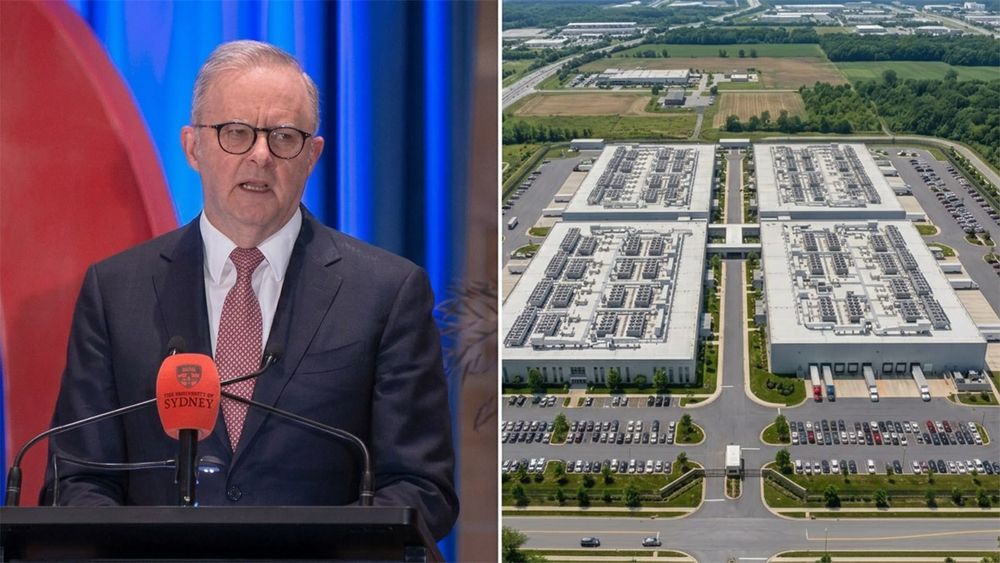
And the government isn't hiding what it wants that money for. At a superannuation roundtable in Sydney this week, Prime Minister Anthony Albanese said the nation's $4.5 trillion in super should be treated as a "national asset".
"There is a real potential to see these funds as a national asset that can be used more appropriately and get better returns as well, not just for individuals and for retirees, but for the nation," Albanese said.
He called super "hard money to provide soft power", and made no secret of using it as leverage. He pointed to up to $500 million from AustralianSuper going into an Indian infrastructure fund, and said the pool had strengthened Canberra's hand with Washington.
"When we were somewhat nervous about the relationship with President Trump, one of the things that we were always really confident of was that Australia can provide two things: one was critical minerals, but the second was investment from our superannuation industry in the US," he said. "That changed the dynamic of the discussion that we were having."
So the "why" isn't a mystery. They want your retirement savings pooled where the state can direct it, deployed through government vehicles, and leveraged for the government's own ends.
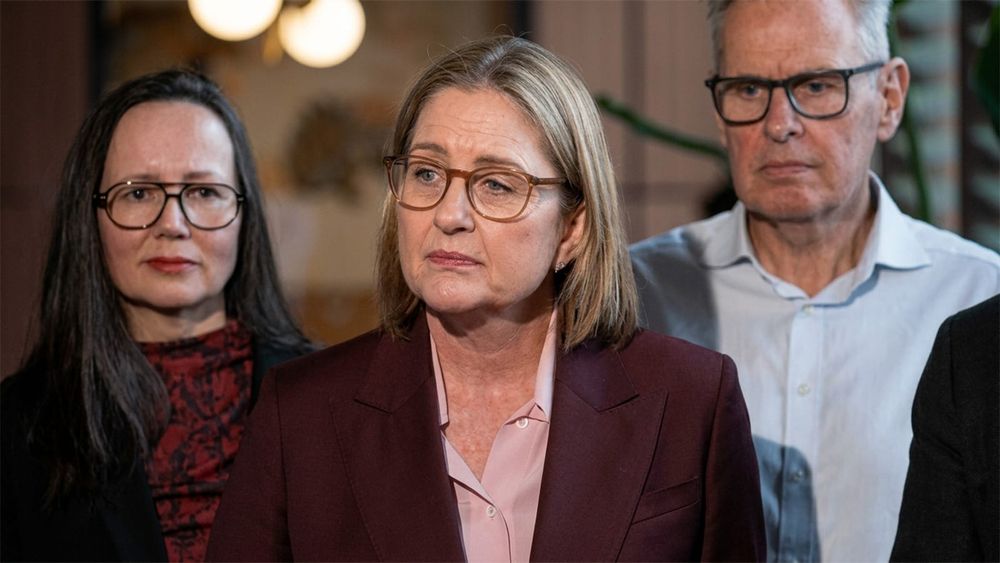
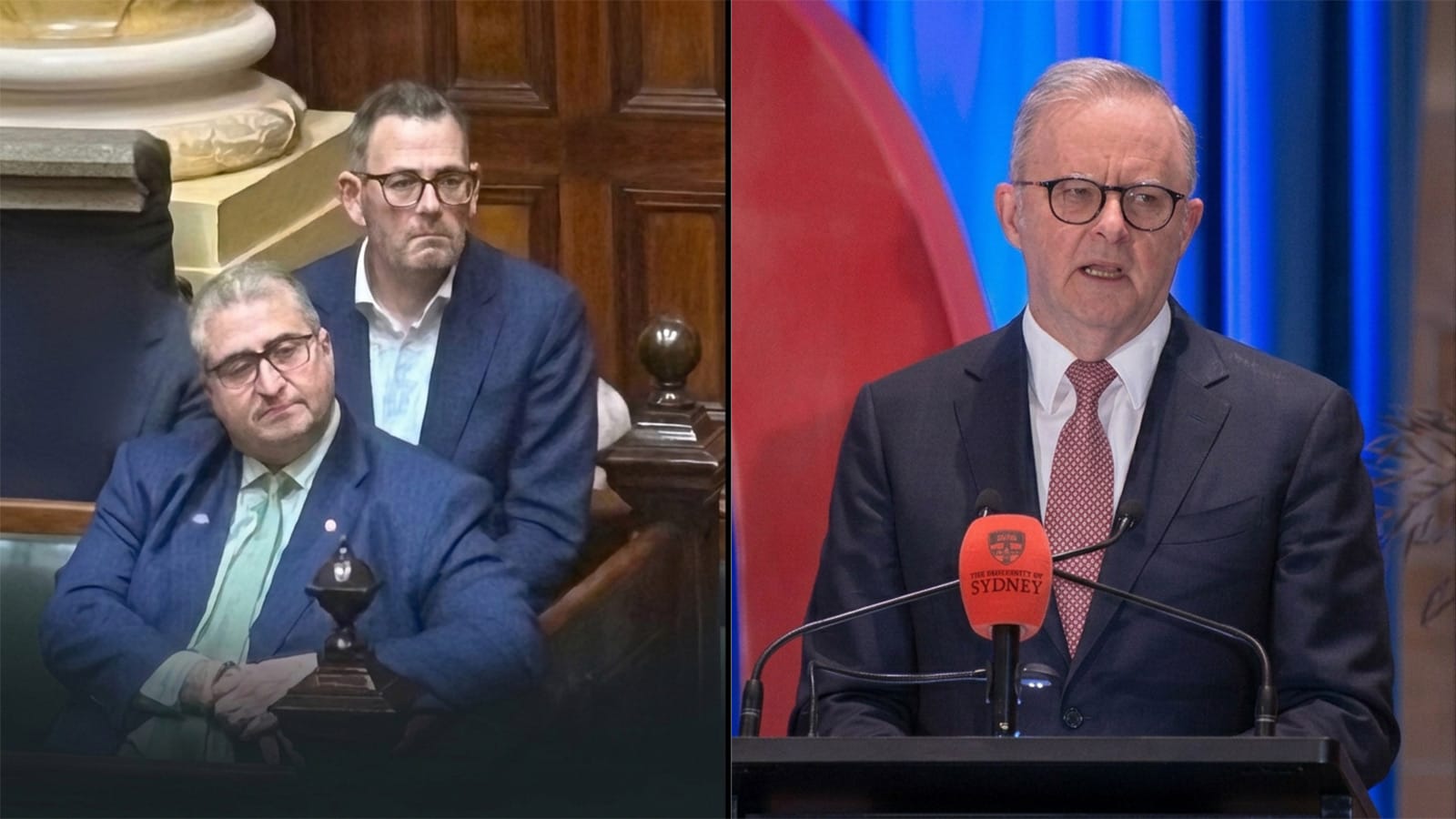
Former Victorian premier Daniel Andrews said the quiet part plainly, urging that super be channelled through bodies like the National Reconstruction Fund and the Clean Energy Finance Corporation into "productivity challenges like housing, infrastructure, energy transition, water, or dare I say, pandemic preparedness". He called it "a wholly efficient and good repurposing of a portion of that national savings pool". Repurposing your savings, in his words, for the projects they choose.
Call it what it is: gradual state control, the Fabian way
There's a name for taking private wealth and steering it, piece by piece, toward the state's priorities without ever calling it nationalisation. It's the Fabian method, the patient advance of socialist ends "through gradual influence" rather than a single dramatic grab. The Australian Fabians, founded in 1947, keep close ties to the Labor Party, and the tradition runs straight through the party's history, Gough Whitlam, Bob Hawke and Paul Keating among them. Keating, who built compulsory super in 1992, sat at this very roundtable and summed up the appeal of $4.5 trillion in one line: "They want the dollars." Nobody grabs the pool in a day. They just keep closing the doors you could use to hold your own, one quiet amendment at a time.

This hits the young hardest, but nobody's balance is safe
Ask who wears the borrowing ban. The people locked out are the ones who needed finance to get started, which is to say younger Australians still trying to build something of their own. The generation told to save harder for a future they can't afford is the one having the last affordable door quietly closed, and pushed toward a system it doesn't control. But don't mistake this for a squeeze that spares the well off. Labor is coming at super from both ends: lock the young out of building a balance, and tax the ones who've already built it. That second jaw is coming below.
The one man in the room who said no: Westpac's Anthony Miller
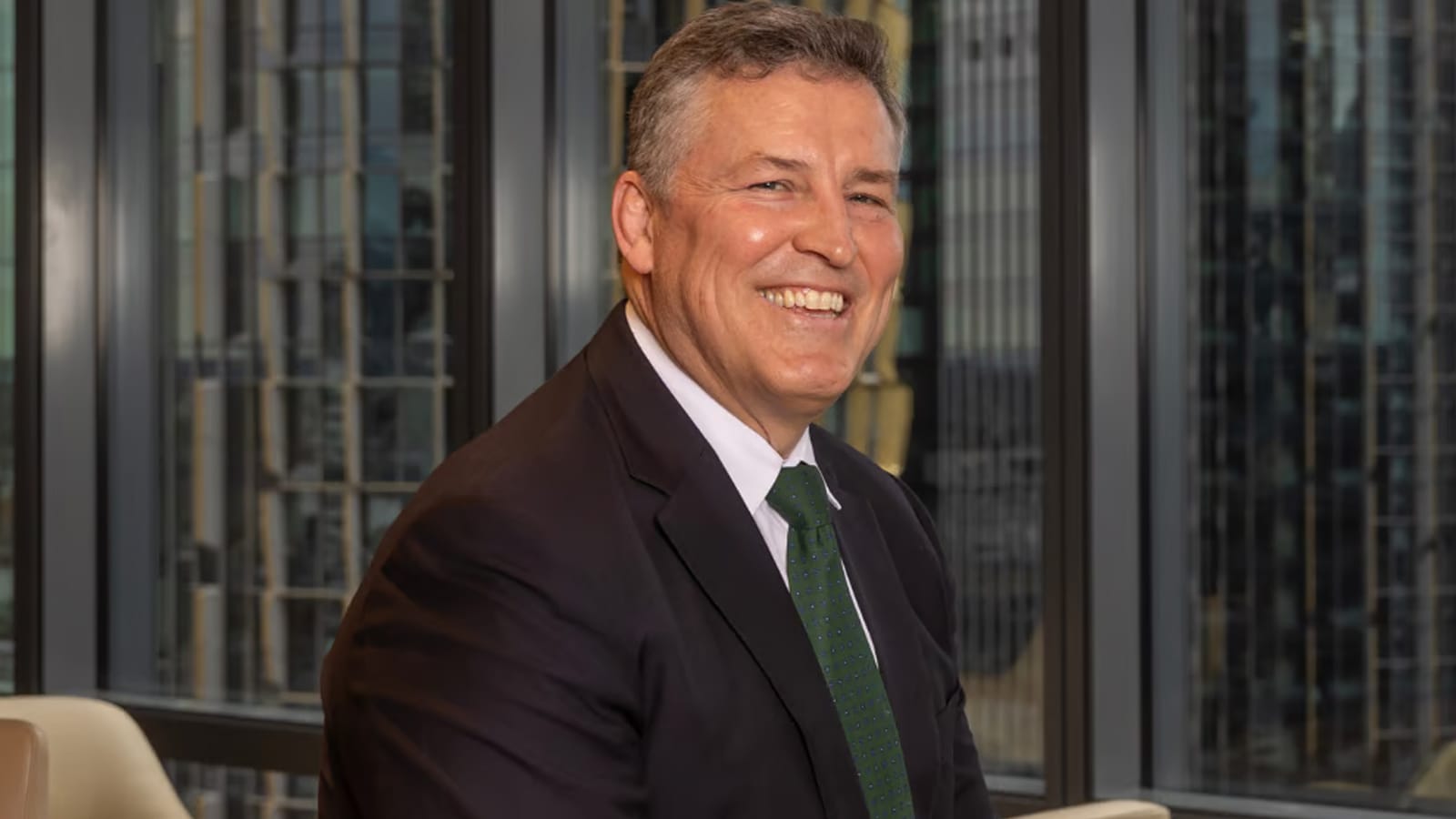
Not everyone was sold. Westpac chief executive Anthony Miller, one of the country's most senior bankers, told the government to stay out of it.
"One thing I would call out is: don't touch the super complex, don't direct it, don't tell it where to go," Miller said.
His point was that the funds owe one duty, to the members whose money it is, and that's to build the best retirement portfolio, not to chase whatever a government of the day calls a priority. He warned a rushed intervention could destabilise markets. Australian Prudential Regulation Authority chairman John Lonsdale told the same forum a stress test had cut balances in super accounts by 25% in an extreme scenario, a reminder this is real money that can go backwards.
Which funds is Labor actually after? Effectively all of them
People keep asking whether this is one fund or the lot. It's two levers on the same pool. The borrowing ban targets self managed funds, the do it yourself accounts people run themselves. The "national asset" push targets the big funds that hold most of the money, the industry and retail giants like AustralianSuper and Aware Super. Between the two, there's very little of the $4.5 trillion the government isn't reaching for. AustralianSuper chairman Don Russell felt the need to insist his fund was "not an arm of Australian foreign policy". The fact he had to say it tells you how the room was thinking.
What you can actually do to keep control of your own super
You have more say than most people realise, even inside the big funds. You can choose which fund you're in, and move if you don't like where it invests. Many large funds offer a "member direct" or direct investment option that lets you pick your own shares, exchange traded funds and term deposits rather than leaving the lot to a manager. And a self managed fund still lets you hold shares, commercial property and even residential property bought with cash outright, it's only the borrowing to buy an investment property that's going.
The simplest first step is to find out where your money actually is and check the options your fund already offers. None of this is personal financial advice, and anyone weighing an SMSF or a switch should talk to a licensed adviser. But the point stands: doing nothing is a choice too, and it's the one the system is built around.
He's not inventing this: the UK fought it off, we didn't
Australia isn't first, and Albanese knows it. In Britain, the government tried to take a power to force pension funds to invest in domestic priorities. It hit a wall: the House of Lords voted to strip out the so called mandation power, leaving only a voluntary accord. In Canada, Ottawa has been leaning on its huge pension funds to bring money home, scrapping a cap that limited how much of a domestic business they could own. Australian and Canadian funds have even signed a joint pact to lobby for exactly these changes. Several European countries go further and cap foreign investment outright to keep retirement money at home. The direction of travel is global. The difference is that Britain's parliament pushed back hard enough to kill the power. Here, the borrowing ban passed, and it starts next month.
A billionaire's breakfast: Pratt, Keating and Andrews around one table
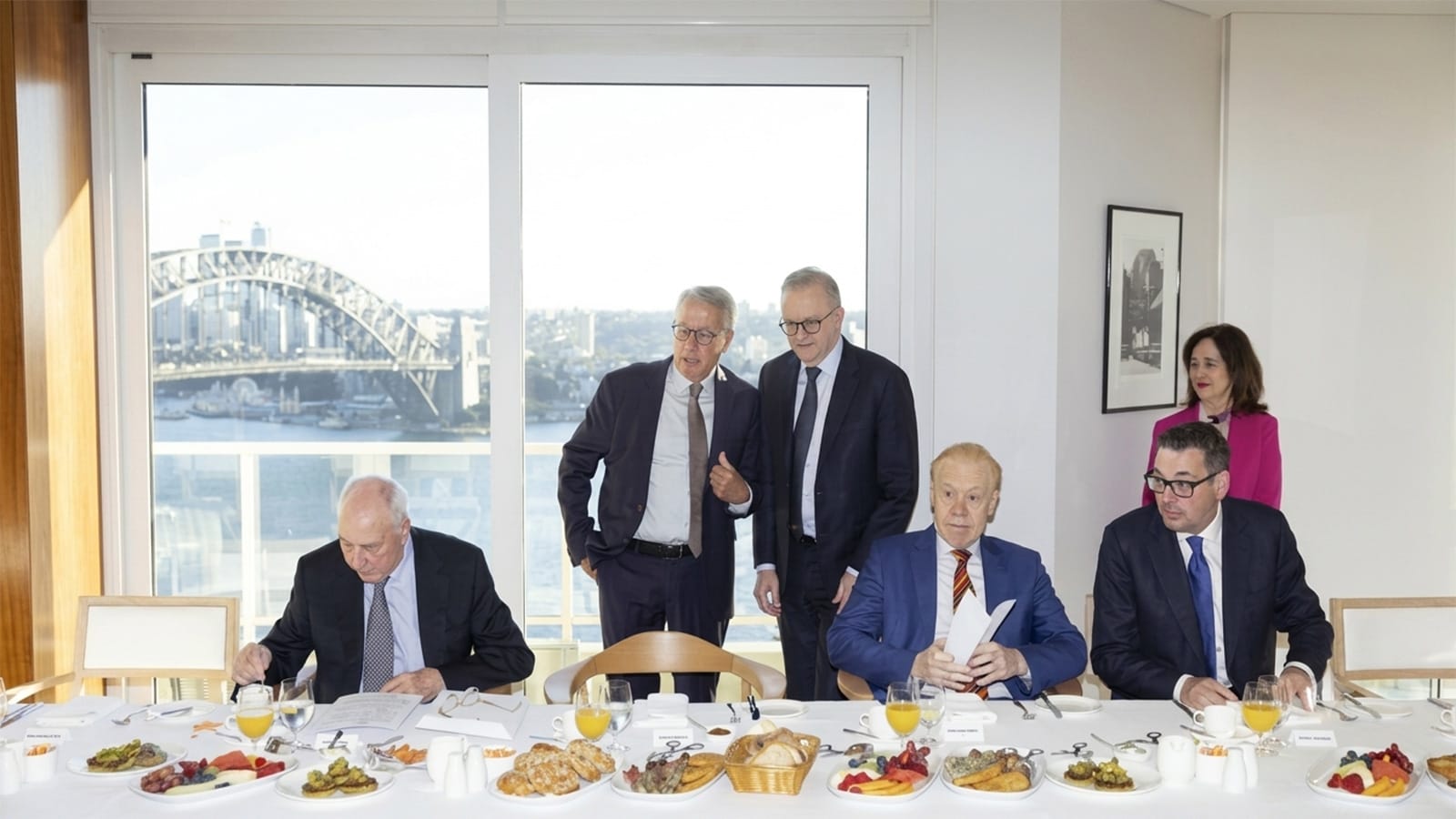
The optics tell their own story. The roundtable was hosted by Anthony Pratt, executive chairman of the Visy packaging empire and one of the country's richest men. Pratt is also among Australia's biggest political donors, and he backs both sides: roughly $1 million to Labor and, separately, $1.3 million to the Liberals ahead of a federal election, after splitting $1.6 million to Labor and $1.4 million to the Coalition in 2019. Around his table sat the sitting Prime Minister, former prime minister Paul Keating, former premier Daniel Andrews and Labor national secretary Paul Erickson, all working out how to put your retirement savings to their use. A room of the powerful, deciding the future of money that belongs to you.
The other jaw: a new tax on the Australians who did build a balance
Here's the other end of the squeeze, the part that catches the people the borrowing ban doesn't. From 1 July 2026, Labor's Division 296 tax adds an extra 15% on earnings for balances above $3 million. Its original plan to tax gains that existed only on paper, never actually cashed in, sparked such a revolt it was wound back to a realised earnings basis. That retreat is the lesson worth remembering: when savers push together, this government moves.
For now the deadline that matters is 10 August. After that, borrowing to buy a home inside your own super fund is gone. Whatever Canberra decides to call your $4.5 trillion, the one word it keeps avoiding is yours.