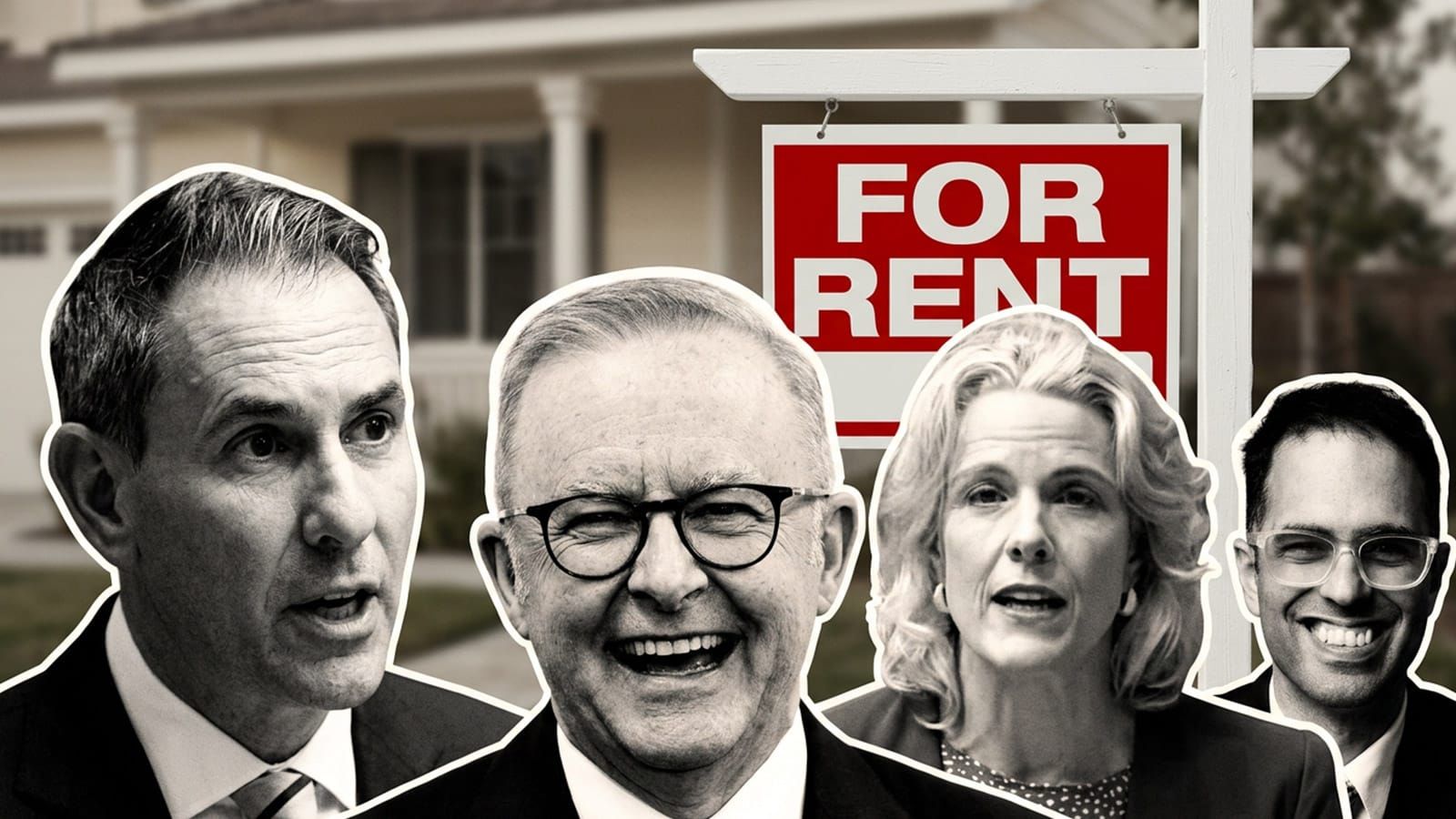
Treasurer Jim Chalmers' budget told Australian renters that limiting negative gearing and cutting the capital gains tax discount would cost them less than $2 a week. Three months later that number has completely unravelled. Industry modelling reveals the true rental hit will be five times higher by the end of the decade, while the policy has simultaneously erased $200 million from New South Wales stamp duty in a single month.
The market response was swift and brutal. PropTrack data shows national advertised rents surged $21 a week over the June quarter immediately following the budget. In Sydney, house rents spiked by $50 a week to a record $850, slamming tenants with an extra $2,600 a year. Sydney unit rents jumped $30 a week to $780, forcing local apartment renters to pay more than tenants pay for an entire house in every other capital city.
Treasury stacked its budget papers with rosy assumptions, forecasting house prices would merely grow 2% slower while delivering a net gain of 30,000 homes over a decade. The reality on the ground tells a very different story. National dwelling values plunged 0.7% in July, marking the sharpest single month drop since December 2022. Far from adding supply, joint modelling from four major housing industry bodies warns this policy will actively destroy housing starts on a net basis, shrinking the nation's home building pipeline when Australians need it most.
| What Treasury forecast | Treasury's number | What has happened |
|---|---|---|
| Rent rise | Under $2 a week | $21 a week nationally, June quarter |
| House prices | Growth 2% slower | Values down 0.7% in July |
| Housing supply | Net gain up to 30,000 | Modelling says net loss of 8,742 starts |
Treasury put the $2 rent rise and 35,000 fewer homes in the same box
Deep inside Box 4.4 on page 159 of Budget Paper 1, under the label "Housing measures in this Budget", sits the estimate the government has never withdrawn. Treasury wrote that the reforms were "likely to have a small impact on rents, with an expected increase of less than $2 per week for a household paying the current median rent".
Treasury picked its own comparison for the very next sentence, noting that a single person on the maximum rate of Commonwealth Rent Assistance had gained more than $20 a week from the 2023 and 2024 increases. Further down the same box sits the concession that the tax changes cost supply, with the increase in dwellings over the decade running "around 35,000 dwellings fewer compared to no tax policy change".
Treasury offsets that shortfall in the same box, counting up to 65,000 new homes from the $2 billion Local Infrastructure Fund and leaving a net claim of up to 30,000 additional homes over ten years. The same box promised house price growth would cool by around 2% over a couple of years, saving a buyer at the national median around $19,000.
Anthony Albanese was asked to confirm the supply figure in Question Time the day after the budget, when Opposition Leader Angus Taylor put it to him on 13 May: "Can the Prime Minister confirm that 35,000 fewer homes will be built as a result of Labor's new taxes?"
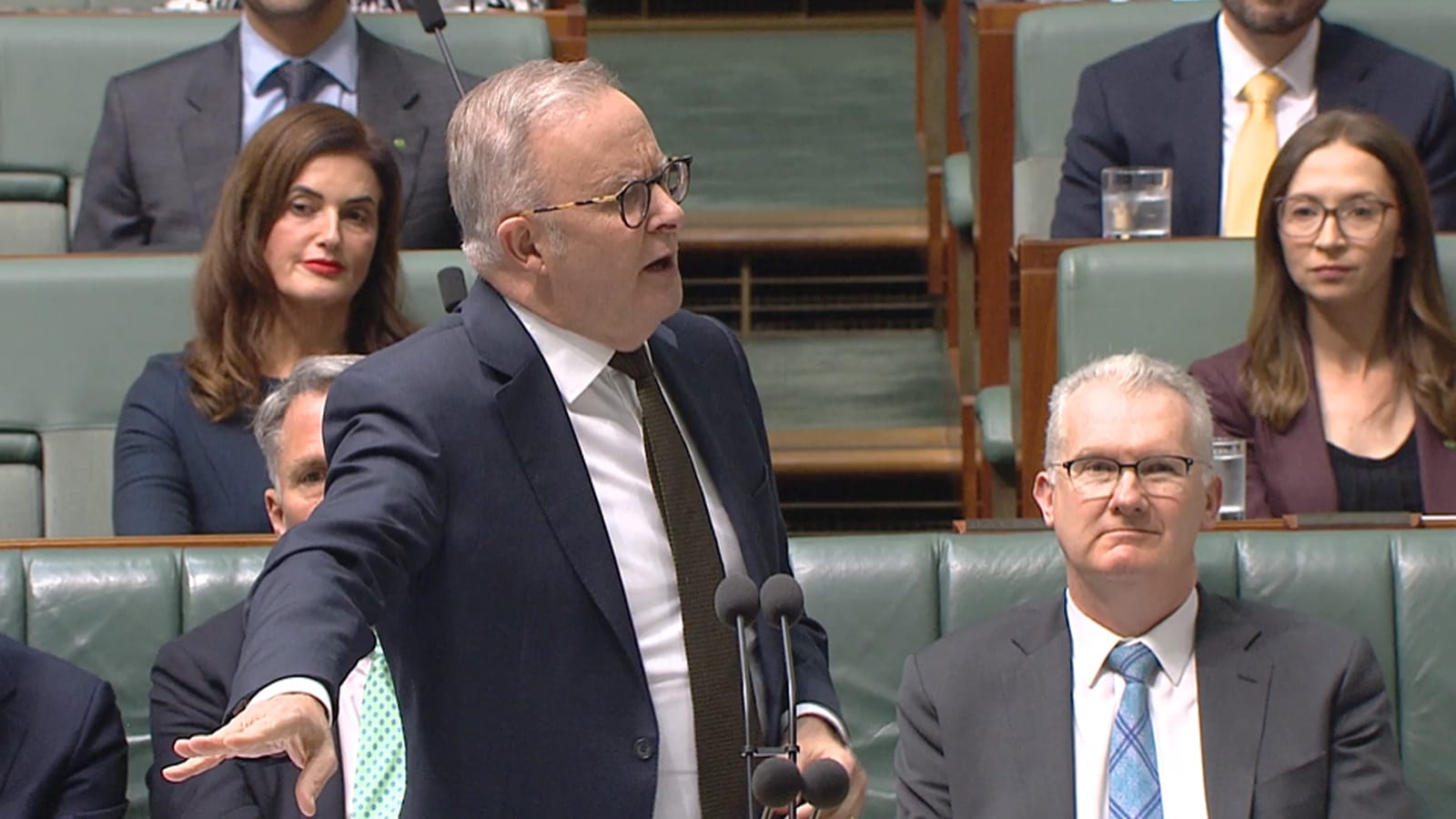
The Prime Minister answered with the net number instead, telling the House that what he could confirm was "increasing housing supply by at least 30,000 as a direct result", crediting the $2 billion Local Infrastructure Fund and directing members to "Budget Paper No. 1, statement 4, on page 158", which is the same page carrying both the 35,000 shortfall and the rent estimate.
Finance Minister Katy Gallagher read the estimate into the Senate record herself on 25 June, answering Liberal senator Andrew Bragg during debate on the tax bill. She pointed him to page 158 of Budget Paper 1, quoted the line that rents would rise by less than $2 per week, and said the budget analysis "provides people with the information they need to understand how Treasury expects these reforms to impact across the economy", making it the only occasion on which a member of the government has stated the figure in either chamber.
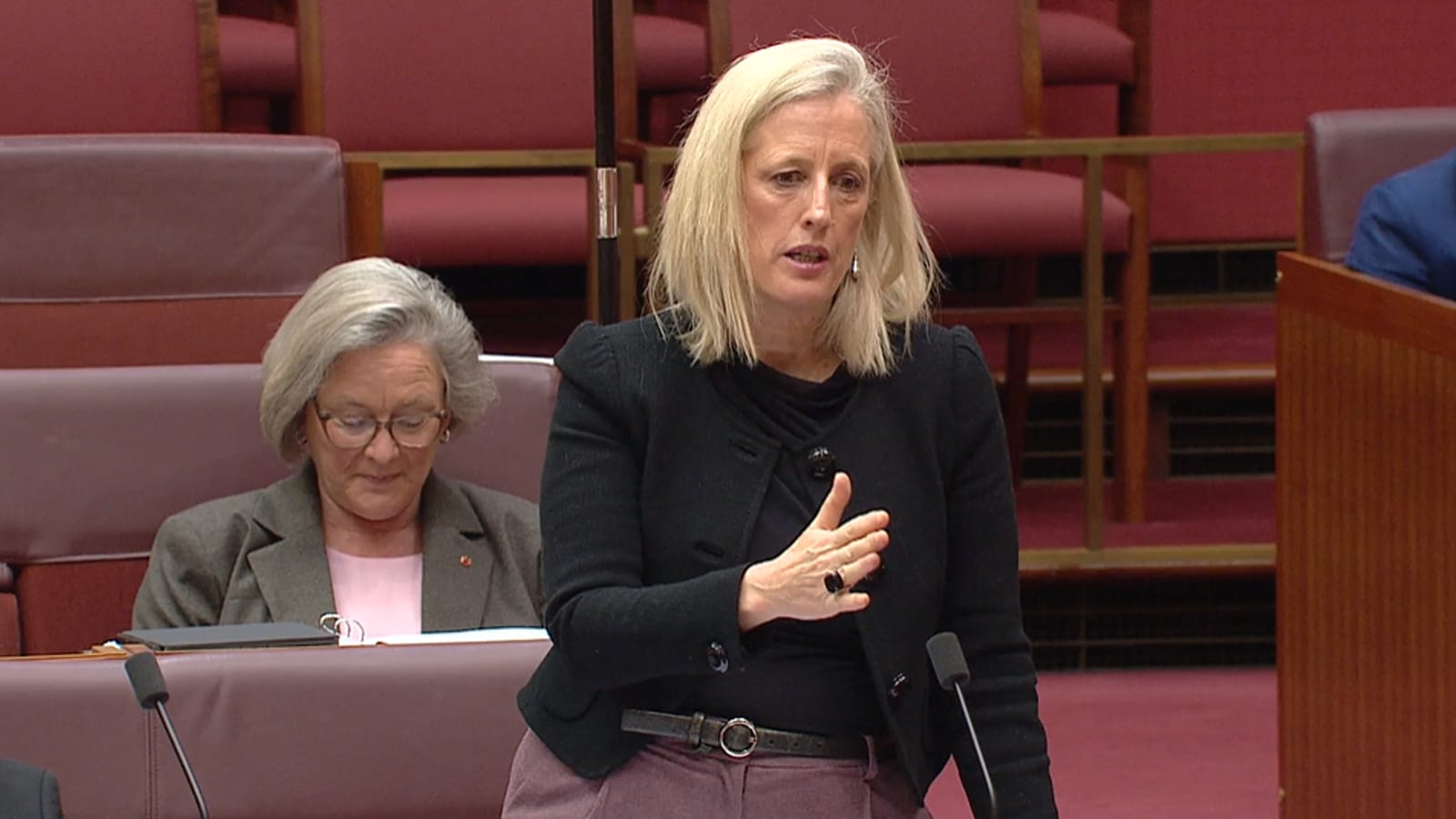
Liberal senator Kerrynne Liddle read the same page back at the government on 11 August, telling the Senate "you're building fewer homes, 35,000 fewer" before quoting the rent estimate and saying "that's not what's actually happening".
Instead, from 7:30pm on 12 May 2026, the trap was officially set. By restricting negative gearing on established homes and gutting the 50% capital gains tax discount for an indexed cost base and a 30% tax floor from 1 July 2027, the government locked in a policy shift that actively punishes investors, shrinks supply, and leaves renters to pay the price.
Master Builders and the Property Council commissioned modelling that blows the figures apart
The housing industry joined forces to expose Canberra's flawed maths, and the results blow Treasury's claims completely out of the water. Master Builders Australia, the Housing Industry Association, the Property Council of Australia, and the Real Estate Institute of Australia commissioned independent modellers Qaive and Tulipwood Economics to test the government's policy. Their 27 May 2026 brief reveals a devastating reality: rents will soar, and new home construction will collapse.
The modellers warned immediately that rental hikes would run 50% higher than Treasury's estimates in year one, exploding to five times the government's number by 2029/30. Isolated from any offsets, the tax changes alone drive rents up 0.49% in 2026/27 and 1.62% by decade end. That pushes weekly rents up $3 immediately and spikes them by at least $10 a week by 2030, while wiping out 14,032 new home builds over four years.
Even when factoring in Canberra's $2 billion infrastructure fund, the government's spin falls completely flat. Net rents still climb $3 a week in 2026/27 and jump to $9 a week by 2029/30, hitting a typical $600 a week tenant with an extra $477 every single year. Crucially, the policy results in a net loss of 8,742 new home starts over four years, directly contradicting Treasury's positive supply claims.
| Whose modelling | Rent effect 2026/27 | Rent effect 2029/30 |
|---|---|---|
| Treasury, Budget Paper 1 | Under $2 a week | Not published |
| Tax changes on their own | $3 a week | At least $10 a week |
| Tax changes plus the $2bn fund | $3 a week | $9 a week |
The economic mechanics behind this hit are stark. Modellers estimate landlords will pass 40% of their lost tax benefits straight onto tenants while absorbing the rest. Worse still, the report labels the government's offset targets overly optimistic, pointing out that Treasury relies on state and territory governments executing complex planning and zoning overhauls just to reach its baseline targets.
PropTrack has Sydney house rents at a record $850 a week
While Canberra published comforting forecasts, real estate data shows the market responding to Labor's tax changes with immediate aggression. PropTrack figures reveal national advertised rents surged 3.1% in the June quarter alone to a median of $670 a week, up 6.4% over the year. Sydney house rents led the charge, jumping 6.3% to a record breaking $850 a week, while Melbourne hit $600 and Brisbane reached an all time high of $695. Cotality, which measures the whole rented stock rather than new listings, has milder numbers, with national rents up 1.6% for the quarter and 5.9% over the year to a median of $705 a week. Its head of research Gerard Burg says it's too early to attribute the change to the budget, pointing to supply constraints that have been building for years.
The speed of the rental escalation exposes the government's complete misjudgement of market dynamics. In Sydney, quarterly rent growth ran five times faster than the same period last year. Domain described the shift as a step change in pricing behaviour, with landlords moving early in April and May to hike rents the moment Canberra made its tax intentions clear.
Top economists and financial institutions warned this exact outcome was inevitable. Gross rental yields surged from 3.5% late last year to 3.7% in the June quarter as investors moved to protect their bottom lines. NAB head of Australian economics Gareth Spence told clients the changes "imply that gross rental yields will need to rise in order to compensate for the loss of tax benefits", on the stated condition that house prices stay where they are, while AMP chief economist Shane Oliver said "it always looked to me like the $2 estimate was too low". With national vacancy rates stuck at a suffocating 1.6% and households already shelling out a third of their income on rent, Labor's policy has handed landlords every incentive to pass their new tax bills straight down to tenants.
Daniel Mookhey lost $200 million of stamp duty in June and won't name the cause
New South Wales stamp duty receipts cratered by 18% in June compared to the exact same period last year, burning a $200 million hole in state coffers in just 30 days. Transactions fell by more than 17% over the same window. The Daily Telegraph reported the figures as the first official snapshot of what Canberra's tax policy has done to the state's bottom line, and noted that a full year at June's rate would leave a shortfall in the billions.

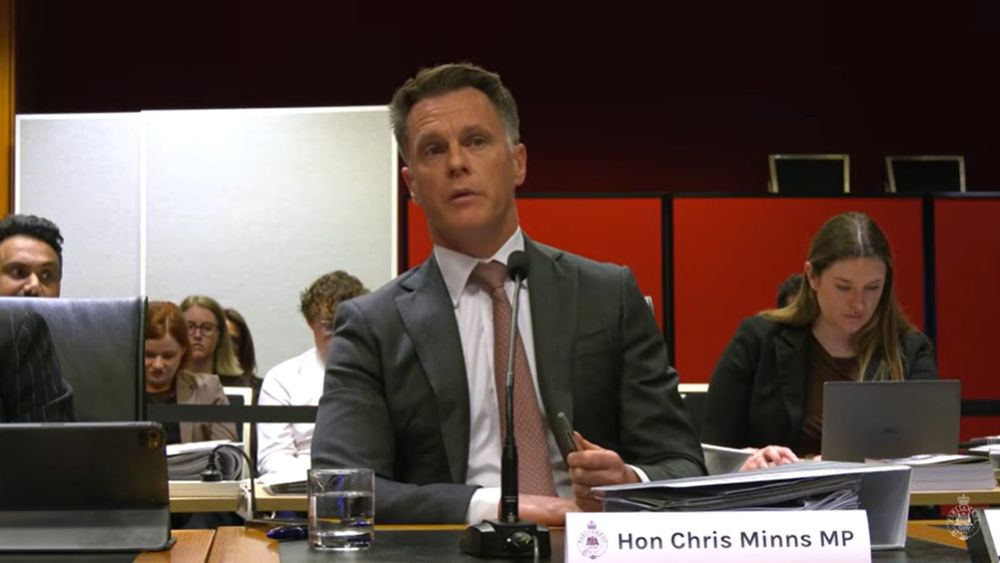
Despite slashing transfer duty projections by $5.3 billion over four years in his 23 June budget, Treasurer Daniel Mookhey and the Minns Government continue to shield Canberra from blame. State Treasury predictably pinned the disaster on Reserve Bank interest rate hikes, while Mookhey said it "remains still too early for us to say how volumes and prices are tracking compared to what we forecast", and a government spokesman called the fall "not unexpected".
The silence is drawing political heat, with Liberal Treasury spokesman Scott Farlow saying that "while other state governments including Queensland, have stood up to Canberra and called out the impact of these changes, Chris Minns and Daniel Mookhey have supported them and denied their impact on the state budget".
Independent economists say the denial doesn't hold. Cameron Kusher said New South Wales would have to write its forecasts down further, and that the federal changes "are probably going to exacerbate those falls in prices and exacerbate the decline in transaction volume", with volumes flat until well into 2028, while Rich Insights economist Chris Richardson said it's "still early days in this downturn".
Treasury forecast slower growth, and values are falling instead
Treasury explicitly forecast that the tax changes would merely slow house price growth. Instead, values are in freefall. Cotality's national Home Value Index dropped 0.7% in July alone, marking the single largest monthly collapse since December 2022. Capital city auction clearance rates have cratered, with Sydney dropping to a dismal 45.6% in the week to 2 August while combined capitals endured nine straight weeks below 50%. With nearly 35% of auctions ending in withdrawals, the market has completely stalled.
That gap between Treasury's estimate of moderate growth and the harsh reality of falling prices is exactly what is blowing up state finances. As buyers pull back and property transactions stop settling, state treasurers like Daniel Mookhey are left holding hundred million dollar holes in their budgets.
Worst of all, Labor's flagship policy is completely failing the very people it claimed to help. The price falls have done nothing to make housing accessible for aspiring buyers. In Sydney, an average couple on median incomes still sits a staggering $154,000 short of what is required to buy a median unit. Labor's tax changes managed to destabilise the market, destroy state revenues, and drive up rents, all without bringing first home buyers a single step closer to owning a home.
Clare O'Neil says the impact is in the budget documents
Faced with mounting market chaos, Housing Minister Clare O'Neil answered questions in Parliament by pointing straight back to the same figures. Asked in Question Time what the budget had done to house prices, O'Neil referred MPs to the government's own paperwork, saying "the impact of the budget changes on house prices is actually in the budget documents". The document she pointed to is Box 4.4, the exact same page that contains the debunked $2 rent estimate, the missing 35,000 home builds, and the failed 2% price growth forecast.
On Credlin on News24 on 17 August, host Peta Credlin said O'Neil had been asked what percentage of people in her own Melbourne electorate had fallen into negative equity as a result of the May budget tax changes, and that the Housing Minister "did everything but answer the question".
Video: Credlin, News24, 17 August 2026. Host Peta Credlin on Housing Minister Clare O'Neil's answers about negative equity in her own electorate.
Instead of taking accountability for spiking rents and crashing state revenues, O'Neil chose political rhetoric over reality. She told Parliament the government had ended a system where young Australians' tax dollars subsidised property investors at weekend auctions. Her office doubled down with standard talking points, claiming the package will eventually lower rents and help 75,000 renters become homeowners. What her spokesman conveniently ignored is that this single projection sits right alongside Treasury's admission that 35,000 fewer homes will actually be built.
The Minister's own record sits awkwardly beside the policy, and O'Neil has declined to say whether she sold her own negatively geared investment property before the rule change.
With rents at record highs and the industry warning supply is contracting, Treasury's flawed estimate of under $2 a week remains printed in Budget Paper 1. Labor has not withdrawn the claim, has not published any real world evaluation, and refuses to take responsibility for the widespread damage caused over the past three months.