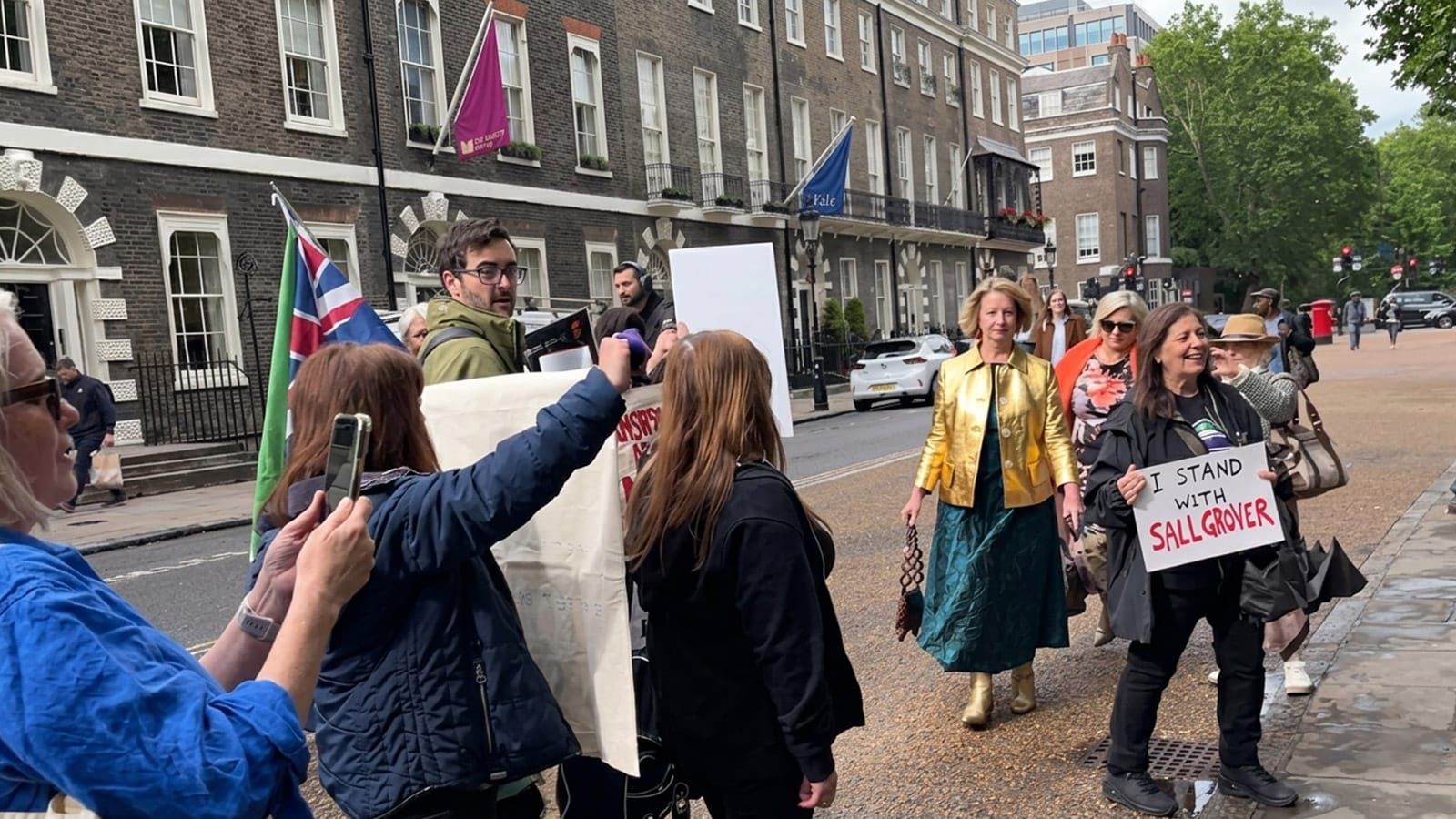
Julia Gillard was branded a "destroyer of women's rights" by women's rights protesters in London on the night of 11 June, the second public protest against her on UK soil in less than three weeks. Both protests are tied to one piece of legislation, the Sex Discrimination Amendment (Sexual Orientation, Gender Identity and Intersex Status) Act 2013, passed by parliament under her government on 25 June 2013.
Gillard was at Bedford Square Gardens as Chair of Judges for the 2026 Women's Prize for Fiction, where she handed the £30,000 prize to Virginia Evans for The Correspondent. Outside the venue, a small group of protesters held placards and called out as she walked past, with chants referring to the Tickle v Giggle ruling and one woman shouting "Julia, you sold us down the river". The moment was posted to X, tagged with #IStandWithSallGrover, and racked up more than 146,000 views inside hours.
Video: @MrMennoTweets, via X. Julia Gillard walks past protesters outside a London venue.
Two UK protests in three weeks
The Bedford Square protest came less than three weeks after Gillard was heckled at the Hay Festival in Wales, where a woman in the audience stood and shouted "What about Sall Grover?" during a panel on women's rights and gender equality. The same protester held a banner reading "Julia Gillard, DESTROYER OF WOMEN'S RIGHTS", a phrase later picked up by Sky News Australia and other outlets covering the moment. Gillard reportedly did not respond directly to the interruption. No public statement from her on either protest has been reported as of writing.
The 2013 amendment behind the protests
The Bill that became the 2013 amendment was introduced into the House of Representatives on 21 March 2013 by then Attorney-General Mark Dreyfus, under the Gillard Labor government. It added "sexual orientation", "gender identity" and "intersex status" as protected attributes under the Sex Discrimination Act 1984, and in doing so stripped the definitions of "man" and "woman" that had sat in the Act since the Hawke government. The phrase "opposite sex" was replaced with "different sex".
The new gender identity protection covers a person's "gender-related identity, appearance or mannerisms or other gender-related characteristics, whether by way of medical intervention or not, and with or without regard to the person's designated sex at birth".
The amendments received bipartisan support at the time, and the LGBTIQA+ sector welcomed them, with Intersex International Australia calling the inclusion of intersex status a world first. More than a decade on, the same wording is what's now driving the cases that have followed Gillard to the UK.
Tickle v Giggle, the ruling that lit the fuse
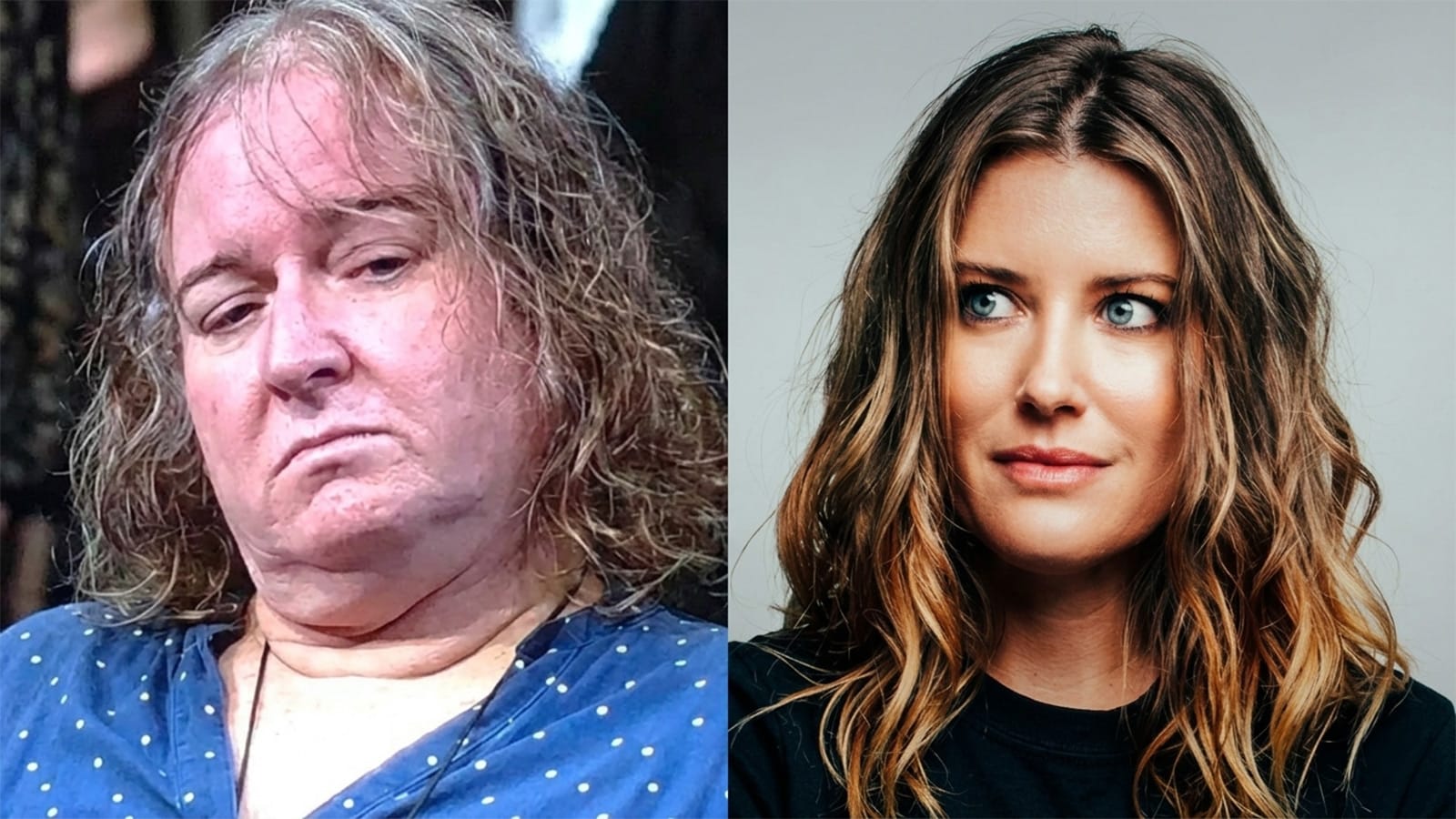
The most consequential test of the 2013 wording came in Tickle v Giggle. Sall Grover, founder of the women-only social networking app Giggle for Girls, removed Roxanne Tickle, a transgender woman, from the app in 2021. Tickle complained to the Australian Human Rights Commission, and the case went to the Federal Court, which in August 2024 found Grover had engaged in indirect discrimination on the basis of gender identity, and ordered her to pay $10,000.
Both sides appealed. On 15 May 2026, the Full Federal Court, comprising Justices Melissa Perry, Wendy Abraham and Geoffrey Kennett, dismissed Grover's appeal and allowed Tickle's cross-appeal. The court found two instances of direct discrimination, doubled the damages to $20,000, and capped Grover's exposure to Tickle's appeal costs at $50,000. The court reasoned that "the definition of sex was intended by this parliament to not be binary and not be immutable", a reading lifted straight from the 2013 amendment. Grover has said publicly she'll appeal to the High Court.
The case has also pulled in the Sex Discrimination Commissioner Anna Cody, who in Senate estimates on 26 May 2026 conceded a biological male cannot become pregnant, then argued a trans woman could still be covered by the Act's "potential pregnancy" provisions. Liberal Senator Michaelia Cash declared the law an "ass". Australian Human Rights Commission President Hugh de Kretser told the same committee a woman is "an adult human female, and that includes transgender women".
Pauline Hanson "disgusted" by the ruling
One Nation leader Pauline Hanson responded to the Full Federal Court decision on the day it was handed down.
"I'm disgusted at the decision that's just been handed down by the Federal Court in the Tickle vs Giggle case," Hanson wrote on X. "It flies in the face of biological reality, and strips rights from women. Women's spaces are not being protected and are no longer safe. I will back Sall Grover in Parliament."
The statement was reported widely across Australian media.
Hanson tried to amend the Act in September 2024. Her Sex Discrimination Amendment (Acknowledging Biological Reality) Bill 2024, which would have reinstated biological definitions of man and woman, was blocked at first reading by Labor, the Greens, David Pocock and Jacqui Lambie. The Senate refused to even hear it debated. "Hard-won rights for Australian women under attack from trans activism have been denied by Labor and the Greens in the Senate today," Hanson said at the time.
The Kirralee Smith case, $95,000 for calling them men
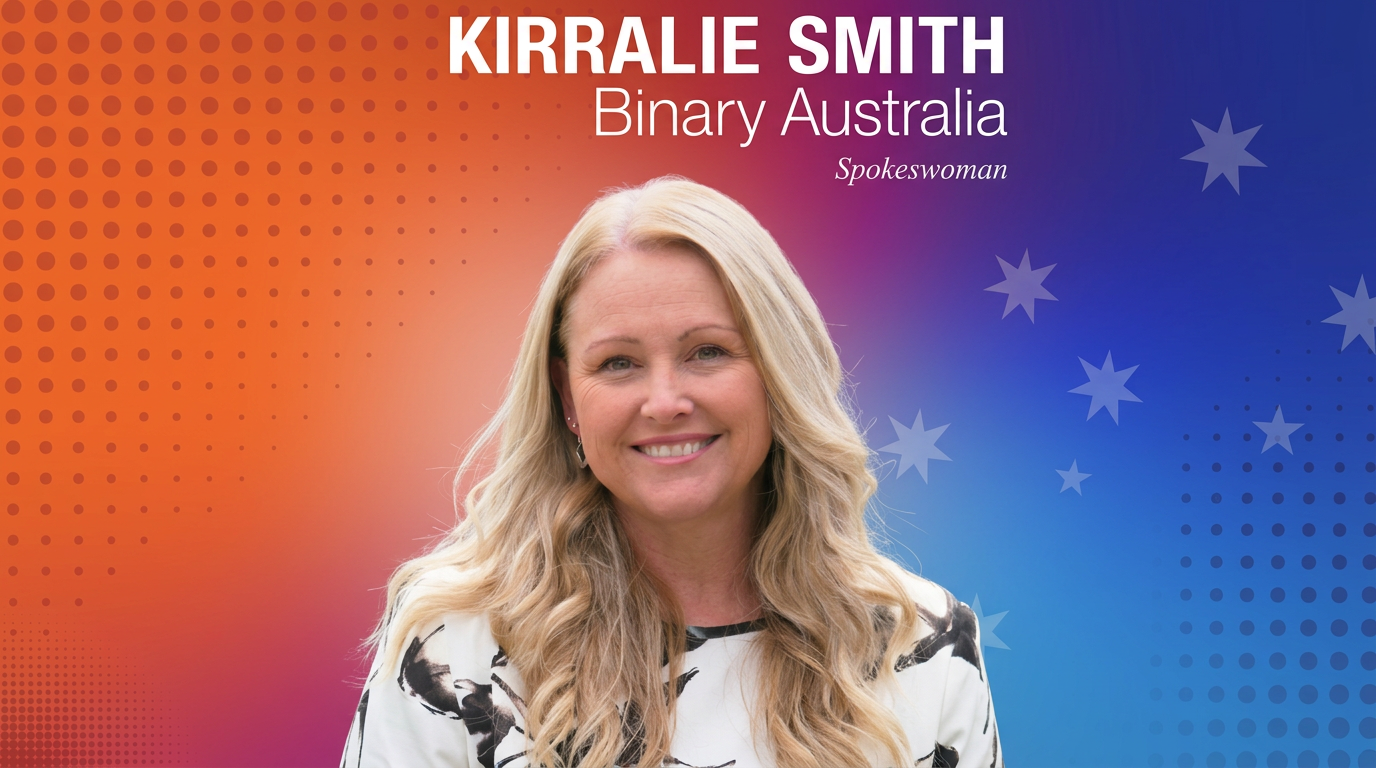
In a separate matter under NSW state law, women's rights campaigner Kirralie Smith of Binary Australia was found by NSW Deputy Chief Magistrate Sharon Freund to have unlawfully vilified two transgender soccer players under section 38S of the NSW Anti-Discrimination Act. The liability ruling came down on 26 August 2025. The penalty ruling on 5 December 2025 ordered Smith to pay $95,000 in damages, split between the two complainants, plus a public apology across all her social media within 28 days or face the penalty doubling. It was the first finding of unlawful transgender vilification under NSW law.
Smith is appealing. A stay was granted on 31 December 2025, and the matter was listed for hearing in the NSW Supreme Court in late May 2026. The federal Sex Discrimination Act doesn't directly drive the Smith case, which sits under NSW law, but the Smith and Tickle matters are routinely cited together by supporters of legislative change because they both turn on the same question of whether a person's biological sex can be referred to once gender identity is legally protected. Hanson has previously backed Smith's legal fundraising.
The push to amend the Act
The political response has come from the conservative side of parliament. On 25 May 2026, Nationals MP Alison Penfold introduced the Sex Discrimination Amendment (Sex-Based Rights) Bill 2026 in the House of Representatives. It would restore biological definitions of "man" and "woman", insert a biological definition of sex, and explicitly protect female-only spaces including prisons, domestic violence shelters, sporting competitions and bathrooms. Liberal leader Angus Taylor has pledged that a Coalition government would amend the Act to "define biological sex in the Act. Male or female. The sex you are born. And we will protect single-sex spaces across Australian life."
The Albanese government's position, after the Full Federal Court ruling, was that it was aware of the decision and "all people are entitled to respect, dignity, and the opportunity to participate in society, free from discrimination". No legislative fix has been put forward. Penfold's bill won't pass while Labor holds government, and Hanson's earlier Senate effort was blocked before debate. For now the 2013 wording stands, and the court's reading of it stands with it.
Gillard's record at the prize, and at home
Back at Bedford Square Gardens, Gillard used her speech to warn about AI:
"AI can cannibalise text, but it is only human beings who can imagine our way into being someone else: a person who lives in a different time and place, who thinks and feels in a way contrary to our own."
Whether a human drafted it wasn't disclosed. The line landed well in the room. Less well with the protesters waiting outside.
Gillard has chaired the Global Institute for Women's Leadership at King's College London since leaving politics, and her 2012 "misogyny speech", prompted in part by "ditch the witch" placards at a Tony Abbott rally, still defines much of her public profile in Britain. The same slogan resurfaced this month on billboards aimed at Victorian Premier Jacinta Allan, and Gillard publicly called it a "tired, old trope".
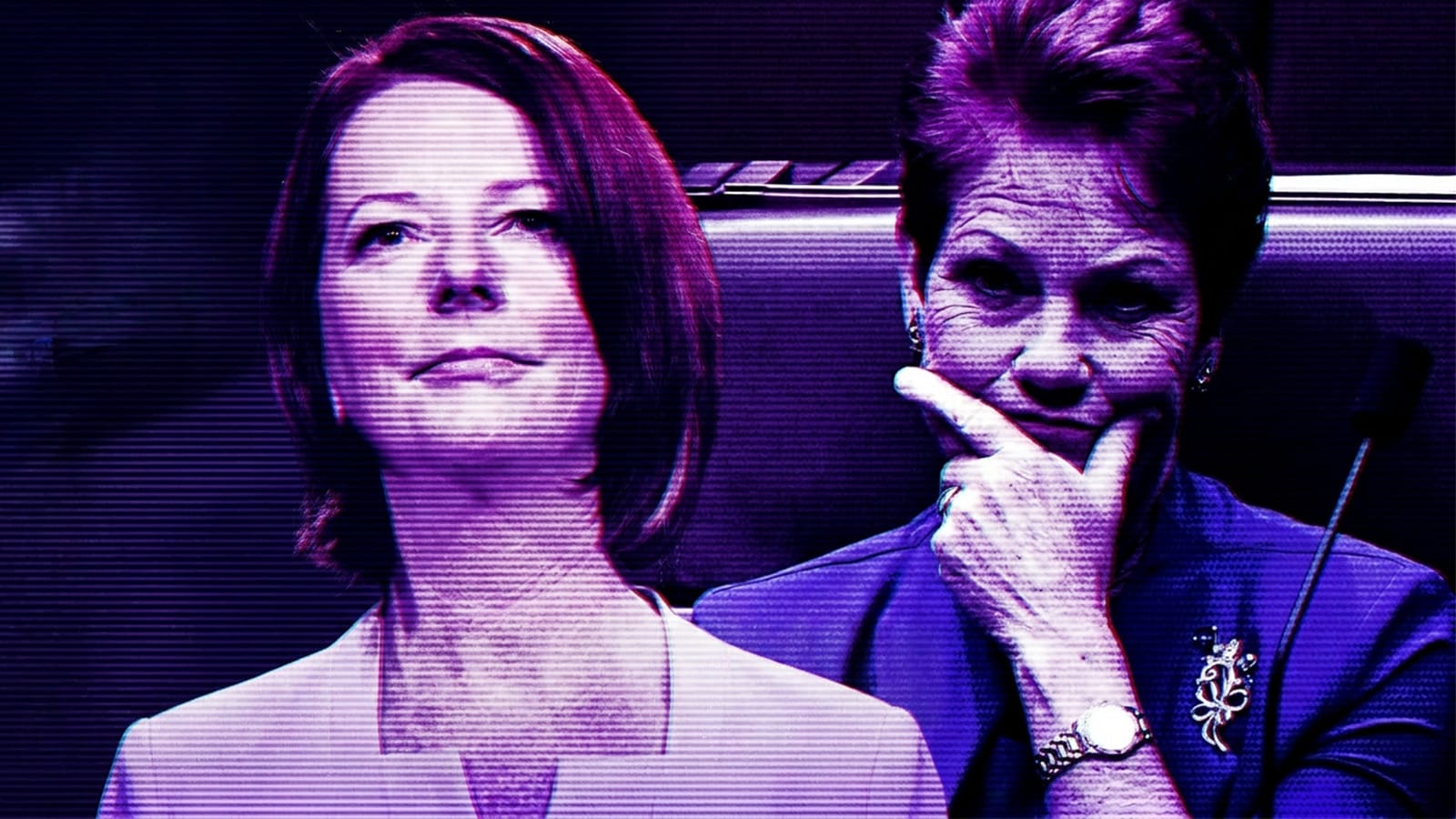
Pauline Hanson, called a witch in 1990s cartoons, in Parliament, and by then Deputy Prime Minister Tim Fischer who said she "should be burned at the stake", has been waiting three decades for the same defence. As One Nation put it last week, "no woman from the left side of politics ever came to Pauline's defence". The 2013 amendment, passed in the dying weeks of her prime ministership, gets less airtime overseas. The protesters in London on 11 June were there to change that.