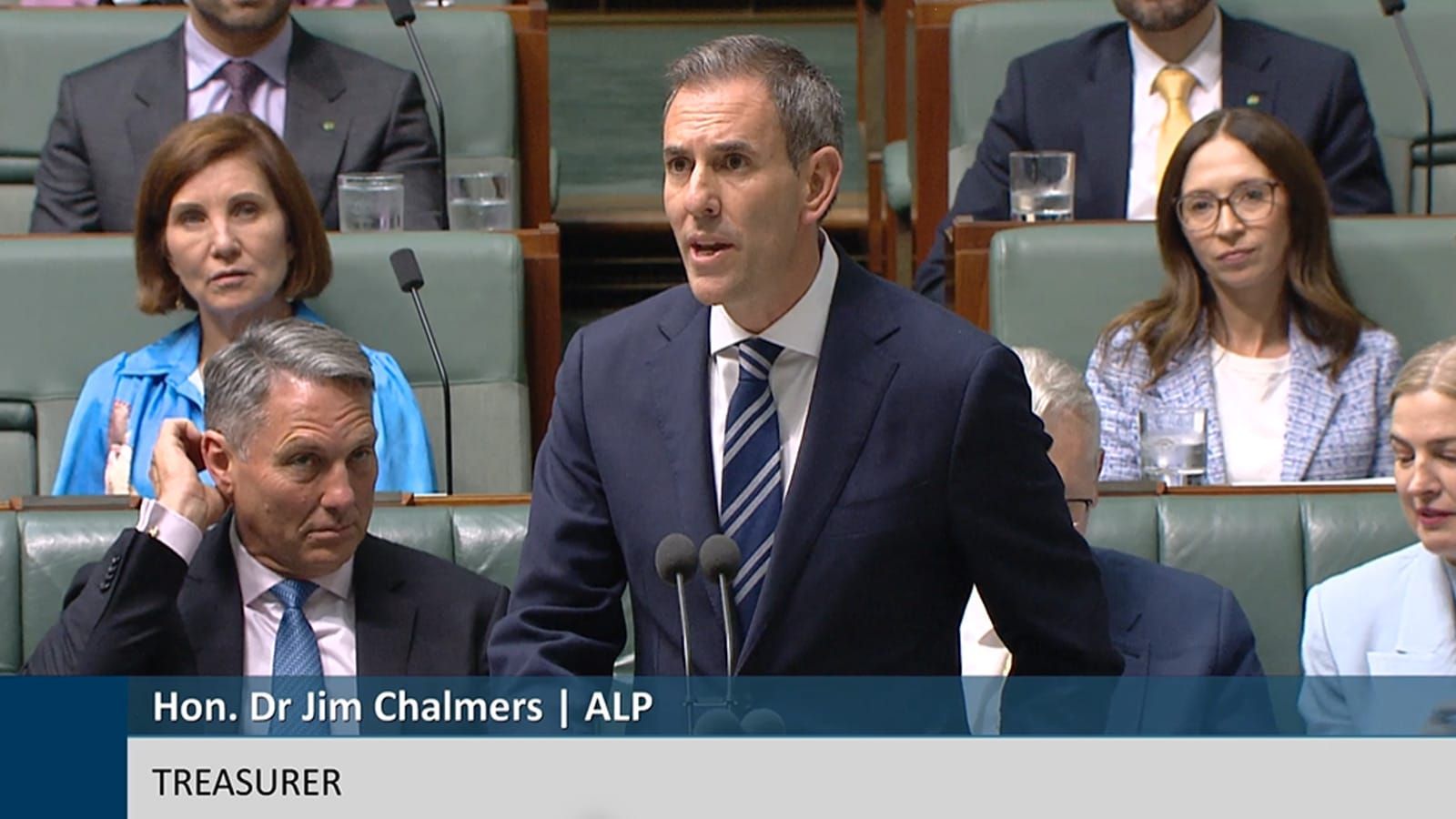
Treasurer Jim Chalmers admitted in parliament on Wednesday that productivity is still "too low". He used the phrase once, in an answer that then turned to income tax cuts, paid parental leave and the government's surpluses.
It came in the same week the Reserve Bank cut its productivity forecasts again, and the chief executives of Westpac and the Commonwealth Bank, Anthony Miller and Matt Comyn, warned that interest rates could stay high until 2028 unless productivity picks up.
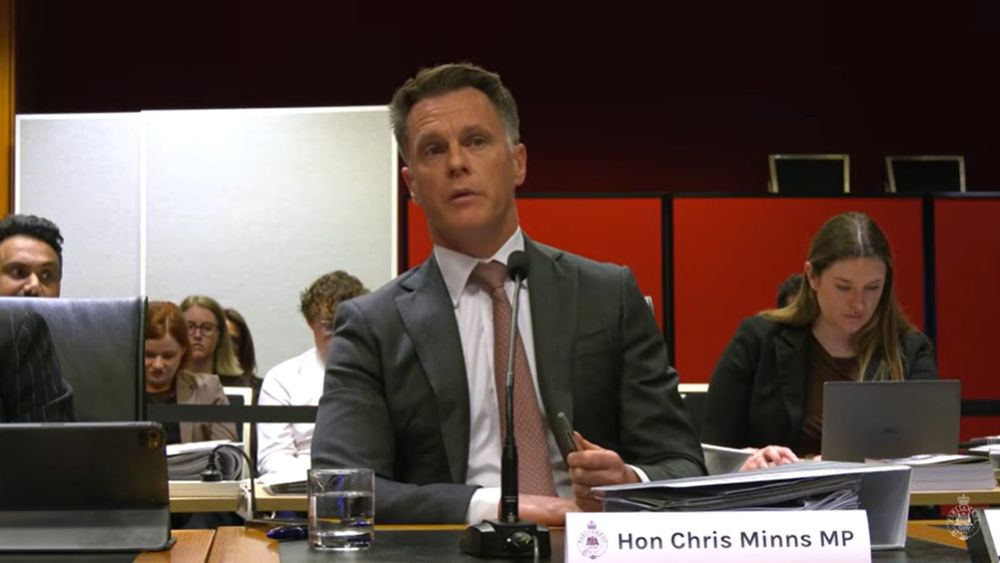
Video: House of Representatives broadcast, via ParlView. Treasurer Jim Chalmers tells the House that productivity is "too low" during question time on Wednesday. The Reserve Bank cut its productivity forecasts again the same week.
What the Reserve Bank forecasts for productivity
The bank's August statement has labour productivity down 0.5% across both halves of this year, turning positive in 2027 and reaching 0.7% a year by 2028, which is its estimate of the medium term trend and which it describes as lower than in the past.
HSBC chief economist Paul Bloxham puts productivity growth at 1.3% a year between 2005 and 2015 and 0.3% a year between 2016 and 2025.
"There is little evidence of a sustained improvement in productivity growth to date," the bank says. Its forecast assumes productivity returns to that trend rather than naming anything that would lift it, and the bank lists that assumption failing as one of three key risks to its whole outlook. The only driver it names on the upside is faster adoption of artificial intelligence.
The bank also asked around 240 businesses about AI between early May and early August. Adoption "is not widely being reported as a factor behind headcount reductions", it says, with most firms treating it as a way to lift revenue rather than cut staff, and most still at a stage where "AI has not yet materially changed how tasks are being performed". A small minority are making much larger investments, and in June we reported that DP World wants AI robots to replace 60% of its Australian wharfies.
The Reserve Bank's productivity forecasts to 2028
Labour productivity, annual change, as forecast by the Reserve Bank in August 2026.
Source: Reserve Bank of Australia, Statement on Monetary Policy, August 2026. The 1.3% ten year average is from HSBC chief economist Paul Bloxham, who puts the following decade, 2016 to 2025, at 0.3% a year.
Chalmers was answering Labor's Alicia Payne, the member for Canberra, on Wednesday. He said inflation had come down three months in a row, that it finished the financial year below what the Reserve Bank and Treasury had forecast, and that this was one reason the bank had been able to hold rates steady the day before.
"We know inflation is still too high and that productivity is too low, and we know that people are under pressure," he said, before turning to income tax cuts, paid parental leave, Medicare and the government's two surpluses.
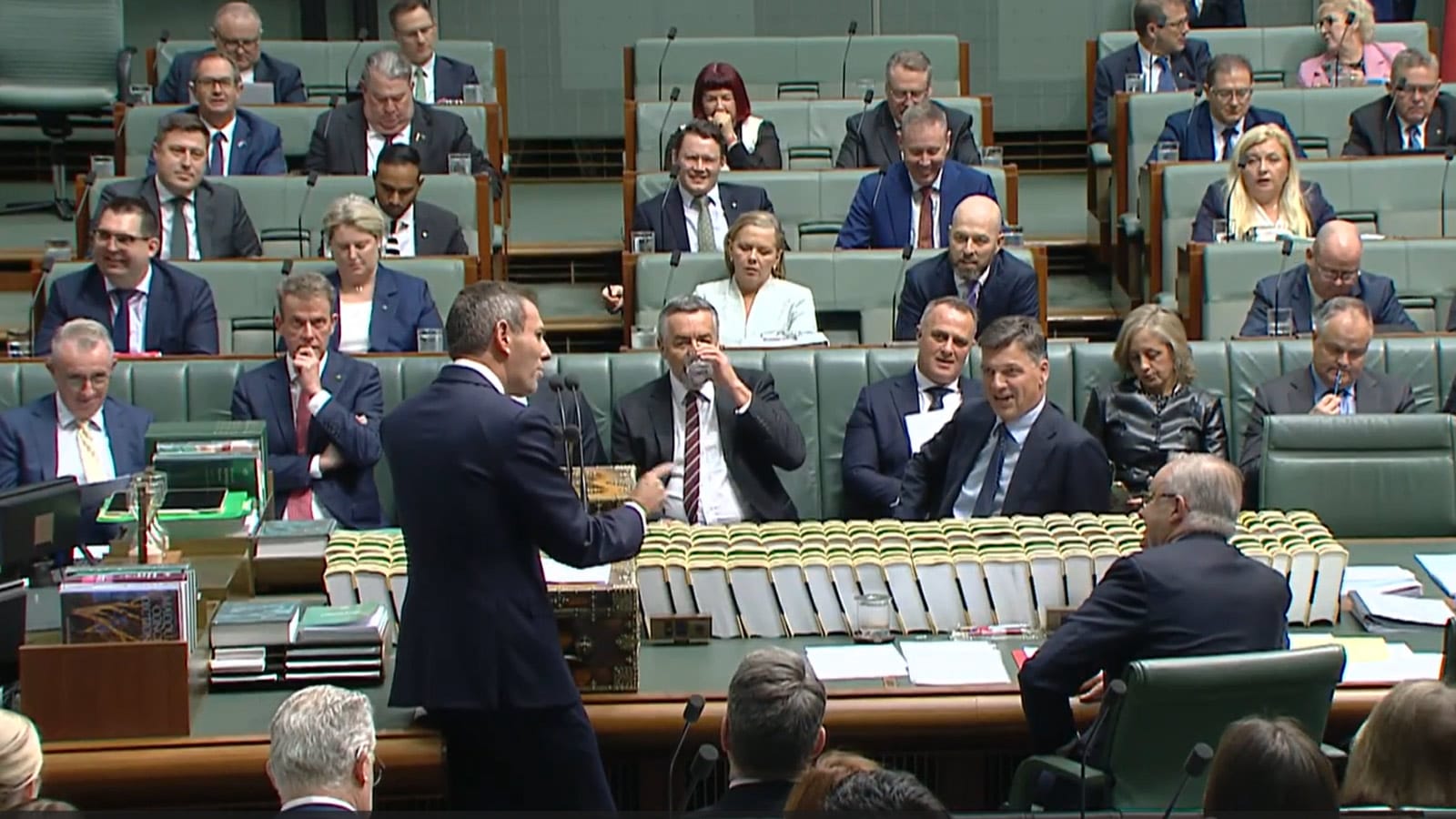
He also pointed to the credit rating, saying S&P Global had reaffirmed Australia's AAA the week before, and that the country is now one of only nine with a stable AAA from all three major agencies, which he called "a feat never achieved in any year of the Howard and Costello government".
S&P affirmed the rating on 6 August. Its report has net government debt stabilising at about 28% of GDP by 2029, against 12% in 2019, and the deficit at about 1.6% of GDP for the next two years. It says it could lower the rating if fiscal outcomes and per capita economic growth both come in materially below its forecasts.
The same report says GDP per capita has fallen in 10 of the past 15 quarters, "in part due to sagging productivity". It puts long term labour productivity growth at 0.8% in fiscal 2024, down from 1.7% a decade earlier, and says growth in the "non-market sector", including public healthcare and social services, could be weighing down aggregate productivity.
Productivity was not raised again in question time, and an hour later, in a debate on the cost of living, Assistant Minister for Productivity Andrew Leigh said competition reform of the sort that "turbocharged productivity in the 1990s" could lift household incomes by up to $5,000.
What the Reserve Bank expects, and which way is better
Five measures from the August statement. The middle column is the direction that would help you, not a forecast.
| What it is | Which is better | What the bank expects |
|---|---|---|
| Productivity what we make per hour |
Higher | Falling right through 2026, and only back to 0.7% a year by 2028 |
| Interest rates what your loan costs |
Lower | The forecasts assume 4.4% at the end of 2028, above where it sits today |
| Real wages your pay after price rises |
Higher | Going backwards now, and not positive again until 2027 |
| The economy how fast the country grows |
Higher | Never reaches 2% growth in any period out to the end of 2028 |
| Unemployment people who can't find work |
Lower | Rises in every single period, from 4.4% now to 4.8% |
Source: Reserve Bank of Australia, Statement on Monetary Policy, August 2026. The interest rate line is an assumption inside the bank's forecasts, not a decision by its board.
Anthony Miller and Matt Comyn say rates could stay high until 2028
Miller was in Canberra on Wednesday to meet Treasury officials and Chalmers. He told The Australian that rates could stay high into 2028 "and potentially beyond" without an improvement in productivity, and that the property tax reforms of the 1990s worked because the country was focused on productivity at the time.
Comyn said the economy can't grow beyond about 2% at the moment without running into inflation, and that the difference between growing at 2% and growing at 3% is what underpins living standards.
Michele Bullock put a fourth rate rise on the table in July.
Change in dwelling values by capital city
The three months to June 2026.
Sydney is 3.7% below its January 2026 peak. Melbourne is 4.0% below a peak it set in March 2022. Over the full 12 months to June, Perth rose 23.9% and Sydney rose 0.3%.
Source: Cotality Monthly Housing Chart Pack, July 2026.
What a 3.7% fall in Sydney house prices does to a 5% deposit
A buyer who bought in Sydney at the January 2026 peak.
The house is now worth 3.7% less than they paid for it, and that loss comes out of their deposit first, leaving them 1.3 percentage points of equity.
Source: Cotality Monthly Housing Chart Pack, July 2026. Sydney values were 3.7% below their January 2026 peak at the end of June and were still falling through July. Figures are before purchase costs and any principal repaid.
Sydney values are down 3.7% since January
Roy Morgan put 1,606,000 mortgage holders, or 30.3%, at risk of mortgage stress in June, the fifth monthly rise in a row and the highest reading since June 2024. The measure counts anyone paying more than a quarter of their after tax income on the loan, and does not count missed payments.
The Commonwealth Bank's home loan arrears rose to 0.73% and its bad debt charge rose 39% to $378 million, which the bank attributed to cost of living pressures. Westpac reported arrears of 0.58%, down over the year, and stressed exposures of 1.19%, up from 1.16% in March.
Both markets were still falling through July, while Perth rose 23.9% over the same 12 months.
First home buyers account for 29% of all owner occupier lending, and Cotality attributes the increase to the expansion of the government's 5% deposit guarantee. A 5% deposit is wiped out by a 5% fall in prices, and Sydney has fallen 3.7% since January. The bank expects housing prices to recover gradually from 2027, and where it lists what sits behind that it names a slightly lower path for interest rates, the lower dollar and data centre investment, with productivity not among them. That rate path still has the cash rate at 4.5% through 2027 and 4.4% at the end of 2028, against 4.35% now, and the bank has dwelling investment going backwards over 2027 and into 2028. In July we reported that Sydney first home buyers were waiting for prices to fall below $800,000.
Opposition Leader Angus Taylor says the Reserve Bank's forecasts mean it will take another eight years to return productivity to its 2022 level, twelve years in total. Productivity growth averaged 1.3% a year to 2015 and 0.3% a year in the decade after, a period in which the Coalition held office for six years.
On the same forecasts, the share of hours people want but can't get rises in every period out to December 2028, from 5.6% to 6.2%.