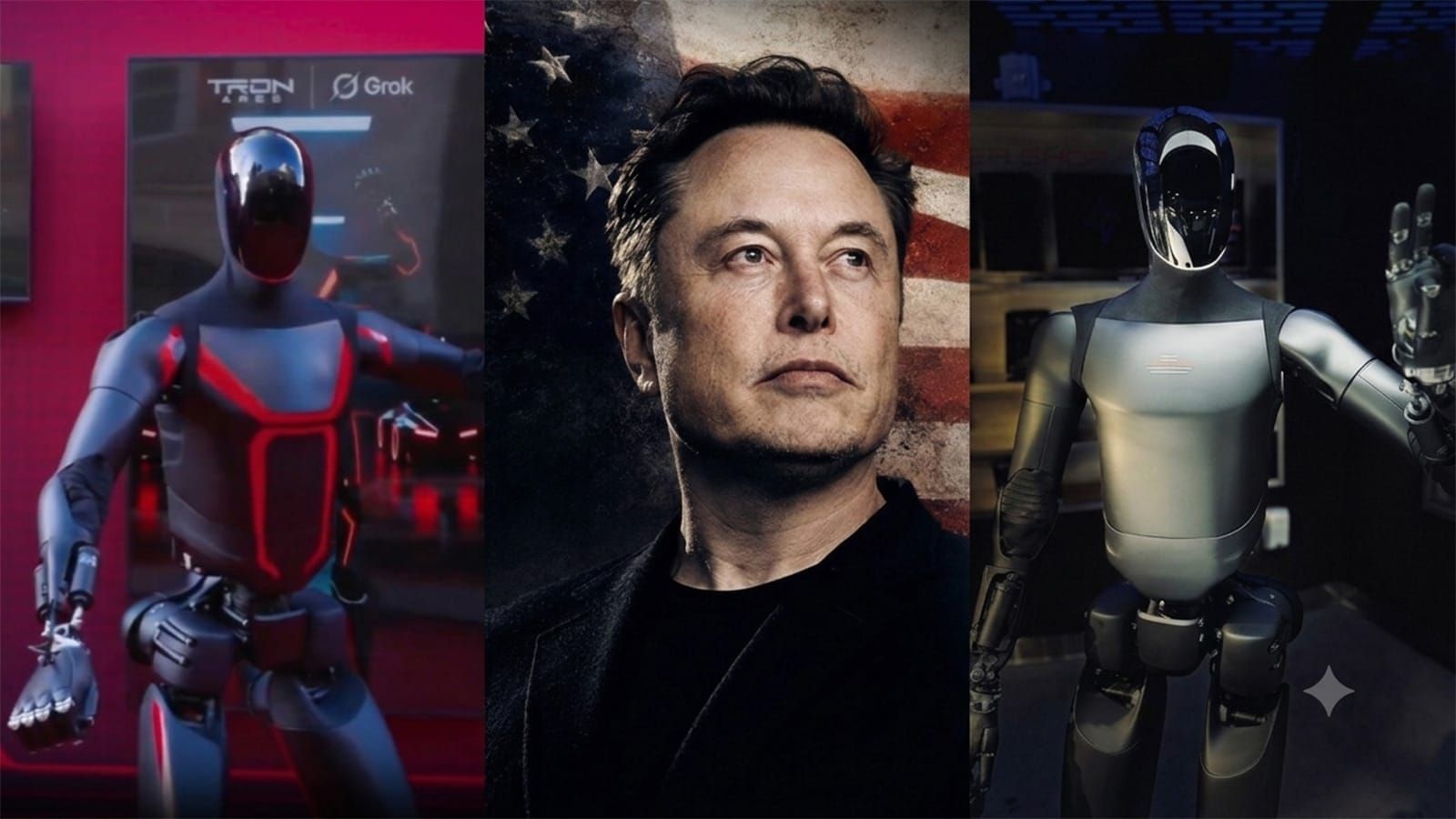
Tesla will start building its Optimus humanoid robot on a dedicated production line at its Fremont factory within weeks, and hundreds of the machines are already walking the company's corridors, sorting parts and, according to Tesla's own engineers, doing the laundry.
Elon Musk isn't hedging on what it means.
"Optimus will be the biggest product ever made," he posted through Tesla's Optimus account in March, in a recruitment pitch that's since clocked 2.5 million views. "A general-purpose humanoid robot that can do useful work at scale will change the economics of labor & manufacturing."
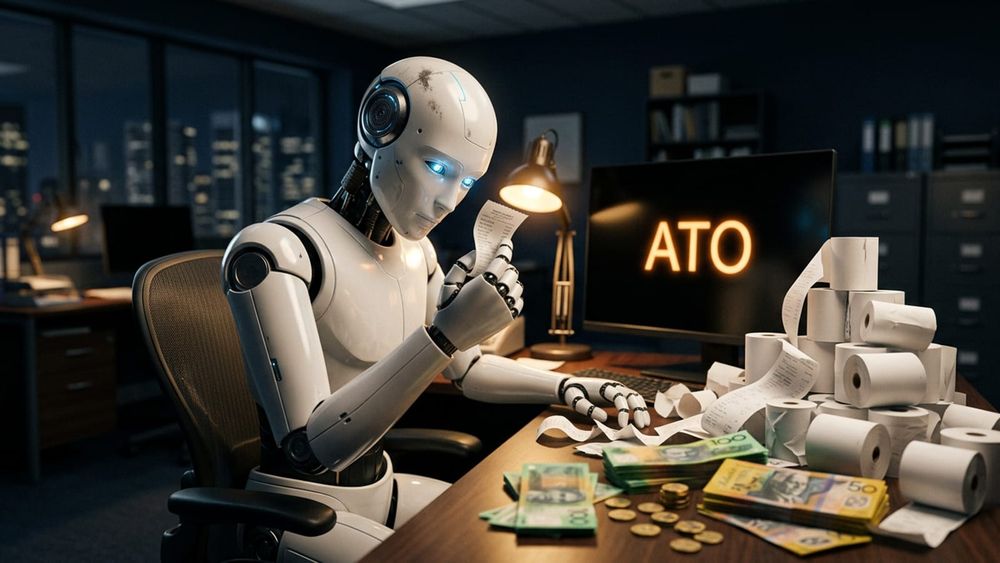
Australia runs one of the biggest migration intakes in the developed world on a single argument, that there's nobody here to do the work. That argument is about to meet a machine that works around the clock. Japan has already made its choice, and it's choosing robots.
Video: Tesla Optimus/X. Tesla engineers building and testing Optimus in the March recruitment video.
Musk shut down the Model S to build robots at Fremont
Tesla told investors on its January earnings call that Model S and Model X production would end in the second quarter of 2026. The final cars rolled off the Fremont line in early May, and the plant space was converted into a production line for the third generation of Optimus, known as Gen 3.
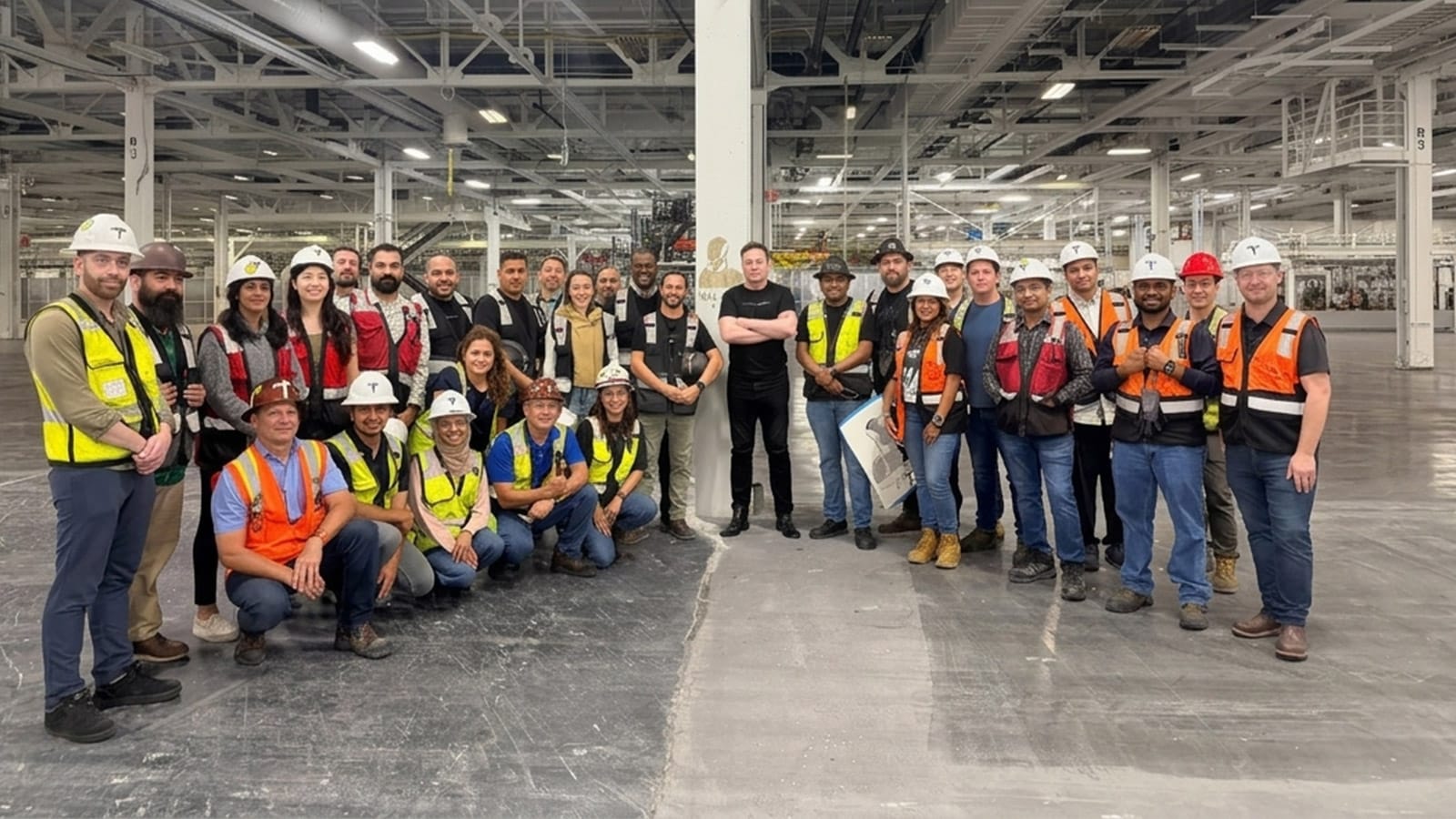
In April, Musk confirmed production would begin in late July or August. On 1 July he was on the line itself, posting photos with the team as installation wrapped up. Tesla's vice president of vehicle engineering, Lars Moravy, says the line is modular, built to adapt as the robot's hardware changes rather than being torn out with every redesign.
Video: Tesla Optimus/X. Inside the Optimus line at Fremont, where station signs read FREM-OP1 and workers assemble the robot's hands and legs.
The ambitions behind it are not small. Musk has said the Fremont line is designed to scale towards 1 million robots a year, with a second, far larger Optimus factory under construction at Giga Texas and a long term target of 10 million units annually.
The March video was a hiring call for exactly that build out. "We're solving manufacturing problems that haven't been solved before at the scale that Tesla operates at," one engineer says in it. Another describes walking in each morning to "bots walking around autonomously".
"Every single day I step into the office, it feels like I'm in a sci fi movie."
Sorting battery cells and folding towels: what Optimus can actually do today
Here's the honest version. Musk told investors in January that the hundreds of Optimus units operating inside Tesla's facilities were there primarily for learning and data collection, not productive work. The robots currently handle a narrow set of tasks: sorting 4680 battery cells, parts kitting, materials handling and basic visual quality inspection, somewhere between 5 and 10 repetitive jobs done autonomously.
That puts Tesla in a crowded field rather than out on its own. Figure's humanoids are working shifts at BMW's Spartanburg plant, Agility Robotics' Digit is moving totes in Amazon fulfilment centres, and Mercedes Benz has Apollo robots running factory logistics in Hungary, a country that's had a factory labour shortage for years.
Where Tesla is genuinely different is scale and price. Nobody else owns a car plant to convert, and nobody else is talking about millions of units.
As for what's coming, Tesla's engineers say Gen 3 closes in on human form and function.
"It won't even look like a robot," one says in the recruitment video. "It'll look like a human in a superhero suit."
Video: Tesla Optimus/X. Optimus on chore duty in Tesla's lab, stirring a pot, working the cupboards and clearing a table.
A US$20,000 worker who never calls in sick, if Musk's maths holds
Optimus is expensive to build right now. Morgan Stanley analysts have estimated the parts bill for the previous generation at roughly US$55,000 per robot, with the legs alone accounting for about US$21,000, and full build costs commonly put between US$50,000 and US$100,000.
Musk's target is a different number altogether. He has consistently said Optimus will sell for under US$30,000 at scale, with US$20,000 the long run goal. The first paying customers are expected to be businesses, warehouse operators and manufacturers, from late 2026 at six figure prices.
"By the end of next year, I think we'll be selling humanoid robots to the public," Musk said at the World Economic Forum in Davos in January. "That's when we're confident that it's very high reliability, very high safety, and the range of functionality is also very high. You can basically ask it to do anything you'd like."
Realistic availability in Australia is more like 2028 or 2029.
Video: Tesla Optimus/X. Optimus flexes its fingers in a dexterity demo, then strikes a pose at the Tron: Ares display.
The arithmetic is the point. A full time process worker in Australia costs an employer well north of $70,000 a year once superannuation, leave, sick days and penalty rates are counted. A US$20,000 machine that works around the clock, every day, rewrites that equation entirely. Even at US$100,000 for early business units, the payback period against warehouse wages runs a few years, once the robots can genuinely do the work.
Musk's record on deadlines says treat every date with caution. Full self driving was promised "next year" for the better part of a decade. But the direction of travel is no longer in dispute, and the investment community here has noticed even if Canberra hasn't.
Japan Airlines is trialling humanoids while Takaichi shuts the migration door
If you want to see the policy version of this future, look at Japan. In May, Japan Airlines began trialling humanoid robots at Tokyo's Haneda airport for baggage handling and cabin cleaning, a direct response to a labour crunch in a country whose working age population is projected by the OECD to shrink 31% by 2060.
Japan's answer to that shortfall has never been mass migration, and under Prime Minister Sanae Takaichi it won't start now. Analysts told a Tokyo robotics summit in May that with Takaichi's support base built on tougher immigration policy, the government is expected to "very much encourage the deployment of humanoids in Japan".
That is a first world government explicitly treating robots as the alternative to imported labour. It won't be the last.
Canberra added 306,000 people last year to fill jobs the robots are lining up for
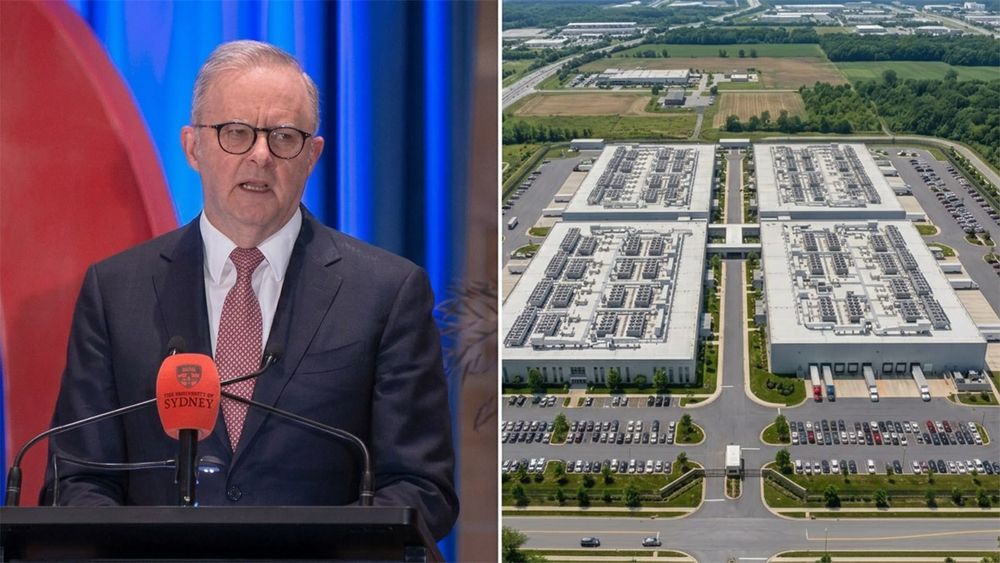
Australia's migration program is sold to voters on one premise: labour shortage. On the latest ABS figures, net overseas migration added 306,000 people in 2024-25. That's down from the record 538,000 of 2022-23, but there were still 568,000 arrivals in a single year, almost two in three of them on temporary visas. The permanent program sits at 185,000 places, and the international student intake target is rising to 295,000 this year, a fee grab One News has covered before.
Now line that up against where the robots are headed. Barclays analysts say humanoids will fill labour gaps in agriculture, healthcare support, logistics and manufacturing, which is much of the territory Australia's migration intake is supposed to cover. McKinsey estimates automation could displace between 400 and 800 million jobs worldwide by 2030. If machines close the gap in warehouses, kitchens, farms and factories within the decade, the economic case for importing low skilled labour disappears.
Video: @cb_doge/X. A concept render of the "age of abundance" Musk pitches, Optimus robots loading a Tesla Semi, carrying shopping and helping a wheelchair user.
And the "migration equals growth" fallback is already limping. Australia's economy has been going backwards on a per person basis even with record arrivals propping up the headline number. Nothing in the public debate suggests either major party has modelled what humanoid labour does to those settings.
The fair caveat cuts the other way too. Robots won't be wiring houses, nursing patients or designing gearboxes this decade. Tesla's recruitment video is itself the proof: every person in it is a highly skilled engineer, and the company is hiring more of them as fast as it can. A migration program built tightly around genuinely scarce, high end skills survives the robot era. One built on volume doesn't.
A human in a superhero suit by 2027, if the deadlines hold
The timeline readers can hold onto: Optimus production at Fremont from around August 2026, first business customers late this year, public sales targeted for the end of 2027, and something buyable in Australia realistically by 2028 or 2029, at a price Musk insists will land under US$30,000.
One of Tesla's engineers calls the project "the extreme sports of engineering." Whether the deadlines hold or slip the way Musk's deadlines often do, the production line at Fremont is built, the recruitment drive is public, and the robots have already clocked on.