Telstra has blamed a broken timer at two of its data centres for the national outage that crippled its mobile network this morning, halting trains in two states, knocking out EFTPOS terminals and, most seriously, causing some Triple Zero calls to fail. The fault hit from about 4.30am, and by mid morning the company said about 90% of the network had been restored.
The collapse reached every mainland capital, with more than 7,000 complaints logged to Downdetector before dawn, and it left millions of phones hunting for a signal that wasn't there.
Telstra runs about 25 million mobile services, and Boost, Aldi Mobile, Tangerine, Everyday Mobile and Belong all ride on the same network, so the failure reaches far beyond Telstra's own customers. Payments provider Tyro, which runs EFTPOS for about 80,000 businesses, told merchants to fall back to WiFi.
"We're investigating an issue affecting some mobile calls and data connections as a matter of priority," Telstra said.
Telstra blames a broken timer, and admits it doesn't know why
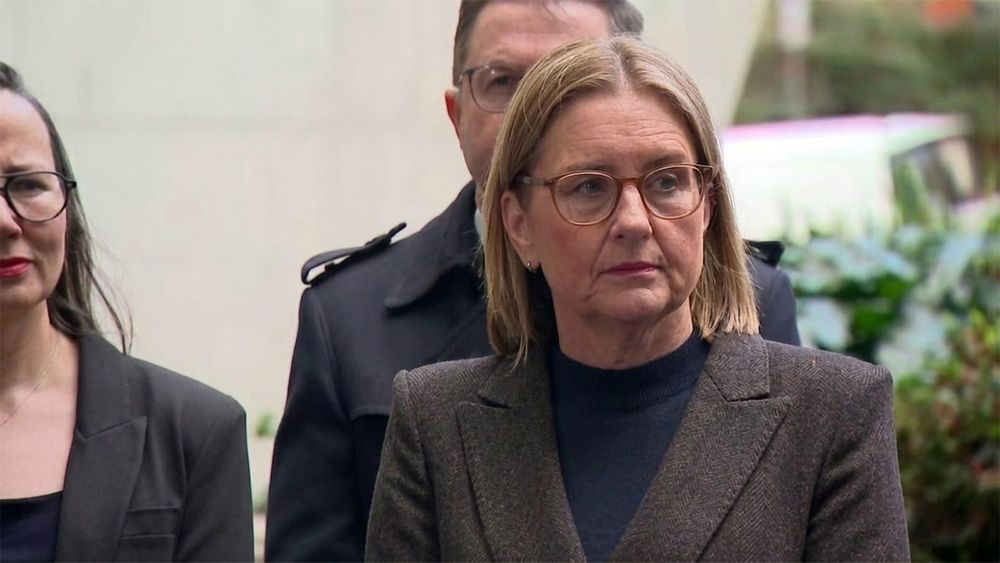
At a Wednesday press conference, Telstra's acting chief executive and chief financial officer Michael Ackland said a time synchronisation fault at two data centres, in Sydney and Melbourne, triggered the collapse from about 4.30am. The $56 billion company said it still could not explain what caused it.
"The time synchronisation in those nodes wasn't working as it should. We don't know why yet," Ackland said.
Ackland said about 90% of the network was back and being restored through the morning, but confirmed Telstra was investigating reports that some emergency calls had not connected, which had prompted urgent welfare checks.
Telstra and the government moved fast to shut down talk of sabotage or a foreign attack. Wells said there was no evidence of any malicious activity, and took aim at politicians who had raised the idea.
"When it comes to matters of national security, you shouldn't make stuff up," Wells said. "You've heard from Telstra's acting CEO that there is currently no evidence to suggest that those things are the case."
Victoria's entire regional train network stopped dead
All of Victoria's V/Line network, which carries about 70,000 commuters a day, ground to a halt, with trains stopping on the tracks at regional and suburban stations. V/Line blamed a radio network fault tied to the outage and told passengers to defer travel, with only very limited coach replacements running. In NSW, trains on the Southern Highlands and Hunter lines were suspended. Freight was hit too: the Australian Rail Track Corporation paused freight trains after emergency communications on the national network went down.
"Due to a radio network fault affecting the network, services are currently unable to operate," V/Line said. "There is no estimated time for rectification at this stage."
Phones flicked to SOS, and that's the detail worth remembering
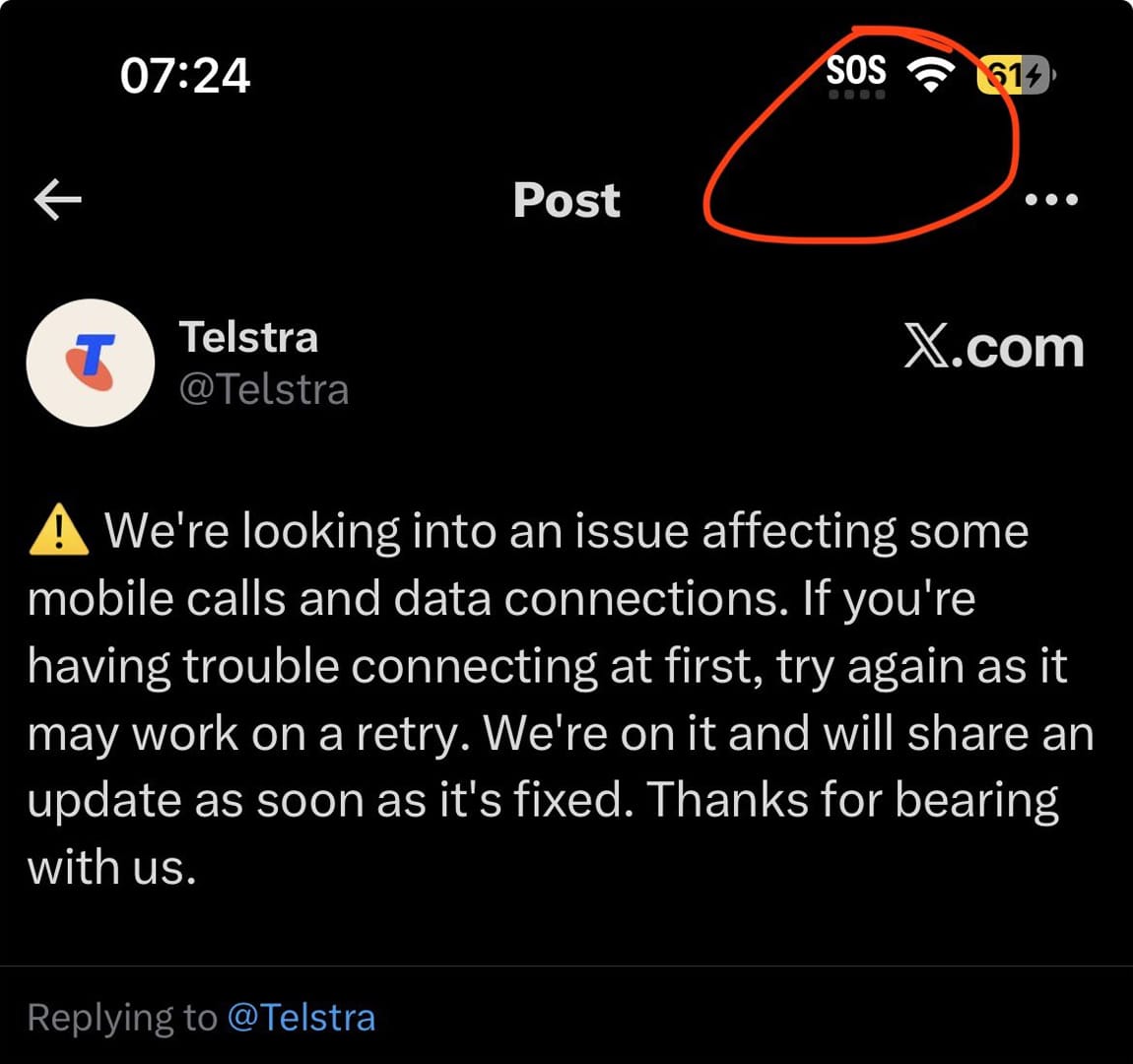
Around the country, phone screens dropped to SOS and satellite indicators as handsets lost Telstra and went looking for anything else. Acting Communications Minister Kristy McBain pointed to the fallback that still works when a network dies.
"Australian phones are also required to fall back to other networks for 000 access," McBain said.
Some Telstra customers couldn't reach 000, and welfare checks are still running
The most serious fallout was on Triple Zero. New South Wales and Western Australia police said some Telstra customers had been unable to get through to 000 during the outage. Telstra is now running about three dozen welfare checks, tracing calls that dropped out and handing any numbers it can't reach to state and territory emergency services.
Communications Minister Anika Wells and Emergency Management Minister Kristy McBain both begged people not to test the system.
"It is very important that people do not make test calls to 000," Wells said. "Please only call Triple Zero if it is an emergency."
McBain went further, accusing the opposition's own shadow communications minister of making test calls to 000 in the middle of the crisis.
"We teach our kids not to prank call 000, and I think it is absolutely outrageous that the shadow communications minister has been making test calls to 000," McBain said.
Wells said the backup that reroutes stranded calls to Optus, Vodafone and TPG had worked, that the core 000 system never went down, and that the overwhelming majority of calls got through. She would not put a figure on how many failed, pointing to updates still to come from Telstra.
Two months after the $5 price rise sold on reliability
The timing stings. Telstra lifted plan prices in May, with Optus and Vodafone following within weeks, and customers on Telstra's own Facebook page remembered exactly how the rise was justified.
"I love that we all had our billing price increased in May this year to improve network performance, reliability and security," one customer posted. "Good job Telstra. You had 1 job."
You couldn't even leave Telstra if you wanted to
Furious customers who tried to jump ship this morning hit a locked exit. Switching a mobile number to another carrier usually needs a one time code texted to that number to prove you control it, which covers most prepaid and online self service ports. With the network down, the code never arrives, so the switch can't go through. It's the same fault that broke banking during the 2023 Optus collapse, when Commonwealth Bank transfers failed because the verification texts ran on the network that was down. Your number is the thing that's broken, and your number is exactly what you need to leave.
Anika Wells returns from leave as the watchdog launches a full investigation
The prime minister, Anthony Albanese, called the outage deeply concerning and said the government was working closely with Telstra.
"It's very disruptive to people's lives throughout the country," Albanese said. "Some people have been unaffected, but many have been severely disrupted."
The opposition leader, Angus Taylor, demanded the government front up and explain the failure, and called on the communications minister, Anika Wells, to return from leave while the country's biggest network was down.
"The government needs to explain what has gone on here, why has this happened, what they're going to do to make sure it's fixed and never happens again," Taylor said.
Wells returned from leave on Wednesday to front the media. She confirmed the Australian Communications and Media Authority would run a full investigation, with Telstra forced to account for how and why the outage happened, and said fines brought in last year could come into play once the findings land.
"Telcos are the least trusted industry in our country, and days like today demonstrate exactly why Australians feel that way," Wells said.
A reporter tried to make it about the Prime Minister's Kylie Minogue mess
The press conference briefly went off the rails when a reporter tried to steer it away from the outage entirely, asking Wells about Anthony Albanese's comments about women on a whisky podcast that have dogged him this week, and whether the government needed to rethink how it does media. Wells refused to bite, saying her only focus was getting Australians back online.
So what is the most reliable network in 2026
The honest answer is a hybrid, and the honest catch is in the detail. No single network is bulletproof, satellite included. Starlink has had its own global outages, and because it's one company running one system, when it falls over everyone on it drops at once. Satellites also need open sky, struggle indoors and carry less than a tower. Anyone selling satellite as flawless is selling.

Two independent networks are still far harder to knock out than one, because towers and satellites fail for completely different reasons and almost never together. The mandated backstop is that phones must drop to any other carrier for Triple Zero when their own network dies. This morning even that didn't fully work, with Telstra confirming some emergency calls failed to connect. That is the sharpest argument yet for a genuine backup, one that doesn't depend on the network that broke.
The catch is that Telstra's own satellite texting is not that independent second network. The satellite is just a tower in space, and the message still routes back through Telstra's own systems to be delivered. So if what failed this morning was Telstra's core rather than its towers, the satellite path would likely have gone down with it. Real redundancy needs a satellite that doesn't depend on the carrier that broke.
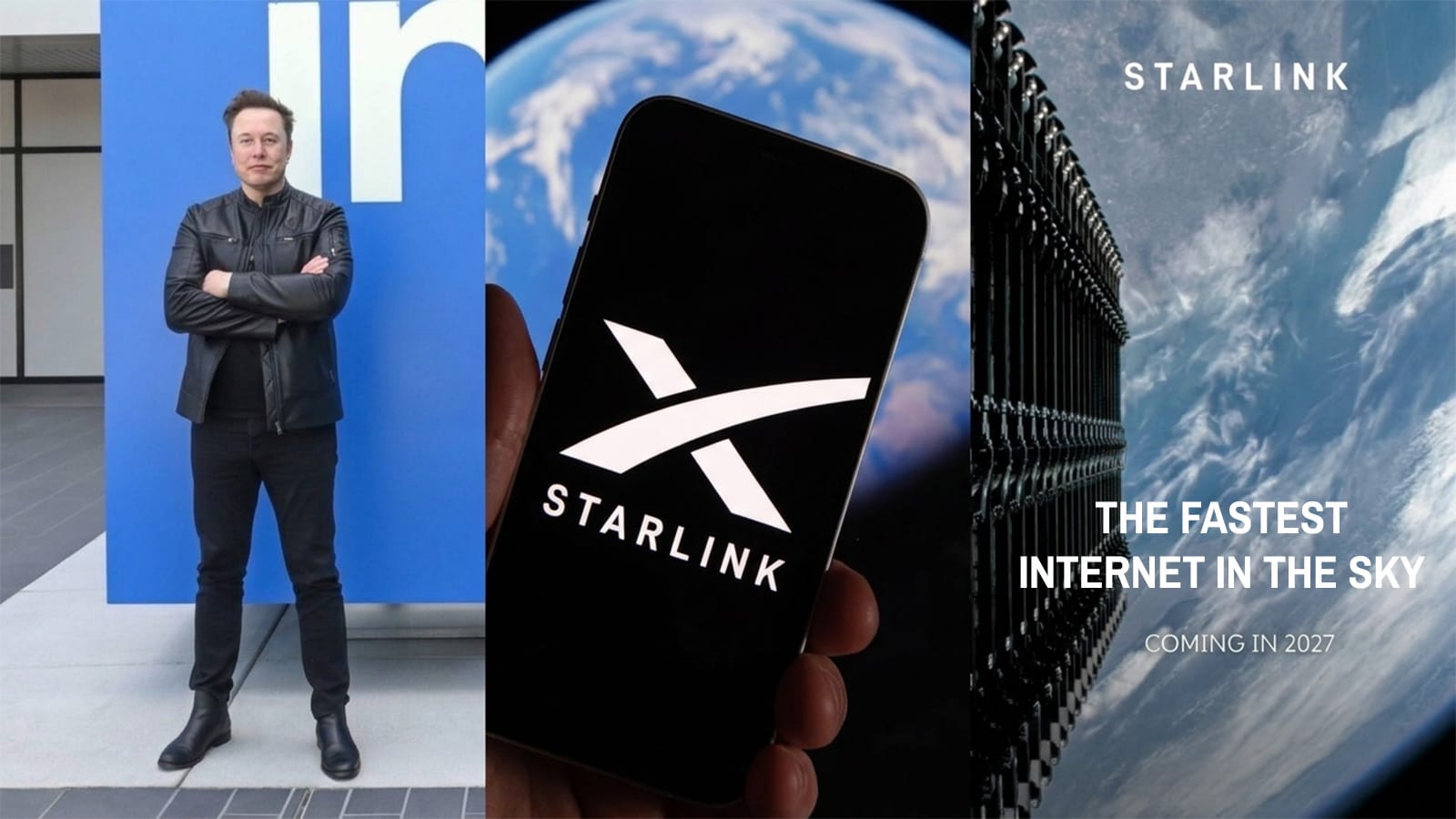
Which is the case for letting Musk sell it direct. One News reported last week that Starlink is preparing a direct mobile service that analysts expect Australians to be buying by 2030, with Telstra already renting Musk's satellites for out of coverage texting and Optus waiting on its own SpaceX deal. A Starlink service you buy straight from Starlink doesn't sit behind Telstra's core, or Optus's, which is exactly why it would survive a morning like this one.
None of this would have saved today's commute on its own. But every SOS icon on a Telstra phone this morning was a small advertisement for the same idea: the tower shouldn't be the only way home, and neither should any single company. The telcos put prices up in May to pay for reliability. The sky is now quoting for the same job.