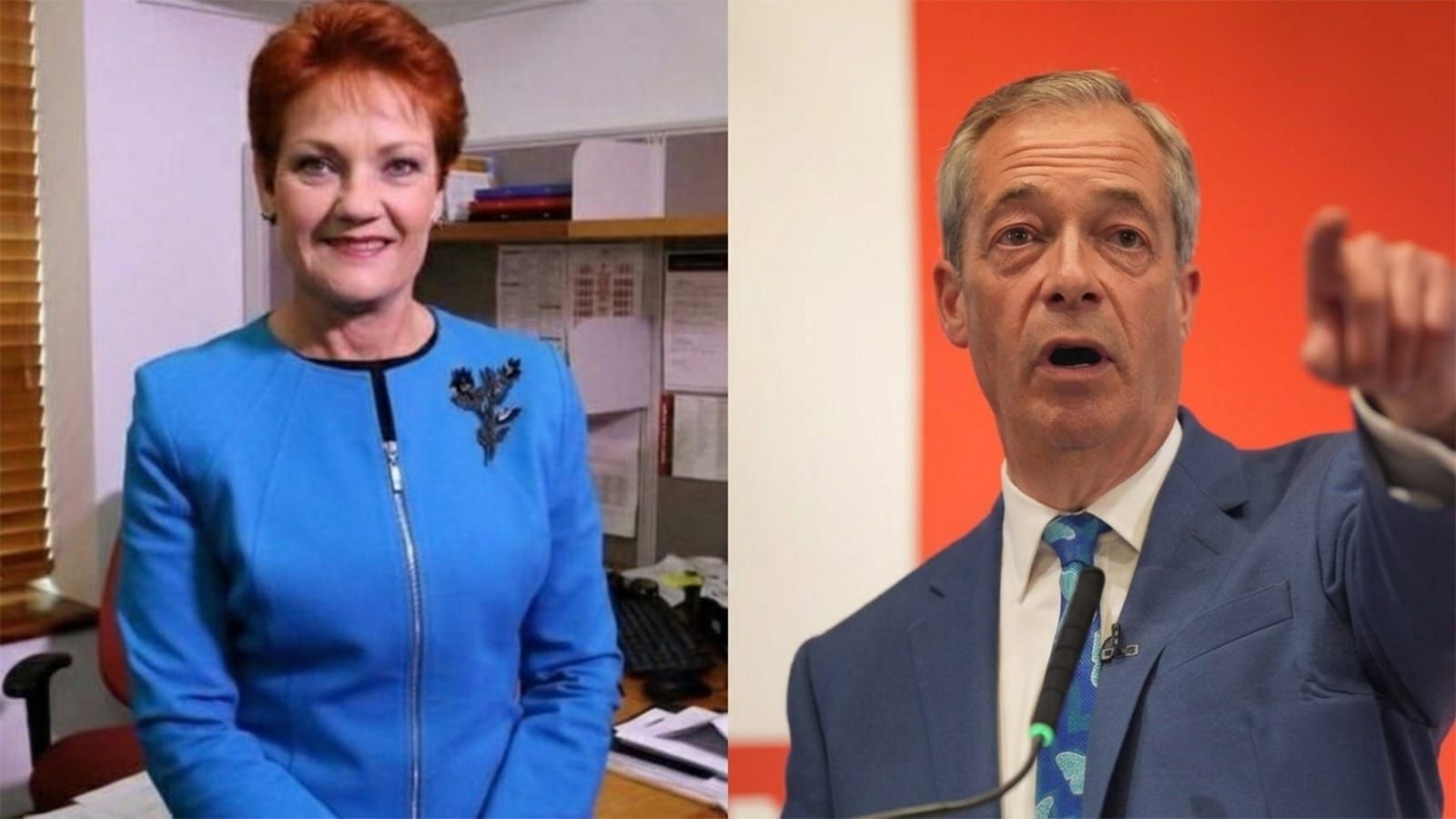
Pauline Hanson has flown to London to meet Reform UK leader Nigel Farage and speak at a conservative conference, and she's making the trip with One Nation now topping the national primary vote last week.
The One Nation leader and her chief of staff James Ashby left for the British capital on Sunday. Hanson will speak at "CPAC Great Britain", running from 16 to 18 July, and meet Farage on the sidelines. Farage and former British prime minister Liz Truss headline the event, where tickets sell for up to £10,000 ($14,415).
It's her second CPAC speech, and the point isn't the £10,000 room. Farage has overtaken Britain's two old parties with an insurgent right wing movement, and Hanson is now doing the same to Australia's. Meeting him is a chance to compare notes and bring a winning playbook home, with both leaders within reach of power.
What CPAC is, and why Pauline Hanson keeps turning up at it
CPAC is the Conservative Political Action Conference, the flagship gathering of the American conservative movement since 1974. It's the room where Republican politicians test their lines and court the base. Ronald Reagan spoke at it for decades, Donald Trump turned it into a loyalty rally, and it's since franchised out around the world. CPAC Great Britain is the London arm of the same brand.
For Hanson the benefit isn't power in Britain, it's standing. A second invitation marks her as a player in the international conservative movement, not a fringe Australian act, and it buys her face time with Farage, the one operator who's already done what she's trying to do. It's a paid ticket conference for the like minded, not a summit of world leaders, but the momentum, the alignment with Trump and Farage era politics, and the profile all travel home while parliament isn't sitting.
Hanson's second CPAC turn comes after Mar-a-Lago and Gina Rinehart's private jet
In October last year, Hanson gave a speech to a CPAC conference at Trump's Mar-a-Lago resort in Florida. She attacked the major Australian parties and praised Trump's hardline stance on deporting immigrants and taking on the drug cartels.
Guardian Australia later revealed that she'd travelled to Florida on mining magnate Gina Rinehart's private jet, which forced her to update her register of interests to reflect the sponsored travel.
Image: 7NEWS Australia. Pauline Hanson delivering her CPAC speech at Donald Trump's Mar-a-Lago resort in Florida in 2025.
Dan Tehan rules out a coalition, and says nothing about the preferences that decide seats
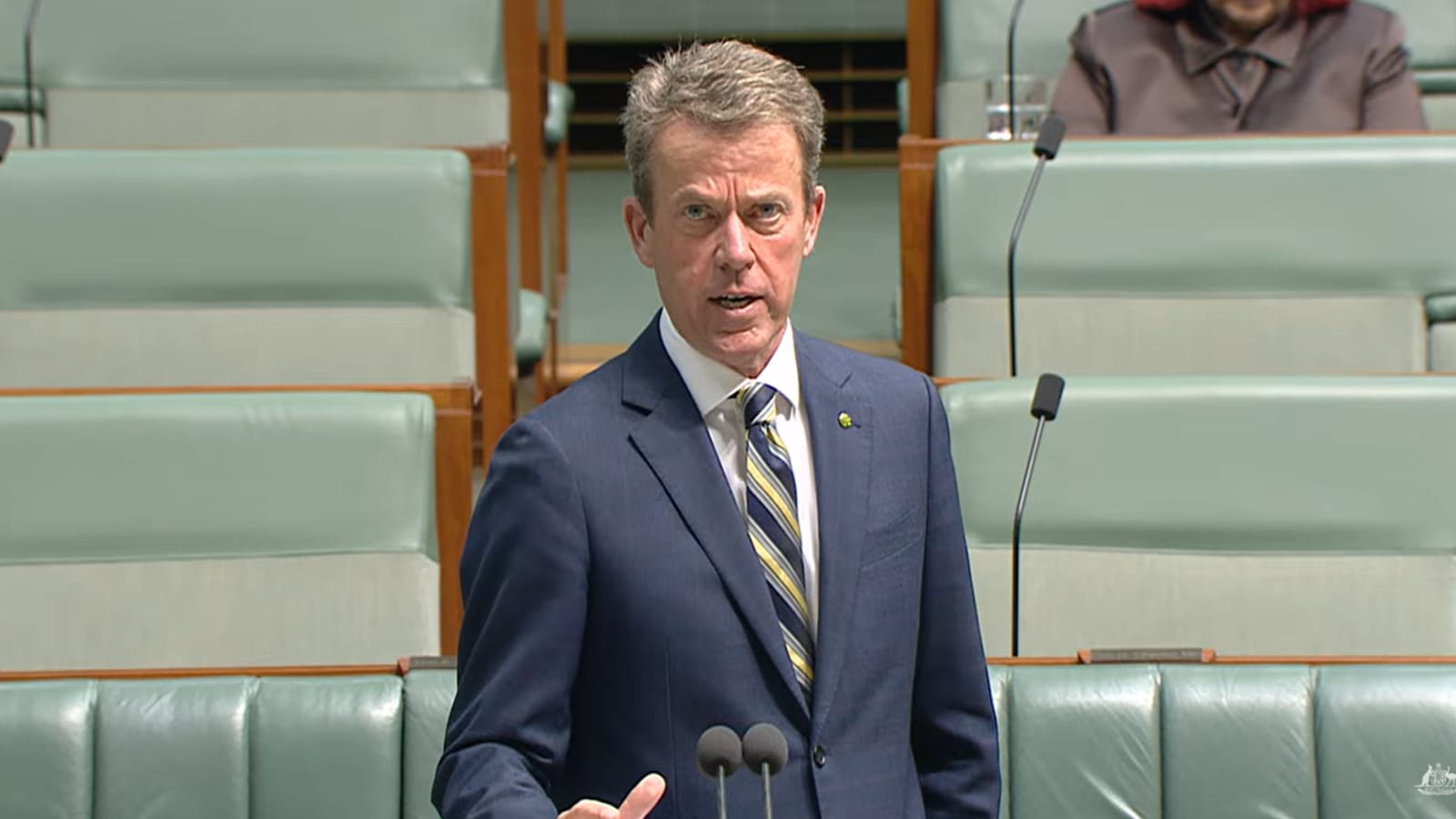
On Sunday, opposition energy spokesman Dan Tehan urged his colleagues to stay the path with Taylor, then ruled out a coalition with One Nation.
"We're not entertaining, we're not discussing, we're not thinking about being part of a coalition with One Nation," he told the ABC's Insiders.
Pressed again, he didn't soften it.
"It's a no," Tehan said. "We do not want to be part of a coalition with One Nation. We want to be part of a coalition with the Liberal Party and the National Party."
Here's what the answer leaves out. A coalition is a governing arrangement, and under Australia's preferential system it isn't what wins or loses seats. Preferences are. Where Liberal and National how to vote cards send their voters is the whole game, and on that Tehan said nothing.
The silence matters because of who's walking out the door. A Sky News and YouGov poll found 46% of 2025 Coalition voters would now vote One Nation, and modelling cited by Sky has One Nation winning up to 63 seats and the Liberals losing up to 40. The party bleeding half its base to Hanson is ruling out an alliance with her, and staying quiet on the one arrangement that would count.
One Nation's Sean Bell and Tyron Whitten say the Coalition is shooting at the wrong enemy
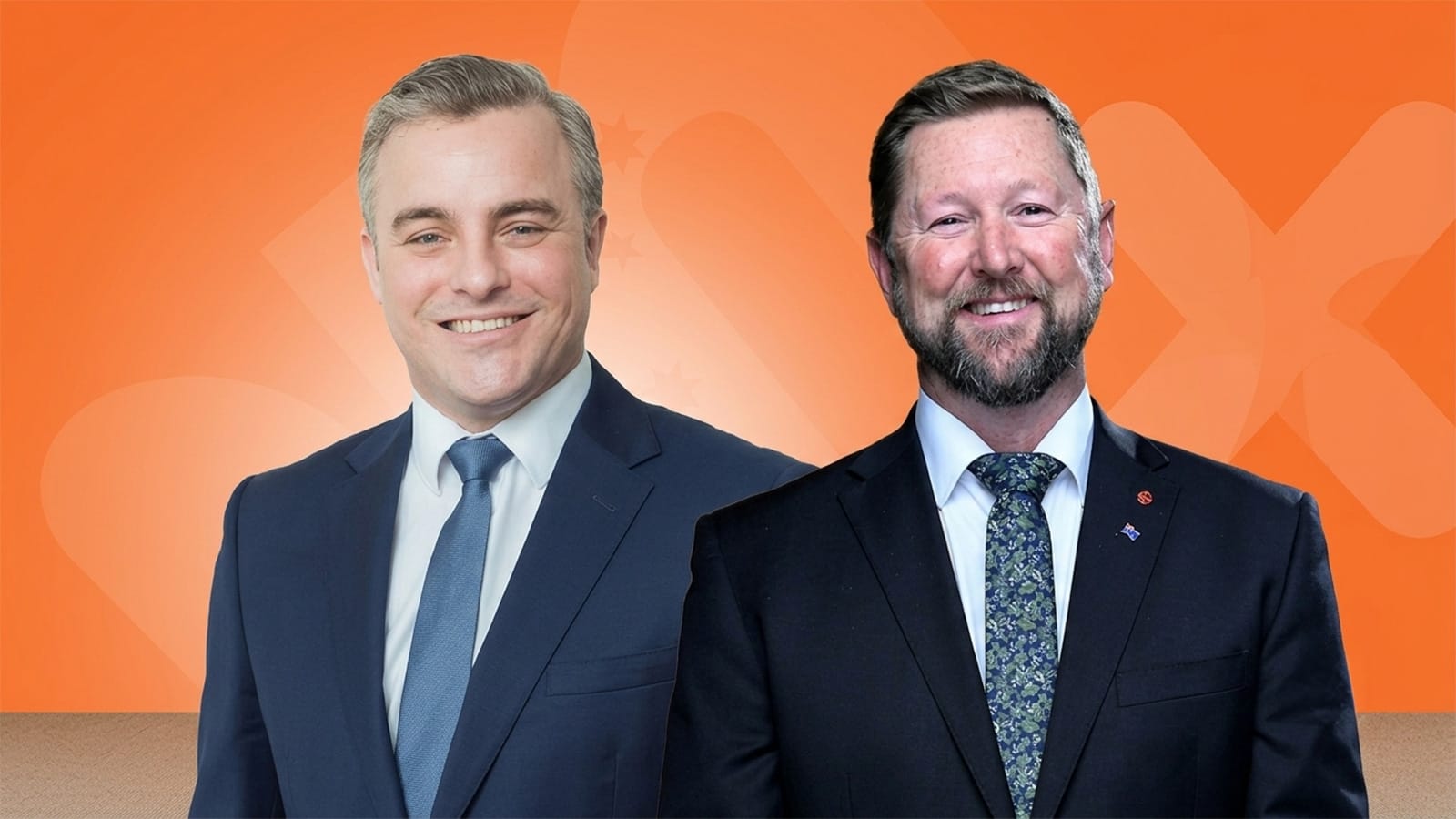
One Nation's senators have noticed. In an interview with Sky News, Senators Sean Bell and Tyron Whitten said the Coalition was aiming at the wrong opponent. Whitten pointed to Matt Canavan's rise as the moment he'd hoped for a united right, and the moment it curdled.
"When Matt Canavan got anointed, I was sort of, you know, almost a little excited for them," Whitten said. "But the first thing he did was attack us. I thought, what are you doing, man? The enemy is over there."
Bell said One Nation was keeping its focus where it belonged.
"We are so focused on the government, on the policies and the destruction the Labor government is doing," he said. "Surely for the greater interest of the country, we could work on taking down Anthony Albanese."
Then he turned the division question back on the Coalition.
"Conservative parties preference each other, Labor, Greens, Teals go last, everything else sorts itself out," Bell said. "Before the Coalition starts talking to us about working together, they should probably talk to themselves about working together."
Britain shows Australia what happens when the major parties stop listening
Farage's Reform UK is the model, and it's a few years ahead. A recent YouGov survey found 61% of Britons now see Reform as a "main party", up from 19% two years ago, and on voting intention it leads on 24%, ahead of both Labour and the Conservatives on 20% each. In May's local elections Reform candidates picked up more than 1450 council seats, gutting both old parties at the ballot box rather than in a survey.
British voters didn't move on a whim. They moved after years of watching the two parties that traded government between them treat immigration and integration as something to manage rather than fix. The boats kept crossing the Channel, the bill for housing arrivals kept climbing, and the establishment kept insisting the problem was in hand. Reform filled the gap the moment voters stopped believing it.
That's the warning under Hanson's London trip. One Nation's 30% is the symptom of the same frustration, and the Coalition's answer has been to attack the party catching its voters while ruling out an alliance and dodging preferences. Britain shows where that road ends. The old parties called the insurgent fringe right up until it passed them both.
When Hanson takes the CPAC stage on 16 July, she'll do it as leader of a party polling ahead of the government on the primary vote, standing alongside a man whose party now leads his. That's the meeting, and that's the message she's carrying home.