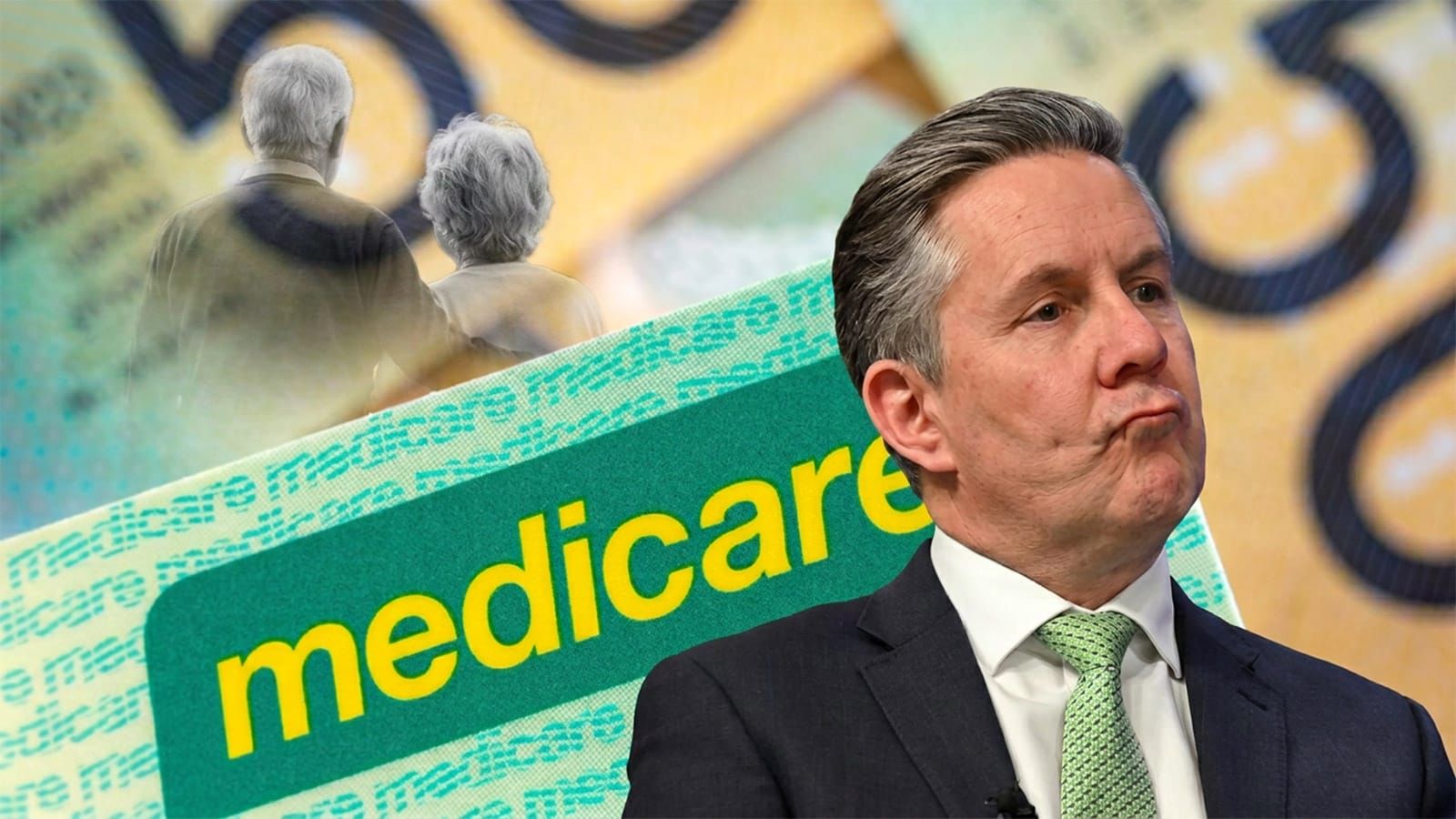
Anthony Albanese's plan to cut the private health insurance rebate for over 65s has blown up into an open revolt, with NSW Health Minister Ryan Park, Queensland Health Minister Tim Nicholls and Tasmanian Health Minister Bridget Archer all warning the change will push older patients into public hospitals that are already full.
The rebate is the slice of every private health insurance bill the federal government pays. Because older people cost the most to insure, over 65s currently get a bigger slice: the government covers up to 32% of the premium for over 70s, against a maximum of 24% for everyone younger. Labor is scrapping that extra help from 1 April 2027, so an over 65's rebate falls to the same 8% to 24% as everyone else and their premium jumps by hundreds of dollars a year.
Pensioners who can't wear the increase face a blunt choice: cut spending elsewhere to keep their cover, or drop it and join the public hospital queue for the hips, knees, cataracts and heart procedures older people actually need. That's the effect the states are revolting over, and it comes with two other problems for federal Health Minister Mark Butler: his own department predicted pensioners would give up their cover, and new polling suggests far more people will walk away than the government admits. And while Mr Butler says the savings will all go to aged care, aged care doesn't pay for surgery.
What Labor is planning to change
Right now, the government helps pay part of your private health insurance bill. That help is called the rebate. Under rules set up by the Howard government, people over 65 get a bigger rebate than younger people on the same income, because older people claim more on their insurance and are the most expensive to cover.
Labor wants to remove that extra help. From 1 April 2027, if the legislation passes, over 65s would get the same rebate as everyone else on their income, between 8% and 24%. In practice:
- A person aged 65 to 69 loses 4 percentage points of rebate
- A person aged 70 or over loses 8 percentage points
- That means the government pays less of the premium, so the insurance bill goes up
The change is projected to save the budget $3 billion over four years. Mr Butler says every dollar goes back into aged care.
Mark Butler's own department predicted pensioners would give up their cover
A Health Department document released under freedom of information laws, obtained by the Coalition and reported by The Australian, shows officials modelled exactly what the policy would do to low income pensioners before Mr Butler announced it.
One of the department's own worked examples was a Geelong retiree in her late 70s, on about $30,000 a year, who drops her private cover because she can no longer afford it, then relies on the public system for a hip replacement she can't pay for privately. Another was a Launceston couple on a $47,000 pension who get slugged an extra $298 a year and have to cut back elsewhere just to keep the insurance they've held most of their lives.
The same document states the department did not consult on the changes "due to the sensitivities involved".
Opposition health spokeswoman Anne Ruston said the government's officials "wrote out in black and white" that pensioners would be seriously affected, and that the scenarios were "the government's own evidence of this policy in action".
Ryan Park, Tim Nicholls and Bridget Archer turn on Canberra
The state ministers' complaint is simple. Private health insurance keeps older patients out of public hospitals. If seniors drop their cover, they don't stop getting sick, they just join the public queue. And it's the states, not Canberra, who run the public hospitals and pay for the extra demand.
Mr Park told The Australian the NSW public system is already under pressure, with older people stuck in hospital beds because they can't get a commonwealth aged care place, and said the projections show Canberra is "just adding to this pressure".
Mr Nicholls said the decision was "entirely unforeseen" and was never raised while the states were negotiating the recent hospital funding deal, during which the Prime Minister asked the states to reduce growth in hospital activity. He said the government is now "giving older Australians nowhere else to go".
Ms Archer has gone furthest, writing to Mr Butler and asking him to reconsider what she called a "deeply concerning" policy and "yet another cost shift from the commonwealth to the states". Tasmania has the fastest ageing population in the country, so it wears the change harder than anyone.
The polling that blows up the government's 44,000 number
Mr Butler says the Health Department expects only about 44,000 people, or 0.4% of everyone with insurance, to drop their cover because of the change.
Polling commissioned by Private Healthcare Australia, the insurers' peak body, tells a very different story. The RedBridge survey of more than 1,500 voters found 15% of over 65s would be much more likely, and another 24% somewhat more likely, to dump their cover. That's nearly 40% of seniors at least considering the exit, and the lowest income households were the most likely to go.
The poll also found support for exempting pensioners ran 33 points ahead of opposition, and 44 points ahead among Labor's own voters. RedBridge's focus group work found the government's "intergenerational fairness" pitch collapsed with every age group tested, and actively offended Gen Z. Even so, 67% of voters didn't know about the change until the pollsters told them, so most of the country hasn't reacted yet.
Private Healthcare Australia chief executive Rachel David said the government has significantly underestimated the exodus, and that middle aged Australians are already talking about paying their parents' premiums to stop them losing cover. Seniors groups are campaigning against the change too, with National Seniors Australia reporting 91% of its surveyed members oppose it.
What happens to a pensioner who drops their cover
Public hospitals will still treat them, and emergencies are seen straight away. The squeeze comes with so called elective surgery, which covers things like hip and knee replacements and cataracts, operations that aren't optional in any real sense, just not immediately life threatening. Instead of choosing their surgeon and their timing, an uninsured pensioner joins a public waiting list that can run months and in some cases years.
That's exactly the scenario in the department's own document: Heather keeps her hip pain and waits in the public queue, because without insurance she can't afford the out of pocket costs of going private.
There's a flow on effect for everyone else too. Insurance works as a pool, so if seniors leave and only the sickest stay, premiums rise for those who remain, which pushes more people out again. And every senior who exits makes the public waiting list longer for insured and uninsured patients alike.
Butler says the money goes to aged care
Mr Butler's defence is that giving bigger rebates based on age is "not fair between generations", and that older Australians are better served by spending the money on aged care. He says the $3 billion will fund about 5,000 extra aged care places a year and expand the Support at Home program so personal care like assisted showering is covered.
Over 65s, he points out, will still get a rebate of between 8% and 24% depending on income, the same as everyone else.
Aged care doesn't buy you a hip replacement
Aged care and health care are different systems, and the money isn't moving like for like. Aged care covers help with daily living: a nursing home bed, home care visits, help with showering and dressing. It doesn't pay for operations, specialists or hospital treatment. A nursing home resident who needs a hip replacement still goes to hospital like everyone else, and without insurance they join the same public waiting list.
So the trade on offer takes money from the system that treats older Australians and puts it into the system that cares for them afterwards. Extra aged care beds won't get a single pensioner their hip, heart procedure or cataract surgery any sooner.
And most of the people losing the rebate aren't in aged care at all. They're living at home, and what keeps them there is timely treatment, the very thing the department's own Heather scenario shows slipping out of reach once the cover goes.
The states' answer is that the savings arrive in Canberra's budget while the extra patients arrive in their emergency departments. The legislation still has to get through parliament before the change starts on 1 April 2027, and with three state governments, the seniors lobby, the insurers and the Coalition now lined up against it, that fight has only just started.