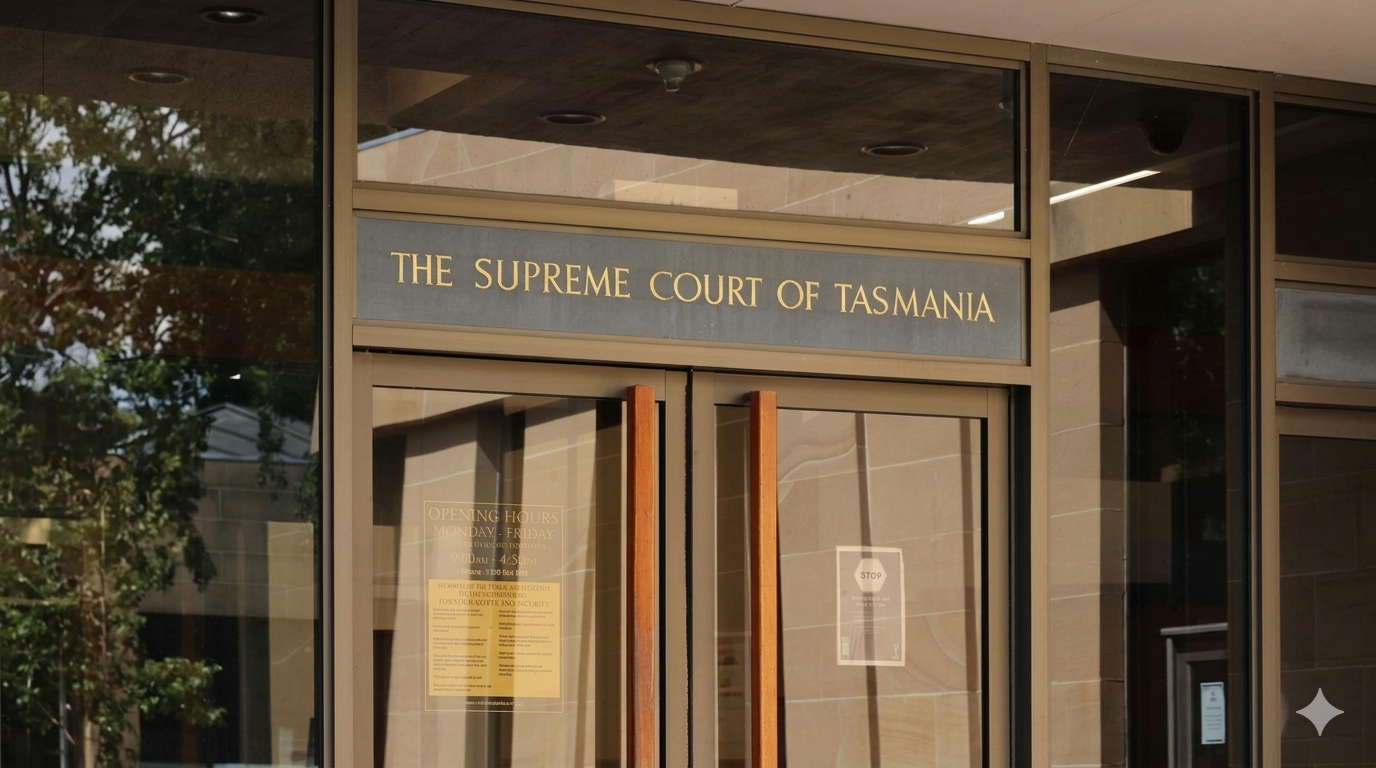
Karan Kumar, 34, has been sentenced to 30 years jail in the Supreme Court of Tasmania for an online child sex offending campaign that ran for five years and produced more than 80 victims in Australia and overseas, before a victim's mother finally rang police.
Justice Kate Cuthbertson set a non parole period of 18 years and ordered Kumar be placed on the sex offender register for 25 years on his release. The court heard Kumar, an Indian national living in Australia on a bridging visa, will be deported to India once his sentence ends.
He had earlier pleaded guilty to more than 80 child sexual abuse offences at state and federal levels, including 67 counts of engaging in sexual activity with a child using a carriage service.
How he found his victims
Kumar offended between 2018 and 2023 using fake Instagram and Snapchat accounts. The court heard he lied about his age and gender, posing as a teenage boy to make contact with victims, some as young as 10. He used threats alongside offers of money, vapes and a PlayStation to coerce more than 100 children into sending him explicit images or performing sex acts online.
He then used a mobile phone to screen record the live streamed material. When AFP led investigators executed a search warrant on the Hobart home Kumar shared with his wife in 2023, they recovered 551 child abuse videos from his phone and laptop, alongside the Snapchat account in the name of a teenage boy Kumar admitted he had used to elicit the material.
Some of the recordings included Kumar's own face, and incoming calls from his family members. Prosecutors described the volume of charges and evidence as "breathtaking", and Justice Cuthbertson told the court the state had been unable to find a comparable Australian case in terms of the number of victims.

What the law says
None of the offending required Kumar to be in the same room as a victim. Under section 474.25A of the Commonwealth Criminal Code, coercing a child under 16 to perform a sexual act via the internet is legally classified as engaging in sexual activity with that child. The offence does not require physical contact.
Each of the 67 federal counts Kumar pleaded guilty to carries a maximum penalty of 20 years jail. That maximum was lifted from 15 years by federal legislation in 2020 in response to the rise in online child sexual offending. There is no mandatory minimum for a first time offender at this level.
The balance of the 80 plus charges Kumar pleaded guilty to fall under Tasmanian state law, most likely sections 130 to 130D of the Criminal Code Act 1924, which cover the production, possession and accessing of child exploitation material. Each of those Tasmanian offences carries a maximum penalty of 21 years jail.
Justice Cuthbertson's 30 year head sentence reflects the totality principle in Australian sentencing law, under which a court imposes a sentence reflecting the overall criminality rather than stacking the maximum for every count, and accounts for a guilty plea discount under the Sentencing Act 1997 (Tas). The full breakdown of how she arrived at 30 years will appear in the sentencing remarks when published.
Police knew in 2021. He wasn't stopped until 2023.
The court heard Kumar first came to the attention of Queensland Police in 2021 over a fake social media account purporting to belong to an 11 year old boy. He was not arrested at that point. The offending continued for another two years.
He was eventually caught in 2023 after the mother of one of his victims contacted police. That call produced the search warrant that produced the evidence.
What happened in the window between the 2021 flag and the 2023 arrest, including whether the matter was referred to the AFP's Australian Centre to Counter Child Exploitation or to a state Joint Anti Child Exploitation Team, is not publicly known. The full sentencing remarks are expected to be published on the Supreme Court of Tasmania website in coming days, and may detail that timeline.

Living in Australia on a bridging visa
Justice Cuthbertson confirmed Kumar was on a bridging visa at the time of sentencing. A bridging visa is a temporary visa that allows a person to remain lawfully in Australia while a substantive visa application or cancellation is being processed or appealed.
The earliest public record of Kumar's presence in Australia is 2018, when the offending campaign began. The court was not told publicly when he arrived in the country, nor under what visa he originally entered. He has been disowned by his family in India. The court heard he accepts he will be deported once he has served his sentence.
The judge's verdict on the social media ban
Justice Cuthbertson said from the bench that Kumar's ability to access children with "apparent ease" showed the importance of the federal government's age restrictions on social media. She told the court that offending like Kumar's was part of the reason for the new under 16 social media ban.
"No child and no family should have to deal with the aftermath of such heinous conduct," she said in sentencing.
She also said Kumar had shown barely any remorse for the offending and had not taken any steps toward rehabilitation. The court heard the mother of one victim said her daughter had become withdrawn, struggled with anxiety, and isolated herself as a result of Kumar's conduct.
What happens next
Kumar will serve his sentence in Tasmania. He becomes eligible to apply for parole in 2044. On release, Home Affairs is expected to take custody and arrange his deportation to India, where he has been disowned by his family. He will remain on the sex offender register for 25 years after release.
The Supreme Court of Tasmania's full sentencing remarks, which would ordinarily set out Kumar's personal history, visa history and the detailed timeline of the offending, are expected to be published in coming days.
Sources:
- https://www.examiner.com.au/story/9287067/social-media-child-predator-jailed-over-heinous-crimes/
- https://www.illawarramercury.com.au/story/9287067/social-media-child-predator-jailed-over-heinous-crimes/
- https://www.themercury.com.au/truecrimeaustralia/police-courts-tasmania/karan-kumar-jailed-for-30-years-for-depraved-child-exploitation-campaign/news-story/fea191b52496333e5055ac074862eaf8
- https://www.noticer.news/indian-jailed-child-abuse-30-years-tasmania/
- https://www.supremecourt.tas.gov.au/the-court/publications/latest-sentences/