Australia's taxpayer-funded national broadcaster has found a way to describe the forced marriage of children as a "coping strategy" for climate change. The Australian Federal Police uses a blunter word. They call it a crime, and reports of it have jumped nearly 30% in a year.
The broadcaster's report, published on 10 July under the topic heading "Climate Change," ran with the line that "climate change is now believed to be a leading contributor to more frequent and younger nuptials", and that 12 million girls are tipped to become child brides this year.
Video: Sky News Australia. Host Danica De Giorgio reports on underage forced marriage cases in NSW almost doubling in a year, 15 February 2026.
To its credit, the article concedes, in a single line, that child marriage is "a global problem across cultures and religions", linked to "gender inequality, poverty, food insecurity, and social norms and practices, including family honour and dowry payments". Then it spends the rest of its length on cyclones, El Niño and the case for more climate aid. The cultural and religious drivers get a single sentence. The weather gets the headline.
The ABC's own experts put the cause somewhere other than the sky. Plan International's Tanushree Soni told the broadcaster that families marry daughters off because "they don't consider girls to be part of their own families", so "investing in girls is not a choice they can afford to make". That points squarely at how some communities value girls, and it has nothing to do with the weather.
Sky News commentator Rita Panahi put the objection bluntly, writing that the ABC was "claiming it's 'climate change' and not Islam or third world cultural practices behind the scourge of child marriage", and noting the broadcaster "receives more than a billion in taxpayer funds annually". The ABC does receive more than $1 billion in public money each year.
ABC claiming it's "climate change" and not Islam or third world cultural practices behind the scourge of child marriage.
— Rita Panahi (@RitaPanahi) July 12, 2026
Reminder: ABC receives more than a billion in taxpayer funds annually. pic.twitter.com/ytDoG5MhrN
The hypocrisy: a women's rights atrocity, filed under Climate Change
Look at what the framing does. It takes the forced marriage of 9-15-year-old girls, the kind of atrocity these same outlets would normally file under women's rights, and reclassifies it as a climate adaptation problem to be solved with foreign aid and "climate-resilient livelihoods". The practice itself, and the beliefs that sanction it, are left carefully unnamed. Strip the labels and it is the sale and sexual abuse of children, refiled as a line in a development budget.
The ABC's report closes with a call for governments to fold child marriage into "climate change response and resilience programs", rather than a call to confront the beliefs that keep marrying nine-year-olds off. A movement that built itself on women's rights has found a way to talk about the sale of little girls without mentioning why it happens.
Video: Sky News. Special Correspondent Alex Crawford reports from Badghis province, Afghanistan, where families told Sky News they were willing to sell daughters as young as five into marriage, 4 February 2022.
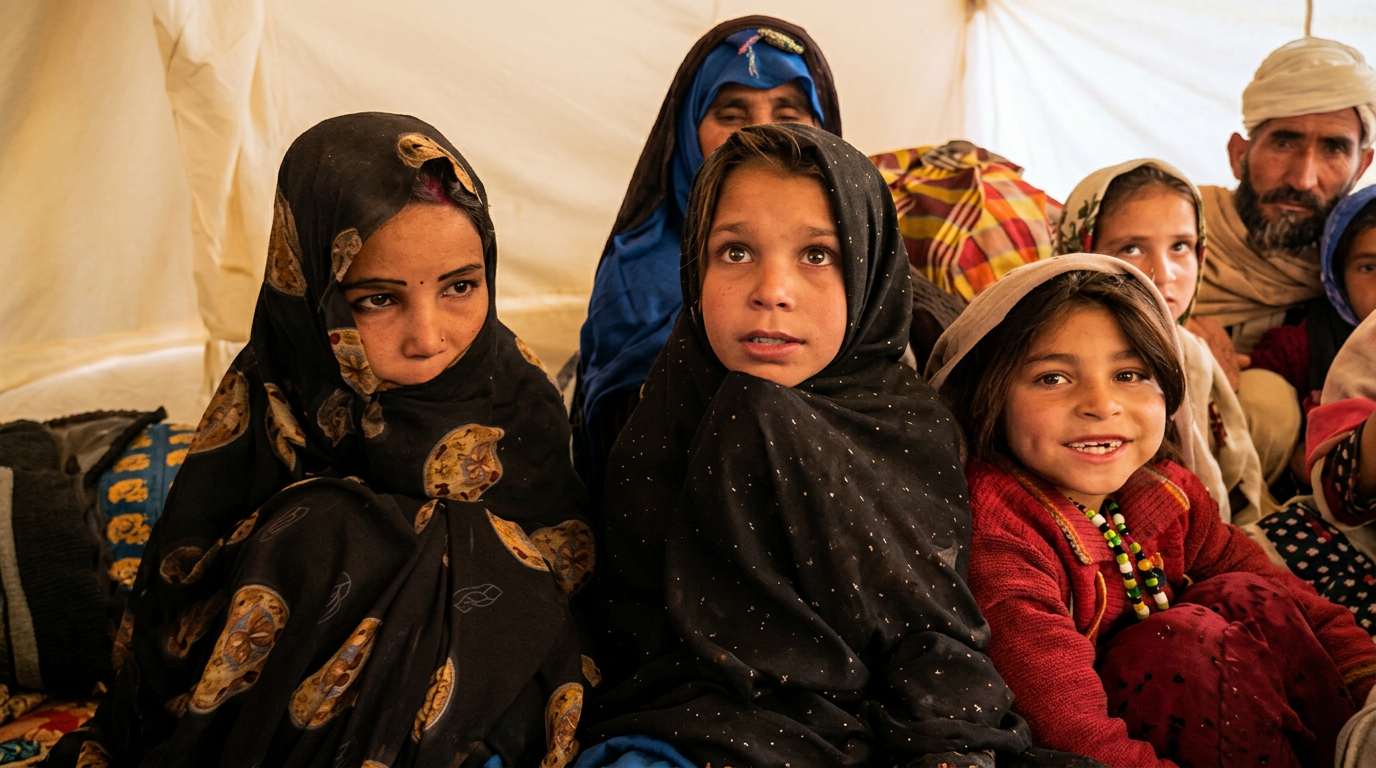
Nowhere shows what that evasion protects like Afghanistan. The Taliban has banned girls from classrooms and erased women from public life, and the legal floor on marriage has collapsed back to "puberty". When Sky News travelled to Badghis province, it found impoverished fathers openly telling the camera they were selling daughters as young as five. That is what "coping strategy" looks like once you strip the euphemism away, and no climate grant put it there.
The ABC found the one child bride with a happy ending. Most never get one
The report leans on Runa, a Bangladeshi girl married at 15 whose husband's family later "allowed" her back to school. It's a hopeful story, and it's the exception. That word "allowed" is the tell. A 15-year-old had to be granted permission to sit in a classroom, and the ABC offers it as the happy ending.
For most child brides there is no happy ending. They are rarely happy or safe, according to UNICEF and Girls Not Brides. Most marriages involve force or pressure. Girls married before 15 face a far higher risk of physical and sexual abuse from partners who are often decades older. They are pushed into pregnancies their young bodies can't safely carry. And they are usually pulled out of school for good, which locks them, and their own children, into poverty.
This is the part that can't be spun any other way. A culture's food, dress and festivals can be celebrated as diversity. The marriage of a nine-year-old to a grown man cannot. So it gets recast as a climate problem, and a feel-good story about one girl who beat the odds runs in place of an honest account of why she was sold at all.

The AFP isn't blaming the weather. Reports of forced marriage jumped almost 30% in a year
While the ABC reached for the climate, the AFP-led Australian Centre to Counter Child Exploitation was asking schools to watch for the real thing. In a media release on 28 January, the centre said reports of forced marriage rose almost 30% in a single financial year, from 91 in 2023-24 to 118 in 2024-25.
AFP Commander Human Exploitation Helen Schneider didn't describe it as a weather event.
"It's a crime people often assume doesn't happen here in Australia. But it can and it does."
The warning signs the AFP asked teachers to watch for included children with very limited independence, constant monitoring by a family member, and sudden concern about planned travel overseas. Forced marriage carries up to 7 years in prison in Australia, 9 for an aggravated offence, and up to 25 years for taking a child overseas to be married, under Division 270 of the Criminal Code.
Where girls are married youngest: Niger, Chad, Mali and the Muslim-majority Sahel
None of this denies that disasters cause hardship. Cyclones wreck incomes, and a family under pressure looks for a way out. The honest question is what that way out looks like, and why it so often means marrying off a daughter. As Soni told the ABC, "financial stress is the trigger". The culture that treats a girl as a burden to offload is the gun.
The countries with the highest rates of child marriage sit overwhelmingly in the Muslim-majority Sahel and South Asia, according to UNICEF and Girls Not Brides data. Bangladesh, the country at the centre of the ABC's report, has the highest rate in Asia, with more than 50% of girls married before 18. In parts of the Sahel, community-level rates top 80%, and in Niger more than a quarter of girls are married before they even turn 15.
| Country | Girls married before 18 | Married before 15 |
|---|---|---|
| Niger | 76% | 28% |
| Chad | 61% | 24% |
| Mali | 54% | 16% |
| Burkina Faso | 51% | 9% |
| Bangladesh | 51% | 22% |
| Guinea | 47% | 17% |
| Somalia | 45% | 16% |
Source: UNICEF and the Child Marriage Data Portal, latest available national surveys. All seven listed are Muslim-majority countries.
Yemen sets no minimum age. Iran allows 13. This is written into the law
In several Muslim-majority countries the law itself sets no floor, or sets it low enough to be meaningless, as Pew Research Center has documented. Read the next table plainly. These are governments writing permission to marry and have sex with children into their own statute books.
| Country | Legal minimum age for girls | What the law actually allows |
|---|---|---|
| Yemen | None | Marriage can be consummated once the girl reaches puberty under the Personal Status Law. |
| Iran | 13 (9 with approval) | Under Article 1041 of the Civil Code, a father or guardian, with a court's approval, can marry a girl below 13, some as young as nine. |
| Saudi Arabia | 18 (guideline) | A 2019 rule set 18, but courts can approve younger marriages. |
| Afghanistan | None (puberty) | Decree No. 18 (May 2026) sets no minimum age and ties marriage to puberty. A girl's silence on reaching puberty is treated as consent to a guardian's arrangement. |
| Palestinian Territories | 18 (about 14 with court approval) | The Palestinian Authority set 18 in 2019 with court exceptions, but Gaza was never brought under it and still allows marriage from around 14. |
Sources: Pew Research Center, Population Reference Bureau, Chr. Michelsen Institute.
Muhammad married Aisha at six: the precedent that anchors the practice
The religious foundation is where the climate story gets uncomfortable. The Quran sets no explicit minimum age for marriage. The practice rests instead on the example of the Prophet Muhammad, whose marriage to Aisha is recorded in the canonical hadith collections Sahih al-Bukhari and Sahih Muslim as taking place when she was six, with consummation when she was nine. Because the Prophet's conduct is treated as Sunnah, an example to be followed, that account has served as religious sanction for centuries.
Some modern Muslim scholars dispute Aisha's age, and a verse often cited in the debate, Quran 65:4, is read by traditional jurists as contemplating marriage to girls who have not yet menstruated, and by reformists as meaning something else. Critics, including Panahi, argue the precedent effectively blesses what Australian law calls child sexual abuse.
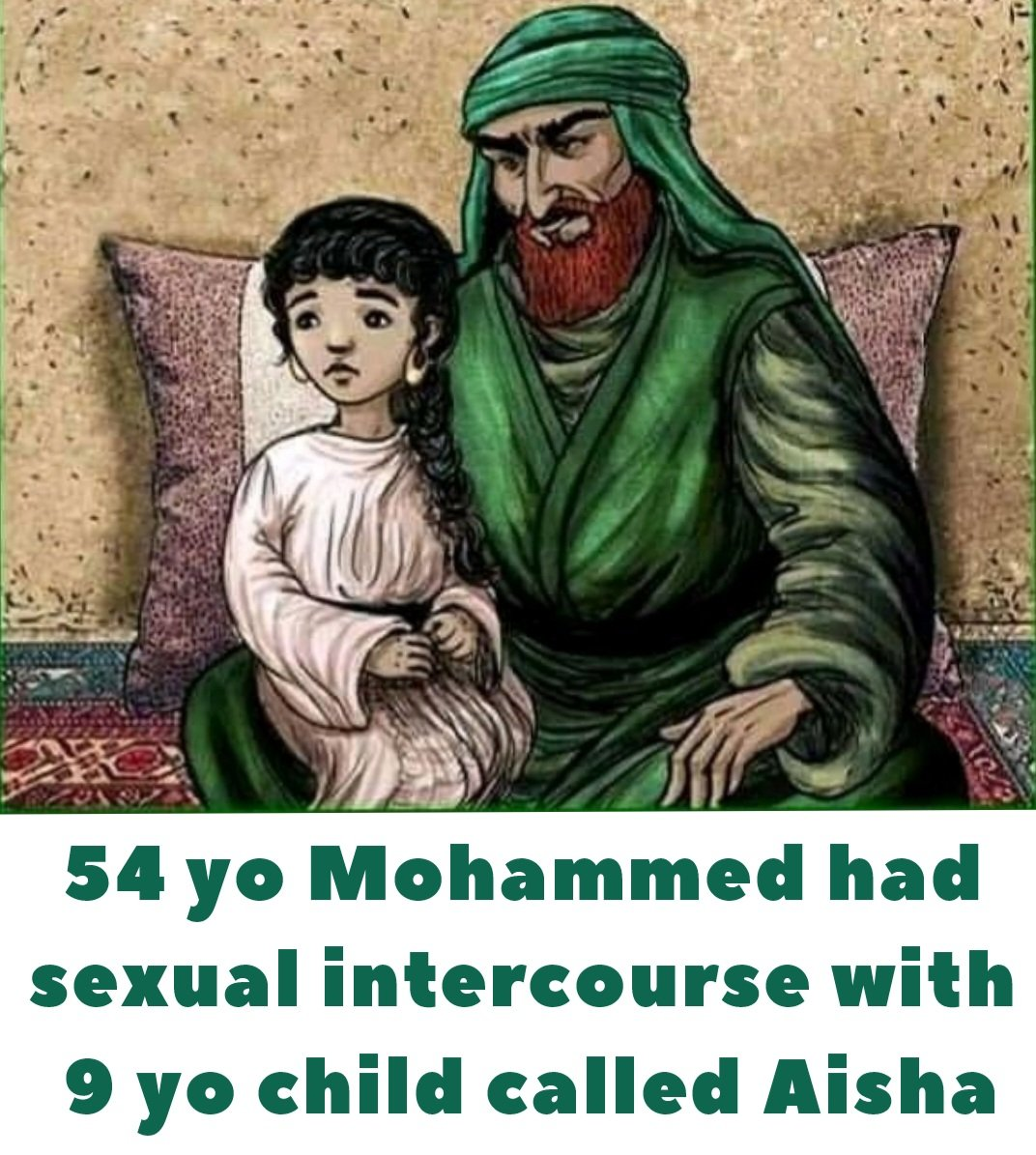
Whatever scholars decide about her exact age, it changes nothing where it counts. Across the Muslim-majority countries listed above, child marriage remains legal, widespread and defended in the name of the same prophetic example. The debate over a single date is academic to the girl being married off this year.
Ruqia Haidari was forced to marry. Five months later her husband cut her throat
It reaches Australia too. In May 2024, Melbourne mother Sakina Muhammad Jan became the first person in the country convicted of forcing someone into marriage, after she coerced her 20-year-old daughter, Ruqia Haidari, into a marriage in 2019. Five months after the wedding, Haidari's husband, Mohammad Ali Halimi, murdered her. He is serving a life sentence. The court heard that after an earlier divorce, Haidari was regarded as "bewa" in her community, a term meaning she had lost her value.
She wasn't the only case to reach a court. In 2017, Melbourne imam Ibrahim Omerdic was convicted of unlawfully solemnising the marriage of a 14-year-old girl to a 34-year-old man at a Noble Park mosque, and was sacked immediately afterwards. A tribunal later noted Omerdic's position that once a girl had reached puberty she was of marriageable age.
India, Hindu communities and the caveat the ABC still avoids
None of this makes child marriage a Muslim-only problem, and the honest version of the story says so. India, which is majority Hindu, records the largest absolute number of child marriages in the world, and Girls Not Brides notes the practice is also justified through Hindu and Catholic belief in various places. Christian-majority Central African Republic and Mozambique both sit high on the global prevalence rankings. We'll break that cross-religion comparison out in full separately.
The point is simpler than the ABC's framing allows. This is a human rights atrocity, and in the countries where the law permits it, legalised paedophilia. Dressing it up as a climate coping strategy softens none of that. It just keeps the real drivers, religion and culture, out of the headline.
The AFP's numbers are going up, its Commander says it happens here, and the courts have started jailing people for it. Handed all of that, the ABC decided the story was the weather.