A South Sudanese man who hit a triple amputee in the head 77 times with the victim's own crutch has won the second "visa stress" ruling in a fortnight because Labor refuses to fix its broken migration framework. Three Federal Court judges threw out Home Affairs Minister Tony Burke's botched appeal and ordered taxpayers to foot the bill for the violent offender's legal costs.
The 33 year old offender is shielded from public scrutiny and anonymised in every judgment as GNHW. He cannot be deported because the government's own delegate determined Australia owes him protection.
The Full Court ruling on 25 August sends his case right back to the Administrative Review Tribunal, which is now legally forced to consider whether handing a violent criminal a permanent visa makes him less of a danger to the public than leaving him on a temporary status. It's the exact same absurd argument that worked for a Sierra Leone man convicted of indecently assaulting a 16 year old boy, a disastrous precedent we exposed nine days ago. The dangerous loophole we warned about is now entrenched by a full bench, binding every tribunal in the country while Labor sits on its hands.
The horrific sentencing remarks set out in the Full Court judgment reveal the full extent of the violence this broken system has allowed onto Australian streets. GNHW wrestled his vulnerable victim to the ground, punched him in the face, stomped on his head twice, and then picked up the defenceless man's own metal crutch to strike him around the head 77 times. The savage assault raged for almost five minutes, and the attacker refused to stop even as a desperate witness tried to intervene. The victim was a triple amputee with two prosthetic legs who relied entirely on that crutch to move.
A court convicted GNHW in January 2020 and sentenced him to 24 months, which automatically cancelled the humanitarian visa he held after arriving in Australia on Christmas Day 2017. Yet under a lenient legal system that Labor continuously fails to reform, the sentence was slashed on appeal to just 7 months. The trial judge even admitted he would have handed down an even softer penalty, a mere community correction order, if the law had permitted it at the time.
Labor leaves dangerous offender free on public streets despite fresh police charges and drinking
GNHW walked straight out of immigration detention on 14 November 2024 because of a 2023 High Court decision that banned indefinite detention. That decision means the government can no longer hold a non citizen in detention forever when no country will take them back, and it forced open the doors on hundreds of them. He was released into the Australian community on the exact same day a delegate officially rejected his protection visa application on character grounds. Under Labor's watch, he now lives freely among the public on a Bridging Visa R, the visa class created for the detainees that decision set free.
The tribunal record since then, as quoted by the Full Court, proves that the danger to the community never went away. He has resumed drinking, and a witness explicitly informed the tribunal that she had seen him intoxicated since his release. Victoria Police files highlight at least two separate interactions with law enforcement, one concerning an alleged shop theft and another involving an alleged sexual assault. The court explicitly noted that he has been charged with two further offences and interviewed over a third. While none of those allegations has been tested in court yet and the tribunal treated them strictly as allegations, the threat remains undeniable.
Medical evidence presented to the tribunal confirmed that his risk of violent reoffending is directly tied to his alcohol abuse, warning of a moderate risk of further offending if he relapses. The tribunal rightly concluded that there was a moderate likelihood he would reoffend, firmly ruled that the Australian public required protection, and denied his visa. Yet under Labor's broken system, that critical safety decision has now been completely thrown out by the courts.
Tony Burke bungles appeal as judges entrench a dangerous visa loophole against the public
The Full Court's legal reasoning exposes the depth of Labor's border policy failure. Because GNHW cannot be deported, refusing his protection visa does not remove him from Australian streets. He remains in the community either way, living either on a temporary bridging visa or a permanent protection visa. Consequently, the tribunal was legally forced to compare the two options.
The temporary bridging visa's conditions require him to report to the government by phone every single day and maintain a standing obligation to assist in his own removal. The tribunal was compelled to ask whether that ongoing psychological strain would drive him right back to alcohol abuse and make him even more dangerous to the public. Because the tribunal failed to spell out that absurd comparison explicitly in writing, its original refusal was completely quashed.
That twisted logic stems directly from DVRL, the May Full Court decision that previously humiliated the government in the Sierra Leone child sex assault case. Home Affairs Minister Tony Burke launched an appeal to stop the precedent from spreading. Instead, Justices Burley, O'Bryan and Jackson flatly dismissed his appeal, ordering Burke to pay costs and locking the precedent into law. That dangerous test now applies to any of the 358 non citizens that High Court decision released into the community who demand a visa upgrade, a cohort that included 39 convicted sex offenders in the very first group alone, according to Senate estimates.
Labor's broken migration system allows violent criminal to demand NDIS and uni funding
GNHW's legal team submitted arguments to the tribunal, as reproduced in the Federal Court's 21 November judgment, claiming that the temporary visa status itself presents the real danger to the public.
"Whilst on a temporary visa, we submit that the feelings of social stigma, ostracisation, and possible perceptions (either self or from others) as a 'second-class citizen' are liable to negatively impact upon his mental health," his lawyers wrote. "As a holder of a protection visa, he would be eligible for government loans and therefore have the option of returning to university studies."
Under Labor's watch, the submissions went on to argue that if he ever requires intensive support, he cannot access taxpayer funded National Disability Insurance Scheme resources while restricted to a temporary visa. This is the reality of what Labor's system permits, allowing a violent offender who beat a defenceless man to demand permanent status, university loans, and NDIS welfare access as a bribe to keep him from harming the public again.
| What he gets | Bridging Visa R | Protection visa |
|---|---|---|
| Stays in the community | Yes | Yes |
| Daily phone reporting | Yes | No |
| Must help arrange his own removal | Yes | No |
| Can be removed if a country takes him | Yes | No, it's permanent |
| Medicare and Centrelink | Yes | Yes |
| NDIS access | No | Yes |
| Government loans for university | No | Yes |
Victoria Legal Aid ran the offender's legal case, and the Full Court ordered Home Affairs Minister Tony Burke to pay his appeal costs out of public funds. Under Labor's disastrous management, long suffering Australian taxpayers have been forced to bankroll both sides of every single round of this legal battle, repeating the exact same expensive farce seen in the Sierra Leone case. At the tribunal, Minister Burke's own legal representative was forced to concede there were "no third country removal options" for the violent offender, exposing the brutal truth that Labor has completely surrendered on deporting dangerous non citizens.
Burke recycles weak excuses while refusing to close Labor's dangerous visa loophole
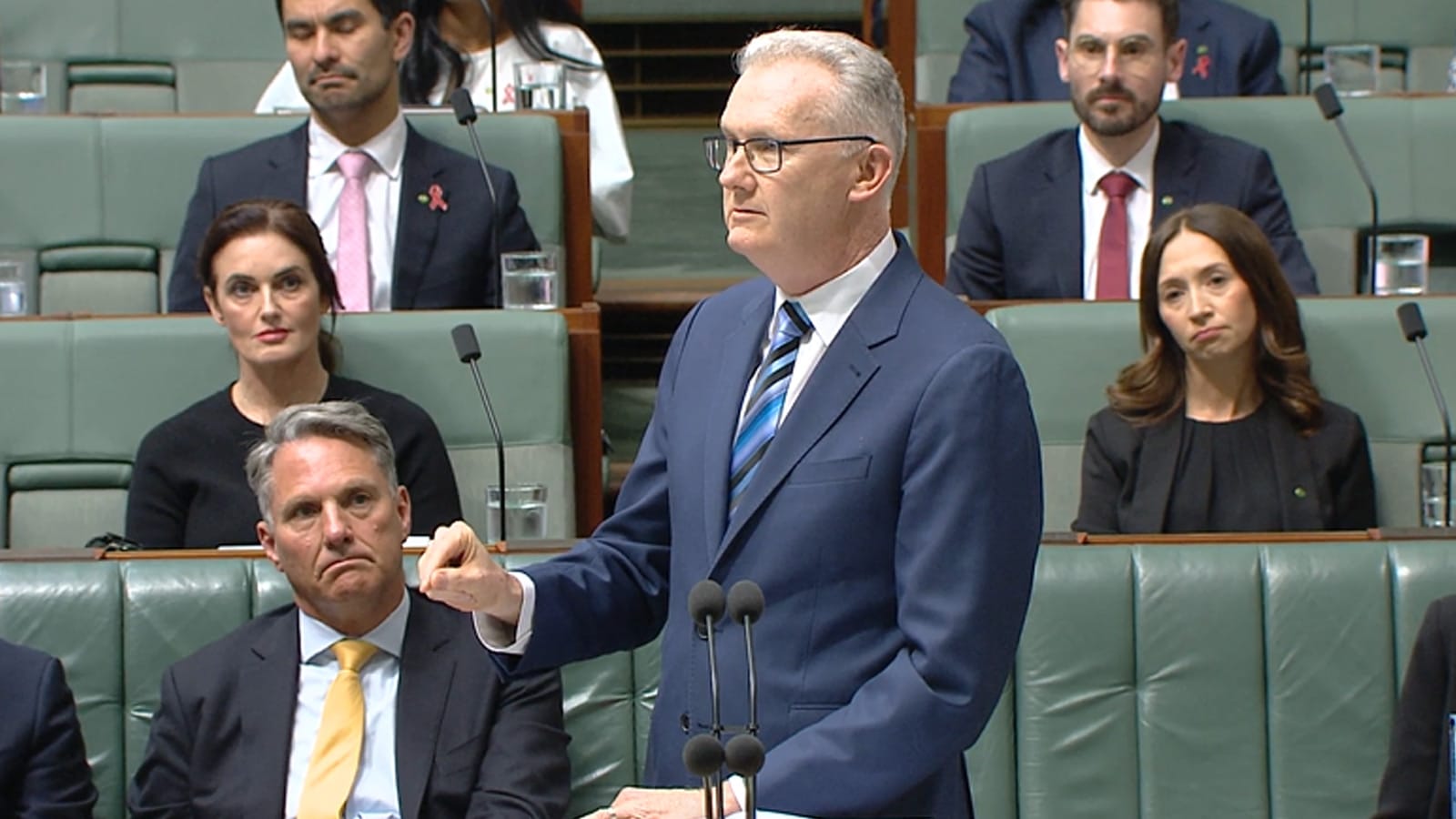
Home Affairs Minister Tony Burke lost in court and his office immediately recycled the exact same pathetic deflection. Asked whether the government needs to change the law, Burke's media team gave The Australian the exact same spin his office ran when the Sierra Leone ruling landed a fortnight ago.
"The only reason this visa has been considered by the ART or the court is that it was cancelled by the department," a spokesperson claimed.
Shadow Home Affairs and Immigration Minister Jonno Duniam stated that the government needs to urgently establish whether there is a systemic problem in how the Migration Act, the High Court decision and the tribunal's risk test interact.
"There is something fundamentally wrong about a system where an individual's risk of reoffending is used to justify cancelling or refusing a visa, only for the stress associated with that cancellation or refusal to potentially become an argument for restoring their visa," Duniam told The Australian.
Burke does not even need Parliament to close this dangerous loophole. The comparison test grows directly out of the courts' reading of Direction 110, an executive instrument Labor Minister Andrew Giles signed in 2024 after his previous failed direction kept restoring visas to violent criminals. Burke can rewrite that direction overnight without waiting for a single parliamentary vote. Yet after two humiliating defeats in a fortnight, he has refused to act.
The November ruling also revealed that the minister's side failed in its basic duty to assist the tribunal, because it concealed that Australia was in advanced negotiations over deporting non citizens like GNHW to third countries.
Anthony Albanese's government owns every single piece of this disaster. Labor wrote the executive direction the courts are using to release offenders. Labor runs the very department that hid crucial deportation negotiations from the tribunal. And ever since the courts created the comparison test in May, neither Albanese nor Burke has bothered to amend the direction or introduce a bill to reverse it. Burke's only move both times was to launch failed appeals, and he has now been beaten twice.
One Nation policy would tear up refugee treaty and deport foreign criminals immediately
The core legal barrier shielding GNHW is the 1951 United Nations Refugee Convention. Robert Menzies' government signed Australia up on 22 January 1954, and Gough Whitlam's Labor government added the 1967 Protocol in December 1973, expanding the promise to refugees worldwide.
The core promise, known as non refoulement, dictates that Australia can never send a refugee back to a country where they face potential persecution. Labor and Liberal governments alike have kept that promise embedded deep inside the Migration Act for more than 70 years, and it is the sole reason GNHW's protection finding blocks his immediate deportation back to South Sudan.
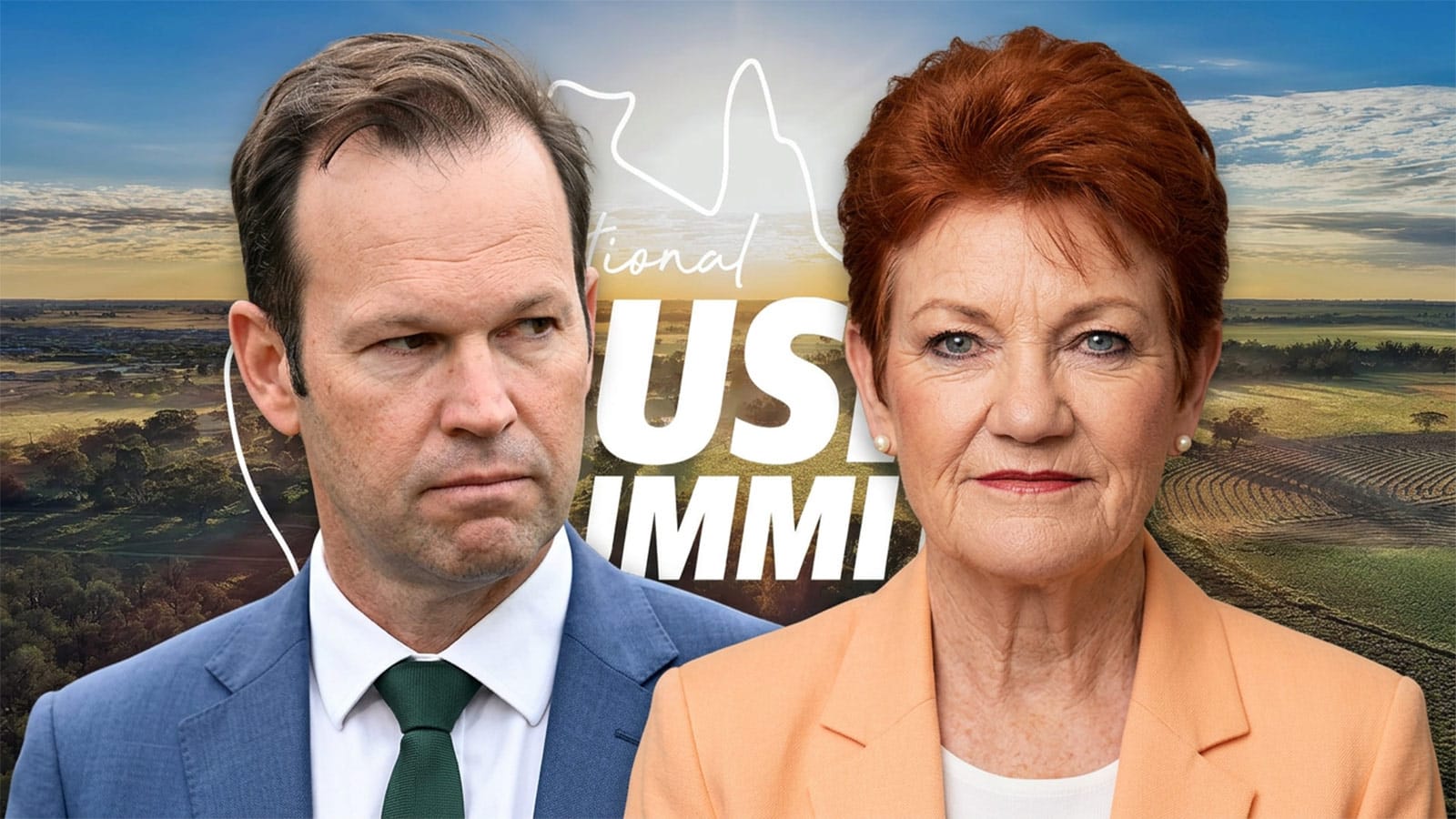
Pauline Hanson's plan is to scrap the treaty entirely. One Nation's immigration policy explicitly commits to pulling Australia out of the UN Convention so the nation stops taking orders from unelected foreign bureaucrats, instantly deporting any visa holder who commits a crime, forcibly removing 75,000 unlawful non citizens, and shutting down the Administrative Review Tribunal's endless legal appeals.
Without the UN Convention written into the Migration Act, his protection finding vanishes, and without that protection finding, there is zero legal barrier to his immediate deportation. Yet while Hanson demands border sovereignty, Labor aggressively drives toward 1.2 million new arrivals by 2030.
The Administrative Review Tribunal will now hear GNHW's case for a third time. Until that hearing concludes, Labor policy keeps him living freely in the community on a temporary bridging visa. And if the absurd visa stress argument succeeds once more, the violent criminal who beat a disabled stranger with his own crutch will walk out of the hearing with full permanent Australian residency.