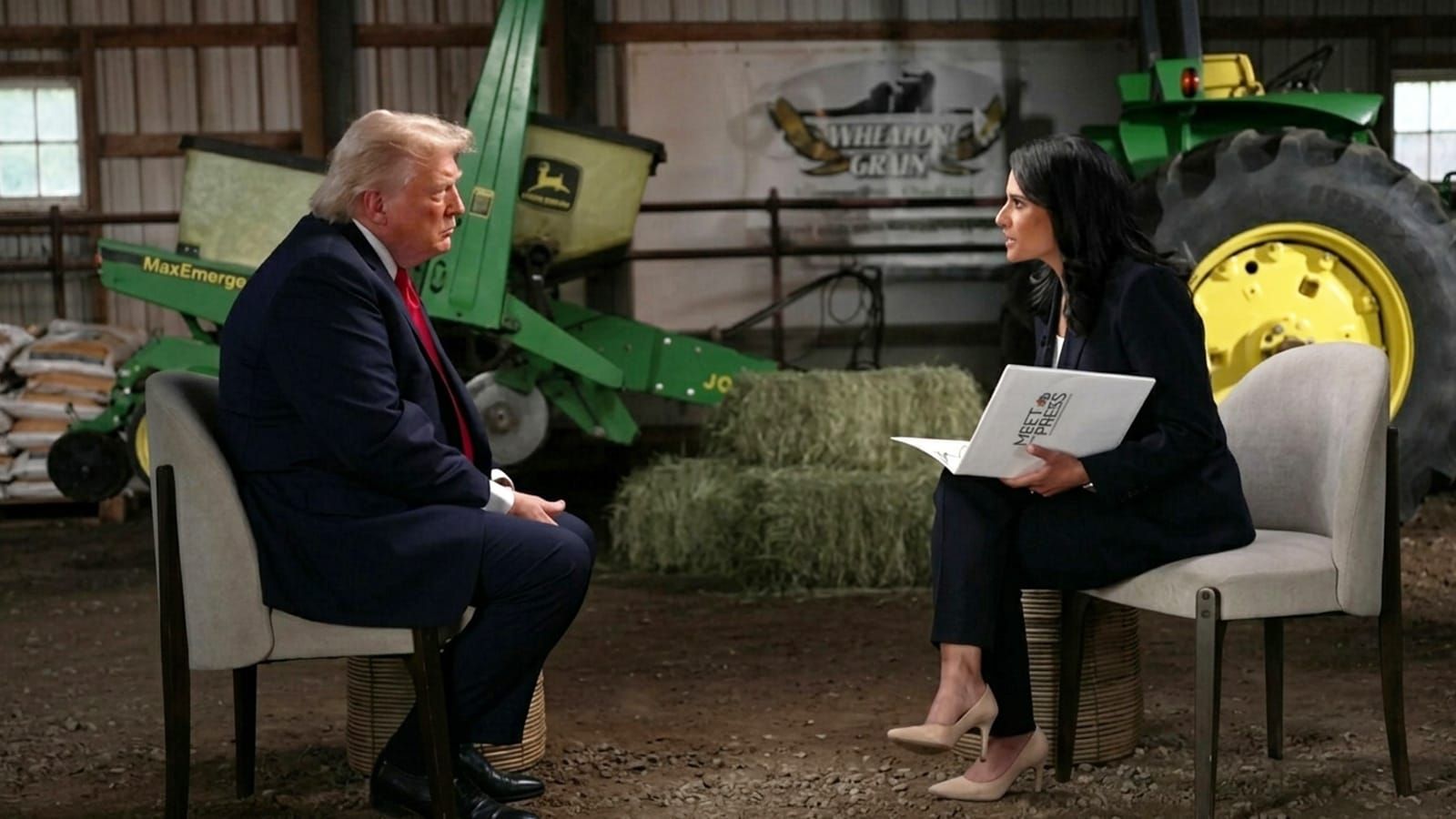
President Donald Trump cut short his Meet the Press interview with NBC's Kristen Welker on Sunday after telling her the United States elections are "crooked," that he was tired of being lectured by a network he called one sided, and that he had given her enough time.
The interview was recorded on Friday 5 June at Custer Farms in Chippewa Falls, Wisconsin, and aired on NBC on Sunday 7 June. It ran about 50 minutes and covered Iran, US fuel and fertilizer prices, the proposed weaponisation fund, and election integrity, before Trump took off his microphone, patted Welker on the shoulder and left.
The US runs federal elections under 50 different state rule books. Voting isn't compulsory. There's no national voter ID law and no national voter database. In 14 states and the District of Columbia, voters don't need to show any identification at the polls. In most of the country, citizenship at registration is taken on the voter's word, with documentary proof required in just 12 states. Mail in ballots, third party ballot collection in some states, signature checks at the count, and counting windows that run for weeks are all part of the architecture. The system runs on trust at the points where most other democracies run on verification. That's the system Trump argues is open to being gamed, and the one Welker spent Sunday's interview defending.
Video: via NBC and Meet the Press interview with President Donald Trump and Kristen Welker
Iran, the mines, and the tolls
The first half of the interview was on Iran. The Strait of Hormuz, the narrow waterway between Iran and the Arabian Peninsula, carries roughly 20% of the world's oil. Iran shut the strait months ago, dropped naval mines into the waterway, and started charging fees on tankers trying to get through. Trump warned Tehran against the tolls in April. The Pentagon now says US strikes have destroyed 95% of Iran's naval mines and 90% of its conventional navy, with more than 80% of Iran's missile facilities also gone under the joint US and Israeli operation the administration named Operation Epic Fury. Secretary of State Marco Rubio told Congress this week the operation has "concluded."
The other half of the strategy is China. Iran sells significant volumes of its own oil to China, and the two countries signed a strategic partnership in 2021 with a 25 year term. That oil pipeline is what gives Tehran its hard currency and a lot of its diplomatic cover. Trump's argument is that breaking Iran's hold on Hormuz, and weakening its ability to keep selling oil to Beijing, removes the leverage Iran has used against the West for decades.
The price of that, on the home front, is at the pump. US gasoline averaged $4.17 a gallon on Sunday, up from $2.98 in late February. Diesel was $5.34, up from $3.66. Welker pointed out that "70% of farmers say they can't afford fertilizer."
Trump didn't dodge it. "Fertilizer was very cheap. Everything was cheap. Gasoline was very low. Everything was very low. I could've kept it that way," he told Welker. "But I said, I have to take a little bit of a turn. The farmers are going to understand it better than anybody. We're going to have higher gasoline."
About half of the world's production of urea and sulfur, two of the main fertiliser precursors, also moves through Hormuz, which is part of the supply squeeze. Oil executives have said it'll take four to six weeks to rebalance the global supply chain once the strait reopens.
The election fraud case Welker wouldn't engage with
The mood of the interview changed when Welker brought up the recent Democratic primary in California, held on 2 June, and the 2020 election. Trump called the 2020 race "rigged" and the California count "cheating." Welker asked for evidence. Trump told her, "all I have to do is look."
His case rests on what the US voting system actually allows.
There is no national voter ID law in the United States. The picture sits at the state level. According to Ballotpedia:
- 21 states require some form of photo ID
- 12 states require non photo ID
- 14 states and the District of Columbia don't require ID at all to vote in person
California, the state Trump pointed at on Sunday, doesn't require ID. It also mails a ballot to every active registered voter, allows third party ballot collection (commonly called ballot harvesting), and counts mail in ballots that arrive up to seven days after Election Day. Final certification of last week's primary isn't due until 10 July.
On citizenship, federal law (18 U.S.C. 611) makes it a crime for non citizens to vote in any federal election. But the verification of that, in most states, runs on the honour system. Every state with voter registration requires voters to attest they are US citizens under penalty of perjury when they register, but only 12 states require documentary proof of citizenship to back the attestation. The District of Columbia, plus some municipalities in California, Maryland and Vermont, allow non citizens to vote in some local elections.
The Safeguard American Voter Eligibility Act, or SAVE Act, would require documentary proof of citizenship to register, and photo ID to vote, in all federal elections. It passed the US House 218 to 213 in February 2026, and then stalled in the Senate, where Democrats are using the filibuster to block it.
Voter rolls carry the rest of the gap. There is no national database of US voters. People who move from one state to another can remain registered in both, and the system relies on the states themselves to share data and prune the rolls. Voter roll audits over the last decade have repeatedly turned up dead people still listed, people who moved years ago, and a small number of non citizens who registered, including through the "motor voter" process at state DMVs.
The administration's case for the SAVE Act doesn't rest on a documented mass fraud event. It rests on closing the verification gap, on the argument that a system that registers voters by attestation alone and counts millions of mail ballots over weeks of low oversight has the soft edges to be cheated, regardless of what later audits find.
Welker's question was for evidence at the scale needed to call an election "rigged." Trump's answer was that the system itself has the gaps to be one. They were never going to agree on it. He ended the interview there.
The walkout and media bias
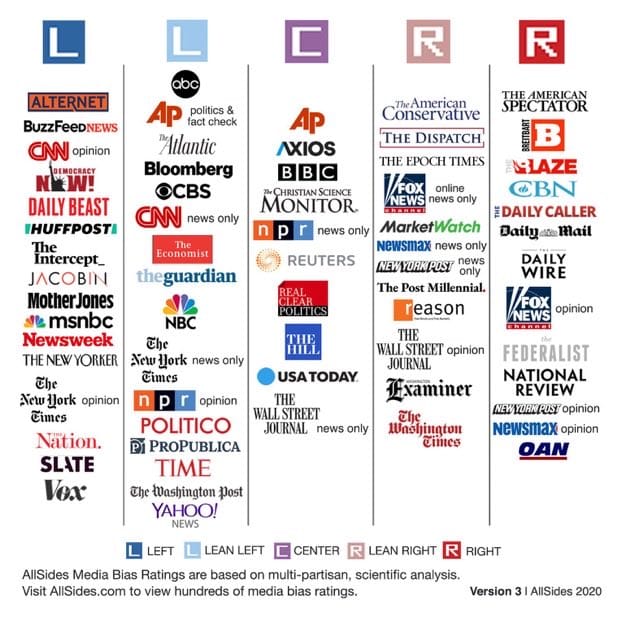
"Your elections are crooked, and you're crooked, and Meet the Press is crooked," Trump told Welker. "And so is ABC and CBS and CNN. You're a one sided crooked network. Sorry. Let's call it quits because I've had enough. Thank you, darling. Have a good time."
Welker tried to keep him in the chair. "Please, I traveled all the way to Wisconsin," she said. Trump replied that he had sat in the rain with her for an hour, and walked.
The venue itself didn't help the recording. NBC News White House correspondent Gabe Gutierrez said on air that the barn at Custer Farms had been picked "at the request of the White House." Rain hit the metal roof through the recording.
The $1.8 billion weaponisation fund
Welker had also pressed Trump on his proposed $1.8 billion "anti weaponisation" fund, intended to compensate people the administration argued were targeted by the Justice Department under President Joe Biden, including those charged over the Capitol riot on 6 January 2021. A federal judge has blocked the proposal. Acting Attorney General Todd Blanche has said the administration isn't pursuing it anymore. Trump told Welker he still loved the idea but didn't know whether it would happen.
The reaction
Footage of the walkout spread quickly on Sunday. Conservative accounts framed it as the president refusing to be lectured by a network that has been hostile to him from the start. Liberal accounts framed it as Trump dodging a fact check.
Welker travelled to Wisconsin for the recording. Trump appeared late at a farmers' roundtable in Eau Claire after it wrapped, where he offered familiar criticism of the press.
Five months out from the midterms, the SAVE Act sits in the Senate, California is still counting last week's primary, and gas at the US pump is averaging $4.17 a gallon.
Sources:
- https://www.washingtonpost.com/politics/2026/06/07/trump-walks-out-meet-press-interview-when-challenged-over-false-claims/
- https://www.nbcnews.com/politics/donald-trump/trump-iran-not-agreed-deal-strong-re-proud-rcna348511
- https://www.nbcnews.com/politics/donald-trump/trump-iran-destroy-uranium-deal-rcna348509
- https://www.nbcnews.com/politics/donald-trump/fact-checking-trump-interview-meet-press-june-2026-rcna348518
- https://time.com/article/2026/05/14/trump-xi-china-iran-strait-hormuz/
- https://www.malaymail.com/news/world/2026/04/10/poor-job-trump-accuses-iran-of-breaching-hormuz-oil-flow-terms-as-ceasefire-tensions-flare/215758
- https://dailycaller.com/2026/06/07/donald-trump-ends-nbc-news-kristen-welker-meet-press-interview-wisconsin-iran-war-farmers-energy-prices-california-primary-election-fraud-claims/
- https://ballotpedia.org/Voter_identification_laws_by_state
- https://ballotpedia.org/Laws_permitting_noncitizens_to_vote_in_the_United_States
- https://news.ballotpedia.org/2026/03/24/senate-takes-up-save-america-act-to-require-voter-id-proof-of-citizenship-for-federal-elections-2/
- https://dp.electionresults.sos.ca.gov/frequently-asked-questions
- https://www.thewrap.com/media-platforms/journalism/trump-meet-the-press-interview-kristen-welker-election-fraud-storms-off-video/
- https://www.washingtonexaminer.com/news/white-house/4598320/trump-storms-out-meet-the-press-interview/