How a federal leak about Ben Roberts-Smith's arrest landed at the watchdog run by the same man whose 2020 report set the prosecution in motion
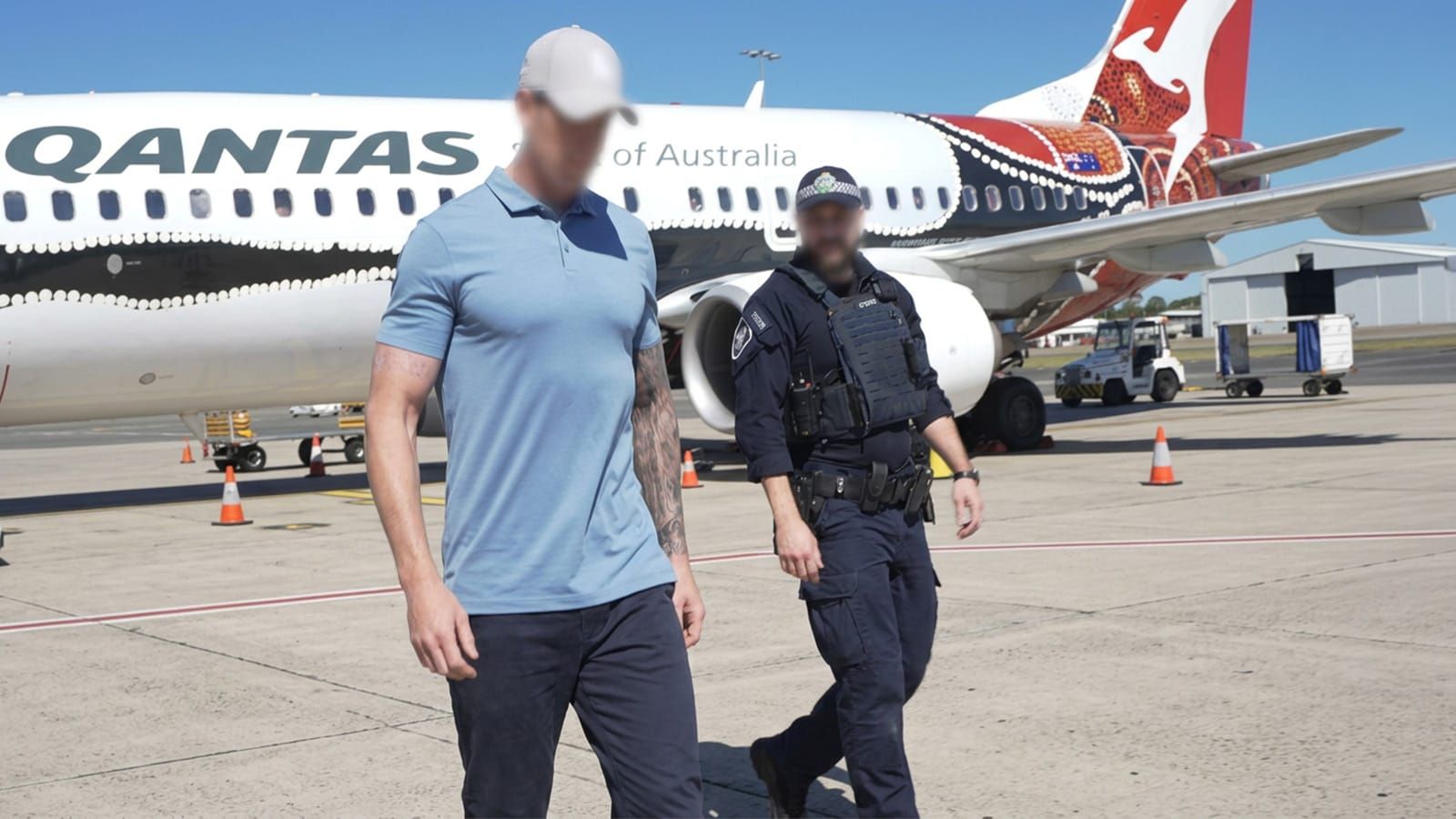
Ben Roberts-Smith was arrested at Sydney Airport on 7 April. A single media crew was there to film it. No other outlet had been told. The Office of the Special Investigator and the Australian Federal Police have since referred a suspected unauthorised disclosure to the National Anti-Corruption Commission, on the basis that somebody appears to have known about a covert arrest before it happened.
Fair enough. Send it to the watchdog. That's what the watchdog is for.
The trouble is who runs the watchdog.
The investigation that led to the arrest
The long running journalistic investigation into Roberts-Smith was led by Nick McKenzie across Nine's mastheads, the Sydney Morning Herald, the Age and 60 Minutes. That's a matter of public record from the 2023 Federal Court defamation case Roberts-Smith brought against Nine and lost on the civil standard. Whether the investigative team had any role in the events at Sydney Airport on 7 April is something no official body has commented on, and no official body should comment on until the NACC has done its work.
The leak referral
AFP Commissioner Krissy Barrett told Senate estimates this week she is "determined to find out how they knew of the arrest" and that she has no evidence the AFP gave the media the date or details. OSI Director-General Chris Moraitis told the same hearing that the media presence at the airport concerned him, and he has co-signed a referral to the NACC with the AFP.
A federal leak about the country's most high profile arrest in years is now sitting at the National Anti-Corruption Commission.
How they got airside
The part worth dwelling on is the location. Airside at Sydney Airport is a controlled zone. Access is restricted by federal aviation security law. A camera crew does not arrive on the tarmac by accident. Someone with the authority to authorise airside access had to clear them in.
So there are two questions, not one. How did the media know the arrest was happening, and who authorised them to be in a restricted federal zone to film it.
Who runs the NACC
Paul Brereton.
Brereton led the 2020 Defence inquiry into alleged war crimes in Afghanistan. That inquiry produced the findings on which the criminal investigation against Roberts-Smith was built. The same Brereton is now the outgoing Commissioner of the body the leak referral has been sent to.
Brereton's exit
On 25 May, Brereton announced his resignation from the NACC, effective 6 July. He said the focus on him personally had become a distraction.
He was recommended by Labor Attorney-General Mark Dreyfus and announced on 30 March 2023. He was formally appointed by the Governor-General and took office as the inaugural NACC Commissioner on 1 July 2023, on a five year term. He is walking out two years early.
There has been a fair bit to be distracted by.
- The NACC's own Inspector, Gail Furness, found Brereton committed officer misconduct over his handling of the Robodebt referrals. He had declared a perceived conflict with one of the six people referred, said he would hand decision making to a deputy, then continued to provide input. Furness found he should have removed himself entirely. He accepted the finding but said he did not personally agree with it. (Canberra Times, The Conversation)
- That initial Robodebt call, not to investigate any of the six referrals, was reversed after Furness intervened. The NACC was forced to seek independent advice and reconsider. It eventually found two former public servants had engaged in serious corrupt conduct.
- In 2025, Brereton had to step away from all defence related referrals to manage a perceived conflict of interest, after revelations he had been doing consultancy work for the Inspector-General of the ADF while running the NACC. (The New Daily)
- A second independent report into his conduct as Commissioner was still being finalised when he resigned.
For the record, the original Robodebt inquiry made no finding of intentional wrongdoing on his part. It found apprehended bias, that a fair minded observer might reasonably think he could not bring an impartial mind to the matter. For the head of the country's corruption watchdog, that is not a trivial finding.
The crossbench position
David Pocock, the Independent senator for the ACT, was one of the loudest voices on the crossbench pushing for a national anti-corruption body to be established. He has since become one of its sharpest critics.
His statement after Brereton's resignation:
"There have been too many perceived conflicts of interest, too many decisions out of step with community expectations and the need for the NACC Inspector to intervene too many times."
The timeline
- 6 April 2026, the URL slug on the Sydney Morning Herald's eventual arrest story carries this date, which is the day before the arrest. Slug dates are typically stamped at draft creation rather than at publication, prompting online questions about the level of media preparedness ahead of the arrest.
- 7 April 2026, Ben Roberts-Smith arrested at Sydney Airport. A single media outlet's camera crew is present. No other outlets are told.
- 17 April 2026, granted bail by Local Court Judge Grogin on the basis of exceptional circumstances.
- April to May 2026, OSI and AFP build a referral over the suspected unauthorised disclosure.
- 25 May 2026, Brereton announces his resignation, effective 6 July, citing scrutiny as a distraction.
- 26 May 2026, OSI Director-General Chris Moraitis confirms at Senate estimates that the leak has been referred to the NACC, co-signed with the AFP.
- 28 May 2026, AFP Commissioner Krissy Barrett tells Senate estimates she is determined to find out how the media knew of the arrest.
- 2 June 2026, Roberts-Smith back in court for committal mention at the Downing Centre Local Court.
- 6 July 2026, Brereton walks out of the NACC.
Why the leak matters as a structural question
The legal academic literature on leaks in criminal investigations consistently identifies the same risk. Unauthorised disclosures during the arrest phase of a prosecution can become a focal point in subsequent proceedings, raising questions about institutional conduct that sit alongside, rather than within, the substance of the criminal case itself. Whether any such question arises in this matter is not for this outlet to predict and is properly a matter for the courts, the NACC, and in due course any review of how the prosecution was conducted.
What is on the public record, today, is that the AFP and OSI have themselves identified the media presence as warranting investigation by a federal integrity body. That alone is unusual.
Three years of the NACC
- Zero public hearings
- A reversed Robodebt call that had to be forced by the Inspector
- An officer misconduct finding against its own Commissioner
- A defence consultancy conflict that took a year to resolve
- A Commissioner walking out two years early under sustained scrutiny
- A leak about Australia's most high profile criminal arrest in years referred to the body on his way out
Labor sold the NACC as the cure for sliding trust in politics. Three years in, the process the public was told to trust has resigned.
Sources
- Senate estimates evidence of Krissy Barrett, AFP Commissioner, 28 May 2026
- Senate estimates evidence of Chris Moraitis, OSI Director-General, 26 May 2026
- NACC Inspector's report on the Robodebt referrals, Gail Furness
- Canberra Times, The Conversation, The New Daily reporting on Brereton's conduct as Commissioner
- David Pocock statement following Brereton's resignation, 25 May 2026
- Federal Court of Australia, Roberts-Smith v Fairfax Media Publications [2023]
- Commonwealth Director of Public Prosecutions, Attorney-General (Cth) v Benjamin Roberts-Smith case page