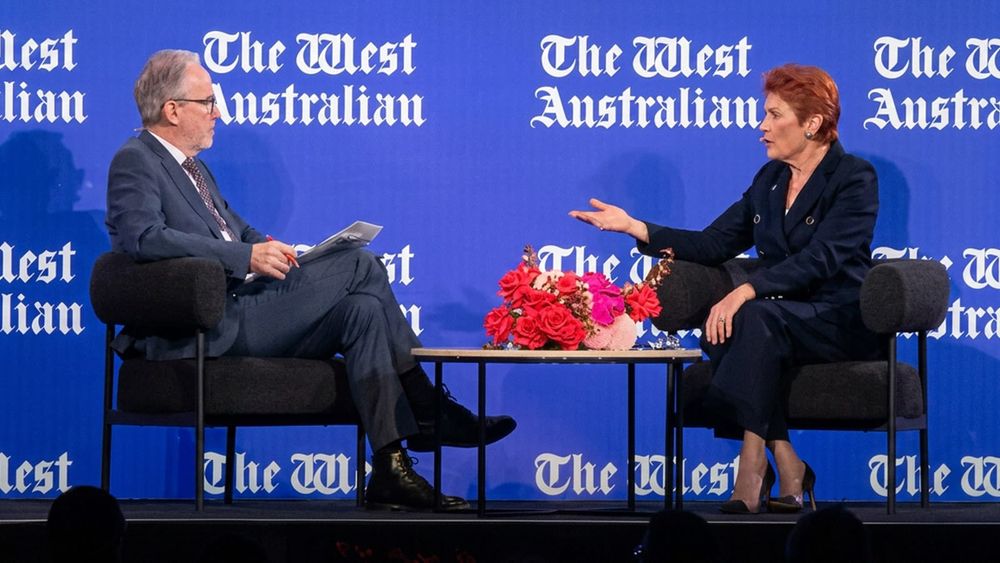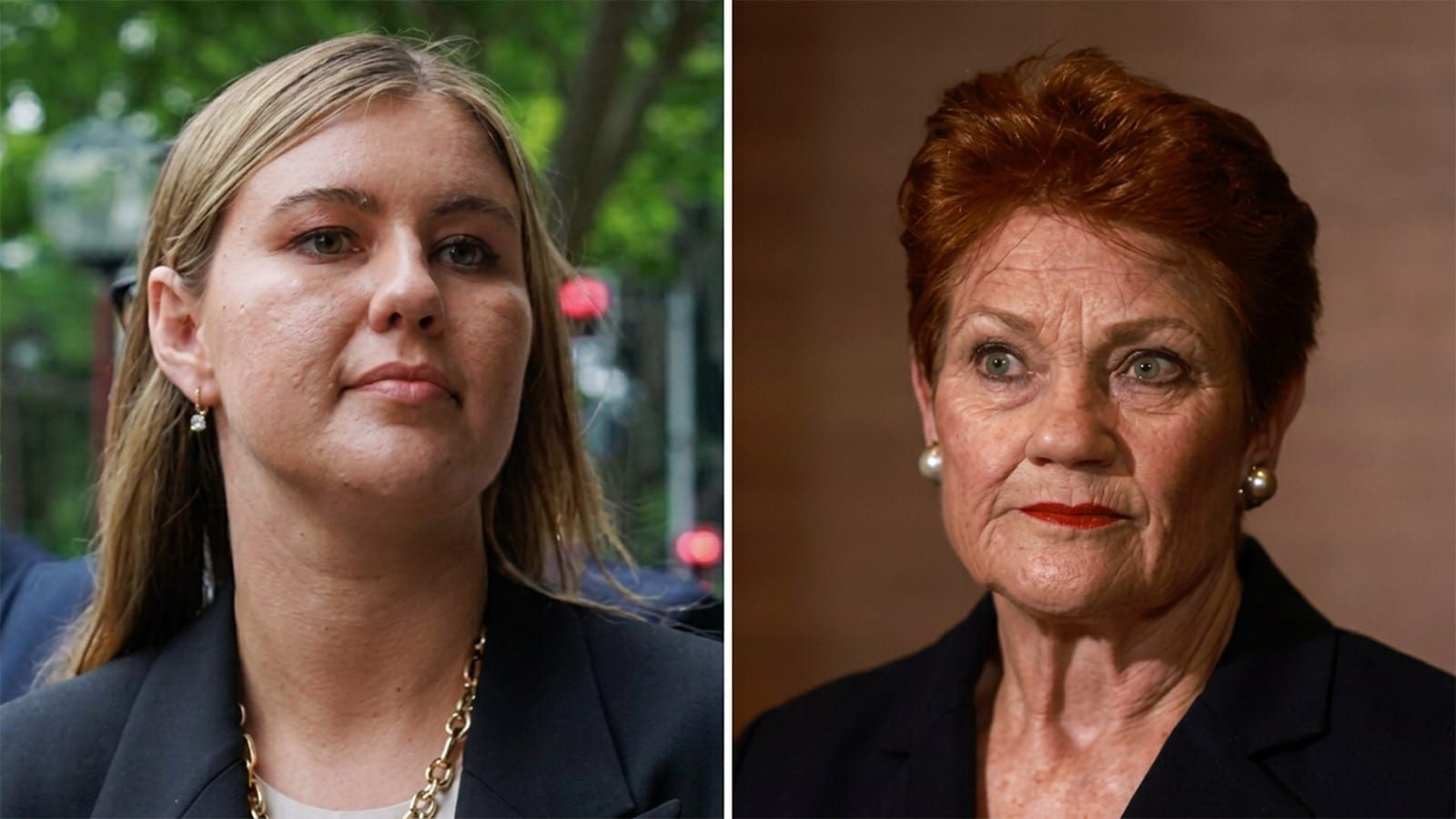
One Nation leader Pauline Hanson spent Wednesday being wrongly accused of victim blaming by Brittany Higgins, Finance Minister and Minister for Women Katy Gallagher and Social Services Minister Tanya Plibersek, all over one answer in a wide ranging 4BC interview.
Here is the part that should make every reader stop. In May, Anthony Albanese rejected a royal commission into violence against women, telling Hobart radio "there's calls for a royal commission about everything" and asking "what does a royal commission do, besides fund lawyers". A petition with more than 91,000 signatures wanted one. Two women had died in suspected murder suicides days earlier. On Wednesday, Labor's Minister for Women and its Social Services Minister found their voices, and aimed them not at their own leader but at a domestic violence survivor who said the crisis can't be dismissed. They attacked the woman telling victims to get out, and spared the man who asked what an inquiry is for besides paying lawyers. Make it make sense.
One News has listened to the full audio. Hanson called domestic violence "wrong" the moment she was asked, called it "a scourge", called it "absolutely wrong" when host Gary Hardgrave pressed her about men killing women, and told victims to leave because she once had to leave herself. And to no surprise, none of that survived into the coverage.
What did survive was this:
"It is wrong but it's also a two way street. I'm not saying that it's just men, women can lose their cool as well."
And this:
"If these women are getting abused by men out there, then don't put up with it. That's what I am saying."
Here’s exactly what I said on 4BC about domestic violence, so you don’t get it twisted by the media or the Labor Party: “Domestic violence is wrong, but it’s also a two-way street”.
— Pauline Hanson 🇦🇺 (@PaulineHansonOz) July 22, 2026
“I’m not saying that it’s just men, women can lose their cool as well … Everyone is under so…
Higgins, now executive director of the anti One Nation Vida Fund, and declared bankrupt three years after her $2.4 million Commonwealth payout, said in a social media statement, as reported by Nine, that "normalising this victim blaming rhetoric in relation to domestic violence when 38 Australian women have already been lost to femicide is atrocious". By Thursday morning One News couldn't find that statement anywhere on her public Instagram, X or Bluesky accounts. Wherever it was posted, it didn't stay up, and it's quoted here as Nine and The Guardian reported it.
This is the same Brittany Higgins a 360 page WA Supreme Court judgment found had made 26 false or misleading statements in media interviews, who apologised to Linda Reynolds and was bankrupted by the costs, and who's now employed as the public face of a campaign built to stop Hanson's party. When she lectures a survivor about normalising anything, that record is part of the story. It's set out in full in One News' June investigation of the fund.
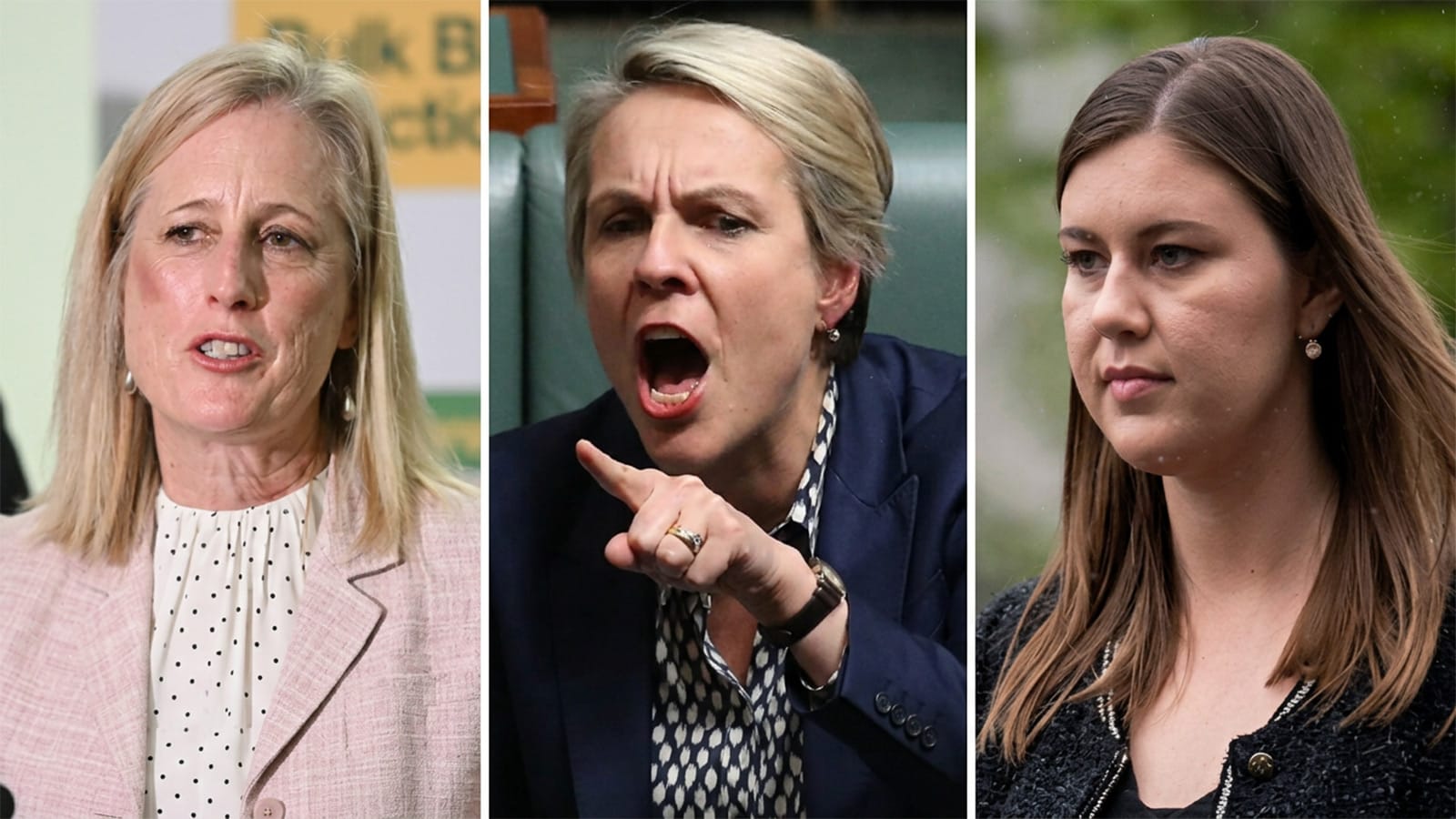
What Gary Hardgrave actually asked, and the answer that never made print
The exchange didn't come from nowhere. Hardgrave had just played Hanson a clip of Barnaby Joyce, who'd told 4BC's Jason Matthews earlier that same morning that men should walk out of the house before they lose their temper and keep it together like James Bond, who is "loved in the cinemas because he keeps it all together". Joyce copped his own backlash for that within hours.
Hardgrave then asked Hanson directly: "What's your message to blokes who lose their bottle, who get angry and bash and hurt their intimate partners?"
Her answer began with two words: "It's wrong."
Hardgrave pressed her: "I want you to call it out. Can you call it out?" The two way street answer followed, along with several minutes on cost of living pressure, bottled up feelings and couples sitting opposite each other in restaurants staring at their phones instead of talking.
Then came the part no outlet printed. Hardgrave put it to Hanson that "blokes have been responsible for women being killed". Her reply:
"It's all wrong. It's absolutely wrong."
Hardgrave's response, live on air: "You've at least said that, which is a step forward on a few other people."
The host who asked the question credited Hanson with answering it. Readers of Wednesday's coverage were told only that she'd called abuse a two way street. Part of that coverage came from a newsroom the taxpayer helps pay for: Nine takes government money under the journalism assistance fund, alongside Seven, Crikey and 181 other outlets.
The AIHW's own data says the same thing Hanson said
The line that drew the most fire was "I'm not saying that it's just men". It happens to be what the Australian Institute of Health and Welfare reports, across every kind of abuse it counts. For emotional abuse the figures are 1 in 4 women and 1 in 7 men. For economic abuse, 1 in 6 women and 1 in 13 men. Abuse doesn't have to leave a bruise to wreck a life, and the institute counts the mental and financial kinds for exactly that reason.
1 in 6 women and 1 in 18 men have experienced physical or sexual violence from a cohabiting partner since the age of 15.
Source: Australian Institute of Health and Welfare, national family, domestic and sexual violence summary, cohabiting partners since age 15
The homicide data shows who bears the worst of it, and it also shows the worst of it isn't borne only by women. Of the 98 domestic homicide victims recorded in 2024 to 2025, 32 women and 14 men were killed by an intimate partner.
The same summary reports that 2 in 5 male victims of partner violence never sought advice or support afterwards. On Wednesday those men learned that a senator acknowledging their existence counts as a dangerous message.
None of this disputes that the violence is gendered. University of Technology Sydney associate professor Jane Wangmann told Nine that most domestic and family violence is perpetrated by men against women, and the AIHW tables agree. So did Hanson, on the tape, when Hardgrave put the death toll to her. Recognising male victims and condemning male violence aren't competing positions. The institute manages both on a single web page.
| Abuse by a partner since age 15 | Women | Men |
|---|---|---|
| Physical and/or sexual violence | 1 in 6 | 1 in 18 |
| Emotional abuse | 1 in 4 | 1 in 7 |
| Economic abuse | 1 in 6 | 1 in 13 |
| Killed by an intimate partner, 2024 to 2025 | 32 | 14 |
| Didn't seek advice or support afterwards | 2 in 5 | 2 in 5 |
Source: Australian Institute of Health and Welfare, family, domestic and sexual violence national summary. Violence and abuse figures are for cohabiting partners since age 15. Homicide count is for 2024 to 2025.
Katy Gallagher and Tanya Plibersek attacked while the royal commission question sat unanswered
Gallagher said Hanson's comments "are ill informed and risk sending a dangerous message that lets perpetrators off the hook". Plibersek said Hanson should support survivors "rather than belittling them" and that "saying women should leave completely misses the point" because leaving is when women are most likely to face escalated violence.
Plibersek's most dangerous time line comes straight from the sector's talking points, and it misses that leaving works from both sides of the problem. The aggressor walking away before they lose control stops the escalation. The victim having a safe place to escape to ends the danger. Wednesday's interviews put both halves on the table: Joyce told men to walk out and cool down, Hanson told victims not to put up with it and called for somewhere real to go. Plibersek's line rebuts neither. Hanson didn't lecture women from a safe distance. She told them what she did herself.
There's also a common sense test here that Plibersek's position fails. The same movement piled on Joyce for advising exactly that walk away. Whatever you think of how he put it, leaving the room before it turns physical is the most basic de escalation there is. Every piece of practical advice offered on Wednesday was branded offensive, by critics who offered none of their own.
Hanson speaks as a woman who fled a violent home. Gallagher and Plibersek spoke through ministerial media statements. Only one of those is lived experience.
What neither minister engaged with was the question raised in the same interview. Hardgrave put it to Hanson that Anthony Albanese, asked whether there could be a royal commission into domestic violence, had brushed it off, the May rejection set out at the top of this story. The host who put the question to Albanese, Hit100.9's Christie Hayes, came away calling him tone deaf and out of touch. Hanson's answer on Wednesday was "you can't dismiss it", and that people under pressure need mediation and somewhere to go before things turn violent.
The royal commission debate is live. Nine reported four women and girls were killed in a single week earlier this month, one of them, Jana Armstrong, in Hanson's home state of Queensland, and the ABC published an analysis arguing that taking violence seriously is more complex than a royal commission. The government's ministers found time on Wednesday to condemn a senator. They didn't announce anything.
Higgins says 38 women. The counters the advocates rely on say 37, or 27
Femicide means the killing of a woman or girl because she is female. There is no official femicide count in Australia: the running tallies quoted in political debate are kept by campaign projects, each with its own rules for which deaths make the list, which is why no two of them agree.
Higgins put the toll at 38 Australian women. Australian Femicide Watch counts 37 women and children, as reported by Nine. The Destroy the Joint project counts 27 women. 4BC's own newsroom reported "almost 40" alleged deaths within hours of the interview.
Each of those numbers represents people who died violently, and the gaps between the counts reflect different methods, not different levels of care. But when a figure is deployed to end a debate about what domestic violence is and who it happens to, it's fair to note that the people deploying it haven't settled on the figure.
Nicole Yade, chief executive of the Women's and Girls' Emergency Centre, called Hanson's comments "vile and shameful" and said a "complete misunderstanding" characterises "practically every word that leaves her mouth". So, the head of a service that exists for women in crisis heard a woman disclose her own experience of domestic violence, watched her tell victims they deserve to feel safe, and reached for personal abuse. If every woman deserves belief and support, that has to include women whose politics Yade doesn't share, and the government's own data above backs what Hanson actually said. A movement that hands out solidarity by political allegiance isn't a women's movement. It's a faction.
Hanson fled a violent home with four kids, that's the experience behind don't put up with it
Hanson's advice came with a disclosure she's made before. "I'm not going to go into detail, but I've been through it myself in my life," she told Hardgrave. In her autobiography she wrote of a marriage that soured with the ill treatment of her sons and years of alcohol fuelled violence, and after her then husband put his fist through a wall she left, working low paid jobs to keep four children fed.
Her critics' answer to that experience has history too. In 2019 she secured a Senate inquiry into the family court system after telling the ABC that some litigants were "nothing but liars" who used violence orders to keep fathers from their children. Women's groups warned the inquiry would become a platform for men's rights activists. The research on deliberately false allegations puts them at a small minority of cases, and an unproven allegation isn't a false one. The same legal reviews acknowledge that strategic accusations, where they do happen, cluster around custody battles and high conflict breakups, which is precisely where Hanson said the system was being played.
Her position then is her position now: the system exists to protect victims, both sexes can be victims, and both sexes can work the system. On Wednesday she added the part her critics keep cutting. It's wrong, all of it.
Near the end of the interview Hanson made a request that had nothing to do with domestic violence and everything to do with how Wednesday unfolded: "Treat me the same as every other member of Parliament." It's the second time in a week a Hanson tape has been cut down to its unfriendliest seconds, after Seven's Spotlight promised an immigration special and aired a hit job. The full 4BC interview, in which she also said she wants to be Prime Minister, is online and unedited.
Comment: the left's empathy comes with an eligibility test
Step back from the pile on and look at the shape of it. A survivor said abuse runs in both directions and that victims should get out. For that, she was branded a victim blamer by a movement that claims to speak for victims, despite Hanson being a victim herself. The test was never what she said. It was who said it, and about whom.
Male victims fail the same eligibility test. They're 1 in 7 of the emotionally abused and 14 of the year's intimate partner homicide victims, and no minister issued a statement about the dangerous message their invisibility sends. Anyone who has lived near domestic violence knows it can run both ways inside the same house, verbal and mental as well as physical, long before anything reaches a police report. Saying that out loud isn't victim blaming. It's the precondition for protecting everyone involved.
It's the same selective outrage the left has practised on the world stage since October 7, when some 1,200 people were murdered in Israel and roughly 250 more were dragged into Gaza as hostages, and the loudest voices found their empathy for Gaza alone. Compassion that switches on and off according to the identity of the victim isn't compassion, it's politics wearing compassion's clothes. A movement that decides who is allowed to be a victim isn't looking after a community. It's looking after its own warped idea of one.
And the unfashionable practical truth under Hanson's advice: the system around domestic violence can be worked by whoever learns to play it, man or woman, and the consequences of getting it wrong can ruin a life. That is why the person you choose to build a home with is the highest stakes decision most people ever make. Hanson's version was blunter. Don't put up with it.
Support is available from 1800RESPECT on 1800 737 732, for women and for men.