A NSW woman is appealing a $95,000 damages order in the NSW Supreme Court over social media posts about women's sport, weeks after the International Olympic Committee moved in the opposite direction at the top of world sport.
The case is the first finding of unlawful transgender vilification under NSW law. The appeal puts a state anti-discrimination ruling against a women's sport advocate in front of the Supreme Court at the same moment the IOC, World Athletics, World Aquatics and World Rugby have all locked in policies excluding transgender women from elite female categories.
The federal policy lever for women's sport has been on the books for 40 years. It hasn't been used to give national direction.
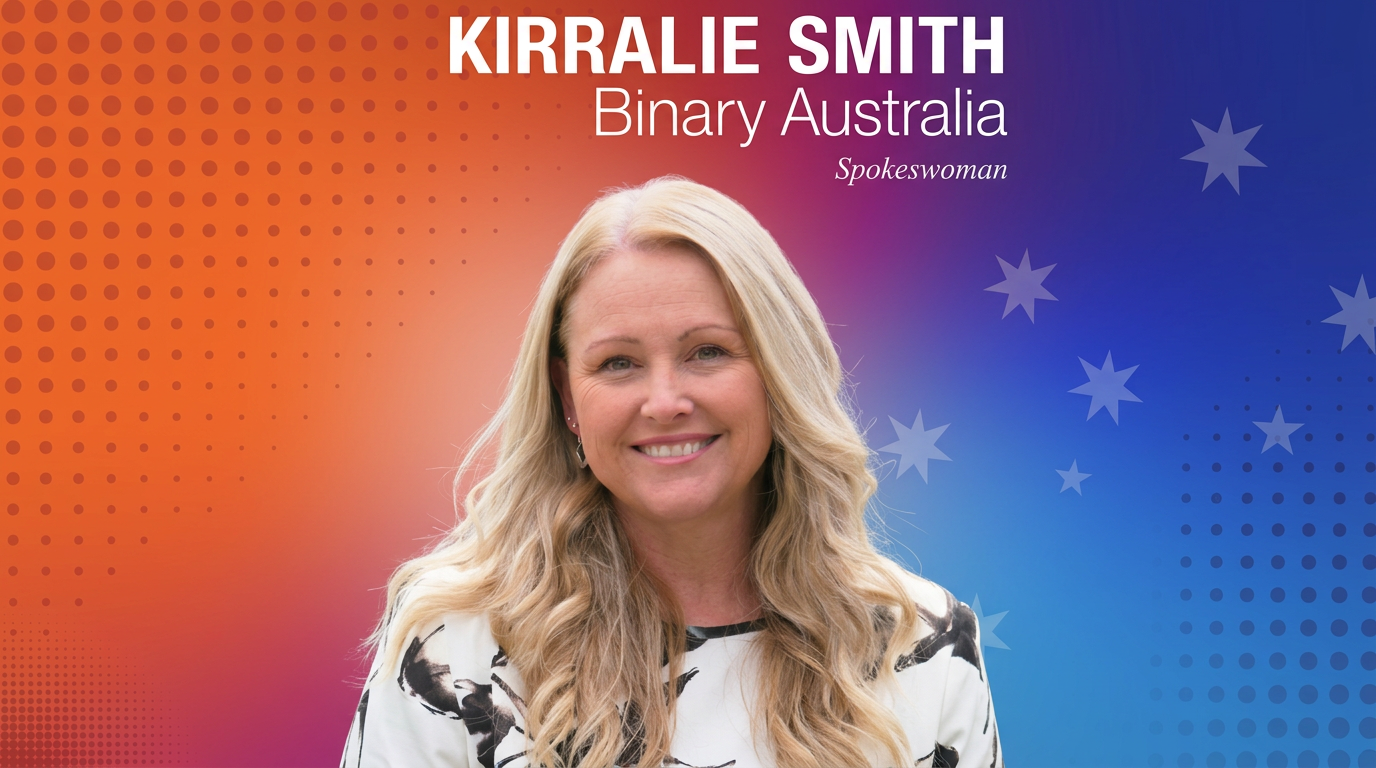
In two judgments on 23 August 2025, NSW Deputy Chief Magistrate Sharon Freund found that Kirralie Smith, the spokeswoman for advocacy group Binary Australia, and Binary itself, had unlawfully vilified two transgender soccer players under section 38S of the NSW Anti-Discrimination Act. The court found the social media posts had incited hatred and serious contempt, and rejected Smith's argument that the posts were protected political communication under the Constitution.
On 5 December 2025, Magistrate Freund ordered Smith to pay $95,000 in damages, $55,000 to one complainant and $40,000 to the other, with 28 days to pay before the order doubled. Smith was also ordered to publish a public apology across her social media accounts. Equality Australia described it as the first finding of unlawful transgender vilification under NSW law.
Smith says she was reporting accurate publicly available information and raising what she calls reasonable questions about fairness in women's sport. Her legal team secured a stay of the orders on 31 December 2025. The Supreme Court appeal is pending. The matter is active and nothing below speaks to its merits.
While Smith's case worked through the NSW courts, the rest of world sport was moving.
On 26 March 2026, the IOC's Executive Board adopted a Policy on the Protection of the Female (Women's) Category in Olympic Sport. Eligibility for any female category event at the Olympic Games or any other IOC event, the policy says, is now limited to biological females. The policy takes effect from the LA28 Olympic Games and is not retroactive.
IOC President Kirsty Coventry, a two time Olympic gold medallist and seven time Olympic medallist in swimming, said the policy was based on science and led by medical experts. "At the Olympic Games, even the smallest margins can be the difference between victory and defeat. So, it is absolutely clear that it would not be fair for biological males to compete in the female category. In addition, in some sports it would simply not be safe," Coventry said in the IOC statement.
The IOC wasn't first. World Rugby banned transgender women from elite women's contact rugby in 2020 on player safety grounds. World Aquatics, swimming's governing body, restricted the female category to athletes who transitioned before male puberty in 2022. World Athletics barred transgender women who had gone through male puberty from elite female events in 2023.
The reasoning the federations point to is documented in the sports science. A 2021 peer reviewed review by Emma Hilton and Tommy Lundberg, published in Sports Medicine, puts the male and female performance gap at roughly 10 to 50 per cent depending on sport, widest in events built on muscle and explosive power. The review reported that 12 months of testosterone suppression typically reduces lean body mass, muscle area and strength by about five per cent, leaving the advantage built during male puberty largely intact. Height, bone structure and frame don't change. A correction note was later added to the paper noting the authors had publicly engaged on the topic. The content of the review wasn't altered.
The federal legal tool to draw a line on women's sport in Australia is older than any of those federation rulings.
Section 42 of the Sex Discrimination Act 1984, the original Hawke government legislation, explicitly permits excluding people from "any competitive sporting activity in which the strength, stamina or physique of competitors is relevant" on the basis of sex, gender identity or intersex status. The exemption is permanent. It applies to all competitive adult sport. It is the lever available to a federal government that wanted to give clear national direction, including through guidance to sporting bodies and the Australian Human Rights Commission.
The Albanese Government hasn't used Section 42 to give that direction. Decisions on transgender participation in women's sport have been left to a patchwork of individual sporting bodies, state anti-discrimination tribunals, and now a Supreme Court appeal in a vilification case. The Coalition had its own years in government and didn't legislate or provide such direction either.
Smith's appeal in the NSW Supreme Court will rule on whether the Local Court findings stand. The IOC policy takes effect at the LA28 Games. The Section 42 exemption is still on the books, available to whichever government decides to use it.
Sources:
- https://www.olympics.com/ioc/news/international-olympic-committee-announces-new-policy-on-the-protection-of-the-female-women-s-category-in-olympic-sport
- https://www.starobserver.com.au/news/anti-trans-activist-kirralie-smith-ordered-to-pay-almost-100k-issue-public-apology-following-vilification-ruling/239923
- https://www.womensforumaustralia.org/the_case_of_kirralie_smith_and_how_nsws_anti_vilification_laws_are_being_weaponised_against_women
- https://lawandreligionaustralia.blog/2026/01/25/football-and-transgender-vilification-the-kirralie-smith-cases/
- https://www.cnn.com/2026/03/26/sport/olympics-transgender-women-athletes-banned
- https://link.springer.com/article/10.1007/s40279-020-01389-3
- https://www.austlii.edu.au/cgi-bin/viewdoc/au/legis/cth/consol_act/sda1984209/s42.html
- https://equalityaustralia.org.au