New South Wales Corrective Services Deputy Commissioner Jennifer Galouzis has confirmed that the Minns Labor government allows biological males to be housed inside female prisons, leaving female inmates vulnerable under sweeping discretionary powers.
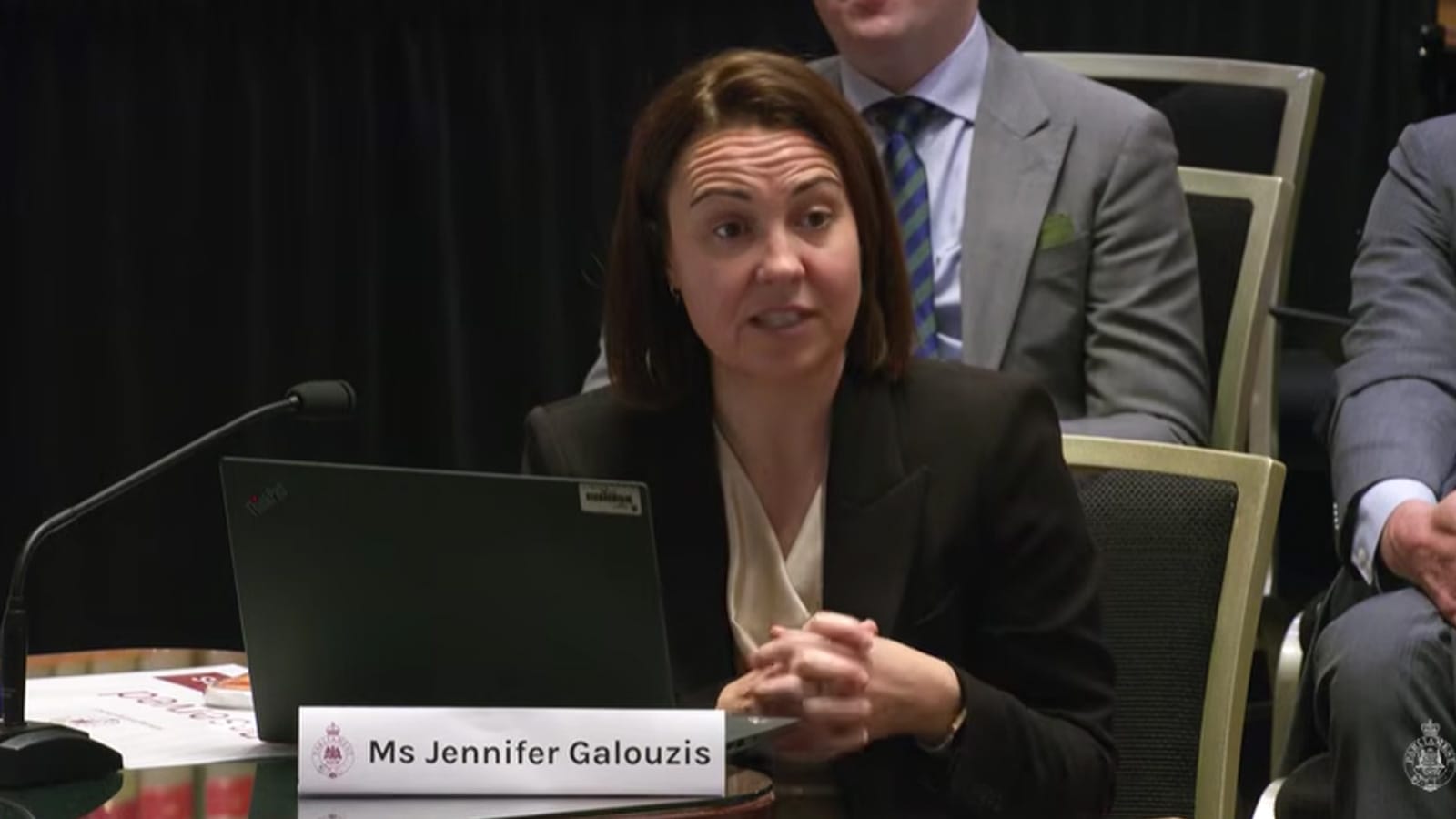
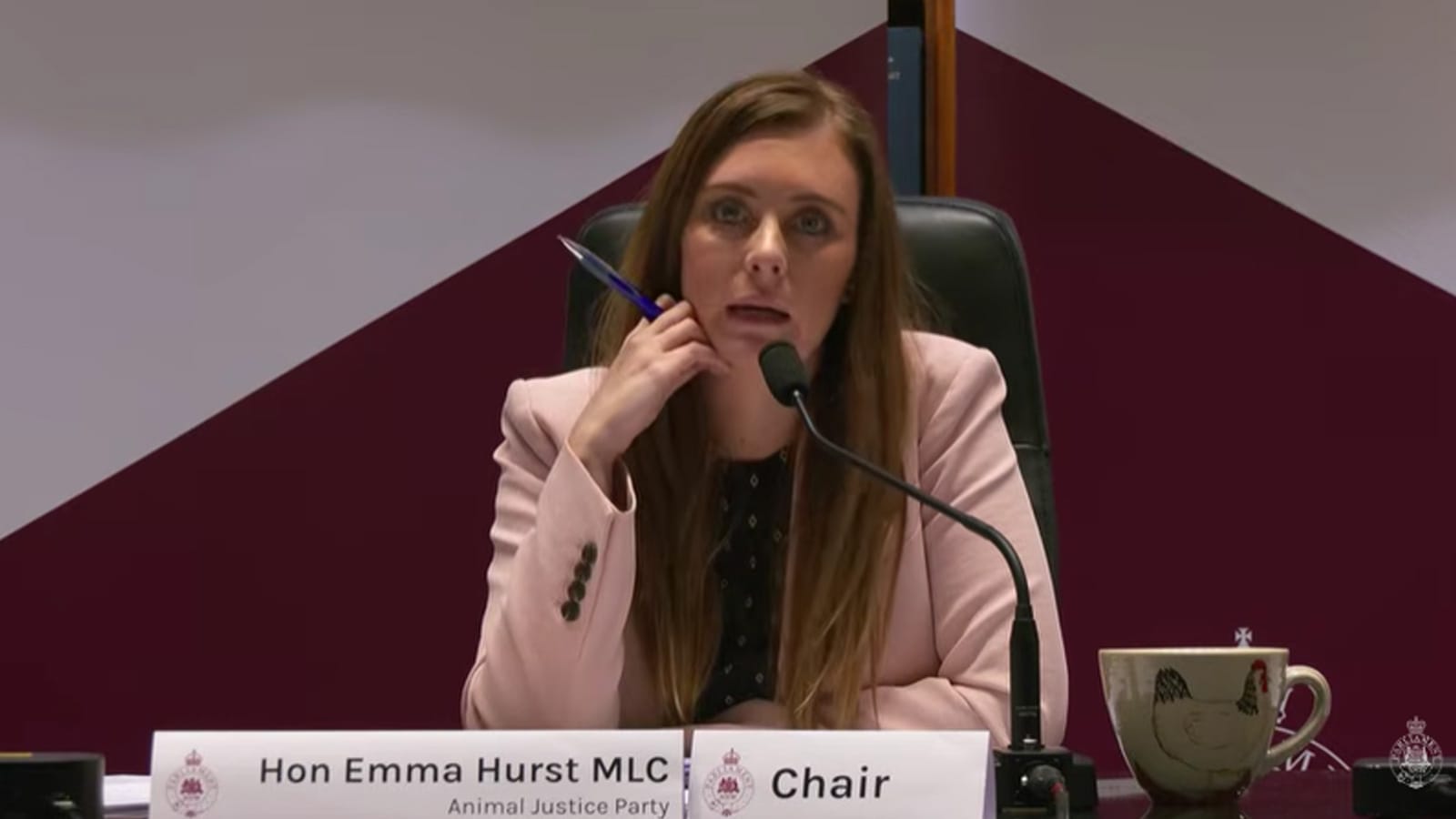
Galouzis was forced to admit the reality during Budget Estimates on Monday 24 August under intense questioning from Liberal MLC Aileen MacDonald and Animal Justice Party MLC Emma Hurst, who chaired the hearing.
"We have 47 transgender inmates in custody at the moment, and 46 of those are accommodated according to their biological sex. We have one who is housed according to their identified sex," Galouzis told the committee.
Video: NSW Parliament. Deputy Commissioner Jennifer Galouzis gives the figures to Portfolio Committee No. 8 from 2:58:39.
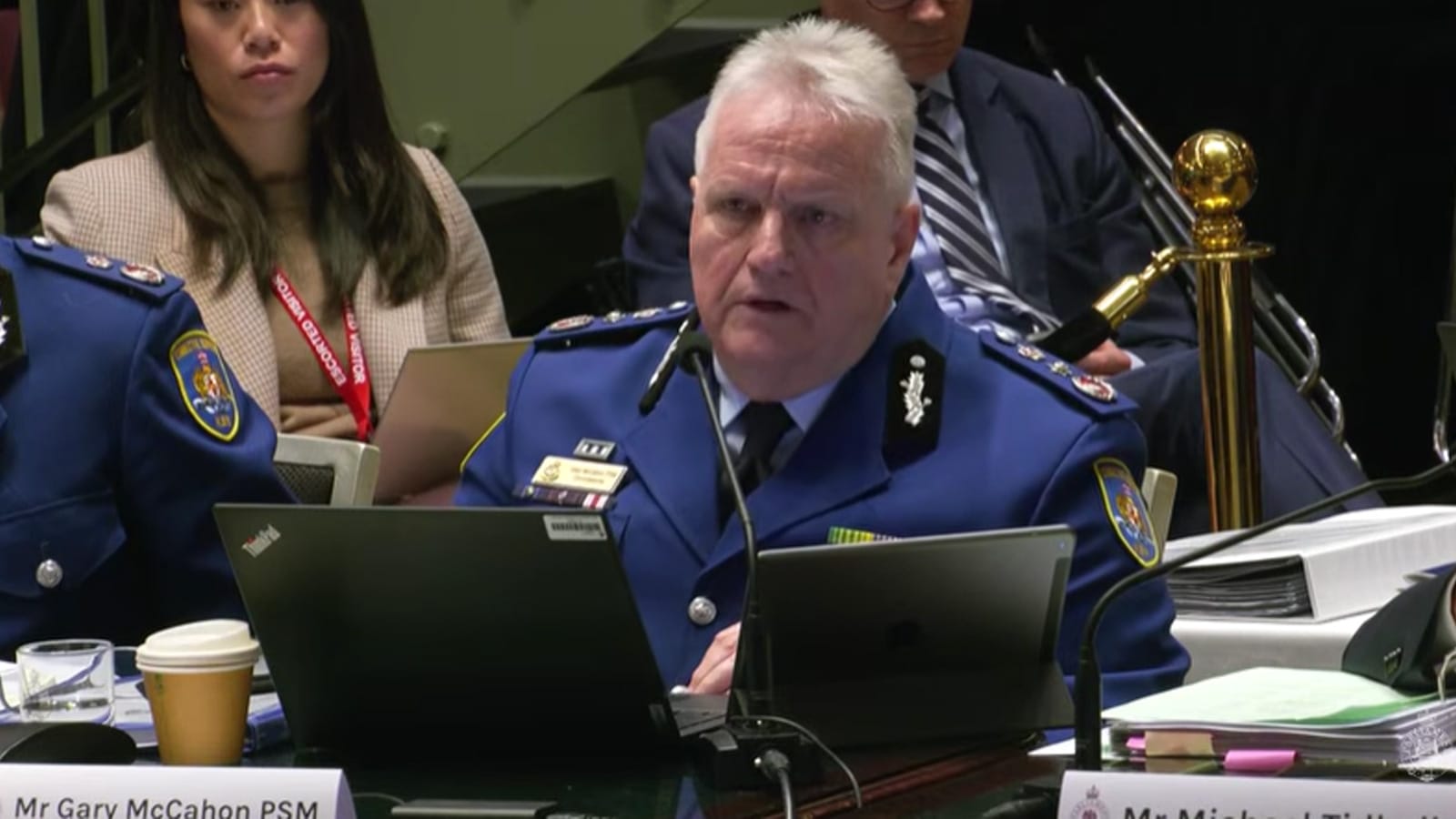
Corrective Services Commissioner Gary McCahon, sitting beside her, added that 14 of the 47 inmates are Aboriginal or Torres Strait Islander.
| NSW inmates recorded as transgender | Number |
|---|---|
| Total in custody | 47 |
| Housed according to biological sex | 46 |
| Housed according to identified sex | 1 |
When MacDonald pressed whether Labor rules permit a biologically male offender to walk into a women's correctional facility, Galouzis confirmed the government policy enables exactly that.
"We could potentially place a biological male in a female correctional centre if we felt that all of those conditions were satisfied and they identified as a woman, as a trans woman, but we would only do that following very comprehensive assessment," she said. "Absolutely, that discretion is with the commissioner."
Reports have since revealed that McCahon used that exact Labor authorised power to approve moving a male born inmate into a women's facility after the offender entered custody at the all male Silverwater Metropolitan Remand and Reception Centre on assault charges in June. Corrective Services has not publicly confirmed those specifics, and the charges remain untested in court.
Labor's Bob Carr laid the legal foundation 30 years ago when surgical safeguards controlled prison placement
The reason a birth certificate carries any authority inside a NSW prison traces back to a law written three decades ago under Labor, though modern Labor has since gutted the strict medical safeguards that once protected women's facilities.
The Transgender (Anti-Discrimination and Other Acts Amendment) Act 1996 was passed by Bob Carr's Labor government and pushed through parliament by Attorney General Jeff Shaw. Assented to on 19 June 1996 and commencing that October, the legislation outlawed discrimination on transgender grounds while establishing the original pathway to alter the sex recorded on a NSW birth certificate.
Crucially, Carr's Labor government built non negotiable medical checks into the legal framework. Section 32B of that Act permitted an application only from a person who had "undergone sexual reassignment surgery", while section 32C explicitly mandated that the application be accompanied by "statutory declarations by 2 doctors" verifying the physical surgery had occurred.
Only individuals who passed that rigorous medical threshold became a "recognised transgender person" under NSW law. That exact phrase was later adopted by Corrective Services in policy 3.8 as the trigger for transferring an inmate into a facility matching their new legal document, a barrier modern Labor has now demolished.
Labor ignored overwhelming public opposition and warnings to force through self ID rules
Premier Chris Minns and senior Labor ministers personally voted to strip away long standing surgical safeguards, dismantling the barriers that protected female correctional facilities.
The mandatory surgery requirement was gutted in 2024 through the Equality Legislation Amendment (LGBTIQA+) Act 2024. The legislation originated as a private member bill introduced by independent Sydney MP Alex Greenwich on 24 August 2023, but Labor enthusiastically took carriage of it in the upper house under Leader of the Government Penny Sharpe. Sharpe delivered the second reading speech on 17 October 2024, explicitly detailing Labor's drive to eradicate surgical checks.
"Schedule 1 to the equality bill amends the Births, Deaths and Marriages Registration Act 1995 to remove the requirement for trans and gender diverse people to undergo surgery in order to update the sex on their birth certificate. New South Wales is the last jurisdiction in Australia that continues to impose a requirement for surgery. Not all trans and gender diverse people want to undergo surgery," Sharpe told the Legislative Council.
Labor framed this sweeping institutional change as a mere administrative fix for identity paperwork, with Sharpe claiming the mismatch between gender expression and official documents "can lead to discrimination, stigma or other problems when applying for a job or accessing government services where the production of a birth certificate is required".
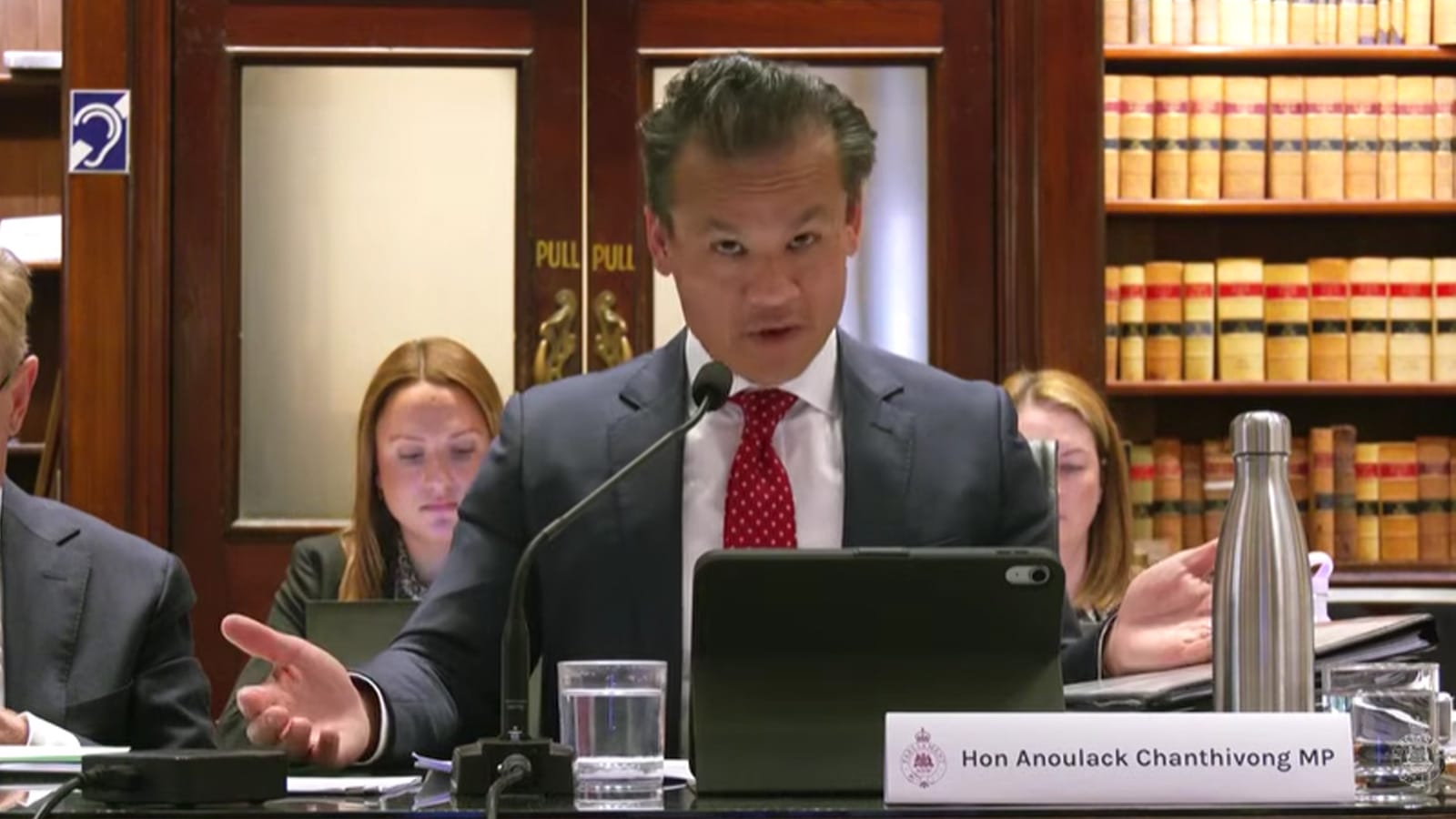
The Legislative Assembly pushed the bill through its third reading on 16 October 2024 in a 50 to 30 vote. The ayes recorded the explicit support of Premier Chris Minns, Anoulack Chanthivong who now controls the Corrections portfolio, Health Minister Ryan Park, Jihad Dib, and Attorney General Michael Daley. Then Opposition Leader Mark Speakman voted no alongside Liberal MP Anthony Roberts.
The Legislative Council passed the measure the next day, voting 17 to 13 on the second reading and 15 to 12 on a recommitted third reading. Emma Hurst voted for the bill while Aileen MacDonald voted against it, the exact two MLCs who later cross examined Corrective Services over inmate placements, with Hurst pressing from the opposite direction over the treatment of transgender inmates.
Labor rammed the legislation through despite explicit warnings delivered on the parliamentary floor about the immediate danger to female prisoners. Liberal MLC Susan Carter warned the chamber directly about the loophole Labor was leaving open.
"New part 5A prohibits prisoners from making applications to change their sex during the period spanning remand to release. That protects against opportunistic attempts to change sex and provides some protection to female prisoners. However, it does not address the situation that has arisen in Victoria, for example, where a trans inmate who had begun transition prior to arrest, with a history of violent assaults against women and a functioning penis, was incarcerated in a female prison, much to the concern of other female prisoners," Carter told the Council.
Carter warned that individuals altering their certificates would legally become women and end up "housed in female prisons in a manner that they currently cannot", yet Labor pushed ahead anyway. In the Assembly, Liberal MP Alister Henskens told the House that a parliamentary committee survey drew 13,258 responses and showed over 80% opposed the changes. Labor ignored the public, passed the Act on 23 October 2024, and brought the birth certificate provisions into force on 1 July 2025.
How Labor gutted surgical proof to let biological males alter legal sex with a simple declaration
Since that date, Labor has reduced official sex reclassification to a routine administrative rubber stamp. Under revised Section 32B, the state merely requires a statutory declaration from an applicant stating they identify as that sex and intend to live as that sex, backed by a single support statement from any adult who has known them for 12 months. Labor stripped away every meaningful threshold, completely abandoning requirements for surgery and medical evaluation.
| NSW birth certificate sex change | 1996 to 2025 | Since 1 Jul 2025 |
|---|---|---|
| Surgery | Required | Not required |
| Medical evidence | Stat decs from 2 doctors | None |
| Who backs the application | 2 doctors | 1 adult who's known you 12 months |
The same Labor legislation inserted Section 32H, which declares that anyone who alters their record "is, for the purposes of a law of this State, a person of the sex stated in the altered record".
Labor buried its supposed protection for women prisons inside an unenforceable note beneath the clause, stating: "Nothing in this part changes access to toilets, change rooms, sport or allocation in correctional facilities, women's refuges or any other place." Section 35 of the Interpretation Act 1987 provides that a footnote or endnote in an Act is taken not to be part of the Act. Seven months after that note took effect, the Labor government created clause 3A by regulation anyway.
Labor did lock the door for offenders already inside the system, introducing Division 6 provisions that designate an inmate, remand prisoner, parolee, or forensic patient as a "restricted person" who cannot alter their sex record without approval from the supervising authority and concurrence under Section 32GC from the Corrective Services Commissioner.
However, that restriction applies strictly after a person enters the correctional system. Labor left a gaping loophole wide open for offenders who alter their documents prior to arrest, precisely the danger highlighted on the floor of the Council before Labor passed the bill.
Labor regulation allows bureaucrats to ignore biological sex and put male inmates in female cells
Premier Chris Minns publicly assured voters that altering identity documents would never grant male offenders access to female correctional facilities, yet Labor's subsequent regulatory changes handed bureaucrats total freedom to do just that.
"If you're born biologically male and you change your government certificates to be female, it will not mean that you can change from a male prison to a female prison," Minns claimed in May.
That assurance came 19 months after Labor voted to strip the surgical requirement out of the state legislation, and 10 months after the change took effect.
In February 2026, the Minns government introduced the Crimes (Administration of Sentences) Amendment (Classification of Inmates) Regulation 2026, forcing clause 3A into prison operational rules. The regulation outlines what a departmental decision maker can weigh when determining whether an inmate is classified as male or female for facility placement, citing safety risks, institutional security, good order, and any secondary factors the decision maker deems relevant.
Labor then drafted the regulation to explicitly disconnect placement decisions from physical reality and official records. Under clause 3A(2), the government decree states that a classification decision need not align with any of the following:
- the sex recorded on the inmate's birth certificate or other identity document
- the gender identity the inmate expresses
- the inmate's external physical sex characteristics
While Minns publicly pointed to the birth certificate as a shield against male transfers, Labor's own regulation explicitly allows decision makers to disregard birth certificates, expressed identity, and external physical sex characteristics entirely, abandoning female prisoners to the unbridled discretion of the Corrective Services Commissioner.
In a written answer to Greens MLC Amanda Cohn in April, the Labor government claimed the regulation was created because Parliament never intended identity reforms to alter prison allocations, adding that inmates are assessed on criteria such as the sex assigned at birth, the nature of the offence, behaviour in custody, and the safety of other inmates.
| Date | Who | What happened |
|---|---|---|
| Oct 1996 | Carr Labor | Birth certificate sex change created, surgery and 2 doctors required |
| Oct 2024 | Minns Labor | Equality Act passed with government support, surgery requirement removed |
| 1 Jul 2025 | NSW Parliament | Birth certificate sex can be changed without surgery |
| Feb 2026 | NSW Government | Clause 3A made, so certificate, gender identity and physical sex no longer have to decide placement |
| May 2026 | Chris Minns | Says a changed certificate won't move anyone between prisons |
| 24 Aug 2026 | Jennifer Galouzis | Confirms one inmate is housed against their biological sex, and that a biological male can be placed in a women's prison |
Labor hides prison placement rules from public view while opening female facilities to males
Corrective Services quietly pulled its binding transgender placement policy from public view and has not published a replacement, keeping female prisoners and the NSW public completely in the dark.
The department previously governed inmate allocations using a written procedure numbered 3.8. That document was scrubbed from the government public website and has never been restored, a disappearance Hurst forced into the open during Budget Estimates. One News retrieved the last published version, version 1.2, from an archive of the state's own website.
The summary of that scrubbed Labor document lays out the core mandate in a single sentence:
"A person received into custody must be managed as the gender with which they identify at the time of their incarceration."
That archived document defined a "recognised transgender" inmate as someone who had undergone gender reassignment surgery and updated their birth certificate, mandating that those specific inmates "must be treated as a member of the sex recorded on their new birth certificate". Section 1.4 dictated that a recognised transgender inmate arriving with identification proof of that status "is to be sent to a correctional facility of their recognised sex", while those without proof who held a previous custody record as a different sex were sent to the male Silverwater remand centre for assessment and determination of placement.
When cross examined at Budget Estimates, Galouzis admitted the government has drafted a replacement policy but has not released it to the public.
"That policy has been drafted but we're currently waiting on legal advice just to determine that we're compliant with the new regulation as well as the legislative changes," she said.
When pressed for a release date, Galouzis said there is no timeline for publishing it. Corrections Minister Anoulack Chanthivong deflected responsibility, telling the committee the Labor government is "merely implementing the intention of the equality bill", claiming the legislation carved out an exemption for Corrections and that every placement hinges strictly on inmate risk.
Labor bureaucrats cover up queue of male offenders seeking transfer to female prisons
MacDonald pressed the department to disclose how many transgender women assigned male at birth are actively seeking placement in a female facility, how many applications are sitting in the pipeline, how many of those involve offenders charged with violent or sexual offences, and the outcome of every application over the past five years.
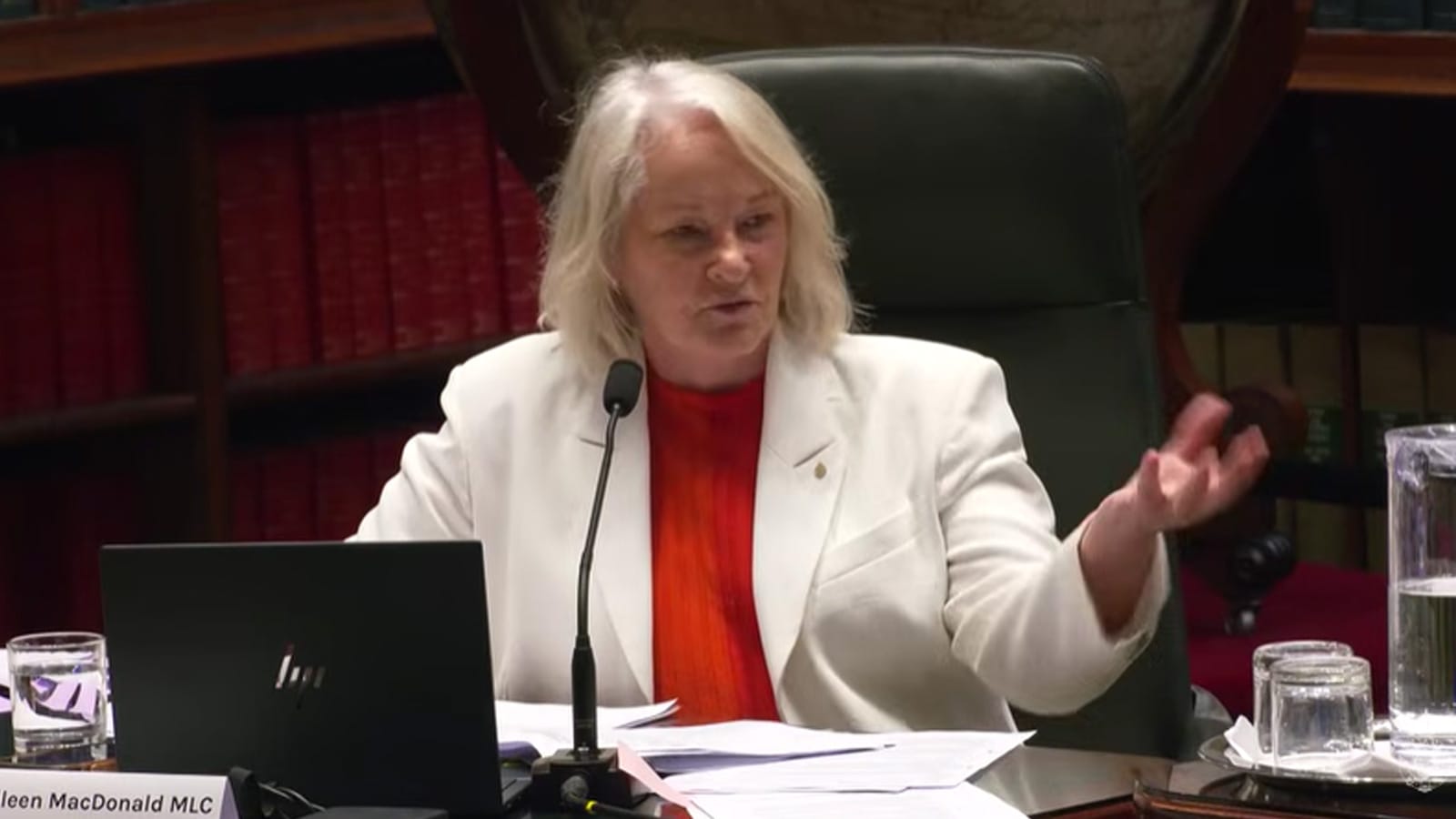
Galouzis took all four critical questions on notice, hiding behind procedure to explain that the Commissioner decides each request within 28 days following an evaluation by a multidisciplinary panel of Justice Health staff, psychologists, and custodial security officers weighing the inmate's preference, offence history, behaviour in custody, transition status, and health requirements.
The lack of accountability runs even deeper under Labor's watch. When Hurst asked whether the department tracks assaults or self harm resulting from improper prison placements, Galouzis admitted she would have to take that on notice too, conceding she did not believe such vital safety data was routinely collected. She further confirmed that consultation with people holding lived experience of the prison system has not even begun.
Commissioner McCahon brushed aside public alarm and defended the department's management of the cohort when Hurst questioned how he could conclude placement was not an issue when the department collects no specific data on it.
"This is not a current trend or concern for us at the moment," he told the committee, saying placements are considered by a multidisciplinary team on the individual facts and that his staff manage the cohort well.
The Northern Territory has banned male offenders from women's prisons while Minns leaves NSW females exposed
While other jurisdictions step up to protect female inmates, the Minns Labor government continues to leave vulnerable women exposed to biological male offenders.
Women's Forum Australia has spearheaded national demands to protect female prisoners, collecting over 24,500 signatures warning that female inmates, many holding horrific histories of violence, abuse and trauma, are directly exposed by these dangerous placements.
Yet while the Northern Territory under Chief Minister Lia Finocchiaro took decisive action to become Australia's first jurisdiction to explicitly restrict female prisons to biological women only, Labor in NSW refuses to act.
The terrifying consequences of Labor's ideology are already playing out elsewhere in the country. In Victoria, Hilary Maloney, a male offender who sexually abused his own five year old daughter and filmed the atrocities, is serving time inside a women's prison while pursuing legal action against the Victorian government over his custody conditions. Nationally, federal Labor has repeatedly backed this agenda, voting down efforts to restore a biological definition of sex in federal law three separate times.
One Nation is demanding every state repeal the rules that let biological males into women's prisons
Two of those three attempts were One Nation's. Party leader Pauline Hanson introduced the Sex Discrimination Amendment (Acknowledging Biological Reality) Bill 2024 on 12 September 2024, which the parliamentary record summarises as amending the Sex Discrimination Act 1984 "to remove references to 'gender identity'". The Senate negatived it at the first reading the same day, killing it before a word of debate, and its status is recorded as Not Proceeding.
One Nation published its position on prisons specifically in February 2026, after the secret Victorian payout to a female inmate became public. The party's demand is that placement be decided on biology and nothing else.
"The physical safety of biological women must be the primary consideration in prison placement. Prisons should be segregated based on biological sex, as they have been for over a century with clear success in maintaining order and safety," the policy states.
The party accepts transgender inmates face genuine risk inside male prisons, and argues for specialised units or administrative segregation instead of moving that risk onto women.
"One group's need for safety does not grant them the right to infringe upon the safety and privacy of another," the policy states.
That demand is not confined to Victoria. One Nation calls on the Victorian government "and all state governments" to repeal policies that allow biological males into women's prisons, which puts the Minns government inside the same demand.
Despite these growing dangers, Galouzis admitted to the committee that the NSW Commissioner decides transfer requests in just 28 days, leaving female inmates vulnerable while Labor bureaucrats still haven't disclosed how many male requests are currently sitting in the queue.